Europe

Random entry RSS

  • Posted in:

    Global Migration Policies, Perils, and Profits: Caroline Hurley reviews Sally Hayden’s ‘My Fourth Time We Drowned: Seeking Refuge on the World’s Deadliest Migration Route’

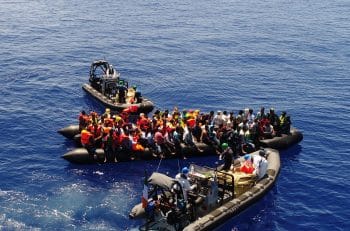
    “Whoever was tortured, stays tortured” — Auschwitz survivor Jean Amery.  In My Fourth Time We Drowned, multi-award-winning freelance journalist Sally Hayden documents the experiences of those who flee homes destroyed by conflict and oppression. Sally Rooney’s reaction is typical — “the most important work of contemporary reporting I have ever read”. Numerous boat crossings from Libya are detailed, each risking what happened off the Greek coast in mid-June when a boat with hundreds crammed aboard sank. Of an estimated 700 plus passengers, less than 100 bodies were recovered. The majority, locked in the hold, were feared dead. Rescue charities, and authorities in France, Greece and Malta, as well as European border control Frontex, had all been alerted, and monitoring the boat for 12 hours, but disagreed over words exchanged with passengers and what unfolded. Alexis Tsipras, Greece’s former left Prime Minister asked, “what sort of protocol does not call for the rescue … of an overloaded boat about to sink”? If practical assistance was not offered until it was too late, organisations failed in their sea duties under international laws. Barack Obama and others noted the contrast in media coverage of the Titanic submersible incident and called out obscene inequality and disparity in life chances. Meanwhile, Ireland is sending a Navy ship, Lé William Butler Yeats, to Libya, which may indirectly facilitate more drownings, because it is joining an EU naval operation tasked to sink or burn migrant ships encountered, often under smugglers’ control, meaning migrants must use increasingly more dangerous ships. Hayden explores similar ploys; denials of responsibility, or outsourcing it to criminal operators, passing the buck, hands-off exploitation and careerism, politicising desperate plights, whitewashing with tokenism, jargon, image branding, and more. The stricter migration control regime installed by the West since Gaddafi’s overthrow in 2011 has paved the way for ever-graver human rights catastrophes befalling those seeking sanctuary. Hayden’s use of unfiltered messages received directly from hundreds of refugees themselves illustrates how these European policies often result in cruel inhumane incarceration across North Africa, with Libyan militias and the modern slave trade being bankrolled by the EU, and with NGOs and the UN standing by, complicit and even corrupt. The opaque trail of accountability and striking under-reporting of activities and conditions suggest a collective wish to ignore and forget so many victims of the West’s neocolonial foreign policy. The EU does not count detainees, or have a process to contact families in emergencies, though the UN tracks numbers drowned at sea. At least 23,000 refugees have drowned or gone missing in the Mediterranean between 2014 and 2022. 1 in 51 attempting the crossing died in 2017 versus 1 in 21 in 2019. The number of people living as refugees rose by nearly 20 million from 2021 to nearly 110 million people by December 2022, according to a UN report. Hayden’s book is accessibly laid out, with lists of contents and key data, plus maps, notes on terminology, acronyms, acknowledgements and 65 pages of other notes and references, to end. According to the late David Graeber, co-author (with David Wengrow) of The Dawn of Everything, for the vast majority of human social experience, people enjoyed “three primordial freedoms: the freedom to move, the freedom to disobey and the freedom to create or transform social relationships”. Peaceful anarchy was the modus operandi. While inequalities in early human societies were not unknown, the structures of domination common to hierarchical government were absent. The tentacles of many institutions now creep around the planet, enforcing an imagined world of divisive identities, affecting millions of individuals in every facet of their lives.   Exploration and colonisation over centuries brought genocides, ethnic cleansing, capture of labour, and accumulation of capital and resources. The spoils are still not going to those who earn them, although the Global South is waking up to the raw deals and lies imposed for too long. As power centres shift, Naomi Klein’s words seem apt: “In the hot and stormy future we have already made inevitable through our past emissions, an unshakeable belief in the equal rights of all people and a capacity for deep compassion will be the only things standing between civilization and barbarism”. A tragic parallel can be drawn between current migration journeys and those of Irish migrants piling into the infamous filthy overcrowded unseaworthy ‘coffin ships’ often arranged by Anglo-Irish landed gentry during the Great Irish Famine halfway through the nineteenth century. Many applicants were already at death’s door, unable to bear further hardships on route to America or Canada. Drownings and sinkings were common. Over 100,000 chose this dangerous option in 1846 alone, numbers which shocked the US Congress into passing two new Passengers Acts to raise minimum voyage fares as deterrents. Unfortunately, modern Ireland mimics international shortcomings. Evidence of human trafficking of migrant fishers off the Irish coast is mounting. And the Irish Refugee Council has recently criticised the preferential treatment of people seeking protection: “While we acknowledge the pressure on homeless services in Ireland, where homeless figures are at a record high, the decision to respond to two groups of people, that are both experiencing homelessness, with different policies on the grounds of their different status and/or nationality, risks being discriminatory and is not tenable”. The 1951 U.N. Refugee Convention states, “no Contracting State shall expel or return a refugee in any manner whatsoever to the frontiers of territories where his life or freedom would be threatened on account of his race, religion, nationality, membership of a particular social group or political opinion”. In a shameful saga, Hayden can be proud of her contribution That is the obligation under international law, incorporated widely into statutory law, but rarely cited anymore. Libya was not a signatory. Still, developing countries shelter about 87 % of the world’s refugees, most of whom have clear entitlements with experiences of conflict, poverty, enforced militarisation and so on. The goal of those fleeing strife is to contact the United Nations refugee agency, UN High Commissioner for Refugees (UNHCR) and/or the International Organisation for Migration (IOM)

    Loading

    Read more

  • Posted in:

    ISIS in Ireland and France

    Not a season has passed since 2015 without a terrorist attack from ISIS or Al-Qaeda in France. Interventions in the Middle East, perceived discrimination against Arabs including ghettoisation and stringent or doctrinaire secularisation are the primary reasons for the attacks, though many have also been random, typically ‘franchised’ retrospectively from ISIS. Ireland is no model of racial tolerance and has not been generous in accepting refugees from conflicts in the Middle-East, including Syria. 1400 members of the Irish Defence Forces operate in Syria, Lebanon and Morocco on Peace Support Operations with the UN. Although Ireland has not participated in the war against terrorism in the Middle East, it is not impossible that one day it would suffer an attack. It is believed there are around 150 radicalised Muslims living in Ireland and that there are terrorists supporting ISIS financially from Ireland. For example, an electrician in his twenties named Hassan Bal was arrested in Waterford after confessing he had financed ISIS. He gave 400 in October 2015 in a city in Bosnia-Herzegovina to Stevo Maksimovic who was apparently supporting the terrorist group. Bal was jailed for 20 years. Last year, two men from Morocco and Algeria were arrested in Dublin suspected of assisting the financing of ISIS but the Garda didn’t have enough evidence to jail them and they were later released. It is understood the Garda Special Detective Unit was conducting several surveillance operations on people suspected of supporting terrorism in Ireland. Also in 2017, Humza Ali – a bricklayer from Birmingham – tried to travel to Syria via a Dublin-Istanbul flight. Turkey refused him entry. He went back to England where he had been before he had travelled to Ireland by boat and ferry. The man and one of his accomplices, Ali Akbar Zeb, had been sharing photos and videos on WhatsApp to promote the terrorist group. It is believed they were training for an attack. Last year, an Irish woman named ‘Sister Aaliya’, from Limerick who had become radicalised to Islam, claimed she had heard ISIS terrorists talking about running a 2.8m fund from Dublin. The men linked to this financing were planning a terrorist attack in the capital. Assistant Garda Commissioner Michael O’Sullivan revealed last month that the Garda has been ordered to use barriers on busy streets like Grafton Street in Dublin. He claimed to be worried about people coming back to Ireland after having travelled to Syria or Iraq in support of ISIS. Security specialist Dr Tom Clonan thinks terrorist attacks are possible in Ireland. He told Village that, according to the International Centre for the Study of Radicalisation in London, there were “40 Irish passport-holders who have gone to engage in jihad in the Middle-East”. The reason why Islamists do not attack on the soil of Ireland, he says, is because Muslims are integrated in this society. The Defence Forces are ready to deploy 500 soldiers if terrorists attack. However, civilians inevitably get killed before any police intervention. Even though France has long been on high alert, there are continuing fatalities. The state of Emergency declared there following the November 2015 Paris attacks only expired, after five extensions, in November 2017. In Ireland the state of emergency only expired after peace in Northern Ireland in 1995, and the Emergency Powers Act still allows internment, the juryless Special Criminal Court and draconian provisions for detention. However these are measures frmo a different era and with a different focus. It is believed our information technology and architecture; and our security and intelligence systems are over 20 years out of date. Two years ago, the association of Garda Sergeants said the Garda was not equipped or trained to deal with the terror threat here. The best way to avoid terrorism, according to Tom Clonan, is to stop interfering and bombing the Middle-East. “Muslims have been treated so badly since the invasions of Afghanistan and Iraq and the war in Syria. It is a major cause of radicalisation because people are suffering.” ISIS attacks are sadly frequent in France, the European focus for ISIS. 11 terrorist attacks, starting with Charlie Hebdo, have been committed since 2015 alone – resulting in 245 dead. 17 attacks have failed and 50 were foiled. 9 cases out of 11 targeted French police. Certainly Ireland has not been affected by terrorist attacks. However, the truth is that nobody knows the percentage chance that situation might change. After the murder of an Irish tourist in Tunisia three years ago, Tom Clonan thinks Ireland should have raised its terror threat level from Moderate to Substantial, the level before Severe and Critical. The 2017 Stockholm attack shows neutrality and non-interventionism are not definitive shields against attack, even if Ireland were not facilitating US troop and ordnance movements through Shannon. Clonan changed his mind after Stockholm: “Now terrorist attacks in Ireland are a distinct possibility”. Marianne Lecach

    Loading

    Read more

  • Posted in:

    Villager June 2018

    Harris asleep Young Simon Harris seems to think the women of Ireland will stay loyal to him if he just puckers up and adopts the mantra that it was all an honour and done for Mná na hÉireann. The night before the referendum he tweeted in what is being seen as a ‘Song of the Camino’ moment: “will sleep tonight in the hope of waking up to a country that is more compassionate, more caring and more respectful. It has been an honour to be on this journey with you and to work #togetherforyes. See you all tomorrow!”. Unfortunately no-one cares how well the Minister for Health sleeps, they care how well the mistreated patients under his aegis sleep. And Villager has been struggling to get the image of the eager nightcap-topped and pyjama-ed Simon out of his fevered head. Sinna Gáel Sinn Féin’s new leader Mary Lou McDonald has said it wants to form a coalition government after the next election with either Fine Gael or Fianna Fáil. “I want to lead the party into government. I want to do that from the strongest possible position. I want us to discuss, debate, agree with others a programme for government”, Ms McDonald told The Irish Times in an interview. All those years, all that effort, pretending Sinn Féin wasn’t just Fianna Gael for slow learners. The view from Dalkey David McWilliams, a metaphorical bow-tie wearer, sometimes gets a hard times in these columns but his Irish Times Saturday feature packs an economic punch and is always accessible and often entertaining and there’s no worthy ideology he won’t eventually come around to or at least promote. But he’s what Villager’s primary teachers used to call a notice box and he’s often wrong. Recently he said Dublin needs to be like Belfast in its policy on high buildings in its historic centre, to avoid a housing crisis. No expert says height is a solution to the housing crisis. The real problem is one of density in Dublin’s suburbs not height in its uniquely-human-scale city centre. Indeed fiddling around with heights sows confusion and is partly responsible for inertia in the city centre as developers wait for ever greater flexibility in standards and correlative extra profitability for their hoarded sites. McWilliams also said people are emigrating because of housing. But Ireland has net immigration. Armchair planning. The view from Dublin’s South Inner City The ascendant Press Up group has outbid several property developers to buy the Celtic Revival style headquarters of New Ireland Assurance on Dublin’s fast-rebeautifying Dawson Street, a more elegant counterfoil to the jaded global offering of next-door Grafton St. The group led by Paddy McKillen Junior and Matt Ryan is paying €38 million for the two interlinking five and six-storey office blocks. Despite helpful suggestions from the Irish Times’ veteran property correspondent, Jack Fagan, Press Up won’t demolish the buildings, but instead will convert the ground floor into restaurant and other retail uses and to add the usual greedy extra office floor to bring the overall office content to 70,000sq feet. In his day Paddy McKillen liked nothing better than a bit of façade-retention but Junior is cornering the market in historic refurbishments with Roberta’s and Dollard in the former Temple Bar printers that Senior (and Bono and Edge) wanted to demolish a decade ago, and the exquisite Art Deco Stella Cinema in Rathmines for which demolition permission had been granted. A bit of authentic taste will get you quite far in sophisticated Dublin now. And if it’s not real, Pressup can elegantly fake it – as with the (actually newish) Vintage Cocktail Club on Crown Alley, and the ye olde Peruke and Periwig pub on Dawson St and Lucky Duck on Aungier St. No pub paraphernalia for these whizzes, as they reportedly prepare for a stock-market otation, but not, Villager is certain, for a downturn. Weird Norman defines normal Norman Tebbit, the former Chairman of the Conservative Party, has announced that he will be boycotting religious services at Bury St Edmunds, Suffolk, whenever the Reverend Canon Joe Hawes officiates, because the Rev is gay. Lord Tebbit has described him as a “sodomite”, an offensive term. Tebbit, who has been worshipping at the cathedral for nine years, has explained that he finds “it difficult to accept a sodomite as a member of the clergy who will, for example, be called upon to conduct marriage services. I will struggle to attend if he is officiating”. Lord Tebbit discovered that Hawes, aged 52, is in a civil partnership with another cleric, the Reverend Chris Eyden, from a newsletter last March and that he was destined to become the cathedral’s most senior official. “The cathedral has taken this decision and I disapprove of it but I do not wish to damage the cathedral in any way. I will maintain my financial support for it every year because it will be there long after the dean and I are gone”. Tebbit is part of a dwindling generation that deems loving relationships between adults of the same sex to be offensive. What is really sickening is Tebbit’s toleration of an actual sinner, Sir Peter Morrison MP, who served as his Deputy Chairman back in the 1980s. Morrison was a violent child rapist. We need look no further than official British archive records for proof of Morrison’s proclivities. The archives show that on 4 November, 1986, Sir Antony Duff, Director-General of MI5, wrote to Sir Robert Armstrong, Margaret Thatcher’s Cabinet Secretary, after allegations of child abuse had been made by separate sources against Morrison. Morrison had been accused (entirely accurately as it transpired) of child abuse. Duff opined that Morrison was only a minor “security danger”. After the Morrison memo came to light in July of 2015, Armstrong (famed for his use of the phrase “being economical with the truth”), defended his inaction thus: “Clearly I was aware of it…but I was not concerned with the personal aspect of it, whether he should or should not be

    Loading

    Read more

  • Posted in:

    Pervasive effects of precarious work

    Employment in Ireland is often spoken about in terms of the economic recovery and falling unemployment rates. However, the real issue that needs to be addressed is job quality and the types of jobs that are being created. There has been increasing recognition that for many workers in Ireland and Europe employment has become insecure, with temporary and casual work increasing. The FEPS-TASC Report, ‘Living with uncertainty: the social implications of precarious work’, sets out to map precarious work in Ireland, and the impact this type of work has on precarious workers’ lives. This research involved 40 in-depth interviews with men and women living in Ireland, aged between 18 and 40, who work or had worked in temporary employment, were employed on a part-time basis with irregular hours and/or were hired on a self-employed basis. There are many definitions of precarious work, as no agreed definition exists. However, for the purpose of this report, we are focusing on employment that is contractually insecure, which includes part-time with variable numbers of highly skilled people are now being locked into insecure employment. A number of sectors of the Irish labour market have a disproportionate share of precarious work. Eight sectors scored higher than the national average. Transportation had high levels of solo self-employment, human health was characterised by a high level of part-time work, and education had a high level of temporary work. The remaining sectors (construction, wholesale and retail, accommodation and administration and support) had two or more dimensions of precarious work at relatively high levels. “Other NACE sectors”, which include occupations such as hairdressers, sports facilities workers and artists, scored high on all three dimensions. To understand the effects of precarious work, we need to look at life outside of the workplace, like the house-hold situation and access to social supports and services. We need to examine the consequences of precarious work for quality of life because, even though the basis of contractually precarious work might be similar in different countries, the experiences differ as a consequence of the availability of public services and state subsidies – for example, universal healthcare or child-care. The following are our main findings in the report. Precarious workers did not choose to be precarious First, the report found that none of our participants chose to be in temporary and “part-time with variable hour” employment. Much of solo self-employment was also not entered by choice but interviewees were forced into this arrangement as a condition for their employment. Importantly, we discovered that many people are unaware that they are working precariously; there are many workers who are working without a contract, or who assume a rolling contract to mean permanency. This finding points to the need for employers to be up-front about contractual status. Precarious workers cannot afford to be sick The report found that precarious working conditions can have a negative effect on physical and mental health. On top of that, the majority of participants cannot afford to be ill. The burden of expense is felt in two ways: through no paid sick leave, and as well as the expenses of paying to see a GP and for medication, tests and follow-up appointments. This lack of support can result in having to make hard decisions such as whether to first buy food, or pay bills or rent. Medical cards and GP cards are means-tested and most precarious workers do not fit the eligibility criteria to obtain them even though they are not able to afford primary care services. Precarious workers have difficulty finding stable housing The housing crisis in Ireland affects families and individuals with very different backgrounds. However, the difficulties that people in non-standard employment encounter are even more pronounced, as they lack economic stability. Precarious workers are not left with any other choice but to rent, or if the option was available to them, to live in the family home. With tightening mortgage regulations, (which followed the economic crash), and soaring property prices, people working in non-standard employment are unlikely to be approved by any lending bank. At the same time, renting in the private market has become prohibitively expensive in the last number of years. This has resulted in bouts of ‘hidden homelessness’ for many of our participants, situations during which they have nowhere to live and are forced to sleep on friends’ couches or stay with their parents. Precarious workers postpone having families It emerged from our interviews that having children was often challenging for precarious workers. While some decided to have children regardless, the majority of our participants continued to postpone childbearing. Postponement of childrearing amongst precarious workers is often not a choice based on individual preference. Instead, while precarious workers want to have children, their financial insecurity, directly related to their contractual insecurity, prevents them from becoming parents. For those who already had children, maternity leave and childcare are the most important issues that they face. It became clear through the interviews that maternity leave is challenging for women in precarious employment, especially for those who are on temporary contracts. First of all, the contract may be shorter than the actual leave. Likewise, for those who were on temporary contracts, maternity leave is a possible obstacle for the continuity of their employment. Formal childcare is too expensive for participants who have insecure incomes and thus alternative arrangements are often necessary. In the most extreme cases, one of the parents has no other choice but to quit their job. Such a decision is usually not based on traditional gender roles, but on employment status. Based on the interviews, precarious work does not appear conducive to having a family. Precarious work leads to insecure lives Contract insecurity and wage unpredictability lead to workplace insecurity and create insecure and unpredictable lives. The lack of independence that precarious work entails often creates a situation in which many people must live with their parents and thus are unable to develop independent lives. Public benefits and support services, such as state access to free primary care services, accommodation,

    Loading

    Read more

  • Posted in:

    The strong centre

    Paschal Donohoe is a decent man: modest, cultured, the cleverest man in the room, according to a senior Fianna Fáil figure who spoke to Fiach Kelly in the Irish Times recently: the man other politicians envy, and a safe pair of hands. At 43, he has graduated with first-class honours from Trinity college, lived abroad, pursued a career in the private sector and risen without obstacle from local politics in Dublin city council to the heights of government, and the Ministry of Finance. Unlike his even younger boss Leo Varadkar he doesn’t have the sheen of a cultivated image. he has never attracted any suspicion of impropriety, never been excoriated, even in the unpleasant role of frugal Minister for Public expenditure (which he sure-footedly merged with the Finance brief when he took it over). When Village interviewed him he was open, generous with his time, eloquent. He reads progressive Irish fiction, has some quirky tastes, knows what is going on in his constituency about whose substandard welfare he remains committed. He even says he reads Village. Village’s agenda is equality, sustainability, accountability and it is wide and all-embracing enough that any political force, as Mr Donohoe certainly is, can be assessed against its imperatives. He is certainly in relative terms a model of accountability and openness. But what of equality and sustainability? Paschal Donohoe serves the politics of Fine Gael faithfully. He implies that Fianna Fáil is economically fickle, not always pro-european or outward looking and, increasingly implausibly now, that its attitude to ethics is demonstrably inferior to that of Fine Gael. He believes in Europe, the Open Society of Declan Costello, in an embracing attitude to outsiders. He believes in a balance between the markets and the state and, creditably from the perspective of this magazine, thinks the momentum has moved too far to the markets and needs to move back to the state, globally at least. He takes a robust attitude, as did his hero Declan Costello, to the obligations of the state. It will intervene to incentivise or nudge those who do the right thing, it will not perpetrate evil itself. He was passionate in defending the coherence of this attitude, in his interview. Mr Donohoe believes in the rights of property but will interfere at the edges, as with site-value and sugary drinks taxes. The state needs to plan systematically for development of its own lands. On national planning he was reluctant to stay how he would stop unsustainable development – such as the sprawl of Dublin into counties Meath, Wicklow, Kildare and beyond, as opposed to merely incentivise and encourage sustainable development – for example of cities and towns outside Leinster. He does not seem engaged by the environmental and climate-change agendas, though he knows its rhetoric. He rarely acknowledges, in policy, that Ireland is the laggard in Europe on climate, plastic waste and many other environmental performances. He does not seem zealous to revive the across-the-board indicators of social and environmental success, not just economics, that even the Fianna Fáil and Fianna Fáil-Green governments toyed with a decade ago. Failing them, it is likely we will continue to be a model of unsustainable, joyless growth, a paradigm of how to nearly get it right. As to equality, Mr Donohoe is exercised by the plight of those who cannot put themselves in a position to benefit from the equality of opportunity that those with strength crave. He knows from his Dublin central constituency that intergenerational inequality is difficult to mitigate. But his credo is equality of opportunity and he and his party are never going to be forces for radical redistribution, for equality of outcome. He is a decent man of the “strong centre”. He and his party have done some service bringing back elusive economic success to this country bankrupted by the now shiny principal opposition party. It has been argued that Fine Gael, with its visceral fetish for the rights of property, so well-enjoyed by its protagonists and indeed its voters, is ill-equipped to deal with the crises of housing and homelessness that do much to undermine the fabric of society in 2018. It is ideologically too wedded to the private sector to provide homes on the scale required on public lands. Mr Donohoe, in fairness, claims that he has far-reaching proposals to do just that. We’ll see. Ireland is lucky to have such an open, decent, youthful and thoughtful politician in the Department of Finance as the risen fiscal pendulum suggests we can once again explore a national Vision. But it is impossible to be radical from the centre, however strong, and – for Village, Mr Donohoe would do well to address the social and environmental agendas as stringently and competently as he continues to promote and foster the purely economic agenda.

    Loading

    Read more

  • Posted in:

    Oxymoron

    By 2040 we expect that an additional one million people will live in Ireland, an additional two-thirds of a million people will work here. An ageing population and smaller family size mean that we will need an additional half a million homes to accommodate this growth. Project Ireland 2040 purports to address this. It consists of the National Planning Framework which sets out a spatial strategy for Ireland, to accommodate in a “sustainable and balanced” fashion these significant demographic changes. It is the overall Plan from which other, more detailed plans including city and county development plans and regional strategies will take their lead. Learning from past experience, the NPF is backed up by an infrastructure investment programme, the National Development Plan. This National Development Plan sets out the significant level of investment, almost €116 billion, which will underpin the NPF and drive its implementation over the next ten years. €91 billion in Exchequer funding for public capital investment has been allocated and will be supplemented with substantial investment by commercial State Owned Enterprises. This increased level of resources is expected to move Ireland close to the top of the international league table for public investment, from a low post-crash base. In short, the State’s infrastructure investment – the money – should be guided by and follow the Plan. That is what makes Project Ireland 2040 different and a significant innovation in Irish public policy. What is not different is that it does not have teeth, particularly to stop market-driven development that is incompatible with the vision. Project Ireland 2040 is about enabling all parts of Ireland to achieve their full potential. It seeks to move away from the current, developer-led, business as usual pattern of development, to one informed by the needs and requirements of society. This means seeking to disrupt trends that have been apparent over the last fifty years and have accelerated over the past twenty. It purports to aim to ensure that rather than have excessive population growth focused on Dublin – as is the current trend – that 75% of all population growth occurs in the rest of the country.The immediate priority is to increase overall housing supply to a baseline level of 25,000 homes a year by 2020, and then a likely level of 30-35,000 annually up to 2027. 112,000 households are expected to obtain social housing over the decade. A new €2 billion Urban Regeneration and Development Fund will aim to achieve sustainable growth in Ireland’s five cities – Dublin, Cork, Limerick, Waterford and Galway – and other large urban centres, incentivising collaborative approaches to development by public and private sectors. It aims to secure at least 40% of future housing needs by building and renewing within our existing built-up areas, whether they be in the many villages and towns in need of regeneration or in our cities and larger towns where there are also huge opportunities for city and town centre regeneration. Of course the corollary of this is that an unsustainable 60% of future housing need will be met on green-field sites. It targets a level of growth in the Northern and Western, and Southern, Regions combined to at least match that projected for the East and Midland Region. It will support the future growth of Dublin as Ireland’s leading global city of scale, by better managing Ireland’s growth to ensure that more of it can be accommodated within and close to the city. It supports ambitious growth targets to enable the four cities of Cork, Limerick, Galway and Waterford to each grow by at least 50% to 2040 and to enhance their significant potential to become cities of scale. It recognises the extent to which Sligo in the North West and Athlone in the Midlands fulfil the role of regional centres. It recognises Letterkenny in the context of the North-West Gateway Initiative and Drogheda- Dundalk in the context of the Dublin- Belfast economic corridor. It seeks to strengthen our rural fabric, by reversing town/village and rural population decline, by encouraging new roles and functions for buildings, streets and sites, and supporting the sustainable growth of rural communities, to include development in rural areas. That’s one- off housing. Anyone who follows this will see that there’s not much sense of anything being ruled out, and indeed almost everything seems to be ruled in. That suggests it won’t all happen. And the determinant of what happens and what doesn’t will, as usual, be the market – which will skew to Dublin and its hinterland, and of course one-off housing whose site costs are negligible (for those lucky enough to own rural land) but which pose difficulties for sustainability: economic, social and environmental. It costs more to service far-flung housing with broadband, and everything else. One might quibble with elements of the plan. Dr Edgar Morgenroth – Professor of Economics at DCU and a primary author of the document – said that plans for the €850m motorway between Cork and Limerick would undermine the proper growth of “second tier” cities in Ireland. He rejected claims by An Taoiseach Leo Varadkar that the motorway would encourage the cities to grow faster saying it would instead lead to sprawl. He told ‘Morning Ireland’ it was important “to put the infrastructure into the cities, not between them”. “Once you put the motorway between two cities what you’re doing is getting more sprawl. So you’re undermining your own strategy”, he said. Morgenroth also said that building a new motorway undermined a commitment by government to reduce carbon emissions. The NPF will also have “statutory backing” overseen, quasi-independently, by the new Office of the Planning Regulator (OPR) – a key recommendation of the Mahon Tribunal.   Unfortunately this particulator Regulator will not regulate but rather advise others whose motivation may be political and short-termist. A regulator who does not regulate. There has been much light-free heat, led by Sinn Féin which even claimed to be seeking a legal opinion, about the failure of the government to put the NPF to a parliamentary vote but instead to include

    Loading

    Read more

  • Posted in:

    The Right to have Rights

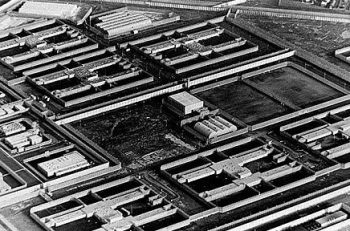
    Hannah Arendt’s famous phrase ‘the right to have rights’ was coined in her 1958 book ‘The Human Condition’. The condition of being stateless, of being a displaced person, which began its modern history in Europe with World War I, has been experienced since by untold millions who have had to listen to the claim that ‘human rights’ are universal and fundamental – but not for them. Once we had the glamorous figure of the cosmopolitan, the person who belonged to the world, the global community; that figure has been displaced by the refugee, who belongs nowhere, but is to be found everywhere in the paradigmatic settings of the modern and contemporary world – the prison camp, the internment zone, the refugee camp, the ghetto, the jail, the arena of suspension where people live in a place that is always outside the country that it is inside. Arendt pointed out that the creation of such places and conditions is a political decision, not just a terrible catastrophe. It is the prevailing form of the penal colony, the new home that we have built to house the theory of human rights. Since Arendt, and most especially in the indebted work of Giorgio Agamben, it has become clear that the concentration camp of the twentieth century was not some historical anomaly, but that it is actually one of the paradigm sites of Western modernity. The internment camp is a zone of suspension, of ‘rendition’, a place that is always outside the country it is inside – Guantanamo is the best-known example, although there many such places – our best- known example was The Maze in Northern Ireland. Those entrapped there expose the hollowness of any claim to universal human rights, to having rights just on the basis of being human. Arendt said it plainly: the refugee, the displaced person, has regularly been denied the right to have rights. The denial is a political decision. It takes its most popular form in the denial that there are any ‘political prisoners’ in the denying country, although enemy countries are full of them. Its political nature has been counterpointed more clearly since 1948, since the United Nations began its series of declarations of Human Rights, unabated since that date; rights of men, women, children, of minorities, of the disabled, of all indeed who can be characterised as having been ‘excluded’, which means that even the ‘poor’, a constituency which enlarges globally by the hour, faster than ever since the almost perpendicular rise of neo-liberalism in the decades before and after the financial crash. Reading these rights, as ‘declared’ (whatever that means), in that bland United Nations universalistic rhetoric, it is hard to know whether to laugh or cry. Such noble vacuities, such actual atrocities – produced by the same state systems that have prevailed since 1945. It was part of Arendt’s long argument, which began in 1943 with her essay “We Refugees” (about Jewish migrants who had become ‘stateless’, that condition in which they had no rights) that asked why European civilisation had so successfully produced the barbarism that made statelessness pandemic and human rights so unavailable to the millions of ‘displaced persons’ of World War II. Part of her answer was that this barbarism was so successful precisely because it was so concealed within or behind the declarations of universal rights and justice which the West, in the case of the American and the French Revolutions, had made central to the powerful ideology of what mutated into Western ‘freedom’. Arendt’s question then was: how could such an ideology be developed (as through the UN declarations) and simultaneously traduced (as in American foreign policy)? It is too feeble an explanation to put it down to hypocrisy. Hypocrisy on this scale occurs when the people who most sincerely believe in the peaceful principles are those who most regularly betray them in violent action. The British spent three centuries in perfecting their international reputation as hypocrites, a nation that believed itself to be peaceful even as it waged endless wars. Now that role has been assumed, largely, by the Americans. But, to achieve world domination is one thing; world hegemony is another. That’s what the World Wars were fought for. Arendt achieved notoriety with her reporting on the 1961 trial of the Nazi Adolf Eichmann, which was published in book form as ‘Eichmann in Jerusalem: A Report on the Banality of Evil’, where she developed the central figure of the ‘desk-murderer’, the bureaucrat who administered the death-camps. But her key point was that this was a show-trial, that pretended to be an example of universal justice triumphing over universal evil. Rather, it was in fact a national victory of the Israelis over their Nazi persecutors. In this exemplary instance, we are shown how the language of universalism can be used as a disguise for a state’s policies. The jurist who had the ambition to do that for a successful Nazi state, Carl Schmitt (1888-1985), described in his ‘Nomos of the Earth’ (1950), how the European system of international law had been replaced by an American one, with the UN as its legislature and the International Tribunal or Court as its executive. In effect, the language of universal rights was used to ratify the aims of American foreign policy; Nuremberg, Tokyo, Damascus, the Hague were, like the Moscow show trials of the 1930s, elaborate pretences that something objectively true was being defended from the current version of sectarian betrayal – war criminality, terrorism, the new terms of ‘war crime’ and its flourishing neighbourly companions, such as ‘ethnic cleansing’. Danilo Zolo has demonstrated in Victor’s Justice how the Kosovo war of 1999, that infamous intervention (to be followed by interventions in Iraq, Afghanistan , Libya and elsewhere, saving the ‘people’ of those countries for democracy, largely by killing and dispossessing them), with its International Court at the Hague, which could try anybody but Americans, is the most egregious example so far of how the language of universal rights has been perverted

    Loading

    Read more

  • Posted in:

    The cost of costs

    Real justice requires access to justice, which requires effective access to courts, which requires that courts be accessible without the threat of prohibitive costs. Some 90%, or an even higher percentage, of people in Ireland have no realistic access to justice, due to the prohibitiveness of the costs associated with legal actions via the courts. The Irish system of access to justice is permeated with unfair procedures, unconstitutional laws, and conflicts of interests, which means that most court users in Ireland are vulnerable users. BalaNCiNG CONFliCTiNG CONSTiTUTiONal RiGHTS: The English rule (Loser pays rule) on legal costs does not balance two conflicting rights – (1) the property rights of winning litigants, and (2) the right of persons to have access to the courts, without being threatened by unpredictable and prohibitive legal costs. Notionally, proponents of the English rule claim that winners are entitled to be 100% vindicated, and so be in a position to cover all their legal costs. However, this is a very narrow view, which fails to assess the big-picture consequences: (a) winners are also threatened, up to the point of winning, and can be threatened as defendants, in circumstances where they have no chance of recovery of costs from penny-less plaintiffs. (b) the English rule creates all sorts of conflicts of interests and market distortions, which enormously inflate the costs payable. (c) wealthy litigants can threaten persons of lessor wealth, with adverse costs, such that the case is determined more often by issues of fear, rather than justice. (d) the state, and most government actors become unaccountable, as the decision makers are immune from costs (lumped ontaxpayers, often, with little transparency), but can pursue political goals, or engage in abuse of power, with no financial downside, and can still threaten all challengers with financial ruin; this inequality of arms, means that citizens are generally unable to challenge the unconstitutional laws and conduct of government. HeNCe, THe eNGliSH RUle iS NOT COMPaTiBle WiTH a Real CONSTiTUTiONal deMOCRaCy: Costs Allocation Rules incentivise Unfair Adjudication Rules which also incentivise Inefficiencies into the system. Because the government is allowed to intimidate its challengers with unlimited adverse costs, it then wants to maximise those costs, so as to bolster its threat and avoid oversight; High Legal Costs has been the default weapon of choice for all governments since the commencement of the state; the “Big Stick” is maintained to bounce its opponents out of the ring, and this has so far been achieved with little condemnation by international institutions, which have largely failed to recognise the stealth threat that prohibitive costs represents as a threat to the rule of law. The Big Stick undemocratically deters citizens and/or NGOs from challenging the government when it passes unconstitutional laws, or acts unconstitutionally – this allows the government to pander to its own electoral constituency while depriving less well represented persons access to rights protection, leading to violations of minority rights and individual rights. When populist demands call for adjudicative processes which affect specific rights of connected groups, QUANGOs are often created in order to parry off populist demands for accessible justice. The substitute QUANGO justice can rarely be as independent as courts, and the outcomes are often secretised, thus bypassing democratic oversight. Hence, the government passes unfair laws for legal costs adjudication, so as to frighten all challengers – this allows it to exercise power with minimum oversight. THe Need FOR CCOS (COSTS CaPPiNG ORdeRS) In the ex parte application by Dymphna Maher [2012], the applicant effectively sought an assurance from the High Court that any adverse costs would not be prohibitively expensive, if her lawsuit was subsequently deemed not to have fallen under the ambit of the special costs regime (related to some environmental cases). Judge Hedigan insisted that there was no legal authority to permit him to make the order sought by the applicant. However, he observed that: “[It was] very arguable that the absence of some legal provision permitting an applicant to bring such a motion, without exposure to an order for costs, acts in such a way as to nullify the State’s efforts to comply with its obligation to ensure that costs in certain planning matters are not prohibitive. As things stand, I have no power to change this”. This case along with 12 other cases was appealed to the Supreme Court (SC) on an ex parte basis – where only one of the parties is heard. The SC held that it could not provide such an assurance, on an ex parte basis, as the other side (the EPA) needed to be heard first. The SC decision in the Coffey case means, in effect, that any person seeing to access the courts in Ireland is threatened with financial ruin, even if just seeking a CCO. The court failed proportionately to balance the right of access to the courts as a right conflicting with the property rights of government, particularly in the context of the need for real separation of powers. The judicial sphere of power is rendered inaccessible to most citizens, when the loser-pays rule is applied to challenges to executive power, and so the judicial sphere of power is inappropriately diminished; this undermines the checks and balances necessary in a liberal democracy between the legislative, executive an judicial functions. SePaRaTiON OF POWeRS By dividing power between these traditional three spheres, the courts, the government, and the Oireachtas, we help to disperse power and make less probable the accumulation of power to one person, or a small elite, as often happens in what are referred to as illiberal democracies. Diagram 1, above, displays the traditional Montesquieu view of three spheres of power. However the (Montesquieu) tripartite division of power, is a poor reflection of reality. This is largely because it generally fails to engage with the level of real power held by each of the three spheres, in practice. A second flaw, is that there should really be five spheres of power, and not three; the people should be seen

    Loading

    Read more