Europe

Random entry RSS

  • Posted in:

    No civilisation in this jungle

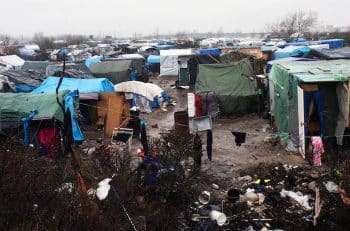
    Hundreds of people line up in a queue as soon as the doors of the van open, each hoping to get a pair of warm trousers. It is a cold November day in Calais, but some of them are wearing just shorts and slippers. In the queue I recognise a Syrian man that I met in the refugee camp on the Greek island of Lesbos just three months ago. He is so thin that it is hard to find him a slim enough pair. But what strikes me even more is his eyes – their sadness and exhaustion – that seem to reflect the cumulation of hardships of the past months, starting in his home country, and now continuing in Europe. That moment of hope and relief, when the overcrowded flimsy rubber dinghy he was on reached the shores of Europe, has now turned into hopelessness at being stuck in one of the worst makeshift refugee camps in Europe, the Calais camp, also known as the Jungle. It’s not a jungle though: it’s more of a disaster zone. Shabby tents and improvised shelters made out of pallets reach as far as the eye can see. The site is far from ideal for camping, the less so during this chilly rain; the sandy ground has become just muddy. Some parts of the camp are exposed to a heavy wind, and people are looking for help to fix their collapsed shelters. There is no electricity. Sanitation is severely inadequate. No more than 40 toilets are currently serving over 6,000 inhabitants – one for every 150, while the UNHCR recommendation is one toilet per 20 users. With only three taps in the camp, there are not many opportunities to wash hands. Litter is everywhere, and some areas are covered with human extracts. At one of the two refuse points of the camp I meet representatives of the Médecins Sans Frontières, who have come to collect the rubbish. They remind me to be careful what I touch due to the threat of scabies and other infectious diseases. A recent investigation by the University of Birmingham, supported by the Médecins du Monde, further highlights detrimental health situations in the camp including the prevalence of ‘white asbestos’, sometimes used to weigh down tenting. As food in the camp cannot be stored safely, much of it carries infective amounts of pathogenic bacteria, causing diarrhoea and vomiting. Several water storage units exhibit levels of bacteria exceeding the EU safety standards, too. The lack of washing facilities prevents the effective treatment of scabies, lice and bedbugs. Many here are suffering from mental illnesses. The makeshift hospital in the camp has the capacity of treating only up to 90 patients a day and there is a constant shortage of medical supplies. It is especially hard to provide treatment for long-term medical conditions such as tuberculosis. Many patients also come in with serious injuries, often resulting from unsafe conditions in the camp, or failed attempts to cross the border. I meet a young boy who has a broken arm, after a failed attempt to jump an England-bound train – a typical case. The United Nations High Commission for Refugees (UNHCR) has continually expressed about the reception conditions for refugees and migrants in Calais, stressing that security measures alone are unlikely to be effective, and urging the French authorities to relocate the refugees to proper reception facilities in the Nord Pas de Calais region and further afield. Some relief is expected from the proposed EU- supported refugee centre, that is expected to be opened in Calais in 2016. It will reportedly be equipped to deal with 1,500 persons. Another alternative would be to involve experienced non-governmental aid organisations such as the Red Cross to act as auxiliaries for the public authorities in the humanitarian field. Charities and voluntary organisations offer an invaluable contribution to the current European challenge, but they cannot be expected to supersede the responsibilities of European governments. Of course, permanent aid mechanisms will be required for as long as the conflicts causing the crisis, sometimes exacerbated by Western military interventions, are allowed to continue. Naiim Sherzai is standing at the exit of the camp, watching the trucks headed for British ports. Sherzai, who comes from the Helmand province in Afghanistan, is a former translator for the British forces, and had to leave the country because of the threat of the Taliban. He now wants to seek asylum in the UK, and ultimately to bring his wife and two children there. He asks whether we could recommend him any legal ways to enter the UK. But in Calais, there are no such routes available for a refugee. Lack of alternatives drives many to desperate acts, trying to hide in the trucks headed for the ferries or the Eurotunnel, or cutting the fence to hide in the trains. At least 16 people have died this year trying to get across the Channel. Tear gas fills the camp regularly as the police tries to drive out refugees from the proximity of the trucks entering the port of Calais. Although the tightened security measures and border controls have decreased the numbers of those who try to leave, groups of refugees lunge for their freedom every night. The rest, like Sherzai, find themselves lost – the road ahead blocked, but with no turning back either. In the jungle. In limbo. Johanna Kaprio

    Loading

    Read more

  • Posted in:

    Europeans Against the European Union. By Ronan Burtenshaw.

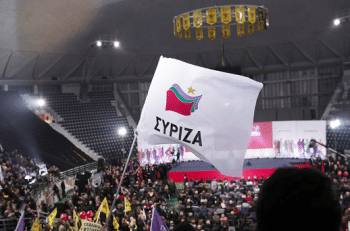
    By Ronan Burtenshaw In late September 2009 I was walking through Dublin as the city prepared for the rerun of the Lisbon Treaty referendum. Outside Dublin Castle I ran into canvassers from Generation Yes, a young, liberal, pro-Europe group established early that year to campaign for the passage of the treaty. Drawing them into conversation you could feel the passion of their arguments. They were the erasmus generation – students and graduates who saw the European Union as an engine of progress for Ireland and a liberator that had broken us from our bleak, parochial past. Rather than the ‘Yes for Jobs’ vacuities many of the main political parties ran with in the campaign, Generation Yes spoke to direct experience living and working in Europe or for European businesses in Ireland. Many of its best advocates came from the tech sector and saw the EU as a vanguard project of a globalising world, breaking down borders, encouraging innovation and providing opportunity. Generation Yes played a crucial role in the landslide victory of 2009. More clearly than any other organisation involved they developed an identity for the Yes camp. The European Union represented a young, modern, idealistic cosmopolitanism. The No camp, as I remember now-Senator John Crown saying on my local radio station, were the past, “Trotskyite communists and right-wing zealots”. So, Lisbon II passed, Ireland’s political elite celebrated, and Generation Yes disappeared. But less than a year later the European Union, so long considered a benevolent actor in Irish politics, imposing human rights with a pat on the head from the continent, came to wear a quite different mask. 2010 brought the Troika. Just five years after its arrival on the scene, the creditors’ union of the European Commission, the European Central Bank and the International Monetary Fund has come to dominate the popular imagination of the European Union. For the peripheral states they made their home their policies have inextricably linked the project of European integration to falling living standards, crumbling welfare states and debt servitude. It isn’t an exaggeration to say that a Generation Yes for 2015 is almost impossible to imagine. A group of the same name might intervene in a referendum, it might even attempt to use a similar message, but it would have to reckon with the fact that the sickly-sweet vision of Europe it once sold has been indissolubly mixed with the bitterness of austerity. It would also have to reckon with a rival identity. Not the eurosceptic Right, a nationalist opponent it had always comfortably beaten in Ireland. But, since 2011, a rival, pro-European identity has emerged which is highly critical of the Troika and the increasingly undemocratic apparatus of the European Union. Last month, in Greece, this movement was given a name: Generation No. The vote in Greece was striking in its breakdown. The average No voter rejecting the Troika’s ultimatum was young, working-class and held increasingly left-wing views. The percentage for ‘oxi’ under 25 was 85, under 35 was 78. These were a new generation, living in conditions of over 60% unemployment, often having to stretch out their studies over many years to afford to complete them, relying on cash from their parents to survive. But also, it is a generation increasingly willing to challenge the shibboleths of our societies – to experiment in unorthodox relationships to the economy, to housing, to politics. The price of building up the reputation of the European Union as an arena of opportunity for Europe’s periphery has been the weight of frustrated expectations when this turned out not to be the case. As a result not just in Greece but in an increasing number of states it isn’t Generation Yes which represents the future but Generation No. This shift in orientation towards the European project is not down to a turn against Europe. In fact, the Greek No vote enjoyed enormous support from across the continent – marches, direct actions, statements from social movements, trade unions, NGOs, academics and intellectuals. Instead what has happened is that the European Union has been stripped back to its essence as a neoliberal economic project. Gone are the pretences of internationalism or a social element – the Greek crisis has demonstrated that bonds of solidarity stretch only as far as is profitable. To understand why this disconnect between growing internationalism of European peoples and the European Union exists, we have to explore its economic basis. The idea of a ‘social Europe’ has never been at the heart of this market-oriented project of European integration. At the same time as Jacque Delors was seducing Europe’s social democrats into this myth in the 1980s, he was trapping them into arrangements they would never agree to without it. First in 1988 the directive mandating for extensive free movement of capital and then, in 1992, the Maastricht Treaty. These arrangements provided the foundation for the euro – a currency which was to drive the stake of neoliberalism into the heart of the European Union. The money in our pockets is the most right-wing currency ever designed, with a central bank that doesn’t care about unemployment and won’t act as a lender of last resort, modelled to work only in the free-market utopias predicted to arrive at Francis Fukuyama’s end of history. It was also forged in two stages of class warfare. On its inception the policies of Agenda 2010 forced wages and conditions down for German workers to create optimal conditions for its export industry. On the occasion of its first crisis the same has been done to workers in peripheral Europe. These divisions – between core and periphery, capital and labour – are key to understanding why the European project has ended up where it has. If we are mystified by the results of the recent negotiations in Greece it is only because so many stories about the euro haven’t been told. Another hidden story takes place in the late 1990s, when German banks took on huge exposure in states like Greece by investing in high-yield bonds. For the business class this meant

    Loading

    Read more

  • Posted in:

    Portuguese parallels

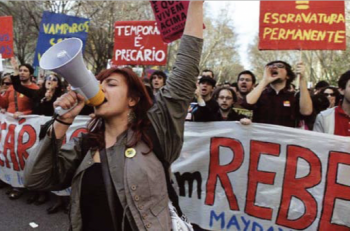
    In 2011 Portugal was at the forefront of Europe’s anti-austerity movement. Yet, four years later, as elections approach in the Autumn, there is no chance of a Left government to ally with Greece’s Syriza or the recent municipal victories in Spain. What went wrong? And can Portugal return to the frontlines? Village’s Ronan Burtenshaw interviews Bloco de Esquerda’s Catarina Príncipe. Q. First, can you tell me how Bloco de Esquerda [the Left Bloc] came about? Several events happened at the end of the 1990s that played into our foundation. The anti-globalisation movement, centred around Seattle in 1999, was important. There was a growing conclusion that we need to find new ways to work together and build projects. Some of these were forums, others were political parties. That was the international moment we were in. Then there was the Indonesia-East-Timor war and occupation. The Portuguese population had its own anti-war movement and sided with Timor against Indonesia. This managed to bring different sections of the Left together to discuss war and campaigning. Finally the failure of the abortion referendum in 1998 was also an influence. There was a referendum to overturn laws banning abortion in Portugal but no broad campaign by progressive or left-wing forces; instead every little group ran their own one. Some of these ran against each other or had clashing strategies. The Yes vote lost, so abortion was illegal in Portugal until 2007. This was the last straw for many on the Left. Q. So how did Bloco form out of these conditions? The definition of Bloco, in its first statute, is a party-movement. It is a broad party that engages with other movements without substituting for or controlling them. It is built up by this grass-roots strength and given a voice in institutions, with a political programme that unites those two domains. Therefore it manages to build strategy together with people who come from very different perspectives, activist histories and traditions. We grew steadily from 1999, when the party formed, until 2011. From 2005 Portugal had a liberal government under the Socialist Party [Portugal’s Labour Party] which had been applying austerity measures for some time before the crisis hit. They used the crisis as an excuse to escalate this. In 2009 we had elections and a broad social mobilisation against austerity. The Socialist Party still won these elections but they didn’t achieve a majority and formed a minority government. Bloco de Esquerda had 10%, the Portuguese Communist Party had 8%, so the radical Left was on almost 20%. Q. What was the result of this growth in support for anti-austerity alternatives? It didn’t mean anything in terms of the programme of the Socialist Party government. In fact, from 2009 onwards they began to impose what they called the “four pacts”, which were packages of austerity measures. The first one cut public spending, the second cut social security, and so on. In parallel they introduced continual measures liberalising the labour market. This produced social mobilisations. We had important Euro May Day demonstrations in 2010. Euro May Day parades are structures we inherited from Milan – colourful, anti-union, involving precarious/ zero-hours workers, quite creative and young, talking differently about labour. Some parts have very Negrian theories, others go with Guy Standing’s idea of the precariat. Our version of this, in contrast to those in Italy, didn’t adopt an anti-union discourse about precarious work but rather tried to ‘add struggles to the struggle’ and forge links with the unions, joining them on the May Day march. We developed a theoretical framework called “precarity in life”, which was a new form of labour discourse. We weren’t just talking about conditions at the point of production – contracts, wages and so on. We talked about the way labour instability affects different spheres of life, and affects you differently if you are a woman, a migrant, or LGBt. We were exploring the relation between exploitation and oppression, developing the particularities of these, but framing it in a new and accessible way. This allowed us to bring together the feminist, anti-racist and LGBt movements with the anti-precarity movement to form the Euro May Day. Euro May Day fed into the first really big demonstration occurring on March 12th 2011 called Geração à Rasca, Generation with No Future. It was started by a call on Facebook by four people, all of whom had some previous involvement in politics but had not been particularly active. It grew exponentially. This was the time of the Arab Spring with all the discussions about the role of new media in facilitating protests so the Portuguese media took this up as our own little experience of it. The organisers were on television almost every day. Soon they realised that they could not organise this phenomenon themselves so they put a call out to social movements and those involved in Euro May Day to help them out. In the end the demonstration had 500,000 people in various places, in a country of around ten million. Q. Was it mostly young people? We were expecting that it would be but in the end it was intergenerational. This proved our thesis in the anti-precarity movement that the issue couldn’t be dealt with in generational terms. There is a particularity to how young people experience insecurity but almost half of the Portuguese working population is precarious right now so you can’t talk about it as generational. The movement was very broad so it was quite apolitical. At the time it was correct to do this but it had limitations. there were no demands, which was necessary because it would not have brought out many people if it was too concrete, but the right-wing also used this space. Two months after the big demonstration they won the snap elections. This was then followed by the arrival of the Troika and the signing of its memorandum by the two right-wing parties who were in coalition [the PSD and People’s Party] and the Socialist Party, who had lost the election.

    Loading

    Read more

  • Posted in:

    Trying to run before it can walk

    BID (Business Improvements District, now known as DublinTown) is a not-for-profit quango, funded by hundreds of retailers in an area, 2,500 of which are compelled by the City Council – acting under the Local Government BIDs Act 2006 – to pay an extra rate to it. Businesses must vote in favour of becoming a Business Improvement District in order for it to be established. BID’s role was originally to ensure that an area would be clean, green and accessible. Its chief executive is Richard Guiney formerly prominent in the Dublin City Business Association and its chairman is Ray Hernan, CEO of Arnotts. Itsboard comprises city business people and councillors including myself and Ciarán Cuffe, as well as Rose Kenny, Dublin City Council Area Manager. The problem is that its principal functions are already dealt with by the City Council. Additional tasks undertaken by BID, a US-inspired initiative much promoted by the City Business Association, include intense cleaning such as graffiti removal, managing the Christmas lights, tackling the anti-social behaviour that obsesses its members, organising festivals, collecting waste, ‘lobbying’ and ‘branding’. Ultimately it seems that BID is more concerned with employing marketing companies to gure out what consumers are buying than it is about husbanding ratepayers’ and taxpayers’ money to make the city a cleaner, safer place with. BID is attempting to run before it has shown it can walk. The problem for its beleaguered compulsory members is that its functions are ill-defined and many claim that despite its expansionary intent it is not delivering on its original functions. Business owners in Capel St recently took the BID to court and won their case, and some are now seeking to exit the BID and be free of the extra rate levy. BID has brought us branded quarters like Dame District, Talbot Area District and the Creative Quarter. It even has ambassadors directing the public to top Dublin attractions. It is improper, against a background of suspicion of local authorities and the indictment of the Temple Bar Cultural Trust for the City Council to collect over €2m as an extra rate levy forBID/Dublintown, but to have no audit control on how or where this money is spent, if only because DCC is the overriding rating authority. I have a motion before DCC calling on councillors to instruct the CEO to forensically audit this company. At its most recent EGM a strong group of members including some on the Board challenged the CEO and the chairman about a process that would give the BID company the legal right to borrow moneyand begin to acquire property, including for a €1.5m headquarters in the former TSB on Lower Abbey St. Serious questions were raised by members of the organisation about whether such functions wereultra vires the objects of the company and the terms of the 2006 Act. The meeting collapsed in acrimony over the issue of allegedly dubious proxies. Tempers were further frayed by the secrecy of BID/DublinTown’s salvo with Dublin City Council into the Christmas Market business at St Stephen’s Green in 2014, franchised to an outfit called Milestone Inventive whose shareholders include Enterprise Ireland. Due to its faux-ski-resort tackiness, over reliance on fast food and beer and close proximity to what is already a very busy commercial area, this so-called Christmas market caused great annoyance to many local rate-paying businesses, including many BID members, to the Restaurants Association of Ireland and car-drivers. Dublin City’s CEO, Owen Keegan professed himself “underwhelmed” by it, and it duly made noises about improving for next year. BID/DublinTown company is primarily interested in Dublin’s big-beast retailers: BT, Arnotts, Clearys, O’Carrolls Gift Shop, the Ilac Centre etc. It appears more concerned with employing marketing companies to gure out what consumers are buying than it is about making the environment of the city a cleaner, safer place. While some of this might be admirable in its place, it is undemocratic and perhaps even illegal to do so with rate-payers’ money that has been compulsorily extracted from hard-pressed businesses. It also gets the City Council o the hook for some of its own delinquent services. Unsurprisingly, the CEO of Dublin City Council is not impressed by BID marketing initiatives or its property adventures, but claims to be legally powerless since itis accountable only to its own shareholders. The BID/DublinTown brand with its limited remit is inconsistent with Dublin City’s own brand of promoting Dublin. The arrogance and indifference of BID’s current leadership has ensured the discontent of many BID members and will ensure their downfall or discontinuance. It is marshalling its diminishing credibility to ‘love bomb’ Sinn Féin, frantic to burnish its business credentials, the biggest group on the Council – one time bolsterers of now disgraced Temple Bar Cultural Trust. As a Board member of BID I have little confidence in the company. A Business Improvement District’s mandate is for a maximum of 5 years. A Business Improvement District wishing to continue beyond 5 years must reaffirm its mandate through another ballot, based on a further proposal. I support the bid for freedom. • Mannix Flynn  

    Loading

    Read more