• Posted in:

    Paean to culturally rich, politically limited patriots

    The paperback version of ‘Handbook of the Irish Revival’ was recently launched at Notre Dame’s O’Connell House, to coincide with their St Patrick’s day festivities and, of course, the commemoration of the 1916 Rising. The volume, an anthology of Irish Cultural and Political Writings 1891-1922, is beautifully produced by Abbey Theatre Press with the look and feel of a hardback though it is very reasonably priced at just €15. As the Abbey director-turned publisher, Fiach Mac Conghail, reveals in his introduction, the book arose from the ‘Theatre of Memory’ Symposium in 2014. During the concluding session Declan Kiberd lamented the fact that so few of the original writings of the Irish Revival were readily accessible. It’s to Mac Conghail’s enduring credit that he rose to the challenge by facilitating Kiberd and his co-editor PJ Mathews. Kiberd, though not a professional historian, has emerged as one of the most authoritative voices on the 1916 Rising, providing us with the clearest insights into the complex and sometimes confused intellectual world of the revolutionaries. He has always contended that for Romantics like Pearse and MacDonagh, both keenly interested in English literature, the Rising was a piece of theatre that could only end in their own deaths. Pearse who was described by one of his admirers as a “bit of a pose” may have been comfortable with the bizarre pageantry of the GPO, but he lacked the skills of a military commander. A prolific writer in both English and Irish, he features regularly in the anthology. It’s a digest of essays and articles, pamphlets, songs and poetry – most of them no more than two pages long – from the great names such as Yeats, Synge, Joyce and some of the lesser known but also influential. Each of the chapters is accompanied by an introduction in much larger font. Indeed, the overall design of the book makes it very appealing. No sooner have you read one chapter than you immediately want more. It’s a book for the serious academic or the ordinary punter who wishes to dip into writings of the period to get a avour of the zeitgeist. As you read it you get the sense, as the introduction states, that these were men and women who “lived intensely in the present moment; took ideas more seriously than their own careers; and contributed brilliantly to debate”. That selflessness, brilliance and intensity is perhaps best reflected in the writings of Connolly, whose prose can hardly contain his obvious passion. Take for an example this sentence from his 1897 essay ‘Erin’s Hope’: “Recognise the right of all to an equal opportunity to develop to their fullest capacity all the powers and capabilities inherent in them by guaranteeing to all our countrymen and women, the weak as well as the strong, the simple as well as the cunning, the honest equally with the unscrupulous, the fullest, and most abundant human life intelligently-organised society can confer upon any of its members”. What it lacks in Orwellian precision it makes up for it in its obvious fervour. This passage is taken from the chapter entitled ‘Militarism and Modernism’ whose introduction identifies the reason for the cultural and political malaise that would soon envelop the new state. “Militarism began to trump modernism”, the authors observe- the men of the the Rising, war of independence and the civil war were better suited to military affairs then forging a modern democratic state: “Mass suffrage came to many areas but soon declined into mere electoralism, as political leaders whose consciousness had been formed more through soldiering than through cultural action, offered ever more dogmatic, ever less thoughtful analyses”. It is easy to ‘idealise the idealists’ at this remove, but it would be foolish to forget that our new State was governed for its first fifty years by the men – the women were written out – of 1916. Socially and economically our new state was illiberal and stagnant, a failed state dominated by the Catholic church. So while this book shows that those who inspired the Rising may have been enlightened, it could also be argued that they were in many ways obstructions to progress. The new State was patriarchal, consigning women to the home and discriminating against them in the workplace. It must have been a disappointment to the women who had campaigned for universal suffrage such as Eva Gore Booth. In her poem ‘Women’s Rights’ from 1906 she portrays male dominance as contravening the natural order: Men have got their towers and walls, We have cliffs and waterfalls. Oh, whatever men may do, Ours is the gold air and the blue. Men have got their pomp and pride – All the green world is on our side’. The new State’s attitude to the Rising has been at times ambivalent. We have moved swiftly from commemoration to revisionism back to celebration. We have also moved from isolated nationalism to become the most globalised country in the world, without pausing for breath or even adequate reflection. The transformation has been staggering. Ireland, the country that its citizens wanted to leave, and whose citizens emigrated in droves, is now a favoured destination for migrants. From the end of the Second World War up the start of the 1960s we were the only state in Europe that experienced population decline. Now one in eight people is a non-national in a population that has grown steadily. This new Ireland is closer to Boston than Berlin and has, as perhaps might be expected, even turned its back on some British virtues. The British tried with some success to introduce a system of planning for urban and rural areas. One only has to contrast the British countryside with its beautifully planned towns and villages with the free-for-all in Ireland, to know that independence embraces the freedom to make a mess of things. And though there are many who wouldn’t change a thing, this strain of individualism is unhealthy in a State that is not just unplanned but saw t to

    Loading

    Read more

  • Posted in:

    Unruly

    What is meant by the Rule of Law and is such a concept honoured in Ireland today? I believe that the rule of law though arguably an unqualified good is not being adhered to in this state save mostly by the judiciary and that the legal system and erratic observance of legality by state officials renders our democracy fragile. In my view Ireland draws close to that amorphous notion, a failed state that cannot in reality uphold the rule of law. This opinion piece will not be a comprehensive pathology but will point out many of the salient practical features which show how the rule of law is breaking down. The Rule of Law: Theoretical Incoherence? We first need to probe the many senses in which the rule of law is described. Joseph Raz, a legal positivist who believes in “perfectionist liberalism” has suggested that the rule of law is merely a kind of shorthand description of the positive aspects of any given political system. From a different vantage point the fundamentalist Christian legal philosopher John Finnis considers that the rule of law is: “[t]he name commonly given to the state of affairs in which a legal system is legally in good shape”. Another philosopher Brian Tamanaha chimes to negative effect that the rule of law is “an exceedingly elusive notion” which leads to “rampant divergence of understandings” and is similar to the amorphous concept of Good in that “everyone is for it, but has contrasting convictions about what it is”. At bottom, there is no consensus: it is elusive at best: a form of smokescreen or professional hypocrisy at worst. But let us endeavour to be constructive. For example Carothers, though sceptical, adds a worthwhile positive definition of the rule of law as: “a system in which the laws are public knowledge, are clear in meaning, and apply equally to everyone. They enshrine and uphold the political and civil liberties that have gained status as universal human rights over the last half-century. In particular, anyone accused of a crime has the right to a fair, prompt hearing and is presumed innocent until proved guilty. The central institutions of the legal system, including courts, prosecutors, and police, are reasonably fair, competent, and efficient. Judges are impartial and independent, not subject to political influence or manipulation. Perhaps most important, the government is embedded in a comprehensive legal framework, its officials accept that the law will be applied to their own conduct, and the government seeks to be law-abiding”. Now let us stress-test certain aspects of this detailed expurgation against the patient – in this context Ireland Inc. Yes of course rights exist in our still fine, if shopworn, constitutional matrix and are enforced by the courts in many instances but there is also an undue deference to the executive that has led to the non-enforcement of social and economic rights particularly the right to housing by the courts. There is an excess of judicial caution on other rights-based claims, particularly where issues of financial iniquity and the countervailing amorphous blob, public policy, are implicated. There is also widespread violation of privacy by the state and its police force, in particular. The overly sanguine way we as a nation have accepted, in effect, what has been police and state criminality with respect to privacy for the last thirty years without widespread outcry is baffling. At least there are signals of an upsurge in civil disobedience, which when peaceful, as Habermas, the German sociologist of critical theory and pragmatist, would contend, leads to a vitalisation of democracy. Not here. Further, the scandal that is our banking structures, the disgrace of the banks varying interest-rate repayments in breach of agreements, the sometimes unconscionable evictions, are not conterminous with the rule of law. NAMA is a mess formulated by the neoliberal club which did its best to avoid a proper new deal for the Irish people. The banking inquiry was a poorly performed French farce. What is desperately needed is a right to housing. Eviction should be rare, require rehousing, and should only follow meaningful intervention by an arbitrator who can determine whether the consumer can repay and whether the bank – with or without the enlistment of a vulture fund – is bundling the mortgage at a bargain-basement rate to private-law profiteers. Further, many of our state institutions have major structural problems. The Garda are not progressive in training and intent: they do not seek justice or the truth, but rather a result. They, at times spin, embellish or at worst, manufacture evidence – and, to be candid, at times act criminally and in violation of the rule of law. Finally, there are limited independent checks and far too close a nexus between politicians and the police. The recent moving of the deckchairs by the Garda Commissioner will not change the culture or training of the force, its group think or, arguably, its competence. It needs a radical ovehaul and a redirection so primarily promotes truth- seeking, investigative process. The impartiality and independence of our judiciary needs at times to be severely questioned because there is far too close a nexus between politics and judicial appointments. Though most are appointed on merit, many of our judges are appointed for their proximity to political parties. Further, some judges have an aggrandised sense of themselves: certainly they are not servants of the state as that is not a judicial function, but rather, they are the servants of the constitution which is a bulwark to protect the people against state excess. Judges also need, in the interest of public confidence as to their impartiality, to declare their share-holdings and indebtedness to the banks. Moreover, parts of the government left itself open to the accusation, during the bugging crisis, that it was also mired in corruption. In the strictest sense it observed the rule of law but, in manner, it laid itself open to the criticism levelled elsewhere by the late great Christopher Hitchens of being crypto-fascist, pursuing a

    Loading

    Read more

  • Posted in:

    Independent Living

    2016 marks another anniversary, the 20th anniversary of a ‘Strategy for Equality’. This was the report of the Commission on the Status of People with Disabilities. Their task was to establish what life was like for people with disabilities in Ireland and to prepare a roadmap to equality for people with disabilities. Before deciding on the appropriateness of any celebrations, it is timely to ask a question: has Ireland become more equal for people with disabilities? The Commission took what it described at the time as “the unusual step” of consulting with people about their ‘lived’ experiences. It reported that people with disabilities experienced outdated social and economic policies and public attitudes, and pointed to “justifiable anger” felt by people with disabilities and their families. In the intervening years a multitude of laws and policies have been introduced but the question remains. Let me state it again: has Ireland become more equal for people with disabilities? A cursory look at the Strategy and subsequent developments would suggest that quite a lot has been achieved on many of its recommendations. A National Disability Authority (NDA) has been established, a Disability Act was passed into law, a National Advocacy Service was established, and a swathe of legislation was brought into force on equality, assisted decision-making and education. However, if you dig a little deeper, there is a different story to be told. Most of these measures were poorly thought out or half-implemented. The Disability Act 2005 created little by way of the rights-based legislation envisaged. Instead it provided a basic right to a person with disabilities to an assessment of need. However, no rights to services follow on from that assessment. Even this limited ‘right’ to an assessment has been only partly commenced and currently just caters for children. The Strategy envisaged an independent advocate for people with disabilities. In 2007 the Citizens Information Act was passed. This provided for “Personal Advocates” with statutory and wide-ranging powers. Four years later a limited non-statutory service called the National Advocacy Service was commenced. A total of 35 advocates operate across a country where there are an estimated 600,000 people with disabilities. The Education for People with Special Educational Needs Act 2004 has been stalled indefinitely. This means that children in mainstream schools struggle to get educational supports. Successive Governments have failed to address the issue of the cost of disability. Many of the manifestos for the recent election used the term “cost of disability” to describe plans to give people an extra ten euro on their welfare payment. This is a regrettable approach. Cost of Disability demands than an increase in welfare payments. It requires a genuine recognition that having a disability can be expensive and moving to alleviate that additional expense. The Strategy recommended that the Department of Environment develop a policy with “the right of people with disabilities to live as independently as possible” as its aim. In 2011 the ‘Congregated Settings’ report was published by the HSE, the agency responsible for care services. This was premised on moving people with disabilities back into the community. Progress on this ambition has been unacceptably poor. The Fine Gael manifesto for the recent election includes a target for 1/3 of residents to move back into the community by 2021, three years after the initial deadline for moving all residents. This is an acknowledgement that the policy has failed and that a generation of people will probably die in institutions. The Strategy stated that ful lment through relationships and sexuality is a basic right. Since 1993, the criminal law has cast a legal shadow over sex and people with disabilities, particularly those with intellectual disabilities or mental illness. The law has provided an easy excuse to opt-out of providing sex education that would strengthen their ability to protect themselves and possibly open the door to a ful-filling, intimate relationship. This is a bleak landscape, but it’s not all negative. We are beginning to win the ideological battle. Concepts of person-centredness, independent living and autonomy are creeping into the parlance of the body politic. The battle now must be to get our partially commenced legislation fully implemented. This will involve resources in many cases and a change in culture in others. Any marking of this 20th anniversary of the ‘Strategy for Equality’ must reflect that not much has changed and must pose the challenge to find the political will for equality. We have all the tools at our disposal. Sarah Lennon Sarah Lennon is Training and Development Of cer with Inclusion Ireland

    Loading

    Read more

  • Posted in:

    Post-election 2016

    The general election was tedious and it’s not really clear what message it purveys. The electorate seemed jaded and the politicians delivered no memorable new policies, apart from Renua’s utterly regressive at tax proposal. Village believes that elections should be all about ideas, ideology, policy (and how best to implement them). In these terms the election and its participants were a two-out-of-ten failure. Commentators from the equally idea-free media have interpreted the results in heterogeneous ways. Every sort of theory and cleverality was deployed to describe the drearily and precariously hung Dail: a triumph of democracy, a triumph of social democracy, the end of the civil war, the end/beginning of the beginning/end of the civil war. The perennial smart view that the electorate has failed the parties got several outings. If the second-rate sages had been able to they would have loved to interpret it as a triumph of angry white men. They couldn’t. Some saw it as a victory for the small parties and independents. But the Social Democrats did not increase, Renua was wiped out, the Greens gained only two seats in an era of climate-apocalypse. The People Before Profit/ Anti-Austerity Alliance finished up with only one more seat than they had before the election, and Direct Democracy did not gure. Before the election these were the only small parties. The truth is that this election was a triumph of the interchangeable FF/FG (FG/FF) duopoly, though its trajectory has been definitively defined as downward. Ideology is what political parties apply when they run out of policies. Since most of the parties’ manifestos are short and the events to which policies must be applied are unpredictable it is reasonable to expect that your candidate will have an ideology to guide her. Village for example favours an agenda of equality of outcome, sustainability and accountability. The ideology is comprehensive, it provides a solution for any situation, and a template against which policy formulation can be benchmarked. Candidates shouldn’t have to reflect Village’s ideology, but they’d be better having some sort of one. Neither civil-war party has an ideology. It is impossible to know what they will do once elected. How, therefore, could anyone who does not live under a stone be enthusiastic about a government of FF and FG? FF is a conservative party that believes in so little that it surrendered its entire ethos to a culture of provincialism and cronyism, last time it was in government. It believes in no more now so, though it is touting a centre-left agenda there is every danger it will return to populism, short-termism and promoting the only agenda it understands – the interests of the people its representatives actually know – a cronyist populism that always finishes up favouring those who shout loudest. It is naïve to think of FF as Micheál Martin and when it is the movement it has always known itself to be, of Eamon OCuív, of Barry Cowen, of Pat ‘the Cope’ Gallagher; and tens of marginally more presentable sons and daughters of best-forgotten FF dynasts. Kevin O’Keeffe, son of Ned O’Keeffe, anyone? FG is a conservative party currently dressed up as a Christian Democrat party. The ethos is exible enough that under Garret FitzGerald it was in effect Social Democrat. In its latest incarnation it has been right of centre, at a time when most people want fairness and an improvement in services. It failed to deliver an agenda of accountability and its representatives seem to believe in little beyond sound money, ‘Europe’ and law and order. Having once appeared to be purer than FF it is now tainted by the Moriarty Tribunal report and a perceived ongoing proximity to Denis O’Brien, Ireland’s richest man, as well as by its large number of low-grade County Councillors, whose corruption record is a hairsbreadth from as bad as FF’s. Though essentially conservative, both FF and FG contain some social democrats and liberals in their midst. These aberrations and those who vote for them are delaying the day a real Social Democratic party with coherent left-of-centre platform can become a force that could anchor a government. On the other hand it is clear that more people than is desirable voted FG in 2011 to get FF out and then FF in 2016 to get FG out. These people need to acknowledge that they are forces forconservativism. The incarnation of this is the dangerously articulate Éamon Dunphy who apparently voted FF in 2016 because he really believes in People Before Profit (or Sinn Féin. It isn’t clear). Anyone who thinks that FF was the solution to our problems in 2016 is part of the problem. So what next? FF and FG should merge as a conservative party though even coalition is for the moment some way off. FF is tactically sharper than FG and FG is in retreat so it is likely FF will tantalise FG to weaken and demoralise it during this Dáil. Nevertheless the (non-)ideological compatibility of the parties has been exposed and will generate its own momentum. While allowing this momentum its space the Left of all hues must use the logic of the momentum against FF and FG, and social democrats must colonise some of the space the dinosaur parties have occupied for tragically long.

    Loading

    Read more

  • Posted in:

    Their daughters’ fathers

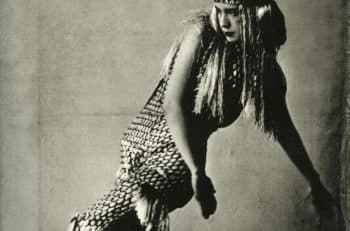
    Way back in 2004, I wrote an article for The Sunday Business Post, entitled ‘Play Boys, but few Play Women’ highlighting chronic gender imbalance in Irish Theatre, on the occasion of ‘Abbey One Hundred’, a virtually all-male programme celebrating the centenary the Abbey Theatre, (apart from one children’s play by Paula Meehan, and a shared run for Marina Carr’s ‘Portia Coughlan’ at the Peacock Theatre). That was before the dawn of social media, and my article, a lone voice in a sea of unquestioned misogyny, was received with resounding silence. Unfortunately, ‘his’ story has a habit of repeating itself, and more than a decade later, on October 28th, 2015 the Abbey Theatre proudly announced ‘Waking the Nation’, its – surprise, surprise – virtually all-male 1916 commemoration programme (apart from a lone monologue by Ali White entitled “Me, Mollser”, jutting out of the programme like Elizabeth O’Farrell’s incongruous little feet behind Patrick Pearse’s iconic 1916 surrender photograph). Nearly as bad was the playing of O’Farrell in both Jordan’s ‘Michael Collins’ and the recent ‘Rebellion’ series on RTE by men. This time, however, Twitter and Facebook ignited with rage at the outrageous gender imbalance, bringing an exciting counter-movement into being, with its own hashtag #WakingtheFeminists, abbreviated, wonderfully, to #WTF. Wasting no time on this occasion, Mná na hEireann, had a “storming of the Bastille” moment at the Abbey Theatre on November 12th, 2015, when over 30 female theatre professionals took to our national theatre’s stage, and the 450-seater auditorium over-owed with women demanding an end to this unacceptable gender imbalance, for ever. A contrite Fiach Mac Conaghail, director of the Abbey Theatre, sat in the auditorium and listened. After each of the 30+ women on stage had had their say, he stood up, looked up, and admitted: “I wasn’t thinking about gender balance. I did not look up. I failed to check my privilege. And I regret that”. If theatre holds up a mirror to society, this recurring gender imbalance at the Abbey Theatre is indeed a perfect reflection of Irish society, and the nature of Irish cultural ‘His’story – so far. We need look no further than to the iconic 1916 surrender photograph of Patrick Pearse for confirmation of this, with its dodgy silhouette of self-effacing inner city nurse Elizabeth O’Farrell who braved snipers to deliver the surrender order throughout Dublin’s rebel garrisons, only to be airbrushed out of the official surrender picture as published by The Daily Sketch. I was delighted to hear artist Jaki Irvine speak of Elizabeth O’Farrell and her 2013 book about the fearless nurse, ‘Days of Surrender’ (as yet unreviewed in Ireland), from the Abbey stage in its Theatre of Change symposium in January. Irvine is going on to set Elizabeth O’Farrell to music, along with her other female 1916 colleagues in her installation “If the Ground Should Open”, at the Irish Museum of Modern Art in September. Like Elizabeth O’Farrell who may indeed, as some claim, have deliberately taken a self-effacing step back when that 1916 Patrick Pearse surrender photograph was taken, making it easy for her little feet and large coat skirts to be airbrushed out of our Cúchulain- style national mythology, Lady Gregory (co-founder of the Abbey Theatre) did not actively seek recognition for co-authoring her iconic 1902 play ‘Cathleen Ni Houlihan’ with WB Yeats either. Similarly, a few decades later the self-effacing but fascinating George Yeats chan-nelled a myriad of voices to – yes – CO-AUTHOR ‘A Vision’ (1937), with her husband WB Yeats, but is rarely acknowledged as having done so. Like Elizabeth O’Farrell, the formidable George Yeats (about whom I am making the rst ever radio documentary, entitled ‘Georgie’s Vision’, funded by BAI Sound and Vision, for broadcast on RTE Lyric FM in Autumn 2016), took a step back, and went so far as to say “thank-you for leaving me out”. But – #WTF – is this shyness reason enough for the rest of us to facilitate, and hence perpetuate, the inaccurate masculinisation of, and erasure of women from Irish cultural history? Another important figure eclipsed by men is Lucia Joyce who could be Ireland’s answer to Camille Claudel, the well-regarded French sculptor who spent 30 years in an asylum (also Rodin’s lover and elder sister to poet, Claude Caudel). Lucia could not have been more different from her mother, Nora, whose entire raison d’être was her man, James Joyce. As well as his lover, cook, maid, and mother to his children, Nora was also James Joyce’s muse, most obviously inspiring Molly Bloom. Even in the Joyces’ modernist milieu, it was alright for a woman to be a muse, but not an artist herself, and certainly not an artist of the body (though in his masterpiece, ‘Ulysses’, James Joyce wrote the epic of the body). A modern young woman in 1920s Paris, Lucia expected her own career and identity, though she had grown up in weirdly close quarters with her unconventional family, and very much in the shadow of her father. When she protested “c’est moi qui est l’artiste”, alas, nobody listened to her. Tragically, Lucia Joyce (1907 – 1982), was never allowed to ful l her dream of being a professional modern dancer, despite her training with greats Emile Jacques-Dalcroze (founder of Eurhythmics); Raymond Duncan (brother of Isadora, who himself lived like a modern-day Ulysses in his Paris commune “Akademia Raymond Duncan”); Margaret Morris (grand-daughter of William Morris and founder of www.margaretmorrismovement.com); despite her seasons dancing with “Les Six de Rythme et Couleur”, and despite reviews like this one in the Paris Times: “Lucia Joyce is her father’s daughter. She has James Joyce’s enthusiasm, energy, and a not-yet-determined amount of his genius… When she reaches her full capacity for rhythmic dancing, James Joyce may yet be known as his daughter’s father”. Instead of being given the space to realise her ‘full capacity’, Lucia, who grew up immersed in iconoclastic counter culture and the avant-garde, found herself consigned to mental institutions – for life. Interestingly, after her father’s death in

    Loading

    Read more

  • Posted in:

    FF won’t see coalition as an ideological issue and FG is glued to stability

    The most extraordinary coalition formed in Ireland was the first one, in 1948. It involved Fine Gael and a then-new party headed by Sean McBride, Clann na Poblachta. The Clann was a lively mixture of liberals, left-wingers and Republicans with a deep immersion in the IRA. The surprise with the Clann was that its youthful enthusiasm and vigorous campaigns against partition very nearly toppled De Valera from his then hegemony over Irish politics. McBride himself was a former IRA Chief of Staff who subsequently cut out a career for himself as an international eminence becoming a Nobel Prize laureate and founding member of Amnesty International – the campaigning global Human Rights body. Because of lingering republican bitterness against General Richard Mulcahy’s role in the civil war, Mulcahy, the Fine Gael leader, stood aside to facilitate a coalition with the Clann and its tooth and claw republican militants. John A Costello became Taoiseach in the coalition instead. The point of all of this is to illustrate that, from the very outset, coalition formation in Ireland has been a pragmatic business where big parties and small ones dispense with ideological or philosophical differences in order to provide an alternative government and run the country. Down the years few, if any, Fine Gael or Labour leaders worried too much about the differences of left and right when it came to forming a government designed to extract Fianna Fáil from prolonged periods in power. In 1989 Charles Haughey led Fianna Fáil for the first time ever into a coalition arrangement with the Progressive Democrats, stating cheerily: “Sure, it was only me that could have done it”. His party colleagues resisted it furiously believing non-participation in coalition an absolute core value for the party up to that point. The bitterness of doing this coalition was magnified by the presence of Des O’Malley and his new party – composed of individuals who had fought Haughey, then split from him to create their own party. For Haughey it was just another deal but for the Progressive Democrats, who claimed to be policy-focused, it was about taxation and other precious policy items, including a public Tribunal into the goings on in the Beef Industry. Haughey worked hard to save his own skin and persuade his ministerial colleagues of the merits of going into coalition. Apparently at one stage in the discussions around the cabinet table he held out his arms sideways demanding in relation to the opposition: “D0 you want to give them all of this?”. Shortly afterwards the new Taoiseach Albert Reynolds formed a coalition with the Labour Party which followed an election in 1992 which featured advertisements generated by Fianna Fáil scaremongering about a left-wing takeover of the country by Labour. This was no small tactic and involved giant billboards and full-page newspaper adverts in a bid to frighten voters in a move that was redolent of the ‘red scare’ tactics of the 1950s and 1960s. During the actual campaign my father, the late Brian Lenihan Senior. When all about him were these banner advertisements called for an alignment with Labour rather than the PDs. His rationale was that Labour were more compatible with FF than what he viewed as the “Thatcherite ” Progressive Democrats. He was dismissed by the party bosses during the campaign only to find himself instrumental, behind the scenes, after the election in putting the coalition deal with Labour together. Albert Reynolds, a businessman, proved to be very pragmatic when faced with the post-election numbers and getting back into power. My father had key relationships and friendships within the Labour Party and within the labour movement generally. These relationships and ability to communicate became vital to the formation of this government. When people set out to cross party divides there is a need for credible and dependable intermediaries who can give assurances on policy and how the share out of ministries will play out when the negotiations get real. This was my own experience when I set out, at the request of Bertie Ahern, to put in motion the process of having a coalition with the Green Party in 2007. In fact the groundwork had begun in the immediate aftermath of the 2002 election. Ahern was already entertaining doubts about the future sustainability of the PD coalition because of problems with both policy and numbers. I knew a number of the key figures in the Green Party, including Trevor Sargent and had been in university with both Eamon Ryan and John Gormley. Part of the reason for having a coalition with the Greens was a concern within the party about the right-of-centre nature of the PD coalition, as well as a fear that the party was already becoming too visibly identified with the building industry and big capital. It was also made easier by the overarching atmosphere of mainstreaming environmental or green issues. When the post-election numbers showed a Green coalition was necessary Bertie pressed the buttons and appointed a skilled and experienced team of negotiators so that his own ministers were locked into the items agreed with the Greens. The government itself worked well together though it has to be said it was much more difficult for the Greens to get the coalition deal past their activists than it was for Bertie to get it past his parliamentary party. Rural TDs were the most resistant regarding Green policies on farming incentives as tantamount to treason. In the event they overcame their difficulties. As with the previous Labour Coalition, outside of the main negotiations, a series of reliable and discreet intermediaries were on hand to smooth out any issues that arose in the talks. Ahern himself was a very accomplished negotiator. General Election 2016 has been dominated by speculation of a grand coalition between the once very dominant big parties of Fianna Fáil and Fine Gael. The fact that both parties combined now count for slightly less than 50% of the popular vote has hastened a frenzy of speculation about such a

    Loading

    Read more

  • Posted in:

    How to save Irish

    Latin, a dead language, is taught in thousands of schools. A Latin online news bulletin gives the world’s news and carries ads. A radio station broadcasts the news weekly in Latin. Latin enthusiasts organise social gatherings. But despite all this, Latin remains a dead language. Is Irish on the way to becoming that? Most of us don’t want to speak Irish, but we like to have Irish in our lives. We cherish it, the surveys show, as a precious part of our national heritage. We are glad there are Gaelscoileanna, a Radio na Gaeltachta and a TG4; that the destinations of buses are shown in Irish as well as English, and to hear that there is a news-and-comment magazine in Irish on the internet. We would not like everything in Ireland to be in English only. However, it is one thing for a minority language under pressure by a dominant language to give pleasure to those who speak and write it and to comfort others by its presence in their lives. It is quite another for that language to live into the future as many of us hope it will. To do that it must at least be the spoken language of a sizeable self-renewing community as Latin, for example, is not. With the former Gaeltacht districts now completing Ireland’s shift from Irish to English, the Irish language has no such community. This fact constitutes an emergency for lovers of the Irish language; an emergency that needs to be countered by dramatic new action – not by the State which has lost interest in Irish but by the lovers of the language themselves. The most valuable achievement of the Irish language movement is that there are now several thousand men and women throughout Ireland who speak and write Irish well; that is, as correctly, and with as wide a vocabulary, as the average educated user of any other European language. Collectively, these people in their speech and writing are a national treasure because they embody the Irish language alive today. Indeed, because of their wide diversity of circumstance and occupation, they embody it more fully than any Gaeltacht ever did. The initiative that is called for is to convert this national human treasure, which embodies the Irish language as it is today, into a living ‘language bank’ that yields high interest—is self-renewing— through adding new people to its number each year. For a start, it would be a matter of establishing – insofar as now possible and with the personnel now available—the kind of community that is necessary for ensuring the continuance of Irish as a living language. The personnel available for that are those several thousand men and women who speak and write Irish well. Identify a thousand of them and obtain their consent to be jointly responsible – together with others whom they would admit to their number through an annual examination – for the survival of Irish as a spoken and written language. Have them agree on a collective name for the language community they would form; undertake to hold general and regional conventions; and choose a discreet badge that they would wear on their clothing to identify themselves to each other and to people generally. That badge would become a mark of positive distinction. The annual entrance examination for new members, which would become a big national occasion, would provide a prestigious goal for Gaelcholáistí and for the university courses in Irish. Apart from the holding of its conventions, this body of Irish-language perpetuators would carry out its remit simply by living, speaking and writing, and growing annually towards an initial complement of, say, 8000 members. The present Irish-language activities and occasions would continue undisturbed. Because the members of the language community would not be living next door to each other, they would not be a self-renewing community of the ideal kind. But it would be the best that can be done under present circumstances. The annual entry exam would give the secondary Gaelscoileanna and the university courses in Irish a concrete and prestigious goal to aim at. In time the initial goal of 8000 members might well need to be extended. It must be clear that unless this scheme or something like it is implemented, the spoken and written Irish language will enter in the coming years a period of gradual, ragged, ignominious, death, with very minority-interest programmes on radio and television recalling the real thing. Desmond Fennell Dr Desmond Fennell’s last book was ‘Third Stroke Did It: The Staggered End of European Civilisation’. www.desmondfennell.com

    Loading

    Read more

  • Posted in:

    Band Aid

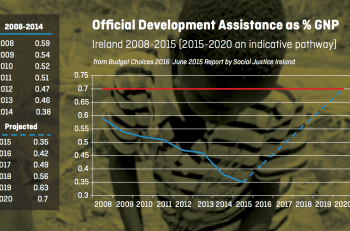
    62 people now own the same wealth as the poorest 3.6 billion people. 1% owns more than 99%. The gaps are widening. Talk of overseas aid may seem like trying to use a sticking plaster to plug a haemorrhage. In a world of trickle up economies with ever growing needs driven by conflict and climate, aid remains critical. Despite the critiques of aid in the past decade, without it, many of the Least Developed Countries, would collapse. This Government is not without achievements in Official Development Assistance (ODA). Following the financial crash in 2009, the aid budget was an easy target and was slashed by 30% in the 2010 budget. Those affected by cuts in the aid budget are not visible and certainly won’t arrive at Leinster House on their tractors. Several Irish NGOs were also downsized and their aid programmes closed as a result. Following that significant cut, however, the aid budget was stabilised at around €600m. This was made possible by cross-party support and opinion polls which showed the tacit support of the public. Over 80% of people in Ireland regularly state they are in favour of aid. They may not raise it on the doorsteps, but they see it as the right thing to do. On the other hand, all OECD countries are committed to giving 0.7% of Gross National Income (GNI) in ODA and we have failed to reach this target. The commitment is a long-standing gold standard in international development and one which many countries had been close to achieving before the financial crash. In 2009, Ireland was giving 0.59% of GNI in ODA. The target, as a percentage, is set up to be cyclical. Countries will give according to their means as their economy expands and contracts. The commitment to reach the 0.7% target was in the Programme for Government of the current Government, with a target date of 2015. However, there has been no real commitment. The economy is now growing yet the aid budget has remained at. We increasingly and significantly lag behind the OECD target. Our aid provision now stands at 0.38% of GNI, the same as in the early 2000s. A new commitment to reaching the target within the life time of the next government is essential. Significant improvements have been made in the quality of Ireland’s aid programme over the lifespan of the current Government. International trends reflect shifts towards concessional lending and private-sector engagement. However, Ireland’s aid programme has become more poverty-focused. This is both in country focus, with one of the highest rates of funds going to Least Developed Countries, and in the types of programmes it funds. The aid programme has bucked the international trend of skewing aid to serve the needs of the donor country and has remained highly poverty-focused. ‘One World, One Future’, the Irish Aid policy, was launched in 2013 following a public consultation. It sets out Ireland’s priorities in overseas development. The commitment to addressing hunger is clear. The current Government spearheaded the drive to address hunger globally and led on international initiatives such as ‘Zero Hunger’ at the UN. It has become a leader in this area and ensured that this initiative was central to the new Sustainable Development Goals signed in New York last September. Questions have been asked, however, about the involvement of Irish Aid in the corporate- backed Global Alliance for Climate Smart Agriculture, which has received much criticism from global civil society, and attempts to link this to the hunger agenda. The biggest gap, however, is the failure to embed the priorities for development in all government departments. While both the Irish Aid Policy, and the ‘Global Island’ policy, the core foreign policy statement, boast commitments to development and human rights as a “whole of government effort”, little has been done to implement it. This incoherence is stark. As Ban Ki Moon, the UN Secretary General said during his visit to Ireland last May: “One cannot be a leader on hunger, without also being a leader on climate change”. Coherence demands that our commitment on global hunger is matched by a commitment to funding programmes for climate adaptation and resilience matched with equal effort to reduce our own emissions. Aid remains essential. However, if aid is to be effective it requires commitment as well as joined-up thinking across all policy areas. This challenge must be addressed by the next Government. Lorna Gold Lorna Gold is Head of Policy and Advocacy with Trócaire

    Loading

    Read more

  • Posted in:

    UNrealistic

    At the end of last September, under the shadow of the glimmering New York skyline overhead, the world celebrated the dawn of a new era. The UN Summit on the Sustainable Development Goals (SDGs) concluded with a massive party in Central Park, graced by the presence of superstars such as Ed Sheerin and Beyonce. The party was sponsored by Gucci, Citi, Unilever, Google and others. Many of their super-rich executives could well have been watching the party from their high-rise apartments in that most elegant part of the planet. Some people had paid upwards of $10,000 for VIP passes to the party. All proceeds went to charity, of course. There was no whiff of a world on the brink of collapse, threatened environmental destruction and violent extremism, the one that had been so eloquently articulated by Pope Francis in his landmark address to the UN General Assembly the previous day. The gap between the optimistic, almost euphoric atmosphere in some UN quarters and the pessimistic, almost despairing perspectives of others, including Pope Francis, was palpable at the Summit. On the one hand, famous business moguls, UN officials and many states, including Ireland, lined up to hail the goals as a new beginning. On the other hand, many wondered whether yet more goals would make any difference at all or even whether they would take us in the wrong direction altogether. Whatever your perspective, the SDGs are now a universally agreed UN document. For the most part, they set out important objectives for the world, 17 in all. They point to all the critical areas of human development that must be addressed if we are to tackle inequality, poverty and environmental destruction. They set 167 indicators of progress which are to be monitored and followed up annually. Importantly, for the first time ever, they promise to “leave no-one behind” and put a deadline of 2030 on achieving that goal. While as individual objectives the SDGs are desirable, as a global policy framework they are deeply flawed in at least four ways. Firstly, the sheer number of goals agreed and the lack of real interconnection between them has turned them into a shopping list. Everything becomes equally important. Yet the truth is that global imperatives exist. There are critical enablers which everyone needs to address alongside second-level priorities, which can be reached only on condition the first are being achieved. So the SDGs create a kind of policy fog in which it is hard to see the wood from the trees. Secondly, despite years of debate, the goals fail to resolve the decades old conundrum of sustainable development. This is the fact that ‘economic’, ‘social’ and ‘environmental’ dimensions do not really sit side by side or form interlocking circles. The ‘economic’ and the ‘social’, in reality, are dependent on the ‘environmental’. We need to move away from the inadequate cliche of interlocking circles to a ‘doughnut’ model as put forward by Oxfam. There is no overarching agreement in the SDGs that we need to move towards a world which lives within planetary boundaries. This is a real opportunity lost. Thirdly, however worthy the SDGs are, they are weak voluntary initiatives rather than an international treaty. Of course, voluntary initiatives have an important role in setting norms, but they only thrive when the environment is conducive to their realisation and are matched by strong implementation measures. The goals are debilitated by dysfunctional power structures, which render them a side-show, if not quite irrelevant to the main drivers of power. Unfortunately, important policies are being actively promoted by the same states that signed up to the SDGs and whose actions elsewhere directly contradict many of the goals. One alarming example is the emerging rules on global trade and investment, epitomised by the Transatlantic Trade and Investment Partnership (TTIP), which is being negotiated between the EU and USA. Controversial proposals within TTIP include Investor State Dispute Settlement mechanisms. These will effectively facilitate MultiNational Corporations to circumvent domestic court systems and sue sovereign states through a confidential arbitration mechanism in challenging governments for introducing regulations that in multinational businesses’ view harms their interests or profit margins. This raises concerns about the state’s right to regulate on a wide range of public policies, including extreme poverty and environmental standards. SDGs do not even enter into these negotiations. Another example is continued state subsidies and investments in fossil fuels. If remaining below the agreed 2°C-increase target for global temperatures is to be possible, a basic pre-requisite for the SDGs, 80% of known remaining fossil fuels need to remain under ground. Yet in 2014 the global economy missed the decarbonisation target needed to limit global warming to 2°C for the sixth year running. Fourthly, the respective roles of the state and the private sector in SDG development and implementation is deeply concerning. The visibility of the private sector and the pledges made in New York reflect the way that major corporations have managed to skew the agenda. One official pledge made by MasterCard at the SDG Private Sector Forum to bring 500 million people in the developing world into the credit market, thus enabling them to achieve Goal 8, is indicative of this. A pick-and-mix approach to the SDGs is already evident, facilitating corporations to use them to their marketing advantage while not addressing basic human rights and issues such as lack of accountability. The UN appears to have already relinquished control of its own message about the SDGs to the corporate sector through its ‘Global Goals’ campaign. This was launched during the Summit. In signing a licensing agreement for the Goals with key sponsors such as Gucci, Citi and others, it effectively delivered the SDGs, a key global public good, into private ownership. A clause in the campaign agreement means that those who use the goals’ branding must do so in ways which do not damage the partner brands. Technically speaking, therefore, if an NGO such as Trócaire or Christian Aid, draws attention to the systemic problems of corporate power whilst using the goals’ branding, they are in breach of the licence. Though it

    Loading

    Read more