Village Magazine

Random entry RSS

  • Posted in:

    Proud of liberalism; hostile to hate

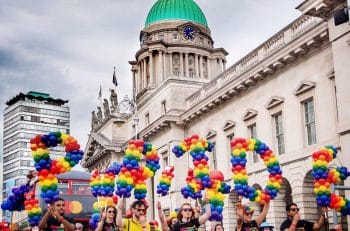
    Editorial from Village July-August 2023 Edition The case for gay rights, pioneered in the 1980s in this country by David Norris through the courts and the European Convention on Human Rights, is unanswerable. Everyone has the option – philosophically – to believe the equality of gays or to deny it. But the fact is that if people choose – politically i.e. in practice – to be offended by what others get up to where no nuisance is caused to third parties, there would be no end to the asymmetrical busybodinesses that would undermine public and individual welfare. For this reason, society is best served by freedom for consenting adults to exercise whatever sexual preferences fulfil them. But it’s easy to be smug. As Dublin overflowed with pride in mid-June other countries were not so self-confident. In May, Uganda introduced the death penalty for “aggravated homosexuality”. Russian authorities have been banning Pride events for years in order not to promote LGBTQ+ lifestyle to children. Former Moscow mayor Yuri Luzhkov also labelled Pride ‘satanic’. This year, 40 Turkish Pride activists were detained after they defied a ban to stage a march in Istanbul a month after Turkey’s homophobic and hate-filled election campaign. The celebrations in Houston, the largest pride event in conservative Texas, were scaled back due to rising insurance and security costs, as Texas lawmakers prepared bills banning youngsters from drag shows and restricting how they learn about the LGBTQ+ community; and restricting gender-affirming healthcare. Pride planners across the US and Canada said they were facing higher bills because of anti-LGBTQ+ disinformation and hatred, and many events were cancelled. Prominent members of the US Supreme Court have expressed scepticism about deriving LGBTQ+ rights from the Constitution. But the principles inherent in decriminalisation and celebration of LGBTQ+ politics and culture should animate greater tolerance and enthusiasm for others who exercise preferences contrary to those of the majority, and to vulnerable minorities. Village has no time for a la carte egalitarianism. You cannot be pro-LGBTQ+ but anti-Traveller. Against that background, this magazine asserts its strong support for Trans people, the latest target of discrimination and hatred, particularly online. If someone wishes to change their gender that is their business. Issues like Trans’ advantages in sport and female changing rooms can be dealt with forensically and sensibly. They do not cut across the overriding principle for society that the majority should not interfere with a minority that is doing no harm. So, if this government has done little else that appeals to this magazine, we commend its determined backing of new Hate Legislation currently nearing passage by the Seanad. The Criminal Justice (Incitement to Violence or Hatred and Hate Offences) Bill 2022 will amend the law on the prohibition of incitement to violence or hatred against a person or a group of persons on account of certain characteristics: (a) race, (b) colour, (c) nationality, (d) religion, (e) national or ethnic origin, (f) descent, (g) gender, (h) sex characteristics, (i) sexual orientation, or (j) disability. In our experience, however, many of the difficulties in enforcing Hate crimes at the moment – under the Prohibition of Incitement to Hatred Act 1989 — derive from inadequate training and enthusiasm from the Garda in pursuing those who harass or abuse others because of characteristics like race or gender. A changed ethos will be necessary. There has been dissent: some malicious, some thoughtful. Concerns have been expressed that Hate has not been defined. People Before Profit want the legislation to specify “intimidation, hostility or discrimination”. However, the judiciary is at least as well placed to ascertain the context and nuance of the motivation behind Hate Crimes as the legislature; perhaps marginally better placed because complexity requires discretion. And the usual suspects are up in arms that the legislation opens up the current binary of gender, so risking the prosecution of those who, for example, assert basic gender simplicities. But in fact, it is not the assertion of the simplicities that grounds a crime. It is the provocative assertion of them in ways that intimidate or humiliate. The Bill requires “intent [or recklessness] to incite violence or hatred against such a person or group of persons on account of those characteristics”. Irish people should reflect on the fact that advertising ‘No dogs, No Irish’ should have been a crime. Concern has also been expressed that the legislation opens up the possibility of a person “being criminalised purely for having material that is hateful, without that material being communicated to the public”. But the Bill makes it clear that the material must have been “made available on a platform that is or may be accessible by the public or a section of the public” and that, only then, will there be a presumption, that can be rebutted, “that the person intended to communicate the material to the public or a section of the public”. In short, most of the objections to the Bill are illusory. Few of them are offered by the vulnerable people who have asked for its protections. We live in a world of increasing economic inequality but in this country, we are moving against the tyranny of the majority imposing its mores on vulnerable minorities. It is progress worth fighting for.

    Loading

    Read more

  • Posted in:

    Neutrality Neuroses

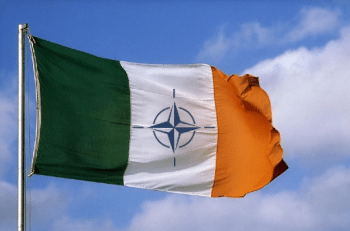
    A conceptual look at the Consultative Forum on International Security Policy By J Vivian Cooke The Consultative Forum on International Security Policy that was held at various locations from 22 June to 27 June was an appropriate metaphor for the international security structures it discussed so earnestly. A small and select group directed the discussion about global security and offered their view to a larger General Assembly, some of whom would be allowed to insert them into the conversation from the floor. To add an extra layer of authenticity to proceedings, occasionally a dissident voice would be raised to protest the entire basis of proceedings. The desire expressed by the Department of Foreign Affairs that discussion should be “open, informed, respectful and evidence-based discussion on the State’s foreign and security policy”, was thwarted by a number of subversive interruptions. A shouting match between protesters and Tánaiste Micheál Martin at UCC was an early highlight. However, the chaos was largely constrained, and the moderators of each session were admirably efficient in keeping to the printed timetable. Perhaps the organisers had made allowances in their schedule for these fractious contingencies. The suspicions expressed publicly by the President that the Forum had been carefully curated so that the process would arrive at a predetermined outcome proved, on the whole, to be unfounded. The invited panellists provided important insight and nuance even if it did not reflect the full range of public opinion. Although many panellists were open in expressing their policy preferences on various issues, there was no attempt to disguise these positions and, for all the fulminations, there was little evidence of anyone acting in bad faith on either side of debates. It is helpful to order the wide-ranging discussions using an analytical framework that distinguishes positions based on intrinsic or instrumental values. An instrumental approach assesses various security policy options based on how effectively they deliver underlying policy goals. The advocates of either strict neutrality or deeper cooperation with NATO – positions that are irreconcilable – maintain that their policy preference is best suited to advance Irish security and/or promote the international rule-based order; and/or facilitate Irish participation in UN peacekeeping missions. In this sense, neutrality is not an end in itself, but rather a mechanism of Irish diplomacy to achieve the national interest and values. Even among UN veterans, peacekeepers, diplomats and administrators, there was sharp disagreement on precisely the extent to which Ireland’s neutrality is acknowledged or valued by other members of the international community. The suspicions expressed publicly by the President that the Forum had been carefully curated so that the process would arrive at a predetermined outcome proved, on the whole, to be unfounded For its advocates, international recognition of Irish neutrality distinguishes us from other European States, is evidence of impartiality, and makes Irish interventions more acceptable to other States and peoples. For example, the Taoiseach, Leo Varadkar, said that our neutrality was “helpful” in securing our election to the UN Security Council. Those who are urging changes to Ireland’s security posture assert that, in their experience, Ireland’s position is not recognised around the world as unique, and we are categorised with other small and well-intentioned countries such as Norway or Denmark, both of whom are members of NATO. Renata Dwan, a panellist at the Forum, suggested that a more realistic evaluation is that Ireland’s policy of neutrality underlies the more obvious aspects of our international reputation which others value – such as our consistent support for human rights; our distinguished track record in peacekeeping; and the absence of overriding national interests. On the face of it, the isolation of neutrality is less of a guarantor of Ireland’s national security than any mutual defence pact that creates a treaty obligation for all members to defend Ireland should we be attacked. However, such a collective security agreement cuts both ways: Ireland will have an obligation to all other members of the treaty organisation. Clearly, we could be dragged into an international conflict without having the opportunity to make a positive decision to do so. The Forum questioned if the current ‘Triple Lock’ guarantees ‘traditional neutrality’. It has created a situation where Ireland can only deploy a maximum of 12 personnel in response to any international crisis, including the evacuation of Irish citizens and aid workers from conflict zones. It also frustratingly grants to Russian and Chinese dictatorial regimes and NATO states, the US, UK and France, a veto over Irish peacekeeping missions. In any event, the ‘Triple Lock’ only applies to the authorisation at the start of UN missions and does not grant the Oireachtas a role in the continued oversight of such deployments. This deficiency has been exposed by revelations in internal UN and international reports of widespread sex and child abuse in numerous UN deployments. Any review of the ‘Triple Lock’ must include a role for the Oireachtas in renewing authorisations. The second category of contributions takes it as a premise that our security policy should be an expression of our national values, whether that is pacifism or solidarity. In this sense, neutrality is a categorical imperative that has inherent ethical value – and, for some, moral purity. Those holding this position are typically suspicious of the intent of former colonial masters attempting to maintain their political and economic influence. They note the US’s long history of illegal wars as well as innumerable invasions and coups, and the fact it has been compromised by its material interests in, for example, ensuring energy imports. Unfortunately, at times, this appraisal veers into a cognitive confirmation bias that fails to acknowledge the moral complexity of modern US diplomatic history where, often at the same time, it has been both the architect and the transgressor of international law; it has both encouraged and undermined democracies; it has been both a fierce opponent of some tyrants and close allies of others. Neutrality is not an end in itself, but rather a mechanism of Irish diplomacy to achieve the national

    Loading

    Read more

  • Posted in:

    Church redress deal needs rethink

    The State, which has been reimbursed only €242m of the €1.5bn it has paid out, should now take only lands and buildings for Community purposes; not paltry cash By Carolin Zaniewicz and Michael Smith The Commission to Inquire into Child Abuse, also known as the Ryan Commission, was established in 1999. Its goal was to investigate the extent of physical, sexual and emotional abuse of children in institutions such as children’s homes, schools, foster care and hospitals run by Catholic Orders in Ireland from 1936 onwards. The results of this investigation were published on 20 May 2009 in the Ryan Report. The report detailed “significant levels of abuse” suffered by children, who were placed by the Irish State in residential institutions run by Catholic religious orders. It found that thousands of boys and girls were subject to chronic beatings, sexual abuse and humiliation at the hands of Catholic priests and nuns. The investigations also brought to light that the government had been aware of those abuses happening, yet the “deferential and submissive attitude of the Department of Education towards the Congregations compromised its ability to carry out its statutory duty of inspection and monitoring of the schools”. First, Indemnity, Deal The outcomes of the report shocked the nation; and further controversy followed an indemnity deal signed on 5 June 2002 between then Minister for Education, Michael Woods, and 18 religious orders. It was decided that the contributions of the religious institutions to the bill for the abuse would be capped at a value of €128 million Euro, including originally 64 properties. An indemnity was given by the State against further liability, forcing the remainder of the bill onto the Irish State. Woods seemed animated by the fact that the congregations estimated their legal liability at under €60 million if forced into court, as they believed nine out of ten cases would fail— mainly because of the statute of limitations. Woods was determined to believe them though 20 years later it is clear that many religious orders including Spiritans, Jesuits and Carmelites are now reportedly paying pupils for abuse in their schools because they cannot sustain technical defences, morally, and want to continue to act in positions of authority. Crucially too, the cost of the estimated redress portion of the liability rose fivefold to €1.25 billion as a result of the numbers and severity of claims. The State has long estimated the total cost of the inquiry bill, a survivor redress scheme and related survivor supports at €1.5 billion. This has proved accurate and includes payments of nearly 15,000 claims, at an average award of €62,250; and €193 million in legal costs. The State thinks the religious should in principle pay 50%, but the religious demur. The agreement was infamously signed just before the 2002 general election, and consequently was not laid before the cabinet for its approval. It then remained unpublished for several months. Woods said that his strong Catholic faith made him the most suitable person to negotiate the deal. When asked to give a statement about the exclusion of then Attorney-General, Michael McDowell, and his officials from two meetings, Woods said: “The legal people simply couldn’t have attended – it was a no-go area for them – they had fallen out with the religious”. Woods also tried to shift the blame for the institutionalised child abuse onto the State and made the untrue statement that it was the Department of Education that “had control, management role, organisation” and that the State knew all the details when making the deal. Of course, exaggerating the culpability of the State minimised the liability of the Catholic Church. However, the reality was that management was exclusively a matter for the religious orders. Journalist and campaigner Mary Raftery criticised his remarks, pointing out that some of them contradicted statements made by Woods himself. While Woods said his Catholicism was an asset that had helped to break a deadlock in negotiations, he denied he was a member of Opus Dei, the Knights of St. Columbanus or any other lay Catholic organisation. Second, Voluntary, Deal In 2015, there was a second, this time voluntary, deal which agreed to an additional €352 million, given the findings of fault. However, according to an April 2017 report from the Comptroller and Auditor General, the voluntary sum was reduced to €193 million (a press release from the same body a month earlier said €226 million), after the Christian Brothers reduced their voluntary commitment to surrender playing fields by €127 million. There were also other extraordinary adjustments and re-evaluations. The government was aware of the abuses yet the “deferential and submissive attitude of the Department of Education towards the Congregations compromised its ability to carry out its statutory duty of inspection and monitoring of the schools” The value of the indemnity and voluntary deals was a combined €321 million (€128 million plus €193 million) coming, according to the Irish Times, in part from a portfolio of 49 school playing fields from the Christian Brothers valued at €127 million and 48 Sisters of Mercy properties valued, though not independently, at some €107 million. Then Education Minister Richard Bruton noted in 2017 that if the religious orders paid up on all the offers it would come to only 21% of the €1.5 billion paid by the State up to then. As if all that was not scandalous enough, it seems that nearly all of the religious congregations have fallen short of their commitments, especially the voluntary ones. Payments under first Indemnity Deal Some €125 million of the €128 million provided for under the 2002 Indemnity Agreement has indeed creditably been contributed, with the transfer of two properties remaining to be fully completed. The cash and counselling contributions received under the Agreement, amounting to some €65 million, were made on a collective basis which is why it is not possible to identify the amounts paid by individual congregations. Payments under Voluntary Deal The voluntary contributions made in the aftermath of the publication of

    Loading

    Read more

  • Posted in:

    Consistency and speed to the detriment of Quality and Sustainability

    The hands of former Attorney General Paul Gallagher and of the property industry are all over the Planning Bill By J Vivian Cooke The Planning and Development (Amendment) Bill, 2022 The Planning and Development (Amendment) Bill, 2022 attempts to bring clarity to the legal underpinnings of the planning system which are currently scattered across numerous laws, regulations, and court decisions (at both national and EU levels). Historical balance between central and local government The history of planning legislation is of a balance between centralised powers, typically emanating from the Minister and latterly from the Office of the Planning Regulator (OPR); and local authorities’ powers, which in turn have been divided between officials’ and elected councillors’. Too often powers exercisable at either a centralised or local level, have simply not been exercised properly, and many would say local government has not justified the trust that underpins the delegation of such powers as planning permission (in officials) and zoning (in elected councillors). The Bill is a significant salvo at taking back some of the powers of local authorities by requiring their deference to centralised standards. Whether the requirements will be observed by headstrong local authorities remains to be shown. Equally uncertain is the appetite of the OPR to exercise zealously its powers or of any Minister to sanction councillors in a delinquent local authority who might be party colleagues. Long-standing and egregious failures of planning, including the sprawl of Dublin and one-off housing, have been largely perpetrated in contradiction to national policy due to enforcement inaction rather than action, with such consistency that it must be deemed to be policy inaction. Unclear if local authorities will defer to the centralisation The Bill carries forward the often-unenforced logical impetus of the existing system. It is based on a clear hierarchy for strategic planning and policy in which subsidiary plans are obliged to be materially consistent with all policies that are above them in the hierarchy. The hierarchy descends from National to Regional to Local Authority to Local. Under the Bill, the Minister will set out certain aspects of important policy in National Planning Statements which contain directives that purport to be binding, termed National Planning Policies and Measures (NPPM). The history of planning legislation is of a balance between centralised powers, typically emanating from the Minister and latterly from the Office of the Planning Regulator (OPR); and local authorities’ powers, which in turn have been divided between officials’ and elected councillors’ New planning procedures Regional assemblies must draft Regional Spatial and Economic Strategies (RSES) that are “materially consistent” (the term is significant: “comply with” would have been stronger, requiring, as it does, positive action) with the specific directives in NPPMs, and support overall government goals; while both national and regional documents aim to coerce often recalcitrant local authorities in their individual Development Plans which drive the planning permissions they issue. The Bill sets out a process common for all actions provided for in law which, the drafters fear, might not necessarily be observed in the political process. Each individual step, in both policy drafting and permission-decision-making, is explicitly laid out in comprehensive step-by-step detail. The requirements for consultation, notification, review, compliance, appeal and deadlines are all stipulated in statutory process maps. Within these policy constraints, local authorities can, as now, give effect to national standards in ways that they deem appropriate to local circumstances; this may be valuable in preserving the democratic legitimacy of the planning process and, in addition, because local authorities have better knowledge of conditions on the ground. Compliance and Enforcement Errant authorities, whose subsidiary document diverges from a higher-level policy instruction are legally obliged to amend their policy documents to take such steps as are necessary to make it materially consistent with national, regional or local standards. Moreover, coherent planning objectives are pursued by obliging regional and local plans to have an internal, or horizontal, consistency with the authority’s other formal policy documents in areas such as housing, transport and climate action. It remains to see what will happen if authorities fail to amend as required. The longstanding experience has been that correcting the flouting of such directives inevitably depends on intervention by the often-reluctant OPR or by beleaguered individual litigants. The Bill maintains the current status of OPR enforcement actions against local authorities which are recommendations to be implemented at the discretion of the Minister, but they probably should be changed to be mandatory. This legislative review project has been misled from its conception by exclusively focusing on the wrong goals – consistency, efficiency and speed. A legal obligation doesn’t necessarily lead to compliance. It would, for example, be better if a standing body — the powers of the OCR could be increased — were to be charged with — and employed personnel who were scrupulous and determined, indeed passionate and fired up about — taking action to enforce compliance. And if the standing body were properly funded. It would ensure that local authority development plans and individual planning decisions complied with planning policy. This is what was envisaged in the recommendation from the Planning Tribunal to establish a Planning Regulator. Unfortunately, lobbying means that we got a regulator for propriety but an advisor for compliance.Much of the Bill is a reiteration and refinement of the existing approach to planning rather than a radical new departure. However, some proposed changes have the potential to create difficulties. Locus Standi for Individuals and Limited Companies If the Bill works in practice, developers will know better, before submitting a proposal for permission, by what standards their proposal will be judged and by when a definitive decision will be made. The building industry has, largely self-servingly, identified inconsistent planning decisions and the threat of legal challenges as a major obstacle to designing and financing urgently needed new private residential developments and, through extensive lobbying, appears to have convinced the Department of Housing of this spurious argument. Too much of the adverse comment that the Bill has been subjected to has focused

    Loading

    Read more

  • Posted in:

    A year after Roe was overthrown, lessons from Trump’s Supreme Court for Ireland’s

    So far, manifestations of difficulty include an insidious marginal judicial interest in historicism and a move away from unenumerated rights, particularly that of a general right to privacy. By David Langwallner This article is about dangerous trends in American jurisprudence driven by problems with the political culture of that country. The trends risk being replicated in Ireland but must be resisted. The recrudescence of neo-conservatism in the American judiciary is a least a 30-year phenomenon with a limited and ever-shrinking liberal counterweight. It has been fuelled by the political nature of judicial appointments, Trumpism and indeed Trump nominees. The difference between neo-liberalism and neo-conservatism is important in the judiciary. A traditional neo-liberal like the UK’s Lord Sumption believes in disallowing state interference and police interference in private lives and the liberty of others — which is at least intellectually cogent. Neo-conservatism on the other hand enforces on others a fundamentalist and dogmatic worldview of religion and the deserving. It is led by Trump and Christian rednecks in America. In the US Supreme Court in the last two years, there have been chilling changes as it veers towards far-right-wing extremism. Intentionalism/historicism/constructivism In New York State Rifle and Pistol Association v Bruen, a case concerning the tragic mass shootings in Uvalde and Buffalo, the Supreme Court recently held a 1911 New York edict that anyone in possession of a handgun in a public place needed proper cause violated the Second Amendment’s right to bear arms So, just as you could use muskets against the British in the Eighteenth century, you can use handguns on the streets of New York in 2023. This ludicrous underpinning doctrine, known as originalism, intentionalism, or historicism is an approach inherited from the recently deceased Supreme Court judge Anthony J Scalia, for whom Trump’s 2020 appointee, Amy Coney Barrett clerked. The idea, if it can be called that, is of an unevolving text that should be interpreted according to the original intent of the founding fathers or those who drafted the text. This all militates against the derivation of new rights particularly that of privacy and its emanations. Apart from the objection that such intent is unknowable, there is also the objection posited by Ronald Dworkin that this is rule by the dead hand of history and that it just creates an unanswerable imperative for the constitution to be overhauled for modern times, and legitimacy. It is a silly method of constitutional interpretation for a progressive society. Privacy Rights The biggest recent outing for the obscurantist doctrine of historicism was the overturning of the abortion case Roe v Wade in Dobbs v Jackson Women’s Health Organization, on 24 June 2022. The trimester analysis in Roe which was overturned was not, it must be conceded, medically sound — allowing, as it did, for termination up to six months which, as medical science advanced, became long post-viability. The subsequent case of Casey established that the abortion right derived not from a right to privacy but from the Fourteenth Amendment’s due process clause and that restrictions could be imposed on abortion unless they were unduly burdensome. This led to a flurry of State retrenchments and subsequent litigation. Notifications, parental consent, and independent advice were all promoted as obstacles to the procedure. It also led to abortion wars, the murder of doctors providing abortion services and, just recently in South Carolina, proposals for the death penalty for abortionists. It culminated in 2022 with Justice Samuel Alito in his majority opinion, overturning Roe, in Dobbs: establishing that Casey was wrong in upholding Roe because a right to abortion was not found in the constitution and could not be inferred from the concept of ordered liberty since it did not historically, as a matter of consensus. feature as an inherent component of liberty. In his recent book, ‘The Supermajority’, Michael Waldman says the judgment preserves “in amber 19th-century social norms”. It is implicit in Alito’s opinion that privacy rights should not ever have been added to the constitution. Waldman implies that conservatives might have been less put out if decisions on contraception, abortion and criminal justice had been couched in less “groovy” and “psychedelic” terms. This augurs badly for homosexuality and contraception. Unwillingness to infer rights from liberty – and other constitutional imperatives — is also arguably evident in recent Irish Constitutional judgments which are shifting away from the idea of “unenumerated rights”, to, as with the Supreme Court in Climate Case Ireland (2020) more limited “derived rights”. Unenumerated rights are anathema to historicists but in fact, flow logically from the fact Bunreacht na hÉireann iterates a list of personal rights “in particular” which necessarily implies there must be others. Abortion has of course been ineradicably secured in Ireland by referendum. In McGee, which recognised a right to marital privacy leading to a right to contraceptives for marital couples, the Supreme Court explicitly rejected historicism and said that it was the public mores of today and not of 1937, which were relevant. As Walsh J, opined referring to the values declared in the Preamble: “It is but natural that from time to time the prevailing ideas of [prudence, justice and charity] may be conditioned by the passage of time”. Of course, Ireland’s Supreme Court’s rightist Titan, the late Adrian Hardiman, endorsed historicism in Ireland. The more recent case of Sinnott v Minister for Education [2001] includes an application of the historical method of interpretation. Hardiman, J stated: “If the term “primary education” is construed on a historic basis it is clear that what was in the mind of the drafters of the Constitution was the ordinary, scholastically oriented primary education represented by the ministerially prescribed National School curriculum. The contrary was not submitted”. The historicist approach is one thing but more generally the Sinnott judgment, according to Professor Colm Ó Cinnéide, is significant for “how the majority of the Supreme Court pushed back against new approaches to protecting rights which had become highly fashionable by the end of the 1990s – favouring instead

    Loading

    Read more

  • Posted in:

    Debate, but without hatred

    By Barry Ward No right is absolute; all rights are balanced against other rights, to one extent or another. Our free speech is constrained by defamation laws, public order legislation, public safety limitations, and a concern that free speech should not be abused to negatively impact on other citizens by incitement to hatred or violence against them. Balance The Criminal Justice (Incitement to Violence or Hatred and Hate Offences) Bill 2022 attempts to balance those competing rights to free speech and to live a life without fear that someone else will seek to make others hate you or commit violence against you because of your individual characteristics defined here as race, colour, nationality, religion, ethnic origin, descent, gender, sexual characteristics, sexual orientation or identity, or disability. Indeed, so important is freedom of expression in Irish policy that Section 11 of the Bill specifically protects it by saying that discussion simpliciter, can not be taken to be an incitement to violence. Criticisms  As the Bill began its passage through the Seanad, some have harshly criticised it, making unsubstantiated claims that it will end freedom of speech or that it constitutes a gross over-reach by the government into people’s private lives and thoughts. In addition to critics here, Donald Trump Jnr. has described the legislation as “insane”, Elon Musk said it was “a massive attack on freedom of speech”, and Fox News ran a headline suggesting that the Government was restricting freedom “to protect trans people from discomfort”. Offensive people can still be offensive, and offended people still offended. However, when free speech is targeted at a defined group, calculated to cause hatred against that group, or intended to incite violence against it, we should prohibit it None of these statements is true, of course, and none stands up to scrutiny. Therefore, it is important to dispel the misinformation that has been put out there about what the Bill will actually do and how it will address hate crime and hate speech in Ireland. In Ireland at least, most of the Bill’s detractors accept the need for, and desirability of, hate crime and hate speech legislation, but they dispute how that should be done or that this Bill is a reasonable response. However, central to the Bill is the right, irrespective of personal characteristics, of all individuals to go about their business peaceably, without being subjected to hatred, and without being under the threat of violence. This Bill is not about stifling debate but taking the hatred out of debate. What the Bill does and does not do Which is not to say that this legislation will outlaw taking, or giving, offence. Offensive people can still be offensive, and offended people can still be offended. However, when free speech is targeted at a defined group, is calculated to cause hatred against that group, or intended to incite violence against the members of that group, it is absolutely appropriate that we, as a community, draw a line and say that that behaviour is not acceptable. This bill will repeal the Prohibition of Incitement to Hatred Act 1989, which was ineffective, resulting in just 50 prosecutions in almost 35 years. Where hate speech might have manifested itself in pamphlet form in 1989, the modern iteration is substantially more digital. This new legislation is broader and specifically addresses online activity, whether in Ireland or not. The Bill also includes protections in addition to the normal fair procedures that we associate with our criminal justice system. For example, it excludes “a reasonable and genuine contribution to literary, artistic, political, scientific, religious or academic discourse”. The permission of the Director of Public Prosecutions, independent in her functions, will be required for any prosecution. The Bill does a number of things, including ensuring that, where certain crimes are committed against a person because that person is gay, or black, or Jewish, or a woman, or transgender, or some other defined personal characteristic, any sentence will necessarily be higher because of the hate element of the offence; making it an offence to condone, deny or grossly trivialise genocide and other crimes against humanity; and making it an offence to incite violence or hatred against someone for those reasons. Hate crime effects Being the victim of crime is one thing. It is unpleasant, unacceptable and unfair, sometimes it takes time to get over, depending on the nature of the crime, where it happened and other factors. But we know that, when a crime is motivated by hate – be it racism, or misogyny, or homophobia, or anti-traveller sentiment, or any other manifestation of hatred – the victim is significantly more liable to a long-lasting effect and is twelve times more likely to suffer psychologically beyond the physical effects of the crime itself. Whether the perpetrators of such offences know it, acknowledge it, or admit it, hate crime damages our whole society, and not just individual victims. Burden of proof Some people have claimed that this bill will overturn the burden of proof, which, in Ireland, requires the Prosecution to prove the case against the Accused. While the Bill will not change this important principle, it does contain a “rebuttable presumption”, which allows certain conclusions to be drawn if there is no reasonable explanation for particular circumstances. The Bill also includes protections for “a reasonable and genuine contribution to literary, artistic, political, scientific, religious or academic discourse” Rebuttable presumptions are common and can be found in the law on theft and fraud, misuse of drugs, and firearms and offensive weapons, to name but a few, yet the same critics have not complained about the operation of those statutes since the 1970s and before. Possession  Others have condemned the provisions that criminalise possession of certain material, even if it has not been distributed or published. They claim that people should be able, for example, to possess material that, if distributed, would be criminal, but because they have not yet distributed it, those people should suffer no consequences. It should not be that the Garda

    Loading

    Read more

  • Posted in:

    Fifty years of omerta on Ireland’s biggest company

    CRH systemically flouts competition and company law with impunity. By Séamus Maye As I walked into the elegant Carlisle room at the Royal Marine Hotel in Dun Laoghaire in April last for CRH plc’s latest AGM, many thoughts flashed through my head. Why am I here? Why have I been in Court with CRH plc for 27 years? Why are the political parties and regulators protecting CRH plc? Why has my family been blacklisted by the banks for over a quarter of a century? Where are the media? Then it dawned on me like an epiphany. This is no ordinary plc, this is a mafia complete with criminal structures and behaviour and the usual protection rackets with every machination of the State and the banks, working arm-in-arm to protect what I now believe to be an OCG [Organisied Criminal Group]. The gang leader, Albert Manifold delivered his usual silky-smooth State of the Nation address. But the meeting was fronted by a decidedly uncomfortable Chairman, former Bank of Ireland CEO, Richie Boucher. You see Richie was tasked with shielding the Board of Directors from my unwelcome intrusion. Richie didn’t deny any of my allegations, just an unconvincing reply, “that’s your perspective, Mr Maye”. So just how did this OCG survive and thrive? CRH plc has been Ireland’s largest company for several decades and now ranks itself as the world’s No. 2 in the construction materials sector. The company is synonymous with controversy going back at least to the 1969 takeover of Irish Cement. Then Fianna Fáil leader, Jack Lynch, had intervened to ensure that Roadstone was the preferred bidder for Irish Cement and former Taoiseach Seán Lemass was appointed as the first Chairman of the new Cement Roadstone Holdings (now CRH plc). The late Des Traynor, arguably Ireland’s most corrupt business figure, also figured on the board of the newly created monster. Don’t worry, no cross-party stone was left unturned, CRH stalwart Tony Barry had his brother Peter to call on as long-time Fine Gael Deputy leader. Labour too was captured, it was under Labour’s then Minister for the Environment, Dick Spring that the illegal cement certification scheme was introduced in March 1983. The Progressive Democrats huffed and puffed about taking down CRH. In the end, Mary Harney and Michael McDowell played a good cop/bad cop blinder and frustrated any attempt to hold CRH to account. The PDs’ betrayed everything they (apparently) stood for in their efforts to protect this leviathan. The Greens too huffed and puffed under John Gormley and his lieutenants but when they went into government in June 2007, they too back-pedalled and acquiesced in the protection racket around CRH plc. That’s all the parties that have been in power since 1969. Then Fianna Fáil leader, Jack Lynch, had intervened to ensure that Roadstone was the preferred bidder for Irish Cement and former Taoiseach Seán Lemass was appointed as the first Chairman of the new Cement Roadstone Holdings By 1973, Ireland was immersing itself in the EEC. It had to introduce several new laws and regulations in order to make Irish Law compatible with EU Competition (Antitrust) and, later, Money-Laundering, Laws. This is where it gets really sinister. Ireland brought in (on the face of it) strong competition law, starting with the 1991 Competition Act, the successor to the Restrictive Practices Act 1972, which created the Competition Authority. This was followed by the Company Law Enforcement Act 2001, which created the Office of Director of Corporate Enforcement. However, these regulators have proved chimerical. The lengths that these supposed regulators have gone to protect CRH plc is staggering. Taxpayers have been forced to pay enormous sums of money to fund these inept regulators for over fifty years. So, what of the Garda, Ireland’s primary crime busters? The author has presented files to the last four Garda Commissioners complaining about unprecedented economic crime (allegedly) committed by CRH but there has been an ongoing failure to act. Indeed a Wexford family has made very serious allegations of fraud against CRH plc but while gardaí initially got involved and acknowledged the fraud to the Somers family, the family were subsequently told by local gardaí that, “we’re killing the case”. And what of the legal system? Suffice it to say that my family’s proceedings (best known as “the Framus case” have been running for 27 years and the, almost identical Goode Concrete case for 13 years with little progress made. Add the Ballymore Properties pyrite case and we have a cumulative 50+ years of litigation against CRH plc, without a blow being landed. The above-mentioned Somers family have now spent eight years seeking effective legal representation against a background of chronic barriers to justice. Typical of the connections that would make you paranoid is the conduct of the late High Court Judge, John Cooke (RIP). In the mid-eighties, John Cooke, then a senior counsel, was engaged by Hytherm, a new entrant to the EPS (insulation panels market). John Cooke’s mission was to obtain an injunction against CRH plc, the dominant player in the EPS market, to stop its relentless predatory pricing, collusion and market-sharing. Cooke was successful with his quest. So impressed was CRH plc with Cooke’s smooth performance against it, that it signed him up to appeal the EU Commission decision of 30 November 1994. It has also been established that Judge Cooke began accumulating CRH shares in 1994 and continued doing so, at least until 2010 (that we know of). Neither Judge Cooke nor CRH plc made disclosures in relation to the Judge’s relationship with CRH. Judge Cooke went on to give three damaging judgments in the Goode Concrete case (subsequently set aside by the Supreme Court) and to strike out the Framus proceedings in their entirety in 2012. The Framus case is a spectacular example of the failure of the Irish Justice system. This can only be a failure by design on the part of the legislature with the object of protecting the defendants, CRH plc and its associates

    Loading

    Read more

  • Posted in:

    Jarvey for Garvey

    Drogheda and Louth Councils disgrace themselves by finding spurious legal reasons not to consider rescinding the 1997 award of Freedom of Drogneda to the former head of the Christian Brothers who has been making life difficult for an abuse victim who is suing them. By Michael Smith Brother Edmund Garvey, 73, was given the Freedom of Drogheda, where he had been born, in 1997 when he was head of the Christian Brothers. He went out of his way on that occasion to apologise for hurtful experiences people suffered because of the order, or in its schools. However, in the last few years, he chose not to act as a nominee for the Brothers for the purpose of a High Court action for abuse, taken against the Brothers in 2019. Though certainly, that is his legal right, it meant that the more than 100 living members of the order at the time of the alleged abuse had to be made defendants in the case, six of whom live abroad, if the traumatised plaintiff wanted to sue the Brothers, a tall order. The High Court ordered judgment in default against 29 of them on 20 June. Damian O’Farrell is an independent Dublin Councillor from Clontarf and a survivor of the widespread abuse perpetrated by the Brothers. He obtained the first-ever criminal conviction against a Christian Brother, in 1998. Farrell wrote to Councillors in Louth last October asking them to rescind the freedom. Alleged victims hired a hotel in the town and asked Councillor to talk to them but only five of 29 turned up. Independent Louth councillor Maeve Yore has attempted to have the following motion tabled in the Council on two occasions: “That Louth County Council supports all victims of child sexual abuse and condemns the current litigation strategy chosen by the Christian Brothers order…and this Council calls on our members in the Borough District of Drogheda to rescind the Freedom of Drogheda bestowed on [Garvey]”. A letter from the Council to Yore states: “your most recent Motion will not be placed on the agenda of council for May as it is considered potentially defamatory and could expose the council to litigation”. It’s about as defamatory as a Bridget’s cross. On 10 May the Council replied to Yore’s solicitor, MacGuill and Company, confirming that it considered it was potentially defamatory: “It could be interpreted as making specific allegations against an identifiable person which, if unsubstantiated, could be injurious to the reputation of that person”. It suggested the Councillor submit alternative wording. Yore is said to be contemplating a complaint to the Standards in Public Office Commission though it is unlikely to find ethics grounds on what is essentially a procedural matter. She is also looking at a legal route. Section 140 of the Local Government Act 2001 states that “an elected council may by resolution require any particular act, matter or thing specifically mentioned in the resolution and which the local authority or the [CEO] concerned can lawfully do or effect, to be done or effected in the performance of the executive functions of the local authority”. Louth County Council should pass a resolution requiring its CEO, Joan Martin, to put a resolution rescinding the Freedom awarded to Brother Garvey which, whatever the Council thinks, is non-defamatory, on the ‘Clár’ or order sheet for expeditious discussion. Though the Cathaoirleach took legal advice that rescinding the Freedom is a matter for Drogheda Borough Council, it is in fact more appropriately dealt with by the full Louth Council rather than the legally depleted Drogheda Borough Council since, on 1 June 2014, the Borough Council was dissolved and the administration of the town was amalgamated with Louth County Council’s. Brother Garvey has not behaved well and it is entirely appropriate to call him to account, or eject him from the honour he was, unwisely, afforded by the Council in a slightly less cynical era. The CEO has already wasted enough of Councillor Yore’s time and legal fees. The Councillor might legitimately demand that if the CEO does not comply with this resolution and the law that she will hold the CEO and her agents personally liable for the costs including legal costs, of her non-compliance. More difficult for Councillor Yore will be obtaining the necessary two-thirds majority vote for her Section 140 Resolution. Without the political support the legal action will not be possible. However, the Mayor of Drogheda, Michelle Hall, signalled last December that at least nine of the ten Borough Councillors were against bringing forward a motion to rescind Brother Garvey’s Freedom. It is not clear why. What is extraordinary is, apart from one Sinn Féin County Councillor, the lack of support from the mainstream political parties, including the defiant Labour Party. locally or from their national representatives, for an attempt to undo a small part of the abuse that most of them at least accept is real. It’s to be hoped those parties will be held to account for their heedlessness.

    Loading

    Read more

  • Posted in:

    From the Temple of Bars to Listowel Writers Week

    Dermot McLaughlin mismanaged Temple Bar and, facilitated by the uncontrolled Arts Council which never took responsibility for failures in Temple Bar, is now arrogantly calling out mismanagement in Listowel. By Michael Smith Temple Bar Properties converted Temple Bar into a high-rent drink-driven cultural centre in the 1990s. Its focus then moved from physical regeneration to consolidating the cultural offering it was housing and, in 2006, it became Temple Bar Cultural Trust (TBCT), with a new board appointed by Dublin City Council. It was a private and limited not-for-profit company engaged in cultural development in Temple Bar, organising Temple Bar Food Market, concerts, circus, street, Culture Night and Handel’s Day. In 2005 it had an income of €2m, with €1.6m of this coming from its 50-strong property portfolio estimated to be worth at least €100m. Its CEO was Dermot McLaughlin, a 17-year Arts Council employee who had risen to become its assistant director. He was also a talented fiddler. Governance of TBCT was dysfunctional and in 2011 a review by Latitude, a consultancy, recommended it be wound up and subsumed into the Council. Independent City Councillor Mannix Flynn, a board member of TBCT, tabled a successful motion to that effect. The then city manager John Tierney agreed to commission a review of the organisation focusing on corporate governance standards, board representation and whether the trust was fulfilling its brief as a cultural promoter and enabler. However, a Council audit report published in March 2013 levelled charges of a different level of seriousness against TBCT, including failures of corporate governance and “control weaknesses and/or regulatory violations [that] represent unacceptable exposure and risk” for the company. McLaughlin remains a continuing consulting favourite for funding by the Arts Council of which he was once a senior employee The report found that the trust’s board minutes and papers were “not available” in relation to certain financial transactions, noting that TBCT’s business plan for 2010 and 2011 had not been approved by its board. There were found to be no appropriate financial procedures and the fact the same external auditors had been acting for over 10 years was deemed “in contravention of good corporate governance”. The party at most risk from these failures was the publicly-funded Arts Council which funds most of the cultural activity in Temple Bar, not exactly an oasis of private culture, to the tune of €9m in 2022. The Arts Council notably failed to investigate whether certain sums paid by it to institutions in Temple Bar were forwarded as intended to TBCT. A TBCT-commissioned review of the audit by former IBEC chief Turlough O’Sullivan found that the McLaughlin-fed board had “failed in its duty of oversight and governance by not enquiring into and satisfying itself that proper procedures were in place around financial transactions”. O’Sullivan was no subversive so it was telling that even he found this level of delinquency. McLaughlin resigned, agreeing not to pursue actions for defamation, and obtaining a substantial severance package after a disciplinary hearing into his role in offering generous redundancy packages to four senior staff members was cancelled. So what’s happened to the man who presided over the mess? Funny thing is McLaughlin doesn’t now mention his period in the van in Dublin’s Cultural Quarter. He remains a continuing consulting favourite for funding by his former employer, in the absence of a clear Arts Council policy on how it procures its consultants. According to now free agent Dermot McLaughlin he’s “been involved in voluntary work with organisations and on boards for many years. I enjoy being involved, I’m always interested in finding ways to help, and I love learning new things. So for me, voluntary work in enriching and valuable”. His voluntary work which came largely to an end after 2008 included spells as: Chairman (2011-2018) of Irish Traditional Music Archive; Chairman (current) of TG4 Gradam Ceoil selection panel (annual national traditional music awards); Chairman (2007-2011) of Dublin Dance Festival; Chairman (2007) of Údarás na Gaeltachta and Arts Council National Monitoring Committee on Gaeltacht arts; Board Member (2006-2008): Irish Architecture Foundation. Beyond this strings to McLaughlin’s bow include that he was: Board Member (2003-2005): Rough Magic Theatre Company; Founder and Board Member (1994 to date): Scoil Cheoil Frankie Kennedy; Founder and Committee Member (1982 to date): Cairdeas na bhFidléirí. In 2014 he set up his own independent consultancy practice, Creative Strategic Solutions. After that he was involved in the Arts Council of Northern Ireland’s Audit of Traditional Music in Northern Ireland (2014-15); the Arts Council’s review of contemporary music policy initiative (2015) Ealaín na Gaeltachta’s Competitive assessment of funding proposals (2015); and An Cosán Glas’s Business planning, negotiation strategy (2015). It’s amazing how far an unassailable relationship with the Arts Council can take a man. He also claims (admits?) he was involved in the “Meeting House Square €2.2m capital redevelopment, business planning and marketing project (2010)”. Sounds good, so let’s have a look at what the project architect says about this. Seán Harrington architects’ website is as sanguine as McLaughlin is about the situation. “There is a saying in Ireland that you can have four seasons in one day. Warm spring sunshine can lead to intense summer light. Lively autumn gales can turn to a sudden wintry shower because Irish skies are constantly changing. Seán Harrington architects was commissioned to find a solution. The innovative solution provides a convertible umbrella covering over a popular public square in Dublin Temple Bar area. The landmark umbrella projects bespoke design comprises of four 21-m high steel structural masts”. This is shameless and shocking when you realise the, admittedly attractive, umbrellas don’t work, never really did. In the last few weeks one of the brolly arms buckled and repair costs are so prohibitive as to make its reinstatement unlikely. The audit commissioned by Dublin City Council was particularly scathing about Temple Bar Square: “Board minutes were altered, deleting concerns raised by some Councillors, and provided to Ulster Bank to support a loan; Reams of financial data relating to the project were

    Loading

    Read more