Posted in:
Theatricalamity
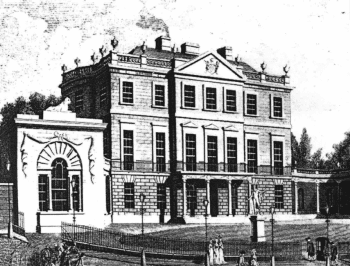
Dublin City Council permits demolition of oldest theatre. By Michael Smith
Posted in:
by admin
Dublin City Council permits demolition of oldest theatre. By Michael Smith
Posted in:
by admin
The Irish Film Board rebrands as Screen Ireland

Posted in:
by admin
Podcasting is about to take its next great leap as Google makes it easier for Android users and gets into audio advertising making Podcasting more attractive to corporate advertisers

by admin
Michael Smith interviews Max Keiser
Posted in:
by admin
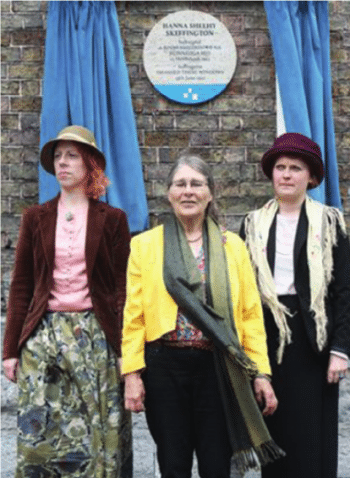
It’s still a man’s world in street names, so positive discrimination is needed for living feminists
Posted in:
by admin
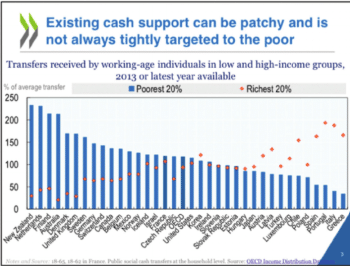
Think again about income and social welfare
Posted in:
by admin
The documents with Hugh Mooney’s handwriting on them

Posted in:
by admin
Only a covert counsel can splash the dirt as the presumption of suspects’ innocence takes a popular pounding
Posted in:
by admin
In this book 18 essays written by associates of Coughlan in his political activities bear on the man himself, those activities and related matters. Reviewed by Desmond Fennell
by admin
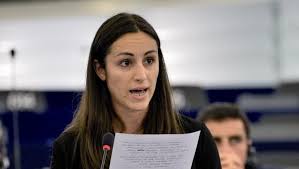
Roslyn Fuller interviews Eleonora Evi, MEP for Italy’s Five Star Movement [5SM]

by admin
As the French courts prepare to prosecute Ian Bailey in absentia, there is growing speculation that gardaí targeted him for the murder of Sophie Toscan du Plantier in order to protect the real suspect
by admin
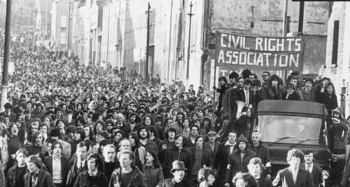
After evidence emerges of a covert British police unit operating in NI and of police infiltrations of campaigns dating back to 1970, it is time to reopen all the inquiries to see whether covert British police officer ‘Mark Duffy’ arranged for the parachute regiment to run amok in 1972
Posted in:
by admin
Ireland’s new Garda Commissioner has – in the PSNI – been too close for comfort to MI5 and MI6, whose agenda is often inimical to that of the Republic

Posted in:
by admin
Re-enact the events of the missing 21-year-old Kilkenny woman, consult the FBI, be proactive – or nobody new will come forward!
by admin
If true, John Miskelly’s Statement to the PAC tarnishes many involved in the purchase of Project Eagle
by admin
What is needed is foundation of a new party of the conventional Left: modern, common-good-embracing, quality-of-life-monitoring, taxing, planning, developing, accounting, envisioning
by admin
As the French courts prepare to prosecute Ian Bailey in absentia, there is growing speculation that gardaí targeted him for the murder of Sophie Toscan du Plantier in order to protect the real suspect. The skies were still dark over the West Cork countryside when Martin O’Sullivan set off from his home in Goleen on a crisp morning two days before Christmas. It was just after 7.30am as he made his way to work along the quiet road to Durrus passing a winding boreen that leads to the white-washed home of Sophie Toscan du Plantier. As he drove north towards Bantry, leaving the French filmmaker’s secluded farmhouse behind, a blue Ford shot up behind him at high speed. O’Sullivan was forced to slam on the brakes as the car overtook him on a dangerous bend and nearly ran him off the road. He noticed its headlights were on and the rear number plate was red. He believed it was a Fiesta. Several hours later, shock and sadness replaced the festive mood throughout Ireland as news filtered through that the 39-year-old mother of one had been found murdered on the laneway leading to her holiday home overlooking the Atlantic in Toormore, Schull. It was December 23, 1996. Du Plantier was found in a blood-soaked T-shirt, white leggings and a pair of laced-up boots. She had been bludgeoned to death with a rock and a concrete block. She put up a considerable fight but sustained more than 50 injuries to her head, face and body in the attack and was left almost unrecognisable. She had lacerations on her hands and arms. The then State pathologist John Harbison also believed she had been kicked or held down by the neck and wrist with a ‘Doc Marten’ boot, whose prints were also found on the laneway near her remains. In the days that followed, Martin O’Sullivan gave a statement to gardaí about the suspicious car he had seen, telling them he was fairly certain it was not from the immediate locality. It was a critical sighting that occurred close to the time and location of the murder and could hold the key to unlocking the case. O’Sullivan expected gardaí to carry out an appeal asking for the public’s help in identifying the driver but they never did; nor did they perform door-to-door inquiries in the locality where the suspicious car had been seen. Why was this? Did they have a motive in protecting the identity of the driver? It is just one of the countless unsettling incongruences in an investigation which many people in Cork and across Ireland now believe was mangled not by accident but by design. There is a growing sense that the persecution of English journalist Ian Bailey (61) by the gardaí, which has endured for 22 years and continues to this day, may have been motivated by something more sinister than the need to find a suspect to satisfy her family and the authorities in France. Speculation is rife that gardaí targeted Bailey because they already knew who the real killer was and were protecting him. Allegations have emerged that a senior member of the force may have been responsible for Sophie Toscan du Plantier’s death. The officer at the centre of these claims, who is now deceased, was a notoriously violent person and a sexual predator infamous for having affairs with women, particularly foreigners. A married man who was strikingly handsome, he was a rampant alcoholic who is described as having abused his power whenever he could. One local portrayed him as being “crooked as a ram’s horn”. He was known for rustling cattle and sheep from farmers who had committed minor offences and he was in a position to blackmail. He also drove a blue Ford car. It is believed the officer may have come into contact with du Plantier because of her fears about drug-dealing in the countryside close to her. Some in the area claim he had a sexual encounter with the French woman, whose love-life was complicated and fraught, but that he was subsequently rejected by her. The violent nature of the killing has always been indicative of a ‘crime of passion’ carried out by a scorned lover. The garda at the centre of these allegations was not involved in the investigation. On his deathbed, he was said to be a profoundly disturbed man. The shocking allegations against him however remain unproven. From the very start of their investigation, gardaí were keen to control the narrative of what might have happened to the French woman. For some reason, they dismissed suggestions that she had a guest in her home in the hours before the murder, rejecting rumours that two rinsed wine glasses had been found beside her kitchen sink. In his book about the case called ‘Death in December’, Michael Sheridan said the wine glass story was a myth. He was assisted in his research by the gardaí. But images from the crime scene disproved this claim and two wine glasses were indeed found draining in the kitchen. More suspicious still was the fact that no fingerprints were found on the glasses – at least according to gardaí. Apart from their relentless targeting of Bailey, the destruction of vital evidence from the crime scene supports the theory that the investigation was deliberately botched. The baffling ‘loss’ of a five-bar blood-splashed iron gate from the entrance to du Plantier’s property has never been explained nor has anyone been disciplined for it. Did the gate disappear because there were blood and finger- prints belonging to the suspect on it? The gardaí have also never accounted for the ‘loss’ of witness statements and suspect files as well as of a document outlining why Bailey and his partner Jules Thomas were to be classified as suspects. A bottle of wine found at the crime scene is also believed to have disappeared as well as a small red hatchet kept inside the doorway of du Plantier’s home which her
by admin
Village is unashamedly Leftist. Its agenda is equality of outcome, sustainability and accountability. These are all driven by the overarching goal of treating people as equals. The right labours freedom to the detriment of equality, tending to fixate on the provision of choices rather than on how in practice those choices are exercised. The non-ideological, non-visionary parties of the pragmatic centre hold little appeal for Village. Depressingly, with a signal in June that it wants to go into coalition with Fianna Fáil or Fine Gael, Sinn Féin has signalled its immediate destination is that pragmatic centre. For fourteen years Village has tried to champion parties taking egalitarian stances but it’s been difficult. Our left has been – and let’s be blunt – remains a disaster, a let-down. That is not an accident. For historical reasons most Irish people, though they have a weakness for leftist rhetoric, are conservative and property-fetishising with a limited sense of the common good. Many are viscerally hostile to an agenda of treating people equally. It is almost of the essence, of course, of the current government and its supporters that property rights are sacred. That is why it will never get to grips with the homelessness crisis. Its respect is already tied up with those who have a home. A variation on this mentality accounts for its reluctance to challenge our over-priced professions. The Independent Alliance is utterly incoherent of policy and membership embracing the apparently disaffected from the likes of ex-stockbroker Mr Ross to the likes of turfcutter Michael Fitzmaurice. Its agenda was always going to unravel. The Fine Gael-Independent coalition is supported on a ‘confidence-and-supply’ basis by Fianna Fáil. Fianna Fáil is tainted by its reckless past and the incoherence of its platform. It believes serving the people and business in equal measure is viable. It has learnt little beyond the need to regulate the banks and, under impressive Micheál Martin to eschew hoorism of all colours. Labour never does what its manifestos promise. Because of the elasticity of its conscience Labour has long attracted the wrong type of representatives. Sinn Féin is evolving, and not overall in a good way. Village has taken a coherent stance on post-Troubles Sinn Féin, making pessimistic predictions based on the nuances of its politics over the last twenty years. Those predictions are now vindicated. Its commitment to a Left agenda has never been convincing bearing in mind its defining preference for irredentist nationalism over ideology and its governing strategy in the North. Its performance at local-authority level is not impressive or particularly leftist. It is cultist, ambivalent about democracy and transparency, and in thrall to the Northern Army Council. As recently as late June, Mary Lou McDonald was saying she believed Gerry Adams that he was never in the IRA. With shiny, tough-minded new leaders it could do so much better. But it has not avoided the traditional hurtle to hunger for power over principle that characterises the evolution of nearly all our parties. It is now on an uninteresting path to become Fianna Fáil in twenty years. Village has a weakness for the Social Democrats, whose mild platform is essentially the same as Labour’s, but its progress is depressingly slow and it should never have allowed the clever but right of centre and pro-business, Stephen Donnelly to become one of its three leaders. It needs to develop fire, shininess and some new personalities. The radical Left – Solidarity and People before Profit – offer the huge appeal of integrity and seriousness, and some zealous personalities, but its opposition to property taxes is inexcusable, and its focus on opposition to water taxes rather than a broader anti-inequality platform, including opposition to the iniquities of NAMA, corruption and the resurrection of the developer classes has sold its revolutionary ideology short. It has blown the opportunities of the Economic Crisis and seems destined to remain peripheral. Tragically it has not digested this. No amount of campaigning can disguise its distance from power. The Green Party’s policies are often radical, and its agenda mature, but it is not hard-minded and it achieved so little in the last government that it is difficult to be enthusiastic. Its message needs to be presented in new ways and it needs new faces. A coalition of the parties of the left, radical left and the Greens would, as always, best promote Village’s agenda, if no doubt imperfectly. With Sinn Féin’s flight to the respectable centre or worse, and the sidelining of Solidarity and People before Profit, Ireland seems doomed to another generation of time-serving centrist government boosting the economy but doing little for society, community, the environment or quality of life. What is needed is foundation of a new party of the conventional Left, modern, common-good-embracing, quality-of-life-monitoring, taxing, planning, developing, accounting, envisioning. It has rarely seemed so unlikely. The vista is bleak.
by admin
We are all in the gutter but some of us are looking at five stars Roslyn Fuller interviews Eleonora Evi, MEP for Italy’s Five Star Movement [5SM] which has been depicted as racists and fascists who want to destroy Europe Fuller: Eleonora, how did you come to be active in politics and why did you join the 5 Star Movement? Evi: I joined in 2010. At the time we were polling at two per cent and had no elected representatives. I joined to support campaigns for public water, against nuclear energy, but also for cleaning out the parliament [of corruption]. At first my activities consisted of collecting signatures for those campaigns. It was after seeing a show by Beppo Grillo [a comedian and one of the movement’s founders] that I decided to stop stitting on my sofa and watching politics, but to do it myself, and within eight years I am here in the European Parliament with a platform that we created. Fuller: Was it difficult as someone with no prEvious political experience to become an MEP? Evi: There is a lot to study, a lot of documents, directives and regulations! But we are not representatives in terms of old-style political representatives. We strongly believe in direct democracy and these decisions are taken through online platforms involving our members. It is more difficult to have a connection when you are physically removed from the local level, as we are here at the EU. Nonetheless, online consultations in a number of areas and debate inside the delegation gives us a clear direction for the political positions we take. Fuller: Can you explain how these consultations with party members work? Evi: On the national level all members can propose legislation or amendments to existing legislation. They vote every so often on which proposals should go forward to the Parliament and start the legislative process. On other issues, we launch consultations on legislation that is already in the pipeline at the national level where we need to consult our members to determine a clear policy position. That happens quite often. It cannot take place everyday, but we do it for those areas where we need to have a strong political position backed by our members. Fuller: On a national level the Five Star Movement has plans to introduce a minimum basic income in Italy. What is the 5SM position on equality: do you support equality of opportunity or equality of outcome? Evi: We are the only European country that does not have comprehensive social protection schemes and we have been working to fill this gap. It is important to have access to a minimum income in order to live in dignity. But our proposal also has an economic purpose. People receiving the minimum basic income must also commit to engaging in some form of service, for example, helping out in their local city. It is not, as it is often presented in the media, giving money to people to stay at home and do nothing, but an economic plan to help people start again. Our numbers of unemployed and people living in extreme poverty are dramatically increasing, so it is a huge priority to change this situation. Fuller: Do I understand correctly, that there is currently no unemployment or welfare aid in Italy? Evi: We have temporary unemployment assistance only under certain conditions. You can potentially end up without state help of any kind. We do not have other kinds of assistance like paying bills for elecricity, etc. Fuller: One of your particular interests is the environment. How have you formulated your environmental policy? Do you feel people are willing to forego some economic advantages in the interest of the environment or is that a false choice? Evi: It is a false choice, because economic opportunity and job potential is in line with environmental protection. Every star of the Five Star Movement stands for a major theme, one is public water, one is sustainable transport, one is the environment as such. For us the environmental aspect characterises all our policies – the environment and our health – those are deeply interlinked. For example, we are working on new limits for CO2 emissions for cars and vans. Every year more than 400 000 people die prematurely because of air pollution in Europe. This is part of delivering on the climate targets we all signed in Paris a few years ago, but are too often neglected. Fuller: M5S is often said to be a Eurosceptic party and in the EU Parliament you sit in a block with UKIP. Would you ever consider leaving the EU? Evi: We have never considered leaving the EU. We believe that the EU has to be changed from the inside. The monetary union as it is today puts a lot of constraints on some countries while others are exploiting the situation. Germany, for example, is constantly breaking the economic rules for its surplus in imports/exports, but there is no political will to solve this problem. We need a more fair approach in terms of respecting the economic rules and European law. Fuller: When you refer to some countries ‘exploiting the situation’ are you referring to tax havens? Evi: The European Union and Commission are always shouting and fighting all over the world against tax havens, while we have them within Europe. In the long run this will not benefit the creation of this common house that we should create. Fuller: M5S has had a quite hostile reception in the English-speaking press… Evi: Yes, we have been depicted as racists and fascists and as a movement that wants to destroy Europe. We had a great result in the recent national elections, but did not win [despite M5S being the single party with the largest number of votes, the centre-right coalition of parties received more votes and seats]. We thought our responsibility was to engage in a new government. The government that has been created with the Lega [a right-wing