2018

Yearly Archives

  • Posted in:

    50 years since 1968

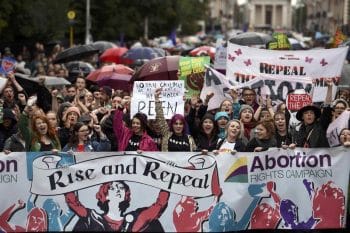
    Not a week has gone by in 2018 Ireland without several street demonstrations, especially about abortion and the housing crisis. In France, protesting is part of the vernacular. Riots are common: just look at 1789 and 1968. Ireland and France share a reputation for feistiness. A comparison between Irish and French demonstrations could be instructive. “What do we want? Public housing! When do we want it? Now!”. More than 10,000 people are currently home- less in Ireland. The demonstration I attended, organised by the National Homeless and Housing Coalition, on 7 April was good-natured: festive and serene. People played and sang music as they marched. The Garda seemed engaged and smiled while overseeing the demonstration: a safe protest. It appeared the crowd was representative of the general population, as perhaps you might want. It started at the Garden of Remembrance and ended in front of the Custom House in Dublin in light rain, as cheerful as the weather allowed. Its effectiveness was its mainstream attendance; there was no danger here. It would, I reflected, be different: more fractious, less representative, angrier – in France. Ireland fights for Human Rights At the moment Ireland is in arms over: abortion, education, sex education, health, animal welfare, drugs. But I have the sense that some of these campaigns are not mainstream, even as protests. Certainly the Water Protests were successful, albeit the underlying political message (no new taxes?) and symbolic value were not too clear. Abortion is a long-standing divisive issue in Ireland, symbolising the hegemony and, later, decline of the Catholic Church. Protests date back to 1983 when an unwise blanket prohibition was approved in a referendum. In May there will be a rerun. There are many events, debates and demonstrations on both sides, with pro-choice as fashionable politically as pro-life must have been a generation ago. The demonstration I attended in April was ‘pro-choice’- for ‘Equality, Freedom and Choice’, organised by Rosa. The rally was jubilant and confident, almost over-confident. The Daddy of all modern Irish marches is the PAYE protests from 1979-1980. Around 700,000 Dubliners marched against the stifling ‘Pay As You Earn’ tax. The BBC called it “the largest peaceful protest in post-war Europe”. But I sense things have changed since then. There is no longer an Ireland the sense that the regime is fundamentally at odds with its electorate. Perhaps it’s because the country now mostly complies with international norms or is fast moving in that direction; perhaps it’s because the country is simply much wealthier and has never been so confident. In 2003, Irish anti-war protesters organised a demonstration for peace in Iraq. The British and Americans had invaded Iraq. 100,000 walked on the streets of Dublin. It was a thoroughly internationalist protest. In 2006, a violent demonstration took place in Dublin’s O’Connell Street. For some reason Northern Unionists wanted to organise a ‘Love Ulster’ Parade to honour the victims of the IRA. A counter demonstration materialised and a riot started. Several Molotov cocktails were thrown and cars were burnt. A total amount of 14 persons were wounded and 41 arrested by Garda. Locals put the intense violence down to the alien influence of recalcitrant Northerners: it didn’t symptomise a new riot mentality. These kinds of demonstrations are pretty rare in Ireland compared to in France, where there are wide-ranging politically-driven strikes and demonstrations every year. Governments can fall as a result of demonstration culture in France. If France had had an international bailout that was forcibly inflicted on the population; if France had had the iniquities of Nama bailing out the richest failed developers there would have been strikes and riots. A country’s protest mentality varies from generation to generation. We’ll put down the Irish monster meetings and boycotts of the nineteenth century as the fruits of a different era. Where a country is colonised and not run for the benefit of the majority – or a significant minority – wideranging subversion is to be expected. In Ireland it culminated in the Easter Rising in 1916 and the War of Independence 1919-21. In the North of course discrimination against Catholics fuelled a later whirlwind. In the Bogside riots of 1969, eight people were killed, a majority Catholic, and over 150 homes destroyed; and the IRA campaign resulted in 1696 deaths. But, though important, this all speaks little to the modern-day Republic of Ireland.   France, protest pioneer French demonstrations have been well-known and lethal since at least the 18th century with a sustained and celebrated (though not of course by Edmund Burke) historic riot: the French Revolution, facilitating a declaration of the rights of man and changing forever the notion of the political establishment. In the twenty-first century, protests are still an important political phenomenon. France has been a global leader in dissent. The rockstar of street opposition was May 1968 when strikes and demonstrations led by students and workers and the occupation of universities and factories across France brought the entire economy of France to its knees and political leaders feared civil war or revolution. The moribund government itself ceased to function for a while after President Charles de Gaulle secretly fled France for a few hours in Germany. ‘68 changed France’s democracy: the super-annuated President De Gaulle resigned, the Assemblée Nationale was dissolved, and government committees were formed to restructure secondary schooling, universities, the film industry, the theatre and the news media. The Grenelle Accord gave better conditions for the unemployed, a 35% increase in the minimum wage and a fourth week of paid leave for those in employment. Mentalities started to change too with a sexual revolution from the young. Mixed schools became more common. 1968 sundered a post-War France of austerity, conservatism and asceticism. Nevertheless the movement succeeded “as a social revolution, not as a political one”. President of the Republic (2007-12) Nicolas Sarkozy famously denounced May 1968 as the source of contemporary France’s problems. The student revolts against bourgeois society introduced a “relativism”, he argued, that undermined national identity, the spirit of

    Loading

    Read more

  • Posted in:

    The appeal of Repeal

    There have been many turning points and defining moments as the debate over repealing the Eighth Amendment has unfolded over recent weeks. Some of these have been the powerful stories of individual women or groups of women; others have been the remarkable statements of specific organisations and yet others have been the unexpected campaigning experiences on the ground. Not least of these turning points has been the remarkable fund-raising campaign launched by Together for Yes just two weeks ago. It had a target of €50,000 initially but quickly increased to €100,000, €250,000,€300,000, €450,000 and surpassed €500,000 in the space of just ten days. But what moved even veteran campaigners were the heart-breaking stories and compelling responses of many of the almost 15,000 thousands who contributed. And for some, who made the decision to contribute despite being hardly in any position to afford to, they were matched in turn by other women and men welcoming the chance to make a public statement and many other thousands who contributed in silence. It was truly amazing the way you could see, feel and watch the secrecy that still thrives in Ireland as many who contributed asked to be anonymous, but were glad that they had found a way to make their statement within a society that silences and renders invisible their actual experiences as women in this country. Other defining moments have been the courageous statements by some organisations that have refused to have their stories manipulated in the interests of those who want to deny women access to health services in their own country and to reproductive justice for all women in Ireland – including migrant women, adoptees and women with disabilities. I would highlight in particular the statements of Downs Syndrome Ireland (DSI), Migrants and Ethnic-Minorities for Reproductive Justice (MERJ), Adoption Rights Alliance (ARA) and Inclusion Ireland (II). Without the timely intervention of Downs Syndrome Ireland (DSI) appealing against the exploitative use of images of children with Downs Syndrome, such images would have been far more pervasive. DSI has been joined by Inclusion Ireland making visible the often hidden experiences of women with disabilities, too many of whom have been denied the right to have a child or who have experienced disrespect and marginalisation within the maternity services in Ireland. It has been the persistent campaigning and activism of MERJ that has ensured that the rights and experiences of migrants and ethnic minorities have been kept in the forefront of the campaign for Repeal: “We often hear about Irish women who are forced to travel to England to access abortion. But what about the stories of the people who can’t travel to access healthcare due to legal status, lack of money, lack of childcare, disability, etc? Migrants and ethnic-minorities face enormous barriers to accessing abortion and maternity services and are disproportionately affected by the 8th amendment. Let’s remember Savita Halapanavar, Ms. Y and the countless others”. Another critical turning point and special moment in this Together for Yes Campaign has to be the very powerful and unstinting voice rarely heard in the mainstream debate on reproductive justice. The Adoption Rights Alliance (ARA) puts forward its compelling case for Repeal in the strongest possible terms. “For our organisation, the Eighth Amendment represents the latest incarnation of the control that was exerted over the thousands of women and girls who were forced to relinquish their children for adoption and who were incarcerated in Mother and Baby Homes, Magdalene Laundries and other institutions. Since 1983, all pregnant women in Ireland have been denied the right to choose whether to proceed with a pregnancy, just as adopted people’s natural mothers were denied any choice. ARA is opposed in the strongest possible terms to the notion that adoption represents a viable alternative to abortion. We firmly recognise the right of a woman to choose not to pro- ceed with a pregnancy. Adoption should only ever be utilised in situations where a child genuinely needs a home, and not as a mechanism whereby women and girls are forced to carry to term and then relinquish the child to a closed, secret system”. Individual voices have also brought new and unexpected emotional experiences to the urgent Repeal cause – in the last few days the story recounted by Chris Fitzpatrick, Obstetrician and Gynaecologist has caught the imagination of many. “I am a doctor. I am supposed to look after people. The woman sitting in front of me is crying. She has had a scan. Her baby’s brain has not developed. The baby will not survive. The woman is 20 weeks pregnant. Her partner has his arm around her. Her mother and father are on their way. Some of her in-laws too. I go over the options. It’s too early to make any decisions. Emotions are too raw. The midwife is very kind to them. We go through everything again the next day. The woman says she cannot go through the rest of the pregnancy. She is too upset. She is wringing her hands in anguish. I cannot help her. She will have to go to England. She and her partner will have to make their own arrangements. Of course, I’ll see her back afterwards. She has our number. She will have to talk to the doctors in England about how to bring the baby home. She wants to bury her baby with her grandparents. The woman is still crying. I offer her a tissue. I have a ticket for the hospital car park. They won’t have to pay on the way out. Inadequate gestures. Cold comfort. There is nothing more I can do. Doctors in another country will look after her. Everyone tells us how important communication between doctors is. I don’t lift a phone. I don’t write a letter. My hands are tied. As they leave, they thank me. I wonder: for what? I close the door of my office. I can hear the woman crying on the corridor.” (Chris Fitzpatrick, consultant obstetrician and gynaecologist (and former

    Loading

    Read more

  • Posted in:

    Pervasive effects of precarious work

    Employment in Ireland is often spoken about in terms of the economic recovery and falling unemployment rates. However, the real issue that needs to be addressed is job quality and the types of jobs that are being created. There has been increasing recognition that for many workers in Ireland and Europe employment has become insecure, with temporary and casual work increasing. The FEPS-TASC Report, ‘Living with uncertainty: the social implications of precarious work’, sets out to map precarious work in Ireland, and the impact this type of work has on precarious workers’ lives. This research involved 40 in-depth interviews with men and women living in Ireland, aged between 18 and 40, who work or had worked in temporary employment, were employed on a part-time basis with irregular hours and/or were hired on a self-employed basis. There are many definitions of precarious work, as no agreed definition exists. However, for the purpose of this report, we are focusing on employment that is contractually insecure, which includes part-time with variable numbers of highly skilled people are now being locked into insecure employment. A number of sectors of the Irish labour market have a disproportionate share of precarious work. Eight sectors scored higher than the national average. Transportation had high levels of solo self-employment, human health was characterised by a high level of part-time work, and education had a high level of temporary work. The remaining sectors (construction, wholesale and retail, accommodation and administration and support) had two or more dimensions of precarious work at relatively high levels. “Other NACE sectors”, which include occupations such as hairdressers, sports facilities workers and artists, scored high on all three dimensions. To understand the effects of precarious work, we need to look at life outside of the workplace, like the house-hold situation and access to social supports and services. We need to examine the consequences of precarious work for quality of life because, even though the basis of contractually precarious work might be similar in different countries, the experiences differ as a consequence of the availability of public services and state subsidies – for example, universal healthcare or child-care. The following are our main findings in the report. Precarious workers did not choose to be precarious First, the report found that none of our participants chose to be in temporary and “part-time with variable hour” employment. Much of solo self-employment was also not entered by choice but interviewees were forced into this arrangement as a condition for their employment. Importantly, we discovered that many people are unaware that they are working precariously; there are many workers who are working without a contract, or who assume a rolling contract to mean permanency. This finding points to the need for employers to be up-front about contractual status. Precarious workers cannot afford to be sick The report found that precarious working conditions can have a negative effect on physical and mental health. On top of that, the majority of participants cannot afford to be ill. The burden of expense is felt in two ways: through no paid sick leave, and as well as the expenses of paying to see a GP and for medication, tests and follow-up appointments. This lack of support can result in having to make hard decisions such as whether to first buy food, or pay bills or rent. Medical cards and GP cards are means-tested and most precarious workers do not fit the eligibility criteria to obtain them even though they are not able to afford primary care services. Precarious workers have difficulty finding stable housing The housing crisis in Ireland affects families and individuals with very different backgrounds. However, the difficulties that people in non-standard employment encounter are even more pronounced, as they lack economic stability. Precarious workers are not left with any other choice but to rent, or if the option was available to them, to live in the family home. With tightening mortgage regulations, (which followed the economic crash), and soaring property prices, people working in non-standard employment are unlikely to be approved by any lending bank. At the same time, renting in the private market has become prohibitively expensive in the last number of years. This has resulted in bouts of ‘hidden homelessness’ for many of our participants, situations during which they have nowhere to live and are forced to sleep on friends’ couches or stay with their parents. Precarious workers postpone having families It emerged from our interviews that having children was often challenging for precarious workers. While some decided to have children regardless, the majority of our participants continued to postpone childbearing. Postponement of childrearing amongst precarious workers is often not a choice based on individual preference. Instead, while precarious workers want to have children, their financial insecurity, directly related to their contractual insecurity, prevents them from becoming parents. For those who already had children, maternity leave and childcare are the most important issues that they face. It became clear through the interviews that maternity leave is challenging for women in precarious employment, especially for those who are on temporary contracts. First of all, the contract may be shorter than the actual leave. Likewise, for those who were on temporary contracts, maternity leave is a possible obstacle for the continuity of their employment. Formal childcare is too expensive for participants who have insecure incomes and thus alternative arrangements are often necessary. In the most extreme cases, one of the parents has no other choice but to quit their job. Such a decision is usually not based on traditional gender roles, but on employment status. Based on the interviews, precarious work does not appear conducive to having a family. Precarious work leads to insecure lives Contract insecurity and wage unpredictability lead to workplace insecurity and create insecure and unpredictable lives. The lack of independence that precarious work entails often creates a situation in which many people must live with their parents and thus are unable to develop independent lives. Public benefits and support services, such as state access to free primary care services, accommodation,

    Loading

    Read more

  • Posted in:

    Island of Tyreland

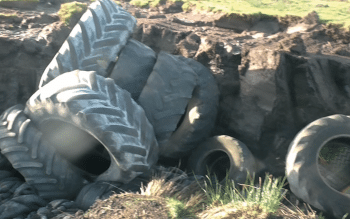
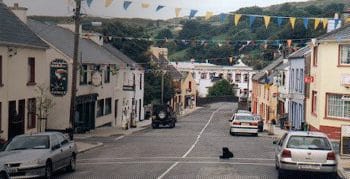
    Carndonagh is an area of outstanding natural beauty that nestles in the shadow of the Grinlieve Mountain, only eight kilometres from the designated Natura 2000 sites, Trawbreaga Bay Spa and the North Innishowen Coast. Safeguarded by the 1992 Habitats Directive both these ecological wonders are home to protected animal species and diverse wetlands. Outwardly this area seems idyllic and well-protected; however, on 4 December 2011 Sunday Life newspaper exposed Meenyollan, Carndonagh, as the location of a vast illegal tyre dump fed by KF Tyres, Corody Road, Derry (top right). The landowner, Michael McLaughlin, was also claimed to be complicit in the dumping. Nearly ten million tyres had been buried, unregulated, in the period 2008-2011 alone. At least one for everyone in the audience. It has made Carndonagh Europe’s largest illegal tyre dump. Following the Sunday Life exposé in 2011, Donegal County Council promised robust enforcement including an extensive cleanup operation. KF Tyres should have been made responsible in whole or in part for the cleanup operation Donegal County Council promised. However, seven years on, there is still clear evidence of tyres being illegally buried at this location and there is little evidence of a cleanup. The pristine fields, underpinned by tyres which leach into the meandering water table, contrast starkly with the surrounding boglands and call to mind previous violations and unseen toxicity (bottom right). Although it is difficult to find out the exact composition of a tyre, and there are lots of different types most of them include synthetic carcinogens, solvents and heavy metals, for example. KF Tyres and Michael McLaughlin escaped prosecution and in fact subsequently applied for and were granted a range of permits and planning permissions by both Donegal County Council and the Northern Ireland Environment Agency (NIEA) allowing them to legally operate at the same site. These incongruous decisions, some of which were granted in breach of the legally-man-dated sequence, reduced the promised enforcement to no more than knuckle raps. After an abortive attempt by planning consultant Jim Harley to get McLaughlin’s development deemed “exempt” from planning permission, an unlikely new wheeze was to tout it as land reclamation with secondary drainage benefit. Yet still the terms of the new permits permissions have been flouted. Photographic evidence clearly shows that illegal dumping is still going on at the site. In 2018 KF Tyres and Michael McLaughlin are still controversially involved on this site, while Donegal County Council behaves as if it is unaware of this. In 2015, Planning Permission was obtained for the use of 8448 tyres in 105 bales (80 tyres per bale) over a five- year period, suggesting even what Donegal County Council considers reasonable has been overwhelmed by illegal dumping on a much greater – indeed unconscionable – scale.   The photographic evidence (left) shows that neither McLaughlin nor KF Tyres appear to be compliant with the terms of the planning permission, which demands that the tyres that are used be baled, not loose (left, bottom right); nor do they seem to care. Moreover, Donegal County Council evidently does not appear to know what is going on. For example, after the Sunday Life article in 2011, Donegal County Council promised an investigation and robust enforcement. However, in January 2012, mere weeks after the article, Donegal County Council granted McLaughlin a five-year Waste Management Facility permit (WMP) (top right). Why? No planning permission had been granted though one is mandatory before a WMP can be issued. Without the requisite planning permission all tyres taken to Cardonagh around that time continued to be transported and dumped illegally. Jim Harley, formerly of Harley Planning Consultants, has figured in strong criticisms levelled against the Donegal County Council planning department when he worked there a decade ago. These are currently being reviewed by a senior counsel on behalf of the Department of Housing, Planning and Local Government. Harley acted as a planning consultant for McLaughlin when he was granted planning permission in November 2015. There was one condition: that he apply for a WMP. But there was an existing WMP that had been issued illegally. It was illegal precisely because it should not have been issued before planning permission was granted. The Sunday Life article stated in 2011 that KF Tyres had a WCP (waste carriers permit) with Donegal County Council to collect “end of life tyres” but it had no permission to bury tyres at Carndonagh. It is yet another anomaly that KF Tyres obtained a valid Waste Carriers Licence for the South in 2011 but no planning permission or commensurate licence for the site it operated from in Derry. It is strange that Donegal County Council neglected to contact the NIEA about KF Tyres in 2011. The NIEA went on to grant Ken Ferguson a WMP (bottom right) allegedly oblivious to the illegal dumping. This information would have been immeasurably beneficial in averting the current situation. Donegal County Council should have been monitoring the site, verifying the number of tyres being buried both by KF Tyres and McLaughlin. No assessment appears to have been made, north or south of the border, of how many Trans Frontier shipments (TFS) and what tonnage of tyres, KF Tyres declared to the NIEA it had transported between 2012 and 2015.   It is not clear how many physical border and site inspections were made by Donegal County Council and the NIEA during this period. As stated both the WMPs (previous page) were granted under Appendix II of the EU Waste Frame Directive 2008/98EC: recovery operations. R10-Land Treatment resulting in benefit to agriculture or ecological improvement; R13 – storage of waste pending (right). Amazingly there is no reference to waste tyres or indeed anything like rubber within this directive, nor to the burial of solid waste in any form. Land reclamation using tyres is deemed dangerous and illegal in Northern Ireland , but not in the Republic – yet both countries are bound by the same European Directives. Given the toxicity of tyres and the stringent legislation on their

    Loading

    Read more

  • Posted in:

    Judge Horner brazens it out

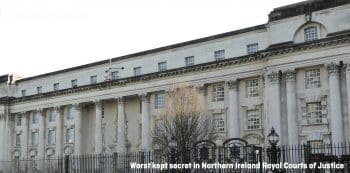
    The Fourth Defendant in the recent rape trial of rugby players in Belfast was Rory Harrison of Manse Road Belfast. He was acquitted of perverting the course of justice by lying to police when he gave a witness statement about his dealings with the complainant woman and deliberately omitting information. He was also acquitted of withholding information from the police. After dropping the woman home and walking her up her driveway, the court heard Mr Harrison texted the woman: “keep the chin up you wonderful woman” and she said she had absolutely no complaint against him. The day after the incident Harrison wrote to Blane McIlroy: “Mate the scenes last night were hilarious. Walked upstairs and there were more flutes than July 12”. Rory who has lived in Dublin and played as prop for UCD and Terenure College Club, is the son of Terence Harrison, a solicitor and partner in Harrison & Hardstaff, 7 Donegal square West Belfast. A former partner is Ian Hardstaff, current Master of the High Court in Belfast. Terence Harrison is the present sole director of TMKK limited, a property company registered in Belfast and incorporated on 13 February 2001. TMKK limited came to prominence last year when a lay litigant was defending an action by Bank of Ireland which was seeking repossession of some property in Northern Ireland. The action had taken nearly four years and was finally heard by Judge Horner. At the very last moment in March 2017 the litigant in question received information, quite accidentally, that the Judge was a shareholder and former Director of TMKK limited; that his wife Karin Horner at that time was a director; and that the company was grossly indebted to the Bank of Ireland, having borrowed substantial sums to fund the purchase of property in Belfast. Checking the records in companies house it was discovered that not only was the company indebted to the Bank but that in 2016 its assets had been devalued from £2,0650,40.00 to £950,000.00, having remained unchanged in value since mortgages were taken out in 2007 when Judge Horner was a QC – barrister – and Director of the company. Property values generally in Northern Ireland had collapsed in that same period but, uniquely, not those owned by TMKK limited. In the notes to the 2016 accounts it was stated that the company was considered a going concern only because of the support of Bank of Ireland: it is questionable whether or not the company was trading while insolvent and whether the value of its assets was properly reported between 2007 and 2016. If its directors knew that the value of the assets was being overstated further issues might arise. The lay litigant brought these matters to the attention of Judge Horner forcing him to recuse himself from the trial while, bizarrely, claiming that he was doing so not because he had been caught out in a manifest conflict of interest that he had not disclosed but because the defendant would not accept any judgment he made. On 14 March the lay litigant made an official complaint to the lord chief Justice’s office but has not yet received a substantive reply, as the office seems wrongfooted. The Lord Chief Justice’s office still seems nowhere close to convening the Tribunal envisaged in the Code of Practice on Judicial complaints. It has produced increasingly forlorn excuses as to why this has not happened. On 27 March 2017 Justice Horner recused himself from the lay litigant’s case giving a statement saying that the reason he recused himself was because the litigant in person would not accept his judgment. This is judicial nonsense. No judge ever should doubt the acceptance of his judgment by a party. The Lord Chief Justice’s office told Village: “Mr Justice Horner stated in open court that he was recusing himself in the case involving the Bank of Ireland and the lay litigant. He said he was satisfied that there was no question of actual bias or that he had any conflict of interest in the case, but that it was apparent to him that ‘the party would never feel able to accept [his] verdict’”. Judge Horner was forced to recuse himself from another long-running trial involving Bank of Ireland at the same time. In that case it was the Bank that asked him to recuse himself and not the other party: he admitted to counsel involved that he was “seriously under water” with the Bank. It appears that he may have given a personal guarantee or guarantees to the Bank to cover at least part of the company’s borrowing in the normal way and that with the company now a loss-making venture those guarantees would fail to be paid. It is the belief of the litigants and of the NI Bar, where this subject is still hot news, that the Bank was well aware of the conflict of interest as were the solicitors then instructed. The failure by the judge to raise the conflict of interest is seen as a very serious matter and the later application by the Bank itself that he recuse himself from a case in which things were not going well for the Bank is seen as scandalous. A question remains as to whether the Bank did not raise the issue of his conflict of interest in cases that were going well for it: if that were the case then it would be shockingly serious for the administration of justice. Further questions remain as to how many other judicial officers including those holding the office of master or similar in NI are or ever have been in the same position as Judge Horner and the extent of the potential hold that the Bank of Ireland, and other banks, may have over others. Bank of Ireland still holds a charge over the assets of TMKK limited of which Terence Harrison is now the sole director. There can be little doubt that officials of the Bank will have been

    Loading

    Read more

  • Posted in:

    Sinn Féin alone

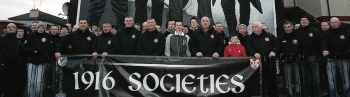
    Republicanism is fragmenting. That was  seen on Easter Sunday, when at least eight Republican groups held commemorations on Belfast’s Falls Road. At protests in the North, it is common for various ‘dissident’ groups to have more presence that mainstream Sinn Féin. That party has a much smaller activist base than a decade ago. Paradoxically, as that base has shrunk, the vote has increased. The exodus of members has not affected the vote. That was seen most starkly in last year’s assembly election for North Antrim. A councillor and 17 other activists resigned in protest when the party forced assembly Member Dáithí McKay to resign. Monica Digney, an able and respected former councillor, and one of those who had resigned, stood as an Independent. Sinn Féin’s vote increased by just under 3%. Digney polled just 435, lagging behind the Green Party. That is a stark version of trends across the north. A few years ago, even Sinn Féin strategists believed the vote had plateaued, and might even fall back. In last year’s Westminster election, Sinn Féin took 29.4% of the vote. That was a 4.8% increase in a year. The terminal decline of the SDlP has been hastened. Sinn Féin took the SDlP’s two perceived strongholds: South Down and, of greater importance, Derry. That is not to deny the importance of the exodus. There is a disillusionment with Sinn Féin. An Easter statement from Óglaigh na hÉireann prisoners sums up the dissidents’ problems: “It’s clear that presently the revolutionary Republican community appear to be facing challenging times and lack strategic direction in response to these events”. The largest single non-Sinn Féin grouping are the 1916 societies. There have spread out of their initial base in East Tyrone across the North, and into the South. They have a sizeable membership, mostly of an older generation, but they also have a small but significant membership from the post-IRA generation. They are an excellent symptom of how widespread the malaise in Republicanism is. They have engaged in some co-ordinated activity, such as calling for an all-Ireland Referendum on unity. However, their main activity is commemorations. This is the only activity on which all non-Sinn Féin Republicans can agree. They certainly cannot on a central debate for Republicans: whether or not there should be an armed campaign. Most are opposed. some, mostly from the anti-armed-campaign cohort, are becoming involved in community issues as individuals or through different organisations. There is no issue about which ‘dissidents’ can coalesce. In 1969-70, the Republican movement split into ‘official’ and ‘Provisional’ wings. (The ‘Provisionals’ became today’s Sinn Féin, while the remnants of the ‘officials’ are the Workers Party). The ‘Provisionals’ derived from the anger of many young Catholics, and a belief that the IRA had spent too much time on left-wing politics rather than preparing to defend catholic areas. This time, there is no single big issue to divide Republicans. There is a generalised unhappiness at Sinn Féin’s acceptance of Stormont and the PSNI. In some cases, unhappiness has spilled over into demoralisation. Some in Sinn Féin dismiss ‘dissidents’ as criminals. That is not to say there are not criminals using dissident groups as a cover; and others who, their war over, have turned to criminality but it is not the central case. The dissident groups are fragmented. The new IRA and the continuity IRA are continuing their campaign, while Óglaigh na hÉireann has called a ceasefire. All armed groups are riddled by infiltration by security-force agents. However, they have found a certain niche in carrying out punishment attacks. These grew by 60% between 2013 and last year. They are popular among a significant layer of the population in Catholic working-class areas. Part of the reason is the traditional hostility between the catholic minority and the police in the Northern state. Part is also that punishment attacks offer ‘quick x’ justice, without the necessity to take the time taken by a formal court system. Police seem willing to let punishment attacks continue, as long as the victims are perceived ‘hoods’. Vigilantism, though, is not a basis for building organisations that will be a serious alternative to Sinn Féin in Catholic areas. Sinn Féin could probably benefit from a bit of coherent opposition from people whose political premises, at least viscerally, it identifies with. Anton McCabe

    Loading

    Read more

  • Posted in:

    The strong centre

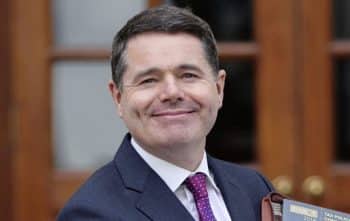
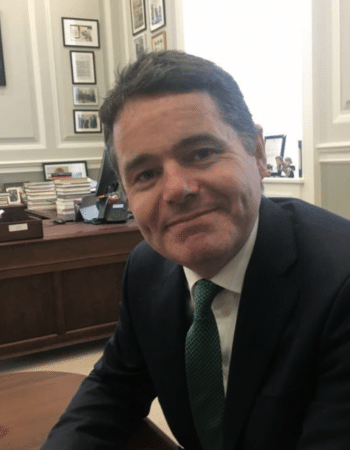
    Paschal Donohoe is a decent man: modest, cultured, the cleverest man in the room, according to a senior Fianna Fáil figure who spoke to Fiach Kelly in the Irish Times recently: the man other politicians envy, and a safe pair of hands. At 43, he has graduated with first-class honours from Trinity college, lived abroad, pursued a career in the private sector and risen without obstacle from local politics in Dublin city council to the heights of government, and the Ministry of Finance. Unlike his even younger boss Leo Varadkar he doesn’t have the sheen of a cultivated image. he has never attracted any suspicion of impropriety, never been excoriated, even in the unpleasant role of frugal Minister for Public expenditure (which he sure-footedly merged with the Finance brief when he took it over). When Village interviewed him he was open, generous with his time, eloquent. He reads progressive Irish fiction, has some quirky tastes, knows what is going on in his constituency about whose substandard welfare he remains committed. He even says he reads Village. Village’s agenda is equality, sustainability, accountability and it is wide and all-embracing enough that any political force, as Mr Donohoe certainly is, can be assessed against its imperatives. He is certainly in relative terms a model of accountability and openness. But what of equality and sustainability? Paschal Donohoe serves the politics of Fine Gael faithfully. He implies that Fianna Fáil is economically fickle, not always pro-european or outward looking and, increasingly implausibly now, that its attitude to ethics is demonstrably inferior to that of Fine Gael. He believes in Europe, the Open Society of Declan Costello, in an embracing attitude to outsiders. He believes in a balance between the markets and the state and, creditably from the perspective of this magazine, thinks the momentum has moved too far to the markets and needs to move back to the state, globally at least. He takes a robust attitude, as did his hero Declan Costello, to the obligations of the state. It will intervene to incentivise or nudge those who do the right thing, it will not perpetrate evil itself. He was passionate in defending the coherence of this attitude, in his interview. Mr Donohoe believes in the rights of property but will interfere at the edges, as with site-value and sugary drinks taxes. The state needs to plan systematically for development of its own lands. On national planning he was reluctant to stay how he would stop unsustainable development – such as the sprawl of Dublin into counties Meath, Wicklow, Kildare and beyond, as opposed to merely incentivise and encourage sustainable development – for example of cities and towns outside Leinster. He does not seem engaged by the environmental and climate-change agendas, though he knows its rhetoric. He rarely acknowledges, in policy, that Ireland is the laggard in Europe on climate, plastic waste and many other environmental performances. He does not seem zealous to revive the across-the-board indicators of social and environmental success, not just economics, that even the Fianna Fáil and Fianna Fáil-Green governments toyed with a decade ago. Failing them, it is likely we will continue to be a model of unsustainable, joyless growth, a paradigm of how to nearly get it right. As to equality, Mr Donohoe is exercised by the plight of those who cannot put themselves in a position to benefit from the equality of opportunity that those with strength crave. He knows from his Dublin central constituency that intergenerational inequality is difficult to mitigate. But his credo is equality of opportunity and he and his party are never going to be forces for radical redistribution, for equality of outcome. He is a decent man of the “strong centre”. He and his party have done some service bringing back elusive economic success to this country bankrupted by the now shiny principal opposition party. It has been argued that Fine Gael, with its visceral fetish for the rights of property, so well-enjoyed by its protagonists and indeed its voters, is ill-equipped to deal with the crises of housing and homelessness that do much to undermine the fabric of society in 2018. It is ideologically too wedded to the private sector to provide homes on the scale required on public lands. Mr Donohoe, in fairness, claims that he has far-reaching proposals to do just that. We’ll see. Ireland is lucky to have such an open, decent, youthful and thoughtful politician in the Department of Finance as the risen fiscal pendulum suggests we can once again explore a national Vision. But it is impossible to be radical from the centre, however strong, and – for Village, Mr Donohoe would do well to address the social and environmental agendas as stringently and competently as he continues to promote and foster the purely economic agenda.

    Loading

    Read more

  • Posted in:

    Villager May 2018

    No Catholics or bastards please, we’re British Villager despises royalty, as anyone who believes in equality, merit or good taste, must. Interesting though that new-born Prince whatsit will come in fifth in line to the “throne”. Time was the new “Prince” would have been advanced to it over his older sister (Princess whatsit), as a male. The Bill of Rights 1689 and the act of settlement 1701, restrict succession to the legitimate Protestant descendants of Sophia of Hanover, of which there are over 5000, who are in “communion with the Church of England”. Spouses of Roman Catholics were disqualified from 1689 until the law was amended in 2015. The succession to the Crown Act 2013 leaves succession to the Crown no longer dependent on gender for lucky heirs born after 28 october 2011. With such incremental progress it will only be a few aeons now before the monarchy passes for democratic. INMajor trouble 23 years ago Vincent Browne got €90,000 in a private settlement with the state because the Garda tapped his phone over an eight-year period in part believing he was talking to IRA leaders for Magill Magazine. a decade earlier journalists Geraldine Kennedy and Bruce arnold were awarded £20,000 in the high court after their phones were tapped for a short period, for absolutely no reason. So how much will the around 200 lucky victims of Leslie Buckley’s version of phone-tapping – data breach – collect? INM has a cash pile of €90m but a stock-market value of only €110.9 million valuing INM in effect at less than €20 million, plus the cash. The problem is that 200 complaints of data breaches could easily hoover up most of that sum. O’Brien has spent €500m building up his stake, partly to show the O’Reilly family what good management looked like and er partly to boost his popularity, but his holding is now worth only €33m and shares are down 40% over the last year. This is an investment even worse, though not nearly as predictably so, as one in Village Magazine over the last decade. STabbing the competition On 22 april The Sunday Times (Irish edition) unkindly editorialised that the INM group was leaking selective extracts from the 240-page affidavit of the ODCE on which it has grounded its application for the appointment of high court inspectors who would examine various allegations against the media group and its former chairman, leslie Buckley. In particular, The Sunday Times claimed that INM was strangely silent on the allegations leaked from the affidavit that the largest shareholder, Denis O’Brien, had access to sensitive commercial information, courtesy of communications minister, Denis Naughten, before other shareholders. But ironically The Sunday Times is part of the Rupert Murdoch stable, news International, which was forced to close down its News of the World brand in 2011 in the light of damning revelations that some of its senior editorial staff had condoned the widespread tapping of phones and other criminal offences. At one point former Taoiseach, Bertie Ahern, soon after his inelegant departure from office in 2008 amid evidence of financial wrongdoing, graced a TV advertisement for the News of the World from inside a kitchen cupboard, his most ignominious television appearance until the recent Tim Sebastian interview. The Sunday Times was famously less than wholehearted in pursuing the politician for failing to account for over £200,000 unexplained in various bank accounts while he was Minister for Finance in the 1980s. ahern cultivated Murdoch whose sky division famously obtained rights to cover the Ryder cup in Ireland under Bertie’s premiership. Equally intriguing is the insistence by O’Brien that the leaks to INM from the affidavit came from the ODCE rather than from the copy provided to the newspaper organisation in which he is the largest, though – significantly – non-controlling, shareholder. The leaks came from people close to the non- O’Brien wing of INM. Radio Caroline ended party early Chris Donoghue, Niall O’Connor and Ed Carty have joined the ranks of independent journalists who now advise government. Government Press advisor Nick Miller once toiled for regional titles such as the Kerryman, Tullamore Tribune and Evening Echo. Now the one-time series producer of RTÉ’s ‘The Sunday Game’, and regular voice of ‘It says In The Papers’ on ‘Morning Ireland’, Caroline Murphy, has become press advisor to Minister for Justice Charlie Flanagan. She is of course married to Sean O’Rourke, presenter of RTÉ Radio 1’s flagship current affairs programme, the ‘Today show’. The formidable Murphy described some years ago to the Irish Times how she fell for the uncontroversial presenter: “We met around 1983, when I had a singles BBQ in a house I’d bought in Killiney: everyone invited had to bring a friend of the same sex and Fintan Drury (later chairman of the RTÉ authority who resigned because of a conflict of interest over rights to cover the Ryder cup) brought Seán. He was still there with Fintan at 2am when I threw them out – Seán was shocked. I couldn’t believe anyone would think it wasn’t my right to say the party’s over”. Murphy told the Irish Independent her work at the national broadcaster has been “marginal” in recent years. Neutering neutrality Cosying up to NATO is now de rigueur inside ‘modern’ Fine Gael. Four of the party’s MEPs, Seán Kelly, Brian Hayes, Deirdre Clune and Máiread McGuinness, advocate a policy which would see us dilute neutrality by falling in line with deepening EU military co-operation. In a statement issued to accompany the launch of a discussion paper ‘Ireland and the EU: Defending our common european home’, by Brian Hayes on 9 March, the MEPs stated, “We want to make it clear that we do not support the creation of an EU army. However, Ireland can do so much more in collaboration with our EU partners in the area of security and defence”. These MEPs have not gone off on a frolic of their own volition. This is now FG and Varadkar’s euro-military policy. Ironically, the Taoiseach is known to

    Loading

    Read more

  • Posted in:

    Paschal Donohoe: Minister for Finance, Public Expenditure and Reform

    I interview the charming, chatty and firm Minister for Finance in the Department of Finance on a bright Wednesday in late April. He has just benefited from a profile in the Irish Times which of course likes his supposed toughness, especially when public-sector-pay talks loom, and which quotes a senior Fianna Fáiler praising him as “the cleverest man in the room” (even when Varadkar is in it). It also notes that despite his “Hello, Everybody” manner, “Business and interest groups that come into contact with him leave impressed with his knowledge and command of his brief. These are the traits that other politicians note and envy”. Donohoe is, then, an Irish Times sort of guy. Arranging the interview was straightforward, and his handlers, particularly Deb Sweeney, efficient and unstuffy. He gave me more time than had been allocated, and a book, ‘The Value of Everything, Making and Taking in the Global Economy’ by Mariana Mazzucato (2018), as I was leaving. He was still engaging about his favourite works of literature as I was in the end ushered down a corridor and out into the sunlight. Mazzucato, in her book, claims that many advanced western countries, in particular the US and Britain, now confuse those who create value for those who extract it or destroy it, leading to impoverished and unhappy societies, soaring inequality and declining growth. I conclude the gift was well-judged. On his Political Philosophy… “My political philosophy is a politics of the very strong centre. I look at the opportunities and chances that I’ve had in life by virtue of the school that I went to and the upbringing that I’ve had. I believe that should be available to everybody in our country. I believe that, in order to make that happen, we need to have an open society and a diverse economy. I want to see an Ireland that is inclusive, that can welcome people and make them feel at home, and I strongly believe in a mixed economy. I believe we need both strong governments and strong markets and I think either on its own cannot achieve what citizens need”. On his Economic Philosophy… “My economic philosophy then springs from that. I believe in a resilient and mixed economy. I believe that markets can do some things well and I believe government can do many things well. If you look at the kinds of new economies that are being developed and the new challenges that are developing, we can only respond to them if both the State and markets play their role. We have seen, to the great cost of our citizens in particular, what can happen if markets become unbridled; and we have seen at other times in history what can happen if the State is expected to do everything; and I don’t believe either work. I believe the global balance needs further shifting at the moment – in favour of the State. I believe that we get the balance about right here in Ireland but I believe that we are going to need to continue to support supranational organisations like the European Union, like the WTO, like the OECD, to help nation states respond back to new challenges like artificial intelligence and to the de-globalisation agenda that is now beginning to develop. I believe very strongly in equality of opportunity but I’m very conscious at the moment that that credo is being challenged by developments within the market economy – if we keep on encouraging our citizens to believe they have equality of opportunity and then, generation by generation, that equality of opportunity is not realised, it poses very serious questions for citizens regarding how they feel about the State. Because if, from generation to generation, that opportunity is not realised or even offered the prospect of citizens either blaming themselves or the system and the State for not offering that agenda poses really grave challenges for how we organise our liberal democracies. I unfortunately believe some of those risks are beginning to materialise elsewhere at the moment”. On equality of outcome… “I think equality of outcome is something that is very, very difficult to achieve because I think it runs against the grain of initiative and individuality that I ultimately believe has a very important role to play in our society as well”. As to whether equality of opportunity is desirable… “I think equality of opportunity is more desirable than equality of outcome and certainly in the policies I try to follow and implement in the two jobs I do at the moment it is about trying to realise opportunity. But I’m conscious of the fact that an equality of opportunity agenda doesn’t speak to, or doesn’t help, citizens who are at the margins of our society; and for those citizens a more interventionist approach is necessary on behalf of the State I should say”. As to whether equality of opportunity can be unfair to the extent that people’s capacity for grasping opportunity is sometimes determined by luck and not entirely a product of effort or initiative… “And this is why I accompany my support of equality of opportunity with a strong support for the necessary role for an enabling and strong State. The difficulty that the equality of opportunity agenda has is when it runs into the chance of birth or runs into intergenerational inequality, and this is why I believe we need an active and enabling State alongside regulated and flourishing markets. I would be supporting the interventions that we have at the moment. I do not think that the agenda of positive discrimination is one that can command ongoing support here in Ireland and so this is why I support the State playing a more active role in the management of land, why I support for example property taxes. It’s why I support a a progressive tax code. Because without having those things in place you can’t offer the support that is needed to deliver the funding for an active State”. On difference in emphasis from Michael Noonan’s… “As

    Loading

    Read more

  • Posted in:

    From Naughten to Neachtain: nothin’ worth notin’

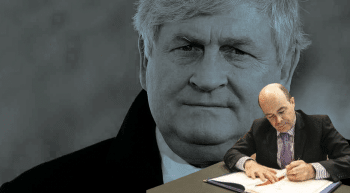
    It is not a question of whether, but how many, more people will become embroiled in the developing row between Independent News and Media and the Office of the Director of Public Enforcement (ODCE). The battle should more accurately be described as one between the biggest shareholder in INM, Denis O’Brien, his appointed chairman to the company and confidant, Leslie Buckley, and Ian Drennan the director of the ODCE who is seeking to appoint High Court inspectors to examine aspects of the media corporations’ governance. In the latest twist to the saga the Minister for Communications, Climate Action and the Environment, Denis Naughten was almost forced to fall on his sword after it emerged that he gave commercially sensitive information to lobbyist, Eoghan O Neachtain, indicating a probable referral of the attempted media purchase of Celtic Media Group by INM to the Broadcasting Authority of Ireland (BAI). Heneghan PR for whom O’Neachtain works, was acting for INM when the lobbyist made the call to Naughten in November 2016, and company boss, Nigel Heneghan, promptly informed his client Leslie Buckley about the news that a referral to the BAI was likely. Buckley immediately passed it on to O’Brien, who controls 29.9% of INM, but apparently did not extend the same courtesy to other board members at the time. When asked about a possible referral by him of the Celtic Media purchase proposal to the BAI by Independent TD Catherine Murphy and Brian Stanley of Sinn Féin three weeks after the phone call with the lobbyist, Naughten had refused to confirm his likely course of action to the Dáil. In the normal course of events, in a normal democracy, a minister passing on such market-sensitive information to a company, or in this case to its largest shareholder, would precipitate a thorough investigation and probably a ministerial head on a plate. Not so in this case. Incredibly, the independent minister insisted that he was only expressing a ‘personal opinion’ to O’Neachtain, whom he said he knows socially from Connacht rugby circles. He confirmed that he had taken no notes of the call. He also said that he met Buckley at an event organised by INM in May 2017 just a month before INM cancelled the acquisition of Celtic Media and just before the minister was to determine whether the deal should proceed. He told the Dáil that he was “trying to recall the detail of that but I do not recall him (Buckley) raising with me at that stage” the issues pertaining to the Celtic Media purchase. In his affidavit to the High Court, heavily leaked, Drennan has suggested that the minister’s action may have breached corporate governance rules insofar as commercially sensitive information was provided to just one shareholder of INM in advance of the likely referral of the Celtic Media purchase to the BAI. By fully supporting the minister, Leo Varadkar may well find himself the focus of criticism further down the road by the corporate watchdog for pre-empting an investigation by the High Court inspectors he is seeking to have appointed to investigate a string of alleged serious, including criminal, behaviour in INM. Varadkar has until now managed to avoid any entanglement in the uncomfortable and controversial relationship between O’Brien and Fine Gael, going back to the mid-1990s when the businessman won the hugely lucrative second mobile phone licence with the assistance of then communications minister, Michael Lowry. The party managed to clear its debt within a few years and although its main fundraiser, Lowry, was forced out in the wake of the Moriarty tribunal investigation, the links between O’Brien and senior party figures, including former leader Enda Kenny and current EU commissioner, Phil Hogan, has long persisted. The main opposition parties have concentrated on this potential exposure of the Taoiseach to the ongoing dispute between the INM and the ODCE, which is investigating an alleged data breach by the company affecting senior staff, journalists, lawyers and others as well as issues over the, since abandoned, attempt by Buckley to get INM to buy Newstalk, the radio station controlled by O’Brien. According to a protected disclosure by former INM chief executive, Robert Pitt, Buckley tried to get the board to pay substantially more for Newstalk than he and his advisors thought it was worth. O’Neachtain, of course, is a former press officer for Fianna Fáil and once toiled day and night to defend Bertie Ahern as he sought to explain his inexplicable financial arrangements to the Mahon Tribunal during the period he was a finance minister, without a bank account. No doubt he knows where other Fianna Fáil skeletons are buried and indeed must be aware of a thing orf two about Fine Gael having advised Enda Kenny during his term at Taoiseach. But Fianna Fáil is also holding fire because it does not want to provoke a general election which would edge closer if Naughten were forced out of cabinet and government, potentially weakening the wafer-thin voting balance in the current Dáil. Besides, following the next election the party may need the support of independents like Naughten. Sinn Féin is reluctant to do anything which could jeopardise the stability of government in advance of the referendum to repeal the 8th amendment in late May. Frank Connolly

    Loading

    Read more

  • Posted in:

    Ireland, Italy and the Disclosures Tribunal

    Leonardo Sciascia was an Italian political journalist, an elected radical member of parliament and the most prominent anti-mafia critic. All of this features in his famous detective novels which are in fact anti-detective novels or works of political observation. Coupled with his masterly analysis of the assassination by the Red Brigade of the Christian Democrat conciliator and former Prime Minister Aldo Moro they amount to a sustained critique of Italian and Sicilian political and cultural life. They reflect the complex interstices of corruption and collusion between extreme-right-wing Catholicism, organised crime and the shadowy self-protection syndicates of big business, politics, a malevolent state bureaucracy and crime. His books show the lethal effects of innuendo, smoke, mirrors and sighs, the nefarious rumour mill, shadows. Sciascia was a specialist in the mafia and he demonstrated how they kill and destroy. First they isolate, disempower and then denigrate. They in effect demonise their prey. And those who seek to investigate them, such as Judge Giovanni Falcone, who act on principle are destroyed in the process. This is exquisitely detailed in ‘Equal Danger’, his best book. In Sciascia’s fiction, it is the detective, not the murderer, who is isolated and suspected. Ironically in the end Sciascia attacked the crusading judges as putting civil rights at stake in an article, when he was dying, that irredeemably punctured his reputation, by attacking Falcone as a celebrity judge. This is deeply relevant to Ireland. Our mafia are our corrupt politicians, bankers and lawyers and the toxic relationship of our shadow state of governance between the police and the justice department. Those who challenge corruption or blow the whistle are reputationally destroyed, personally attacked, framed, driven to self-destruction or simply disposed of. Ireland is Italy and “equal danger” a cautionary text. The smearing of the state knows no boundaries and frequent collusion with Tulsa a criminal conspiracy maintained by many lawyers who should be disbarred. Another Sciascia theme, particularly evident in his most famous text, ‘The day of the Owl’ is the Sicilian trait of anomie or indifference. A shrug of the shoulders. It is what it is. Life moves on. Principle, justice and the truth are a waste of time. In controlled societies such as Ireland and Italy Sciascia’s books show the lethal effects of innuendo, smoke, mirrors and sighs, the nefarious rumour mill, shadows, in Italy trivialisation amounts to a resigned admission that the victims of crime had it coming to them in some obscure way. It betrays a desire for yourself not to go the same way. Being principled in an unprincipled society is very difficult. We know more than 10 black sacks of shredding left the office of the Commissioner under the supervision of a superintendent who has given evidence twice already to the Tribunal. The phone of the two past heads of national intelligence, Callinan and Ms. O’Sullivan are gone…vanished, destroyed. Yet no issue of the destruction of crucial evidence seems to be of concern to the Tribunal. It was the husband of the former Commissioner O’Sullivan who was appointed to take charge of the investigation into Superintendent Taylor. The phone of the Superintendent was taken but that crucial evidence too is lost. It seems to be simply a matter of no consequence. A judge whose orientation in private practice was prosecutorial and who, on the bench, has been somewhat indulgent of changes to evidential exclusionary rules to the advantage of fact-gathering gardaí, risks steering a Tribunal away from the glaringly obvious criminality of the highest level of the Department of Justice and the police. Moreover Maurice McCabe is represented at the Tribunal by former Minister for Justice Michael McDowell SC, a long-time and visceral political defender of the police and law and order. If I were McCabe I would contemplate refreshing my legal representation and wonder how the now ascendant narrative is that a cock-up rather than obvious state criminality smeared him. He should dwell on whether it was in fact appropriate for him to concede that the evidence established that the inclusion of the false allegation against him of rape in the 2013 Tusla report “was some form of cut and paste error”, and that the error was not the result of any deliberate action or ill will. And he should consider how the damning evidence of the press secretary Dave Taylor was not addressed first, as the Tribunal’s first module, as dictated by the terms of reference; and how the sequence of modules was altered so the less clearcut Tusla model was heard first. Instead the Tribunal opened with an arbitrarily selected series of smokescreen narratives implying a cock-up by Tulsa, and culpability for outlying zealot Callinan perhaps. Noel Waters, former Secretary General of the Department of Justice, has suffered from amnesia. In his evidence to the Tribunal he declared he could not remember, on nearly 50 occasions. Most damningly, he spoke to Nóirín O’Sullivan at a crucial moment during the O’Higgins Commission which in 2015 was looking at allegations of poor policing in Cavan/ Monaghan made by Sergeant McCabe, phone records indicate. However, neither Waters nor O’Sullivan can remember the 14-minute call on May 15, 2015. The crucial moment was when O’Sullivan’s lawyers were asked by the commission to confirm that they had been instructed to attack Sergeant McCabe’s motivation, and the commission adjourned briefly so that she could be contacted. The Tribunal had previously heard that O’Sullivan “sought time to speak to the Department of Justice” before confirming her original instructions. The Department has maintained neither it nor then Minister for Justice Frances Fitzgerald had prior knowledge of, or input into, the legal strategy. Waters said he could not remember the call, and insisted the Department had played no role in the strategy. When it was put to him by Tribunal counsel, Diarmaid McGuinness SC, that it was reasonable to assume he and O’Sullivan discussed what was occurring at O’Higgins that day, Waters replied: “I have to say in response that I have no recollection of that at all”.

    Loading

    Read more

  • Posted in:

    Village Idiot March 2018

    His TV credits include ‘Dirty Money: The story of the Criminal Assets Bureau’ and ‘Paul Williams Investigates – ‘The Battle for the Gas Fields’ about the policing of the Corrib Gas protests. ‘Secret Love’ (1995) with Phylis Hamilton told the story of her secret 20-year love affair with Ireland’s most outspoken Catholic priest, Fr Michael Cleary. Williams always tells it as it is, or at least as the gardaí see it. He also writes books: ‘Gangland’ (1998), ‘Evil Empire’ (2001), ‘Crimelords’ (2003), ‘The Untouchables’ (2006), ‘Crime Wars’ (2008), ‘Badfellas’ (2011) and ‘Murder Inc’ (2014). He is known for bravely confronting crimelord John Gilligan about the murder of journalist, Veronica Guerin. The Sunday Tribune said as long ago as 2008 that a common criticism of Williams is that he is “little more than a cheerleader for the gardaí” and noted Williams’s tendency to steer away from any crime or corruption within the force. In 2013 he told an interviewer that “most of my friends are police”. He often explains that particular people are damningly “known to gardaí”. Williams has been criticised for his tendency to give nicknames such as “The Tosser”, “The Penguin”, “Babyface” and “Fatpuss” to the criminals he is reporting on as it tends to glamourise the criminals. In 2011 he joined the Irish Sun, as ‘Investigations Editor’. Since 2012, he has contributed to the Irish Independent where he’s a mate of the editor, as ‘Special Correspondent’. In 2016 Williams joined the newly revamped ‘Newstalk’ schedule as a co-presenter with Shane Coleman on the Breakfast Show. According to the Irish Times: “Williams’s chief asset remains his hard-boiled, fuming persona. It’s not just the criminal fraternity and the Garda hierarchy he takes aim at, but anyone who smacks of being lily-livered or politically correct. He talks about ‘the snobby world of literature’ and dismisses President Michael D Higgins’s voluntary pay cut with a curt ‘big bloody deal’, while constantly making cracks about ‘the Shinners’”. He described the Jobstown protesters on-air last July as “assholes”, “bastards”, “thugs” and “bullyboys”. The BAI didn’t like it. The Charleton (or Disclosures) tribunal is looking into whether Sergeant Maurice McCabe was the target of a smear campaign. Last year Williams told the Tribunal that it was “absolutely false” that he was “in some way acting as a puppet for the guards” in 2014 when he met Ms D, the woman who made allegations of abuse against McCabe in 2006. Her father, a garda at Bailieboro garda station, was moved to other duties after a disciplinary tribunal into his performance was launched after complaints from Sergeant McCabe. McCabe has told the tribunal of a 2016 meeting with Superintendent Dave Taylor of the Garda Press Office during which he said he was told “hundreds” or “thousands” of text messages had been composed by then-Commissioner Martin Callinan and forwarded to senior Garda officers, journalists, and politicians, on Callinan’s orders. “If there was an article praising me, Callinan would say ‘use your phone, do him down, he has to be buried’”. McCabe said Taylor said he would be encouraged to say that McCabe had been investigated for sexual assault. Taylor has specifically told the tribunal that he never sent any negative texts about McCabe to journalists and conveyed it all verbally. Williams told the tribunal that he was never negatively briefed against McCabe but rather, off the record, that there had been an investigation in 2006 into Ms D’s allegation and that the director of public prosecutions had decided not to bring proceedings. In March 2018 McCabe told the tribunal that when in 2014 an article by Paul Williams was published just a few months later containing an anonymised version of Ms D’s allegations, McCabe said he knew “exactly who it was pointing at”. He was not identified in the article, but said he knew it was about him and felt it was “payback”. The article started: “A young woman who was allegedly sexually assaulted as a child by a serving garda claims the incident was covered up through a botched investigation”. “Sure, it was awful. I mean, I have been cleared, completely, and I should have been left alone”, said McCabe. “I can’t prove it, but I knew it was in relation to what I was doing, in relation to penalty points”. TD Joan Collins has named Williams under Dáil privilege as one of those to benefit from having their penalty points cancelled by gardaí. Williams has previously given evidence that he was contacted directly by Ms D and was not negatively briefed about McCabe by Garda Headquarters.

    Loading

    Read more

  • Posted in:

    How did Republicanism lose its way in the 1960s?

    The IRA in the 1960s, led by Cathal Goulding the IRA Chief and Tomás MacGiolla who chaired Sinn Féin, initiated a reform towards radical democratic politics. This was supported by Seán Cronin, later an Irish Times correspondent, who had led the 1950s armed campaign. I know this because he contacted me in around 1959 after his release from internment, to discuss left-republican ideas which I had been promoting in the Plough, an innovative Left periodical of the time with trade-union links. I had earlier been associated with the Irish Workers League, a Marxist group which I had had a hand in setting up, with student-left support via the Trinity College Dublin Fabian Society. I was however seeking broad-left alternatives, and was supporting the Plough, avoiding the basically Stalinist Irish Worker League which superseded the Communist Party here for a while and was associated with Jim Larkin. In 1960 my TCD/Dublin Institute of Advanced Studies post-graduate research period in physics ended, and I worked in London up to 1963, when I returned to a job in Dublin. In London I had worked politically with the Connolly Association and interacted with Desmond Greaves, a pioneer Marxist focusing on national questions. Greaves had come up with the need to focus, in the Irish context, on the civil rights issue in Northern Ireland, as an escape from religious sectarian politics. After my return to Dublin, I cultivated links with the republican movement, initially via the Wolfe Tone 1963 bi-centenary events, which included broad-based seminars in the Mansion House. These were manifestations of the Goulding/MacGiolla/Cronin influence on IRA reconstructive reform. I interacted with the leadership and we came up with the ‘Wolfe Tone Societies’ concept as a promotional model for democratic reform. From this I went on to cultivate an active role in the leadership of a reforming republican movement, in which the Northern IRA activists set themselves up openly as Republican Clubs and supported the Civil Rights Movement. We now have the problem: how did this evolve in the 60s and how and why did it occasion the militarist ‘Provisional’ split? I will not attempt this here and now, but I did try with my book ‘Century of Endeavour’ published initially in the US in 2003, with a revised edition in Ireland in 2006. This covers the century from my perspective and that of my father, a Tyrone Presbyterian supporter of all-Ireland Home Rule in 1913, who made his subsequent career in the Free State and in 1938 helped to set up the Irish Association to promote an all-Ireland cultural identity in the spirit of the de Valera Constitution. There are 576 pages in ‘Century of Endeavour’ and the period of 1960s activism takes up about 150 pages for the 60s decade. There is much detail in the book about the 1960s politics of republican transformation, and I feel I need help in analysing the record of how it evolved into a ‘near miss’ of what now has, I hope, been achieved by Adams et al but could have happened then. Certainly I believe the split led by O Brádaigh and MacStiofáin who resisted moves to end abstentionism from the British, Irish and Northern Ireland parliaments, to form the ‘Provisional IRA’, was a disaster! Will anyone interested in helping to research how the 1960s politics evolved into decades of mayhem, and the current complex ‘hard border’ problem, please e-mail me with some comments on the above overview; I am contactable via roy@rjtechne.org; please do not phone as my hearing aid is not phone-friendly. You can usually get the ‘Century’ book in libraries; it is also still on the market, but I have some copies here that I can donate to people interested in analysing critically how the 1960s political problems were nearly deals with without the use of the gun! Roy Johnston Dr Roy HW Johnston (born 1929) is an Irish physicist. As a Marxist member of the IRA in the 1960s he argued for a National Liberation Strategy to unite the Catholic and Protestant working classes. He wrote extensively for such newspapers as The United Irishman and the Irish Times, remaining as a member of the Official IRA after the split. Johnston left the stickies in 1972 after the assassination of Northern Ireland Senator John Barnhill and joined the Communist Party of Ireland, which he left in 1977. He was later a member of the Labour Party, serving on their International Affairs Committee, and is currently a member of the Green Party. He wrote a bi-montly science column for the Irish Times in the 1970s.

    Loading

    Read more

  • Posted in:

    Villager March 2018

    Cut off Villager is in favour of water charges so he doesn’t see why the water in the Village building was cut off for three days after the snow, even though next door is like Niagara/Poulaphouca. And why are they cutting it off anyway: it was snow not drought. Whatever, a hand hasn’t been washed in the office since the beginning of March. Tarmac on the hillsides Villager likes to bound around the hills and mountains of Wicklow when he can get out of the waterless dust and smoke of the Village office, particularly of a Sunday. Favourites are Luggala and the forgotten Kilruddery area between Bray and Greystones. He was shocked recently to see that many trees in the foothills near Kilruddery, where the Earls of Meath own the famous house, have been cut down. Just as bad, some of the verdant hillside has been tarmacked over, apparently for film studios, whose activities, being artistic you see, clearly do not concern Wicklow County Council. The same grey movie lorries and vans collected until recently on lands adjoining the JB Malone walk up above Garech de Brun’s land over Luggala, again with tarmacking the favoured terrain. Luggala Of course the Luggala estate is for sale and Denis O’Brien who famously liked to jog there with his so-called mates has been linked to a purchase, though it seems he has not bitten. Now there seem to be signals that Department of Culture and Heritage discussions with the trust that owns it may be going somewhere. An elusive Minister Josepha Madigan told Richard Boyd Barrett in the Dáil that the sticking point is price. Unfortunately it’s probably a mistake to think the State would improve this wilderness – it would probably install car-parks and other sterilising paraphernalia, though – despite Boyd Barrett’s fears – since the right of way down to Lough Dan is longstanding, any mogul buying the estate would have to observe it. Siteselfserving Taxpayers face a potential €100m bill for the investigation into the sale of building services group Siteserv to a Denis O’Brien company, according to a statement released by Mike Aynsley former IBRC chief executive – according to reports in the Irish Independent, Irish Times and RTE.ie. A commission headed by Judge Brian Cregan, apparently aided by up to 30 lawyers, is investigating the sale of Siteserv to the Denis O’Brien-controlled Millington in 2012 for €45.5 million. The State-owned Irish Bank Resolution Corporation (IBRC) wrote off a €110m loan to the company following the deal. According to, Aynsley, the inquiry’s spiralling legal costs could leave taxpayers with a €100m tab. Aynsley was CEO of IBRC when it sold Siteserv. His views seem utterly self-serving. It is a tribute to press paranoia over Denis O’Brien that anyone would even report his comments. Aynsley now runs a consultancy called Prospera Associates in London. There’s a history of this sort of agenda-driven tribunal-mongering. In February 2007 the Irish Times reported that then Minister for Justice Michael McDowell was predicting the planning tribunal would cost “€1bn”. In fact the best current guess is that it cost €159 – not of course that it was worth it. More of the same an INM The new chairman of INM, whose largest shareholder is Denis O’Brien, is Glaswegian Murdoch MacLennan, former CEO (2003-2017) of Britain’s Telegraph group. Among other baubles, MacLennan is chairman of the Scottish Professional Football League and served on the Commission on Scottish Devolution. At the Telegraph he had a reputation for speaking the jargon: “smart working”, hot-desking” and “employee-friendly working practices” while pursuing a ruthless cost-cutting and employee-shedding agenda on behalf of the avaricious Barclay Brothers who own the newspapers. He made over 100 journalists redundant in 2006, nearly, but not quite, provoking a strike. The Sunday Telegraph editor Dominic Lawson was sacked and replaced by Sarah Sands in June 2005, but she lasted just nine months. They may miss Leslie Buckley yet. Hypocr/Tical The Irish Times castigated the dubious expediture of €1.5m by the Government’s Strategic Communications Unit on ‘Project 2040’. However, it has questions to answer about its own coverage under headlines including ‘National Development Plan’, ‘A Special Report in association with Project Ireland 2040, an initiative of the Goverment of Ireland’ and (in one small-print reference, ‘A Special Report’, over a page). Readers will make their own minds up as to whether the type sizes implied complicity. Certainly the usual Irish Times smugness masked a dollop of impurity. Change in Italy Just as Germany cobbles together an unexcited national unity government, a hung parliament seems likely in Italy. The Five Star Movement (M5S) secured an impressive victory in its parliamentary elections in early March. Everyone inVillage is drilled with the mantra of equality, sustainability, accountability: Five Star’s version and the agenda underpinning it is: public water, sustainable transport, sustainable development, right to Internet access, and environmentalism – the ‘five stars’. Purporting to be neither left nor right and Euro-sceptic, it won more than 30% of the vote as the traditional centre-left and centre-right political parties flopped: Matteo Renzi’s Democratic got 19% of the vote, Silvio Berlusconi’s Forza Italia 14% though it is tied to several other right-wing parties, notably the anti-immigrant and anti-EU League, with 18%. It falls to the president, Sergio Mattarella, to knock heads together. Macau: Miaow Speaking to Parliament’s extraordinarily named ‘Exiting the EU select committee’ in Westminster, Pascal Lamy, former Director General of the WTO, the global capitalists’ trade union, said the UK’s decision to leave the customs union and single market, “will necessitate a border”. Lamy told MPs the idea the UK could operate an invisible border on the island of Ireland while also having different trade tariffs with the EU was unworkable. Lamy shot down the Government’s plan for a “virtual border”, saying such a customs arrangement does not exist anywhere in the world. He suggested one solution would be for the UK to give Northern Ireland the power to operate its own trade policy. He cited the example of

    Loading

    Read more

  • Posted in:

    Ourland

    The return of the Irish economy is not an accident. The fact there were no riots when in collapsed in 2008 in a sea of imploded vested interests was no happenstance. The fact this country has divided power since its instigation between Fianna Fáil and Fine Gael wasn’t just luck. The repetition of the failures of the national spatial strategy in the National Planning Framework was predestined. The failure of any party to take on the rights of property and make them subject to the common good isn’t a random thing, it’s determined. This country isn’t Germany which went through industrialisation, Nazification and deNazification, and learnt that politics and the common good is a serious business. Nor are we like the US which takes itself so seriously that it can elect a politician on an America First platform, elect someone who’s utterly wrong about everything. Or the UK which tossed a reputation forged over a millennium for empirical pragmatism into the fires of Brexit because it had a serious gripe with Institutional Europe (and Johnny foreigner). Ireland lost half of its people in the famine five generations ago. There is a strong folk memory of apocalypse which imbues a national fear that workaday issues aren’t important, that politics doesn’t really matter, that anything good is transient, that there’s no point planting a tree, a flower. We also suffer from the residual malaise of the colonised. For 700 years decisions were taken not in the common good but in the interest of an alien political entity. Service for the government and its establishment was not service for the common good. This country is sceptical about the motivations of its politicians, and its politicians do not see their roles as ethical or principled. This can generate corruption. We also suffer from the overhang of over a millennium of pious religious adherence though arguably we are overcoming that fast, almost – though not quite – too fast. Ireland is not a serious country like Germany. Yes we’re big on the GDP that every country wants. Certainly, we can do capitalism if you ask us too, but it’s only because that’s a doctrine that depends on an independent competitive detachment. You don’t have to buy in to anything particular to practise capitalism. We’re good at giving international commerce and its IT companies and vulture funds what they want: from planning permissions to an utterly unethical system of corporate taxation. You never hear anyone in public life talk of morality or ethics, you rarely hear mention of the public interest or the common good. Or philosophy: we’re sort of middlebrow. It is taken for granted that the combined private interests of all somehow amounts to the public interest. It is assumed the needs of the present outweigh concerns for the future. We don’t have a language for ugliness even though we forge it everywhere. We don’t care about planning, we couldn’t give a fiddlers for the environment. We’re the worst climate-change offenders in Europe, one of the few EU countries to miss its 2020 emission reduction targets under the EU effort-sharing decision, the worst per person in Europe. We love to litter. We’ve filled the countryside with unsustainable houses, allowed Dublin to leapfrog into much of Leinster. We’re going continue doing it. It would be draconian to tell anyone they can’t actually build somewhere. Climate, the environment and planning are at the sharp edge of our psychological weaknesses. We understand when someone fleeces the public purse – sure we’d do it ourselves. Even the parties of the left can’t bring themselves to support a property tax. For that would impinge on “the family home”. Does Richard Boyd Barrett not realise that that phrase betrays a millennium of weakness? Strangely we never hear that other assets shouldn’t be taxed – that stocks and shares shouldn’t be taxed because they’re “the family portfolio” but mention the family home in Ireland and a ‘Land League’ and a host of people who don’t realise they’re not leftists will come running to your aid, in your home or in the courts, even if you’re looking to remain in a gilded mansion, even if you have three homes. Charlie Haughey, Bertie Ahern, Enda Kenny, have been replaced with shiny new faces – Leo, the Simons, Eoghan. These tyros may have had radical, progressive or interesting ideas before they got into politics but it’s not an accident that they get beaten out of them by the time they stand for election, for the party. They’ll toe the party line, not the thinktank line on everything from housing to the drugs crisis to healthcare. They bought into Fine Gael (it might as well have been Fianna Fáil) atavistically. Sit on a bus in England or the US and the quality of the conversation overheard (‘innit?’, ‘So I’m Like’) shocks and bores. Not here. You’ll never meet a complete moron in Ireland. The left may not yield a property-tax agenda but then again the right hasn’t managed to muster much of an anti-immigration or even privatisation agenda. Most Irish people have lots of common sense, a fairly global outlook, a sense of humour and a cultural hinterland of some sort. Ireland isn’t serious enough to keep its quality of life as high as that in countries where the common good is the transcendent driver. But then again it’s not serious enough to say no to gay marriage – sure everyone likes someone who’s gay. Or serious enough to elect a Fascist or a tub-thumper. Ireland is a peculiar place. It’s not the worst place. But its history holds it back, and will for generations to come.

    Loading

    Read more

  • Posted in:

    NIexit will reduce protections

    Brexit brings a threat of the North accelerating in a race to the bottom in terms of the environment and employment, cutting costs in order to get economic advantage. In the face of this, much depends on when or if Devolution is reinstated. There is a particular concern on environmental matters because the EU has had a determining impact on the North’s environmental legislation. Even with EU membership, there is concern at a systemic failure to enforce environmental legislation. Sand has been dredged from Lough Neagh for years, without any planning process being applied. Currently about 1.5m tonnes per year is extracted. The Lough is the largest fresh-water lake in Ireland or Britain. It is a Special Protection Area. It is a Ramsar site, that is recognised as a wetland of international importance. Around 100,000 wild birds winter on and near it. It is one of only five lakes in the world where pollan are found. In June last year the North’s Court of Appeal allowed an appeal from Friends of the Earth against former Environment Minister Mark H Durkan’s decision not to order an immediate halt to the dredging. However, the Department of Infrastructure has said it is “not expedient” to stop dredging, which continues. In another regulatory failure, approximately one million tonnes of assorted waste was illegally dumped on a site at Mobuoy Road, Derry. Remediation will cost at least £20m (€22.4m), but may cost 12 times as much. The dump is beside the River Faughan, which provides drinking water for Derry City. Friends of the Earth has lodged a complaint with the European Commission against the North for systemic failure to enforce planning and environmental laws. The complaint is slowly making its way through the process. The North, like the rest of the UK, has no third-party right of appeal against planning decisions: developers have a right of appeal. That is contributing to pressures to restrict the right of appeal in the South. With this being the current situation, the North’s environmentalists are worried about developments after Brexit. They are particularly worried about the loss of the Habitats Directive. This has been key to their successes: in particular, their two biggest. These were the A5, the North’s biggest-ever road project, which was halted after a court challenge: and the court action on the Lough Neagh dredging. The Habitats Directive is particularly important because it contains the precautionary principle. Politically, there is no great will to protect the environment. The two dominant parties, the DUP and Sinn Féin, have shown little commitment. Famously the first measure the Paisley/McGuinness devolved administration introduced was a relaxation on the former Northern Ireland Minister’s restrictions on one-off housing. In 2008 Arlene Foster as Environment Minister rejected a report ‘Review of Environmental Governance. One of the recommendations was for an independent environmental protection agency, and a limited third party right of appeal. Former DUP Environment Minister Sammy Wilson has said people would “look back at this whole climate change debate and ask ourselves how on Earth were we ever conned into spending the billions of pounds” on policy changes. Sinn Féin has not denied climate change, but has been the main party pushing the A5 project. The party’s attitude to the environment is typically ad hoc. This is more worrying because the North’s environmentalists are not a major lobby group. The Assembly elected last year contains only two Greens, from 90 members. Only a handful of others have any significant interest in environmental matters. The effects on workers’ rights will partly depend on when or if devolution is restored. Certainly, trade unionists are seen as a better – organised lobby than environmentalists. They have had certain limited successes. The Executive parties rejected introducing proposed legislation further restricting the right to strike being introduced by the UK government. It did not follow the British parliament in extending the time limit for the right to claim unfair dismissal. On the other side, Northern wages are lower. The median weekly wage is £501 (€562.50), in contrast to €734.60 in South. The minimum wage, which is UK-wide, is £7.83 (€8.79) and only comes into operation at 25. In the South it is €9.55. It seems Northern Ireland is facing into a future without the threshold protections of for example the EU Working Time Directive 2003 which requires a minimum of four weeks paid holidays annually and a maximum 48-hour working week unless a worker individually consents; of the The Parental Leave Directive 2010 which prescribes four months of unpaid leave for parents to care for children before they turn eight years old, and of the Pregnant Workers Directive 1992 which creates a right for mothers to a minimum of 14 weeks paid leave to care for children. There will be continued pressure to reduce wages and protections. That will be strengthened by the tendency not to let a good crisis go by without seizing the chance to cut pay and conditions. Anton McCabe

    Loading

    Read more

  • Posted in:

    Referee!

    On-side Rugby is religion for Limerick. The city mercifully did not inherit the class exclusivity associated with the sport. In the latter decades of the twentieth century Munster victories, usually over Leinster, sustained Limerick’s morale in the face of prejudice. In gratitude its City and County Council has granted permission for a rugby museum which will shoehorn a seven-storey show-stopper into a Georgian streetscape. With a rugby hero and a billionaire philanthropist tax-exile fronting the project they have the public on side. Does the new class of money and celebrity overrule our planning laws? The Players A new sports museum for Limerick, was announced in December 2016. Its applicants were Rugby World Experience Ltd set up that same year with a registered address in Lucan, Co. Dublin. It has three Directors: Chairman Paul O’Connell, Paul Foley and Sue-Ann Foley. Former Ireland, Munster and Irish Lions captain Paul O’Connell, Limerick native, basso profundo, family giant, Lidl man of squeaky cleanliness is the perfect frontman. Paul Foley is a former Limerick City Council Senior Executive Officer in the Department of Economic and Planning Development. Sue-Ann Foley is the daughter of JP McManus. Limerick’s greatest/richest son, and Chair of the JP McManus Benevolent Fund. The Coach John Patrick ‘JP’ McManus, money-trader and gambler, hails from humble beginnings but has for 30 years been resident in tax-friendly Geneva, Switzerland, while retaining a suite at the Dorchester Hotel in London. He is a doughty force in Limerick, particularly in Limerick City and County Council which even has a hall named after his most famous horse, Istabraq. His charity has funded schools, palliative care units, and every type of local sports clubs. Any criticism against a JP McManus project in Limerick is an attack on Santa Claus. It is McManus’ €10m seed funding that is making this project happen. O’Connell has said the rugby museum was a notion put to him by JP McManus during his playing days, but the idea has gained momentum since he retired. The Dashing Out-Half An unexpected dash for Rugby World Experience was the commissioning of renowned London-based, Irish-born architect Níall McLaughlin, twice shortlisted for the Royal Institute of British Architects Stirling Prize. His work includes the extension to the National History Museum London, the Carmelite Prayer room in St Teresa’s Church Dublin and college buildings in Oxford and Cambridge. Try The museum would be of scintillating contemporary design with, it is hoped, a sensitive palette of materials, mainly brick in keeping with the Georgian aesthetic. However, the architect’s report admits that “the brick selection and brickwork quality will present a challenge and it may be decided to use precast panels”. High Tackle The proposal is for a seven-storey building, 32-metres high (the architect originally intended the tower to be 36 metres in height), with a two-storey portico fronting O’Connell Street, and a two-storey block to the rear. There would be a three-storey block built over the existing Fine’s Jewellers, at the junction of O’Connell Street and Cecil Street. Inside, the development would see the existing buildings’ 1335sqm floor area increased to 2787 sqm “multi-media visitor experience, exhibition and education space”, plus retail (81sqm) and café (83sqm) at ground-floor level. The scheme is context-free: a bold attempt to subvert an aesthetic built up over centuries by breaching the established building height on Limerick’s main street, its beating heart. The design also self-consciously does not replicate the Georgian fenestration rhythm perhaps in an effort to minimise the perception of extra floors. Spear tackle The plan involves the razing of 40 and 41 O’Connell Street, and of 1 Cecil Street, a corner site on two prominent streetscapes within Newtown Pery, Limerick’s Georgian area. The Beautiful Game Lewis’ Topographical Dictionary of 1837 called Limerick’s Newtown Pery “one of the handsomest modern towns in Ireland”. The historic Georgian city is an example of ambitious eighteenth-century Italian-inspired town planning whose integrity should be respected through the retention of the characteristic continuous heights and building-frontage alignment that contributes to a quality unrivalled anywhere in the world, albeit that it has been allowed to dilapidate. Substitution The buildings that stand in the way are not protected but are listed on the National Inventory for Architectural Heritage, an indication that national government thinks they merit protection. There have been some changes to them over the second half of the twentieth century, including the cement-rendering of the façade, the replacement of an earlier shop front and the blocking up of window openings on the side elevation. These could easily be removed. The off-side rule Both sides of this site sit within an Architectural Conservation Area (ACA), protected under Section 81 of the Planning and Development Act 2000-2008 which states that an ACA is: “a place, area, group of structures or townscape, taking account of building lines and heights, that is of special architectural, historical, archaeological, artistic, cultural, scientific, social or technical interest”. ACA protections extend to the carrying out of works to the exterior of a building within the Area regardless of whether or not it’s a protected structure. The aim of designating areas is to protect their “special characteristics and distinctive features” from inappropriate actions. The ‘Statement of Character and Identification of Key Threats’ set out in Chapter 10 of the Limerick City and County Development Plan 2010-2016 notes: “This ACA constitutes the core heart of Limerick City’s Georgian Heritage within the City Centre…The streets of Newtown Pery represent a unique example of eighteenth and nineteenth-century planning in Ireland…The streets leading to The Crescent and Pery Square conform to eighteenth-century town planning, defining the streetscape by their adherence to fixed proportions and ordered harmonious symmetry. They combine to form an architectural heritage of great urbanity and considerable beauty”. This appears damning for McLaughlin’s acontextual, proportionately unfixed, asymetrical and inharmonious effort. But the ACA statement goes on: “The irregularity which emerged in relation to the treatment of heights, facades, and type of buildings combined with the rigid street pattern gives Georgian Limerick a distinct sense of place…All of these

    Loading

    Read more

  • Posted in:

    MI5 grapples with anti-nuke Corbyn

    The British Prime Minister, Theresa May, has accused Russia of meddling in elections and planting fake stories in the media in an extraordinary attack on its attempts to “weaponise information” in order to sow discord in the West, but Whitehall has been strangely quiet about past attempts by Britain’s own Intelligence Services to meddle in UK and Irish elections. 42 years ago this March the British Prime Minister, Harold Wilson, abruptly resigned from office during a whispering campaign orchestrated by elements within the British Intelligence Services alleging that he was a Soviet agent. It is highly ironic, therefore, that during the past few weeks the British media have been dominated by the ‘fake news’ story that the current Leader of the British Labour Party, Jeremy Corbyn, was an agent of the Soviet-controlled Czech Intelligence agency, the Statni Bezpecnost (ŠtB). Established in 1945, the StB was also closely linked with the Communist Party of Czechoslovakia. The media campaign against Corbyn relies entirely on claims made by a former StB officer Jan Sarkocy, who served as a diplomat in Britain under the cover name ‘Jan Dymic during the 1980s’. Despite the media frenzy, the current director of the Czech Security Forces Archive, Svetlana Ptacnikova, issued a formal statement making it clear that Corbyn was neither registered by the ŠtB as a collaborator, nor does his alleged collaboration stem from anything in the archive. She said: “The files we have on him are kept in a folder that starts with the identification number one. Secret collaborators were allocated folders that start with the number four… He stayed in that basic category – and in fact he was still described as that, as a person of interest – in the final report issued by the ŠtB agent shortly before he [Sarkocy] was expelled from the UK in 1989”. A Czech Republic Defence Ministry official, Radek Schovánek, who currently has responsibility for examining the old ŠtB files, has also gone on record saying that the allegations against Corbyn are unfounded, as were the claims that Sarkocy signed up other members of the Labour leadership. It is almost certain that a number of MPs from all the British political parties were “persons of interest” to Czech Intelligence at that time. It is a bit like saying that some MPs are persons interest to the press! The current story bears all the hallmarks of a similar disinformation exercise run by British Intelligence in the 1960s. In 1968, another Czech Intelligence officer, Josef Frolik, defected to the CIA and provided the CIA and British Intelligence with questionable revelations about operations run by the ŠtB in the West. These included the alleged recruitment, or attempted recruitment, of British members of Parliament and Labour Party leaders. In his book: ‘The Memoirs of an Intelligence Agent’ Frolik claimed that there was a plot to blackmail Edward Heath over his sexual activities. According to Frolík, another ŠtB officer, Jan Mrázek, working out of the Czechoslovakian embassy in London, had devised a plan in the mid-1960s, which aimed to expose Heath to homosexual blackmail. Frolik claimed that Mrázek had prepared a homosexual honeytrap for Heath, in the form of a personal invitation from a handsome (and sexually versatile) young Czech organist, to visit and play the famous organ of the Church of St James in Prague. But Frolik claimed that Heath was tipped off by MI5 at the last moment, and cancelled the visit. Despite these claims, the ŠtB’s archives have no record of any plot to trap Heath, nor do they contain any files on Heath. Thefakeallegation is interesting because it not only drew attention to Edward Heath’s alleged sexual orientation, but also portrayed MI5 in a good light. The strong rebuttals issued by the Current Czech Republic authorities have not stopped right-wing elements of the British press from promoting the campaign of disinformation against Corbyn. So what is behind this fake news? To understand this, it is important to look at the events in the lead up to the 1974 General Election and to an uncanny similarity between the Corbyn smear and one used against Harold Wilson. It may now seem incredible to many people, but 30 years ago there really was an attempt to undermine the Government led by Wilson. One of the prime witnesses in support of that claim is a former Assistant Director of MI5, Peter Wright, who in his bestselling memoires, ‘Spycatcher’, explains how some of his colleagues set about undermining Wilson at the election in February 1974: “In the run-up to the election which, given the level of instability in Parliament, must be due within a matter of months, MI5 would arrange for selective details of the intelligence about leading Labour Party figures, but especially Wilson, to be leaked to sympathetic pressmen. Using our contacts in the press and among union officials, word of the material contained in MI5 files and the fact that Wilson was considered a security risk would be passed around. “Soundings in the office had already been taken, and up to thirty officers had given their approval to the scheme. Facsimile copies of some files were to be made and distributed to overseas newspapers, and the matter was to be raised in Parliament for maximum effect. It was a carbon copy of the Zinoviev letter, which had done so much to destroy the first Ramsay MacDonald Government in 1928”. The Zinoviev letter was a controversial forged document published by the Daily Mail newspaper four days before the general election in 1924. It purported to be a directive from Grigory Zinoviev, the head of the Communist International (Comintern) in Moscow, to the Communist Party of Great Britain, ordering it to engage in all sorts of seditious activities. Current scholarship sug- gests it probably originated in a Russian monarchist group. In May 1976 Wright’s allegations about the plot were confirmed personally to two BBC reporters, Roger Courtiour and Barrie Penrose, by Harold Wilson. He told them that the then head of MI6, Sir Maurice Oldfield,

    Loading

    Read more

  • Posted in:

    Panoramaphosa

    On a recent drive to Cape Town International airport the ‘Rainbow Nation’ was nowhere to be seen. Instead it was like old times when I was the Irish Times Correspondent there in the 1990s. The scene carried a strong message of the work that faces the country’s new President Cyril Ramaphosa. Along the motorway known as ‘Settlers Way’ there was a clear run out of town to deposit the hired car and catch the early-morning flight to Lanseria north of Johannesburg. The other carriageway, the one carrying traffic into the city centre, told an entirely different story. On that side the traffic was chock-a-block and consisted almost in its entirety of white minibuses carrying black workers from the vast townships of Gugulethu, Langa and elsewhere. They were travelling in their thousands to service the needs of the white population of the city and its wealthy suburbs. Earlier that week in Franschhoek, a tourist and wine-producing town , it was also like old times. The restaurants were full of white folk of retirement age being served by waiters from the Black and Cape Coloured Communities. In Johannesburg restaurants things were different but only slightly. There were tables occupied by white clients and tables occupied by black clients but no tables at which blacks and whites dined together. These casual and anecdotal observations don’t tell the full story but they are an indication of how deeply-ingrained apartheid and its legacy have been in South African society. It will take a very long time and a great deal of patience to make significant changes but there is no doubt that the country’s new President, Cyril Ramaphosa, is a patient man. -Nelson Mandela indicated that Ramaphosa was his preferred successor but the African National Congress (ANC) was, and still is, a very complicated organisation and as in most African countries ethnic loyalties played their part in the succession stakes. Ramaphosa is a member of the small Venda nation. His opponent for the vice- presidency and eventual presidency, Thabo Mbeki, was a Xhosa, a group that produced Mandela himself, his political partners Oliver Tambo and Walter Sisulu as well as the influential churchman Archbishop Desmond Tutu. Nelson Mandela merely indicated a preference for Ramaphosa but his estranged wife Winnie mobilised the ANC Youth League behind Mbeki’s candidacy. Ramaphosa’s time for campaigning had been limited due to his involvement in negotiations on a new Constitution. All these factors: tribes, internal ANC politics and time constraints played their part in his defeat by Mbeki. Ramaphosa had to wait until December of 2017 before he could make his move. Mbeki, a small bookish man with a penchant for the poetry of W B Yeats, fell under the spell of American pseudo-scientists who peddled the theory that HIV did not cause AIDS. The result for South Africa was disastrous but the ANC’s response was predictable. As a former liberation movement, loyalty had been vital to the organisation’s very existence during the struggle against the apartheid regime but it became a hindrance to progress after the party came to power. ANC loyalty kept Mbeki in power amid a catastrophic AIDS epidemic, just as it kept Jacob Zuma in a presidency that smacked of intense corruption and maladministration. After Mbeki had won the nomination to become Mandela’s vice-president, Ramaphosa made a rare rash decision. He refused to attend Nelson Mandela’s presidential inauguration in Pretoria in 1994. From then on, however, he matured and played a political waiting game, concentrating on business opportunities that made him one of South Africa’s wealthiest men with a personal fortune of more than $550 million. During that time Zuma, a member of the Zulu nation, the country’s largest ethnicity, became entangled in a web of deals with the Guptas, a wealthy Indian business family. Corruption allegations abounded and a new glossary of political terms was spawned, the most prominent of which was ‘State Capture’ suggesting much more than personal corruption. The phrase indicates the belief that the entire State and its institutions had been ‘captured’ by the Guptas and their allies in the ANC. And Zuma was not the only ‘captured’ ANC member. In Parliament, as the popular newspaper City Press recently put it, six ministers sat in what it has been tempted to call the “Gupta Corner” of the Government front bench. Ramaphosa has recaptured the cabinet in a quick reshuffle in order to get moving but by doing so has increased tensions and enmity within his own party. The ANC’s traditional loyalty to its leader in this instance could provide a positive counteraction to its negative effects in the past. He has got off to an energetic start, setting out on early-morning exercises in his Ronald McDonald socks in various parts of the country, ranging from the promenade at the prosperous Cape Town suburb of Sea Point, to the beach at East London; and on a long walk at 5.30 am in the Cape from the black Township of Gugulethu to the ‘coloured’ community of Athlone. In each case these were exercises in building up his profile in local communities as a man of the people instead of his image as a wealthy man who loves fast cars and good wine. In parliament his State of the Nation address was delivered without interruption, a very rare happening in a place where raucous heckling is frequent. In that address he touched on the country’s problems which he has vowed to solve. The education system is in a parlous state. Poverty abounds mainly in non-white areas but also amongst Afrikaans-speaking people who have always had a “poor white” section of their community. Health services need reform. Public transport is almost non-existent with Uber taking over its role especially in white areas. There have been a number of murders of white farmers, and Ramaphosa caused raised eyebrows among them by stating in his address that he would pursue the expropriation, without compensation, of land that had been confiscated from blacks. Right-wing commentators saw their chance and

    Loading

    Read more