2018

Yearly Archives

  • Posted in:

    Drain(Herit)age

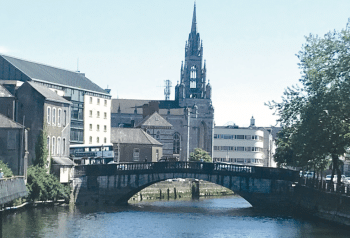
    The office of Public Works (OPW, the State’s building service) proposes to construct up to 15km of flood defence walls and embankments in Cork City, including dykes, concrete walls and railings throughout the historic centre of the city. The works would be carried out under the Lower Lee (Cork City) Drainage Scheme (Flood Relief) and are an effort to mitigate the effects of climate-change driven flooding which all agree needs to be addressed in Cork. In some places the OPW walls would cover the entire frontage to the water of 16th, 17th and 18th Century historic quays while in others the new walls (and railings) would be constructed on top of older quays. Clearly the aesthetic and design of the scheme as presented is in stark contrast to the existing historic fabric and could not rationally be considered sensitive to the historic setting. Drawings for the scheme show the effect would be dramatic. The proposals have been viewed as a way of investing in the quays and the historic setting of Cork, and there are those, including some business groups, who want to secure the investment without questioning whether it is necessary or how the project is designed. However, Save Cork City and a growing number of opponents say that, like the main drainage project, the construction of the scheme would undermine local business in the historic city, destroy heritage and leave a barren landscape in the city centre that would lose the competitive advantage of its special character, over out-of-town locations in the Cork area. It says the widespread construction of drainage walls and pump chambers is ill-conceived in Cork where tampering with ground-water systems could lead to building subsidence and that water will rise within buildings, flooding the city from within as has long been the case, regardless of the works proposed. HR Wallingford international hydrological engineers, commissioned by Save Cork City, have said overtopping of quay walls after implementation of the OPW scheme could cause serious risk to life and the OPW has confirmed this may happen as early as 2049. Save Cork City say a tidal barrier at Little Island is the most economical and the fastest way to protect Cork. International experts agree, with Delft University saying it is “an interesting and attractive option” to protect the city. Emeritus Professor Philip O’Kane has extensively studied the upstream dams in Cork and, with HR Wallingford which has provided consultancy advice to the ESB over the years and the Port of Cork Authority, confirming that the dams are suitable to protect the city from fluvial flooding with little alteration to current practice or even electricity production. Save Cork City say the walls scheme is the largest scale planned destruction of heritage in the history of the state. They also say Cork has the largest intact urban Georgian waterway landscape in the World. Cork city has grown for a thousand years as a centre of trade. Its development was heavily influenced by its connections with Northern Europe and the south of England. Early Cork as seen in John Butt’s view of Cork c1740, (Crawford Art Gallery) shows a city of canals and waterways with fine Dutch style gabled, brick buildings. Ireland was a different place back then and Cork connected very fast with other trading cities especially in progressive and innovative Northern Europe. In 2017 Save Cork City ran an international design competition with a €10,000 prize for the quays of Cork to demonstrate what the city quays could be if sensitively repaired. The jury was chaired by Yvonne Farrell of Grafton Architects a multi-award-winning Irish practice and included Tim Lucas of Pryce Myers Engineers in London. The competition received entries from all over Europe and was won by Henry Harker and Francis Keane. The City Council and OPW largely ignored the exhibition and the results, in what was seen as a punitive response to a genuine effort to improve Cork. The winning design considers flood defence and provides for a tidal barrier that would cost less than the OPW and City Council scheme. Save Cork City describe the OPW designs as brutal and insensitive to the art of design in historic settings. It says Cork City Council now has an opportunity to repair the damage it inflicted on the city during the darker days of the later 20th Century. For example as part of the modernisation of the 18th-Century centre the City removed all cobbles from the quaysides, discarding them into the river; and built bridges that prevented boating on the river by being too low. It also demolished much of Cork’s 18th Century building stock. Save Cork City say the destruction has deeply affected the psychology of citizens and wants political support to protect the historic centre of the city and its quay scape. Cork City Council proposed to start the OPW scheme under a Part 8 process (where a local authority gives citizens an opportunity to comment on proposals). It duly consulted on the first phase of the OPW walls proposal – at Morrison’s Island. Tidal flooding has run into the city centre from low lying Morrison’s Island and protecting the area is seen as a priority for the City Council. Save Cork City says localised OPW walls at Morrison’s Island are a wasteful sticking-plaster-type solution and won’t solve the problem as many more areas are also vulnerable and the city would flood regardless. They question that the Council has not ever provided demountable protection to the area. The City Council says Morrison’s Island is a stand alone project, yet the OPW say it is not. Save Cork City has raised concerns as to why there has been no tender process for consultancy services for the “separate project”. It claims the City Council and OPW are supporting “project-splitting” methods to push the scheme against substantial public opposition. Clearly, the full project exceeds the size threshold over which an EIA is required. The City Council received an unprecedented 1491 submissions in response to its part 8 consultation process for the Morrison’s

    Loading

    Read more

  • Posted in:

    The silent clearance of North Kerry

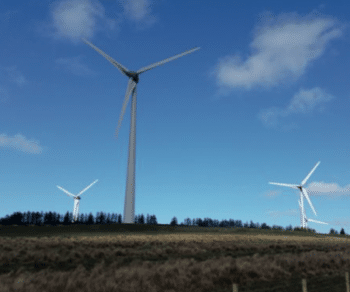
    North Kerry has become the ‘renewable energy capital of Ireland’, by default rather than strategic design. This bountiful traditional farming landscape has been obliterated by an industrial landscape of wind turbines, situated in random pattern, at the behest of developers, and not the wider community. Of 411 turbines with full planning permission in Kerry, only 200 had been built as of May 2017. Since then another 100 have gone up, many in my own community. Between Beal (where I live) and Tarbert, we have 25 new turbines constructed in an area of 12 miles, some straddling the Wild Atlantic Way. 13 have been constructed and are now marketed as the Tullahinell Windfarm. The pity is it derived as a comedy of errors, enforced, by a bit of cute hoorism, on the part of Kerry County Council. Before any Renewable Energy policy plan had been created for Ireland, Kerry County Council had granted permission for 375 wind turbines in Kerry, principally in North and East Kerry: 225 of them on Stacks Mountain, which is a protected area for the hen harrier under the EU Habitats Directive. The gung-ho approach slipped under the radar of most people in the county and the permissions were granted with little opposition. It was only when the windfarm constructions started, that people realised what had happened. Even the National Parks and Wildlife Service, guardians of the Habitats Directive failed to exercise any clout in the planning process. Support from the powerful farming lobby and the posting of a dead hen harrier to the local newspaper stating that landowner rights were paramount, set the tone and laid a path for many more permissions. By 2007, the seeds had been deeply sown for an unofficial land clearance policy of North Kerry, orchestrated by Kerry County Council. The collapse of the so-called Celtic Tiger prompted a pause in the escalating growth of Ireland’s carbon emissions. Kerry County Council’s Development Plan, at the time stated that the strategic site, located in the Listowel Municipal District, is “eminently suitable for windfarms and is reserved for such purpose”. In 2012, for the purpose of drawing up a Renewable Energy Strategy for the County, Kerry County Council had to draw up a landscape character assessment. This, now infamous, assessment states “The majority of North Kerry landscapes were identified as ordinary, i.e. as landscapes of no particular merit in terms of amenity”. As regards the area around Ballybunion the Council asked itself: “Is this landscape important for scenery, tourism or recreation?” and answered “no”, stating bad planning, (which they granted). More generally on windfarm zonings for North Kerry the assessment stated “It is being zoned as Open to Consideration… and in order to properly assess the cumulative impact of numerous windfarms in the area’ And so most of the area of North Kerry has been zoned for windfarms, to the relative exclusion of the rest of the County. It is worth noting that the public consultations for the strategy, took place in Tralee and South Kerry. No public consultation took place in Listowel. People were asked at the meetings, where the windfarms should go, and naturally they all stuck their fingers on North Kerry. This was brought up at a Council meeting but the Council engineer stated that “all regulatory requirements were met”. North Kerry was stitched up. The planning and construction of the windfarm at Tullahinell has been a classic example of project splitting, facilitated by Kerry County Council. The consulting company for the farmer/landowner did a copy-and-paste job for serial applications. The planning files show that the consulting engineer, who was previously working with Kerry County Council, had a meeting with a senior planner about the applications. There were two applications for Tullahinel North and Larha, a total of four turbines. Madden’s bog, known locally as the runaway bog, is so wet that it ran away into the village of Ballylongford in 1898. On the Ordnance Survey maps you will see that two blue mud holes are marked on it, highlighting how wet and fluid it is. There is permission for 10 turbines but only nine have been built. During the construction, thousands of tonnes of peat have been moved. In the Runaway bog they had to dig down twice the normal depth, I believe. For our community it has been devastating. At one stage, it felt like the seven plagues of Egypt had descended upon us as the peat disturbance evicted thousands upon thousands of lizards and frogs. The construction traffic drawing in stone, concrete and other materials destroyed what were already bad roads. If you look at the geography of North Kerry it is mainly podzol underlined with a blue clay, a drained flood plain. Much of it is considered peatland which is one of the reasons why it has become a dumping ground for wind turbines and coniferous forestry. We only have to take a short spin back in history to the Napoleonic wars, to see a much more logical solution to many of our environmental problems. Scotsman Alexander Nimmo was one of the Bog Commissioners appointed to survey the south-west in 1811. He surveyed this peatland, as the agenda at the time was to drain it, in order to grow hemp for the production of canvas and rope. It was too large a project at the time and was perceived to be too emotive as peat was being used as a fuel. Agricultural practice has drained a lot of this peatland and now hemp has appeared on the horizon again. Hemp, with its carbon sequestering properties and up to 5000 uses, is poised to become an important component in the development of a true bio-economy for Ireland. It could also become the heart of a model for rural renaissance, by providing a truly sustainable and valuable crop for our farmers. Back in 1971 the IDA bought what is known as the Ballylong-ford land bank – 390 hectares of land zoned for enterprises that require deep water access. There is

    Loading

    Read more

  • Posted in:

    Beating the rich at their own game

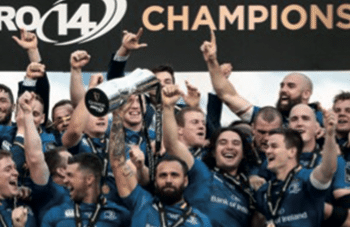
    Leinster Rugby has just completed a historic European Cup and Pro 14 double, becoming the first Celtic League team to do so in the same season. This comes on the back of Ireland completing a Grand Slam as part of a third Six Nations win in the last five years. It is a golden era for Irish Rugby, and especially for Leinster. With a blend of top Irish internationals, young locals coming through the Schools system, quality foreign imports and a talented coaching staff, the future remains encouragingly bright for the province. Leinster’s unique provincial production lIne Leinster is the only team in a major professional sport to have a home-grown production line systematically providing so many top quality players. Every year more and more talented young players break into the Leinster team. This season will be remembered for the brilliance of James Ryan, the power of Andrew Porter and the electric shimmying of Jordan Larmour. The year before, Joey Carbery was the one setting the fans on fire. Before him it was Garry Ringrose, whose performance levels for club and country are taken for granted though he is only 23. Leinster complements this youthful exuberance and quality by bringing in a handful of foreign imports who become leaders by example and finesse the overall culture of the province. Examples of tone-setting foreign imports are Felipe Contepomi, (2003-9) Rocky Elsom in 2009, Brad Thorn in 2012 and Isa Nacewa, just retired, who was ever present for all four of Leinster’s Heineken/Champions Cup final wins. By winning this season’s European Cup, Leinster join Toulouse as the second club to have won the cup four times, in Leinster’s case achieved over just nine years. It has to be mentioned that another foreign import has had a massive impact – Senior Coach Stuart Lancaster. The former English National team Head Coach has been praised for helping elevate Leinster to its dominance. The only other professional sports team that plays at the highest level and has a home-grown system with an ambition to rival Leinster’s is Athletic Bilbao – in soccer. Athletic Bilbao has an unwritten rule that it will only sign players who were born in the Basque Country, or who learned their football skills at a Basque club. In a sport that is increasingly ruled by extortionate transfer fees, this unwritten rule seems to be working, as Athletic Bilbao are one of just three teams to have never been relegated from the top flight of Spanish football, the other two are Real Madrid and Barcelona. The Irish and English Systems compared Leinster’s success can be attributed to a decision by the Irish Rugby Football Union in the mid 1990s. When Rugby Union decided to turn professional in 1995, the IRFU was faced with a choice – to either fund provincial teams themselves or allow the existing rugby clubs to remain the top tier of Irish Rugby, run by owners and boards that the IRFU would not have much control over. There were calls to enter existing rugby clubs such as Shannon and Garryowen, something that would have created a number of “super clubs”. Instead, in a masterstroke, the IRFU decided to use the provincial structure to create four professional teams for European and domestic competitions. The top Irish players sign “central contracts” with the IRFU, meaning that the IRFU coaches can dictate when these players play for their provinces; how many minutes they play; and when they must take rest periods during the year. This contrasts with the current set up of the English clubs which have impatient and wealthy owners funding them, and therefore do not emphasise resting of their top players. Aviva Premiership clubs are financially reliant on qualifying for European competitions, and set an unsurprising premium on avoiding relegation. Nowhere is the distinction in the treatment of top players more evident than in the number of games played by two of the stars of the 2017 British and Irish Lions tour. England forward Maro Itoje started eight out of Saracens first nine matches this season after playing 34 games the season before. He is only 23, but even a young man has found it tough to perform at the level he could while having to play so many games. Leinster playmaker Johnny Sexton, on the other hand, was gradually introduced back into the Leinster team following the Lions tour to New Zealand. By the time he was eased back into Leinster at the start of the season, Itoje had played five games. This month, Ireland face a summer series consisting of three test matches away to Australia. England will be travelling to South Africa for a three-test series. Following this series, top Irish players like Sexton, Conor Murray and Captain Rory Best will probably be given the month of September off, before being caressed back into club rugby in October. A top English player, like Itoje or his club mate Owen Farrell, will be needed by their team and therefore their studs can be expected to be tearing up the pitch throughout every minute of Saracens’ September and October games. The Turnabout There was a period between 2013 and 2016 when Irish rugby suffered at the hands of big-budget teams from France and England. From 2013 to 2017 Irish Rugby had no finalist in any of the European Cup finals, as the richly financed Toulon won three trophies in a row from 2013-2015. It took a while for the Irish provincial system to generate sustained success. Ulster won the Heineken Cup in 1999 but Irish fans had to wait until the mid-Noughties to see another success, with Munster winning in 2006 and 2008. Leinster took this success to a new level with wins in 2009, 2011 and 2012. This meant Irish teams won five out of the seven finals from 2006 to 2012. With the present success, it seems like the Irish system has now been constructed to last for many years to come. An eye to the future: will

    Loading

    Read more

  • Posted in:

    Bailer: hefty, grooving, hardcore-inflected modern metal

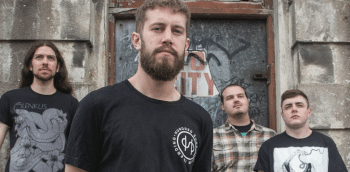
    Since emerging from nowhere in 2014, Lee-side four-piece Bailer have been working constantly: an unstaunched torrent of gigs, tours and festival/ all-dayer appearances have been punctuated with steady releases of singles and extended players, charting the development of the band’s hefty, grooving, hardcore-inflected strain of modern metal. The most recent of these extended players, a self-titled affair released via Sligo-based Distroy Records, has seen them finally begin to break down some of the media barriers that have traditionally thwarted Irish artists in the UK and continental Europe. Guitarist Chris Harte has been seeing the difference in recent months. “Yeah, the songs have been pushed by bigger metal outlets. We’ve been thrilled with the response so far, and it feels great”. Part of the touring for the record included an excursion to Russia for two weeks in February. A daunting task for any band just because of the weather, the trip presented logistical and political difficulties too. “About this time last year, an offer came to us to tour there for two weeks. We’ve seen so many of our favourite bands go there in the past, and their shows always looked wild. We wanted to do the same, so we took the chance and it was a crazy experience. The shows were incredible, and the culture was totally different”. Heading to a new country to play tunes for the first time is always a big deal for a band, and, day-to-day, Harte and company were pleasantly surprised by the reaction they met from a metal audience that hasn’t necessarily been treated well by touring bookers in recent years. “The crowds seemed to love high-energy, heavy music, and we certainly didn’t hold back on the performances after travelling all that way. People were queuing up for photos every night, and you could see how much it meant to them. We made sure to connect with as many people as possible online. Lots of them have been following us ever since.” The experience of dealing with music fans at the other side of a social and political divide was especially poignant for the band. Gig-goers and supporters of heavy music attending the band’s tour regularly asked them to take the message home that objections to Vladimir Putin’s rule and actions in recent years are shared by people on the ground in Russia. “That was pretty surreal on a humane level, those were some of the most powerful memories we took away from the tour. In a way, it was what we expected, since we were heading over to play underground hardcore shows, but it really stuck with us. I think it’s easy to see that people these days, from all over the world, are seriously dissatisfied with their governments and it’s no different in Russia. Western media would have us all believe they are a scary people who hate our guts, but it’s total bulls**t. Look at America’s government right now for god’s sake, politics are f**ked wherever you go”. Upon arrival back home, Bailer found themselves on the cusp of cult recognition in the UK, with enthusiastic reviews and features in youth-oriented print magazines such as Kerrang! and Metal Hammer. “For us, it felt great to be in them, even if only for the fact that we used to buy them all the time as teenagers, and we found out about so many bands that shaped our tastes in music through those mags. We’re working on getting over there for some good shows later this year to follow up on the exposure. Hopefully that’s just the start of it, now”. The industry is currently dealing with the extended transition from paid downloads to subscription streaming services, which have overtaken physical CD and vinyl sales in the past year in many markets. Having taken their own management in-house, the band is using its knowledge of merchandising to help other artists with artwork and visual identity. Enter Absurd Merch, the band’s joint venture with their label. “Since becoming a member of the Distroy Records family Alex, who runs the label, had been chatting to me a lot about his aspirations to start up a merch brand, operating within the metal and hardcore community. There is a big increase in the scene here in Ireland and around the world right now, and there are a lot of bands doing well. We set it up to help out bands working hard and looking to tour at home and abroad. It’s looking good already and we have lots of plans in the pipeline”. Bailer tour Ireland this summer, including appearing at Townlands Carnival in Macroom (July 20th) and Knockanstockan Festival in County Wicklow (July 27th). Mike McGrath-Bryan

    Loading

    Read more

  • Posted in:

    Shame us, Séamus (or at least say something genuine)

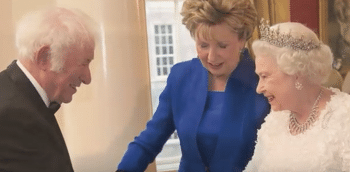
    When I was a young man, I managed various used and rare book stores for a company based in Washington DC. As part of this book ‘empire’, we leased a large warehouse across the Potomac River in Arlington, VA. It comprised several cavernous rooms. In one of these rooms stood a veritable Everest of books. Further, the entire heap comprised a single title – undustjacketed, misbound and/or damaged US editions of Seamus Heaney’s Poems 1965-1975. Ironically, close by squatted a larger mound of equally misshapen copies of a later printing of the Complete Poems of Robert Frost. To recoup some of his loss, an unscrupulous binder, rather than honouring his contract and pulping the volumes, had sold them to us for a price that would importune a covert cash payment. Kevin Kiely’s bluntly titled, Seamus Heaney and the Great Poetry Hoax, (Areopagitica Publishing, 2018), opens with a comparative appraisal of these two milk bucket obsessed northern agrarians, Frost and Heaney. Kiely focuses on Heaney but neither poet is to his taste. He finds Heaney’s incessant reliance on rural themes disingenuous and out of touch. Certainly, Kiely has a point. What else but nostalgia and bathos could steer anointment and garlanding of the award-winning poet by ensconced academics, wealthy potentates and entertainers who writes lyrics which extol the virtues of peat and cow shit? As Kiely so admirably and doggedly points out, as a consequence, there is nothing honest in Heaney’s work. I think we can agree that Ezra Pound, though for the most part a fine judge of poetry, was a spotty judge of character. Though he called his birthplace of Hailey, Idaho, half savage Pound initially misconstrued Robert Frost’s New England Yankee ‘plain speak’, an intrinsic characteristic of Frost’s work, as providing some sort of spare, down-on-the-farm expression of the American ethos when in reality it was just a faux homespun ‘higher hokum’. Yet I and, in his lukewarm assessment of Frost, Kiely would agree that the folksy American’s snake oil and illusory tales are more genuine than Heaney’s. This even though Frost was little more than a gentleman farmer and Heaney was, at least at one time, a genuine farm boy. If, as Kiely states, and I concur, Frost’s fancies ring truer than Heaney’s what does that say about Heaney’s oeuvre generally? In Heaney’s infinitely tired reprises of farm life – the damp, the smells, the stoic heroism, the sentimentality – one hears faintly the same sort of bombast one gets from America’s ‘Good Gray Poet’, Walt Whitman, who most certainly lived in a country that never existed and never will. If it’s not naïvete, both Whitman’s and Heaney’s approaches manifest sheer cunning. Kiely is correct and, given Heaney’s stature, courageous to tilt at Heaney’s legacy. Whitman was constrained sexually by the very culture he bloviated about. Thus his product was a cry for acceptance which he somehow thought he could gain by pandering to the existing order. And to a frightening degree, it worked – for all the wrong, nationalistic, jingoistic reasons. As Kiely does, let’s assess one of Heaney’s most famous lines from one of his most read and ‘beloved’ poems, Digging. Heaney writes: “Between my finger and my thumb The squat pen rests. I’ll dig with it”. The poem has about it a lassitude as though Heaney himself had grown tired of his subject matter. He opens with a wholly inept and personally disingenuous image which compares two wholly different utile appendages, a pen and a spade — reworking Bulwer-Lytton’s famous quote of pens/swords. Then, after a 22-line instructional on how to use a spade, he resorts to the murky bathos of comparing his pen to that shovel. Kiely, by now frustrated with Heaney’s metaphorical fuzziness, queries “how much earth can you dig with a pen”? But it’s worse. At first, though still painfully sentimental, the shovel-incised blocks of bog, of dead (yet organic) matter, serve the living by providing heat and fertiliser. But what is the bog? History? Tradition? Heaney’s mind may have done some digging. But his pen can only record the process. Within reason and art, the pen does not do the digging. And Heaney is no André Breton, no surrealist, as Kiely points out, so the mental image flounders and flops. Kiely trounces Heaney’s stances on Irish history, international politics, Nobel, institutional pandering and how these factors influenced his poetry. Kiely demonstrates that to avoid the convulsions Ireland faced, especially from 1968 to 1988, Heaney, more often than was tolerable, wrote nostalgia about farm life or buried his poems’ relevance in a miasma of prehistory. Heaney’s stance reminds one of Yeats’ position on Northern Ireland before the Easter Rising. Though Yeats continued to generally support non-violent solutions, he was shattered by the brutal treatment at the hands of the British inflicted on the Irish nationalists as evidenced in his superb poem Easter, 1916. However, Yeats solution of a non-violent literary rebellion with nostalgic Celtic roots reminiscent of Heaney’s bathos, smacks of wishful thinking. As is well known, the far more pragmatic James Joyce would dub Yeats’ and Lady Gregory’s Celtic Twilight the ‘Cultic Twallette’ in his masterpiece, Finnegans Wake. Further, as an individual living the bloody hypocrisy of American foreign policy, I’m certain that palling around with a war criminal like Bill Clinton, as Heaney did, does not speak well of one’s character. And, Seamus, the same went for the Nobel, which the poet Ed Dorn referred to as the Dynamite Prize. The Nobel was in recent years given to yet another American mass murderer and apologist for the very Wall Street that bankrupted Ireland, Barack Obama. And there is some foul whiff that our current golden-domed Baboon-in-Chief should be foisted with Stockholm’s much tarnished award. Kiely also points up another insidious influence on Healey’s ascendance from ‘the Land of the Fee and the Home of the Knave’ — literary critics Harold Bloom and Helen Vendler. It’s bad enough that across the pond, these two old literary fossils have erred so much toward the ‘I’ centered, solipsistic lyric that our current poetic product has all the

    Loading

    Read more

  • Posted in:

    BAIance under threat

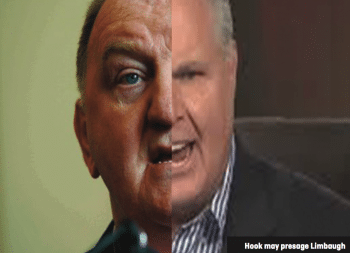
    The well-worn phrase “it’s all over bar the shouting” couldn’t be more apt with regard to the Referendum which repealed the eighth amendment to the constitution (article 40.3.3). The referendum is all over, the shouting has begun and it is going to continue for some time. So far the shouting has been confined to a small number of very conservative Catholics on the one hand and people whose fury at the Catholic Church knows no bounds on the other. These relatively small numbers will grow. When clinics to provide abortion eventually open they will be picketed by conservatives and the pickets in turn will probably be picketed by left-wing groups. This has been the experience in the United States but at least in Ireland we can be reasonably confident that neither side will be armed. It is important that Ireland studies the American experience not only in order to learn from it but also because there is little doubt that US activists were involved in the referendum, largely on the NO side, but possibly in smaller numbers in supporting the winners. That the US is ultra-sensitive to foreigners intervening in its own electoral events added a touch of irony and paradox to the procedure. The decisions by Facebook to ban advertising from outside Ireland and by Google to ban all advertising highlighted the total absence of regulation not only of social media in general but also of the online activities of mainline broadcast media. Here’s an example of what is possible in a referendum or general election. The Broadcasting Authority of Ireland lays down the guidelines for election and referendum coverage and these include a moratorium on broadcasts from 2.00pm onwards on the day before the vote. So let’s take the case of a fictitious broadcaster called Radio Populism or RP for short. Its talk show is drawing a large listenership as 2.00pm approaches. One of the speakers says he is about to reveal some devastating information concerning corruption and bribery by his opponents. Just as he starts to make his statement the clock strikes 2.00pm. If the broadcast continues then RP will be in breach of the guidelines and get itself into trouble with the BAI. The presenter, however, makes an announcement saying that the discussion will be brought to an end on air but will continue as a podcast on the station’s website. RP, therefore, will move from the highly-regulated sphere of traditional broadcasting to the unregulated territory of the internet. Once that switch from one medium to another has been made the moratorium will not be broken because the BAI has no authority over internet podcasts and the only things that can deflect the speaker from accusing his opponents of bribery and corruption are the Courts of Justice and the law of the land in the form of the Defamation Act of 2009. The year 2009 was a busy one for legislation for it also saw the arrival of the Broadcasting Act under which the BAI was set up and the regulation of broadcasting in Ireland was brought up to date. Since then there has been an exponential growth in internet media, social and otherwise. What was up-to-date in 2009 is now outdated to almost prehistoric levels in 2018. One thing that has happened according to successive surveys is that a large majority o the younger cohort of the population listens to radio and watches TV over the internet rather than by traditional broadcast means. In our hypothetical case above while older listeners might have made a dash from radio to laptop to stay with the programme their younger fellow citizens would probably have used the unregulated internet to access the broadcast from the start. In years to come, therefore, the BAI could find itself with nothing to regulate. There are a number of options. The Act could be allowed to stagnate and we could be off on a Limbaugh-dance to US style Shock-Jock podcast radio where the concept of balance and impartiality of any sort would simply not apply. There are plenty of people with right-wing views who would welcome such a situation and who have enough money to exploit its political and social advantages. On the other hand a new Broadcasting Act could be introduced in an attempt to bring broadcasting regulation particularly in the area of coverage of the democratic process into line with today’s reality. The first necessity in any new legislation should be a re-organisation of the BAI itself. It is staffed by a highly professional group of public servants whose expertise made an extremely positive impression on me during my membership of the Authority’s board. Apart from the most publicised activity of dealing with complaints against broadcasters the BAI gives financial assistance to broadcasters under its Sound and Vision scheme and this has led to the production of very-high-standard programming especially from smaller independent companies with limited funds of their own. But the set-up imposed on the BAI by the 2009 Act has led to a highly-complicated situation which has been described, with reasonable accuracy, from within as a “three-headed monster”. The three heads are as follows: 1) The Authority which is essentially the board of directors of the BAI and set the strategic direction of the organisation. 2) The Contract Awards Statutory Committee that does exactly what it says on the tin. It awards licence contracts to broadcasters. 3) The Compliance Committee is another statutory body and it monitors broadcasters for compliance with broadcasting regulations such as impartiality. It also investigates complaints against broadcasters and publishes its decisions. But it’s even more complicated than that. As might be expected in any public or private company, decisions of the Contract Awards Committee are put to the board of the Authority for ratification. The Authority is, after all, the board of directors. The Compliance Committee’s decisions, on the other hand, are not ratified by the board. In effect therefore the Compliance Committee is an independent body with some membership links to the Authority itself (it includes two Authority members and two members of the

    Loading

    Read more

  • Posted in:

    Embargo

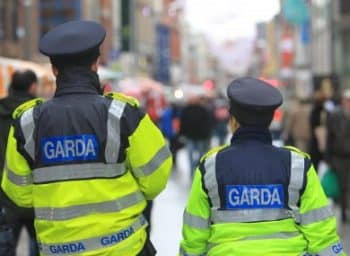
    The lacklustre prose might have tipped you off that all of the above items are from press releases, and so lack the sharpness good newspaper prose should have after subediting. But it’s not just PR-speak that distinguishes these news items. Each one was subject to a news embargo. News embargoes are not unknown in Ireland, and are usually honoured. Sometimes, they are even lifesaving. A few years ago, to pick one example, the Garda press office issued an alert to journalists about an “incident” where a man had barricaded himself inside a house. The brief notice asked journalists to respect a blackout in reporting the incident until it was resolved. Sometimes, based on their assessment of a crisis situation, Garda authorities will ask journalists to cover an event as much as possible, for example as a way of communicating directly with someone who may be listening to a radio. And sometimes, they ask for silence, to avoid inflaming a situation. The barricading incident was resolved without tragedy, and the stand-off was then reported by the press. There’s no way to tell if the embargo helped or not, but it was observed by every journalist who learned about the case. There’s no legal basis for a press-embargo system. It’s just something that evolved over the years. One of the compromises entailed is implied by press releases labelled “check against delivery”. The text of a speech, usually from a Minister or party leader, is leaked in advance to journalists to help them over the pressure of impending deadlines, but on the understanding that the journalist will listen to the speech in case the minister changes what he says at the last minute. Often of course, what the minister says in an off-the-cuff or unrehearsed remark departing from the script is the most newsworthy event of the night. Such a system made sense when print was the dominant news medium, and it took up to eight hours to get a news report from one end of the country to another. When a government or news website can upload the same speech in seconds, and then promote it through social media directly to citizens, the embargo makes less sense. On the (to be honest, not that frequent) occasions when the script contains urgent and newsworthy information, there is no reason why the planned script a Minister is going to deliver should not be reported. And if the actual delivery changes, then that too is news to report. A press embargo should be rare, and only invoked in the public interest. The barricading incident described earlier is an illustration. But instead, it is abused more often than respected. Some embargoed stories, such as an increase or reduction in homeless numbers, are of immediate interest. Many, quite frankly, are not. In addition to numerous speeches by ministers and TDs, among the recent embargo requests I’ve received were the launch of a new website and app by a government agency, tractor testing regulations, the opening of a courthouse, and a speech about the cost of Garda overtime. All worthy and worth reporting in the public interest, but few of immediate interest to the public, and certainly not meriting the spurious importance attached by the word “embargo”. Most of the embargoes in my inbox expire either at midnight, or at 4.30PM. In other words, they are blatant attempts to influence news coverage, hoping to feature prominently on morning newspaper front pages, Morning Ireland, or evening drivetime news broadcasts. What should be a rare occurrence, urging media restraint in the public interest, has instead become a way for press officers to manipulate news cycles. It is time for journalists to ignore embargoes. Gerard Cunningham

    Loading

    Read more

  • Posted in:

    Oldies get it wrong again

    You should stop reading right now. Pay no attention to pretty much every columnist of my generation. We got it wrong. Opinion polls are only as good as the people who interpret them, and we all filter our interpretations though our experience. I first voted in 1983, on the Eighth Amendment, which was approved by two-thirds of those who showed up to vote. Three years later, similar numbers turned out to reject a proposal to allow divorce in Ireland, and seemingly put an end to Garret FitzGerald’s grandly named Constitutional Crusade. It’s worth noting how referendums were back then. In the first 50 years of Bunreacht na hÉireann, we only got up to ten amendments. Since then, in large part thanks to Ray Crotty’s court challenge to the Single European Act, referendums have become almost an annual event, as much a part of the Irish calendar as the Munster Hurling Final or the Christmas Late Late Toy Show. There have been just under 50 referendum votes over the eighty years of the present Constitution. The X Case led to three further referendums on abortion in 1992. There were no good choices on offer, and the voters made the best of a bad deal, accepting votes to allow the right obtain information on abortion and to travel abroad, but rejecting an attempt to row back on the Supreme Court decision on suicide as a threat to life. A decade later, Bertie Ahern’s Fianna Fáil led government tried again, with the twenty-fifth amendment. Again, the government tried to reverse the suicide ruling from the X Case. Voters rejected it narrowly. In the interim, divorce had been introduced by the slimmest of margins in 1995. In each of these referendums, the same faces and voices popped up again and again, rehashing the same arguments. And weirdly, those voices were also raised in the regular referendums on the EU, as the Union expanded and evolved, requiring votes on new Treaties. But generals lose wars by preparing for the last battle they fought, and the tactics that worked in the 1980s have lost their edge. Despite the fear and damnation promised in 2015, Ireland said Yes to marriage equality in 2015. That should have been a warning klaxon that the country had changed. Yet three years later, the same tactics were deployed in the campaign to ‘Save the Eighth’. The old voices at Lolek Ltd, a private company trading under the registered business name “Iona Institute”, and the no longer quite so youthful Youth Defence, misread the country. Maybe the old guard thought that abortion was a harder sell for the reformers than marriage equality. The Repeal movement knew that the marriage campaign was won by thousands of coming-out stories, but conservatives thought that shame would keep women quiet. It didn’t work. Women told their stories, and the people listened. The quiet anger that had been bubbling since a few hundred people gathered quietly outside Leinster House the day after news broke of Savita Halappanavar’s death had not gone away. The No side misread their internal polls, and thought there was a soft Yes vote they could turn to a No. But while the electorate might differ over how abortion might work after the Eighth was gone, they were clear on one thing, the Eighth had to go. Soft support for abortion did not translate into soft support for Repeal. And so we come to this column, and all the columns like it. If generals make the mistake of fighting the last war, journalists make the mistake of reporting the last campaign. Journalists my age, who lived through the referendums in 2002, and 1995, and 1992, and even 1986 and 1983, remember when it was a hard slog. Against all of that, it was easy to write off marriage equality as a one-off fluke. But Ireland has changed. Michael Noonan was a government minister in 1983. Enda Kenny was elected in 1975. The Taoiseach who succeeded Enda wasn’t even born when he first entered the Dáil. Health minister Simon Harris wasn’t born when the Eighth amendment was passed. Invisibly, without the political correspondents and old heads noticing, a new generation took power. The Leinster House lobbies proved to be the greatest echo chamber of them all. Newspapers spoke about how online bot armies would sway votes and distort debate, while activists built “Repeal Shield” to silence abusive trolls (16,000 (mostly US-based) had been blocked at the time of going to press). Analysts derided a distributed movement without clear leaders, because they’ve been looking at astroturf for so long they’ve forgotten what genuine grassroots activism looks like. The grey-haired commentators are left wondering how they missed a revolution. The answer is simple. We got old. The kids have got this now. And I think the country is in good hands. Gerard Cunningham

    Loading

    Read more

  • Posted in:

    Illiberal liberalism

    College campuses around the world are renowned as centres of free thinking, individuality, and acceptance of those from all walks of life. And they are; as long as you think the right way that is. In recent years, it has become more and more normalised for people to be silenced because their opinions are seen as unpopular. In the lead-up to the abortion referendum debates raged across the nation, with students being particularly vocal, perhaps because they had little internal opposition. Although most, if not all, universities have pro-life societies, their Student Unions hold a pro-choice stance. In my experience many students feel demonised by the authoritarian view of the majority and are unable to express their opinions freely for fear of vituperation from other students. The impeachment of Katie Ascough, the former UCD Student Union president in late October 2017 is a notable example of the backlash some pro-life students face. Ascough made the decision to remove information concerning access to abortion from the SU’s magazine ‘winging it’, claiming she was acting on legal advice due to the strict laws surrounding the publication of such material and information. The decision led to the reprinting of the student magazine at an estimated cost of 8,000, a figure which her antagonists claimed was far higher than any potential fine that would have been incurred from the printing of the original material. Ascough was further criticised for making a decision that was not in line with her Student Union’s pro-choice mandate, which had been formally voted in by the student body the previous November. The grounds on which Ascough were impeached were somewhat questionable, however. She did, after all, act in accordance with the law, and technically did not actively withhold the information as it was readily available from other sources. What she did do was express a hugely unpopular opinion which was met with immediate ridicule and condemnation from fellow members of the Student Union and the student body. Posters and pamphlets were spread around campus with pictures of the original copy of ‘winging it’ containing the pricing information of obtaining an abortion and information on where to obtain abortion pills online, accompanied by pictures of President Katie Ascough’s campaign manifesto. Would the reaction have been the same if she had come out with a pro-choice guide? Perhaps not. My own experience as a student in DCU has had similar if less extreme overtones. It is almost automatically assumed that you are pro-choice; it is what is expected of you from other students. Certainly, the Student Union encouraged students via social media, not only to vote Yes in the referendum but to take part in pro-choice events which were happening throughout the year and particularly coming up to the referendum itself. DCU’s Student Union is not an outlier here, as almost every student union in the country supported the pro-choice movement. I was not the only student who saw a problem with this lack of representation for pro-life students. An organisation called Students for Fair Representation, led by a small band of DCU students, petitioned for the DCU Student Union to take a neutral stance on the abortion debate, stating in a Facebook post: “College is a time when we make up our minds on important social and political issues – like the abortion issue. But why does our Students’ Union – our voice – only pick one side of such a controversial issue to represent us and invest our welfare money in?”. From my experience, the conversations being had on campus were dominated by pro-choice opinions and this was easy to see from social media. I can’t even begin to count how many of my friends on Facebook put the Yes filter on their profile pictures. It is perfectly natural for members of the Student Union to support a movement they feel strongly about, after all, they are only human. But I feel it is also important to feel supported by the Union which claims to represent the interests of all students. It is imperative, if you have been elected, to represent those who have elected you rather than your own politics. Membership of a student union is not optional. They should be slow to take stances that even political parties, membership of which is very clearly optional, see as issues of conscience. Liberalism has several guises but the one that is subversive of those who are perceived as less liberal is unattractive, especially where the zeal of the Liberals seems to be in inverse relation to the complexity of the issue. The tainted legacy of the long-intolerant Catholic Church may be that it has left us a society of intolerant liberals, most dramatically our young people. Dearbhla Gormley

    Loading

    Read more

  • Posted in:

    Politics instead of vision

    Denis Naughten (45) was born in Drum, County Roscommon, site of the Meehambee Dolmen, a portal tomb estimated to be 5,500 years old, and educated at St Aloysius College, Athlone which closed last year, University College Dublin and University College Cork, where he did a PhD in Food Microbiology (impressively focused on extracellular polysaccharide – complex carbohydrates – production in lactic acid bacteria). Just as DeV was said to be one of only three people in the world who understood Relativity, Naughtenites allege he is driven by the scientific approach. He is married to Mary Tiernan and they have four children. In the New Year of 2017, Naughten was nearly killed while cycling with his wife along a road between Roscommon town and Fuerty when struck by a car, sustaining back injuries. Naughten’s father, Liam, was a Fine Gael TD (1982- 1987) and was Cathaoirleach of Seanad Eireann from 1995 to late 1996. Young Denis succeeded him following his tragic early death aged 52 in a car crash, at a by-election to Seanad Éireann in 1997 , making him the youngest ever senator. He has the ever-important keen interest in all sports and has played Gaelic football with Clann na nGael GAA club and held both county and provincial athletic titles with Moore AC. He was elected for the Longford–Roscommon constituency in the 1997 general election, aged just 24, and re-elected in 2002 when he and Simon Coveney were initially touted as the ace young guns who might replace the jaded Michael Noonan – before Big and wily Phil Hogan moved in to clear the path for Enda Kenny – with preferment promised. Within his first few weeks in the Dáil, he duly became Fine Gael Spokesperson on Youth Affairs, School Transport and Adult Education. This appears to be his level. He was re-elected at the 2007 general election for the new constituency of Roscommon–South Leitrim. In June 2010, he unwisely supported Richard Bruton’s leadership challenge to Enda Kenny, after he had been promised the deputy leadership in a Bruton shadow cabinet. Following Kenny’s victory in a motion of confidence, Naughten was not re-appointed to the front bench and there was bad blood between him and Kenny, perhaps partly because Kenny and Liam Naughten had been close. In October 2010, he was appointed as party Deputy Spokesperson on Health. He was a member of the Governing Council of the Association of European Parliamentarians with Africa which aims to strengthen parliamentary democracy in Africa and keep Africa high on the political agenda in Europe. He prevailed again at the 2011 general election. He voted against the Government in a motion to reverse cuts at Roscommon Hospital and lost the party whip. This parochial issue was the making of him; defined him. His party and constituency colleague Frank Feighan voted with the Government on the controversial issue, despite intense pressure from angry locals. The Government won the vote. On 13 September 2013, he and six other expellees formed the Reform Alliance, described as a “loose alliance” rather than a political party or “loose cannons”. The now largely forgotten grouping included TDs Lucinda Creighton, Billy Timmins, Terence Flanagan, and Peter Mathews as well as Senators Paul Bradford and Fidelma Healy-Eames who lost the whip over an abortion vote. In the run-up to the 2016 General Election Naughten told the Connacht Tribune he would be willing to prop-up a minority Government after the general election – as long as it maintained and invested in Portiuncula Hospital Ballinasloe and Roscommon Hospital, and local health services. He seems to draw his political tempo from his service on Roscommon County Council and the Western Health Board from January 1997 to October 2003. Any more profound political philosophy or vision of the common good has never crossed his lips. Naughten is really a rural populist, the Big Man, with a veneer of scientificism. His website is propelled by slogans like ‘Putting People First” and promises to “Get More Jobs to Cross The Shannon” and “Ensure That Every Child Leaving Primary School Can Read and Write”. Naughten was re-elected in 2016 and the numbers catapulted him to a ministry. The ambitious and crafty Naughten emerged as Minister for Communications, Climate Action and Environment in Enda Kenny’s Fine Gael/Independent minority government after two months of negotiation following the 2016 general election. He styles himself an Independent and has long dumped both Lucinda Creighton’s Reform Alliance and Shane Ross’s Independent Alliance. A year into his second government, Enda Kenny was asked if he would accept Minister Naughten back into Fine Gael. He said that was a matter for Naughten, and that he was doing a good job as an Independent Minister. He said: “How am I getting on with Denis Naughten? Great”. With Enda Kenny gone his rehabilitation is complete. So… time to see if the quiet man with the scientific bent is any good – playing, as they say, senior hurling. COMMUNICATIONS He has little interest in the communications brief, as it is of little value to his constituency. He has been almost invisible as minister for data protection – for Google and Facebook. The underpowered Data Protection Commissioner serves under the aegis of his department from an unimpressive office in Portarlington. Ireland took Facebook’s word for it that very few of the 87 million people compromised by Cambridge Analytica were Irish. He has, however, pushed for wider availability for high-speed broadband. Partly because viability has been undermined by Ireland’s unique fetish for one-off housing, Eir (successor to Eircom) pulled out of the bidding for the National Broadband Plan. Naughten was notably unable to get Eir, which owns much of the national phone infrastructure, to bid for the least attractive – farthest flung – next tranche of business, after it had delivered the most lucrative tranche to 300,000 houses in denser communities. Naughten may have been so reluctant to accept the logic of densifiying rural communities, anathema to his electorate, that he was blinded to its economic downsides. HIS MOST INFAMOUS OUTING IN HIS MEDIA

    Loading

    Read more

  • Posted in:

    ISIS in Ireland and France

    Not a season has passed since 2015 without a terrorist attack from ISIS or Al-Qaeda in France. Interventions in the Middle East, perceived discrimination against Arabs including ghettoisation and stringent or doctrinaire secularisation are the primary reasons for the attacks, though many have also been random, typically ‘franchised’ retrospectively from ISIS. Ireland is no model of racial tolerance and has not been generous in accepting refugees from conflicts in the Middle-East, including Syria. 1400 members of the Irish Defence Forces operate in Syria, Lebanon and Morocco on Peace Support Operations with the UN. Although Ireland has not participated in the war against terrorism in the Middle East, it is not impossible that one day it would suffer an attack. It is believed there are around 150 radicalised Muslims living in Ireland and that there are terrorists supporting ISIS financially from Ireland. For example, an electrician in his twenties named Hassan Bal was arrested in Waterford after confessing he had financed ISIS. He gave 400 in October 2015 in a city in Bosnia-Herzegovina to Stevo Maksimovic who was apparently supporting the terrorist group. Bal was jailed for 20 years. Last year, two men from Morocco and Algeria were arrested in Dublin suspected of assisting the financing of ISIS but the Garda didn’t have enough evidence to jail them and they were later released. It is understood the Garda Special Detective Unit was conducting several surveillance operations on people suspected of supporting terrorism in Ireland. Also in 2017, Humza Ali – a bricklayer from Birmingham – tried to travel to Syria via a Dublin-Istanbul flight. Turkey refused him entry. He went back to England where he had been before he had travelled to Ireland by boat and ferry. The man and one of his accomplices, Ali Akbar Zeb, had been sharing photos and videos on WhatsApp to promote the terrorist group. It is believed they were training for an attack. Last year, an Irish woman named ‘Sister Aaliya’, from Limerick who had become radicalised to Islam, claimed she had heard ISIS terrorists talking about running a 2.8m fund from Dublin. The men linked to this financing were planning a terrorist attack in the capital. Assistant Garda Commissioner Michael O’Sullivan revealed last month that the Garda has been ordered to use barriers on busy streets like Grafton Street in Dublin. He claimed to be worried about people coming back to Ireland after having travelled to Syria or Iraq in support of ISIS. Security specialist Dr Tom Clonan thinks terrorist attacks are possible in Ireland. He told Village that, according to the International Centre for the Study of Radicalisation in London, there were “40 Irish passport-holders who have gone to engage in jihad in the Middle-East”. The reason why Islamists do not attack on the soil of Ireland, he says, is because Muslims are integrated in this society. The Defence Forces are ready to deploy 500 soldiers if terrorists attack. However, civilians inevitably get killed before any police intervention. Even though France has long been on high alert, there are continuing fatalities. The state of Emergency declared there following the November 2015 Paris attacks only expired, after five extensions, in November 2017. In Ireland the state of emergency only expired after peace in Northern Ireland in 1995, and the Emergency Powers Act still allows internment, the juryless Special Criminal Court and draconian provisions for detention. However these are measures frmo a different era and with a different focus. It is believed our information technology and architecture; and our security and intelligence systems are over 20 years out of date. Two years ago, the association of Garda Sergeants said the Garda was not equipped or trained to deal with the terror threat here. The best way to avoid terrorism, according to Tom Clonan, is to stop interfering and bombing the Middle-East. “Muslims have been treated so badly since the invasions of Afghanistan and Iraq and the war in Syria. It is a major cause of radicalisation because people are suffering.” ISIS attacks are sadly frequent in France, the European focus for ISIS. 11 terrorist attacks, starting with Charlie Hebdo, have been committed since 2015 alone – resulting in 245 dead. 17 attacks have failed and 50 were foiled. 9 cases out of 11 targeted French police. Certainly Ireland has not been affected by terrorist attacks. However, the truth is that nobody knows the percentage chance that situation might change. After the murder of an Irish tourist in Tunisia three years ago, Tom Clonan thinks Ireland should have raised its terror threat level from Moderate to Substantial, the level before Severe and Critical. The 2017 Stockholm attack shows neutrality and non-interventionism are not definitive shields against attack, even if Ireland were not facilitating US troop and ordnance movements through Shannon. Clonan changed his mind after Stockholm: “Now terrorist attacks in Ireland are a distinct possibility”. Marianne Lecach

    Loading

    Read more

  • Posted in:

    Dublin’s North Inner City

    Dublin’s North City fell out of fashion after the flight of the future Duke of Leinster to Kildare St and the Act of Union. That’s more than two centuries ago and the journey back has been slow. It suffered shocking poverty over succeeding generations, the collapse of world-class mansions into tenements, dereliction, the flight of nearly all private residents and a drugs and crime epidemic. In the last twenty-five years it has been subjected to an inundation of third-rate private-sector apartments, the re- division of many old houses including the removal of period features and a pogrom of gang killings. It has also witnessed wholesale immigration and a degree of cultural diversity. It has a dramatic need for new apartments but the focus for new development in 2018 appears to be hotels and (high-quality if expensive) student housing, not – perhaps because standards are in flux – apartments. It seems likely a naïve Minister for Housing and Planning will indulge a reduction in building-height standards that may compromise perhaps the area’s principal attraction, its historic human scale. CONSERVATION The focus of this piece is on one small new pattern of development: some exciting conservation projects. ORMOND QUAY The construction of Ormond Quay Upper and Lower – named after James Butler, 1st Duke of Ormonde – began during the 1670s with the development of the former lands of St. Mary’s Abbey by Sir Humphrey Jervis, and with the setting out of a formal quay-line and carriageway as part of the Corporation’s grant of substantial lands to Jonathan Amory in 1675. These developments were facilitated by the construction of two bridges under the auspices of Jervis linking the walled medieval city with the new north-side suburbs: Essex Bridge (now Grattan Bridge), erected in the late 1670s, and Ormond Bridge (now O’Donovan Rossa Bridge), completed by 1684. The speculative development of the quay front soon followed, with the lands of Ormond Quay Upper developed as a fashionable residential parade with associated commercial uses under the freehold of Lord Santry, Henry Barry.   1-1A ORMOND QUAY LOWER The house on the corner of Capel Street and Lower Ormond Quay is most famous from its appearance on a late-18th-century Malton print (the ones you find on greasy place mats and on bathroom walls in Dublin 6) with a view across the river to the then Custom House where the Clarence Hotel now stands. It’s been derelict for twenty years since it served as offices for a solicitors firm fronted by Liam Cosgrave Junior who was disgraced after unedifying information about planning corruption emerged in the planning tribunal. It comprises an existing four-storey over basement protected structure with four bays and two shopfronts facing Ormond Quay and two bays with one shopfront facing Capel Street. The shopfronts are shuttered and now messy. There was previously a fast food restaurant at street level. The façade of the building is rendered and in a poor state of repair; however, there are interesting features including arched windows at first-floor level and corner quoins. Permission has been granted for development comprising conservation and a change of use at first, second and third floor levels from commercial occupancy to use as short-term-lease guest suites and change of use of the ground floor and basement to restaurant/cafe use, supervised by James Kelly of Kelly and Cogan Architects. Indeed it might be argued that in view of the strategic significance of the site, facing the overblown Temple Bar, in effect an ambassador for the North Side, public uses – pub or restaurant – might have been suitable for the entire building. The site of No 1 Capel Street was originally occupied by a larger house, which also occupied part of neighbouring plots. The exact age of the building is unclear but it is shown on a map dating from 1784, and also on a 1795 image by James Malton. The building was used as the state lottery office before 1800 and was then in a variety of uses including draper, feather merchant, stationer, bookseller and bookbinder in addition to briefly accommodating solicitors’ offices. By the mid-19th-century the building had been stucco-finished, with quoin detailing and decorative moulding added. The facade to the quays was partly blank but included an arched window at street level. During the Civil War in 1922 the façade and shopfront of the building were damaged. A new shopfront was then provided on the façade to Ormond Quay, which was divided into two parts and included a new entrance lobby onto the quays, though access to the building was, and remains, tricky with narrow pavement on two sides and a torrent of parking-free traffic down the quays. By the late 20th century the retail/commercial unit at ground floor level had been subdivided. It is stated that the building has been largely unaltered since the late eighteenth century, with the exception of the alterations to the shopfront and the plastering over the original brick façade. Original fabric, including the gothic rounded headed windows to Capel Street and the quays, survives, as do internal joinery works including architraves, staircase and doors. The building retains its commercial character, while the original plan form is substantially intact. 18 UPPER ORMOND QUAY On Upper Ormond Quay, to the South of the area, the Dublin Civic Trust is leading a project to restore an interconnected pair of riverfront merchant buildings. – the quayside house dates to 1842-43 and the rear building to the 1760s. The four-storey over basement house includes a rare arcaded Georgian shopfront composed from cut granite of, depending on who you listen to, a date of 1789 or around 1810. This is the most challenging and transformative building project the under-celebrated Trust has embarked on since its foundation in 1992 and is one of the most significant initiatives of its kind in Ireland. Both buildings require extensive structural stabilisation and careful conservation of fabric. The project will restore residential use to the upper floors and traditional shop use below. Number 18 started life as a river-fronting

    Loading

    Read more

  • Posted in:

    Russell, O Laoire and the Whitestown scandal

    When hazardous hospital waste was found in an illegal landfill at Whitestown, Co Wicklow Irish institutions and agencies were shocked. This wasn’t the usual domestic dumper avoiding charges of €1100 a tonne or a local authority dumping old road materials. The average cost of disposing of medical waste in 1998 was €11,480 a tonne. Clearly someone wanted to avoid such payments. The €40,000,000 bill handed to Wicklow County Council and, by default, Irish society that was explained in the February issue of Village puts the delinquency of those trying to avoid the disposal costs in perspective. Lest we forget the enormity of this case, which Judge Richard Humphreys described as centring on perhaps the largest illegal land ll in the history of the State, medical hazardous waste was found strewn in multi-tonnage amounts in initial examinations of the land ll. The World Health Organisation cites such illegally disposed waste as being responsible for 40% of hepatitis cases and 12% of HIV cases worldwide. The court case was primarily focused on the potential for pollution of water but those involved in the transporting waste to the site were also at high risk. The Judge and counsel bantered about Chicago in the 1930s and the Sopranos giving a avour of the waste-industry impropriety and corruption that figured in the case. Two of the individuals central to that case, Ireland’s Jarndyce v Jarndyce, that has lasted 16 years already, are Professor Ronnie Russell and Retired Commandant Donal O Laoire. The men have a business relationship through a range of associated directorships and companies that spans nearly 30 years to the present day. As O Laoire Russell Associates since 2001 and EMA International before that, they list clients including the World Bank, UNIDO, the European Commission and many Irish government, industry and regulatory authorities. With a PhD in Immunology from Glasgow University (1973-76), Professor Ronnie Russell is described on his own Linkedin page in terms that command respect: Adjunct Associate Professor TCD (1976 to present), Chairman HSE Decontamination Advisory Committee (2007-present), Vice-Chair of the Environmental Education Unit of An Taisce (which runs Ireland’s Green Schools, Blue Flags and other environmental programmes, 2015-present) and the technical representative for the disarmament section of the Department of Foreign Affairs at the UN in Geneva (1994-present) in which role he Chaired the EU Bioweapons Disarmament Expert Committee during Irish EU Presidencies. An RAF reconnaissance liaison and trainee Concorde pilot while studying for his Ph.D, he probably had a lot to complement the distinguished military experience of Donal O’Laoire whose profile on the CEMS website describes a professional career background in the Irish Defence Forces: Donal O Laoire has practised as an independent consultant in Ireland, EU, Eastern Europe, North Africa and Asia for almost 20 years, and is a graduate and post-graduate of Trinity College Dublin. Working with agencies of the United Nations, he has designed and project-managed large-scale environmental projects including land decontamination and remediation in several countries. In some biographies he de nes a lecturing role at TCD. This pair constitutes a formidable galaxy of knowledge, influence and contacts. What is here relevant is their involvement with one of the companies listed as having possibly contributed waste to the illegal land ll in the first place, Eco-Safe Systems Limited. Russell and O Laoire were two of the initial directors in Eco-safe Systems Ltd and both were shareholders. The implication of this company went unchallenged at all stages and was accepted by the High Court last year. Eco-Safe Systems Ltd had become the only company granted an Environmental Protection Agency (EPA) permit to dispose of treated hazardous hospital waste legally – in a, designated, Irish land ll. The compelling, frightening image of this land ll was graphically depicted in court by Professor Ronnie Russell. On 14 July 2005 he swore a lengthy affidavit about his examination of the site. His first paragraph included the following: “The items tested included bandages and dressings, cannulas, hypodermic needles and syringes. Many of these proved strongly positive for the presence of blood indicating a contaminated state. Furthermore, intravenous lines, assorted plastic tubings, sample containers and other clinical materials showed no evidence of having been autoclaved (having been subjected to high temperature sterilisation treatment) as would be appropriate for such material before being discarded”. O Laoire in his affidavit stated: “During this initial inspection I observed gas bubbling through waste puddles on the surface. Parts of surgical gloves were observed on the surface. All these parts of gloves seemed to have been systematically cut or shredded. Further examination of the surface revealed small amounts of broken glass, shredded tin cans, and medical equipment such as masks, syringes, surgical gloves and theatre gowns at surface level”. Other engineers and consultants also swore lengthy affidavits in July 2005 as to what was on site, including hospital waste. In other words, Wicklow County Council may have unwittingly invited two of the founding directors of that highly innovative new medical-waste-disposal company to forensically investigate the scene of a crime where waste from that company might have been illegally brought. There are ways that this could happen without the knowledge of company principals but the looming ethics question is why they did not bring this to the immediate attention of the Garda leading the Criminal Investigation. If they had, the excellent insurance coverage Eco-Safe Systems Ltd had in place as a prerequisite to being awarded the EPA waste licence permit 54-01 could have covered 15m for each of the ndings of illegal medical waste which might have paid for the entire subsequent clean-up of the whole site before the problem was exacerbated by the botched remediation. There is no legal time-limit on hospital waste generator obligations for proper disposal. They could also have met a medical duty of care to the workers who may unwittingly have been exposed to hazardous material and now perhaps even be suffering mystery illnesses of unknown origin. The “botched remediation” effectively blended all categories of waste on the site together leaving a

    Loading

    Read more

  • Posted in:

    Wild geese

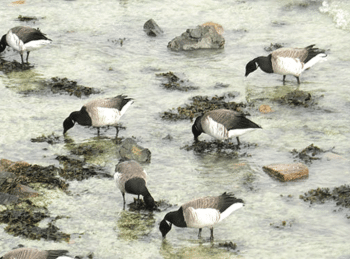
    In April An Bord Pleanála surprisingly granted permission to Crekav Trading for 104 houses and 432 apartments on playing fields east of St Paul’s College on Sybil Hill Road in Raheny, despite receiving more than 1,000 objections, and a recommendation for refusal from Dublin City Council. The site was originally part of the St Anne’s estate, the home of the Guinness brewing family on which Lord Ardilaun forged a magnificent Palazzo out of the original seventeenth century house. According to Dublin City Council’s Parks Division, St Paul’s is the most important ex-situ (ie outside of the North Bull Island) feeding site for Brent Geese in Dublin, based on numbers (a large majority of the Dublin population feed at this site), regularity of use, geographical location in relation to North Bull Island, size, and the relative lack of disturbance. The Brent Geese on the North Bull Island Special Protection Area are now largely reliant on the availability of inland feeding grounds, like St Paul’s. These lands are not designated but are nonetheless protected under habitats legislation. The only exception whereby development might be deemed to be compliant with this protection would be in exceptional cases where there is overriding public interest, and even then, only when no feasible alternative for the development has been demonstrated, and compensatory measures to offset the ecological damage are implemented. There is no suggestion that these exceptional circumstances and compensatory measures are to be found in the case of this development. Development on feeding areas forces the geese to travel greater distances to feed and potentially brings them into conflict with agricultural interests feeding on winter cereal crops. This results in greater expenditure of energy which affects the condition of the birds and their ability to complete the annual migration to their breeding grounds. The cumulative effects of this residential development proposal alongside existing impacts on geese arising from other already permitted developments which have removed some of their feeding sites, should have been assessed by An Bord Pleanála. In addition it should have considered whether adequate feeding areas will be left for Brent Geese after these developments are complet and whether any such areas are zoned appropriately in the Dublin City Development Plan. An Bord Pleanála is obliged to comply with European law on these issues . In considering the proposal, An Bord Pleanála’s inspector noted that the extent of potentially suitable feeding areas for the geese within Dublin city is finite and that the currently recognised feeding sites that are considered to be an alternative to the lands at St Paul’s may currently be experiencing pressures, including recreational disturbances, that may limit their capacity to accommodate the loss likely to occur as a result of the proposed development. Not withstanding this concern by its inspector, the planning board went on to grant consent for the development at the St Paul’s site. Of course Bord Pleanála decisions are formulaic and legalistic but we can take some indirect insight into its possible thinking from the reasoning in the report of its inspector whose conclusion it adopted: “The numbers of inland feeding areas are relatively significant, the geese appear to be thriving based on their increasing populations and I consider that the loss of this site as a feeding ground will not adversely impact on the conservation objectives of any of the five designated sites. In light of this assessment, I am of the opinion that there is capacity for the existing ex-situ inland feeding areas to absorb the loss of St Paul’s and I consider it reasonable to conclude on the basis of the information on the file, which I consider adequate in order to carry out a Stage 2 Appropriate Assessment, that the proposed development, individually or in combination with other plans or projects would not adversely affect the integrity of the five relevant European sites, in view of their Conservation Objectives”. However, whether this reasoning meets the requirements of European law and related case law remains to be seen. Bord Pleanála is under political pressure to approve housing schemes, in a housing crisis and the government is infamously unconcerned with environmental and planning niceties. In particular, for instance. The lack of certainty around the capacity of alternative sites to absorb geese displaced from the St Paul’s site may be problematic. Dublin City Council had eloquently warned in its submissions to An Bord Pleanála that the suggested capacity of alternative sites to accommodate the displaced geese is questionable and may not be achievable. The St Paul’s site is one of the top eight inland feeding sites for Brent geese. Accordingly, Bird-Watch Ireland and the Irish Brent Goose Research Group commented in their submission to An Bord Pleanála on this application: “We conclude that is an unacceptably high proportion of the population to be expected to be displaced to and absorbed within the existing network of sites and not in keeping with the conservation objectives of adjacent European protected sites” and furthermore that: “To suggest that these birds are flexible and will simply move elsewhere is simplistic and is especially weak given the recent pattern of development (all representing habitat loss) in the area”. The application was made under the new Strategic Housing Development ‘fast track’ planning system. This allows applications for schemes of more than 100 homes to be made directly to An Bord Pleanála, bypassing the local authority decision phase and excluding the possibility of an appeal. This leaves judicial review as the only course of action for those aggrieved by the planning consent. A miffed Dublin City Council, which turned down a less intrusive application for an associated application for sports facilities on a site at St Paul’s adjoining this one (on grounds of impacts to Brent geese) is hostile to the decision. City Manager Owen Keegan told the Council: “My recommendation, based on planning advice, was the board should not have granted this”. He obtained, presumably suitably conservative, legal advice that it did not have “locus standing” or legal standing to take

    Loading

    Read more

  • Posted in:

    Abortion on the march

    After the abortion-repeal referendum, there is momentum for change in the North, though DUP-dependent Theresa May has indicated she will not not facilitate it. It has made reluctant bed-fellows of DUP traditionalists and Catholic moral conservatives. DUP Assembly Member Jim Wells has had the DUP whip withdrawn for openly criticising the party leadership. “I’m anti-gay marriage, anti-abortion. I would be conservative, and maybe that’s not the new image the party wants”, he has said. Wells went to Dublin to take part in the ‘Save the Eighth’ march. DUP leader Arlene Foster has noted support from former Sinn Féin voters disaffected by its stance on abortion, coming her party’s way. In early June Ian Paisley Jr tweeted: “I have a letter from a local priest in my constituency thanking the DUP for its stance on these issues and assuring me that he is urging his parishioners to vote DUP because of the stance we take on social matters”. Up to 50% of the North’s Catholics are estimated to be socially conservative, to varying degrees, with 2% to 3%, mostly urban, being fundamentalists. A minority of these actually vote DUP, for moral reasons. On the other hand, however, there are internal strains in the DUP, with some in favour of allowing abortion in certain circumstances and moving away from Paisleyite fundamentalism. Moreover, influence is not all one-way, with the recent West Tyrone by-election emboldening Sinn Féin to a Repeal stance. On May 3 Sinn Féin’s Órfhlaith Begley won that Westminster seat with a majority of just under 8,000. Pro-life campaigners ran a vigorous campaign targeting Sinn Féin in the election. The constituency is 68% Catholic, much of it rural and conservative. Sinn Féin calculates that it only lost approximately 1,000 votes on the issue. It accepts that not all its voters supported the right to choose, but most seem prepared to accept the party position. A factor was that Mary Lou McDonald came out clearly for repeal. Her statement may not have been as strong as most pro-choice campaigners would want, but it was clear. “Sinn Féin is campaigning in the upcoming referendum to remove the Eighth Amendment from the Constituion”, she said. “We are doing this because this is a public health matter. The Eighth Amendment should never have been put into the constitution because that was never the appropriate place to address issues of women’s health”. It’s a long way from the IRA in the 1930s which declared that it would take its social policy from Papal encyclicals. It’s even a big shift since the 2015 Westminster election in Fermanagh and South Tyrone. There pro-lifers had targeted Sinn Féin. In response, it circulated a lea et in the name of Martin McGuinness: “I hold very strong personal views on the issue (abortion) myself and have always been and remain pro-life… As one of the leading parties in the Assembly, Sinn Féin will continue to block the extension of the 1967 Abortion Act to the North”. Despite this letter, sitting Sinn Féin MP Michelle Gildernew lost her seat. While there has been no vote in the North on the issue, the clear majority of ‘yes’ votes in Southern border counties is suggestive of attitudes in the North, even in rural areas. These are areas where communities straddle the Border, and most people have family on both sides. Ballyconnell, Co Cavan, is on the Border with South Fermanagh. It voted ‘yes’ by almost two-to-one. Clones, Co Monaghan, is surrounded on three sides by Fermanagh. All five polling booths had a ‘yes’ majority. The same was true of parts of North Monaghan, physically, economically and socially intermeshed with Tyrone. The villages of Emyvale and Glaslough were strongly ‘yes’. That could be seen in East Donegal. Lifford, on the Border with Strabane, where most residents in several housing estates are from Strabane, voted 51% ‘yes’. From Monaghan and Donegal, there are indications that many members of the Presbyterian Church, the North’s largest Protestant denomination, did not support their Church’s call for a ‘no’ vote. In Aghabog, Co Monaghan, with a strong Presbyterian community, ‘yes’ took 160 votes to 140 ‘no.’ Nearby Drum is as Presbyterian and Orange a village as any in Ulster. It voted ‘no’, but narrowly, with 110 ‘yes’ and 119 ‘no’. In Monaghan even more than Donegal Presbyterians congregations are rural and doctrinally conservative. Thus, urban Protestants in the North could reasonably be assumed to be more pro-choice. In the longer term, the Referendum result will modify attitudes in the North. A significant driving factor of Unionism is the genuine fear of ‘Home Rule is Rome Rule’. Most Unionists would recognise there have been signi cant changes in the South, but would have certain doubts. This vote is proof of big change. In the foreseeable future it is unlikely that any significant proportion of the Protestant population will move to support Irish unity. A 2016 BBC poll showed 72% of them (and 47% of Catholics) against. But even in conservative Northern Ireland, now be sieged to the South and East by abortion liberals, a wave of change is rolling. Anton McCabe

    Loading

    Read more

  • Posted in:

    Mary, Mary, quite contrary

    By Frank Connolly. Former Minister for Health, Mary Harney, met one of the US firms at the centre of the cervical smear-testing scandal on three occasions in 2008 and 2009. Harney was Minister when US firm, Quest Diagnostics, secured the tender for smear testing in 2008 against the advice of leading Irish cytologists who questioned the reliability of the US laboratories. According to documents obtained by Village from the Department of Health, Harney met representatives of Quest in October 2008, June 2009 and October 2009 although details of the discussions were not revealed. The first encounter took place soon after Quest was awarded the multi-million-euro contract to provide laboratory-testing services to the HSE. It had been checking slides from Irish hospitals for breast and other cancers for some years but with the introduction of national-screening programmes and a significant backlog in Irish laboratories, it was decided to outsource the service to Quest and, two years later, to other US laboratories. Objections raised by Irish pathologists, including by Dr David Gibbons of St Luke’s Hospital, about the poor quality of US tests compared to Irish results were dismissed by the HSE and by Tony O’Brien who was then in charge of the National Cancer Screening Service (NCSS). Dr Gibbons has said that he resigned from the oversight board which supervised the NCSS after his warnings were ignored. O’Brien stood down from his post as Director General of the HSE last month in the wake of the cervical-smear scandal. In 2008, the NCSS awarded the contract to analyse 300,000 Irish smear tests to Quest Diagnostics. Two years later Clinical Pathology Laboratories (CPL), based in Austin, Texas, was awarded a tender to provide laboratory services for CervicalCheck, the programme run by the NCSS. Both firms continue to provide laboratory testing services to the Irish health service. Two months ago, Vicky Phelan (43) from Limerick settled her action in the High Court action against CPL for €2.5m. A smear test by the US firm in 2011 was misdiagnosed and failed to detect her cancer which was not found until three years later. She was not informed until September last that an audit in 2014 had discovered the 2011 misdiagnosis. Emma Mhic Mhathúna was diagnosed with cervical cancer in 2016 after being told that a test of her slides had been wrongly diagnosed by Quest in 2013 and possibly as far back as 2010 when another slide was apparently misread by the New-Jersey-based company. The 37-year-old mother of five children is dying of cancer. In late May, further distress was caused to her when the High Court was informed that Quest was seeking to have her children interviewed by a psychologist to assess the impact her death would have on them. There was significant controversy when Quest was awarded the major testing contract in 2008 – with cytologists and medical laboratory scientists warning that there was already evidence that the US system produced results that were less accurate than the work done in Irish hospitals, including at St Luke’s Hospital and the Royal College of Surgeons in Dublin and Cork University Hospital (CUH). Village has recently learned that an inquiry by HIQA into the incorrect diagnosis of tests of cancer sufferer Rebecca O’Malley was informed by a medical scientist in CUH in 2007, a year before the main contract was awarded to Quest, that there was an unacceptably high failure rate in its test results. The debate over the decision to award the contract to Quest was revived in February 2009 when it emerged that Harney had spent almost a week in the US, including on visits to Texas, Arizona and Washington DC a year earlier, in February 2008 – just months before the contract to Quest was awarded. Most of the media attention focused on her attendance, with her husband Brian Geoghegan, at the Super Bowl football game in Arizona during her trip. She visited several US health facilities including the Mayo Clinic and a cancer-treatment centre in Houston, Texas. The itinerary provided by the Department of Health to Village in recent days does not include any mention of meetings or visits to Quest or any other laboratory testing firms. Details released under Freedom of Information at the time disclosed that the trip cost some €190,000 involving 23 hours of flying time on the government jet at a cost of €163,000, €11,000 on hotel bills, €3,380 on food and drink and more than €11,000 on hiring mini-buses to ferry the seven-member delegation to various venues. Asked about the content and outcome of her meetings with Quest in 2008 and 2009, the Department did not address the question directly but said: “A dedicated team is in place in the Department to oversee and progress the CervicalCheck records trawl. Work is ongoing and the trawl is being informed by the broad terms of reference of the Inquiry being undertaken by Dr (Gabriel) Scally. At this point, however, the Department can advise that following a check of the Minister’s diary database there are three entries relating to meetings between the then Minister and Quest Diagnostics: 9/10/2008; 17/6/2009; 13/10/2009”. Harney, who was the leader of the Progres- sive Democrats during her time as Minister in the Fianna Fáil led government, is expected to appear before the Scally inquiry to explain the contents of her discussions with Quest. She will also be asked to explain her role in the decision to outsource to the US laboratories the testing of slides of Irish women seeking to avoid life-threatening cancer conditions. The decision to outsource the service to US companies was hugely influenced by the estimate by the HSE and the Department of Health that the programme would be significantly more cost-effective than the Irish system at the time. Irish laboratories complained at the time that the tender criteria, whereby applicants must be capable of carrying out large volumes of tests, rendered them unable to compete given the shortage of laboratory scientists although there were training programmes underway. Most of the

    Loading

    Read more

  • Posted in:

    Gardai look again at white collar acquittals

    Acounty meath businessman has fought a prolonged battle to recover what he claims are millions of euro in losses and damages caused by former employees who set up a company using his business name and equipment. Paddy Sheils of P Sheils Plant Hire (PSPH) has claimed that three former employees established a company also called PSPH, in 2008, to supply customers, including Meath County Council, with road digging, maintenance and other services using his equipment. One former employee, Siobhan Ryan, pleaded guilty in the District Court in 2014 to offences related to the fraud. Another former employee, David O’Donoghue, was acquitted following a jury trial in 2016. The charges against a third, Sinead McNamara, were withdrawn. The complaint by Sheils has been the subject of investigation by the Garda and by the local authority but he has never received compensation from Meath County Council for his alleged losses. Last week, the state solicitor for Meath, Vincent O’Reilly, was given leave in the Trim District Court to obtain transcripts of the trial of David O’Donoghue as it has been alleged that incorrect evidence was given to the court in his case. Paddy Sheils started his plant hire business in 1989 at Garballagh, Duleek, County Meath and by 1993 was obtaining civil and contract work from Meath County Council. In 1996, he incorporated P Sheils Plant Hire Ltd. (PSPH) and purchased a yard with offices at Rathdrinagh, Beauparc in Navan. He was managing director running the day-to-day operations of the company while his brother Fergus held a 1% share and was also a director. He purchased a quarry at Knockmooney in Slane in 2004 from which he supplied stone for building sites and motorway projects. He did extensive road and footpath work, water repairs, and maintenance for Meath County Council. His workforce grew to more than 80 employees over the next few years. In September 2009, he noticed discrepancies in the company’s financial records, including in relation to cheque-book payments. His accountant found that there were irregularities in cash receipts and in the payment of wages for goods and services provided by the company. Siobhan Ryan of Kells, County Meath had worked for the company since February 2008 being responsible for financial accounts, before she departed in April 2009. David O’Donoghue, from Collon in Louth, had worked with Sheils’ company since 2006, starting out as a lorry driver before being given responsibility for organising the servicing, repair and replacement of plant and machinery at the company. He left the job in February 2009. Sinead McNamara from Drumconrath, near Navan took worked with P Sheils Plant Hire from 2007 to 2009 managing contracts for clients, including the local authority, as well as holding responsibility for health and safety matters for the company. After they left, Sheils discovered that his company had been defrauded and that the three former staff had established their own company, also called PSPH, in 2008. His company logo, evidence of its health and safety compliance as well as insurance documentation, had been used by the new rm to tender for work from Meath County Council. He discovered that invoices had been submitted by former staff to the local authority for work done by his company with his equipment. The money was paid into an account in a bank in Ardee, County Louth, according to gardaí. When she pleaded guilty to the offences, Siobhan Ryan told gardai that all three were acting in concert. However, O’Donoghue was acquitted following his trial in 2016 and the charges against McNamara were withdrawn earlier. Siobhan Ryan admitted that she was responsible for false entries on the accounts system which she operated. She made a compensation payment of 120,000 to Sheils, and the Probation Act was applied by the court in February 2014. O’Donoghue was tried in the Circuit Court in Trim where he was found not guilty. Sinead McNamara provided evidence in this case on his behalf. Sheils has since produced information that contradicts the evidence of McNamara. He has also questioned why the charges against her were dropped given that investigating gardai had established that she had collected a cheque payment from Meath County Council which was lodged into the account of PSPH, the company his former staff established in 2008. Sheils has also pressed for an investigation into the role of Council officials and employees who dealt with his former staff and authorised payments to them and has sought the return of these monies to him. He claims that his company suffered losses of hundreds of thousands of euro as a result of the fraud and that the original Garda investigation was less than satisfactory. A new investigation was prompted following Dáil questions by County Louth Fine Gael deputy, Fergus O’Dowd, to then justice minister, Frances Fitzgerald, in December 2016 and March 2017. This led to a successful application by garda Michael Devine to the Trim District Court on 30 May for the transcripts of the earlier trial of David O’Donoghue which took place in the Circuit Court in 2016. Frank Connolly

    Loading

    Read more

  • Posted in:

    Villager June 2018

    Harris asleep Young Simon Harris seems to think the women of Ireland will stay loyal to him if he just puckers up and adopts the mantra that it was all an honour and done for Mná na hÉireann. The night before the referendum he tweeted in what is being seen as a ‘Song of the Camino’ moment: “will sleep tonight in the hope of waking up to a country that is more compassionate, more caring and more respectful. It has been an honour to be on this journey with you and to work #togetherforyes. See you all tomorrow!”. Unfortunately no-one cares how well the Minister for Health sleeps, they care how well the mistreated patients under his aegis sleep. And Villager has been struggling to get the image of the eager nightcap-topped and pyjama-ed Simon out of his fevered head. Sinna Gáel Sinn Féin’s new leader Mary Lou McDonald has said it wants to form a coalition government after the next election with either Fine Gael or Fianna Fáil. “I want to lead the party into government. I want to do that from the strongest possible position. I want us to discuss, debate, agree with others a programme for government”, Ms McDonald told The Irish Times in an interview. All those years, all that effort, pretending Sinn Féin wasn’t just Fianna Gael for slow learners. The view from Dalkey David McWilliams, a metaphorical bow-tie wearer, sometimes gets a hard times in these columns but his Irish Times Saturday feature packs an economic punch and is always accessible and often entertaining and there’s no worthy ideology he won’t eventually come around to or at least promote. But he’s what Villager’s primary teachers used to call a notice box and he’s often wrong. Recently he said Dublin needs to be like Belfast in its policy on high buildings in its historic centre, to avoid a housing crisis. No expert says height is a solution to the housing crisis. The real problem is one of density in Dublin’s suburbs not height in its uniquely-human-scale city centre. Indeed fiddling around with heights sows confusion and is partly responsible for inertia in the city centre as developers wait for ever greater flexibility in standards and correlative extra profitability for their hoarded sites. McWilliams also said people are emigrating because of housing. But Ireland has net immigration. Armchair planning. The view from Dublin’s South Inner City The ascendant Press Up group has outbid several property developers to buy the Celtic Revival style headquarters of New Ireland Assurance on Dublin’s fast-rebeautifying Dawson Street, a more elegant counterfoil to the jaded global offering of next-door Grafton St. The group led by Paddy McKillen Junior and Matt Ryan is paying €38 million for the two interlinking five and six-storey office blocks. Despite helpful suggestions from the Irish Times’ veteran property correspondent, Jack Fagan, Press Up won’t demolish the buildings, but instead will convert the ground floor into restaurant and other retail uses and to add the usual greedy extra office floor to bring the overall office content to 70,000sq feet. In his day Paddy McKillen liked nothing better than a bit of façade-retention but Junior is cornering the market in historic refurbishments with Roberta’s and Dollard in the former Temple Bar printers that Senior (and Bono and Edge) wanted to demolish a decade ago, and the exquisite Art Deco Stella Cinema in Rathmines for which demolition permission had been granted. A bit of authentic taste will get you quite far in sophisticated Dublin now. And if it’s not real, Pressup can elegantly fake it – as with the (actually newish) Vintage Cocktail Club on Crown Alley, and the ye olde Peruke and Periwig pub on Dawson St and Lucky Duck on Aungier St. No pub paraphernalia for these whizzes, as they reportedly prepare for a stock-market otation, but not, Villager is certain, for a downturn. Weird Norman defines normal Norman Tebbit, the former Chairman of the Conservative Party, has announced that he will be boycotting religious services at Bury St Edmunds, Suffolk, whenever the Reverend Canon Joe Hawes officiates, because the Rev is gay. Lord Tebbit has described him as a “sodomite”, an offensive term. Tebbit, who has been worshipping at the cathedral for nine years, has explained that he finds “it difficult to accept a sodomite as a member of the clergy who will, for example, be called upon to conduct marriage services. I will struggle to attend if he is officiating”. Lord Tebbit discovered that Hawes, aged 52, is in a civil partnership with another cleric, the Reverend Chris Eyden, from a newsletter last March and that he was destined to become the cathedral’s most senior official. “The cathedral has taken this decision and I disapprove of it but I do not wish to damage the cathedral in any way. I will maintain my financial support for it every year because it will be there long after the dean and I are gone”. Tebbit is part of a dwindling generation that deems loving relationships between adults of the same sex to be offensive. What is really sickening is Tebbit’s toleration of an actual sinner, Sir Peter Morrison MP, who served as his Deputy Chairman back in the 1980s. Morrison was a violent child rapist. We need look no further than official British archive records for proof of Morrison’s proclivities. The archives show that on 4 November, 1986, Sir Antony Duff, Director-General of MI5, wrote to Sir Robert Armstrong, Margaret Thatcher’s Cabinet Secretary, after allegations of child abuse had been made by separate sources against Morrison. Morrison had been accused (entirely accurately as it transpired) of child abuse. Duff opined that Morrison was only a minor “security danger”. After the Morrison memo came to light in July of 2015, Armstrong (famed for his use of the phrase “being economical with the truth”), defended his inaction thus: “Clearly I was aware of it…but I was not concerned with the personal aspect of it, whether he should or should not be

    Loading

    Read more

  • Posted in:

    Equality over freedom

    Politics is a continuum from equality to freedom. If freedom is the vertical axis of a graph and equality the horizontal axis, every society – and every citizen – decides where the balance should be. A libertarian society tending towards survival of the fittest will not foster equality; an egalitarian society may need to be enforced by a strong state to the detriment of individual licence, and so on. Philosophers from Tocqueville to Hayek to mainstream liberals accept there is a trade-off. Village tends to the egalitarian end of the scale: truly free equality, after education and reflection – precise processes for which have been touted by many modern philosophers – is a mature and more stable goal than equal freedom. Workaday politics can be charted and defined on the graph. However, the same political action can be justified by different points on the graph. Issues like divorce, gay marriage, and abortion can be deemed imperatives of either freedom or equality. In this respect the language used is not a definitive indicator of the politics. A campaign can claim to be about equality but in fact on analysis be defined by positions only of freedom. Any campaign fronted by Simon Harris or Leo Varadkar – agents above all of the propertied, of the status quo for the wealthy – is unlikely to be rooted in any real substantive equality. It is perfectly legitimate to campaign for gay marriage or abortion because you want yourself or others to exercise rights to freedom to get married or have an abortion. Telltale signs if you do so you may include that you are less likely to make common cause with campaigns for others suffering discrimination of all sorts. You may ignore issues like racial equality, Travellers rights; you may express no concern about economic, social and educational inequalities. It is legitimate but it is not Village’s political motivation of preference. For Village recent referendums reached the right solutions but were disappointingly rooted in the politics of freedom rather than that of equality. The egregious wrongs in Irish society are best resolved by solutions driven by equality. This society above all facilitates those who are economically adroit. It provides opportunity for people who are strong; worse still it provides opportunity for them to make mistakes (trashing the environment is the one posterity will most register). It provides very little vision as to how they should exercise their freedoms. – this is in part the problem of 100 channels but nothing on the television. But on a societal scale. It is now time to move on to new agendas that are really radical. These include: agendas of radical redistribution of wealth in society, of radical changes to the opportunities available to those who have suffered traditional discrimination, including (still) to women and to those of minority sexual orientations, to racial minorities including Travellers; of educational opportunities facilitated by positive discrimination so even (or especially) the poorest in society can be whoever they want to be; of redistribution of power so it is exercised at the lowest, most local, most democratic levels; of attenuation of property rights so they are exercised in the common good. The goods in society should be distributed by that society so those least well off are most compensated. Everyone in society is morally equal, they should be treated by society in a way so they can participate in the fruits of the earth equally. It is a myth that the fruits of the earth are distributed in accordance with merit – they have been accumulated largely by force and luck. The idea that in 2018 a child’s future is determined by the time it reaches two years old is an abomination. Ireland is growing up politically. Ireland has waved good-bye to the invidious influence of an unrealistic Church and voted the right way on divorce, gay rights and abortion. However, these are really liberal causes focused on issues of identity. It is time we addressed the issues of endemic inequality enshrined down the generations. As regards the Constitution we do need to abolish Article 41 which recognises the woman’s life within the home, so devaluing women who choose not to work within the home; and to eliminate the part of the preamble which invokes the Constitution “in the name of the Holy Spirit”. Indeed the Constitution’s premises relate to another era and the whole document should be reconceived. More generally, materialism, capitalism and competition have had their day, it is time to welcome in a new agenda – of equality of outcome/condition: equality of wealth and power, of quality of life, of environment, of education, of fulfilment and happiness, of respect and opportunity. This should be achieved through politics and laws. The constitution should be amended to reflect it too. The most radical change would be to enshrine equality of outcome/condition as a constitutional imperative across the range.

    Loading

    Read more