2018

Yearly Archives

  • Posted in:

    Unturning the stones on murder

    See below: The Press Council has affirmed a decision of the Press Ombudsman upholding part of a complaint that Village magazine breached the Code of Practice of the Press Council of Ireland. The complaint was made under Principle 1 (Truth and Accuracy) of the Code of Practice. Other parts of the complaint are not upheld. Article by Frank Connolly Among the issues that have delayed the restoration of power-sharing government in the North is the failure of the DUP and the British government to honour previously-made agreements to deal with what are known as legacy issues. These include a promise to establish some form of historic truth commission to investigate the role of the British state and its security forces in the killing of hundreds of people during the conflict. A documentary film, ‘No Stone Unturned’, examines the deaths of six Catholic men in the Heights bar in Loughinisland, County Down, in June 1994, just three months before the first IRA ceasefire in August 1994. The men were shot dead while watching the Republic of Ireland play Italy in the World Cup on 18 June, when two masked loyalists walked into the bar and one fired indiscriminately at the customers and staff. Those murders were the subject of a 2016 report by the Police Ombudsman of Northern Ireland which found, following an earlier whitewash by the same office, evidence of Royal Ulster Constabulary (RUC) collusion in the protection of Loyalist paramilitary informants, who may have carried out the murders. While he found no evidence that the police knew in advance about the murder plot, the Ombudsman was heavily critical of how the RUC Special Branch handled informers, and failed robustly to disrupt the activities of UVF paramilitaries operating in south Down and to share intelligence with detectives investigating this UVF gang. He claimed there was a “hear no evil, see no evil, speak no evil” approach. The 160-page report by Dr Michael Maguire also found police informants at the most senior levels within loyalist paramilitary organisations were involved in the importation of guns and ammunition. In the film, made by Oscar-winning director, Alex Gibney, three loyalists who were involved in the attack are identified, while it is claimed that the automatic rifle used was among a large consignment imported into the North with the knowledge of the RUC Special Branch and MI5 in the late 1980s. One of those named, Ronald Hawthorn, and his wife Hilary, were among those arrested following the massacre, but have never been charged, while another loyalist, Gorman McMullen, is named in the documentary as the getaway driver. A second attacker is also named and is believed to have left the North in the late 1990s and re-settled in England. The film claims that Hilary Hawthorn identified the gang members, including her husband, in two calls she made to an anonymous police phone line in the wake of the killings, and in an unsigned letter sent to a former SDLP councillor. Her voice was recognised by police officers with whom Hilary Hawthorn worked in an RUC station, while in the anonymous letter she also claimed to have been involved in the planning of the attack. Ronald Hawthorn was arrested and questioned in August 1994, just weeks after the atrocity, while his wife was detained a year later. Neither was ever charged in connection with the killings. The documentary explains that Ronald Hawthorn was only named as ‘Person A’ by the Police Ombudsman, Dr Michael Maguire, who did not disclose the names of the three suspects, in a detailed and shocking report published in 2016. Another confidential and unpublished report prepared by Office of the Police Ombudsman of Northern Ireland (PONI) identified the suspects by name. It was subsequently sent anonymously by post to journalist Barry McCaffrey, who has spent years researching the Loughlinisland killings and who helped to make ‘No Stone Unturned’. The PSNI is currently investigating the leaking of this confidential document to McCaffrey. The published PONI report by Dr Maguire sets out how the killings were carried out by the UVF which directed its members in Down and Antrim to organise attacks on nationalists following the killing of three of its members on the Shankill Road by the INLA in early June 1994. The Ombudsman concluded that there was collusion in the Loughinisland killings involving unnamed members of the RUC. He found that the VZ58 rifle used in the attack and subsequently used in a wide range of loyalist murders was part of a consignment imported from South Africa by police and MI5 informant, Brian Nelson, in late 1987 or early 1988. Maguire wrote: “My conclusion is that the initial investigation into the murders at Loughinisland was characterised in too many instances by incompetence, indifference and neglect. This despite the assertions by the police that no stone would be left unturned to find the killers. My review of the police investigation has revealed significant failures in relation to the handling of suspects, exhibits, forensic strategy, crime scene management, house to house enquiries and investigative maintenance. The failure to conduct early intelligence-led arrests was particularly significant and seriously undermined the investigation into those responsible for the murders”. During the attack, Maguire said, “one of the masked men crouched down, shouted ‘Fenian Bastards’ and opened fire indiscriminately with an automatic assault rifle. Both men then fled the scene in a waiting Triumph Acclaim car driven by an accomplice. The car was driven in the direction of Annacloy and found the next morning abandoned in a field on the Listooder Road between Crossgar and Ballynahinch. The car was destroyed while in possession of the police in 1995”. The Ombudsman recorded how the families of the victims complained at the time that the vehicle should have been retained for potential future examination, especially in light of advances in forensic science. They state that police “wilfully destroyed” this exhibit, which they viewed as “wholly unsatisfactory and unreasonable”. Dr Maguire said: “In addition, investigative opportunities were undermined by the

    Loading

    Read more

  • Posted in:

    Unturning The Stones On Murder

    See below : The Press Ombudsman has upheld part of a complaint that Village magazine breached the Code of Practice of the Press Council of Ireland. The complaint was made under Principle 1 (Truth and Accuracy) of the Code of Practice. Other parts of the complaint are not upheld. Among the issues that have delayed the restoration of power-sharing government in the North is the failure of the DUP and the British government to honour previously-made agreements to deal with what are known as legacy issues. These include a promise to establish some form of historic truth commission to investigate the role of the British state and its security forces in the killing of hundreds of people during the conflict. A documentary film, ‘No Stone Unturned’, examines the deaths of six Catholic men in the Heights bar in Loughinisland, County Down, in June 1994, just three months before the first IRA ceasefire in August 1994. The men were shot dead while watching the Republic of Ireland play Italy in the World Cup on 18 June, when two masked loyalists walked into the bar and one fired indiscriminately at the customers and staff. Those murders were the subject of a 2016 report by the Police Ombudsman of Northern Ireland which found, following an earlier whitewash by the same office, evidence of Royal Ulster Constabulary (RUC) collusion in the protection of Loyalist paramilitary informants, who may have carried out the murders. While he found no evidence that the police knew in advance about the murder plot, the Ombudsman was heavily critical of how the RUC Special Branch handled informers, and failed robustly to disrupt the activities of UVF paramilitaries operating in south Down and to share intelligence with detectives investigating this UVF gang. He claimed there was a “hear no evil, see no evil, speak no evil” approach. The 160-page report by Dr Michael Maguire also found police informants at the most senior levels within loyalist paramilitary organisations were involved in the importation of guns and ammunition. In the film, made by Oscar-winning director, Alex Gibney, three loyalists who were involved in the attack are identified, while it is claimed that the automatic rifle used was among a large consignment imported into the North with the knowledge of the RUC Special Branch and MI5 in the late 1980s. One of those named, Ronald Hawthorn, and his wife Hilary, were among those arrested following the massacre, but have never been charged, while another loyalist, Gorman McMullen, is named in the documentary as the getaway driver. A second attacker is also named and is believed to have left the North in the late 1990s and re-settled in England. The film claims that Hilary Hawthorn identified the gang members, including her husband, in two calls she made to an anonymous police phone line in the wake of the killings, and in an unsigned letter sent to a former SDLP councillor. Her voice was recognised by police officers with whom Hilary Hawthorn worked in an RUC station, while in the anonymous letter she also claimed to have been involved in the planning of the attack. Ronald Hawthorn was arrested and questioned in August 1994, just weeks after the atrocity, while his wife was detained a year later. Neither was ever charged in connection with the killings. The documentary explains that Ronald Hawthorn was only named as ‘Person A’ by the Police Ombudsman, Dr Michael Maguire, who did not disclose the names of the three suspects, in a detailed and shocking report published in 2016. Another confidential and unpublished report prepared by Office of the Police Ombudsman of Northern Ireland (PONI) identified the suspects by name. It was subsequently sent anonymously by post to journalist Barry McCaffrey, who has spent years researching the Loughlinisland killings and who helped to make ‘No Stone Unturned’. The PSNI is currently investigating the leaking of this confidential document to McCaffrey. The published PONI report by Dr Maguire sets out how the killings were carried out by the UVF which directed its members in Down and Antrim to organise attacks on nationalists following the killing of three of its members on the Shankill Road by the INLA in early June 1994. The Ombudsman concluded that there was collusion in the Loughinisland killings involving unnamed members of the RUC. He found that the VZ58 rifle used in the attack and subsequently used in a wide range of loyalist murders was part of a consignment imported from South Africa by police and MI5 informant, Brian Nelson, in late 1987 or early 1988. Maguire wrote: “My conclusion is that the initial investigation into the murders at Loughinisland was characterised in too many instances by incompetence, indifference and neglect. This despite the assertions by the police that no stone would be left unturned to find the killers. My review of the police investigation has revealed significant failures in relation to the handling of suspects, exhibits, forensic strategy, crime scene management, house to house enquiries and investigative maintenance. The failure to conduct early intelligence-led arrests was particularly significant and seriously undermined the investigation into those responsible for the murders”. During the attack, Maguire said, “one of the masked men crouched down, shouted ‘Fenian Bastards’ and opened fire indiscriminately with an automatic assault rifle. Both men then fled the scene in a waiting Triumph Acclaim car driven by an accomplice. The car was driven in the direction of Annacloy and found the next morning abandoned in a field on the Listooder Road between Crossgar and Ballynahinch. The car was destroyed while in possession of the police in 1995”. The Ombudsman recorded how the families of the victims complained at the time that the vehicle should have been retained for potential future examination, especially in light of advances in forensic science. They state that police “wilfully destroyed” this exhibit, which they viewed as “wholly unsatisfactory and unreasonable”. Dr Maguire said: “In addition, investigative opportunities were undermined by the way in which information relating to those involved in the

    Loading

    Read more

  • Posted in:

    Right to buy means right for landlord to buy you out

    The myth that Irish people have a historically-rooted preference for home ownership is a long-standing cornerstone of Irish housing policy. The story goes that Irish people will always have an innate preference to own their homes, regardless of how attractive, secure and affordable renting is made. In the middle of the country’s worst housing crisis, this myth has, extraordinarily, justified yet another round of Council-housing sell-offs, with the 2016 Tenant Incremental Purchase Scheme. Tenants are given a discount of up to 60% in the market value of their home, if they choose to buy it from the Council. It then disappears from Council stock and, a generation later, is sold onto the private market. If there is limited evidence to support the myth that the Irish have an in-built preference for home ownership, what is clear is that government policy in the last half century has done everything in its power to grant preferential treatment to the purchase of homes. What is touted as an ‘innate preference’ for home ownership has in fact been carefully incentivised and manufactured through decades of developer-driven housing policy. Margaret Thatcher, Ireland and the ‘right to buy’ In 1980, British Prime Minister Margaret Thatcher passed legislation granting a legal right to all Council tenants in the UK to buy their homes. It was the culmination of her philosophy that the freedom to accumulate profit was the foundation of all human freedom. Speaking about the scheme in 1984, she said that “Spreading the ownership of property more widely is central to this Government’s philosophy, because where property is widely owned, freedom flourishes”. Any freedom gained by those who managed to buy their Council home was temporary at best. As with all public goods that are privatised, Council-built homes were transformed into commodities to be bought and sold for profit. Now, it’s estimated that 40% of ex-Council homes are owned and let by private landlords. The Tory Minister behind the scheme, Michael Heseltine, once said that the major victory of the “Right to Buy” scheme was “the transfer of so much capital wealth from the state to the people”. If by “the people” he meant “wealthy landlords” – then yes, he was probably right. Otherwise the darling of one-nation Toryism needs a rethink about his party’s victories. Astonishingly, successive Irish governments’ commitment to selling off social-housing stock pre-dated, and has arguably always been stronger than even, Maggie Thatcher’s. Provisions had been in place since the 1930s to enable tenants to buy their Council house in rural areas, and from 1966, with the introduction through the Housing Act of a nationwide ‘right to buy’, there was a surge in the numbers of publicly-built homes which were sold off. As in the UK, the temporary benefits of home ownership have not provided security for further generations. Over time our housing stock, particularly in sought-after areas closest to the city, has been commodified just like the in UK. House built by the Council in places like Marino and Cabra regularly sell for €400,000-€500,000. Working-class estates are under threat of becoming gentrified enclaves. Home ownership has never been affordable – so the State had to introduce schemes to make it so A critical point justifying subsidies to home ownership is that they are designed to somehow rectify temporary problems in the housing market. Lack of affordability is blamed on a temporary market malfunction (for example, lack of adequate supply), and temporary extraordinary measures are deened necessary to enable access to that market. In reality, however, these measures will be required forever – not just to rectify one-off market malfunctions. Michelle Norris has outlined how, in the 1960s, it was possible for a buyer to recoup up to a third of the purchase price of a house through various government subsidies. In the 1970s and 1980s, a hundred thousand Council-built houses were sold to tenants at knockdown rates, ostensibly as a way to make home ownership affordable. And as recently as 2004, the National Economic and Social Council was highlighting that:“The high entry costs of home ownership have conferred advantages on those whose families have housing equity and disadvantages on those who do not have access to ‘parental gifts”. In fact there has been no time when home ownership was ‘affordable’ in the sense of a majority of the country’s population being able to afford to purchase a home on the open market, unassisted by the government. Any ‘affordable housing’ initiatives delivered by this or future governments, will simply be the latest in a long cycle of state subsidies to the private market. Is it a good use of money for the State to subsidise home ownership? Fundamentally, what the debate about ‘right to buy’ and ‘affordable housing’ comes down to is whether it is a good use of public money to subsidise ‘home ownership’. As debates and inaction over the housing crisis rage on, a demand for public housing is being gradually subsumed into a broad and amorphous call for “social and affordable housing”. The notion is that some people will always want to buy their own home, and that they have a right to State support equal to that of those who rent from the State in secure, affordable publicly-owned housing. But what is being lost in this conflation of public housing and affordable housing, is that, unlike investment in public housing for rent, when the government subsidises ‘affordable home ownership’, the investment serves only one generation. The home can then be sold on to the chaotic, unjust and uncontrollable private housing market. “Affordable home ownership” – whether through land, or through ‘right to buy’ schemes selling off Council houses – keeps the property market bubbling. It suits the developers, solicitors and estate agents who benefit from increasing house prices that the state funnels money into pushing more and more workers into that market. But it does absolutely nothing to tackle the housing crisis. The real solution When considering how we invest public money to tackle the housing crisis, we need to look

    Loading

    Read more

  • Posted in:

    Stalin’s Englishman On Trial in Ireland

    The paperback edition of Andrew Lownie’s highly regarded Stalin’s Englishman is now on sale with updates which did not appear in the hardback version. It is a riveting biography of the notorious Eton- and Cambridge-educated British spy and traitor Guy Burgess, bristling with new information based on first-hand sources including hitherto unpublished letters and files. Significantly, a careful reading, between the lines, reveals a lot for the discerning Irish reader about a hidden and deeply murky aspect of the Troubles here. RECUPERATING IN IRELAND, BURGESS-STYLE Burgess was a frequent visitor to these shores. One of his trips landed him in the dock of the District Court. Lownie describes how Burgess had tumbled down two flights of stone steps after a drunken midnight wrestle with a friend called Fred Warner, as the pair was leaving the Romilly Night Club in London in early 1949. Burgess smashed his elbow, slightly cracked his skull and dislocated three ribs. Warner pushed him into a taxi, bleeding profusely, and took him back to his rooms from where he telephoned without avail, every doctor whom he knew by name or repute. He received no reply and he remained there all night, with Burgess groaning on the bed. In the early dawn, he found a doctor who took Burgess off to the Middlesex Hospital. Some rest and recuperation were advised and, after ten days in hospital in London, Burgess went with his mother, with whom he often holidayed, first to Wicklow and then for a few days at the Shelbourne hotel in Dublin. In Dublin Burgess met the writer Terence de Vere White. Lownie’s recalls how de Vere wrote how Burgess was “travelling with his mother, a quiet lady. He took the centre of the stage. He was dark and bright-eyed and was either an old-looking young man or a young-looking middle-aged man, I was not quite certain which . . . He was in the Foreign Office and was taking a rest in Ireland on account of an accident in the Reform Club [sic], where he had fallen and bashed his head on the stairs. As a result of this, he was under doctor’s orders to keep off alcohol and if he disobeyed the rule, the result was a complete blackout, lasting for more than a day. I noticed that he drank tomato juice, which seemed out of character”. ON TRIAL AT THE DISTRICT COURT IN DUBLIN True to his reputation, Burgess was actually drinking incessantly. He and de Vere White parted ways after an hour as Burgess was off to enjoy a play at the Abbey Theatre. Shortly afterwards, on 4 March, de Vere White was contacted by phone and asked if he would give evidence for Burgess in the Dublin District Court. Burgess, he learnt, had been charged with “driving a car while drunk, driving without reasonable consideration, and dangerous driving” two days before, on Grafton Street. “Confronted with the most positive medical evidence of a shaky walk and alcoholic breath, Burgess was invited by the Justice . . . to explain how he reconciled this with his story of complete teetotalism”. He responded “with a most affable air” suggesting his tomato juice might have been doctored and pointed at de Vere White who was forced to give an account of the evening. Burgess’s old friend from Eton, Dermot McGillycuddy, now a lawyer with an office on Kildare Street beside the Oireachtas, was brought in as his defence solicitor and managed to make a silk purse out of a sow’s ear. The case was dismissed, with the judge describing Burgess as “a man of brilliance who appeared overwrought and nervous…a man of cultivated tastes” – he had been returning from seeing a play at the Abbey Theatre when the accident took place. According to the doctor, a friend of McGillycuddy, who examined Burgess at the police station, “There was no smell of drink which witnesses could detect from his breath. He was smoking continuously, his speech was confused and when witnesses asked him to walk in a line, he was definitely unsteady and limp”. DRUGS FIT FOR A HORSE Burgess continued his excessive proto-rock star lifestyle while in Dublin. The tumble in London had left him with bad headaches and insomnia which he treated with Nembutal to put him to sleep and Benzedrine to wake him up. He managed to secure his supplies from a vet. The dosage was fit for a horse. A friend quoted by Lownie wrote later that, “Drugs, combined with alcohol made him more or less insensible for considerable periods in which, when he was not silent and morose, his speech was rambling and incoherent” to the extent he “seemed, hardly capable of taking in whatever it was one was saying to him”. A LOT TO LEARN ABOUT THE HIDDEN HISTORY OF THE TROUBLES Reading between the lines of Lownie’s book, there is a lot to be gleaned about the dangerous and seedy side of the Troubles. Burgess, of course, was an MI5 and MI6 officer who worked secretly for the Soviet Union as part of the infamous Cambridge Circle of traitors which included Sir Anthony Blunt, Kim Philby, Donald Maclean and John Cairncross. Village has described aspects of the Anglo-Irish paedophile network of which Blunt and Burgess were members on a number of occasions over the last two years. Burgess knew some of the more senior members of the Anglo-Irish Vice Ring. The ring had probably existed in one form or another for generations but was reorganised on a systematic basis after WWII with access to orphanages and care homes in NI for paedophiles. It survived until at least the mid-Troubles, if not long afterwards. The British Establishment is still engaged in an ongoing cover-up of its activities. Survivors are hopeful that at least some of its Irish branches will be put under the microscope by the London-based Inquiry into Child Sexual Abuse (IICSA). The wider ring included friends of Burgess such as his fellow traitor Sir Anthony Blunt; the poet Brian

    Loading

    Read more

  • Posted in:

    Non Disclosure

    A fortnight ago, I gave evidence at the Disclosures Tribunal. I spent almost four hours in the witness box in Dublin Castle over the course of two days. Most of what I said was the subject of a blackout by the establishment media, as I suspected it would be. For some time, I have been an outspoken critic of RTÉ and the Denis O’Brien media because of their close relationships with government and the Gardai which are so harmful to democracy and the public good. In 2012, before Sergeant Maurice McCabe came to public prominence, I got a call one day at my office in the Irish Independent from his father. He asked if I would be willing to look at allegations his son was making about corruption in the force. At the time, I was the newspaper’s Chief Features Writer and had been working on a number of cases of garda corruption, mostly unsolved murders. Mr McCabe explained this was why he had contacted me. My investigation into the 1985 death of Fr Niall Molloy had just led to the ‘re-opening’ of the case and my stories were generating interest among citizens who were having their own difficulties with the Gardai. Most of them were bereaved families who believed their loved ones’ deaths had been covered up by the force. My questions to the Garda press office and the Department of Justice about these cases were routinely ignored and I had become a thorn in the side of Commissioner Martin Callinan and his headquarters in the Phoenix Park. I was increasingly alarmed at the depths Garda management seemed willing to go to cover up serious crimes to protect powerful individuals and deny citizens their right to justice and the truth. So when I heard that a serving member of the force had finally decided to speak out, I was intrigued and relieved, and agreed to meet Sergeant McCabe shortly afterwards. Over the course of several weeks, I got to know him and his colleague John Wilson and found their testimonies solid and compelling. They were courageous, honest and driven by nothing but a desire to expose wrongdoing in the force and try to clean it up. All of their efforts to date had failed. I began my own investigation into abuses of the penalty points system, focusing on a number of high-profile individuals who had had speeding fines quashed. One of them was Martin Callinan. By then, it had emerged that certain judges, state solicitors and crime reporters had had penalty points cleared. But now there was proof that the person with overall responsibility for implementing our road safety laws had also evaded them for his own personal gain. At the time, Independent News and Media (INM) was undergoing a period of enormous transition as Denis O’Brien became the largest shareholder. Stephen Rae, former editor of the Garda Review, took over the reins at the Irish Independent. Almost overnight, a wave of fear seemed to sweep through the newsroom. The new regime was planning big changes and there was a strong sense that those of us involved in adversarial investigative journalism might be about to have our wings clipped. It was in this period, I came into possession of a Garda PULSE document identifying a Martin Callinan as the recipient of speeding points that had been quashed. My source believed this to be the Garda Commissioner but knowing my lawyers at INM would not accept this as sufficient proof, I went to the address on the printout to make sure the information was correct. I had a cordial conversation with Mrs Callinan which lasted no more than a few seconds. I told her who I was and asked her if the Garda Commissioner lived at the house. She said he did but that he was away. I jumped back into my waiting cab, looking forward to getting my story published. Little did I know it would lead to the end of my 17-year career at INM. Shortly afterwards, I had a call from Stephen Rae’s then-deputy at the paper, Ian Mallon. He was very hostile and said the Commissioner was furious and had made a complaint of harassment against me. In the days that followed, there was little appetite to publish my story about Callinan and I was subjected to a barrage of criticism and intimidation. I also learned that the then Managing Editor at the paper had been ordered down to Garda HQ over my story. One afternoon shortly afterwards, I was bluntly informed that my job was gone but that every effort would be made to make my departure as financially attractive as possible. When I said I would not be bought off, I was told I could stay on at the paper as long as I withdrew from the work I was doing on Garda corruption. I refused and was forced to take three legal actions against the company which resulted in a High Court apology from the company and compensation. When the Disclosures Tribunal was established in 2017 to investigate an alleged smear campaign by Garda management against whistleblower Sergeant McCabe, I wrote to the chairman Justice Peter Charleton and offered myself as a witness. I believed my testimony would be of interest to it and the public, as it would help to reveal the incestuous links between INM and Garda HQ, and the lengths they were willing to go to to harm those backing up Maurice McCabe’s claims. I have never been in any doubt that my support for his work led to the end of my career at the company. And as I told the Tribunal in early June, it is also my belief that the smear campaign against McCabe intensified after Callinan was exposed for having his points terminated. Shortly after that story was published in April 2013, the repugnant rumours that McCabe was a paedophile started to surface. The ‘Miss D’ allegations emerged and a file was created by TUSLA –

    Loading

    Read more

  • Posted in:

    Suffer little children

    Eric Witchell is a serial paedophile. In the 1970s he ran Williamson House where he preyed on pre-pubescent boys and young teenagers. He and his accomplices drove at least three of them to commit suicide; and another two to attempt it. One of his charges was supplied to Enoch Powell MP, for abuse. A select few were transferred to the notorious Kincora Boys Home when they reached 14 years of age. At Kincora they became fodder for MI5 ‘honey trap’ blackmail operations. THE ENOCH POWELL STORY IS CONTAINED IN PART 2 OF THIS ARTICLE. Part One: Williamson House A WOLF IN A MONK’S HABIT Eric Witchell, a serial paedophile, was a key figure in the Anglo-Irish Vice Ring about which Village has been writing for the last two years. He is currently living in London aged 70, safe in the knowledge that a succession of senior MI5 figures have gone to extraordinary lengths to cover-up what he and his associates did in Belfast, London, Manchester, Liverpool and elsewhere as they – MI5 – benefited from the existence of an Anglo-Irish paedophile network of which he was a key member. In Northern Ireland (NI) MI5 exploited the network to gain leverage over influential Loyalists, including members of the DUP. Witchell, who hailed from England, was born in 1948. He became a Franciscan at the age of 19. Before his appointment to Williamson House, he had been a housefather in an English boys school attached to the Franciscans. He became the Officer-in-Charge (OiC) of Williamson House in May of 1975 at the age of 27. The small boys Witchell abused were abandoned, vulnerable and powerless waifs. A select few were later sent to the notorious Kincora Boys Home where they were used as bait in MI5 ‘honey trap’ blackmail operations. Sir Michael Hanley was Director-General of MI5 at the time. Ian Cameron ran MI5 operations on the ground in NI for Hanley from his office in Lisburn. Witchell betrayed the trust bestowed upon him by Belfast’s child welfare authorities but also by the Anglican Franciscan Order of which he was a member. He was, however, a godsend to Hanley and Cameron. The Williamson House scandal is worse than the outrage at Kincora insofar as younger children were abused at it. Witchell’s sordid branch of the Anglo-Irish Vice Ring supplied very young children to VIPs including Enoch Powell MP. The Independent Inquiry into Child Sexual Abuse (IICSA) was set up to investigate allegations of child abuse by VIPs including Westminster MPs. There is no indication yet that Witchell will be questioned by IICSA which is based in London despite the fact that Witchell is one of the most important living witness to the existence of a VIP vice ring and lives in London. Witchell did not appear before the Hart Inquiry. Had he done so – and told, or been made to tell, the truth – Judge Hart would have reached a wholly different conclusion to the one he published in 2017. Hart denied the existence of any sort of vice ring beyond the walls of Kincora Boys Home. WHO PAVED THE WAY FOR WITCHELL TO TAKE OVER WILIAMSON HOUSE? Witchell secured the post at Williamson House despite the fact his tutor at the National Children’s Home Training College in England had advised the appointment panel of Belfast‘s Welfare Department that at “this stage I would have some doubt in commending him to be the Officer- in-Charge… I would commend him to you for employment, but I would not commend him to you for employment as Officer-in-Charge”. It was fortuitous for MI5 that Witchell became OiC despite this because he was the vilest sort of paedophile, someone who was prepared to farm out the children in his care to a wider network of child molesters. This suited MI5 because it enabled them to manufacture blackmail opportunities and ensnare Loyalist politicians, paramilitaries and Orangemen and force them to do their bidding. After Witchell became OiC at the home, he moved into an apartment in the attic. It had a TV, sofa, sleeping quarters and a drinks cabinet. This was where he abused the young boys. He would usher his chosen victim upstairs and lock the door behind them. Physically, he was tall, thin and imposing. He wore glasses and had black longish hair. He was an exceptionally cruel and violent man with an insatiable sexual appetite. His preference was for prepubescent boys but he assaulted teenage boys too. His taste ranged from masturbation to anal rape. At least three of his victims would never recover from the assaults he and his associates perpetrated, and committed suicide; another two attempted to kill themselves. Officially, he held the post of OiC at Williamson House until 1 March 1980 but he actually left before then as the RUC and MI5 were losing control of the secrecy surrounding the scandal. WITCHELL’S ACCOMPLICES By the early 1970s MI5 had probably gained control over all of the key figures in the Anglo-Irish Vice Ring including Councillor Joshua (Joss) Cardwell, a Unionist politician and paedophile, who was also Chairman of Belfast Corporation Welfare Committee. The Committee was responsible for both WH, Kincora and other homes in Belfast where sexual violence was commonplace. Cardwell was also a friend of Joe Mains, the Warden of Kincora. Together Cardwell and Mains supplied boys from Kincora to England and Scotland. As Village reported last February, it was Cardwell who instructed Joe Mains to send Richard Kerr, who had been at Williamson House but was now residing at Kincora, to London in the mid-1970s. He was abused by a high-profile TV star there: a man still well known to the public, so much so that his photograph recently appeared in an Irish national daily newspaper. On another occasion, while still at Kincora, Kerr was sent to be abused by a Tory MP in London. Another Kincora boy, Stephen Waring, was also sent to the UK from Kincora. He committed suicide in 1977 by jumping into the sea

    Loading

    Read more

  • Posted in:

    Spooks spooked

    The poisoning of a Russian espionage agent and the naming of a politically coercive company in March 2018 proved a rare set-back for two British apparatchiks. Normally regarded as masters of their craft – and tradecraft – Christopher Steele and Alexander Nix were hoist by their own petard in areas of proven expertise, Espionage and Influencing. Steele’s expertise worked for MI6 (SIS – Secret Intelligence Service) where his career followed a predictable trajectory after Cambridge University, where he studied Russian and was President of the Union – to the SIS section of the Foreign Office, thence to the intrigues of 1990s Moscow. Along the way he made a reputation for being reliable and not given to alarmism. His basic espionage training included military skills in fire-arms and physical endurance, disguise and counter-surveillance. As a professional intelligence officer, Steele’s success rate was high in negotiating with, and ‘exfiltrating’ to, European countries defectors from his host’s intelligence services. His own country’s spies thought so highly of him that at a discreet get together with CIA counter-parts he was described as ‘the real James Bond’. By his 40s he had been recalled to the London Russian desk of SIS, supervising a clutch of Russian defectors, among them Alexander Litvinenko, poisoned by the Russian intelligence service, FSB, in tea-rooms off Grosvenor Square, in revenge for working with SIS. More recently another defector, Sergei Skripal, was also targeted and perhaps brain damaged in revenge as a warning to potential other defectors. Steele left SIS to, along with other ex-colleagues, found a business research firm, Orbis, which in turn was hired by US political interests and allegedly produced, via Steele’s former Russian network, a dossier on Trump which became known as the Dirty Dossier, as it included episodes of The Donald cavorting with Russian call-girls who, among other services, urinated on Trump in the hotel bed once occupied by his rival Hilary Clinton. Which seemed the point of the exercise. Though now being handsomely paid by corporate interests, Steele’s past as a skilled agent came back to haunt him when his authorship of the dossier was made public. One of his Russian sources was summarily dragged from a meeting by masked abductors; another source was found dead in his car with a cranial gunshot wound. Steele went to ground with his family, leaving requests with a neighbour to feed the cats … revealing the ‘ordinary life’ many spies inhabit. Weeks later he surfaced in the Orbis offices after, presumably, he had received some kind of assurance from – whoever. No such assurance was forthcoming for Alexander Nix, another achiever who was a co-founder of Cambridge Analytics, ostensibly another business ‘consultancy’ which also dealt in the black arts of power, deception and betrayal. Like Steele, Nix was a high academic achiever. MI6 specifically trained him in and ex-Etonian and Saatchi executive Nigel Oakes in ‘psycho ops’ – developed in the live laboratory of the Northern Ireland conflict, with the aim of inducing paranoia among paramilitaries. With input from security services personnel whose refining of paranoia among Irish paramilitaries had induced self-destruct, Oaks and Nix were plausible in being contracted to win elections by governments floundering in remnants of Empire. In Asia and Africa, Cambridge Analytica plausibly persuaded leaders to give the company vast sums of money and, in some cases, land – in return for mounting psychological campaigns against opponents. In Kenya particularly where politicians were prone to the post-colonial reflex of believing the White Man’s magic was superior to the native version, Cambridge Analytica by its own boasting “wrote speeches [and] honey- trapped – all on camera”. Unable to resist the lure of explaining to a potentially powerful Asian client (full marks to Central Casting) Nix was filmed by a camera left casually in a briefcase at a meeting. The resultant exposure on Channel 4 provoked investigations by the UK authorities, embarrassment for the Conservatives, and for the DUP and UKIP parties which had business relationships with it; and a deeply traumatised Nix being hustled away from reporters by heavies. Steele’s enforced purdah from Orbis and the departure of Nix from Cambridge Analytica seem to point to the enduring tactical importance of using long spoons when supping with devils. Steele can hardly have predicted his dossier on Trump would have generated such a personal backlash as to force his family into hiding to avoid revenge of the type that afflicted his one-time charge, Litvenko. Nix, boaster about the black arts of entrapment, fell foul of an ostensibly wealthy ‘client’ from a Sri Lankan political party seeking guidance. The client was a TV investigations unit, replete with convincing actors, a working camera and sound system. His own methods were used against him to devastating effect. The collateral ruin far exceeded his original success, with Facebook, Twitter and other giants of the digital universe suffering not only losing users and and revenue but attracting legislative penalties sufficient to deter them from making data available to sinister conspirators like Cambridge Analytica. Technology has a price, as Nix and Steele can vouch. Kevin O’Connor

    Loading

    Read more

  • Posted in:

    Israel Politik: Illegal settlement

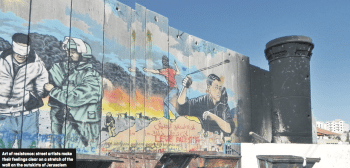
    After completing his Ph.D in the University of Pennsylvania, the former Palestinian foreign minister, Nabil Shaath, lectured in financial economics at the elite Ivy League Wharton School in the US. Among his students was a brash undergraduate named Donald Trump who did little study, flunked his exams and was expelled from the university. With the help of his very rich father, Trump was readmitted and, despite his poor academic credentials, went on to greater things. “He was not a good student. He dropped out and his academic standard did not come up to scratch. I was teaching advanced corporate finance and he flunked the courses. The idea of this man as President of the US to me shows the decline of American civilisation”. Some half a century later, Trump is leading the latest assault on the historic right of the Palestinian people to their own land, including international recognition of Jerusalem as the capital of their independent state. Last December, President Trump confirmed that he intended to move the US embassy in Israel from Tel Aviv to Jerusalem in a move that deeply angered the Arab world while elating many Israelis who have long had their sights on ultimate control of the holy city, which has been traditionally shared by Muslim, Christian and Jewish religions. The decision to move the embassy to Jerusalem was authorised by the US Congress some years ago but was put on hold by President Barack Obama, who believed the decision could only hamper efforts to find a lasting peace in the region and, in particular, the achievement of a two-state solution with east Jerusalem as capital of Palestine. For the Palestinian president, Mahmoud Abbas, and for Nabil Shaath who acts as foreign relations advisor to him, this divisive action by the Trump administration has confirmed a view they have long held privately: that the US cannot be considered as an honest broker in the search for a just solution to the Middle-East crisis, arguably one of the world’s most egregious human rights scandals. Over recent weeks, 35 Palestinian people have been killed and over 1500 injured by live rounds fired by Israeli army snipers from behind a fortified security fence erected in Gaza. Each Friday thousands of people from the besieged and almost destroyed Gaza Strip have protested for their “Right to Return” to the lands from which they and their families were expelled during the Nakba or catastrophe when the state of Israel was declared in 1948, and over the decades since. The policy of the government led by Benjamin Netanyahu and of the Israeli Defence Forces (IDF) is that the right-to-return protests must be resisted with maximum force, including by the killing of unarmed activists and the maiming of thousands. Already overstretched and under-resourced Gazan hospitals have been unable to cope with the recent slaughter, while their efforts to transfer shooting victims with serious injuries to hospitals in the West Bank have been obstructed by the IDF. Two young men who each had had a leg amputated after suffering severe bullet wounds lost their other leg after doctors were prevented by Israeli authorities from transferring them from Gaza to better-equipped hospitals for treatment. The reason they were refused access to urgent medical care in Ramallah was because their “medical condition is a function of their participation in the disturbances”, the Israeli authorities confirmed. One of the young men, Yousef Karnez, said that he was a trainee journalist and was holding a camera at the demonstration which he sought to document. “I got two bullets. One hit my left leg and crushed it and the other hit my right leg, where it gravely injured my shin. Doctors have already amputated my left leg and I am begging; I don’t want to lost my other leg,”, he pleaded in the days after he was shot in early April. A young journalist, Yaser Murtaja, who was wearing a white ‘Press’ sign on his chest during the same protest on 6t April, was shot dead by IDF snipers and wrongly accused by the Israeli defence minister, Avigdor Lieberman, of being a member of Hamas who had been operating a ‘spy drone’ before he was killed. His claims were denied by the International Federation of Journalists who said that Murtaja had worked for both national and international media over recent years including for the BBC and Al Jazeera, and that his company Ain Media had been funded by the US Agency for International Development. His production company had used drones for aerial filming and he was due to start a new job with the Norwegian Refugee Council two days after he was shot. Nabil Shaath, a Gazan, believes the people of the strip are desperate and the large ‘Right to Return’ protests are a reflection of their appalling living conditions. The electricity in Gaza, where some 2.5 million Palestinians live, is turned off for sixteen hours each day, there is no clean water, and there are severe shortages of food and medical supplies. Efforts to establish a unity government across the West Bank, east Jerusalem and Gaza which commenced last year have so far been unsuccessful due to the inability of the Palestinian Authority (PA) and Fatah (the political organisation led by President Mahmoud Abbas) and Hamas to reach agreement. At the core of their disagreement is the refusal of Hamas, which took political power in Gaza following elections in 2006, to cede control of security to a new government of Palestine. “We have a presidential system in Palestine and the President is in charge of security and foreign relations,” Shaath explains. “Hamas was elected in Gaza in 2006 by popular vote and we accepted that mandate. However, the PA remains responsible for ensuring that the people of Gaza have sufficient finance to cover the costs of education, health, water and electricity. We have now said to Hamas that we can only continue to pay the bills if they agree to complete discussions for a unity government that will include security”. This

    Loading

    Read more

  • Posted in:

    As sad as Assad

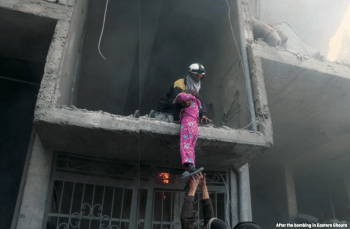
    Unthinkable suffering The Syrian army’s apparent chemical attack on Douma on April 7 was the worst atrocity of an infernal six-week military campaign in Eastern Ghouta. This in turn was the latest horrific chapter in a war lasting seven years which has brought unthinkable suffering to millions of innocent civilians. The relentless bombardment of Eastern Ghouta, backed by Russia and Iran, follows a cruel siege of the area lasting almost five years. These events reflect the most destructive and tragic elements of human nature: when ruthless powers encircle and terrorise the vulnerable, unchecked by any higher authority. The scenes being broadcast from the region are glimpses into an abyss of inhumanity – children being dragged from underneath rubble, parents convulsed with grief, neighbourhoods reduced to debris. The repeated bombing of hospitals and obstruction of aid convoys entering Ghouta are the most depraved aspects of the Syrian army campaign. They are examples of what Holocaust survivor Primo Levi called “useless violence” – suffering inflicted for its own sake and for no other purpose. Putin’s geo-political game Russian President Vladimir Putin has been providing military and diplomatic support to Bashar al-Assad since 2015 when he was losing the Syrian civil war – partly to secure Russian economic interests and partly to assert Russia’s dominance over the US in the region. The civilians of Eastern Ghouta are pawns in Putin’s geo-political game, and it appears he faces little consequence for directing this inferno of mayhem and bloodshed from Moscow. The wholesale destruction of Eastern Ghouta resembles the fate suffered by Aleppo and Homs earlier in the Syrian war and by Grozny, capital of Chechnya, during Putin’s first venture in politicised mass killing, a year into his reign. In each of these war zones the wretched plight of civilians incited him to an extreme of merciless aggression. Putin and al-Assad appear to share a psychopathic relish for attacking the weak. Aerial footage of Aleppo after the worst bombardments in 2016 showed apocalyptic scenes of ruination. The Russian and Syrian forces may as well have dropped a nuclear bomb on this once thriving, exotic city. Night after night on our television screens we are witnessing similar destruction and misery visited upon another mass of civilians, and hearing the same lies from Russian and Syrian officials who deny appalling events that are plain for all the world to see. Footage now emerging of Eastern Ghouta reveals almost a carbon copy of the haunted, hollowed-out cityscape that remains of Aleppo. Syria abandoned Article 1 of the Charter of the United Nations, set out at its inception in 1945, committed members to “tak[ing] effective collective measures for the prevention and removal of threats to the peace, and for the suppression of acts of aggression or other breaches of the peace”. Humanitarian protections for civilians in war zones were enshrined in the UN’s Fourth Geneva Convention of 1949. Grave breaches of these conventions include “wilful killing”, “wilfully causing great suffering or serious injury” and “making the civilian population or individual civilians the object of attack”, all of which have without question been perpetrated on Eastern Ghouta. The UN as it currently stands is nothing more than a politically redundant talking shop for Syria. Hand-wringing about the awfulness of the latest atrocity is invariably followed by diplomatic paralysis. Where power is concentrated most – among China, the US and the EU – moral courage appears absent. The US government, supported by the UK and France, mounted a sharp military response to the chemical assault on Douma, as it did last April when 80 civilians were killed by nerve agents dropped by Syrian army planes in Idlib province. We could ask why the relentless killing of civilians by every other weapon imaginable does not warrant intervention. As before, it is likely that such a measure will not be followed by substantive protections for Syrian civilians who will remain at the mercy of al-Assad and Putin. It primarily served as a show of US military might and of Trump’s willingness to impose a supposed tougher line than Obama on chemical weapons. It   also conveniently shifted public attention from the Mueller investigation into Trump’s alleged links with the Russian administration during his election campaign. An international peace-keeping force The Syrian conflict is a complex and deadly quagmire, involving armies and militias from several countries. Any attempt to resolve it is fraught with risk. And yet the choice to allow this slaughter of innocents to continue is a defilement of our collective humanity. If a large international peace-keeping ground force were based in Syria Putin would be far more cautious in the use of his military power there, and in his sanctioning of al-Assad’s violence. This would require courage from several of the world’s most powerful nations and would involve some risk to the domestic popularity of their leaders. It would be a show of collective strength to cold-blooded autocrats who answer to nothing else. A long-term political settlement is another challenge altogether, but in the interim this would give some protection to civilians caught up in the war. Putin and his allies have been emboldened for too long by having no limits placed on their behaviour and by the implied international attitude that the lives of Syrian civilians are not of much value to the rest of the world. Liam Quaide Liam Quaide is a clinical psychologist and the Green party election candidate for East Cork

    Loading

    Read more

  • Posted in:

    Drastic Plastic Profligacy

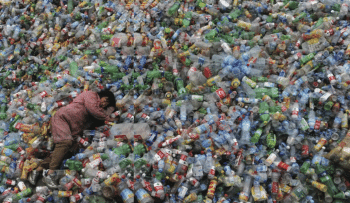
    For years, it was widely ignored, even as the evidence grew more and more overwhelming. Reports had been flooding in from some of the remotest places on Earth, from the middle of the Pacific Ocean to the North Pole. Researchers found its impact was hammering every ecosystem, disrupting natural processes and spreading havoc across the living world. Then, slowly at first, the message began to resonate well beyond the usual narrow circles of scientists and environmental NGOs. The public’s ears pricked up, the media began to look deeply into the story and politicians, ever eager to follow the crowd, jumped aboard and began to huff about taking action, stepping up to the plate, not standing idly by, etc. And so, slowly, after scandalous decades of neglect and indifference, the wheels of change began their inexorable shift. The task ahead remained Herculean but at least many societies could be said to be engaged, and from there, anything is possible. I would like at this point to claim the preceding paragraphs are a description of how humanity has finally – hopelessly late – begun to grapple with the existential ecological crunch of which emissions-fuelled climate change is the most obvious manifestation. Sadly, this is not the case. The belated public response is instead to the plague of plastic pollution that has reached such an epidemic point that even the usual defenders of the free market haven’t bothered to construct a phoney ‘alternative’ narrative to beguile the media and stymie political action. The extent to which a carelessly used and discarded by-product of global industrialisation has come to present such a potent threat to the web of life on Earth has been known in scientific circles for many years. Marine biologists in particular have been trying with little success to draw attention to the rising tide of plastic pollution and its deeply insidious effects. Perhaps it was only when it became obvious that the human food-chain is also compromised did the wider public really start to sit up and take note. Plastic marine debris is now described as: “one of the most pervasive pollution problems facing the world’s oceans and waterways”, by the US National Oceanic and Atmospheric Administration. Around a million tons of plastics, comprising tens of billions of individual pieces, is now produced globally every week. Perhaps a tenth is ever recycled. People come and people go, but plastics persist. Complex polymers, under the influence of UV radiation and sea water, break down into near-microscopic monomers that enter at the base of the food chain, being ingested in their trillions by the vast shoals of tiny organisms that support and underpin the entire marine web of life. As these creatures are eaten, ever increasing amounts of toxic plastic pollutants are concentrated in the next level of the chain, and so on, until creatures at the apex, from sharks, dolphins whales and sea birds, are carrying catastrophic levels of toxins. Consider that every square mile of the surface of every sea and ocean on Earth contains around 50,000 pieces of plastic debris and you begin to get a grasp of the scale of the crisis. And, with the equivalent of a full dump truck of new plastic waste entering the world’s waterways every minute, it is manifestly clear that nothing short of a radical, global response will suffice if we are to have any chance of stemming the toxic tide of plastic pollution before it is too late. Ireland’s response has been mixed. Back in 2002, the then government introduced a modest tax on the purchase of single-use plastic bags handed out in their millions at supermarket checkouts and elsewhere. Industry critics said it was unfair, too expensive to administer, would never work etc. etc. They were all proved wrong when, within 12-18 months of its introduction, the quantity of single-use plastic bags fell by some 90%. Even more unexpectedly, the public actually supported the tax, and this support was maintained when it was increased to ensure compliance. Ireland found itself, for a short time, in the unusual position of being a global leader on an environmental issue. Success would, however, be short-lived. In the intervening decade and more, ever more plastics have made their way into our lives. It’s not unusual to find apples being sold on a plastic mat, with cellophane wrapping and perhaps an outer layer of another plastic. Milk went, in the space of just a few decades, from being sold in reusable glass bottles to in recyclable paper tetrapaks to now being largely sold in heavy plastic jugs. Meanwhile, tiny plastic yogurt pots are sold with more wrapping than yogurt. The ubiquitous ‘take-away’ coffee cup is constructed with a plastic inner lining, making the entire cup (and its plastic lid) unrecoverable. Ireland is in fact the EU’s number one per capita producer of plastic waste. Irish people account for 61kg annually – this is nearly 50% above the EU average. Repak, the industry-funded recycling group, boasts of our high levels of recycling relative to other countries, but this begs the question: what exactly happens to all this material? The short answer is that, in 2016, 95% of all Irish plastic waste was shipped to China for ‘recycling’. Conveniently for us, far lower environmental standards apply in much of China, so quite what happens to our so-called recycled waste remains unclear (China has since shut its doors to western wastes, which will now have to be dealt with much closer to home). I was involved in a recent radio debate on the issue of plastics hosted by Newstalk. Repak CEO, Seamus Clancy explained in glowing terms some of the achievements of the industry. He instanced a decline of several grams in the average weight of a plastic drinks bottle as demonstrating the industry’s determination to reduce waste. What Clancy was less forthcoming was on the total number of plastic bottles in circulation. The weight of an individual bottle is almost immaterial when overall volumes continue to increase rapidly. An

    Loading

    Read more

  • Posted in:

    Swimming against a plastic tide

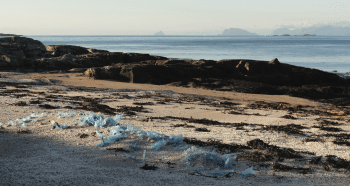
    Along Ireland’s coastline, you’ll encounter long sandy stretches and wild seas crashing against craggy coastlines. Yet, if we care to look under the surface – literally – it’s clear our seas and coastal habitats are not quite as pristine as would appear. The global issue of plastic pollution has recently come to the fore, amplified by David Attenborough’s series Blue Planet II. According to a study by the US National Center for Ecological Analysis and Synthesis Working Group, roughly eight million tonnes of plastic enter the world’s oceans from land, annually; a 2016 report from the World Economic Forum and the Ellen MacArthur Foundation predicted that there will be more plastic than fish in our oceans by 2050. Ireland apparently became one of the best EU performers for plastic recycling, though most of it has been treated in China where it is difficult to track, and which has now stopped taking European waste. We’re also the EU’s top producer of plastic waste, producing 61 kg per person annually. When not disposed of responsibly, this plastic can cause significant environmental destruction. While difficult to form statistics on the quantity of plastics in Irish seas, the founder of Coastwatch Europe Karin Dubsky says we have an inkling on the extent of the problem. “Through coastal surveys, we can see improvements in certain areas, for example there’s less pollution from oil and sewage. However, other problems seem to be persistent. Plastic drinks bottles continue to be the most widely distributed item found on Irish coasts`’, explains Dubsky. “The amount of coastal cleaning has increased but the baseline number of plastic bottles we find remains greater than in countries that have a deposit return scheme. Without this, we rely on telling people not to throw bottles and on cleaning up after those who do”. Indeed, over 8,800 plastic drinks bottles were counted across 535 sections of Irish coastline in the thirtieth annual Coast- watch survey in 2017 – along with 4,867 cans, 988 plastic bags and over 1,100 tyres – some of which had formerly been used for peeler-crab traps. Inevitably, much of this waste will be swept in and out with the tides if not collected. Plastic pollution isn’t solely a result of littering. Coastal landfill sites are falling victim to erosion, resulting in leakages of hazardous waste into the sea. “At the old landfill site in Bray for example, the sea has been causing approximately 1.5 metres of erosion annually. We need these sites to be very secure to prevent this from happening”, says Dubsky. She adds that while a decision has now been made to appoint consultants to place rock armour at the Bray site, it would be more appropriate to remove the ‘band of waste’ altogether. “It’s mind-blowing how slow it is for action to be taken”. Waste also ends up in our oceans as individuals take coastal erosion management into their own hands. “We have no national erosion management policy so people decide to do their own thing. They put all kinds of litter in front of their homes but because the area is at risk from erosion, the sea takes it away”, says Dubsky. Lack of policy surrounding the environmental impacts of new materials and products is having a detrimental effect. “We need a proper screening process so clever ideas don’t go to the market without being screened to ensure they aren’t going to create another litter problem”, she suggests. “Pontoons are one example. The cheapest way to make pontoons is using polystyrene with a concrete surface. During Storm Emma, polystyrene was released from pontoons in Holyhead following a breakage. From April 14 onwards, it has been arriving on our shores”. Discarded fishing gear, known as ghost fishing gear, is also an environmental concern. According to a recent report from World Animal Protection, it kills over 136,000 seals, sea lions and whales every year, in addition to millions of birds, turtles and fish. An estimated 640,000 tonnes of fishing gear are left in oceans annually. In the coming months, the Ghostfishing foundation will collaborate with local divers and stakeholders to remove discarded fishing gear off Irish coasts. Nic Slocum from Whale Watch West Cork is involved with the project. “We decided it was important to first find out the extent of the problem”, explains Slocum. “We went to a number of dive companies and they told us that the extent of ghostfishing is not that great along the south coast here. Ghost-fishing is a greater problem further offshore on much deeper wrecks”. As diving to such depths is challenging and requires specialist skills, the project is currently slightly delayed as organisers assess how they can run it in the safest and most effective manner. For now, Slocum continues to take part in clean-ups and informs visitors about the environmental dangers of plastic. He has seen it first-hand, recalling incidents of seals getting caught up in nets and a recent occasion when he was alerted to a young whale trapped in fishing gear. “We do see evidence [of harm from marine waste]: I can’t say daily or weekly but, when we do see it, it’s significant. For example, that whale would have starved to death if we weren’t able to free it”. Internal harm is less obvious. As Ireland doesn’t have a facility to conduct post-mortems on large marine mammals, it’s impossible to know whether whales washing up on Irish shores have died as a result of plastic ingestion. However, worldwide studies suggest that this could be the case for some of our species, according to Slocum. “Sperm whales are very prone to plastic ingestion. They feed on squid and often mistake plastic bags for food. Post-mortems have been done on many sperm whales around the world and it has been shown they are full of plastic. There’s no reason why it would be different here”. While visible waste in our oceans is of great concern, an equally pressing but perhaps more difficult issue to tackle is that of microplastics. This refers

    Loading

    Read more

  • Posted in:

    Wicklow Council reacts to housing crisis

    A fiercely fought decision by Wicklow County Council officials to buy and demolish an Edwardian house in central Bray for 45 car spaces raises questions about the power of local authorities. The house, inhabited until now, was torn down on 12-13 April. Residents suspect that spending at least€1.3m to buy and replace it constitutes an indirect public subsidy to Paddy McKillen’s Oakmount/Navybrook. Oakmount is erecting the Florentine retail centre nearby, for which Wicklow council reduced the number of car spaces required compared to previous plans. Officials snubbed a last-minute appeal by local TD and Minister for Health Simon Harris who supported the residents’ call for independent legal advice before proceeding with, as Harris put it, “the irreversible action of demolishing this heritage house”. Minister Simon Harris TD and Sinn Féin’s John Brady TD, as well as the Green Party, An Taisce, Bray Cualann Historical Society and many local residents (including this writer) have objected to demolition. But a coalition of Fianna Fáil and Fine Gael councillors held firm and rejected calls by fourteen councillors for an independent legal opinion on the process followed. And the Office of the Information Commissioner has now informed residents that it has identified more than thirty records relating to St Paul’s Lodge that the council did not previously disclose to it on foot of a continuing Freedom of Information appeal by residents. Wrecking St Paul’s Lodge during a housing shortage is the latest in a series of controversies involving Wick- low County Council. Last year it was strongly criticised by a High Court judge. The Council was originally poised also to buy and demolish for more spaces at the same location a second house, occupied by Wicklow’s former county manager. Although the Council assured An Bord Pleanála that the planned Florentine centre included enough car spaces, it now claims that new spaces are needed elsewhere “urgently” and at public expense. Critics point out that at least double the number of spaces planned to replace St Paul’s Lodge are empty daily in the car park under the Council’s own civic offices on Bray’s Main Street, and objectors have also identified other alternatives. For some time critics have called on the minister for the environment to initiate an enquiry into how Wicklow Council does business. The management of Bray’s fire services and of related matters following the death of two firemen there, the presence of an illegal dump in West Wicklow that may cost the state tens of millions to clean up, the status of land near Greystones, and the sale of public properties on Bray seafront and elsewhere have given rise to concerns. It is remarkable (and not widely appreciated) that, when endorsed by a majority of councillors, plans to demolish or build on council-owned properties cannot be appealed even to An Bord Pleanála. The absence of any right to appeal may be unconstitutional. John Ryan, the Fine Gael councillor most prominently supporting demolition, recently filed a form declaring his interest in a contract to provide services to Wicklow County Council staff. But he did not inform or withdraw from meetings about St Paul’s at which councillors had to adjudicate between council staff and objectors. Nor did Fianna Fáil’s Pat Vance, who owns commercial properties facing the Florentine site. Eight of 32 Wicklow councillors represent Bray, with just one each from Fianna Fáil and Fine Gael (elected last and second-last respectively). Fianna Fáil’s Bray councillor is Pat Vance, currently deputy chair of Wicklow council. Fine Gael’s is John Ryan. Most independent councillors in Wicklow, especially retired garda Brendan Thornhill, along with Green Party and Sinn Féin councillors have strongly resisted the demolition of St Paul’s Lodge. Protesting councillors convened a special meeting of Wicklow County Council in March to question the way in which the decision to demolish St Paul’s Lodge has been taken. That meeting lasted over two hours but the large Fianna Fáil-Fine Gael bloc largely remained silent before voting against a proposal to take independent legal advice. It was backed by Bray District Chairman, Councillor Christopher Fox. Councillors from these two parties in Wicklow generally support one another, with implications for resources. Three trips abroad during the St Paul’s controversy cost the Council over €6,500 and saw Council chairman Edward Timmins in New York with the county CEO, while deputy chair Pat Vance and a Council official went to Dublin, California (twinned with Bray). With residents against the demolition of St Paul’s refused permission to address the full Council, and their requests to meet officials rebuffed since last June, such trips exacerbate a sense of exclusion. The Council told residents last June that it was examining all options for parking. In fact, as its appeal to the Office of the Information Commissioner has already revealed, the Council had earlier decided to try and purchase both St Paul’s Lodge and an adjacent house. No record has been discovered that reflects any consideration of options beyond Herbert Road. Nor have records been uncovered that record any authorising decision early last year to buy two houses, or that might reveal who inside or outside the Council first suggested this, or what budget was allocated for the transaction. The Council eventually spent well above its initial valuer’s estimate of €765,000 buying St Paul’s Lodge, and even covered the cost of the vendor’s auctioneer, solicitor and furniture removal to Spain. Residents would have campaigned earlier to stop demolition had they been frankly informed when they first enquired. They object especially to the fact that council officials closed the purchase of St Paul’s unconditionally before the necessary statutory ‘Part 8’ consultation was even commenced, and question the point of that consultation, in which 150 parties including An Taisce made submissions. The Council admits that it did not ask its own heritage officer for her opinion. Submissions opposing demolition were also not circulated to councillors but were instead dismissed in a report presented by the Council official who had directed the purchase of St Paul’s Lodge. Most of the undisclosed records now

    Loading

    Read more

  • Posted in:

    Life and death on Abbey Street

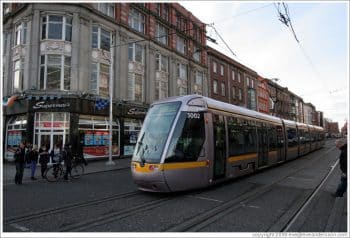
    All of life is on Abbey Street, the street where I work. Stepping out of the school, humming a tune to myself, in spite of the rain, heart beating with a secret joy, I imagine my self as a smooth stone, skimming over the the grey current of the day, towards the green granite horizon of Easons. A Chinese man is smoking outside Ladbrokes, mauling betting slips, each one like a love letter from an old flame, stories that ended at the first hurdle. Five euro on Heartache each way. My heart is beating with a secret joy. I cross over to Connolly’s window and admire the sculpture of shoes, precarious heels, and wonder how it feels to walk half a foot taller than you are. I see the Collins bus in front of Wynn’s Hotel drawing its breath before heading for Carrickmacross. A Spanish man with a large blue umbrella is explaining to a group of giddy teenagers all about 1916 and where they can buy cheap clothes; Penneys. Leaning on a roadwork barricade, smoking in the morning, breathing out a thousand spirals of associations, I could dream on this street corner forever, my heart is beating with a secret joy. Recalling, how a year ago, the city was slowly having its stitches removed, its wounds healing, being filled with tar and cement. Ghost light rail vehicles crawling on new tracks, testing her unclogged arteries. Strange passenger-less carriages, new blood cells, flowing through the veins of O’Connell and Parnell. For over a year it had been open heart surgery on the streets of Dublin. Teams of hard-hat medics making incisions on her asphalt skin, extracting bales of cable and huge yellow tubes from her drill-blasted bowels. The city was a vast operating theatre. The patient stretched from Stephen’s Green to the Ambassador Theatre and there, Parnell reminded over-worked junior doctors who were tarmacking her torn flesh: “No Man has the right to fix the boundary to the march of a nation…”. Dawson Street was like intensive care, reduced to one lane; just enough to let the blood of commerce flow to the gaping tills that gurgle profit like mouth wash. High mesh fences erected all around to protect the patient’s ruptured modesty. Deep scar tissue on Westmoreland Street, trainee doctors sweeping débris on O’ Connell Street, consultants and surgeons pummelling it with diggers and drills. Dublin was bleeding with dust, its arms stitched on Abbey Street by nurses in luminous overalls and a dressage team tending the city’s scars behind a plastic green mesh in front of the GPO. Then I see her laid on the ground, wearing a duffle coat, two sizes too large, half my age, skin, milk-pale and purple with the cold. Chicken-carcass cheekbones, crutches by her side. Behind her, a garish poster for a family-sized Supermac pizza; above her a man, weeping, pushing her chest, “I’m losin’ her, I’m fuckin losin’ her… will ye come back to me..?”. Traffic lights change and hundreds of shoes and shopping bags pass by. My heart had beaten with a secret joy and hers is stopping, ignored in a public place; overdose. A friend with a ploughed line of stitches on his cheek balances on a crutch calling an ambulance. The blue umbrella bobs now in the distance above a sea of scalps. Drizzle speckles her face and I can see the flash of ambulance scissoring the grey sky before I hear the siren, like lightning before thunder. Blue paramedic gloves draw a sheet over her face and the last she sees of this world is a fever dream of shoes passing at the level of her sunken eyes and a huge pizza slice being cut from a family meal deal, lassos of melted cheese the last thing she could cling to. A Red Line Luas tram passes, pressed tight with faces and brown-paper shopping bags, the bell rings to signal its crossing over O’ Connell St; the ambulance wails down Abbey St, all that is left is her rain-sodden cardboard death-bed outside Supermacs. Traffic lights change again and a thousand shoes hurry by; nothing to see here. Billy O’hAnluain

    Loading

    Read more

  • Posted in:

    Vulnerable Monsters

    Emma Gilleece reviews ‘SOS Brutalism: a Global Survey’; published by Park Books, 2017 (RRP €68) ‘SOS Brutalism; A Global Survey’ is the first-ever international survey of Brutalist architecture from the 1950s to the 1970s, a collaboration by the Deutsches Architekturmuseum DAM and the Wüstenrot Foundation. It is an understatement to say that this book is a colossal contribution to architectural discourse and twentieth-century conservation. As explored in its essays, even the process of defining this enigmatic genre, still muscular and enthralling after almost 65 years is like grasping wet soap. Each contributor eagerly tries to grip it with the same enthusiasm and excitement that these Brutalist pioneers must have felt when their concrete ‘monsters’ were taking shape. Nevertheless, the debates and divisions are all part and of Brutalism’s contrary appeal. Cult Status The godfather of modern architectural criticism, Kenneth Frampton, contextualises Brutalism in the foreword to the book, incisively distinguishing it for example from the“people’s detailing” of the shallow-pitched, tile roofs, cavity brick walls, invariably white “amiable, unchallenging, anti-street, garden-city aesthetic” which “came under therubric of contemporary architecture asopposed to the pre-war notion of a severelyabstract modern architecture”. The scope of the database of brutalist constructions, contained in an accompanying tome, is staggering: more than 750 pages. It was an important basis for the selection of the book’s 120 case-studies from twelveregions extending to Africa, the Middle Eastand Oceania. Accompanying the survey are essays from its editors and contributors exploring questions such as whether a building is now Brutalist, or merely a late-modern, exposed-concrete, edifice; the discrepancy between the terms New Brutalism and Brutalism; contemporary efforts to preserve Brutalist buildings across the globe and theassumed continuity debate. The goal of the book is to spotlight the evaluation and preservation of the heritage value of Brutalist works. This is no small task for Brutalism is divisive. Popular Culture The compiling of the database sosbrutalism.org by architectural crowd-sourcing, reflects the egalitarian nature of Brutalism mirrored by the role social media has played in Brutalism’s renaissance. For example, think of the international reach to thePreston Bus Station campaign in 2012 which swung its fate from razing to Grade II listing. In recent years Brutalist architecture has achieved a second flowering (cementing?)on social media where its images bulge and captivate. However, there is also a renewed interest in Brutalism in scientific journals, symposia and exhibitions. It appears it’s position in the cycle of fashion and derision is upwardly bound. Perhaps not uncoincidentally, too late for many exemplars. The database was launched in October 2015 with 250 entries. By September 2017, ithad grown to 1,100 Brutalist buildings, many formerly undercelebrated, of which 120 are endangered through neglect or intended demolition. Experts, architectural buffs and photographers contributed to the survey either by contacting them directly, or by adopting the #SOSBrutalism hashtag. The Irish Contribution The only Irish case study is Stephenson, Gibney and Associates’ practice head-quarters Molyneaux House, Dublin (1971- 73)written by Erika Hanna. Hanna describes the now anachronistic attitudes not only of that firm but also of Irish planning at that time: “They also publicly delighted in confounding the conservation lobby and were at the center of the most high-profle controversies…demolishing a Georgian streetscape to construct offices for the Electricity Supply Board; building the bunkerish Civic offices on the remains of Viking Dublin;and erecting the Central Bank building higher than its planning permission permitted”. In the endangered list for Ireland they include; the IDA Small Business Centre(1983), by Scott Tallon Walker, highlighted inred as under threat; Stephenson and Gibney’s Fitzwilliam Lawn Tennis Club (1973); and the Ulster Museum Extension by Francis Pym (1962-64). Sadly Fitzwilton House (1964-1969) by Shoolheifer and Burley is in red but will soon be crossed out by demolition. With the refurbishment of the former Central Bank on Dame Street, this book and the publication later this year of ‘More Than Concrete Blocks: Dublin City’s Twentieth-century buildings and their stories, 1940 – 73 Vol. II’ (Dublin, Four Courts Press), no doubt Brutalism will attract new fans overcoming the visceral aesthetic contempt always evident from those with unimaginative good taste.   Design This hardback is accompanied by a bonus paperback supplement of contributions made to the international symposium on Brutalism that took place in Berlin in May 2012. The retro, voguishly-burlap-bound book perfectlycaptures its scintillating subject era. Many will recognisethe book’s nod to the design of Reyner Banham’s seminal book The New ‘Brutalism: Ethic or aesthetic?’ (1966), the bible of Brutalism which knew, as times were changing, heralded its death. The photographs, both colourand atmospheric black-and-white; sketches; plans andsections make it a joy to turn each page and the list in the Appendix counterpoints the easy joy with evocations of the arresting magnitude of the speed and scaleof loss. The Appendix lists 986 buildings as of September 2017. Threatened/endangered buildings are markedred, demolished buildings are crossed out. Geographic coordinates are provided. More Than a Catalogue More than a catalogue, the book’s fantastically researched essays try to define elusive Brutalism, charting its rise and fall and pinpointing its appeal. The movement went beyond aesthetics. These buildings are embedded in the debates of their time when questions of design profoundly refracted a larger political context.Although an international movement, it was regionally-embedded coinciding with a period of decolonisation and nation-building (Africa, Asia), of reconstruction (Europe, Japan), and of rapid modernisation (North/Latin America, Middle East). Wherever we look, Brutalist buildings leered, all over the world, in most political systems. How many Brutalisms are there? Did the end of Brutalism coincide with the fall of thewelfare state and the beginning of neoliberalism? Did Brutalism become too costly atsome point, because the labour required for customised sculptural products was too expensive? Oliver Eiser’s essay, ‘Just what isit that Makes Brutalism Today so Appealing’,decrees that a new form of Brutalist architecture is long overdue. Annette Busse inher paper, ‘From brut to Brutalism, Developments between 1900 and 1955’, delves into the significance of the difference in the meaning of the words brut and brutal in English, French and German; and into the

    Loading

    Read more

  • Posted in:

    Robocobra Quartet

    Robocobra Quartet have been blazing a trail over the past few years. For artists, comparisons to admired figures can trepidate more than they motivate. Once a revered name is uttered and invoked in connection with an upcoming band, it becomes ineradicable from press releases, rehashed by gig promoters over social media, and used as an easy point of reference for journos and DJs with the luxury of only a few minutes’ research ahead of features. Your writer has the unfortunate honour of laying this burden on Belfast outfit Robocobra Quartet. While not, in fact, a quartet, but an assembly of musicians available on a given night, this constant shifting of sonic tectonics merely adds to the band’s unpredictability: a jarring and exciting racket that spurred a passing reference in a UK publication a number of years backto“Fugazi meets Charles Mingus”. Now a second album, ‘Plays Hard to Get’ is due on vinyl and digital formats in May, and as we get settled into a chat, the well-mannered and appealingly chipper Chris Ryan, speechifying drummer and bandleader, relates, with a wry smile, how this designation followed them as far as college radio in the United States while on tour there. But while it is exceptionally hard not to draw comparisons to sonic trailblazers past while pondering the angular, aggro jazz of Robocobra, the same seeming fluidity that applies to their musical broadsides extended across the range of the creative and production processes of their upcoming full-length. “There was definitely a much more blurred line between writing and recording on this one. Any time you commit something to recording, it always comes out a little different from imagined. In producing it, I wanted to respond to those changes and improvise just as much in the mixing and editing as in the actual performing. When you leave things malleable, it allows for the musicians to respond strongly and take ownership of their performances”. Material that’s aired in the run-up to the new record’s release has seen the band extend its range and explore the weird Venn diagram of sounds and textures available to them, especially in terms of jazz instrumentation and arrangement. “That’s interesting, I think the album is just much more extreme in all directions. It has some of the most gentle performances we’ve done but also some of the most dissonant violent noises we’ve ever made. Just a wider emotional-dynamic-range I guess”. Themes of alienation and trepidation are holdovers from the band’s first record, the embracingly-monikered ‘Music for All Occasions’, however modernity – in all its pettiness, distance and squalor are filtered through Ryan’s personality, experiences and spat-out verbiage throughout. While social commentary is no doubt at the heart of Robocobra Quartet’s music, the vitriol with which themes and concepts are thrown at the listener come from that certain place. “I find that I tend to get the most negative or dismal parts of my personality out through the lyrics, which kind of ‘cleanses’ me for real-life interactions, where I tend to be generally happy and polite. It’s hard to think about how something looks or feels when you’re in it, and even though the album is mastered and off to the vinyl plant, I still feel very much ‘in it’. Ask me again in about a year and maybe I’ll have a more eloquent response!”. With ‘Music for All Occasions’ now firmly in the rearview mirror for Ryan and associates, the conversation turns briefly to how he feels about the album now that he’s had some time to live with the finished product. Staying true to form and reflecting the band’s forward-looking nature, however, Ryan is eager to relate his experience in creating it to the grand vision he has for the new platter. “We definitely did that one a lot quicker than this record. There’s more of a simplicity to ‘Music For All Occasions’, but this album is much more layered. Some of my favourite albums offer you new things to hear with each listen, even after years. There’s a lot of the orchestration on this album that is somewhat buried, or momentary, to offer that kind of effect. There are drum machines, and string sections, and voices all over the place that are only really audible on headphones. Jeez… some mix engineer, eh?”. He laughs. The state of independent, experimental and otherwise ‘difficult’ music all over the island is one of rude health, across the genre spectrum. Hailing from a vital and busy Belfast scene that has carved a new identity for itself in recent years with precision post-punk and fearless experimentation, Ryan has a more nuanced take on the current upswing in noises and the people making them. “There are people doing beautiful things of their own volition all over the place, at all times. It’s usually the work of individuals with a will to make cool things, so I think it’s better to prop up those individuals, than thank the collective consciousness, which I think doesn’t really exist. Everything is in waves though, and I think even when things look terrible there are still people out there working hard and expressing themselves”. Off the back of the release of the new record, the band is touring the mainland UK and the continent throughout the summer, building on a live reputation that sees them neatly skewer the live demographics between the regular gig-going scene for noisy rock and the fringes of jazz-festival infrastructure. Balancing, as often, on the line between sincerity and irony, Ryan is quite specific about his thoughts heading into the fray. “There’s a really pretty petrol station in the north of England called Tebay Services on the M6 that is a little like paradise. That will be nice, especially in June which is when we’re on the UK leg. There are also a few promoters that we’ve worked with a few times before so it will be nice to say hello again and see how they’ve grown and changed. We’re just dipping our toes into mainland Europe at

    Loading

    Read more

  • Posted in:

    Difference and Repetition

    There is only one ghost scene in ‘Phantom Thread’, Paul Thomas Anderson’s latest film, which is a little surprising, given the title. (The spoilers start right here, I’m afraid.) The hero, played by Daniel Day Lewis, glimpses his long-dead mother as he lies in a fever induced by a poisonous mushroom secretly administered by his ‘girlfriend’. I use inverted commas because the term is altogether too demotic for the rarefied world of this elegant film about elegant people, but really at this stage she has no proper status in the egomaniacal edifice that is his house/life/ work/reputation. And it is this indeterminate status that she overcomes by the poisoning, because, the moment he can get out of bed again, he asks her to marry him. But back to the mother. We know who she is because we have seen her in a photograph earlier in the film. During his first date with the poisoner-to-be Alma (played by Vicky Krieps), Day Lewis’s character, Reynolds, explains that the wedding dress that his mother is wearing in the picture was made by him as a teenager, when she got married for the second time. It was the first dress he ever made. The husband, whoever he was, is nowhere to be seen. It’s an affecting scene, as it helps us understand that Reynolds’s occupation as a dressmaker for the high-society set in 1950s London is rooted in his powerful connection to his dead mother. The scene also positions Alma as the person who understands what his mother means to him, in other words, the person who under- stands him tout court. So when the mother’s spirit appears to him in his poison-induced fever dream, it is appropriate that she has been raised by Alma and her own weird hunger for love. It is appropriate because Alma ultimately proves herself to be the only person who can insert herself into this over-charged bond between unhappy son and dead mother, and in the process help him live a life for the living. The poison brings Reynolds closer to his mother and to Alma. This helps explain the strangest part of the film, which is when Reynolds realises that Alma is planning to give him poison again, and voluntarily eats it. His normal being is in a prison house for which he has lost the key, and the only release available to him is provided by her. Back to the photograph of the mother. It’s an antiquated, formal portrait of a woman in a constricting, formal dress, squarely facing the camera, her mouth clamped shut and without the slightest hint of joy on her features. When the mother appears as a ghost, she is exactly the same as in the photograph. She does not speak or move in any way. It’s as if the thing that is haunting Reynolds is not the flesh and blood mother, but the picture itself,. The moment that this ghost version of the mother appears is worth dwelling on. Given that this is a ghost scene, and that it’s 2018, we might expect some kind of special effect, some computer-generated move that would merge the spirit realm with the feverish state of mind of the character on screen who sees the ghost. But Anderson eschews the trick shot. Instead, the actress simply stands there, seen by one character (the bed-ridden Reynolds) and unseen by the other (Alma), who moves around the room. We cut to the face of Reynolds, but when we see what he sees again, the mother is gone and Alma is there instead. It’s as simple as that. The effect of it all is to emphasise the weird ghostliness of cinema itself, where images of the living and images of the dead are equally substantial, equally insubstantial. All cinema is a kind of trick shot, making us believe that we are seeing something that is not there. Anderson exploits this oddness to show us that this mother is neither living nor dead, but an undead presence with the same weight as all the other characters. The refusal to use any normally ghostly effects (mistiness, echoing sounds, uncertain lighting, etc.) makes it hard for us to decide whether Reynolds believes he is seeing a ghost, or he sees his real mother, or he actually sees a ghost, or he sees an actual ghost. The lack of trickery keeps all the options open and makes it more possible to believe in this ghost than the standard cinematic tricks achieve. We know, of course, that he does not actually see a ghost, because nobody actually sees ghosts. If we could actually see them, they would not be ghosts. They would belong to a more solid category. And yet, the category of ghosts is there, in all of its illogic. The story goes that Daniel Day Lewis gave up his theatrical career after playing Hamlet at the National Theatre in London in 1989. He said back then that the ghost of his father, the poet Cecil Day Lewis, appeared to him on stage, staring at him. He later somewhat retracted this version of events, saying instead that he was speaking more metaphorically than literally. It’s an unclarifying distinction, however, when it comes to ghosts, as ‘Phantom Thread’ makes clear (not to mention ‘Hamlet’). The character of Hamlet is, after all, haunted by his father, or “thy father’s spirit” (is there a difference?), from the opening moments of the drama. Being the method actor that Daniel Day Lewis is, it should come as no surprise that the loss of his own father should inform his on-stage experience. And so it fits the actor’s personal myth that now he is ending his screen career with a film in which he sees the ghost of his mother. For an actor who so deeply invests himself in his roles, brushes with death feel perhaps rather too much like the real thing. What will become of Daniel Day Lewis now? Actors before him have announced retirements,

    Loading

    Read more

  • Posted in:

    Cold, and Hot

    Someone has finally said it. The Cold War is back. The man who made the statement was Antonio Gutierres and he carries some weight on the matter as Secretary General of the United Nations. Up to now most commentators and experts have stopped short of using those two words. They have spoken of a “deterioration in relations” between Russia and the United States and an end of trust between the two countries. But to those of us who remember the First Cold War certain alarm bells have started to ring. There are people alive today who remember the Cuban Missile Crisis which brought us to the verge of annihilation. In those days both the Soviet Union and the United States had enough weaponry to destroy the planet several times over but the two sides were led by men whose political flexibility served to bring the crisis to an end. Back then the US was led by John F Kennedy and the leader of the Soviet Union was Nikita Khrushchev. Today both powers can still destroy the world but they are led by Donald Trump and Vladimir Putin. A direct military clash between the two in Syria has been avoided so far and, hopefully, will be avoided in the future but the hostile propaganda that characterised the old Cold War is being used to full effect. As in hot wars the first casualty in cold wars is the truth. Nuclear warheads remain in both camps but in today’s world a new set of weaponry exists that was unheard of back in the days of Kennedy and Khrushchev. Propaganda used to be issued on radio, TV, the newspapers and, occasionally, from the pulpit. There were lots of opinions doing the rounds but the Soviets saw to it that very little news, fake or otherwise, emerged from their territory. Back then we were told that the, Soviet peoples, and the Russians in particular, were brainwashed automatons ready to give their lives at a moment’s notice if their leaders asked them to. The Red Army would pour through the Fulda Gap in its hundreds of thousands to end what we considered to be civilisation. Before long we would be as brainwashed as they were and would be ready to do the bidding of our masters. For me that particular vision of Russia came to an end on a warm July evening in Moscow in 1991. I had arrived a month earlier as the Irish Times correspondent and was settling in to life in what was still the Union of Soviet Socialist Republics. On that afternoon my wife and I decided to visit the Novodevichy Monastery one of the city’s numerous historic sites, famous for its beautiful frescoes in the Cathedral of Our Lady of Smolensk. It was there that we caught our first glimpse of a member of the dreaded Red Army that was all set to annihilate us. What we saw was not what we had expected. The soldier’s appearance was far from terrifying. He was a raw-looking kid in his late teens or early twenties. His uniform cap was slouched back on his head in a manner that would engender the ire of a sergeant in that far less threatening military organisation known to us at home as the FCA. But that was not all. This boy in uniform was not alone. He walked arm-in-arm with his mother. It was a striking message to us that Russians are as human as we are and in this case perhaps more so. As for the automatons who believed everything their leaders told them, well that wasn’t true either. There was a burgeoning industry in jokes about the past leader Leonid Brezhnev’s ineptitude. The current leader Mikhail Gorbachev was mocked by sophisticated Muscovites as a country bumpkin with a south-Russian accent. Workers took things easy under the slogan: “They pretend to pay us, so we pretend to work”. Intellectuals had their own slogan which went: “How can we know what our future is today when we don’t know what our history will be tomorrow”. Russians didn’t need western propaganda to persuade them that things were not working well. So how have they ended up supporting Putin? The answer has a lot to do with Boris Yeltsin. Yeltsin brought hope initially but eventually Russia’s economy and its moral compass disintegrated under his rule. Crony capitalism took over from crony communism. Some people became immensely rich while others were selling their belongings in Moscow’s underpasses in order barely to exist. The gun became a major business tool. The Russian Mafia emerged from the shadows and many of its members had backgrounds in the security services. The tradition of the razborka, the settling of matters by the gun, became a major feature of everyday life. On one occasion that I particularly remember a family visited the grave of one of its members only to be blown to pieces by a bomb planted by a rival group. TV pictures showed the crows picking at human flesh on the branches of the cemetery’s trees. While this was going on the West indulged Yeltsin. If the 1996 presidential election was rigged then it was done to save the country. If Yeltsin wandered at night in the Washington streets in his underpants it was endearing. If he couldn’t manage to get off the plane in Shannon he was “tired”. Russians knew better. Ordinary people rang the Irish Times Moscow office to apologise for their president’s behaviour. The word stabilnost (stability) was on everyone’s lips. Then along came Putin. Russians craved stability and they got it. The West’s tone changed. Here was someone who might make Russia strong again. Bit by bit the demonisation of Vladimir Putin began. Relentlessly he was portrayed as the evil emperor. As time went on he helped the propagandists by behaving as they predicted. We have now reached the stage that any allegations against him are instantly believed. He was responsible for Trump’s election even though it

    Loading

    Read more

  • Posted in:

    Fight for Autonomy and then Solidarity

    There has been a perception that Travellers North of the border have benefited from progressive legislation which recognised our ethnic status some two decades before the South. In the Republic, our legal status was that of a social group, until 2017 when we were Formally recognised as an indigenous ethnic group. Irish Travellers are a minority native to the island of Ireland and according to the 2011 census represent 0.07 percent (ie 1,267 individuals) of the population in Northern Ireland. On the other hand, the All-Ireland Traveller Health Survey in 2010 concluded, based on its own statistical research that at least 3,905 Travellers resided in the North indicating that much more research is necessary, but also that there is an enormous disparity between the number of travellers residing in the six counties and those who are engaging with agencies. Tellingly in a report of just that name, launched in April, the Northern Ireland Human Rights Commission launched a report in april, citing 13 systematic concerns about traveller accommodation. These included inadequacy of sites for travellers, lack of funding and racial discrimination. Researchers recognised that there is “evidence that Travellers have been subject to discriminatory behaviours and attitudes from public authorities and the settled community”. This emerges “through actions, but also through inaction and general inertia regarding Travellers’ issues”. The report found that “negative public opinions and bias towards travellers also impacts negatively on Travellers, in particular concerning planning applications”. It considered that “efforts to ensure the participation of travellers in decision-making processes regarding accommodation by public authorities are ineffective and inadequate”. Irish Travellers have been recognised as an ethnic minority in the North for 21 years and yet it has clearly not been a panacaea that was pitched during the 2016 #TravellerEthnicityNow campaign. How are we to address the marked lack of improve- ment in terms of health inequalities, education, employment and civic participation? There is an absence of Travellers in key positions in statutory agencies and no political representation whatsoever. While many Traveller organisations throughout the country produce excellent work, too often Travellers are touted as the public face of a project while settled people maintain actual authority. Despite community-development rhetoric, NGOs in the six counties have made little or no progress in recruiting Travellers in any meaningful way. While all organisations or projects receiving funding claim that inclusivity and community empowerment is their goal, without substantive input on how these organisations should serve us, Travellers are relegated to being mere recipients of philanthropy rather than becoming active partners in our communities’ success. Even in board positions, Travellers are not provided with the requisite resources, support or authority to act as mandated for an organisation. There are no Traveller-led NGOs or advocacy groups and very few full-time Traveller employees in Traveller organisations. Had the equality and community empowerment discourse we’ve been fed since 1997 been in any way sincere there would be Traveller-led organisations across the six counties and already established projects would now be headed by community members, the fact that they’re not is a glaring indictment of the failings of the Traveller community-development sector. Although lack of engagement can’t be laid solely at the door of such Traveller organisations, responding to the absence of representation without investigation as to why dedicated and educated activists choose to pursue other avenues is key. Those recruited simply to diversify often fail to finish their terms, leaving organisations in a quota-filling cycle instead of assessing why Travellers may not feel comfortable or appreciated in their organisation. If we’re to address this issue, we need to understand both the power dynamics within the sector and the mistrust it can inspire in the Traveller community. Included primarily to legitimise a particular project, when Travellers attempt to exercise leadership, they are often discouraged or directed elsewhere, in line with the organisation’s own requirements. Employing a minority for purposes of meeting funders’ demands and as a means of potential access to a traditionally inaccessible community, yet failing to invest in their personal education and training, which would inevitably have a multiplier effect, is the opposite of community development. While the majority of organisations have good intentions, a lack of accountability and a culture of catering to funders’ requirements rather than the community’s needs is making many able and talented Travellers, who have the capacity to influence real change, disengage. When I worked with Traveller projects in my youth on a tokenistic basis, my presence was little more than a symbol of the organisation’s progressive credentials and a justification for their failing to engage in more meaningful work. The alienation begins in governance, where policies and funding requirements are set. Diversity statements and commitments mean little without dedicated action. Aggressive reform of this process is long overdue. When an organisation’s only experience of Travellers is as a service user at crisis point, there is a risk that certain opinions can develop and, though individuals may feel exoneration through protesting or providing tick-box employability courses, there is hypocrisy in ignoring the disparity within their own ranks. In this situation, charity doesn’t only affirm the moral superiority of the donor – despite profiting from social injustice, it also effectively buys permission to control the recipient, rendering it entirely counterproductive. Stigmatised individuals such as Travellers are already acutely aware that others may judge and treat them stereotypically and so, in professional settings, often feel increased pressure to perform well, generating passivity, and this includes remaining passive for fear of seeming confrontational or confirming prejudices. Evidence shows that this very specific form of internalised oppression can harm the progress of any individual for whom there is a stereotype-based expectation of poor performance. I found it particularly challenging to work in organisations whose primary focus was that of chasing funding to pay our own wages. My colleagues, who had no personal responsibility to the community they were employed to serve, could leave at 5pm and return to their own lives. Those of us who are community members feel added guilt and pressure,

    Loading

    Read more