Posted in:
Obituary: Sean McEniff, 1936 – 2017
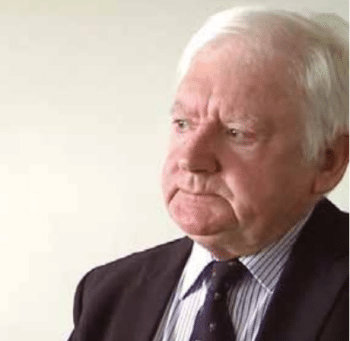
The death at 81 of Sean McEniff removes one of the last old-style political fixers from Ireland’s political landscape. McEniff was the co-owner of the Tyrconnell Group, a hotel chain. In 2007 Tyrconnell had merged with the Brian McEniff Hotel Group, owned by his brother, Brian McEniff, an All-Ireland-winning manager of Donegal football team, to form McEniff Hotels. McEniff served as chairman of Bord Fáilte, the tourist marketing board 1993-1998 and at one time was a Lloyds’ ‘name’ though he lost at least €8m there. His hotel empire extended to ten hotels countrywide including the Skylon, Grand Canal and Camden Court in Dublin, the Yeats Country Hotel in Rosses Point, Sligo, the Westport Woods in Mayo. But the core of the empire was Donegal, where the company owns the Mount Errigal in Letterkenny, and the Allingham Arms, Holyrood and Great Southern in Bundoran. The group weathered the economic downturn well. McEniff ruled his home town of Bundoran with a rod of iron, and ran a network of companies based on hotels, gambling arcades and holiday accommodation which together undermined the charm of Donegal’s leading resort. At the time of his death, he was Ireland’s longest-serving councillor, having been first elected to Bundoran Urban District Council in the early 1960s, then to Donegal County Council in 1967. That’s more than half a century. He ensured political decisions were taken to benefit him and his family. He was also a racist and bully. He once told local radio that Travellers “wreck homes” and should be housed away from other people. He said “there should be an isolated community of them some place – and give them houses and keep them all together”. “You wouldn’t want them beside you and I don’t want them beside me”. He was complaining about a house being bought in Ballyshannon for a Traveller family, and said it was “par for the course”: the house would eventually be “wrecked”. The house was burned in an arson attack after his outburst. In fairness, he condemned the arson attack. He believed he could bully state institutions. In November 2005 he threatened to take legal action against Met Éireann because it issued a severe weather warning. He claimed the tourist industry in Donegal suffered heavy losses. His own business was hit, as fewer than expected turned up to a music festival in one of his Bundoran hotels. “There was damn all snow in Donegal”, he said. “The Met Office has shafted us”. He was vindictive. When one local taxi driver fell foul of him, he instructed the three McEniff hotels in Bundoran that, if guests were seeking a taxi, this driver was not to be sent for. When the Council’s feisty traffic warden objected to several developments by McEniff and others, she was dismissed. She is currently in legal dispute with some former councilors, including McEniff. His empire traced its foundation to slot machines. These machines don’t just operate during the summer holiday season. In winter, buses run to Bundoran from several towns in the North bringing gamblers, mostly elderly, poor, or both. Under legislation, the maximum legal payout from a slot machine is less than €1. McEniff was by far the largest slot machine operator in the town, and ignored the law: his slots would make big pay-outs, just enough to keep the key punters hooked. The now-abolished Bundoran Town Council (formerly known as Bundoran Urban Council) has the job of licensing ‘the slots’. In 2009 it adopted a submission from the slot-machine operators – McEniff being the largest – to the Department of Justice as its own submission. The submission said Bundoran had 1,000 machines which are “an integral part of the overall Bundoran product, both on and off the season, and a key reason why visitors continue to be attracted to the town…the central importance of the sector is that it also directly supports most of the rest of the tourism and service sector. McEniff treated the Council as family property, and used electoral fraud. He put people living outside Bundoran, some in the North, on the voter register. On election day, cars would be sent for them. They would vote, get a meal, then a free bar. The tactic was effective. For the 2004 local elections, Bundoran Town Council had an electorate of 1,528. At the 2002 census, there had been 1,665 people in the town: 415 were under eighteen. That gave a population over eighteen of under 1,300. Thirty-three names were added to the register in February 2004 after the Electoral Review Court finalised late applications – but these names did not go through it, which is normal practice. All gave addresses at the McEniff-owned Great Northern Hotel. General Manager Philip McGlynn was McEniff’s brother-in-law and a Fianna Fáil candidate for the Town Council. A journalist rang the Great Northern Hotel to speak to one of the persons added to the Register. “She hasn’t been working here in over a year and she’s gone to America”, the receptionist who answered the phone said. McGlynn said he approached the Donegal County Registrar after the Electoral Revision Court. “I had twenty people working in the Great Northern Hotel, who had been working here two, three, four years”, he said. “The County Registrar said if these people filled in forms to register they could send them to the County House in Lifford. Nobody is living in the Great Northern Hotel (our emphasis). They are employed in the Great Northern Hotel and living in Bundoran. They have got four Council houses off Bundoran Town Council. Every one of these people is entitled to vote”. The Registration Department of Donegal County Council said voters had to live at the address at which they were registered. In that election, Fianna Fáil won five of the nine seats on the Council. The lowest-elected received 79 first-preference votes. Three of the five Fianna Fáilers were members of the McEniff family. A dynasty. While Bundoran Town Council existed, it was the planning authority for