AFEW RULES completely cover the mysterious case of The Judicial Appointments Commission Bill 2017.
![]()
by admin
AFEW RULES completely cover the mysterious case of The Judicial Appointments Commission Bill 2017.
![]()
by Dara Carroll
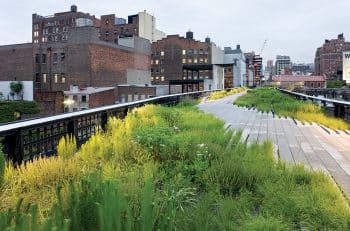
The growth of Dublin at the expense of rural Ireland is a familiar refrain, amplified in post-crash Ireland. While it is true that Ireland has a particularly unbalanced economic and population growth pattern focused on its capital city, increased urbanisation is a global trend. Along with pressure on housing, this urbanisation poses a range of environmental challenges for cities that directly affects the health and wellbeing of inhabitants, as well as biodiversity. These environmental pressures are exacerbated by climate change, with more frequent flooding events and (possibly less obviously in this country) urban heat island effects. Increasingly policy-makers and communities are looking to what are termed ‘nature-based solutions’, actions copied or inspired by nature, to address these challenges and to help citizens re-connect with the natural world. Depending on calculations, about 60% of Irish people live in urban areas and this is only projected to increase. It is still relatively low relative to the European average of 73% which is projected to increase to 82% by 2050. Globally, over 3.5 billion people live in urban areas. This accounts for over 75% of global energy consumption and 80% of global CO2 emissions. The environmental impacts of urban development are linked to the population and wealth of a city and hence consumption levels and consequent demands on natural resources. The ecological footprint or impact of a community on natural resources and ecosystems is therefore greater with larger and wealthier populations. However, while cities concentrate negative environmental impacts, their very densities of population and consumption offer opportunities for sustainable development through innovations in land-use planning, transport and building design. The ‘greening’ of cities, or more specifically the (re)introduction of nature into towns and cities is one such opportunity to reduce environmental impacts and to promote more sustainable development. Having a greener city as a means of improving the environment through parks, street trees, green roofs and walls – even window boxes, seems obvious to most in some vague appreciation of its amenity value. Over the past twenty years an extensive body of research reveals the connection between public health, wellbeing and nature. Increased contact with nature is proven to have positive physical and mental effects, through mitigation of air pollution, increased physical activity and social interaction, and reduction in stress. However, research also reflects concerns that urbanisation is quantitatively and qualitatively diminishing possibilities for human contact with nature. This may be particularly acute within often impoverished, inner-city neighbourhoods raising the issue of environmental justice. A 2016 study by UCD mapped greenery in Dublin city and highlighted stark disparities between areas, with the North East Inner City particularly lacking in greenery. There is good reason that the term ‘leafy suburbs’ tends to denote both a pleasant environment and wealth. The idea of enhanced urban greening is not wholly new. The earliest interest in land conservation was a reaction to urban environmental conditions in the nineteenth-century Industrial Revolution and the destruction of the natural environment. Nineteenth-century nature conservation came in the form of national parks and the protection of forests, rivers and wilderness, championed in the US by people like George Perkins Marsh who, in 1864, published ‘Man and Nature’ which castigated the destructive effects of human activity. Around this time, nature also began to be considered as a vehicle for urban planning and landscape development. The American author, poet, and naturalist Henry David Thoreau wrote that every town should have a park or primitive forest and Frederick Law Olmsted designed New York City’s Central Park and Prospect Park in the 1860s. In the UK, the Garden City movement developed as a reaction to the squalor and degradations of Victorian, urban, industrialised Britain. Pioneered by Ebenezer Howard with the new town of Letchworth, it incorporated housing, a connection and balance with nature, and economic viability. Garden City design principles were incorporated in Dublin in the newly developed suburbs of Marino and Drimnagh. Come the 1960s, Scottish landscape architect Ian McHarg promoted the concept of ecological planning for human settlement with his book ‘Design with Nature’. In this he divided the world into what was ‘fit’ and what wasn’t. Nature was deemed fit, whereas cities were seen as unfit or “scabrous entities”. In ‘The Granite Garden, Urban Nature and Human’ published in 1984, Anne Whiston Spirn explored how urban ecology can address environmental and social problems – such as water and air quality, the urban heat island, storm-water drainage, flooding, urban vegetation and wildlife – within the city itself. The contemporary concept of Sustainable Urbanism and its offshoot Green Urbanism have evolved from these earlier movements and writings. It brings together the strands of environmentalism, New Urbanism, Smart Growth and innovations in building and infrastructural design and technologies. Sustainable urbanism seeks to connect people with nature and natural systems and in contradiction to McHarg’s beliefs, this can be achieved even in dense urban environments. Local authorities in cities around the world are slowly beginning to embrace green urbanism, with a particular focus on green infrastructure. Comhar, the defunct National Sustainabilty Forum, described green infrastructure as an interconnected network of green space that conserves natural ecosystem values and functions and provides associated benefits to human populations. Multi-functionality is at the core of the concept. ‘Ecosystem services’ that green infrastructure can deliver include clean air, temperature control and mitigation of the local ‘heat island effect’, recreation areas, flood protection, rainwater retention and flood prevention, maintenance of groundwater levels, and restoration or halt the loss of biodiversity. These are in addition to improving the health and quality of life of citizens through the provision of accessible and affordable areas for physical activity. The multifunctional nature of green infrastructure means that the benefits accruing to it are not measured as just the sum of its constituent elements. Green infrastructure can be viewed as an approach rather than just a single entity. Its elements weave together synergistically, enabling the delivery of both ecosystem and human benefits in a way that enhances the environmental,
![]()
Posted in:
by Thomas White
A group of United States mental health professionals has expressed concern about the mental health of Donald Trump. Psychologist Dr John Gartner said: “We do believe that Donald Trump’s mental illness is putting the entire country, and indeed the entire world, in danger. As health professionals we have an ethical duty to warn the public about that danger”. But what about duty to warn about his philosophy? Let us imagine that four famous dead philosophers, Herbert Marcuse, David Hume, Immanuel Kant and Plato, have been resurrected, and applied themselves to Trump. More unlikely, let’s pretend Trump opens himself to his philosophical side. Herbert Marcuse is very, very worried In his famous 1960s book ‘One-Dimensional Man: Studies in the Ideology of Advanced Industrial Society’, Herbert Marcuse described the Happy Consciousness, the amoral product of the technocratic age, in which “guilt feeling has no place”. A person with such a deficiency, Marcuse says, “can give the signal that liquidates hundreds and thousands of people, then declare himself free from all pangs of conscience, and live happily ever after”. Trump, No? In ‘One-Dimensional Man’, Marcuse explained how nuclear-war planners represented this Happy Consciousness. They weirdly mixed the business of planning death on a nuclear scale with ‘fun’ talk about playing interesting games so trivialising mass murder. Trump’s frivolous flippancy about the possibility of nuclear war between North Korea and its neighbours: “Good luck, Enjoy yourself folks”, and his failure to rule out using them in Europe reflect this. Trump is a product of what Marcuse’s Frankfurt School colleagues called the Culture Industry – movies and TV. Despite its popularity the mass media is not democratic. The Culture Industry is an anti-democratic con job. As its Wikipedia entry says, “The culture industry perpetually cheats its consumers of what it perpetually promises”. Trump is a creation, Marcuse would conclude, of the fraudulent Culture Industry that perpetually dupes addict-consumers by conjuring up prefabricated fantasies about the endless promise of the American Dream. Donald Trump used his image as a wealthy celebrity showman to spread these fantasies and manipulate voters, who were desperate for a glimmer of success, glamour or fame, as well as for someone to bring them well-paying jobs. Marcuse claims that “advanced industrial society” creates false needs, which integrate individuals into the existing system of production and consumption via mass media, advertising, industrial management, and contemporary modes of thought creating a “one-dimensional” universe of thought and behaviour, in which critical thought and oppositional behaviour dissipate. Philosopher Roland Barthes, quoted by Marcuse, speaks of “magic-authoritarianism” where “there is no longer any delay between the naming and the judgement, and the closing of the language is complete”. Examples of this include the casual way Trump declared to her face that he’d prosecute ‘crooked’ Hillary Clinton and his judgement of Barack Obama as “Bad (or sick) Guy”, after he decided the former President had had him bugged. Trump lies – and lies about his lies – because he is a One-Dimensional Man entirely severed from the Truth and its ascendancy over falsity. It is all just a narcissistic magic show, hypnotic entertainment – the Post-Truth Triumph of the Spectacle. But in our fractious and dangerous era of media-generated ‘false news’ supported by international strategic hacking, leaking and subversion his powers are politically lethal. David Hume warns not only about Trump, but his followers too David Hume, the apostle of scepticism, might also have something to say about Trump’s dangerous personality cult. In Hume’s essay ‘That Politics may be reduced to a Science’, citing the political vagaries of humanity, he declared “should be sorry to think that human affairs admit of no greater stability, than what they receive from the … characters of men”. In other words, Hume as a professional historian, would declaim the folly of Trump thinking that only he – just one leader – could fix America’s problems – an assertion that history tends to mock. And being an astute moralist, and observer of human nature, Hume would also have questioned why Trump’s followers were gullible enough to be fooled by overbearing bombast into heralding him as the master problem solver. In another essay ‘Of Impudence and Modesty’, Hume remarked: “Such indolence and incapacity is there in the generality of mankind, that they are apt to receive a man for whatever he has a mind to put himself off for; and admit his overbearing airs as proofs of that merit which he assumes to himself”. Moreover, Hume forewarns not just about about Trump, but his indolent supporters. Kant: Donald Trump is my worst nightmare Immanuel Kant would have been disgusted by Donald Trump, appreciating in him the philosopher’s worse nightmares. For Kant integrity, honesty and consistency were everything. Trump would be akin to a philosophical pornographic website (we assume that our reborn Kant is up-to-the-minute). Kant had a dim view of an exclusive focus on sex. In his lectures “Duties towards the Body in Respect of Sexual Impulses”, he notes: “Sexual love makes of the loved person an object of appetite; as soon as that appetite has been stilled, the person is cast aside as one casts away a lemon which has been sucked dry… Taken by itself it is a degradation of human nature…”. Donald Trump, of course, engaged, as Kant would now be aware, in just such degradation: from beauty-contest-sponsorship to casual sexism and alleged real-life gropings. Kant might agree with Michael Moore, who noted that this predation explain why Trump rejects global climate treaties. Sexual predation against women and corporate predation against the environment are part of the same amoral game, which he characterizes as “crimes against humanity”. Yet what makes this even worse for Kant is that Donald Trump has been elected President of the United States of America, a nation for whose original revolution he had been an enthusiast, even though he denied the right of revolution. Morally, Kant invested every action with the importance of a universal action. But nearly all
![]()
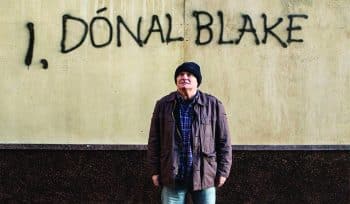
Our new Taoiseach Leo Varadkar TD makes sure he gets out once a week, often to see a movie. Last year he went to see the English movie ‘I Daniel Blake’ directed by Mike Leigh. Discussing the movie at a Pobal conference he showed little sympathy for the plight of Daniel who, having suffered a heart attack at work, was forced to reply on job seekers payments while attempting to appeal a decision not to allow him a disability payment. Nor did he appear significantly moved by single mother Katie and her children (Daisy and Dylan). Katie, having moved to Newcastle from a London homeless persons’ hostel, and increasingly desperate to survive, resorted to food banks, shoplifting, and work in a brothel. Indeed he has since gone out of his way to affirm his belief in the heavy-handed ‘work-first’ policy message at the heart of UK welfare reform. Through a rhetoric of ‘welfare cheats’ and an election campaign that spoke to the “coping classes”, the “people who get up in the morning” he has consciously sought to replicate an anti-welfare rhetoric in Irish political discourse. The question we must now ask is whether, under his new emboldened leadership, the bleak lives of Daniel and Katie, dominated by a hostile welfare state, could happen here. Are we seeing conditions emerge for ‘I, Dónal Blake?. The Irish welfare state has recently played catch-up to new forms of globalisation, privatisation, marketisation and voguish new public management (NPM) and has, championed by both international and domestic actors, moved towards work-first activation which is a more active use of income support to promote participation in paid employment. It is a mixture of enabling, compensation and regulatory regimes, but the general international trend has been for policy, and managerial, reforms to undermine potentially enabling elements and intensify its regulatory and punitive elements. Pathways to Work (PTW), Ireland’s activation policy, has fundamentally restructured Ireland’s activation institutions and programmes, rolling back old institutions like FÁS and rolling out new institutions like Intreo, the pay-by-results private-sector Job Path, and the Social Inclusion Community Activation Programme which has reoriented local community-development work towards supporting job readiness. New penalties have been introduced and, while the incidence of sanctions is still comparatively low, the unemployed have heard the message clearly. There is a new regime in town which must be engaged. Activation is often associated with recommodification of labour and mobilisation of a new form of ‘floating’, or more available and flexible employee, where claimants are gauged by their ‘standby-ability’ and live in a condition of flex-insecurity. We can best understand what activation is for by asking activation ‘into what’. The crisis also saw increased incidences of low pay and more precarious working conditions. Low pay is an increasing feature of the Irish labour market, with up to 30% of Irish workers low-paid according to the OECD definition of two thirds the industrial wage. Some groups of people are more likely to be low-paid, with women, young people and migrants not only more likely to be in low-paid work but also to work involuntarily part-time, to be underemployed or to be in precarious forms of employment. The Irish state spends over €1bn in in-work benefits to support low-paid workers and their families, compensation mechanisms that supports participation in low paid employment ultimately act as forms of corporate welfare, supporting not only low-paid workers but ultimately making such low-paid work viable. Taken together then, recent Irish changes point to a work-first policy strategy with a greater use of privatised actors working in a more managerial culture and using more regulatory sanctions to pressurise working-aged claimants into low-paid and precarious employment. That this work is often only viable through compensation in the form of in-work and employer subsidies raises questions about the quality of employment people can aspire to and whether in fact paid employment offers a sustainable route out of poverty. There is an alternative and it includes longer-term ‘preventative’ measures including properly accredited and quality education and training and regulating for decent jobs and living wages. One desirable recent change is the inclusion of Employment in the remit of the old Department of Social Protection. We need to judge success not by movement from welfare into work, but movement into lasting, sustainable and decent employment. If the new Taoiseach wishes to avoid a dystopian future or ‘I Dónal Blake’ situation he might look to addressing low pay as a significant Irish labour market phenomenon and introduce policy initiatives that counter a ‘low hours’ employment culture. People want jobs and to ‘get up in the morning’ but need a combination of institutional and income support responses to unemployment that reverse the emerging reality where approximately 30 percent of Irish workers experience not only low pay but also low hours of work, part-time work, temporary contracts and precarious working conditions. By Micheál Collins and Mary Murphy
![]()
by Mel Reynolds
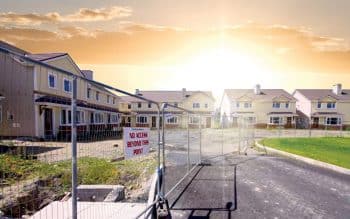
On 20 June the consumer advocacy group Right2Homes presented a National Co-Operative Bill to the Oireachtas Joint Committee on Finance, Public Expenditure and Reform. Supporting the bill was an expert panel including Edmund Honohan, Master of the High Court, homeless campaigner Fr Peter McVerry, academic Dr Rory Hearne of Maynooth University and other industry professionals. Prominent US Cornell University Law School professor Robert Hockett submitted a separate written submission to the Chairman. The Bill envisages the establishment of a not-for-profit co-operative to purchase large volumes of mortgages currently on the books of Irish lending institutions, that are in arrears. It is envisaged as an off-balance-sheet self-funding initiative, a special purpose vehicle with the intention to purchase 42,000 homes currently in arrears of more than one year. €14bn of assets for a marked-down value of €5bn. The overarching intention is to “keep owners and tenants alike in their homes” out of an overheated private rental sector and to help prevent further homelessness. To put the initiative in context, it is useful to remind ourselves of the current housing status. Mortgage Arrears – a ‘perfect storm’ A March 2017 report by the Central Bank confirmed the scale of Ireland’s mortgage distress: one in ten mortgages (76,422) are in arrears over 90 days of which 33,447 were in arrears for more than two years. Out of this 14,367 are ‘Buy-to-Let accounts. Despite this, the current rate of repossessed properties disposed of was relatively low at 210 in the first quarter. Homeowners in arrears are facing a ‘perfect storm’ – on the one hand very low levels of new home supply give a net loss of overall housing stock and contribute towards historically low levels of rental properties. On the other there is a recovering economy, net inward migration of over 34,000 people per annum and increasing levels of household formation. The Housing Agency suggests there is a demand for 81,000 additional homes by 2021. The Central Statistics Office confirmed that, when all factors were taken into account, the total stock of housing increased by just 8,800 in 5 years. Sharp sales price and rental inflation in the past three years confirms that demand dramatically outstrips supply, even with 32,000 vacent and so-called ‘ghost estate’ homes having been brought back into habitable use since 2011. For owners and tenants facing repossession, options are limited. Social and Affordable Housing Under-investment in State housing has left thousands of families in social-rental ‘solutions’ – temporary tenancies with little security of tenure. In the five-year period 2011-2015 there were only 807 Part V social homes delivered. Just 37 Part V social homes were delivered nationwide last year. Ireland’s social housing is a subsidised private-rental model – state-sponsored tenants competing for living space in the private-rental sector. The average sales price of a new three-bed home in Co Dublin on a greenfield site is €360,000. Purchase at this price requires a combined household income of over €100,000. There is no official definition of ‘affordable’ housing at present, no affordable housing scheme and no official intention of introducing one. Legislation underpinning the previous affordable housing scheme was revoked and any new initiative would require a legal framework to be developed. State infrastructure funding of €240m has been announced and will subsidise infrastructure for a number of housing sites (LIHAF). The intention is to aid delivery of 23,000 new homes in a five-year period. However, there are no legal agreements in place with developers in receipt of LIHAF funding for affordable housing, and given the lack of clarity on what an affordable unit is, especially its price, it is unlikely that any family homes below the maximum affordable price limit of €290,000 will be provided. Officials talk of an ‘affordable dimension’ to the infrastructure initiative and the assumption is that additional new homes will reduce prices to affordable levels. Detailed analysis of Central Statistics Office (CSO) data confirms that increased new-homes supply follows increases in price and rent, and that over a 40-year cycle increasing supply has not once reduced prices. Rental Sector and Homelessness There are 3,100 available rental properties nationwide, just 1,300 of them in Dublin. This is the joint lowest level on record. All demand indicators point towards entrenched double-digit house price inflation in the short term, and even with a recently introduced cap, rent increases of over 7% per annum. There is an unprecedented level of homeless families in Ireland at present . Typically these are households left behind by the country’s recovery that, for various reasons, simply cannot afford higher rents. Officials are quick to point out that over 3,000 people exited homeless temporary accommodation last year. However Father Peter McVerry has confirmed that in 2016 there was a net increase in homelessness of 1,000 people, confirming that the rate of people entering the homeless system is currently at 4,000 per annum. To improve balance sheets, lending institutions may accelerate the sale of large tranches of distressed home loans to investment funds – so-called ‘vulture funds’ – as there is good demand and sale-price inflation approaching 10% . As many vendors require ‘vacant possession’ for sales, sales of 20% of the mortgages in arrears for two years or longer may result in a significant distortion of the rental sector. Owners and tenants-in-arrears will enter a volatile rental sector while their original properties become temporarily vacant during the sales period. Given the current historically low level of available rental properties this has the potential to drive up rents into double-digit figures and to increase the net numbers of families entering homelessness by up to 5,000 persons per year. National Housing Co-Op Bill It is against this bleak backdrop that The National Housing Co-Operative Bill 2017 has been proposed. By purchasing existing arrears properties for an average of €120,000, owners and tenants could be kept in place for less than €600 per month. This figure is less than half the current Housing Assistance Payment (HAP) level for a two-bed property in County Dublin. Off-balance-sheet bond-funding-mechanisms have been
![]()
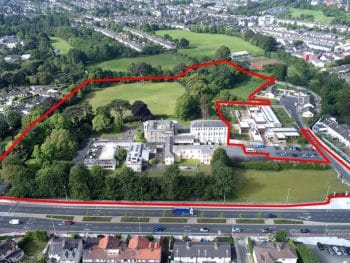
Assets that are social not just financial Ireland’s housing crisis and swirling property prices threaten precious and irreplaceable green spaces in our cities and suburbs with housing developments. House prices have risen more in the first six months of this year than the entire twelve months of 2016. Recognising the opportunity for maximum prices to take care of an aged clerical population and reparation commitments for historical abuse, religious orders are selling off their most valuable assets (after their faith) – their land. Unfortunately these sites are not vacant lands. Agonisingly they are where the children go at breaks and lunch-time, they are the schools’ resort for children’s sports and funding fairs and often community resources for dog-walking and exercise and simple relief from the traffic and commotion. Dublin has the highest land valuations and so has seen the biggest rise in the sale of school land in recent years. Infamous examples include Oatlands in Mount Merrion, St Paul’s in Raheny, and Notre Dame in Churchtown, carried through despite a shortage of schools in these areas. Holy Faith Convent in Killester, adjoining the school of the same name, is currently for sale. The brochure from WK Nowlan Real Estate Advisors suggests the zoning allows 70 apartments on the attractive one-hectare site which also contains a large former convent building. The same agent will sell the former St Teresa’s school in Blackrock, which closed in 1988, by auction on 21 July. It describes it as an “Exceptional Development Opportunity and period residence on approximately 3.92 hectares (9.7 acres). Large Residence, Gate lodge and former school buildings on mature landscaped grounds”. Of course in sales of mature institutional lands from Kilcoole to All Hallows WK Nowlan, the reverends’ favourite, publishes expensive marketing materials that suggest that the opportunities to cover these attractive lands in second rate housing is an occasion for public celebration. There has never been a greater market for education in this country. The population of the country continues to grow and projections for new schools continue to grow. Doctors complain that our children are not exercising enough. Institutional lands cannot be replaced once built on. A future generation, richer and more civilised than ours, will certainly curse us for the betrayal of our legacy of fine institutions on elegant grounds. So whose interest is being served by their ubiquitous sales over the last generation and in its desperation to deal with a severe housing crisis are the government and local authorities sleepwalking us into an educational crisis in Dublin? God’s Land The Catholic Church owns €3.743bn of land and property in the State. It owns or occupies more than 10,700 properties across the country and controlled nearly 6,700 religious and educational sites. The assets owned by the State’s 26 dioceses and 160-plus congregations and other district Catholic organisations have been accumulated over more than two centuries of providing religious, educational, health and other services to a once comprehensively devout populace. In the case of many orders the congregations transferred the running of institutions to separate bodies which are invariably charities, for example the Edmund Rice Schools Trust (ERST) which was set up in 2008 with responsibility for 95 former Christian Brother schools and 37,000 pupils. Its objective (as stated on its website) is “to foster the advancement of education”. Interestingly, and showing that Richard Bruton’s proposal to preclude Catholic schools from discriminating against those who have not been baptised in the Church is, at least in the case of the Christian Brothers, pushing an open door, its schools “promote equality of access and participation – in other words, children of any faith, or none, at every level of ability, of any nationality or ethnic grouping are all welcome in our schools”. Addressing the Redress Scheme Apart from peak land price, the tiptoe to the auctioneers is driven by clerical abuse and its financial legacy. The Catholic Church has surrendered ownership of 44 properties worth €42m to the State as part of the 2002 Residential Institutions Redress Act. In the wake of the 2009 Ryan report, the Government wanted the religious orders to pay half of the total bill of €1.4bn due for redress payments and legal costs. But the religious orders still have a long way to go to reach the €700m the State in the end demanded. Minister for Education Richard Bruton spoke out in March of this year, following the publication of a report by the Comptroller and Auditor General (C&AG) which showed that in total €209m has been received by the Irish Government from religious groups to address historical child abuse. Bruton condemned religious organisations for failing to help meet the costs of residential institutional child abuse. It might be argued that the Church should have met sanctions at the upper end of the financial scale and as a result transferred not just ownership, but control, of the institutions over which it is widely accepted it exercised control well out of proportion to its mandate in today’s society. Many of the schools, hospitals and clerical-training colleges could have been transferred to the Republic, with little unfairness since much of the money subscribed in the first place was for progressive-secular, as well as religious, purposes. In addition the funds raised from these sales are to meet the challenges arising from declining and ageing congregations of nuns, brothers and priests. The average age of the Christian Brothers is 79 and of the Sisters of Mercy 74 with over three-quarters of the nuns aged over 65. Part of the cost of maintaining retired members and the staffing of their care homes will be taken from the final price fetched for the school land sales. Celestial Figures The sale of these lands is not only taking away green spaces from the schools but it also ignores the need for new and expanding schools in light of anticipated population growth in these areas. There are currently 345,550 secondary-school pupils in the Republic (excluding PLC
![]()
Several years ago I lectured in a management school in England. One of the classes I gave was on food marketing. I began the class by playing a clip from the then famous documentary, ‘Super Size Me’, where the protagonist Morgan Spurlock undertakes an extreme diet of McDonald’s-only food for a month to chart the consequences on his body and mental health. The clip I chose is near the beginning of the documentary – where two American teenagers are about to sue McDonald’s for their obesity. I freeze-framed the image of the two teenagers, and turned to the class. “Where”, I wanted to know, “does personal responsibility end and corporate responsibility begin?”. As you can imagine, the entire class fell silent. Then one student pointed to the screen, and said, “Do you see those two girls? They deserve to die”. My shock only lasted a moment before the other students chimed in with qualifications to the student’s statement – no, not really that they deserved to die, but that they were the ones that were ultimately responsible for their own health! – everyone knows that McDonald’s is unhealthy food and should be eaten in moderation! – no one is forcing them to eat junk food! – and so on. I asked them whether they would react differently had I presented them with a documentary on the beauty industry and freeze-framed two anorexic girls who were suing L’Oréal for their unrepresentative portrayals of extremely thin women. “No!” was the incredulous reaction. In such a scenario, there would be more justification for blaming beauty brands, as they stimulate a mental vulnerability in all women, with some falling victim at a more extreme level. The classroom is a microcosm of society – albeit a pretty rarefied one. These students, I concluded, were not some extremist bunch whose mental processes were close to psychotic. In fact, you could probably argue, their reactions were a base point for most people’s; they just happened to be unguarded in their response. I suspect in fact most people feel this way. We feel that we should be able to ingest what we want, as long as it’s legal, and that the market doesn’t force us to do anything – certainly not to consume to excess. These two obese girls are what we would call ‘bad consumers’ – they haven’t learned the rules of the market properly. Perhaps they lack information (they don’t know that it’s healthy to eat at least five pieces of fruit or vegetables a day, for example). Or perhaps they lack restraint, whether moral or physiological (as in, their hypothalamus, the part of the brain that supposedly regulates appetite, isn’t functioning properly). And yet, is this the whole picture? The longer I teach marketing, the more uneasy I am about where this locus of control lies. We have never been so health-conscious and at the same time so fat. These two trends, rather than being opposites, go hand-in-hand. How come? The first reason I believe lies in what I call the perversity of marketplace knowledge. Marketplace knowledge refers to all the information we have about the market – how much a pint of milk costs, where to buy a lawnmower, how many calories are in a can of Diet Coke, that washing machines live longer with Calgon. That is a huge trove of information that we learn over the years and carry around in our heads! Thus, it is much better to think of consumers as learners and marketing as their teacher. Within this model, you’d be forgiven for thinking that the more information you had the better decisions you’d be able to make. However, recent research would suggest that this is not the case. In fact, the more involved we are in our market-place decisions, the more ‘brand literate’ we are, the more we fall victim to what are known as halo effects. The consumer researcher Pierre Chandon has shown that when one aspect of a food is portrayed as healthy, consumers will tend to mentally categorise the entire food as healthy, leading them to underestimate its calorie content, and to overconsume it. This phenomenon is known as the health halo, and it is not ‘marketing illiterate’ consumers who fall victim to it, but precisely those of us who know a little about nutrition, are health conscious, and can understand how branding works. When the so-called health benefits of a food are foregrounded on packaging and advertising (organic, gluten-free, high in natural fibre, sugar-free, low-fat, packed with fruit, etc.), consumers typically miscalculate the product’s calorific content: gluten-free bread or organic ice-cream is somehow healthier for us. This is not a conscious mechanism; in fact, when people are made aware of it, they tend to regulate their behaviour. The problem is of course that the environment we live in is obesogenic – we are surrounded by messages that encourage eating, and counter-messages are virtually non-existent. Chandon’s research also revealed that when consumers believe they are eating healthily they will unconsciously reward themselves – those who opted for Subway (positioned as a healthy fast food) over McDonald’s in one particular instance tended to add a side and a dessert to their order. In another experiment, by Chandon’s colleague Alexander Chernev, overweight participants when presented with ‘light’ M&Ms increased their consumption by 47%, whereas normal-weight participants only increased their consumption by 16%. In this ‘negative calorie illusion’, people who are more attuned to features of food and drink that supposedly promote health are likely to consume more. You can be weight-conscious and opt for diet versions of foods, but you are more likely to underestimate the calories, consume more and ultimately become heavier. These mechanisms are typical of the psychological vulnerabilities that the food marketing system is expert in. Our weaknesses stem in part from how we think of food in the first place. Ask anyone to give a definition of ‘food’, and their answer will likely be something like ‘a source of fuel or energy
![]()
by Village
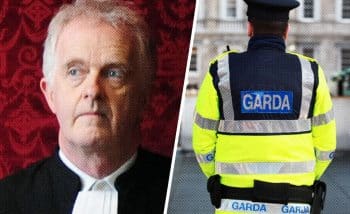
A few rules completely cover the mysterious case of The Judicial Appointments Commission Bill 2017. The judiciary should be independent but not self-selecting. Independence is good, preening is bad. Lawyers robustly defending the judiciary against encroachments by the executive is welcome though not if it has been fundamentally mendacious and itself cut across the independence of the executive. Ministers who’ve attacked a lot of people and whose motivation is often self-serving don’t have the benefit of the doubt afforded to them when taking public-interest stances. Independent Alliance leader Shane Ross has secured a commitment from Fine Gael to set up a new judicial appointments body with a lay majority and headed by a non-legal chair. It will select a ranked shortlist of candidates for the bench. The Government will retain the final vote in the selection process and, in a definitive indication that the Bill does not go far enough, there is no reason to think party allegiances will be eliminated as a force in their preference. Nor is there, yet, provision for judicial training, or interviews. Yanis Varoufakis recounts, in his expose of the Greek bailout (reviewed in this magazine, p 76), a conversation with Larry Summers in which the former financial guru who served in the Clinton and Obama administrations asked him if he was an outsider or insider, and declared that everything turned on that. The answer to that question may determine your attitude to the question of whether judges, and indeed other elevated and privileged personages in our society, should be reined in. In a Republic we should have no time for privilege, or the defenders of privilege, because there are simply too many who are not even being afforded their rights. Where they exist they should be under attack, not defended. But where they are defended with self righteousness by the privileged themselves it’s difficult to watch. Sinn Féin’s Justice Spokesperson Jonathan O’Brien told the Dáil: “The only reason Fianna Fáil think the [Judicial Appointments] Bill is radical is because it is so rare for anyone to attempt to amend even slightly the systemic privileging of a particular group of people in Irish society”. You will justifiably detest the vauntings of the privileged and the scrapings of their deferential acolytes though you will of course appreciate that if that reining in serves to render the executive (Cabinet ) and legislative (Oireachtas) less accountable that it will have backfired. In his contribution on the Bill, Labour leader Brendan Howlin appeared to suggest that in Dublin Northsiders favour outsiderism, Southsiders insiderism. Howlin himself seemed, as usual, to straddle both but perhaps betrayed too much deference to the establishment, reflecting the power of the artful but anti-legal-reform Labour Lawyers group within the often surprisingly unradical Labour Party. Howlin castigated Shane Ross the hapless and inconsistent but feisty author of the reform initiative: “In his blunderbuss assault on official Ireland, insiders and cronyism, Shane Ross devoted a chapter of his book to judges. In truth, that is the only reason we are here today debating this legislation”. The parochial and insiderist downside of this small society is the unleashing of serial illogical and evidence-free vituperation against outsiderist attacks on privilege, in this case against Ross from almost every “eminent” legal and judicial personage, each intemperate jab heralded as wisdom by a deferential media. The headlines tell the tale: ‘Judicial appointments Bill just an ego trip’ (Diarmaid Ferriter, Irish Times); ‘Judicial reform plan a ‘deliberate kick in the teeth’ for Chief Justice’ (Catherine McGuinness, Irish Times); ‘Judicial appointments Bill driven by political self-interest’ Ruadhán Mac Cormaic, Irish Times; ‘Judicial Bill an unsound solution to a problem that does not exist’ (Noel Whelan, Irish Times); ‘Judicial reform ‘dishonest’ (Times Ireland cover headline); ‘Ex-Chief Justice slams judicial reforms’ (Sunday Business Post). As if there was any doubt judges and their acolytes (or any profession) would be open-minded about a reduction in their status, however small. So the views of Michael McDowell SC on the place of barristers in society can be discounted. Some months ago the Irish Times headlined a report, ‘Senator [McDowell] says lay majority on proposed appointments council is “an attack on the system”’. “He said the Republic was the only state in the common law world in which a government had ever proposed having a lay majority on a judicial advisory board. It is of some significance that such a change has not been proposed in America or anywhere else with a common law system”. His statement was utterly wrong though there is no indication that any attempt will be made to correct the record of the Seanad. The Judicial Appointment Commission in England and Wales has 15 members, twelve appointed through open competition, three selected by the judges’ council. The chair must always be lay. Currently it is Ajay Kakkar, professor of surgery at UCL. The Judicial Appointments Board in Scotland has 12 members, six lay, four judges, two additional legal. The chair must always be lay. In Northern Ireland the Judicial Appointments Commission has 13 members, only four judges (one of whom admittedly chairs the body). In America appointments must be scrutinised by the Senate Judicial Committee, a judge-free zone. Indeed much of the commentary is misinformed and deliberately misleading, particularly where the Council of Europe’s anti-corruption GRECO body has said Ireland is “globally unsatisfactory” for judicial independence and appointments. In this case the Law Society, which represents solicitors, has been an honourable exception. The Association of Judges in Ireland has pronounced in an intervention that through its reach and not just its inaccuracy breaches the separation of powers: “It is hard to imagine any other walk of life in which the majority of those involved in an appointment process would be required to come from outside the ranks of those serving in the area to which the appintments are being made”. Evidence-free fulmination is not judicial. For fear of flouting the separation of powers, no self-respecting Judges Association would issue a statement of any sort
![]()
The Minister for Housing, and recent FG leadership contender, Simon Coveney, appointed a former senior Council official to investigate an allegation of financial malpractice at Cavan County Council (CCC), even though the former official had been accused in the High Court of being “up to his neck in corruption”. In March, Coveney and his department officials asked former County Manager of Wicklow County Council (WCC), Eddie Sheehy, to examine an allegation that fake invoices were issued by a senior official at the Cavan local authority for work that was not done. At the time his investigation commenced, Sheehy was a key witness in an ongoing legal case brought by waste operator, Brownfield Restoration Ltd., against Wicklow County Council about illegal dumping at a major site in west Wicklow. In the case, Brownfield alleged that WCC had itself dumped over 100,000 tonnes of illegal, including medical and toxic, waste at the biggest illegal dump in the country, at Whitestown. An allegation was made by a former Authorised Officer of the Council that he was involved in a corrupt enterprise to set up a private company to remediate the site and to make up to €30m and that the plan had been endorsed by Sheehy and another senior official at WCC, Michael Nicholson. Donal O’Laoire, Authorised Officer of the Council and an environmental consultant, told the High Court during his evidence earlier this year that Sheehy knew about and supported his plans to establish the private operation and “was up to his neck in corruption”. In turn, Sheehy described O’Laoire as a ‘liar and a perjurer’ when he subsequently gave evidence. During this time, Sheehy was working on the allegation that a senior official at Cavan County Council (CCC) had approved payment invoices for a least one private service-provider for work that was never carried out. In early April, Sheehy met senior CCC officials and interviewed Council staff at a Cavan hotel during his inquiries into the allegation concerning the issuance of false invoices. A month later, Judge Richard Humphreys rejected the claims made by O’Laoire in relation to Sheehy’s involvement in his ‘corrupt’ remediation operation and described the former county manager as “an intelligent witness with a clear understanding of the legal and ethical framework within which he operated”. “His evidence was broadly internally consistent, was broadly consistent with other known facts on the issues on which he conflicted with Mr Ó Laoire… and was broadly consistent with his previous testimony. In the few points where he had to correct previous testimony, I find that inadvertence is a much more probable explanation than design for any errors or omissions in his previous evidence”, Judge Humphreys said, in his partial judgement in the case on 11th May last. Among the inadvertent errors Sheehy had made was to wrongly inform the High Court that the first time he had heard of O’Laoire’s plan to set up a private company to remediate the site was in 2009. The court heard that Sheehy had informed the Garda in 2007 of his knowledge of the proposals. The judge described O’Laoire as “an amiable individual” who was also “suggestible” and “appeared to have little understanding of the legal and ethical constraints of his position as an authorised officer”. His ‘exoneration’ of Sheehy came as a huge relief to Council and Department officials even though the judge also ruled that WCC was in breach of EU law for its illegal dumping at Whitestown and the case continues. It was a setback for Brownfield which is suing the Council for failing to remediate the site as it promised the High Court it would do in 2009. The judgment also averted a potential embarrassment to Coveney in the middle of this campaign for the party leadership as it would have been difficult for him to defend Sheehy’s appointment to the Cavan inquiry if the former Wicklow County Manager had an adverse High court ruling made against him. Asked about his appointment of Sheehy to investigate corruption while the former county manager was himself the subject of serious allegations in the High Court, Coveney said during a visit to Wicklow days after the judgment that Sheehy had been “exonerated” in the court, Asked by local journalist and editor of the Wicklow Times, Shay Fitzmaurice, why he appointed Sheehy given the litany of complaints and allegations surrounding illegal dumping, planning and rezoning irregularities in the county over many years. Coveney said he planned to appoint a senior counsel to review the huge files he had seen on the matter. Meanwhile, judgment is awaited in the appeal by Wicklow Councillor, Tommy Cullen and former Councillor Barry Nevin, against a Circuit Court decision that also exonerated Sheehy and WCC. They have alleged that they were defamed in a press statement issued by the former County Manager in 2013 in regard to a planning matter relating to a major residential development near Greystones. The hearings before Justice Marie Baker started over a year ago.
![]()
by Colm Wallace
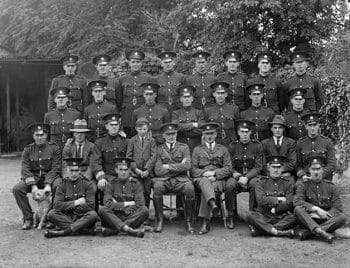
The Garda is in trouble, morale is low and there are numerous investigations into alleged incompetence and cover-ups. Village has been to the fore in detailing these delinquencies. The purpose of this article is something different: to highlight through a not untypical case the extent of the duty and the dangers of service. Overall, 88 gardaí have been killed in service, 23 by individuals or groups associated with the IRA/dissident republican paramilitary and terrorist groups, this being the most common cause of death apart from accidents. The most recent death was that of Garda Tony Golden, who was murdered in October 2015, while attending a domestic dispute, by dissident republican Adrian Crevan Mackin, who also shot and critically injured his partner before taking his own life. This article looks at the first Garda murder. In 1922. The War of Independence was ended by a truce on 11 July 1921 and the Anglo-Irish Treaty was ratified by Dáil Eireann early in 1922. Agreement was also reached by the British and the newly formed Provisional Government to disband the Royal Irish Constabulary, and in February 1922 a meeting was held at the Gresham Hotel Dublin to establish a police force to replace it. The Civic Guard was formed on 22 February 1922 and renamed the Garda Síochána on 8 August 1923. The Civic Guards were initially armed and trained at the Royal Dublin Society Showgrounds, Ballsbridge, Dublin and transferred from there to Kildare Military Barracks on 25 April 1922, and later to Collinstown before returning to the former RIC headquarters in Dublin’s Phoenix Park. Following a mutiny in Kildare the first commissioner, Michael Staines, TD tendered his resignation on 18 August and he was succeeded by General Eoin O’Duffy in September. Dublin Castle and nearby Ship Street Barracks was taken over by the Civic Guards on 17 August 1922. Following the accidental death of Charles Eastwood the Civic Guard became unarmed. Later that month the Gardai moved to Collinstown, County Dublin, and then to the Phoenix Park RIC Depot. The Civic Guard was then sent out among the people. The bitter civil war was still raging and the deployment of thousands of government-backed gardaí was certain to cause unrest, particularly in areas that were still controlled by republicans. The assurance that the Garda were above politics and concerning themselves only with criminal matters failed to impress the anti-Treaty IRA and their supporters. Dozens of barracks were attacked in the first months and it seemed only a matter of time before a garda would find himself on the wrong end of an IRA bullet. Henry Phelan would be the unfortunate victim after a tragic encounter in Mullinahone. Henry Phelan was born in 1899 neat Mountrath in County Laois. He was the youngest of a family of nine children but his father had died, forcing his widow and children to manage the farm alone. As Henry grew older he became interested in nationalism, eventually following the well-worn path of many of his generation to serve in the IRA during the war of independence. After the truce Phelan considered membership of the Civic Guard. He applied and was quickly accepted into the force, undergoing a short period of training in the Curragh. He qualified and was amongst the first detachment of twenty-six gardaí sent to the old RIC barracks on Parliament Street in Kilkenny City on 27 September 1922. At the end of October, along with twelve of his colleagues and a sergeant, Phelan was transferred to the town of Callan. Just after 3 pm on Tuesday, 14 November 1922, Phelan, along with two colleagues, garda Irwin and garda Flood, were granted an afternoon’s leave from their superior officer, a Sergeant Kilroy. The men had decided to cycle the five miles to Mullinahone. The trip was a recreational one and the guards’ intention was to buy a sliotar and hurleys for a new team that garda Phelan was attempting to set up in the Callan district. Like much of the county of Tipperary, Mullinahone was supposedly under the command of the government at that time but realistically the anti-Treaty IRA held great power in the area. Phelan and his colleagues decided to go to the village nonetheless. The gardaí succeeded in their mission of purchasing the goods, afterwards deciding to go to Miss Mullally’s licenced premises and general grocers on Kickham Street. The men ordered and were given a couple of glasses of lemonade which they finished quickly. Just then, three armed men rushed into the premises. The first of the intruders produced a revolver, while the man directly behind him held a rifle level with his hip. The first man fired a shot in the direction of the three men from a distance of about three or four yards. It hit garda Phelan in the face and he fell heavily onto the pub’s floor. The belated order was then given by the second man “Hands up”. The remaining two gardaí were horrified but complied with the command. The shooter then asked the shocked policemen if they had any arms. They replied that they did not. The second raider, who was still pointing a rifle at Irwin and Flood, seemed just as surprised by the shooting as the two gardaí and he asked his compatriot “What are you after doing; why did you fire?”. The first man muttered something inaudible and placed the revolver back in its holster. The third man was still standing at the door and said nothing during the altercation. Garda Flood begged the men to allow him to come to the aid of the stricken Phelan, who was still lying on his face and hands. They replied “You may”. They then left as garda Irwin went for help. The local doctor came swiftly but could not be of any assistance as Phelan was already dead. He had not spoken after the shot and died almost instantly. Word spread quickly about the first member of the Civic Guard to be killed
![]()
Posted in:
by Cormac Deane
After a couple of stuttering seasons, Season 6 of ‘Homeland’, which ended in April, pulled off a decently gripping story this time round. The writers make life difficult for themselves, as with its predecessor ‘24’, by making daring near-future predictions about the political reality that will be in place by the time the show airs. ‘24’, with its never-ending terrorist emergency, struck a lucky chord when it came to screens in the first week of November 2001, at the height of post-9/11 hysteria. That show ran for eight seasons, and in fact still produces the odd additional couple of hours of material, though the quality, always dodgy, really is inexcusable at this point. Many things appealed in ‘24’ – Kiefer Sutherland’s depressive charisma, Chloe O’Brian’s Aspergersy fixity of purpose, the sneering and maniacal baddies, and, a consistent ingredient, the palace intrigue surrounding the US President. Even before Barack Obama became the junior senator for Illinois, and while Hillary Clinton was the senator for New York, ‘24’ had two black Presidents and one female President, all establishment-liberals in exactly the Obama-cum-Clinton mode. These seem daringly prescient at this remove, though at the time they felt rather poorly paced. The black Presidents pre-dated Obama by too long and so seemed too far-fetched, and Clinton never even got her party’s nomination in 2008. ‘Homeland’ picked up where ‘24’ left off in several other respects. Although it has always positioned itself as a rather more intelligent version of things, it has continued the steady stream of terrorism-induced paranoid fear and sustained our fascination with the alternately high-functioning/highly dysfunctional US security apparatus. Its slower pace has always given it a more measured air, and its relatively considered depiction of mental illness (bipolar disorder) leaves ‘24’’s depiction of its array of gibbering misfits, Jack Bauer chief among them, look like the parts cut out for being too incoherent from the fantasy world of a Tom-Clancy-inspired 4channer who cannot make eye contact with anyone but his dog and his mother. ‘Homeland’ even has a tang of John le Carré-lite with its nostalgic sequences of good old-fashioned spycraft and face-to-face encounters between old rivals and enemies. In ‘24’, most of the time the connection between the good guys and the bad guys was mediated by a surfeit of fantasy surveillance technology, and when enemies met face to face they were usually in a homicidal mood, or at least they would be trying to cut each other’s fingers off or somesuch. In ‘Homeland’, we’re in a more interesting milieu of Russian agents who we feel are really idiosyncratic failed novelists, Iranians who are ruthless and entirely secular Realpolitikers, and Israelis who are weird self-deceiving liars, with the tanned unblinking vacuousness of hothoused transnational professional tennis players. With the first episode of season 6 coming out in the days running up to the inauguration of Donald Trump, ‘Homeland’’s bad luck was to forecast a Democrat-style woman as the brand new President-elect. It would have been great to see this drama unfold parallel to the first months of Hillary Clinton’s term in office, but instead it just felt like they’d backed the wrong horse, like most of the rest of the media. It would be interesting to know how much time and leeway the makers had in skewing the narrative to bring it into line with the phantasmagoria of Trumpism. Because one thing they get spot-on is the alt-right racists and America Firsters, whose tactics are borrowed straight from the Russian hacker playbook and whose vitriolic rhetoric (brilliantly ventilated by Jake Weber) blends elements of Rush Limbaugh, Stephen Miller, Bill O’Reilly, and Richard Spencer. In this story, these guys are on the losing side, and they do all they can to destroy the President and the Presidency from within. What the show did not dare to predict was victory for Trump. They can hardly be blamed – if they did have a Trump-style victor but with no corresponding real-world Trump victory, the show would come across as a rather dystopian paranoia-fest. Whatever the case, what their choices provide proof of, if it were needed, is that these shows are the dream of American Hollywood liberalism. This is not immediately apparent, especially to us politically anaemic Europeans, but these TV shows of political nightmares, permanent wars, state-sanctioned torture, the State on the brink of attack and its values under constant attack from its own security services, are ultimately stabilising for the American self-image and even for the American State itself. Clinton was more of the same dressed up as a change (the first female President!), Trump was something different (the first unpredictable President!). Despite their seemingly nightmare visions, these shows did not predict Trump. He has proved literally unpredictable. This is part of his uncanniness, narratively speaking. In the normal run of things, our fears, racisms and intolerances can be effectively masked by narratives about terrorism and intelligence and prediction, prevention and risk and probability, and that is part of the magic formula of ‘Homeland’. In the early seasons, we could hate the Islamic terrorist villain and fervently support the extraordinary reach of the security apparatus to catch him, all the while not feeling like racists because he was a red-haired, white-skinned American, played by an Englishman (Damian Lewis). What job is left for these narratives to do now? The Trumpian disruption could well provide yet another threatening obstacle that will provide the opportunity for shows like these to depict the ever-evolving deep-State establishment triumphant once more. This desperately needs to happen in order for things to carry on roughly in the same mode, both in the world of screen fantasies and in the real world of politics, which are not two separate realms. But the other danger is that the Trumpian disruption will, when it ebbs, leave behind the full normalisation of the extraordinary measures undertaken by surveillance (private and public) and by neoliberal economic reform (private and public), which got its great initial momentum with the election of George
![]()
I don’t like ‘-isms’,” War of Independence veteran George Gilmore once said to me. “Heaven save me from the Marxists!”, an exasperated Karl Marx is reputed to have exclaimed. “All the ‘-isms’ are ‘-wasms’ ”, was a witticism following the collapse of East European communism in 1991. Nonetheless ‘-isms’, ideologies of one kind or another, show no sign of vanishing. We all subscribe to some ideology or other once we have developed political views and think or say that our Government or the powers-that-be ought to do this or that, even if we do not know it or fail to give it a name. They are slippery things, “-isms”, shifting in meaning from place to place and accreting different connotations over time. One person’s praiseworthy “-ism” is likely to be regarded as reactionary by at least some others, depending on their politics. That is why sensible people who engage in political or polemical debate and want to avoid fruitless argument will seek first to define their ideological terms if they use them. “Populism” is a new “-ism” that has come into fashion only this past year. It refers to electoral or referendum outcomes that the elite who control mainstream public narratives do not approve of – e.g. Brexit, Donald Trump’s election or the growth of EU-critical movements like UKIP, Marine Le Pen’s National Front and the Alternative for Germany party. ‘Nationalism’ is one of the oldest ideologies, from Latin ‘natus’, referring to where people were born. In Ireland the word has traditionally had positive connotations as referring to the aspiration or movement for an independent State, which most Irish supported. Thus Pearse and Connolly were nationalists, as were De Valera, Collins, Cosgrave, Lemass etc. In modern Germany by contrast ‘nationalism’ is seen as a bad thing. ‘Nationalist’ is a term of abuse. The Nazis were nationalists. Hitler’s nationalism brought a catastrophe on Germany, as Mussolini’s did on Italy. The words are redolent of reactionary and anti-human doings. Clearly the same word, ‘nationalism’, can refer to quite different, even diametrically opposite, things in different contexts – to movements for national self-determination and independence on the one hand, with connotations of patriotism and love of country, and to imperialism on the other, the aspiration to conquer or dominate others, and associated chauvinism, racism and xenophobia. It is interesting how negative associations have come to attach to the words ‘nationalism’ and ‘nationalist’ in Irish public discourse since 1970. The decades since have spawned a whole school of ‘anti-national’ revisionist history-writing which tended to disparage past movements for Irish independence. The IRA’s campaign of violence from 1970 to 1994 was one reason for this. The commitment of the Republic’s Great and Good to European economic integration since we joined the EEC in 1973 was another. After all if one thinks that history is moving towards a supranational United States of Europe, talk of national independence for individual States is out-of-date and Europe’s national histories need to be drastically revised. ‘Internationalism’ is probably the most helpful ‘-ism’ to fall back on when one is dealing with national questions. Internationalists desire the emancipation of mankind. The human race is divided into nations. Therefore internationalism stands for the right to self-determination of nations. That was first advanced as one of the Rights of Man in the French Revolution. It is now a basic principle of international law, enshrined in the UN Charter, and is a fundamental of modern democracy. Internationalism does not mean that one is called on to urge every national community to seek a State of its own. Some nationalities are quite happy within multinational States as long as their rights as a minority are respected. But if enough ‘nationals’ want to have a State of their own, that is their right, and internationalism calls for democrats everywhere to show solidarity with them if they seek it. In France’s recent presidential election the basic conflict, we were told, was between ‘globalisers’ and nationalists. Nearly half the voters in the first round of the French election backed candidates who were critical of either the EU or the EU-currency. They were anti-globalisation. By contrast, the victory of Emmanuel Macron, the most europhile of the candidates, was seen as a win for globalisation’s supporters. Macron’s walk to the podium for his victory speech was to the tune of the EU anthem, not the French one. He plans to save the euro-currency by pushing for more integration in the Eurozone. The carrot he is likely to hold out to a reluctant Germany is the prospect of France’s nuclear weapon being ‘Europeanised’. That way Germany will get its finger on a collective nuclear trigger. The Deutschemark for the Euro-bomb, monetary union for political union, has been an objective of the Franco-German duo since the 1992 Maastricht Treaty. ‘Globalisation’ is at once a description of fact and an ideology, a mixture of ‘is’ and ‘ought’. It refers to important trends in the contemporary world: ease of travel, free trade, free movement of capital, the internet. The effect of these on the sovereignty of States is often exaggerated. States have always been interdependent to some extent. There was relatively more globalisation, in the sense of freer movement of labour, capital and trade, in the late 19th century than today, although the volumes involved were much smaller. At that time too most States were on the gold standard, a form of international money. In contrast to the 19th century modern States do more for their citizens, are expected by them to do more, and impinge more intimately on people’s lives than at any time in history, most obviously in providing public services and redistributing national incomes. Globalisation imposes new constraints on States, but constraints there always have been. Nation States adapt to such changes, but they do not cause States to disappear or become less important. Globalisation as another newly fashionable ideology refers to the interests of transnational Big Business and High Finance that seek to roam the world looking for profitable
![]()
Dante Alighieri opens ‘The Divine Comedy’ with the immortal lines: Nel mezzo del cammin di nostra vita mi ritrovai per una selva oscura, ché la diritta via era smarrita. (In the middle of the journey of our life I found myself within a dark wood where the straight path was lost) To the medieval mind of Dante, the great forests of Europe were a fearsome spectre of numinous presences, but by entering the wood of doubt he gained a deepened awareness. We retain these competing instincts: a wariness of wilderness that incites conquest, beside reverence for the sylvan mysteries. It is this latter instinct that requires nurturing. On a recent visit to Italy I embarked with a friend on a ramble towards Mount Sole near Bologna. This park had been the scene of a final battle in April 1945 between the Allies and Germans, along with their Italian fascist allies. Unfortunately our time was short, and as we ascended the narrow path, wending steeply through dense woodland towards the summit, a lengthy walk seemed imminent. In order to return for an appointment we had a decision to make. We had three alternatives: follow the path in the hope it would soon loop backwards; return the way we came; or take a short cut by descending directly through the thick deciduous forest flanking us. Contrary to good sense, we chose the latter course. Initially we divined a trail through the thickets of hornbeams and Turkey oaks – laid perhaps by the native cinghiale (wild boar) – but these soon lapsed as the descent became more precipitous. By then we were using trees, many tilted at curious angles, to lever ourselves like firemen down an increasingly sheer slope. This is when it became slightly dangerous as a surprising number seemed dead, giving way at the slightest pressure. The humous around the trees was also amazingly loose, and over some stretches we slid down soil that felt like snow. We had arrived in a natural sanctuary, and were cutting a swathe through it like a pair of conquistadores rampaging through an Indian village with steel. The acute angle of the hillside made this a route only the most foolhardy of large fauna would descend. In remote areas such as these we find fragile remains of unmolested old-growth European forests, although in these conditions only hardier species are in evidence, rather than the great beeches that once dominated the continent. This was, nonetheless, an impressive ecosystem that concentrates great wealth in the soil, and where old trees are allowed to live out their days in peace. Until we arrived that is. Then my friend’s foot came in contact with a hard metal object in the brittle soil, which on inspection proved to be a gun cartridge. Wiping away the earth revealed the inscription: “RH 1943 20mm”. A subsequent Internet trawl showed that it was a Spitfire Cartridge manufactured by the Raleigh Corporation in 1943. Bob’s Your Uncle! By happenstance I was then reading the German forester Peter Wohlleben’s remarkable little book: ‘The Hidden Life of Trees: What they feel, How they communicate; Discoveries from a secret world’. It seems we had made another, less explosive, discovery. “On hillsides”, he writes, “it is sometimes the ground itself that is sliding extremely slowly down to the valley over the course of many years, often at the rate of no more than an inch or two a year”. He continues: “Trees are losing their footing and being thrown completely off balance in the mushy subsoil. And because every individual tree is tipped in a different direction, the forest looks like a group of drunks staggering around. Accordingly, scientists call these ‘drunken trees’”. Coincidentally, on returning home to Ireland stories were emerging of one of the worst fires in living memory on thousands of acres of Coilte land in Cloosh Valley, east Galway. I knew this had to be coniferous cash crop as Wohlleben points out that a deciduous forest is not susceptible to fire: it lacks resins or essential oils, and must be seasoned for two years before it can serve as fuel. Conversely, the destruction of non-native evergreens offers a rare opportunity to use the site to reduce Ireland’s contribution to Climate Change. The great deciduous varieties are vast carbon storehouses, and incredible photosynthesisers (releasing oxygen in the process): just to grow its trunk, a mature beech requires as much sugar and cellulose as that yielded from a 2.5 acre field of wheat. This demands over 150 years, so our descendants are sure to be very grateful for measures taken today. If we assume (conservatively) 500 such beech trees grow on one acre, this offers space for 1250 trees on a 2.5 acre site. Its (stored) energy value can be calculated as follows: over one hundred and fifty years a wheat fields gathers an energy value of 150x (where ‘x’ is one year’s sugar and cellulose from a 2.5 acre site); whereas an acre of undisturbed beech trees offers 1250x for that period. This is both a potential energy source (that would eventually yield a fossil fuel) with over eight times more capacity than a wheat field, unsurprisingly considering heights of 150 feet. This leaves aside potential food (assuming we learn to process trees nuts better) and medicinal sources. Moreover, the expanding humous around trees contains vast carbon reserves, and trees, unlike wheat and most other crops, fix their own nitrogen. Suffice to say, old-growth forests are the leading weapon in the battle against Climate Change. According to Wohlleben the best thing to do in order to generate growth on a site is absolutely nothing, leaving Nature (relying on birds to carry seeds) to find a balance. In Ireland this will give us a summit vegetation of oak and hazel, which given the opportunity would colonize the whole country, and offer only marginally less bulk than beech. As it is, old-growth forests are virtually absent in the least-wooded substantial European country, which, paradoxically, has some
![]()
I have spoken to Fred Holroyd from time to time. Holroyd worked with the British army and MI6 in Ireland, 1973-75, and has written a book about his experience ‘War without Honour’. Incredibly, British spies are still meddling with his post. Holroyd has furnished me with a photograph of an envelope he received from me. It contained an academic book about the origins of the Troubles, something that interests Holroyd. To protect the book from damage, it was placed inside a bubblewrap cover and then slipped inside an ordinary white envelope. Somewhere along the line someone pierced both layers of the package with what was undoubtedly a micro camera wand to see what dangers to the Realm lurked inside. The misuse of precious resources Moreover spendthrift paranoia like this and the decades-long Special Branch monitoring of Jeremy Corbyn and Diane Abbott compromises scarce resources. Since Theresa May became home secretary in 2010 total police numbers in england and wales have fallen by 46,700 or 19.5%. In contrast to this, the overall budget of the Single Intelligence account – which covers expenditure on MI5, MI6 and the government monitoring service GCHQ – rose to £2.63bn in 2015 up from £2.48bn in 2014; in 2010, it stood at £2bn. As a result of these cutbacks, armed troops had to be placed under the con- trol of the police after the Manchester suicide bomb atrocity. Meanwhile, MI5 is making excuses for its failure. One of these is that it is overwhelmed and under resourced. A fact shouted from the rooftops is that it requires 30 officers to place a single suspect under surveillance 24/7. Since there are approximately 3,000 such threats, it would require 90,000 surveillance officers to watch them all. Yet, despite this MI5 is still able to find resources to interfere with Holroyd’s post; photograph its content; compile reports and send them to whatever departments analyses them. After this MI5 probably liaises with MI6 which in turn contacts its spies in Dublin to find out more about the threat posed by the sinister forces who sent a history book from Dublin. Holroyd’s phone is probably also monitored. Since he is scrutinised daily, a fair estimation is that 10 working hours are consumed daily. Why? The surveillance of Holroyd intensified after the pressure to reinvestigate the Kincora Boys Home scandal grew to the point where the Hart Inquiry into child abuse in NI was established. Holroyd’s handwritten notes from his time in NI confirm that he had been told that Loyalist politicians were visiting Kincora for sexual purposes. If Holroyd’s post is being surveilled, other Kincora whistleblowers who have featured in recent editions of Village such as Brian Gemmell and Colin Wallace are probably being scrutinised too; not to mention Kincora survivors such as Richard Kerr and Clint Massey. If only 30 individuals are being monitored, that means about 300 man hours are being consumed daily. This is only part of MI5 and MI6’s misuse of time, energy and gold. They have both had to prepare for the Hart Inquiry and the Independent Inquiry Into Child Sexual abuse (IICSA) in London. Their only interest was to maintain the cover-up of their sordid role in a swathe of child sex abuse blackmail scandals. Officers would have had to talk to serving and retired officers to get a full picture of what went on; trawl through records; cull embarrassing documents; liaise with Home office and Foreign office officials and pull the wool over the eyes of senior politicians; engage with lawyers; consider PR and propaganda initiatives; and last but not least: coach their witnesses to lie to these inquiries. Tens of thousands of man hours must have been spent, and this will continue to be the case as the IICSA looks like it will last another decade. An avoidable massacre There is no doubt that the Manchester massacre could have been avoided. Amber Rudd, the Home Secretary, has stated that the bomber was “known” to the security services “up to a point”. His mother told them that he had been radicalised. Two of his friends called the police hotline in 2012 and warned that he believed that “being a suicide bomber was okay” and that he was “supporting terrorism”. He also made trips to Libya and, it now appears, Syria. In addition to wasting time on Holroyd et al, MI5 has a lamentable record of eavesdropping on trade unionists and other civil rights groups. one of those placed under the microscope was that well-known threat to the realm, Jeremy Corbyn. It’s anyone’s guess how much of this nonsense is still going on at the expense of British taxpayers while Isis terrorists gambol back-and-forth from the Middle east. The present Director-General of MI5 is Andrew Parker. He believes that MI5 is an honourable organisation. We will give him the benefit of the doubt and assume that all the recent child-abuse skulduggery has taken place behind his back. Will someone now please tell him that he should redeploy his troops from Holroyd et al to Isis terrorists. The politics of the pirouette The demons unleashed by Britain’s destruction of Libya loom large in the story of the Manchester bomber. He had a Libyan background and was trained by Isis in Libya and/or Syria. Going back a few years, MI6 (which is responsible for overseas intelligence activity) failed to predict what was likely to happen in Libya when David Cameron was considering bombing Colonel Gadaffi’s forces in support of the rebels. It certainly didn’t impress this likelihood on him with sufficient force to prevent the bombing of Libya by the RAF. Chaos and civil war engulfed the country and created a haven for Isis. Overall, recent British-Libyan history defies belief. Gaddafi furnished the IRA with arms, his agents had planted a bomb on an airliner which exploded over Lockerbie and shot a police officer dead outside the Libyan embassy in London. On the other side of the fence, the US and UK plot against Gaddafi and on one
![]()
As a younger, and perhaps wiser, Leo Varadkar once said: there is no messiah who will lead Fine Gael from the desert into the promised land. This did not prevent him from presenting a decidedly messianic image as he posed for the cameras following his decisive victory in the party’s leadership contest on 2 June. Since then politics and the media have obsessed over his choice for cabinet posts with one potential appointee after another scrambling for pole position beside the new leader to confirm their adoration for the man who holds their future in his hands. Soon forgotten was the uncomfortable truth that most of those among the party membership allowed to vote chose Simon Coveney from Carrigaline ahead of the man from Castleknock, and that Varadkar was elected through the over-whelming support of the parliamentary party and local councillors for the sole reason that they believe he is the most likely leader to ensure their re-election. The wider party it seems judged the candidates on policy, rather than geography or dare we suggest because the average blue shirt just is not ready yet for a gay man whose father comes from India as their particular cup of Barry’s tea. This is not to suggest that Fine Gael people are more likely to be homophobic or racist than any other group of political supporters but that they simply have not got their head around the rapid change in attitudes of a population with an average age of 38, which also happens to be Leo’s. For all this, Varadkar is as cautious and conservative as most in his party on both social and economic matters and is more likely to upset the wider LGBT community than endear himself to them. After all, he only came out as gay during the marriage equality referendum which many gay people saw as the culmination of decades of campaigning for their rights from which the young Leo had been silently absent. More importantly however, as Taoiseach, he is unlikely to deliver on a repeal of the eighth amendment which adequately meets the progressive demand for an end to church and State interference with reproductive rights or to tackle the huge range of discriminatory measures the State employs against women, children and minorities in health, education and social provision. There is little question that Varadkar will improve on the future prospects for his party colleagues and that they will go into the next election with greater expectations than if enda Kenny was still in charge. But that does not say much and neither does it take into account the harsh realities facing Fine Gael as it stumbles from one crisis to another while feeding from the life support provided by Fianna Fáil in government. Fianna Fáil is now looking at a general election next year and possibly ahead of the third budget it agreed to allow under the confidence and supply agreement which was negotiated by a less than enthusiastic Varadkar. His tendency to speak first and ask questions later will almost certainly cause some rocky moments over the coming months while his need to satisfy the many competing demands within his own ranks will also hinder any desire he may have to make innovative, not to mind radical, change. Varadkar will be really tested when it comes to the bigger issues facing the country and the first challenge he faces is how to deal with the ongoing and apparently unceasing crisis within the leadership of the Garda. He was among the first to criticise former commissioner, Martin Callinan, for describing the actions of whistleblower, Maurice McCabe as “disgusting”, and almost certainly precipitated the end of his long career in the force. Now he has to decide whether to allow the beleaguered Noirin O’Sullivan to remain in position. Varadkar will be happy to see the public service pay and pensions issue sorted before he takes full hold of the reins but the challenge posed by Brexit and its implications for the border and peace process would have been well outside his previous comfort zone. As to the insuperable health crisis as a medical doctor he might have been expected, when Minister for Health (2014-2016) to have led the delivery of the party’s plan for a universal health service to which he pays lip service, but there is a suspicion he ran out of ideas and little cause to think he will apply swift effective medicine as Taoiseach. Ultimately it will be his willingness to stand up to the vested private interests that sustain and feed the housing crisis, the rise in economic and tax inequality, precarious work and poverty that will test his imputed qualities as a radical young visionary. However, his party promotes the low tax, poor public service model that appeals to the very people he needs to survive in the cruel world of politics. Let’s call it Leo’s paradox. Frank Connolly
![]()
Posted in:
As the Tribunal of Inquiry into protected disclosures and Certain Other Matters prepares for its opening statement from counsel in mid-June, Peter Charleton must be wondering what he’s let himself in for. It wasn’t supposed to be like this. The Supreme Court justice initially agreed to chair a commission of inquiry, a much more sedate affair than a tribunal. Set up by Michael McDowell in 2004 during his tenure in the department of justice, commissions of investigation addressed several concerns at the time about tribunals of inquiry, principally their ratcheting costs. But commissions are held mostly behind closed doors, and when it emerged shortly after Charleton’s appointment that false allegations of child abuse had been made against whistleblower Sergeant Maurice McCabe, the public clamour led the government to upgrade the commission to a tribunal of inquiry. A bigger deal altogether. He said there would be two modules in the tribunal – the first module will concern the reaction of Garda Commissioner Nóirín O’Sullivan, former commissioner Martin Callinan and others at the highest command level to disclosures made by Sgt McCabe. Maurice McCabe rejected plans for a Commission of Investigation calling instead for the inquiry to be held. The second module will deal with members of the force who made protected disclosures and whether they were mistreated as a result. Fortunately, although fresh scandals continue to emerge from An Garda Síochána almost weekly, from investigations into breathalyser statistics and accounting practices in Templemore to reports of potential security breaches as senior officers use third- party email accounts from Gmail, the Tribunal has avoided attracting further terms of reference as each new report of alleged Garda misbehaviour emerged. Charleton is of course no stranger to Garda tribunals. He was the lead counsel for the Morris tribunal into Donegal Garda misbehaviour in its initial years. Set up in March 2002, the tribunal delivered its final report in 2008, although Charleton departed in 2006, appointed a judge to the High Court. A retired president of the High Court, Frederick Morris headed one of two Garda tribunals at the time, while Justice Robert Barr headed a tribunal into the Abbeylara siege which ended in the death of John Carthy, shot by gardaí. Coincidentally, Barr’s son Anthony, also a barrister, acted for the Morris tribunal alongside Charleton. The latest whisleblowers inquiry (or as it wishes to be known, the Disclosures tribunal, and as it will probably become known among journalists, the McCabe or Charleton Tribunal) has one advantage over the Morris Tribunal. While the Donegal inquiry looked at a wide range of issues covering over a decade, the terms of reference for – and indeed the events which are being scrutinised by – the latest probe are much narrower. Even so, it could take some time to complete its work. Justice Barr looked at the events of a 25-hour siege, and the events leading up to it. His inquiry ran for four years. Charleton moved swiftly from the first. First announced early in February, before month’s end he had delivered impressive opening remarks, pointedly observing that lies told to the tribunal would be a “waste of what ordinary men and women have paid for”, and that the Irish people expected the tribunal to do its work expediently. Lies are a big thing for him: in a 2006 book, ‘Lies in a Mirror: An Essay on Evil and Deceit’, Charleton reflected on the criminals he had worked with, developing the idea that lying opens up the evil within all of us. His opening remarks also sought to shut down the possibility of delays to the tribunal’s work by way of appeals to the High Court, arguing that because so many previous tribunals had led to appeals to the High Court and Supreme Court, most important issues relating to tribunals were pretty much settled law. He also sought to shut down any claims of journalistic privilege which might impede the tribunal’s investigations. An interim report followed in mid-May, dealing mostly with the logistics of setting up the tribunal. It did reveal that at least some early concerns about journalistic privilege had been allayed, as both former Garda commissioner Martin Callinan and his successor Nóirín O’Sullivan, and Garda press office superintendent David Taylor, had waived any privilege in relation to any allegedly confidential communication with journalists. Born in 1956, Charleton was educated at St Mary’s College, Dublin, Trinity College and King’s Inns, before being called to the bar in 1979. He has written several books on criminal law in Ireland, as well as articles for both Irish and international journals on family law, constitutional law, the law of evidence, criminal law and judicial review. He has lectured at King’s Inns, Trinity, Fordham University in New York and Beijing University. He is unpaid chairman of the National Archives advisory council. He was appointed from the High Court to the Supreme Court in 2014. A noted musician, he was a founder member of the RTÉ Philharmonic Choir, and is formerly a member of the board of the Irish Baroque Orchestra. He is often described as “off beat” and “quirky”, which may be legal code for “well rounded” and “has interests outside the law”. By Gerard Cunningham
![]()
Leo Varadkar consistently asserts that he does not believe in equality of outcome but in equality of opportunity. He sees himself as “right” or “either centre right or a higher class of liberal… somebody who believes in personal freedom, someone who believes in a political economy and in a free market as the best way to create wealth”. He wants to lead a party, and we infer a country, for “people who get up early in the morning”. His highest-profile initiative came in late April, when as Minister for Social Protection he launched the fractious ‘Welfare Cheats Cheat Us All’ advertising and online campaign. It aims to encourage the reporting of suspected fraud to the Department of Social Protection anonymously. The image Varadkar, who was always going to win anyway, cultivated in his long tilt at the Fine Gael leadership is that of champion of equality of opportunity, liberalism… the right… those who get up early in the morning and aren’t part of the class responsible for welfare fraud. But above all Varadkar speaks the language of markets. However, the markets are a dead end. Neoliberalism is defined as “a modified form of liberalism tending to favour free-market capitalism” (Oxford). Like Scientology or some of the madder dogmas of religion, it is pseudo-science or bad science and it has been, as we shall see, comprehensively discredited. But this is too tart. Of course it has been discredited, but its hold on us grips our lives still, grips our incoming Taoiseach. So let us try and whisper in the world’s ears, and in the ears of the Taoiseach, why it is wrong and dangerous and pushing us to the edge. For a start there are better economic theories. John Maynard Keynes was in Saul Bellow’s phrase a man of “clairvoyant intelligence”. Keynes was prophetic in his great work ‘The Economic Consequences of the Peace’ that predicted that the dire economic conditions forced on Germany after the war would lead to its economic collapse and political upheaval throughout Europe. It resonates in our times. Keynes’ ideas fuelled recovery after recovery after the mistakes which followed 1929. Recovery was needed after the market was shown in every instance to be deficient in providing macroeconomic efficiency, let alone broader societal goals. Keynes argued that aggregate demand determines the overall level of economic activity. Inadequate aggregate demand can lead to prolonged periods of high unemployment. Keynes advocated the use of fiscal and monetary policies to mitigate the adverse effects of economic recessions and depressions. Time Magazine has said of Keynes: “his radical idea that governments should spend money they don’t have may have saved capitalism”. Keynes himself was reportedly disparaging about capitalism itself: “Capitalism is the astonishing belief that the nastiest motives of the nastiest men somehow or other work for the best results in the best of all possible worlds”. The stagflation of the 1970s with the shocks to the Keynesian system generated by oil prices opened sowed dissent. Keynes fell out of fashion with the stranglehold of unionism and welfarism and the imposition of socialist dogma. It created ‘a market’ for the work of the Chicago School and trickledown economics characterised by fetishistic privatisation, deregulation and the elimination of State subsidies. In the late 1970s much of this made superficial though never profound sense. The market may have seemed like a score counter that could be tamed for human purposes. No longer. It is the recipe for inequality leading to intolerance. After the Depression which started in 2007, Keynesianism actually underpinned some of the measures implemented in some countries – notably by Barack Obama and Gordon Brown in the US and UK. This was not the case in most of the world, particularly in Germany, which has learnt, and insisted that others learn, the wrong lesson from its own hyperinflation-driven catastrophe – or the EU, including Ireland which was an incubator for austerity. But it is Greece that was the laboratory. When the Greeks decided the ignominy was too unfair and pointless and elected a government firmly opposed to the hopeless conditions imposed upon them they were forced into an astonishing U-turn to accept further self-destructive bailout packages. Not even the IMF thinks that Greece can comply with these terms and successfully pay back its debt, especially when coupled with crippling austerity conditions. The latest figures show Greece’s debt stands at 179 percent of its gross domestic product, or about €315 bn. Naomi Klein in her bestseller ‘The Shock Doctrine’ analyses the growth and development of Neoliberalism across the world. An economic paradigm dubbed by the author ‘disaster capitalism’. Klein particularly homes in on how these crises and others are used to justify further disaster prescriptions. She quotes Hayek’s mate Milton Friedman: “Only a crisis – actual or perceived – produces real change. When that crisis occurs, the actions that are taken depend on the ideas that are lying around. That, I believe, is our basic function: to develop alternatives to existing policies, to keep them alive and available until the politically impossible becomes politically inevitable”. This describes the Greek decade. Moreover, Neoliberalism has contributed to the world order approaching a collapse at a startling velocity. As shown by Thomas Piketty decades of inexorably widening inequality lead to economic instability and social unrest. Trump, Le Pen and Brexit are the predictable fruits. Racism, sexism, xenophobia, intolerance, anti-environmentalism and disdain for the truth are their imperatives and their currency. It isn’t hysterical to fear that the end of human civilisation is glaring us in the face while most people look away. Established parties of government in nearly all major countries have subscribed to the Neoliberal agenda and merely quibble about its implementation. A wild ballet of madness. Neoliberalism’s imprimatur for austerity has ineluctably led to social instability and fragmentation, the destruction of pension and welfare entitlements, poorer and often more expensive health care, homelessness, evictions and the corralling of our world into the very rich, and the rest. The ineluctability comes from its
![]()
Posted in:
Margaretta D’Arcy found herself jailed in January 2014 on the back of a protest she mounted at Shannon Airport in 2012. What was she protesting about? US troop aircraft using Shannon as a stopover on their journey to the warzones of Iraq and Afghanistan among other things. D’Arcy is a rare stalewart against the steady erosion of Ireland’s vague understanding of its declared neutrality. The New Battlefields Unfortunately, in our increasingly connected technological world she was fighting the right battle on the wrong battlefield. Troops landing on the ground have increasingly been replaced by drones in the sky commanded by the video-game generation from air-conditioned facilities in the comfort of their own country. This arms-length war is conducted in part through the use of the numerous transatlantic cables that crisscross the seabed, many of which land in Ireland before continuing on their journey to the United Kingdom and the rest of Europe. As to the number of deaths that can be attributed to commands that were routed through cables that land in Ireland we can only speculate, but as the Galway Alliance Against War statement asserted on the occasion of the conviction of Margaretta D’Arcy: “By allowing the US Military to use Irish airspace and Shannon airport to wage these wars we have become a willing accessory to mass murder. We have blood on our hands…”. By logical extension, by allowing the command and control systems to communicate across infrastructure that connects through Ireland we continue to support these military operations in opposition to the basic principles of our perceived neutrality. Not a New Problem The first transatlantic communications cable was laid between Newfoundland and Ireland in 1866. One of the first communications transmitted across that cable was from Queen Victoria to then President James Buchanan: “A treaty of peace has been signed between Austria and Prussia”. The cost of transmitting messages across the transatlantic cable was prohibitive, limiting its usefulness to the affluent, wealthy organisations and of course governments. The strategic value of the cable was further emphasised in the explicit agreement for the UK to retain the right to determine control of it after the establishment of the Irish Free State in 1922. We might like to think that in the intervening years Ireland had grown to the point where it exercises control over the cables that land here. In 2014 Edward Snowden’s WikiLeaks revealed the degree to which the influence of Britain’s security services and General Communications Headquarters (GCHQ) has hardly diminished. The Irish Government has failed to address this issue. The actual number of cables connecting the US to its closest strategic partner, the UK, is startlingly few: discounting cables that form loops, there are seven. Eliminating those that connect through the rest of Europe, such as France or Denmark, the number reduces to four. Of those four three are routed through Ireland. The relevance of these connections can be easily understood when one looks at what traffic is going through these cables. Nippers and Slippers The United States Military operates a number of private networks, that are not connected to the public Internet. They have fantastic names such as JWICS (Joint Worldwide Intelligence Communications System), Secure/Secret Internet Protocol Router Network (SPIRNet or slipper), Non-classified Internet Protocol Router Network (NIPRNet or nipper) and National Security Agency Network (NSANet). These networks all fall under the umbrella of the Defence Information System Network (DISN), a worldwide system that connects US interests. These interests include in this case: command and control centres, intelligence agencies, embassies all the way out to Joint Task Force/Coalition Task Force troops on the ground. Included in the numerous global points to which slipper and nipper connect is the US Embassy in Dublin. You may wonder how the US Military managed to get access to all of the required jurisdictions to lay a private network of cables across the globe. The answer, unsurprisingly, is that they didn’t. Instead they purchase services from private infrastructure companies which have already laid the required cables. Companies like those which land in the likes of Dublin, Cork or Sligo. These networks are designed to be ‘Airgapped’ i.e. they are intended to operate physically isolated from each other and physically separated from the public Internet. According to protocol, any device connected to slipper for example, is supposed to automatically fall under the control of the slipper protocols and by extension the DISN protocols. The allegations against Hillary Clinton during the 2016 elections specifically relating to the handling of secret information are based on her having access to information from slipper but using an insecure device. Slipper, nipper, JWICS and the rest leverage private infrastructure but are supposedly separated from the rest of the Internet, but there is some evidence to suggest that this isn’t entirely the case. Marines Building Tunnels In 2002, as the US was starting to land troops on their way to Afghanistan and the Middle East, in Shannon Airport, a resourceful team of Marines developed a new mechanism for accessing the nipper and slipper networks. In consultation with a private contractor, the Marines built a ‘tunnel’ that allowed a secure channel to be established to slipper from a lower classified network – lower classified networks include nipper of course but also the public internet. The tunnels are now understood to be Virtual Private Networks (VPNs) that are in daily use by private industry. The implication of this ostensibly innocuous development is that the military themselves have transcended the security of their own private network using what is now off-the-shelf technology. Did You Lose Control of the Drones? At the intersection of the video-games universe and the US military is Creech Air Force Base, just outside Las Vegas, Nevada. From there Air Force pilots remotely control the surveillance, information-gathering and ‘targeted killing’ Drone operations. Among the many different forms of information communicated to and from Creech is target-designation information – focusing on who is to be killed. This information is communicated via our now familiar
![]()
Posted in:
Ireland is known for its literature, but not for its science fiction. There is not a great number of Irish writers in the genre, but it is a puzzling fact that major international authors such as James White and Bob Shaw are barely known in their native Ireland. Science fiction often imagines alternative life-worlds, which give writers the chance to assess the present by composing thought experiments that explore the implications of a new technology, new social structures, or encounters with alien others. It might be a good idea, then, to look to Irish science fiction as a source of incisive critical comment on all aspects of Irish life. The first published catalogue of Irish science fiction came out as recently as 2014. ‘Irish Science Fiction’ by Jack Fennell of the University of Limerick traces the genre as far back as Fitz-James O’Brien’s ‘The Diamond Lens’ (1858) and Robert Cromie’s ‘A Plunge into Space’ (1891) all the way through to what he calls “the shape of Irish science fiction to come”. Fennell lists many strange and wonderful pickings from the Irish science-fiction tradition, such as Tom Greer’s ‘A Modern Daedalus’ from 1885, which outlines the invention of flying machines by a Dublin man and his inner conflict at using the technology to gain independence for Ireland, and James Creed Meredith’s ‘The Rainbow in the Valley’ (1939), in which Martian contact becomes a trigger for philosophical speculations and reflections on the War of Independence. Fennell also uncovers science fiction in Irish. The four Captaen Spéirling novels by Cathal Ó Sándair were space-going adventures written in the early 1960s for children. Fennell points to the optimism engendered by an economic upturn in Ireland in the period as crucial for understanding the stories, with Spéirling described as “nothing more than a gaelgeoir Buck Rogers or Dan Dare”. Fennell also points to an imperialist theme throughout the Spéirling series, with the suggestion in the novels that Ireland’s history as a colony will ensure that aliens on any inhabited planets will be treated with the utmost respect when an Irish interplanetary imperialist project is established. One author not covered in Fennell’s volume is Joseph O’Neill, whose ‘Wind from the North’ (1934), ‘Land Under England’ (1935) and ‘Day of Wrath’ (1936) arguably also belong to the genre. A friend of W.B. Yeats, O’Neill was the Secretary of the Department of Education in the early Irish Free State. In The Irish Press in 1944, O’Neill reminisced about his younger days as a member of the Gaelic League, travelling the countryside with his boyhood friend, Pádraig Pearse, collecting stories and handing out cash prizes to anyone who could speak Gaelic. However, O’Neill’s interest in Gaelic antiquity never translated into political action. The O’Neill expert Kelly Flynn Lynch writes that at Easter 1916, the author was “incapable of evincing a passion or even an enthusiasm for popular Irish causes”. But O’Neill did have a passion for the science fiction of H.G. Wells. Upon publication of ‘Land Under England’, he sent the father of modern science fiction a copy of the book with a letter telling him that “‘Land Under England’ in so far as it has value, owes it to you more than to all other writers put together, because it is your works, the early ones as well as the later, that kindled my imagination to the point at which I felt that I wanted to create”. ‘Land Under England’ provides a fascinating inverse view of the newly independent Ireland. The novel details the adventures of a young Englishman who follows his father into a secret cavern beneath Hadrian’s Wall. His father’s obsession with the ancient Romans has led to the discovery of a hollow beneath the historic wall into which Roman civilisation has retreated. In their isolation, the Romans have evolved telepathic mind-control techniques in order to control their subjects and exist as a society of automatons. The novel is usually connected to the rise of fascism in Europe, but it also echoes events closer to home, in what Diarmaid Ferriter calls the “frenzied and paranoid” atmosphere of 1930s Ireland. Indeed, after its publication, reviewers wondered whether its depiction of Roman automatons was a sly critique of Irish Taoiseach Éamon de Valera’s Fianna Fáil party, or his rivals in the fascist Blueshirts. In his role in the Department of Education, O’Neill was said to have been one of Archbishop McQuaid’s favourite civil servants, and O’Neill’s official writings on education and the church certainly bear this out. However, O’Neill’s final novel ‘The Black Shore’, published posthumously in 2000, reveals a more sardonic take on the relationship between church and State in Ireland, and perhaps adds a new dimension to the metaphorical significance of O’Neill’s Roman automatons. The bulk of Irish science-fiction literature has been produced by three Belfast writers: Bob Shaw and James White, who both wrote from the mid-twentieth century to its end, and Ian McDonald, whose career spans from 1989 to the present. Science fiction is a genre that tends to arrive with late modernity, so it is probably no surprise that a science-fiction tradition would take root in Belfast, given the history of industrialisation in the city. Bob Shaw and James White were friends who worked together at the Shorts aerospace company. White set up the Irish science-fiction group Irish Fandom in 1947 with his friend Walt Willis, with Shaw joining the group soon after. White and Willis met through the pages of the British speculative fiction magazine Fantasy, when White noticed a Belfast address in one of the letters to the editor and tracked Willis down. Irish Fandom was nominally a non-sectarian grouping, although White remained the only Catholic member throughout its existence. The group self-published the science-fiction fanzine Slant, which was printed using a hand-levered flatbed printing press. White made prints using woodcuts of rocket ships, astronauts and planets for the illustrations. White saw his science fiction as an antidote to the violent and
![]()