Posted in:
Technology neutralises our Neutrality
Irish infrastructure used in US Drone strikes
![]()
Posted in:
by admin
Irish infrastructure used in US Drone strikes
![]()
Posted in:
by admin
Restore political life by restoring community life
![]()
Posted in:
by admin
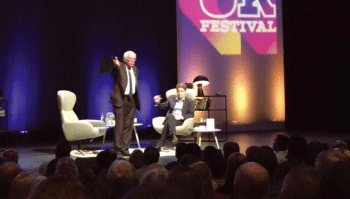
McWilliams and Sanders at the Bord Gáis

![]()
Posted in:
by admin
Ireland should brace for market worship dressed up as equality of opportunity and favouring those who get up early
![]()
Posted in:
by admin
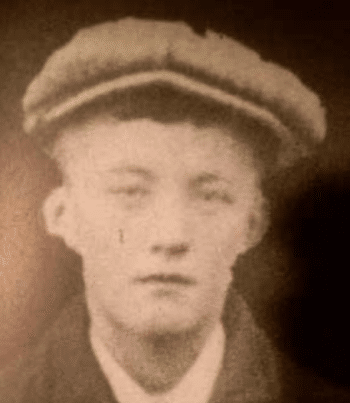
Unarmed and drinking lemonade with colleagues in Mullinahone off-duty, the first garda murdered was shot in the face, probably mistaken for his brother, in 1922
![]()
Posted in:
by admin
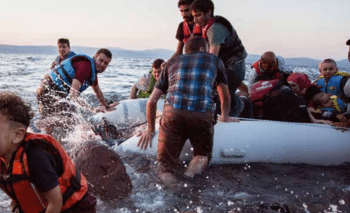
Economic migrants, refugees, asylum-seekers and asylum-seekers-turned-refugees
![]()
Posted in:
by admin
A radical would have no place in unradical Fine Gael
![]()
Posted in:
by admin
Former Manager Sheehy had clear understanding of the law and ethics though Wicklow Council breached EU waste law
![]()
Posted in:
by admin
Judge John Cooke’s remit is usefully wide as there is much that has not been investigated by PAC; though key potential witnesses may not co-operate, and Michael Noonan is now gone
![]()
Posted in:
by admin
NORA OWEN whose appeal is otherwise limited but who seems to know a lot about Fine Gael
![]()
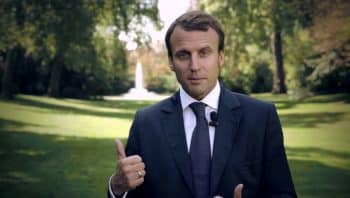
In the acknowledgement section of philosopher Paul Ricoeur’s last major book, he thanked his editorial assistant for a “pertinent critique” of the draft work. As he was then finishing up working for Ricoeur, in 2014, that editorial assistant, fresh-faced Emmanuel Macron, professed himself “like an excited child at the end of a show”. Macron, now French President, has shown more leadership than the entire rest of the Western world since his election. He claims to have found a political path between left and right, has made clear in the most elegant ways his disdain for Trump and has bowed to nobody, least of all Vladimir Putin in sharing truths about international political thuggery. So it is interesting to trace his philosophic influences. For Ricoeur, phronesis, Aristotle’s term practical wisdom, is the tool we bring to bear on political or social puzzles. There is no single method and it does not flow not from a universal moral code but instead from leading an ethical life. In 1969 when he learned that a group of student radicals was committed to preventing professors enter the cafeteria at the University of Nanterre, then a refuge for radical leftists from the University of the Sorbonne, to which he had just been appointed a professor, Ricoeur nevertheless walked into the room in the hope of dialogue. However, one of the students placed a dustbin lid on Ricoeur’s head. This cameo grimly illustrates what Ricoeur called the fragility of politics. The week before the recent French Presidential Macron talked – and listened – to a crowd of angry workers at a tumble-dryer factory in Amiens, northern France, threatened with closure by June 2018. Greeted by whistles and calls of “Marine for president” when he arrived, by the time he left Macron had, if not completely convinced his audience, at least ended the jeers – and won some respect. “I’m not sure he can truly help us” one striking employee was reported as saying. “But he tried. He was quiet and honest”. It was a dustbin initiative. It was more ethical than the actions of most politicians in similar circumstances. For Ricoeur, integrity can be judged by our attachment to the promises we make to ourselves and to others. Distinguishing himself from Le Pen and Jean-Luc Mélenchon, the leader of the extreme left Defiant France, Macron declared: “I will not promise that I will nationalize your factory. The answer to what is happening is not to suppress globalisation or close the borders. Do not be fooled by those who tell you otherwise. They are lying to you. Unhappily, there will always be companies that fail”. When a worker demanded to know what Macron would do as president, he vowed that his government would invest heavily in retraining programs for endangered industries. Hearing frustrated groans, Macron replied by telling the workers that he did not come to “promise the moon,” but instead that he would fight for them: “We all have responsibilities. If I did not respect your work, your fears, and your anger, I would not be here today”. He then made a final promise: “I will return, without cameras and even if I lose”. The recognition of the other’s singularity, the recognition that there are no simple solutions and that confrontations must become dialogues — creating a space, even in parking lots, where answers might not be found but questions will find respectful listeners — all reflect Ricoeur’s ethics. So, too, does Macron’s repeated invocation of promises, both those he would make — such as returning to Amiens to meet the workers — and those he would not, like Le Pen’s to keep Whirlpool’s operations in Amiens. In an essay titled ‘Existence and Hermeneutics’ Ricoeur claims he is striving for a philosophy which can describe and engage with the various ways that people make sense of their worlds. He wants a philosophy which can arbitrate the claims which different world views, each a philosophy in its own right, will present. Ricoeur proposes hermeneutics, the art/science of interpretation, as a model for the philosophy he desires. This he defines as the art or science of interpreting texts where more than one meaning is present. Macron has famously formed his party, En Marche, and his government in equal measure from the left and the right, and – allegedly – from neither. He characteristically frames his vision with the famous formula “and at the same time”: For example addressing probably the most fractious issue in French politics he has said he wants to make work more flexible but at the same time protect the most vulnerable. Ricoeur emphasises an ethic of responsibility, a sort of ‘practical wisdom’ seeking constantly to integrate actions with a sense of the consequences. This would account for Macron’s strength on the issue of climate change. He berated Trump for his withdrawal from the Paris Climate Agreement, in English, calling to make the planet great again; and he called on climate scientists disgruntled with Trump’s policies to help France with its efforts to arrest global warming. Ricoeur struggles with the correlation between power and evil. There is evidence Macron does not pull his punches. Who could deny that scrunching Trump’s tiny fist in a symbolic macho handshake was addressing evil used by power, head on, albeit in a banal way. Ricoeur is Christian, utopian and idealistic. He thinks that politics should intersect with economics and ethics. One of the manifestations of this is strict honesty. After telling celebrated, fashionable psychoanalyst Jacques Lacan in 1963 that he could not understand a word of his writings on Freud, Ricoeur became the bête noire of Lacan’s zealous followers. It was blunt and brave. In the presence of the intimidating Vladimir Putin and in another “muscular exchange”, in May, Macron attacked Russian propaganda outlets, which he says do not practise journalism. “I will not give an inch on this”, he asserted. “Russia Today and Sputnik … behaved as
![]()
by John Gibbons
In which Ireland gets an unthinktank, the self-styled Irish Climate Science Forum (ICSF) founded by Professor Ray Bates and sponsoring talks by discredited contrarians attended by a few from Met Éireann
![]()
Posted in:
by Mic Moroney
Not entirely due to its own efforts, Aosdána has often been more associated with controversy and letters-page hullaballoos than its members’ artistic fruits – perhaps most darkly in 1997, after writer Francis Stuart’s horrific remark on Channel 4 that “the Jew was always the worm that got into the rose and sickened it”. Back then, at the annual Aosdána Assembly, Máire Mhac an tSaoi (backed by her voluble late husband Conor Cruise O’Brien from the public benches), failed to effect Stuart’s expulsion from the organisation, before promptly resigning herself. Another rash of negative press broke out in 2014, some of it snippy about the comparative obscurity of many members (and the non-membership of many renowned Irish artists). Some was in the spirit of “what do Aosdána do to earn their annual €2.7 million?” – although the famed Cnuas is no king’s ransom. Some pieces were error-riddled and uninformed; others convulsed by loathing of Aosdána’s exclusive, self-electing nature and its easily-ridiculed bardic pretensions and the orotundity of its Gaelic nomenclature. This was the case with Village’s Kevin Kiely piece. Mannix Flynn made rather technical arguments about democratic deficits in Aosdána’s selection of its Saoithe (or “wise ones”). Most disconcertingly, an FoI request from the Sunday Times led to a great deal of personal and financial information being released by the Arts Council (with some members given a chance to redact), although in the end, very little was published. Aosdána’s very gestation is deeply contested. Brian Kennedy’s surprisingly engaging Arts Council-funded history of the Arts Council, ‘Dreams and Responsibilities’ (1990) recounts how, back in 1980, when most artists worked part-time or in penury (despite Charles J Haughey artists’ tax exemption under the 1969 Finance Act), an Arts Council report moved Haughey to consult his arts advisor, the late Anthony Cronin. According to Kennedy, the first suggestion came from the Arts Council, then headed by Colm Ó Briain, to extend the old Ciste Cholmcille annuity for destitute artists to deserving working artists. Haughey told the Arts Council he wanted established artists to be spared demeaning annual applications for assistance. Ó Briain proposed to Cronin a rolling-funding scheme called An Torc for 100 creative artists; Cronin suggested 150. Haughey took ownership and ran with it. Kennedy contends the Arts Council then developed the proposal into “an affiliation of artists” to honour those who “had made an outstanding contribution to the arts”, and to help them devote their energies fully to their art. Free from political interference, the new Aosdána (the name suggested by Arts Council member Máire de Paor) would be self-governing through its elected administrative body, the Toscaireacht; while distinguished members could be selected as Saoithe (wise ones), with a symbolic golden torc conferred upon each Saoi by the serving President of Ireland. While election to Aosdána is a life-time honour, the Cnuas (now €17,180 annually) for five years is means-tested (members must currently earn less than €25,000 from their art, so total allowed tax-free earnings is a decent €42,180); while the Cnuas is unique in that, unlike any other Arts Council grant, Cnuas-holders must relinquish other state benefits and any gainful employment other than artistic. Yet it is not a pension, and must be-reapplied for every five years. About 150 now receive it; while the membership limit has expanded to 250 (247 currently filled) The Arts Council approved Aosdána in September 1980. Haughey launched it in March 1981, and the first invited 89 members were soon baptised – for Ó Briain “the culmination of six year’s work” by the Arts Council. Yet these were volatile political times. In 1982, newspaper articles appeared suggesting Haughey wanted to eject Ó Briain from the Arts Council. Kennedy claims Cronin approached Arts Council Chairman James White to express this, but White refused; asserting the Arts Council’s independence, which was ultimately rewarded with a healthy 25% increase in government funding. A FG-Labour government took over in December 1982, and in April 1983, Aosdána was inaugurated at its first General Assembly, attended by Taoiseach Garret FitzGerald, along with Haughey and Jack Lynch. Three weeks later Ó Briain resigned as Arts Council director. Ó Briain stands by all this, but muses that “this narrative was ultimately overtaken by the ‘grand political vision’… you have to realise there was a real atmosphere of fear at the time”. He doesn’t refer to widespread rumours, around the febrile time when FF TD Jim Gibbons was violently assaulted by Haughey supporters the night of the `Club of 22’ leadership challenge in October 1982, that Haughey once threatened to arrive in that way of his and personally shut down the Arts Council. Cronin always hotly contested Kennedy’s account. Soon after his book was published, there was an infamous conference where displayed copies had printed corrections affixed with an elastic band – instantly christened the “intellectual condom”. Then it emerged that unsold copies had been shredded by the Arts Council during Haughey’s last term as Taoiseach. The Arts Council’s stated reason was to save space in its roomy Merrion Square offices. In 1993, the new Arts Council chairman, Ciaran Benson immediately ordered it reprinted in full, and it is now online. Somehow this legacy writhes at the bottom of the current imbroglio between the Arts Council and Aosdána. The Arts Council still maintains it established Aosdána; but while the role of Registrar was traditionally occupied by the sitting Arts Council Director; it is now delegated to an “acting Registrar” Arts Council employee, with a part-time assistant. Many Aosdána members hold that Cronin and Haughey forged its basic architecture, then nested it with the Arts Council for administrative and Cnuas-disbursal purposes, and that the Arts Council suffers from “institutional amnesia”. Within the arts, it didn’t help that in 2008 (when Aosdána members Theo Dorgan and Colm Tóibín sat on the Council), the annual Cnuas leapt from €13,000 to €17,180; with a corresponding rise in the artistic-earnings threshold, which made many more members eligible. When the Crash finally slammed through Ireland, most artists’ incomes were savaged; meaning
![]()
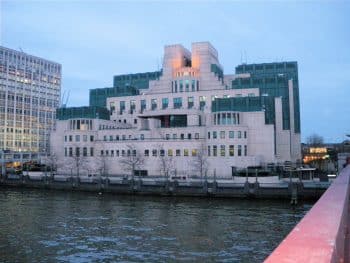
The London-based Independent Inquiry into Child Sexual Abuse (IICSA) was established in 2014. It has a mandate to investigate VIP abusers with links to Westminster. Regrettably, it cannot be described as truly independent since it is a creature of the Home Office, the parent department of MI5 which blackmailed, protected and exploited paedophile networks in the UK and Ireland and has dirty tricks embedded in its DNA. An “independent” Inquiry? The Independent Inquiry into Child Sexual Abuse (IICSA) was established in 2014 by Theresa May in her then capacity as Home Secretary. Her first choice as chair was Lady Ann Elizabeth Oldfield Butler-Sloss, whose appointment was announced on 8 July 2014. A storm of protest swept her off the chair within days because she was the sister of the late Michael Havers. He had served as Margaret Thatcher’s Attorney General in the 1980s. As reported in Village last month, Havers spoke up for the high-ranking British diplomat and MI6 officer, Sir Peter Hayman, after he had been exposed as a paedophile in March 1981 by Geoffrey Dickens MP in the House of Commons. The police had discovered that Hayman had been involved in a paedophile network and was a connoisseur of child pornography. Havers, speaking in his capacity as Attorney General, parried that Hayman’s collection was not extreme and had not warranted prosecution. Butler-Sloss was born on 10 August 1933. Since the IICSA is likely to last another 12-15 years, she would have been well on the way to her century when it finished. Just what was Theresa May thinking? May’s second choice as chairman was Dame Catherine Fiona Woolf, DBE, JP, DL, who was appointed in September 2014 and lasted a month. She was a friend and neighbour of Leon Brittan who had served as Home Secretary in the 1980s. In 1984 he was handed the Dickens Dossier which exposed a VIP paedophile network, by Geoffrey Dickens MP. Brittan commanded all the resources of the police and by lifting a telephone could have ensured that immediate action was taken to end the rape and brutalisation of children described in the institutions in the dossier. Instead he did precisely nothing. Why? In 2014 it emerged that the Dickens Dossier had disappeared. When quizzed about this, Brittan initially claimed he had no memory of ever having received it but later relented and “recalled” he had handed it over to an official in the Home Office. After media reports that Brittan had been a dinner party guest at Woolf’s house on at least three occasions, she stepped down from the IICSA and was replaced by Judge Lowell Goddard who shouldered the burden until 2016 when it became too much for her. One would almost be forgiven for suspecting that the Inquiry was designed to topple over under its own weight. A subterranean campaign against the truth A campaign to suppress the truth about manipulation by MI5 and MI6 of VIP paedophile networks has been afoot for decades and shows no sign of abating. As detailed in recent editions of Village, last year MI5 and MI6 (which is attached to the Foreign Office) lied to the Hart Inquiry about their involvement in the Kincora scandal and received a clean bill of health from it. Meanwhile pro-establishment figures in the media (at least one of whom has been linked to MI6) have been campaigning to end police investigations into historical child abuse. There is growing support for this initiative among the British public on account of the behaviour of the police who investigated the singer Cliff Richard and others for child abuse when – patently – there was no evidence against them. Their behaviour was so inept one would be forgiven for thinking their intention was to poison the public against historical abuse inquiries. Some of the vice rings which the IICSA should be investigating overlap with networks in Ireland. The odds are stacked high that the IICSA will be persuaded to ignore them in light of the publication of the Hart Report earlier this year which was meant to have dealt comprehensively with Irish issues but was hoodwinked by the spooks. General-Election woes A small number of courageous Westminster parliamentarians have tried to shine a light on these issues during the last few years. Proving that no good deed goes unpunished, they have suffered nothing but bad luck and now face a more difficult battle to retain their seats in the British general election. Simon Danczuk MP is one of them. He is a candidate in Rochdale and author of the book which denounced the notorious paedophile Sir Cyril Smith. He revealed in 2014 that a Tory minister attempted to get him to back down as pressure was mounting on Leon Britton over the disappearance of the Dickens Dossier. He explained how: “As I was making my way from the House of Commons on Monday night after a late vote a Tory minister stepped out of the shadows to confront me. I’d never spoken to him before in my life but he blocked my way and ushered me to one side. He warned me to think very carefully about what I was going to say the next day before the Home Affairs Select Committee, where I’d be answering questions about child abuse. ‘I hear you’re about to challenge Lord Brittan about what he knew about child abuse’, he said. ‘It wouldn’t be a wise move’, he advised me. ‘It was all put to bed a long time ago’. He warned me I could even be responsible for his death. We looked at each other in silence for a second. I knew straightaway he wasn’t telling me this out of concern for the man’s welfare”. Danczuk persisted and became the target of a torrent of salacious reports about his private life in the red tops. Worse still, an accusation was hurled against him that he had raped a man in 2006, an allegation he described as “malicious, untrue and extremely upsetting”. At the
![]()
Posted in:
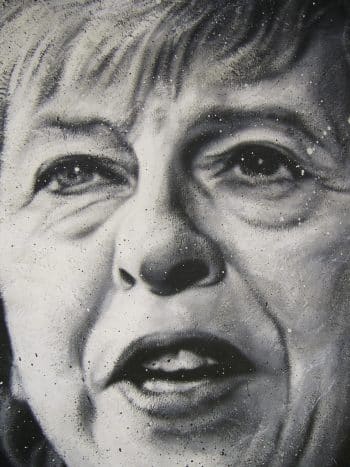
Theresa May was born in 1956, in Eastbourne, England, only child of Hubert Brasier and Zaidee Mary May. May’s grandmother Violet chose the name Zaidee, because she was highly religious and Zaidee is the name of Abraham’s wife in the Old Testament. Her father was a Church of England clergyman who served as Vicar of Wheatley, not to be confused with ‘Vicar of Dibley’, a British sitcom from the 1990s in which Dawn French came to serve in an eccentrically conservative church community. May’s grandfather served in India and had been a regimental sergeant major but two of her grandmothers were in domestic service and her great-grandfather was a butler in service, genealogy that overwhelmingly middle-class Theresa plays down. She attended a state primary, an independent convent school. According to ambivalent sources from the time she was a closet hair-puller, but excelled at geography, knowing all the tribes and capitals of the Commonwealth. She learned from ‘Ladybird’ books about the special history of England and its place in the hearts of people around the world, though she has recently conceded she doesn’t read much history. Twice a week she was allowed to watch ‘Blue Peter’, where Val Singleton was a particular favourite though she was always in bed by eight as the Reverend liked to watch ‘Z Cars’ and there was a danger of bad language. It was idyllic. Doves cooing in the trees over the duck-filled village pond at Wheatley and Morris dancing on the green. But halcyon days could not last forever. She moved up to Holton Park Girls’ Grammar School, a state school in the village of Wheatley, which became the ominous-sounding Wheatley Park Comprehensive School during her time there. Standards dropped. Talk in the common room was reportedly turning to Communism and wife-swapping. May was a shy girl but no fool. She mustered all her girlish indignation and resolved she would become prime minister and restore the grammar school regime and the standards that went with it. This was at a time when immigration was taking hold all over Britain. May was naturally aware of the threat to the English way of life. The young Theresa Brasier, as she was then, threw herself into village life, taking part in a pantomime that was produced by her father and working in the bakery on Saturdays to earn pocket money to spend on bullseyes and – always the fashionable one – bellbottoms. She kept a Bay City Rollers outfit under her mattress and wore it once at a barn dance. In later years she has worn it to meetings with Nicola Sturgeon. Friends recall a tall, clothes-conscious young woman on lime-green platform shoes who from an early age spoke of her ambition to be the first woman prime minister. She was an obsessive fan of boring and abrasive batsman-cricketer Geoffrey Boycott and at one time her father reluctantly had to have austere words with her about this. Principally on the back of her excellence at Geography she advanced to Oxford University where, in 1976, in her third year, she was introduced to Phillip May at a Conservative Association disco by Benazir Bhutto, later Pakistani prime minister. Phillip was president of the Oxford Union, a hotbed of people with strong views, some of them left wing. Theresa and Phillip were learning fast that this had to be subverted. Margaret Thatcher was on the rise and they were both really into Geoffrey Howe. May had her first Pimms, by 1979 Phillip and Theresa were holding hands, visiting local reservoirs to check the water levels on Sunday afternoons, and in 1980 they wed. The next year tragedy struck: the Rev Hubert Brasier was driving his Morris Marina to a nearby church where he was due to conduct the evening Sunday service when he was in collision with a Range Rover on the A40 outside Oxford. The vicar, 64, died of head and spine injuries a few hours later. A report of the inquest at the time told how he had been trying to cross the busy A40. He “edged forward from the central reservation into the path of a Range Rover”. The Range Rover, with a driver and two passengers, tried to brake in time but collided at high speed with the front wing of the Marina. Mr Brasier was rushed to hospital but it was too late. May went to work in the City, initially starting work at the Bank of England and later rising to become head of the European Affairs Unit of the Association for Payment Clearing Services. She used to tell interesting stories about clearing. Next she had failed attempts at election to the House of Commons in 1992 and 1994 but was successfully chosen as MP for Maidenhead in the 1997 general election. From 1999 to 2010, May held a number of roles in the Shadow Cabinets of William Hague, Iain Duncan Smith and Michael Howard. Even though a woman, she was at least as fascinating a character as they were, so they made her Chairman of the Conservative Party from 2002 to 2003. In the early days at Westminster she became known for her exuberant choice of footwear – her kitten heels became famous in political circles in the noughties, while she named a lifetime subscription to Vogue as the luxury item she would take to a desert island. It is her toughness which has become her political hallmark. She likes to talk of herself as a bloody difficult woman. “I am a bloody difficult woman”, she repeats. Her patent furrowed eyebrows remind most English people of their crossest relation and cabinet ministers always accept what she says when she does them. Another favourite is her rictus smile, which she deploys in difficult situations as a substitute for wisdom. She has coped with being one of only a small number of women in the upper echelons of the Conservative Party for 17 years and has been prepared to tell her party some hard truths
![]()
Posted in:
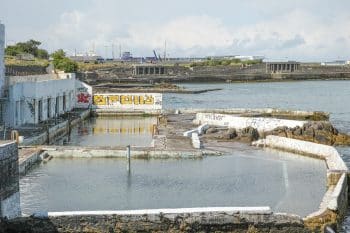
Growing up on the Mill Road in the suburb of Corbally in Limerick, I was always intrigued by what I considered to be the remains of an entrance to an ancient Greek temple leading down into the river. A forgotten gathering place bereft of any purpose. Having moved to Dublin I discovered other open-air baths in the sea no longer in use. I learned of their popularity up until the 1960s. With current proposals for Clontarf, Warrenpoint and Dún Laoghaire Baths, are we ready to take the plunge or are they destined to remain seashore antiquities? Taking the Waters While swimming in the sea has always exercised atavistic appeal for humans (and dogs), it was during the eighteenth century that sea bathing became particularly popular and fashionable. Sea bathing was seen as beneficial to health, in much the same way as taking the waters was at spas in Lisdoonvarna and Mallow. The earliest designated bathing spots were recorded on Rocque’s 1756 map, for men and women, at Salthill near Monkstown as well as a bathhouse on Killiney Beach. The increased popularity of sea-bathing during the eighteenth century saw many towns in Ireland and Britain develop as resort towns frequented by the upper classes during the summer months. While the south coast of Dublin benefited from an impressive sandy expanse, a disadvantage was the shallowness of the shoreline and the fact that at low tide, the water receded for a distance of as much as two miles. Certain locations along the coast, such as the Forty Foot at Sandycove, were prized for the fact that they were largely unaffected by the tides. The best-known sea-bathing places of today were established by the railway companies to encourage coastal businesses. The construction of the Dublin to Kingstown (Dún Laoghaire) line saw the closure of the baths at Booterstown and Blackrock, as the bathing huts there were now cut off from the sea by the railway, which ran along an embankment across the shallow bay. While the arrival of the railway did spell the end for some bathing spots, it opened up other parts of the coast for bathing. Man-made baths became increasingly popular during the nineteenth century with the earliest sea-bath or ‘lido’ (an Italian word for beach, bespeaking elegance and cosmopolitan excitement) erected in 1833 at Lymington in Hampshire, England. The bathing pools at Clontarf, Sandymount and Dún Laoghaire all followed the style of the Lymington baths. Significant for their maritime heritage and 20th century maritime recreation tradition. Bathing in Blackrock As early as 1754 a proposal was put forward to build a bathing place at Blackrock. When the Dublin and Kingstown railway was opened in 1834 Blackrock was the principal village between the termini. The Blackrock Promenade and Pier Company Ltd decided to establish “a promenade Pier and suitable Bathing Place for the residents in the locality and for the use of the public at a point near Blackrock Railway Station”. This followed public outcry that access to the sea had been cut off with the building of the Railway line. The baths were completed by 1839 and a special integrated train ticket also permitted entrance to them. In 1887 the baths were rebuilt in concrete with a large gentlemen’s bath and a smaller ladies’ bath to the designs of architect and engineer William Kaye-Parry. In 1928, the Urban District Council bought the Blackrock baths for £2,000 and readied them for the Tailteann Games, a Celtic Olympics. The baths, with a 50-metre, eight-lane pool, were well known for their swimming galas and water polo and could accommodate up to 1,000 spectators. They boasted dramatic 10m and 3m springboards, as well as two smaller children’s pools. The decline in use of the baths started in the late 1950s when indoor heated swimming pools started to appear in hotels and local authority facilities. Dún Laoghaire Corporation closed the Blackrock Baths to the public in 1987. The Leinster branch of the Irish Water Polo Association made private use of the pools, diligently carrying out extensive cleaning and repair work to make the baths usable again after a year of exposure to the sea – but succumbing to the need to withdraw the 10m diving platform from use for safety reasons. At this point, the estimated running losses for a summer season were £10-30k, depending on admission fees. By 1992, due to lack of maintenance, parts of the baths were dismantled. In 1997 they were sold by Pembroke estates holdings to developers Treasury Holdings who failed to get planning permission for a shopping mall encompassing the baths site and DART station in 2001. An earlier (and greedier) redevelopment proposal which came from a council ‘ideas’ competition in 1999 comprised 54 apartments and a restaurant with retail and leisure facilities. In 2013, the baths were demolished due to safety concerns following a routine inspection by Dún Laoghaire-Rathdown County Council. It was found that the diving platform had been significantly corroded and detached from the pool base. However, the bay in Blackrock is still used for swimming and board sailing. Sandymount Swim Another massive seawater baths was built at Sandymount, designed by Frederick Morley, and erected as the Merrion Pier, Promenade and Baths in 1863. The baths did not operate all year round but were usually open from late May until September. Serviced by both tram and rail it became very popular. 33,000 bathers used the facility at its height over the summer of 1890, splashing around in fresh seawater baths and reveling in ancillary pleasures such as music and refreshments. However, frequent ablution was not within the grasp of the unwashed poor. The Irish builder in 1863 noted that the cost of admittance was well beyond what a labourer could afford, particularly if accompanied by his wife and children. It noted that these bathers ‘were compelled to shelter themselves in a [communal] bathing box close by with the scum of society…and were supplied with ragged garments called “bathing dresses” at
![]()
Posted in:
by Village
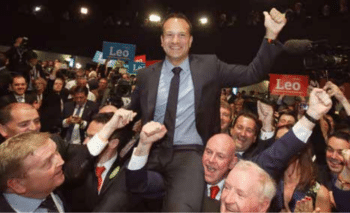
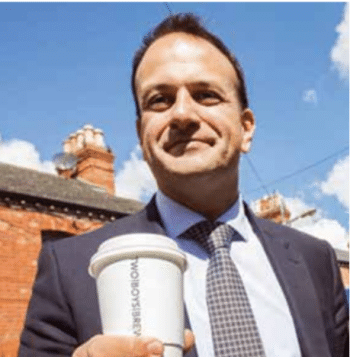
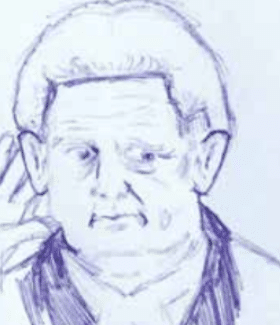
Nora Owen whose appeal is otherwise limited but who seems to know a lot about Fine Gael, of which she was once deputy leader, including perhaps what it represents, says Leo Varadkar came to her constituency as a 17-year-old and that “he was appallingly right-wing and very aggressive”. He was also overweight and seems to have adopted the blazer look favoured by the young fogie. It is easy to imagine him as the caricature of a Tory. Lucinda Creighton has said she wasn’t exactly enamoured of him when she first met him around that time: “I felt he was a bit obnoxious”, she has said. So what changed with Leo? Nothing (except perhaps an inflated bonhomie). Being ideological in Ireland is impossible for historical and cultural reasons so the press can’t call a rightwinger a rightwinger. But he is. Here’s something he ventilated during his recent campaign for the leadership of Fine Gael. “I’m not sure what values Minister Coveney is putting across. The only value seems to be that we should try to be kind to everyone. And that’s not what I mean by political values. When I talk about political values I mean the things that actually are Fine Gael’s political values – like equality of opportunity, and like enterprise and reward. These aren’t things I’ve invented, these are in our Constitution”. He added other values but for him these were incontrovertible, prime and pre-eminent. It is a recipe to make Fine Gael the nasty party, long after Theresa May’s half-hearted analysis sent Britain’s Tory party in search of a bit of nice. Its membership, a majority of whose members favoured the Just Society touting Simon Coveney, should brace themselves. Imagine being a half-Indian gay 38-year-old in the prime of your life and at the top of your career and deciding what you want to do is target the most disadvantaged in society, those most discriminated against in the most tangible ways, economically and socially. Imagine feeling that you want to spell out a message that the most scandalous misappropriations are by the welfare classes not the bankster classes. Imagine being Minister for Social Protection, representing the classes that have nothing to get up for in the morning and running a campaign that promotes those who get up early in the morning. Varadkar appears to have been assimilated. The doctor with the King’s Hospital education has no instinct for the disadvantaged or the oppressed. There is insufficient space here to outline what this appears to mean for his views on social issues such as abortion, mental health and racism. There is enough about his views on economics and redistribution. David Langwallner and Ben Harper make the case in this month’s Village that his economics is that of the markets: Neoliberalism. Certainly he is the apostle of equality of opportunity rather than substantive equality – of outcome. He has noted with the derisiveness of the College debater, “We could have much more equality and be poorer”. Indeed he says: “My difficulty with the whole right-left construct is that I don’t think it describes modern politics, or the modern choices that people face in the world,” he says. “But I don’t want to be running away from a label. If I was to describe myself in terms of a political philosophy, I’d cast myself as a social and economic liberal, which is typically what people describe as being left-of-centre on social issues and right-of-centre on economic issues. It’s not that I’m afraid to be tagged with the label of right-wing, or even centre-right, I just don’t believe it properly describes either the choice that we face politically, or what I’m trying to say”. But Varadkar is no Macron and there is no need for a shift to the right here. Ireland has among the lowest tax regimes in Europe, among the fastest growth rates, among the poorest public services. France is the opposite in every respect. Furthermore Ireland has taken a paralysing dose of austerity over the last decade; France eschewed it. When the circumstances are different we must apply different measures. Ireland has taken its turn to the right. It does not need a Thatcher with a broad, cosmopolitan grin to take it further still towards ‘economic freedom’.
![]()