Village

  • Posted in:

    Villager, July/August 2017

    A Freedom of Information Request showed that Simon Coveney and his officials knew that Departmental figures on housing completions were out, by up two thirds as it turns out, because they relied unduly on ESB-connection figures. Minutes of a meeting betewen the Housing Department and CSO shows the parties knew the figures were debased in February, though they used them up until May, confirming Village’s nasty April cover alleging Coveney was lying about housing completions.

    Loading

    Read more

  • Posted in:

    Obit(ch)uary: Zbigniew Brzezinski

    Brzezinski was part of a triumvirate of Western powerbrokers whose malign influence has scorched the Earth for more than 50 years. One of his confreres, David Rockefeller, died last March aged 101. Now, only the third member of the coven, Henry Kissinger, is left to serve the interests of the billionaires and trillionaires of Wall Street and NATO. When Kissinger goes, their combined legacy will be plain to see: a mountain of twisted and broken skeletons.
    Loading

    Read more

  • Posted in:

    N-AMAteur mistake: Kilcooley Abbey

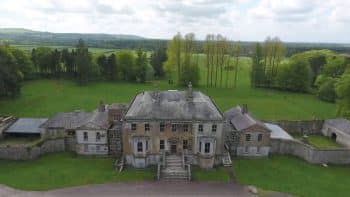
    One of the more intriguing stories surrounding the property disposals of NAMA concerns the sale of the historic Kilcooley Abbey Estate in Gortnahoe, County Tipperary. In late 2013, the estate comprising an 18th century mansion, 220 acres of farmland, five staff houses, courtyard buildings, a lake, boathouse and a 12th century Cistercian abbey and chapel was sold for a reported €2.1m to Newry businessman, Tom O’Gorman. He also purchased the freehold on 950 acres of adjoining woodland which had been leased by Coillte for many years for what is said to be a sum of €1.5m. The figures are unclear because neither the estate agents, Colliers, which handled the sale nor Bannons the receiver acting for NAMA which offloaded the property can confirm how much actually changed hands in the transaction. What makes the Kilcooley Abbey so interesting is the manner in which the sale was organised and how O’Gorman ended up as the successful bidder for the property. Originally owned by the Ponsonby family, the Kilcooley Abbey estate was purchased in 2008 by John McCann, a property developer from Crossmaglen and principal of the Castleway Group, who paid some €6-€8m for the house and lands, not including the forestry. McCann’s loans went into NAMA soon after, and he was chased all the way to the US for the €114m debt. McCann had acquired properties and built developments, north and south, during the boom years and also invested in the US including in an airport business park in Philadelphia, before his business collapsed in the wake of the crash. In 2011, the Kilcooley Abbey estate was put up for sale through Colliers and attracted interest from various parties, including Mary and Jim Redmond, an Irish couple living in London. They visited the property in 2012 and made an initial offer of €1.8m but were informed soon afterwards it was going to be sold to a higher bidder. A year later they discovered that the estate was up for sale again and they expressed their interest in spending up to €2.1m. By this time the property was in the hands of Bannon, who were appointed as receivers by NAMA over McCann’s assets. On 22 August, 2013, Marcus Magnier of Colliers informed the Redmonds that their offer had been rejected by the receiver who had signed a contract with another party at “an acceptable level”. Jim Redmond wrote to NAMA to complain about the sales process, which he claimed was neither open nor transparent. He also contacted the office of finance minister, Michael Noonan, to complain about what they considered was unfair treatment by NAMA and its agents. They received a letter from NAMA spokesperson, Martin Whelan, to say that the agency was advised by Bannons that due process was adhered to throughout the sale. It soon emerged that O’Gorman had purchased the estate and had also bought out the freehold on the forestry from Coillte. Efforts by the Redmonds to find out how much was paid, and why the fact that the Coillte-leased lands were also potentially available was not disclosed during their discussions with Colliers and Bannons, were unsuccessful. A complaint to NAMA, questions raised in the Dáil on their behalf and attempts to acquire information under the Aarhus convention on environmental information, proved fruitless. The only information about the purchase came through the property pages of various media which confirmed that O’Gorman, an oil and gas entrepreneur, had bought the estate and forest. O’Gorman was also the successful bidder for the 160-acre Blarney Golf Resort and hotel near Cork city in early 2014 which he boasted he had purchased ‘sight unseen’ for a reported €2.5m in a sale also handled by Colliers. He said he intended to invest a further €500,000 upgrading the leisure and hotel complex. Meanwhile, NAMA was chasing McCann for the debts he incurred and it was suggested that he had relocated from the US to Switzerland. The agency failed in a recent attempt in the US courts to get control of his assets including the proceeds of the sale of the airport business park. In 2015, it was reported that O’Gorman was hoping to sell Kilcooley for more than twice what he reportedly paid for it but up to early this year the property was registered at the address of his company in Dundalk. He has since erected gates and fencing to prevent local people from straying across his lands along traditional walking routes as the value of the property continues to soar. Once again, a NAMA sale has enriched those with pockets deep enough to invest and impatient enough to sell it on, before NAMA’s long work is done. The episode tends to suggest those who have not asked the right questions have had less chance of purchasing NAMA properties. By Frank Connolly

    Loading

    Read more

  • Posted in:

    Uncool Britannia

    This magazine took a surprisingly benign stance on the mediocre legacy of Enda Kenny, despite the facts that he embraced neither the substantive equality nor the sustainability that animate this magazine. The main reason for this was that it is clear that our times have thrown up much worse. In Donald Trump and the Brexiteers the two most influential Anglophone countries let themselves down and opened their hearts to dangerous fools at the centres of their mature body politics. Our politicians have not yielded to intolerant populism. In the US, Donald Trump’s Presidency will, on the basis that character is destiny, end in a morass of shaftings, leaks, groundless policies and decisions, corruption, impeachment, and disgrace. The UK is more tragic. While Trump’s ascendancy symbolised an enormous and intolerant malaise, the UK’s muddle is more fragile, less personal, more endemic and not so easily solved. It’s about the British predicament. England has for centuries been riven by a class system, sustained by those at the top as it provided fodder for their estates and their Empire, and now prolonged because… well who knows why. Latterly it has denigrated education and aggrandised a boorish press, reaping a whirlwind in moronism and intolerance. Britain has struggled with its post-colonialising identity. Particularly in England many people are convinced of their country’s specialness, by which they may mean superiority. This is not something which has yielded much to the objective analyst. Few can doubt that it is now manifesting as a fullblown identity crisis. The UK’s external relations are now egregiously compromised. The reclaiming of coastal waters for the national fishing fleet is merely symbolic of the divisiveness of unilateral exit. Too many failed to register either the historic or the economic significance of the EU. Cynical propagandists in the press and Tory party created a myth of over-zealous regulation emanating from Johnny foreigner in Brussels, when as the tragic Grenfell fire only underlines, regulations are easily denigrated as fodder for bonfires, until you see what they prevent. Last year the UK voted to leave the EU. Village still predicts it will relent. But it still has a great deal of pain to go through. It will be humiliating to be outmanoeuvred at the start of the negotiation process by a bloc that has the upper hand, simply by dint of the nature of international trade and international-trade agreements which depend on complex long negotiations and which deliver benefits from mutuality, and disbenefits to those who cede. It will be humiliating to ask for a reversal of the Article 50 process which allows countries to leave the Union. The UK will decline economically though politically this is disastrous as the country is reeling from years of austerity, post-industrial decline and social discrimination. It will continue to experience loss of international investment as the markets indulge their fears of uncertainty, of the adversity generated by less trade and less favourable trade, and less immigration with the economic dynamism it generates; but worse of the reality of Brexit, of a hobbled financial sector centred in London, of a declining industrial base, separated from its natural trading partners. It seems unlikely these pervasive sectors with outlets in the principal political parties will not register their discontent in ways that will resonate. The country is also imperiled by fissiparous demography. Over-65s were more than twice as likely as under-25s to have voted to Leave (71% as against 29%). Disenfranchised young people already suffer relative to their parents in terms of jobs. The proportion of working 16- to 20-year-olds in low pay rose from 58% in 1990 to 77% in 2015. Their opportunities to obtain quality housing are inferior. Half of the people living in homeless supported accommodation are aged 16-24. And young people cannot look forward to the retirement and pension terms their parents were privileged with. The State pension which was payable from 65 (60 for women) is rising to 67. Disenfranchising their views on the economy and international place of their country will inevitably engender civil fracture. More humdrumly, Britain’s politicians are dangerously deficient. Theresa May is stiff, petty and unimaginative, and played a cynical card for one who initially was pro-Remain. Her Tory successors, Boris Johnson and David Davis are unrealistic and buffoonish. Jeremy Corbyn is latterly being feted noisily by an anaesthetised electorate but he lacks a clear, positive and modern vision, most of all about the EU.   None of these people will unite their country. Their personalities, backgrounds and policies clearly prefigure divisiveness. But in any event even if they were skilful, and they are not, the situation is irredeemable: the country doesn’t know if it wants Brexit (it voted it 52:48% and though constitutional foibles mean they are reluctant to revisit a referendum, they seem fast to have changed their minds after they’d googled to see what it would involve. Moreover if it wants Brexit it’s not clear if it wants a Hard Brexit defined as embracing extraction from the single market and the customs union or a Soft Brexit. There is also a systemic constitutional difficulty. The UK will struggle to provide a solution to Northern Ireland. Despite ample opportunity nobody has outlined a satisfactory border arrangement between it and this Republic. Moreover, the pressures exercised by the DUP, apparently the Tories’ chosen partners in government, may breach the Good Friday Agreement, an international treaty, which requires the impartiality of the British Government in its dealings between nationalists and unionists. Perhaps the UK will leave but if it does it will soon come back. Economics dictates. Economically everybody benefits from trade. In the end it is to be hoped a chastened but wiser UK takes a more comfortable place in world affairs, with its sense of its specialness diminished and its concomitant sense of superiority sundered. For without it, the UK is a great country, with a history of rare genius and a post-war tradition of magnanimous tolerance. To have Britain functioning dynamically and progressively will be a relief,

    Loading

    Read more

  • Posted in:

    More than averagely trusting

    The Jobstown trial has inspired a lot of commentary on both the power of social media to influence outcomes, and the credibility (or lack of same) of ‘mainstream’ media. Perhaps predictably, most of the commentary seemed to reinforce already existing viewpoints. Social-media users sympathetic to the protestors and their cause were more likely to regard legacy media titles as hopelessly compromised, while journalists in general even before the trial viewed social media – and social-media campaigns – with suspicion. In other words, each side viewed reality through a filter bubble based on their existing prejudices. So it was that the Reuters Institute Digital News Report 2017, including a survey of the Irish media landscape, comes at just the right time to put some of these claims and counter-claims in context. The survey finds that 46% of respondents in Ireland trust “most of the news most of the time”, down four percent on last year, though the figure rises to 52% for “news I use”, suggesting that most correspondents rate their own news judgement in deciding which news to consume above that of the population at large. Both these figures place Ireland pretty much in the middle internationally. Out of 36 countries surveyed, the country places 14th on overall trust of news, and 16th for “news I use”.   Overall, Irish users are more trusting of (or have more confidence in) their traditional media news sources than the international average, 46% to 41%. And while trust has fallen in the last year, it has not fallen as steeply as in our near neighbours in the UK. Concerns about ‘fake news’ and partisan coverage of events such as Brexit and the Trump election campaign may have been concerning when it came to international news but so far, while there may be concerns about the impartiality of some local news outlets, none has ever shown the “see no evil, hear no evil, speak no evil” blind partisanship of a Fox News or Russia Today magazine show. The same national versus international pattern holds when it comes to social media. Although social media are less trusted than legacy media for their ability to sort fact from fiction, at 28% of those surveyed, this is still higher than internationally, where just under a quarter (24%) trust social media. Facebook continues to dominate social media news, with 41% of Irish Facebook users finding news through the social network (compared to 47% internationally). Twitter and Snapchat both outperform international norms in Ireland, but despite its popularity with journalists and media types generally, only 11% of Irish Twitter users are getting news from the network. Dissatisfaction with traditional news sources is often amplified in new social media, but despite this, social media clearly have their own credibility issues. But despite audience scepticism, old-media outlets continue to be the primary news sources for most people. RTÉ dominates the field in Ireland, with 62% getting their news there once weekly or more often. This should not be too surprising, given that RTÉ has multiple channels, with both television and radio output. Sky (34%) has only television, in contrast, and the BBC (30%) radio channels don’t really penetrate into the Irish market. Additionally, 31% of those surveyed get news from the RTÉ News website, just 1% behind online news outlet TheJournal.ie, at 32%. The Independent online website is a close third at 30%, while the Irish Times, next in line, lies back at 23%. These differences among the leading online news sources may be a product of different paywall and registration strategies, from the most open (the Journal) to the least (Irish Times). Timing is everything, and Ireland may be lucky that its jolt to the system came a few years ago. The Jobstown trial is to a large extent an artefact of the Irish Water protests, which are receding from current affairs into history. From Brexit fallout to the ongoing housing/homelessness crisis becoming a full-blown catastrophe, there’s no guarantee there won’t be another shock to the system in the next few years, but so far Ireland seems to have been spared the kind of existential problems a high-profile Trump or Le Pen can take advantage of, and the resulting loss of faith in news media. Instead, as shown in the Reuters Digital News Ireland report prepared by Paul McNamara, Kevin Cunningham, Eileen Culloty and Jane Suiter at the Institute for Future Media and Journalism (FuJo) at Dublin City University (DCU), Ireland’s media problems revolve around the more prosaic issues of ageing audiences and reluctance to pay for news. One reason for the relatively high trust in news in Ireland may be a figure which describes participants’ political leanings. Two thirds (67%) described themselves as Centre, compared to 19% Left and 14% Right. Decades of consensus politics on the major issues, from national wage agreements to EU membership to Northern Ireland have presumably had an impact in creating the impression among many that their views are part of the moderate middle, whatever an objective outside assessment might be. By contrast, countries with highly polarised polities, such as the USA, Italy, and Hungary, show low levels of trust in news sources. Perhaps related to this, the age differences when it comes to trust in media are notable. Only one in three 18-24 year-olds and 25-34 year- olds (33% and 34% respectively) agree with the statement “I think you can trust most news most of the time”, a number which rises steadily as participants get older, to 43% of 35-44 year-olds, 53% of 45-54 year-olds, and 56% among those over the age of 55.  The reluctance of younger consumers to pay for news may not be a function simply of their familiarity with obtaining free news using modern technologies, but the level of trust they place in it. What should you pay for news you cannot trust? It is also worth considering how much worse those numbers might look for legacy media sources if it had not been for the ‘safety valve’ of

    Loading

    Read more

  • Posted in:

    Varoufakup

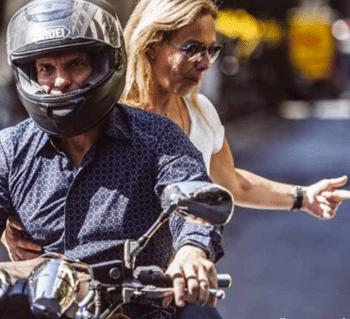
    Michael Smith reviews ‘Adults in the Room: My Battle With Europe’s Deep Establishment’, by Yannis Varoufakis. Yanis Varoufakis is (or was) “the most interesting man in the world” according to Business Insider; a “very, very clever person” according to Martin Wolf of the Financial Times. After all he landed Danae Stratou, allegedly the inspiration for Jarvis Cocker’s breathtaking song Common People, and challenged the deep global establishment. If he failed in the cut-throat bailout drama which he accepts as tragedy, in Greece, at least he came closer to undermining global capitalism, a system above all designed to be unassailable, than anyone else, both politically and intellectually. Village readers, above all, will be familiar with the background: having held only university posts, mostly in Leftie bastions – Essex, Birmingham, East Anglia, Varoufakis was elected to the Greek parliament (Larry Summers calls this his big mistake!), collecting the largest number of votes (more than 142 thousand) of any Greek MP and became Syriza’s new government’s finance minister in early 2015 armed with ‘A Modest Proposal’, a plan to deal with Greece’s debt without vicious austerity, while staying in the EU. He’d been working on it for years with Stuart Holland, a former British Labour Party MP and the American economist, Jamie, son of JK, Galbraith. In the end it was supported by numerous economists including Larry Summers, Thomas Piketty and Joseph Stiglitz. Varoufakis considers the Greek state became insolvent in early 2010 and that the bailouts that followed were attempts to “extend and pretend” – to take on the largest loan in history (in order to keep making repayments on older loans) on condition of austerity measures that would shrink the incomes from which the old, un-serviceable loans, and the new bailout debts would be repaid. Taking on the “bailout” loans in 2010 and 2012 would lead to deeper bankruptcy and even harder default in the future, and therefore defies fundamental laws of economics and mathematics. This is still playing out. Meanwhile, by the end of June 2015 having been deprived of funds, Greece was no longer able to make payments on its debts, and came close to declaring default. As queues formed at ATMs, ‘Marxist’ prime minister Tsipras called a referendum on the Troika’s demand for more austerity in exchange for additional funds to bail out Greek banks. Over 61% of the 62.5% turnout recorded their solid NO to the Troika’s demands. Tsipras was appalled by the implications of the vote. That same night, having panickingly abandoned his back-up plan, Tsipras rejected the result, capitulated to the Troika, and Varoufakis was out, on his bike. The government had overthrown the people. Tsipras had been deMarxified and Varoufakis went back to rhetoric without power.     Paul Tyson says ‘Adults in the Room’ is “a reflection on the nature and meaning of power in our times”. In the Theological Review he writes that Varoufakis “chronicles what happens when an able theologian of modern political economics points out that our priests are heretics in the terms of their own doctrines. For if austerity is meant to heal the Greek economy then 1 + 1 = 17; but if austerity is not about healing the Greek economy, then what is really going on in the Eurozone? In response, our priest guild simply asserts that 1 + 1 obviously = 17, and they see no reason why they should tell anyone what is really going on. Who can know divine truth but the priest guild? Trust and obey, for there is no other way”. Less benign to Varoufakis, The system-defending Financial Times says the book is “a lesson in how not to negotiate with Europe’s power brokers”. Elected politicians have little power; stock markets and a network of hedge funds, billionaires and media owners have the real power, and the art of politics is to recognise this and achieve as much as possible without disrupting the system. That recognition was the universal norm. Varoufakis rejected it and, by describing it in frank detail, is now arming us against the stupidity of the electorates’ occasional fantasies, not least in an Ireland enjoying a smooth return to boom-and-bust, that the system built by Neoliberalism can somehow bend or compromise to our desire for social justice. That is what makes this book special, politically beautiful. The honesty of the outsider with the knowledge of the former quasi-insider. The insider/outsider question is the key. Varoufakis opens the book with his arrival as Finance Minister in Washington for a meeting with Larry Summers, the former US treasury secretary and conduit to Obama. Summers asks him: “do you want to be on the inside or the outside? Outsiders prioritise their freedom to speak their version of the truth. The price is that they are ignored by the insiders, who make the important decisions”. Apparently Larry understood that Yanis would not sign surrender “at the price of becoming a bona fide insider…and he believed that this would be a pity, for me at least”. A lot, maybe the future of Europe, depends on how you read this conversation, according to The Theological Review. Some might consider that the pity was much more marked for his country and that his own was scarcely worth registering. It’s all about power and its networks. The 2008 crisis, which continues. “is due to the terminal breakdown of the world’s super black boxes – of the networks of power”. Believing the solutions to the crisis will stem from the same networks is “touchingly naïve”. “The key to such power networks is exclusion and opacity”, Varoufakis asserts. As sensitive information is bartered, “two-person alliances forge links with other such alliances … involving conspirators who conspire de facto without being conscious conspirators”. Before he went into government as he notes he believed we could open the black boxes: “each one of us may very well be a node in the network…if we can get inside the network…and disrupt the information flow, if we can put the fear of

    Loading

    Read more

  • Posted in:

    Movies transform into media events

    ‘Transformers’ came out ten years ago this month. It’s not exactly a milestone event in the history of film, but it has left its mark. For those who have not seen it, it is a highly kinetic science-fiction action movie featuring a war between rival races of shape-changing robots, with Earth as their main battlefield. There have been four more instalments in the franchise since 2007, with ‘Transformers: The Last Knight’ on multiple screens across Ireland this summer. The ‘Transformers’ concept grew out of a line of children’s plastic toys of the same name, and the experience of watching the movies gives more or less the same pleasures as watching a four-year-old smash a couple of pieces of coloured plastic together. Critics have panned the films in this way (i.e. mercilessly) from the start, but they are extremely popular, the first four of them amassing a profit of almost $3bn worldwide. We can use ‘Transformers’ as a good lens for understanding a set of very rapid developments in cinema and media more generally over the ten years since it came out. First, it typifies the strong trend towards large-scale blockbuster sequels, often based on superhero franchises, that have come to dominate the box office. Think ‘Batman’, ‘Spiderman’, ‘Superman’, and ‘The Avengers’, all of which are in their sixth, seventh or later versions, depending on how you count the core stories and their spin-offs. Other multiply-sequelled titles of the past decade or so include ‘Pirates of the Caribbean’, ‘The Fast and the Furious’, ‘Alien’ and there is plenty of evidence that the testosterone-fuelled trend will continue in the form of, to name a few, Lego toy spin-offs, ‘Cars’, and ‘Wonder Woman’. What ‘Transformers’ shares with all of these is its furious pace, especially in the action scenes. The 2007 film is often pointed to as the first notable example of a frenetic editing style that produces ‘chaos cinema’. Traditional editing techniques for mainstream movies put a lot of effort into making sure that the viewer maintains a coherent sense of the space of the action. If moving to the right in one shot, a character had better be moving to the left in the next shot if the camera has moved to the opposite side. ‘Transformers’ junked this convention. Not only is its Average Shot Length (ASL) around the frenetic three-second mark (as opposed to the average ASL of about eight seconds), but many of the shots are literally incomprehensible. In chaos cinema, objects, characters, vehicles and debris fly across our vision in practically any direction, producing a hectic sense of energy that exhausts many (mostly older) viewers and draws in millions of thrill-seeking, distracted and distractable viewers. The soundscape is also packed with content, much of it also meaningless, if you are looking for sound that contains usable information, but meaningfully exhilarating if you are looking for a sonic rush. The notion that there is such a thing as ‘chaos cinema’ arguably became established with the release of a two-part video essay, titled ‘Chaos Cinema’, by Matthias Stork in 2011. The development of the video essay itself is part of the broader story of what has been happening to visual media in the ‘Transformers’ decade. Video essays generally consist of multiple clips from movies accompanied by a voiceover exploring a certain theme, filmmaker or trope. They can be high- or low-brow, are usually amateur, and often grow out of fan culture. They are posted online and occasionally go viral, the most successful garnering hundreds of thousands of views. As such, the video essay as a genre in itself is highly distinctive of this last decade, during which a great many of us have barely lifted our eyes from our screens.     The popular style among video-essay practitioners (should we say ‘filmmakers?’. ‘Essayists?’) is typified by Tony Zhou, an American editor who presents snappy analytical pieces, often with a pedagogical edge. The style is the NPR-mode, akin to (for you podcast listeners out there) ‘99% Invisible’, ‘Radiolab’ or ‘This American Life’. There is a taste for the quirky, for a studied, homespun relaxedness that makes the content come across as a series of interesting titbits to stimulate the viewer-listener. The content is thought-provoking, observational, supposedly serendipitous, and positions itself as intellectually sophisticated but is usually rather lightweight and carefully apolitical. In other words, it is clickbait for hipsters. Despite my cynicism, it is clear that the video essay is full of exciting possibilities, including what are called ‘desktop documentaries’. An excellent example is by the prolific video-essayist Kevin B Lee, whose 2014 ‘Transformers: The Premake’ accompanied the cinema release of the fourth Transformers movie, ‘Age of Extinction’. Without using voiceover, Lee guides us around his computer desktop, featuring various videos, maps and other sources of information about the making of this film. But this is more than a behind the scenes sneak preview. His account is a fascinating demonstration of the pop-will-eat-itself circularity of modern media. ‘The Premake’ shows how the makers of ‘Transformers 4’ co-opted the videos taken by fans and bystanders as part of their publicity campaign before the film was released. That is, the studio used online footage of scenes being shot in public places that people had posted of their own volition. Not only was this an extremely clever way of fanning the flames of already existing fandom, but it was cheap too. The work that people were willing to put into their social media profiles was harnessed by the studio without needing to pay for it. When filming moved to Hong Kong and elsewhere in China, the amateur camera-phones were there ready for them, expectantly hoping for a glimpse not only of A-lister Mark Wahlberg but also of the Chinese star Li Bingbing. The attention that blockbusters get from local media during the filming process is now integrated into the marketing campaign, and the work of generating the content is almost exclusively done by regular people. The rest is done by public-relations companies that

    Loading

    Read more

  • Posted in:

    Interview: Ronit Sela, Israeli human-rights activist in Palestine
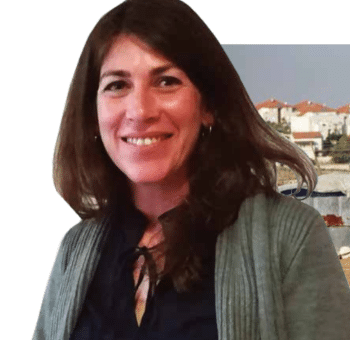
    June marked 50 years since the Six Day War between Israel and the neighboring states of Egypt, Jordan, and Syria. Since then the region has been in turmoil. The Association for Civil Rights in Israel (ACRI) is the oldest civil society organisations in the region. Its work is to promote human rights in both Israel and the occupied Palestinian Territories. Ronit Sela is the Director for The Human Rights in the Occupied Palestinian Territories Unit with ACRI. She was in Ireland recently on a trip sponsored by Christian Aid Ireland. When you meet Ronit the first thing you notice is how measured and calm she is, presumably a prerequisite for this job. When we meet she is dealing with the loss of her phone with superhuman serenity. It’s no surprise to learn from her that for a long time she thought about a career in diplomacy. She tells me about ACRI: “It was set up to protect and promote Human Rights in Israel and the Occupied Territories in 1972. We feel it’s our mandate to protect and to promote the rights of everyone one who is affected by the Israeli government. A lot of the work we do is with Israeli citizens, the largest group of people who are affected by Israeli policies, but we also work with communities who are not citizens, so in the Occupied Territories we protect the rights of Palestinians who are under military occupation”. She’s the head of the department that deals with the Occupied Territories and she works in the West Bank and East Jerusalem. “We don’t work in the Gaza strip, we only get involved with Gaza issues when there is a war and unfortunately there were three. There we look at any action taken by the Israeli military and determine whether it’s in breach of international law”. East Jerusalem has been annexed and even though ACRI’s official stance is that its occupation is illegal and Israeli law shouldn’t be applied there, it’s a reality that has to be dealt with. She notes that, “if people don’t have access to health services in the region we’re going to go to the Health Ministry and say according to Israeli law, they should have access to these services and we demand it. It’s the part of the occupation that we have to play along with”. East Jerusalem suffers from extreme discrimination, the infrastructure is very poor on every level, especially when you compare it to West Jerusalem, which has become more western. There are parks, the streets are clean and everything is nice. But in the East of the city, it’s a world apart. Sela says, “East Jerusalem is full of border police. We always joke that they need to have so many border police because they need to figure out where the border is, everyone is still looking for the border, especially in Jerusalem, where the border is so unclear!”. Her work in the West Bank focuses in part on Area C – a district that’s under full military control, where all the settlers live, with some Palestinians who are the hardest hit: “Especially the people who are living in places that Israel would like to annex in the future. Israel is applying very harsh measures to limit or diminish the Palestinian presence here and Palestinians are not allowed to develop the land. The longest-standing case in ACRI is 17 years. We submitted a petition on behalf of Palestinians living in a location that Israel strategically wants in the south Hebron hills. People were put on trucks and were forced to flee – they were herding communities out, because Israel declared it a firing zone for military training”. ACRI have been petitioning on this since 2000. “We’ve had success but my overall sense after having worked in ACRI for eight years, is that for now the door is open but it may not be in the future. We go to committee meetings at parliament, we sit down with their officials. We are invited to very high-profile meetings, we go to the high court, but at the end of the day none of our victories are complete”, she declares sadly. “For 17 years people have continued to live in a firing zone under horrendous conditions. Detention periods were shortened but they are still too long. Our principal position is that if there are Israelis and Palestinians living in the same territory, they need to have the same detention periods: you can’t have two systems! At this point I don’t know what it feels like to be working on something where you have clear victories. We have moments, but in the West Bank and East Jerusalem all our victories, all our positive verdicts and all the advocacy success is only partial. You go to sleep happy and you wake up in the morning and there’s another thing”. I ask her about the pressures faced by organisations like Acri. “One of the things that has characterised the three Netanyahu governments is that they have been gradually cracking down on civil society and on anyone who has been a critic of Israeli policy that relates to the conflict, so not just what we do in the West Bank specifically, but also on the Netanyahu approach to negotiation or to peace deals. One of the strategic things that they have done which I think they have succeeded in, is that they have equated any anti-government policies in the West Bank with being anti-Israel and anti-Semitic”. In the case of an organisation like Christian Aid Ireland it’s hardly surprising that it might say Israeli policies in Area C are harming Palestinians and are in violation of Human Rights. But, she notes, “That’s not just a criticism of the current government; according to the Netanyahu government that’s being anti-Israel and anti-Semitic; and people buy it. Jewish people have endured such a hard history of anti-Semitism that it’s easy to convince us that things are bad. Organisations that support anti-occupation work

    Loading

    Read more

  • Posted in:

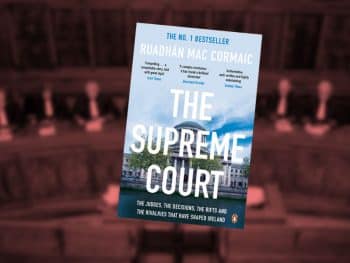
    ‘The Supreme Court’ by Ruadhán Mac Cormaic

    Review by Máire Moriarty. Ruadhán Mac Cormaic, Irish Times journalist and former legal affairs correspondent, has written what is in effect a biography, the first, of the Supreme Court, bringing to life its stories through its judges and litigants. Clearly he has had unprecedented access to many of the most prominent judges and their papers. The research is meticulous, the unnamed sources are intriguing, the interviews with litigants are refreshing and illuminating. Chapters unfold in the manner of a drama, with a rolling cast of colourful characters meticulously drawn. Each chapter is carved out of a step forward in the evolution of Ireland embracing the creation in 1922 and recreation in 1937 of the Irish Constitution, then leaping beyond the guardrails of the Constitution, as drafted, to the genius of the doctrine of unemunerated rights, that the Supreme Court utilised to unlock the superpower of the “powder blue book”, Bunreacht na hÉireann. This is no dusty history. Litigants are propelled into the foreground, given a multidimensional rendering by Mac Cormaic, and so come alive in a manner that would never shine through in a clinical court report or, for those of us who studied law, in text books. Legal teams, which broached new and creative ways to challenge laws, and judges, who reviewed, expanded and reinterpreted the constitution, are shown through a real and unfiltered lens. He expatiates in particular on the Ryan (water fluoridation and the right to bodily integrity), McGee (contraception), Norris (homosexuality), de Burca (female participation in juries), CC (a lacuna in the law of sex offences), Crotty (power of government to sign European treaties) McKenna and Coughlan (government intervention in referendum campaign), Abbeylara (capacity of Oireachtas members to conduct meaningful parliamentary inquiries), X (abortion), and Sinnott (right to education – the nadir) cases. Definitive sketches emerge of the great lawyers of the last century: Brian Walsh, Seamus Henchy, Cearbhall O’Dálaigh, Tom O’Higgins and Adrian Hardiman. He gives the personal side to the evolution of unenumerated rights first logically extracted from the constitution by Justice Kenny in the High Court in Ryan – the Constitution lists some rights but makes it clear they are not exclusive: therefore there other rights can be inferred. Perhaps the hero of the book is Brian Walsh who was never elevated to the position of Chief Justice, partly because of a perceived proximity to Charlie Haughey. Mac Cormaic has unearthed friendly correspondence between him and the great US Supreme Court Justice William Brennan, which suggests Walsh was systematically monitoring US Supreme Court jurisprudence during the golden era of judicial enumeration of Constitutional rights in both jurisdictions. The doctrine of unenumerated rights has been in decline since Sinnott (2001). Mac Cormaic outlines the events that led to the resignation of Hugh O’Flaherty from the Supreme Court and how senior judges leant on Chief Justice Hamilton to strengthen his report about the Sheedy Case. Mac Cormaic clearly spoke to an impressive range of the protagonists too in researching how both Albert Reynolds and newly-appointed High Court judge Harry Whelehan came to resign following the seven-month neglect by the office of Attorney General, which Whelehan had just vacated, of a request for extradition to Northern Ireland for paedophile priest Fr Brendan Smyth. Politicians who feature in periodic clashes that unfolded between the legislators and the judiciary, are also scrutinised. The hard fought battle by Mrs May McGee, to assert her right to import into Ireland contraceptives for personal use within her marriage, seems to come from an impossibly different era of so called 1970s modern Ireland. McGee told Mac Cormaic that she found the Four Courts “cold and scary… an awful place to be”, but she is proud of her part in probably the court’s most important decision. The McGee case was successful on appeal to the Supreme Court, but paradoxically, as noted by Mac Cormaic, the freedom won by McGee was undoubtedly the catalyst for a conservative political movement to kickstart the pro-life campaign that ultimately led to the 1983 amendment to enshrine the right to life of the unborn in the constitution. This was the Eighth Amendment to the Constitution and a campaign to amend or repeal it is a very live political issue today. If only there was an addendum to this book to address the current struggle between the judiciary and the government on the topic of the Judicial Appointments Board. It seems that political expediency has propelled the Cabinet to endeavour to fast-track this Bill and introduce a new balance of power to the Judicial Appointments Commission Board which is to comprise a majority of non-legal members and a lay chairperson, rather than the Chief Justice Susan Denham. This bill is getting a mighty push, despite the lack of support from Fianna Fáil which benefits from a Confidence and Supply Arrangement with the government. Fine Gael are relying on Sinn Féin Party and the radical left to land their Bill. It would be really interesting to imagine what views the late and volcanic Justice Adrian Hardiman would have launched into the debate. Mac Cormaic would have extracted them, discretely but forensically.  Máire Moriarty is a barrister and journalist

    Loading

    Read more

  • Posted in:

    National Planning Framework: toothless 

    The government is preparing a ‘Plan’ for the development of the country. It is intended that ‘the Ireland 2040 Plan’ will be a “high-level document that will provide the framework for future development and investment in Ireland. It will be the overall Plan from which other, more detailed plans will take their lead, hence the title, National Planning ‘Framework’, including city and county development plans and regional strategies. The National Planning Framework will also have statutory backing”. The most noticeable thing is that “statutory backing” means nothing. A plan gets “statutory” backing just by being mentioned in legislation. A meaningful plan should be ‘mandatory. For example legislation might require government agencies and local authority plans to merely “have regard to” the plans referred to in the legislation. It needs to require them to comply with and implement those plans. Suspending cynicism for a moment, however, what might an excellent plan look like. The first thing would be to work out the criteria that would dictate the plan. It’s notionally accepted that these should be criteria that conduce to “sustainable development” that is development that meets the needs of the present without compromising the ability of future generations to meet their needs too. It’s a good definition and a good goal. The starting point in assigning the earth’s stock of resources must be to minimise their depletion. The nuts and bolts of sustainable development are taken to mandate equal attention to economic, social, environmental and perhaps cultural agendas. The goal of society in our post-religious times is quality of life, even if many use an inept surrogate, Gross Domestic Product. Sustainable development conduces to quality of life, over the long time. If anyone decides to bother it can be measured to ensure its promotion – unemployment rate, inequality measured by the Gini coefficient, water quality, number of opera houses etc. Planning can be seen as a machine for improving quality of life – if we want to. The upshot of this for this State is a policy imperative for balanced regional development, with the nature of the balance being determined by the economic, social, environmental and cultural imperatives. Economically there is an imperative to develop Greater Dublin, particularly Dublin itself. We live in a foolish world where economics is supereminent, particularly among policymakers, many of whom particularly at local-government levels are promoted almost exclusively because of their performance on economic matters. Environmentally too, it is arguable that if we concentrate development around the capital, it tends to free the much bigger rest of the country from the ecological depredations that characterise human activity, at least in the early part of the twenty-first century. It is also, on the other hand, arguable that environmental imperatives suggest pre-existing infrastructure, and the energy embodied in its manufacture, should continue in use. In any event, socially it is regressive to force people to live away from their communities. So what does this mean in practice in Ireland? First, there must be a plan and it must be implemented. The last plan, the national spatial strategy (2002-2020) had no teeth and was not implemented. Most development was sprawl for Dublin and one-off housing in the countryside. With its cynical use of the loaded term statutory rather than the more practically important term “mandatory” there is no evidence the Government has learnt the lesson. Unfortunately existing development patterns suggest we can look to more of the same. However what we need is development to counteract Dublin. Realistically this must attract the development that otherwise would occur in Dublin, particularly high-tech, high-paying companies that seek sophisticated, urban settings for their workforces. This suggest we need to look to divert development that otherwise will take place in the hinterland of Dublin to cities outside Dublin, including Cork, Galway, Limerick, Waterford and perhaps a new city in the midlands. This probably necessitates shifting government expenditure to these cities, though not in the ad hoc way Charlie McCreevy attempted in the early 2000s. Citizens too may have to be incentivized through tax incentives for sustainable developments in the right areas. We might remember that if a policy is worth legislating for it is worth also pursuing through fiscal measures. Beyond this there are other imperatives: for social reasons stated no area should go into decline and for environmental and social reasons people should live near to their workplaces . The market must therefore similarly be stacked to promote the development of existing towns and villages, the next two layers down from cities. Of course new energy in the cities outside Dublin would generate its own knock-on effects in local towns and villages. Finally then least sustainable development of all is one-off housing (apart from people who live and work on the land) as it cannot be served by public transport, requires disproportionate costs in servicing such as postal and electricity services and risks disengagement as populations age and cannot leave their isolated homes. It’s fairly simple and logical: incentivise people to live in cities outside Dublin; regulate against development in Dublin’s hinterland (though development in Dublin itself, particularly high-density developments in areas like docklands in the city centre is fine); ensure towns and villages don’t decline; eliminate new one-off housing. By Michael Smith

    Loading

    Read more

  • Posted in:

    Farmers Journal is undermined by climate-change denial

    Back in the 1970s, there was striking advertising poster in Kilkenny Mart featuring a powerfully built bull with a ring through its nose. The unsubtle slogan: ‘No bull in the Irish Farmers Journal’. The old Kilkenny Mart building is long gone, but the Farmers Journal rumbles on. The Farmers Journal, however, rumbles on. Founded in 1948, it is approaching its seventieth birthday and, in an age of plummeting newspaper sales, continues to have a robust weekly circulation of nearly 70,000. And while never at the journalistic bleeding edge, the Journal has enjoyed grudging respect, both for its commercial savvy and for wielding significant political clout in the agribusiness sector. In recent months, however, the proverbial bull has not only returned to the Journal, it has run amok. You cannot understand the Journal without reference to Matt Dempsey, who edited it for 25 years until 2013. Today, he is chairman of the Agricultural Trust, the body that controls the Journal, and retains a weekly column, so while 39-year old Justin McCarthy (with no journalistic experience beyond the Journal) is editor, there is little doubt as to who is the power behind the throne. Dempsey is also a former president of the Royal Dublin Society (RDS) and it appears to be here that he had a meeting of minds with retired UCD meteorologist, Ray Bates, in their shared interest in shielding Irish agriculture from the need to cut emissions to tackle climate change. In July 2016, Dempsey’s RDS and the Institute of International and European Affairs jointly launched a joint report outlining the “political commitment required to establish Ireland as global leader in climate-smart agriculture”. The Advisory Committee for this project was drawn from a wide range of interest groups, and included Bates, who by then was making frequent political pronouncements in public on the need for Ireland to not do too much to tackle climate change for fear that it might impair the aggressive expansionary plans of the beef and dairy sectors. Many eyebrows were raised as to why a former Met Eireann scientist appeared far more interested in the wellbeing of Irish agriculture rather than in articulating the mainstream scientific community’s alarm at the dangerous trajectory of climate change and the existential risks it poses for life on Earth. Then, on May 5 last, the pieces of the puzzle began to fall into place. That evening, a shadowy new group styling itself the Irish Climate Science Forum (ICSF) had its inaugural meeting in a hotel in south Dublin. Their invited guest speaker was the noted US climate denier, Richard Lindzen. As a statement of intent, their choice of a hard-line contrarian could hardly have been clearer. This reporter attempted to attend as a member of the press, but was rebuffed by the organisers, who explained it was a “strictly private event” and among the undesirables to be refused access were “politicians, media and NGOs”. The ICSF describes itself as “a voluntary group of Irish scientists, engineers and other professionals, currently in a formative stage”. It plans to carry out what it says is “neutral, independent analysis of the latest climate research with the purpose of better informing climate and energy policies in Ireland”. The 50 or so invited guests, including several current and former Met Éireann staff, were almost exclusively hand-picked on the basis of their relationship with Ray Bates. The real purpose of Lindzen’s talk appears to have been to provide ammunition for the opening salvo in a new war on climate science, with Matt Dempsey and the Journal willing accomplices in the endeavour. Dempsey duly wrote up an entirely uncritical account of Lindzen’s junk science and ran it in his column. His understudy Justin McCarthy rushed in the editorial column to support and endorse the long-discredited denier talking-points that Dempsey had rehashed from the ICSF talk. Dempsey shipped a fair amount of flak for his troubles, including a very uncomfortable interview with RTÉ’s Philip Boucher Hayes, who wondered why Dempsey would rush to print statements when he appeared to have no idea whether they were true or false. NUI Maynooth climatologist, Professor John Sweeney, also trashed Lindzen’s presentation as “balderdash”. Rather than backing down, the Journal instead doubled down, first offering Bates a page to support Dempsey (Sweeney was also given the right of reply, but his solitary piece amid a blizzard of contrarian coverage, has been the sum of the Journal’s openness to the views of 97% of practising climatologists). The Journal then went gangbusters, and ran a news item from the ICSF’s second meeting, this time quoting guest speaker William Happer, long-retired professor, Trump supporter and noted (and, frankly, somewhat unhinged) climate denier. The Journal comically headlined the piece: ‘Earth is in the midst of a CO2 famine – Princeton professor’, and reported Happer’s long-debunked spiel as though it was something other than crude propaganda. The Journal’s entirely new-found interest in the science of climate change did not end there. In the same edition, it carried a spread over two pages from a father-and-son duo called Michael and Ronan Connolly, self-styled “independent scientists and environmentalists”. In case you’ve never heard of them, that’s because nobody else has either. They are involved with Bates in the ICSF and run an odd little website called ‘Global Warming Solved’. They also labour under the curious impression that they have out-thought the entire global scientific community. Here’s an example from their FAQ section: “There have been many peer reviewed studies which have claimed that man-made global warming is both real and dangerous. Our findings show that both claims are wrong”. Simple as that. And what about CO2?: “the models were wrong. CO2 doesn’t cause global warming.” Were the Connollys, self-described polymaths, actually able to prove either of these claims, they would by now be Ireland’s newest Nobel laureates. The Connollys generously describe the entire international scientific community (NASA, NOAA, the UK Royal Society, the IPCC and hundreds more international scientific bodies and institutions) as more likely misguided than corrupt: “We are optimistic that when our

    Loading

    Read more

  • Posted in:

    EU membership delays reunification

    Brexit will be divisive by facilitating not-easily-reversed customs and possibly passport controls; border checks; and divergence between EU-harmonised and British law; meanwhile Ireland will accept military union and NI will get used to freedom from the EU

    Loading

    Read more