Ivana Bacik

  • Posted in:

    Yes to history, no to commemoration

    Commemorations for the centenary of the 1916 Rising are well underway. This anniversary is being marked in a much less sanitised way than previous significant Easter Week commemorations. This is very welcome. For far too long, ceremonies celebrating the 1916 Rising were based on a highly simplified, monochrome account of history: Rebels good, Brits bad, civilians ignored. We did not see pictures of dead bodies. Few official accounts mentioned the deaths of women and children caught in the crossfire. This time around, things are different. The vital research work of many historians and others has contributed greatly to the generation of this more complex understanding of the 1916 Rising. We now know that approximately 488 people were killed during Easter Week. Of these, 40 were children, and over 200 were civilians. There were about 120 British soldiers killed, and 60 rebels. These numbers are as significant as the numbers we have traditionally associated with commemorations marking Easter Week: the seven signatories of the Proclamation, and the 16 men executed. It is timely to reflect on four key themes which should shape, and to some extent are shaping, the centenary commemoration process: de-militarisation; contextualisation; inclusivity; and humanisation. Commemorations should not be over-militaristic, nor should any death or killing be ‘celebrated’. This is even more necessary in the wake of the recent Brussels atrocity which showed the immense human tragedy of mixing religion, politics and violence. The events organised throughout Dublin for Easter Monday under the ‘Reflecting the Rising’ banner were far more in keeping with an inclusive spirit of commemoration, than the military parade that took place on Easter Sunday. In a similar spirit, commemorations should reflect the context of the time. The rise of important social movements, in particular the trade union and suffragette movements, as well the Irish cultural revival, should be marked alongside the nationalist struggle. The commemorations must be inclusive. Where official ceremonies include religious services, these must be carried out with respect for humanists, atheists and people of minority religions. Similarly, commemorations must be inclusive of both women and men. We now know, from the great work of feminist historians, that 77 women involved in the 1916 Rising were arrested along with their male colleagues at the end of Easter Week. Inclusivity also means remembering the many thousands of Irishmen who fought and died in World War I, but whose lives and deaths were not officially commemorated for many decades after independence. Commemorations must become humanised. It is welcome to see this happening in this centenary year. Many official and unofficial events have incorporated the telling of individual eye-witness accounts: some noble, some tragic, some humorous, and some poignant. These include stories like that of Catherine Byrne, who jumped through a side window of the GPO to join the male Volunteers inside. They include that of two-year old Sean Foster, who was shot dead in crossfire while being wheeled in a pram by his mother Katie on Church Street, and whose father had died on the Western Front the year before. In bringing these stories to the fore, we come closer to realising the past and to remembering the dead in a respectful and inclusive way. It is very welcome to see these four themes informing the 2016 commemoration process. Yet it appears that they are not embraced universally. The Glasnevin Cemetery Trust has carried out hugely important work in compiling accurate data on all the 488 people killed during the 1916 Rising. It is constructing a Necrology wall to mark all of their deaths in a non-judgemental fashion. It is unfortunate that some of the 1916 Relatives Association do not support this approach to commemoration. And that there was some scuffling at the recent unveiling. It seems that, for them, even 100 years on, there is still a hierarchy of grief. Those who still seek to elevate some deaths over others are themselves harking back to the old monochrome view of Easter Week. Their view should not prevail. The reality is that the concept of ‘commemoration’ is always problematic. Ultimately, we should not seek to replace ‘history’ with ‘commemoration’. Commemoration is a largely artificial concept, itself tending towards sanitisation. History is messy, complex, ambiguous and contradictory. The history of the 1916 Rising should be marked and remembered in a way that is appropriate to that reality. Accurate historical research, inclusive contextualised events, and vivid eye-witness accounts should replace empty commemorative ceremonies. Our process of marking the 1916 Rising should be de-sanitised, to reflect the real complexity of the history of the struggle for Irish independence. Ivana Bacik

    Loading

    Read more

  • Posted in:

    Re-Ligion!

    Michel A aq (1910-1989) was the principal ideologue of the pan-Arabist Ba’ath Socialist party which still rules Syria, as it previously did Iraq under Saddam Hussein. Although born Christian, he believed Islam to be proof of Arab genius and allegedly converted before his death in Baghdad. The Arabs were a motley collection of illiterate warring tribes inhabiting the Arabian Peninsula until the Prophet Muhammed (570-632 CE) and his successors built an enduring empire with extraordinary speed. The early Muslims were not only successful warriors conquering territory from Spain to Persia but also projected a ‘soft’ power allowing them to convert subjugated peoples. The era brought great advances in philosophy, art and mathematics and was marked by a tolerance unknown in Christendom. The Qu’ran itself was the first book written in Arabic, and according to the historian Albert Hourani Muslims believe Arabic is revealed in it; it certainly ushered in a great era of literacy. It is perhaps unsurprising that contemporary Arabic political movements have expressed themselves in the idiom of Islam however diverse that inheritance is. Furthermore the failures of Arab nationalism especially under Egypt’s Gamal Abdel Nasser (1918-70) appeared to make Political Islam the answer to the project of throwing off the economic and cultural shackles of imperialism, and confronting Israel. The brutalisation of the Middle East through internal repression and outside intervention has shaped the emergence of ISIS, but its unsophisticated ideology has an historical trajectory. Likewise Christianity has had a lasting influence on the idea of Irishness: first because Christianity’s arrival in Ireland brought with it literacy (Ogham script hardly qualifies) that generated a seismic cultural awakening; second, and another source of pride, Irish Christians performed vital missions in restoring Christianity to Britain and other parts of Europe; third, the Reformation in Britain occurred simultaneously with its second wave of colonisation of Ireland, creating an effective method of creating a ruling caste; fourth, the decline of the Gaelic language left Catholicism as the most obvious point of cultural differentiation between the Irish and English. Thus in George Moore’s novel ‘The Lake’ Father Moran opines: “Religion in Ireland was another form of love of country and if Catholics were intolerant to every form of heresy, it was because they instinctively felt that the questioning of any dogma would mean some slight subsidence from the idea of nationality that held the people together”. He continues: “Like the ancient Jews, the Irish believed that the faith of their forefathers could bring them into their ultimate inheritance”. Moore himself eventually renounced Catholicism, just like the main character in the novel Father Gogarty who says: “my moral ideas were not my own. They were borrowed from others and badly assimilated”. Gogarty bemoans the Church’s attitude to women, recalling how “at Maynooth the tradition was always to despise women”. Well before Irish independence in 1922 the Catholic Church held a firm hold over Irish society especially in the crucial sphere of education. Maynooth was estab- lished in 1795 and Irish primary education had become increasingly denominational by the end of the nineteenth century. To some extent this suited the British administration as it recognised the Church as a force of conservatism that would protect private property against social revolutionaries. James Joyce also violently repudiated Catholicism. He wrote to Nora Barnacle in 1904: “Six years ago I left the Catholic Church, hating it most fervently … Now I make war upon it by what I write and say and do. I cannot enter the social order except as a vagabond”. In ‘Portrait’ he resolves: “I will not serve that in which I no longer believe, whether it calls itself my home, my fatherland, or my church: and I will try to express myself in some mode of life or art as freely as I can and as wholly as I can, using for my defence the only arms I allow myself to use – silence, exile and cunning”. It took artists of the stature of Joyce and Moore to escape their Catholic upbringings. Unfortunately most of the revolutionary generation rapidly conformed and thereby stamped out the pluralism, feminism and even vegetarianism that animated the more free-thinking period before hostilities began. One of the most powerful ministers in the first government, Kevin O’Higgins, remarked: “we were probably the most conservative-minded revolutionaries that ever put through a revolution”. That it should have been an ‘Easter Rising’ that kicked off the affair is revealing. There was an obtuse connection drawn between the crucifixion and resurrection of Jesus and the blood sacrifice and emergence of an Irish nation state. Remarkably, in the wake of the Rising such illustrious revolutionaries as Roger Casement, Countess Marckievicz and James Connolly converted to Catholicism. The Civil War between two children squabbling over the spoils of a new state imported no relevance for the relationship with the Church. Observers were already noting the “sombre bodyguard of priests” surrounding de Valera as he ascended political platforms in the early 1920s; and the first Cumann na nGaedheal administration (1922-32) alienated many erst- while progressive supporters, including WB Yeats, by bringing in a ban against divorce in 1925. We now know that the Catholic Church was virtually untouchable in its position of power in Ireland until the 1990s when the staggering effect of sexual repression and a culture of impunity became apparent. The same-sex marriage referendum last year affirmed that the once vice-like grip was no more: only Roscommon voted against the proposal, despite the Church’s opposition. It remains firmly entrenched in education but such is the prevailing distrust for priests in particular that this situation is unlikely to endure much longer. Moreover, Irish people are no longer drawn to the priest’s house or convent as they were in droves. The Church simply does not have the personnel to project its message any longer. Of course there are residual defenders of Catholic conservatism in the Iona Institute and the broader Pro-Life movement. But the abuse scandals seem to have changed most Irish people’s outlook and the Pro-Life movement now looks

    Loading

    Read more

  • Posted in:

    Nationalists as Real Men

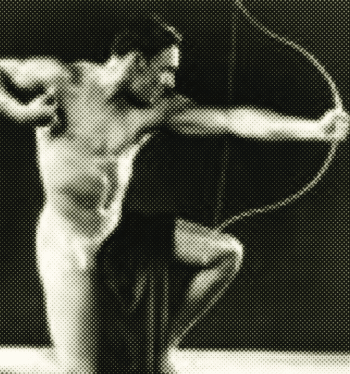
    In 1909 Patrick Pearse wrote a short six-verse Irish-language poem, ‘A Mhic Bhig na gCleas’, translated into English as ‘Little Lad of the Tricks’. A relatively disposable piece, it has since gone on to have an infamous status; proof for many that Pearse had dark sexual proclivities: … Raise your comely head Till I kiss your mouth: If either of us is the better of that I am the better of it. There is a fragrance in your kiss That I have not found yet In the kisses of women Or in the honey of their bodies… Ruth Dudley Edwards’ 1979 revisionist biography, ‘The Triumph of Failure’ makes much of this poem, presenting it as evidence of Pearse’s supressed tendencies. And later works have echoed her, to the point that the trope of Pearse-as-Paedophile is now standard fare among Irish historians. Similar speculations have also been made about Eoin O’Duffy and even about Michael Collins. Such tabloid innuendos, though, ignore a central truth about Irish nationalists in the early years of the twentieth century: masculinity mattered for them. Not in the sense of private peccadilloes, but as a key part of their public ideology. Masculinity did much work for organisations like Sinn Féin and the Irish Volunteers, allowing them, as it did, to imagine what national sovereignty and the end of British colonial rule would look like. It allowed them to analyse that British rule as an effeminising influence on Irish men. And it allowed them to attack opponents, such as the Irish Parliamentary Party, as unmanly traitors. The heavy emphasis on masculinity also does much to explain how and why women and leftists were systematically frustrated in their efforts to influence the national movement; imagining the nation as a male fraternity was a convenient way to dismiss feminism or socialism as divisive ideologies that pitted brother against brother. In another of Pearse’s most famous texts, ‘The Murder Machine’, the educator-nationalist railed against the British state schools in Ireland (the “machine”). And in a telling passage, Pearse denounced the contemporary school system as worse than “an edict for the general castration of Irish males”. Anglicised Irishmen, he said, are “not slaves merely, but very eunuchs”. For Pearse, Irish men had been emasculated by British colonialism and by the slow parallel process of Anglicisation. These were common anxieties among almost all Irish nationalists. A recurring theme in Gaelic League publications was that the Irish, by abandoning their native language, had become de cient and deformed and no longer real men. As one turn-of-the-century Gaelic Leaguer said, if the Irish continued to speak only English, then “we can never be perfect men, full and strong men, able to do a true man’s part for God and Fatherland”. The movement to revive the Irish language was thus imagined as a process of reasserting a purified male power and was often associated with a recovery of sovereignty and strength. When the Irish Volunteers were established in 1912, many of their founding members had already imbibed the thinking that saw national revival and masculine revival as two parts of a broader whole. Writing in the Irish Republican Brotherhood’s Irish Freedom newspaper in July 1912, Ernest Blythe, a government minister in the 1920s, discussed the contribution that the Volunteers would make to healthy Irish masculinity. While he criticised the weak “ abby men” that predominated in Ireland, he also spoke of a subterranean manliness still surviving, he said, thanks to both militant nationalists “but also those whose thoughts have gone no further than the running and leaping and hurling which they delighted in”. The future Irishmen, whom physical-culture and physical-force enthusiasts such as these would birth, would be noticeable by their “mighty lungs and muscled frames”. The Volunteers were “the rebirth of manhood unto this Nation”. Their muscular masculinity would replace the abby weakness of Ireland under British rule. Talk of masculine power continued to circulate in the years after the Rising. Indeed, Ernie O’Malley, a medical student turned IRA soldier, later remembered that one positive effect of the war was that the “familiar stage-Irishman had disappeared”, replaced by the confident, armed men of the IRA. The rhetoric of heroic men standing together for the national interest, also lent itself to suppressing the ‘wrong’ kind of politics. A 1921 pamphlet on ‘The Labour Problem’ published by the Sinn Féin-allied Cumann Léigheachtaí an Phobhail presented socialism as an intrusion into the national fraternity of men: “Labour… is like a virulent foreign element in the social system… whatever else we are, capitalist or worker or neither, we are all Irishmen interested beyond anything else in the welfare of our common country, and as an Irishman speaking to Irishmen I put it that these industrial conflicts, if continued, will inevitably impair, if not utterly destroy, our common country”. Feminism was denounced in almost the exact same terms. The tourism-friendly version of Irish nationalism that has featured in the ‘Decade of Commemorations’ has received a large dose of justified criticism. With the government promoting an image of romantic, if depoliticised Irish rebels, it is worth remembering, first, how much Irish nationalism was a product of the encounter with British colonialism. Second, the State that emerged from this national struggle was noticeably coercive, particularly when it came to female citizens or left-wing politics. Masculinity, and the nationalist desire to create a harmonious nation of muscular men, was central to all of that. Masculinity matters. Aidan Joseph Beatty Aidan Joseph Beatty is Scholar-in-Residence at the School of Canadian Irish Studies, Concor- dia University, Montreal and author of ‘Masculinity and Power in Irish Nationalism, 1884-1938’. aidanbeatty.com

    Loading

    Read more

  • Posted in:

    Paean to culturally rich, politically limited patriots

    The paperback version of ‘Handbook of the Irish Revival’ was recently launched at Notre Dame’s O’Connell House, to coincide with their St Patrick’s day festivities and, of course, the commemoration of the 1916 Rising. The volume, an anthology of Irish Cultural and Political Writings 1891-1922, is beautifully produced by Abbey Theatre Press with the look and feel of a hardback though it is very reasonably priced at just €15. As the Abbey director-turned publisher, Fiach Mac Conghail, reveals in his introduction, the book arose from the ‘Theatre of Memory’ Symposium in 2014. During the concluding session Declan Kiberd lamented the fact that so few of the original writings of the Irish Revival were readily accessible. It’s to Mac Conghail’s enduring credit that he rose to the challenge by facilitating Kiberd and his co-editor PJ Mathews. Kiberd, though not a professional historian, has emerged as one of the most authoritative voices on the 1916 Rising, providing us with the clearest insights into the complex and sometimes confused intellectual world of the revolutionaries. He has always contended that for Romantics like Pearse and MacDonagh, both keenly interested in English literature, the Rising was a piece of theatre that could only end in their own deaths. Pearse who was described by one of his admirers as a “bit of a pose” may have been comfortable with the bizarre pageantry of the GPO, but he lacked the skills of a military commander. A prolific writer in both English and Irish, he features regularly in the anthology. It’s a digest of essays and articles, pamphlets, songs and poetry – most of them no more than two pages long – from the great names such as Yeats, Synge, Joyce and some of the lesser known but also influential. Each of the chapters is accompanied by an introduction in much larger font. Indeed, the overall design of the book makes it very appealing. No sooner have you read one chapter than you immediately want more. It’s a book for the serious academic or the ordinary punter who wishes to dip into writings of the period to get a avour of the zeitgeist. As you read it you get the sense, as the introduction states, that these were men and women who “lived intensely in the present moment; took ideas more seriously than their own careers; and contributed brilliantly to debate”. That selflessness, brilliance and intensity is perhaps best reflected in the writings of Connolly, whose prose can hardly contain his obvious passion. Take for an example this sentence from his 1897 essay ‘Erin’s Hope’: “Recognise the right of all to an equal opportunity to develop to their fullest capacity all the powers and capabilities inherent in them by guaranteeing to all our countrymen and women, the weak as well as the strong, the simple as well as the cunning, the honest equally with the unscrupulous, the fullest, and most abundant human life intelligently-organised society can confer upon any of its members”. What it lacks in Orwellian precision it makes up for it in its obvious fervour. This passage is taken from the chapter entitled ‘Militarism and Modernism’ whose introduction identifies the reason for the cultural and political malaise that would soon envelop the new state. “Militarism began to trump modernism”, the authors observe- the men of the the Rising, war of independence and the civil war were better suited to military affairs then forging a modern democratic state: “Mass suffrage came to many areas but soon declined into mere electoralism, as political leaders whose consciousness had been formed more through soldiering than through cultural action, offered ever more dogmatic, ever less thoughtful analyses”. It is easy to ‘idealise the idealists’ at this remove, but it would be foolish to forget that our new State was governed for its first fifty years by the men – the women were written out – of 1916. Socially and economically our new state was illiberal and stagnant, a failed state dominated by the Catholic church. So while this book shows that those who inspired the Rising may have been enlightened, it could also be argued that they were in many ways obstructions to progress. The new State was patriarchal, consigning women to the home and discriminating against them in the workplace. It must have been a disappointment to the women who had campaigned for universal suffrage such as Eva Gore Booth. In her poem ‘Women’s Rights’ from 1906 she portrays male dominance as contravening the natural order: Men have got their towers and walls, We have cliffs and waterfalls. Oh, whatever men may do, Ours is the gold air and the blue. Men have got their pomp and pride – All the green world is on our side’. The new State’s attitude to the Rising has been at times ambivalent. We have moved swiftly from commemoration to revisionism back to celebration. We have also moved from isolated nationalism to become the most globalised country in the world, without pausing for breath or even adequate reflection. The transformation has been staggering. Ireland, the country that its citizens wanted to leave, and whose citizens emigrated in droves, is now a favoured destination for migrants. From the end of the Second World War up the start of the 1960s we were the only state in Europe that experienced population decline. Now one in eight people is a non-national in a population that has grown steadily. This new Ireland is closer to Boston than Berlin and has, as perhaps might be expected, even turned its back on some British virtues. The British tried with some success to introduce a system of planning for urban and rural areas. One only has to contrast the British countryside with its beautifully planned towns and villages with the free-for-all in Ireland, to know that independence embraces the freedom to make a mess of things. And though there are many who wouldn’t change a thing, this strain of individualism is unhealthy in a State that is not just unplanned but saw t to

    Loading

    Read more

  • Posted in:

    Our key witness is unwell

    The portentous Latin quoted Quis custodiet ipsos custodes? “who is watching the watchers?” jumps to mind in any consideration of the conduct of the Law Society of Ireland in its treatment of one-time member, solicitor Colm Murphy since it appears to show that the Law Society itself does not adhere to the standards that it imposes on its members. Readers may remember serial articles that appeared in this magazine before (see Village February/March 2014, June/July 2014, October 2014, April 2015 and December 2015) detailing how Kenmare-based Murphy was struck off from the Roll of Solicitors in 2009 on the back of complaints from another solicitor, Fergus Appelbe. Murphy took a case against the Law Society which failed to investigate Appelbe until last year when he was finally restricted as to how he can practise. Appelbe is a former member of the Law Society Conveyancing Committee and was the subject of two ‘Today Tonight’ investigations in 1997/8 into his conduct. He and his various companies are now also in overwhelming debt – to a sum in excess of €100m much of which will inevitably have to be borne by the State. The principal reason that Colm Murphy was struck off was for breaching an undertaking allegedly given to the High Court. The only evidence against him was that of a Solicitor of the Law Society, Linda Kirwan, who has subsequently admitted that she was not even in Court on the day in question. It was only after Murphy was struck off that she admitted, on af davit and in a letter to Murphy in 2010, that she was not in fact in the court when the supposed undertaking was made. No such undertaking is recorded in the order from the court issued on the day in question and the hapless Murphy had denied its existence for ten years, but Kirwan was believed.   Another contributing factor was that the Society relied on a forged document presented by Frank Fallon who subsequently got two seven year jail terms for fraud and forgery. Colm Murphy always believed that the Law Society realised that the document was forged some time after embarking on the proceedings against him and simply failed to inform the Courts of this. Documentation received under the Data Protection Act and seen by Village show that it was in fact much more sinister. On the day Joan O’Neill of the Law Society was maintaining in Court that Murphy had somehow cheated Fallon she sent the documents in relation to the land Fallon was wrongfully claiming to the rightful owner and thus she could not have believed the position she was maintaining before the Court. O’Neill subsequently swore that she had got the documents for Frank Fallon, had given them to him, and that was the end of the matter. Of course the documents seen prove that she had not done this but rather had given the documents to the person who was entitled to them. This action taken by Joan O’Neill and the Law Society and their maintaining of the position in relation to the forged document presented by Fallon prompted scathing comments from the then President of the High Court about Colm Murphy based on the fact that Colm Murphy had, we now know rightfully, stated that the document was a forgery. It seems that Colm Murphy sued the Society for defamation and abuse of power in 2004. Colm Murphy served the Summons on the Law Society and it seems that on receipt of the document Joan O’Neill wrote to John Elliot, Director of the Law Society’s Regulation Department, saying that “It is my view that Mr Murphy should not be a Solicitor. Linda Kirwan shares this”. The Supreme Court has ordered that Colm Murphy is entitled to a full trial on all the matters. O’Neill’s explanation of what has happened was eagerly awaited but it seems that the Law Society is now maintaining that O’Neill is “not medically fit to participate in these proceedings”. Colm Murphy had maintained since 2011 that the then High Court President had said he was entitled to a plenary hearing (full hearing of all matters). The Law Society went before Judge Hanna and denied that this was intended or indicated. It also maintained this position in it’s submission to the Supreme Court. A memo from the Law Society’s external solicitor shows that it was aware in June 2011 that “the President of the High Court made it clear that these matters should proceed to plenary hearing”. However, the Law Society has managed to frustrate this so far. Whatever happened to its elusive one-time motto “veritas vincet” (“Truth shall prevail”)? The Law Society seems to be trying to keep the real story here from even its own Council and has told its members not to contact Colm Murphy. You can see why. Michael Smith

    Loading

    Read more

  • Posted in:

    Retrograde results reflect recalcitrant republic

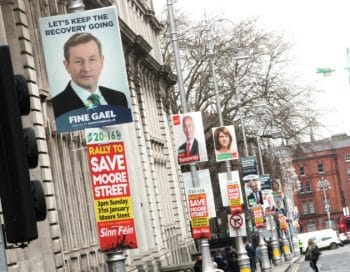
    The recent General Election was a very good one for Sinn Féin. We increased our number of TDs from 14 to One thing is clear: the after-math promises to be far more interesting than the insipid election campaign, a campaign defined by the monotony of the government’s ‘Keep the Recovery Going’ message. It may have resonated with the select few, but most reacted with an incredulous, ‘Are you for real?’ The employment figures may be up, but the people in jobs are still feeling the pinch eight years after the crash. Meanwhile, our public services appear to be getting worse. Most people – even those with private health insurance – have experienced the horror of watching a loved one on an A and E trolley. The opposition parties sensed that change in the public mood. Fianna Fáil, with its finger back on the public pulse, devised a set of policies that reflected people’s concerns. To be fair, this wasn’t just Fianna Fáil focus-group politics. Micheál Martin, as comes across in his recent Village interview, does have a commitment to social justice and has steered the party to the left of Fine Gael. The ideological differences may be slight but they are discernible and make a coalition less likely. There are, of course, other mercenary reasons why the grand coalition may not happen. Fianna Fáil won the election. It wasn’t a knock out, but it had/has Fine Gael on the ropes. A rematch at its time of choosing would suit it much better than it would a demoralised, soul-searching, Fine Gael party, which has fundamental problems. Inevitably, there will be a simplistic focus on the party leader. In post-election interviews pledges of allegiance to Enda from cabinet ministers have been noticeably absent or halfhearted. Big Phil, his protector in chief, is no longer around to sort out any of the renegades. The heave seems inevitable. Will it come to that? Or will it be a dignified resignation like Eamon Gilmore’s. The former Labour leader was treated mercilessly by Joan Burton who in turn will find her leadership questioned by the party faithful. The Labour Party’s mauling by the voters was entirely predictable. Bleating on about having to make hard decisions doesn’t win you much sympathy, as the Greens discovered last time out. Labour calculated that, having lost the working class vote to Sinn Féin and left-leaning parties, it could count on the socially liberal middle classes for support. The fact is that abortion has been shown not to be a defining issue either way. Those who wanted to repeal the eight amendment didn’t get a tail wind, and those vehemently opposed to abortion, like Lucinda Creighton, were kicked out. Likewise, the marriage referendum was seen as eaten bread. Fine Gael and all other parties had managed to appropriate that liberal space effectively – sure we’re all liberals now, some having got here a bit later than others – but who cares. Other electoral tactics back red. The political Banking Inquiry simply muddied the waters and showed that the last government had few options, and that the same pro-cyclical expansionary policies were advocated by all the parties. The Green resurgence owes much to the hard work and unstinting optimism of Eamon Ryan. Not even his narrow loss in the European elections could stop his gallop, and indeed it proved to be a blessing in disguise. He and Catherine Martin are the dream team: a moderate, articulate and photogenic pair, who have the capacity to provide a platform for further green success. Like other newly elected candidates, the Greens will hope that another election won’t happen too soon. But the signs on that front are not good. The rejection of Eamon Ryan’s proposal for co-operation amongst the opposition parties means that the new dawn for Irish parliamentary democracy will have to wait. Those who think that this election will result in a new Borgenesque Danish parliament of progressive legislators are delud-ing themselves. Instead, we may revert to the worst type of parish-pump horse-trading that the country has ever witnessed. We don’t have a Scandinavian list system; we have proportional representation with the single transferrable vote, an electoral system that has resulted in an array of independent political efs. Right now, shopping lists the length of your arm (in the case of the Healy Raes – the length of two arms) are being prepared for the highest bidder. It all promises to be unseemly and retrograde, and will be, perhaps, the best reflection of where we are as a nation in the centenary of 1916. John Gormley

    Loading

    Read more

  • Posted in:

    Transfer pattern augurs well for Left

    Transfers matter under proportionate representation though perhaps more for psephologists and party tacticians than in terms of actual electoral difference. Noel Whelan, for example, notes that: “only 12 or 13 of the 158 deputies in the new Dáil will win their seats because of transfers. If we stopped counting after the first counts and declared the results, all but a dozen or so of the seats would have been filled by the same people”. The most dramatic difference transfers made was of Maureen O’Sullivan, a notably gentle and non-partisan independent in Dublin Central. She polled badly on first preferences, getting just 1,990 votes. The quota was 5,922. She was in sixth place. Everyone assumed she was out for the count but in the end she took the last of the three seats. In the same constituency in 2007 Bertie Ahern, then ascendant Taoiseach, brought in his running-mate Cyprian Brady in 2007, though he had polled 939 first preferences. The only other candidate ever to be elected with fewer than 1000 first preferences was Brian O’Higgins (later President of Sinn Féin from 1931–1933) elected in Clare in 1923 on DeValera’s transfers. The Right to Change campaign, which involved around 100 candidates, both party and non-party, helped Sinn Féin to secure transfers that pushed a number of their candidates over the line. As well as a strong transfer pattern (76% as opposed to 58% in 2011) between SF candidates running in the same constituency the party enjoyed a good return of more than 23% from other left candidates who endorsed the campaign. In Dublin Bay North, which had one of the longest counts in the election, Denise Mitchell of Sinn Féin was assisted by significant transfers from John Lyons of People before Profit (PBP) as well as from her party colleague, Micheál MacDonncha who was eliminated at an earlier stage. Similarly, SF candidate and trade unionist, Louise O’Reilly, won a seat following strong transfers from Barry Martin, also of PBP and a running mate of Clare Daly’s in the Fingal constituency. Richard Boyd Barrett who was always likely to take a seat in Dun Laoghaire, was helped by the votes transferred from Sinn Féin candidate Shane O’Brien on his elimination. Across the country, there were other examples of the Right to Change arrangement benefitting successful candidates. AAA-PBP transferred significantly more votes to Sinn Féin than any other party with independents the next block to gain from their transfers. Sinn Féin performed exceptionally in its internal transfers with an unprecedented rate of 76% which augurs well for its future prospects where it stands two candidates. Sinn Féin has historically been quite transfer unfriendly, but in 2016 they have improved significantly on their own transfers as well as taking 28% of the transfers from AAA-PBP. With the exception of Donegal where it overrated its chances of taking three of the five seats, leaving Pádraig MacLochlainn as the party’s most prominent casualty, it came close in several other constituencies to bringing in a running mate. Fine Gael also displayed strong transfer discipline. The transfer rate between Fine Gael candidates was much better than that between Fianna Fáil candidates. In 2016 this discipline brought Fine Gael an even bigger seat bonus than it got in 2011. It benefited from 54% of its own transfers as well as 53% of those of Labour candidates. What is also evident and perhaps a harbinger of the future is the number of transfers between Fine Gael and Fianna Fáil. Where a candidate had no running mate or he or she had been eliminated or elected, Fine Gael was more likely to transfer to its big right-wing rivals than any other party and vice versa. 18% of FF transfers went to FG candidates and 16% of FG transfers nished up with FF. As the two beasts prepare the ground for an historic coalition it would seem that their supporters do not share the view that their differences would make the ending of civil war politics impossible. Frank Connolly

    Loading

    Read more

  • Posted in:

    The left must prepare for the next election

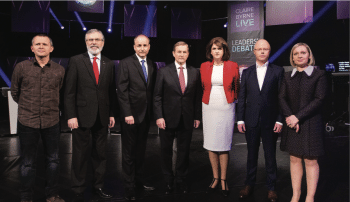
    As the dust settles and the victors and vanquished count their blessings or nurse their wounds all eyes are on the main political kingmaker, Micheál Martin. Fianna Fáil is likely to play the long game and hold out for as long as possible before conceding that it has no option but to shore up a Fine Gae-led government. There will be much hot air about the responsibilities of others, including Sinn Féin, to ‘step up to the mark’ but the people have spoken and the only tally that counts is the combined 90-plus seats of the two main parties. The downward and steady drift of the ideological right from 80% of the vote less than twenty years ago to just over 55% in 2016 makes a single large party of the right an historic inevitability no matter how much the leaders of FG and FF resist it. But resist they will, using any excuse to find reasons to differ even though there is hardly a sliver between them on fundamental policies. It is possible that their reluctance to come together or to agree a minority government arrangement along with right-minded independents or smaller parties will lead to another general election within months but they are both savvy enough to know that the electorate will not reward such failure. Besides, there is no guarantee that the result will be very different with the two centre-right parties each hovering around the 25% mark but unable to reach the numbers required to form a stable and coherent government that can implement their programmes. Another factor that will change the dynamic the next time around is the certainty that, with the possible exception of Martin, the faces on the television for the debates between the four main party leaders will be different. Kenny and Burton will be dumped by their respective parties for their poor showing in GE16 while Gerry Adams could be replaced by a younger leader during the coming Dáil term. As the two parties of the Right play hard to get, the Left cannot claim the historic break-through that some are hailing. Labour has suffered a traumatic implosion and just managed to hold its speaking rights in the Dáil. Sinn Féin increased its numbers but advanced to nowhere near what seemed possible just a few months ago. Obtaining just over 13% of first preference votes is way down on the 17-24% it polled consistently over the previous eighteen months. A relentless and hostile campaign led by Independent News and Media and the difficulties Adams faced during some of the leader debates and in one-on-one interviews were certainly factors in this late drop in support. But party strategists will also be looking at the rise of the far left in urban areas which ate into its potential vote, and at mistakes such as the three candidate experiment in Donegal as issues to be addressed. That said, Sinn Féin has increased its vote by 50% and has a raft of new, yet experienced, men and women in the 32nd Dáil providing a solid platform for its project of leading a left-wing government by 2020. Adams brought in Imelda Munster in Louth and has a secure seat into the distant future. Any decision by him to step down will be dictated by his perception of the best interests of the party, north and south, and not by his political or media opponents. It was something of an exaggeration on the part of the AAA-PBP to describe the outcome as a political earthquake, less still a revolution, when they managed to pull in just 4% of the vote between them. Dancing on the political grave-stones of the Labour casualties is not only crude but exposes their visceral and incorrect tendency to believe that they are the only true believers in the world of progressives. It is a view which guarantees long-term irrelevance and political impotence. As the noise subsided in the immediate aftermath of the vote some of the new and re-elected Left independents were mature enough to recognise that the potential of the Right to Change movement in bringing a swathe of parties, groups and individuals together was not realised this time around but could be the sort of vehicle to impel greater left-wing unity and a real electoral challenge down the road. The combined votes of SF, Labour, Social Democrats, Greens and up to 15 progressive independents would outnumber Fianna Fáil in the extremely unlikely event of such a grand coalition with the Soldiers of Destiny being cobbled together. Martin and his circle have insisted all through the election that they would not join with SF under any circumstances, while Adams would nd it difficult to bring his party into an arrangement which could halt or reverse its steady growth. It has captured a significant portion of the under-34 vote which does not entertain the old establishment. It needs to ensure that it remains vibrant and radical and not another version of the same old. For a long time the SF leader has insisted that he will not repeat the mistakes of the Labour Party which has been emasculated for what it sees as its sacrifice in putting the country first. Since the local elections in 2014 the demise of Labour has been apparent although the scale of its seat loss was not. The 2014 elections showed the steady recovery of Fianna Fáil as former supporters deserted Labour and FG to whom they ‘lent’ their votes in 2011. The Labour pact in 2016 with Fine Gael arguably pro ted the larger party in late transfers in the final counts in several constituencies and brought a seat bonus to the Blueshirts unjustified by their percentage vote. If there is a lesson for Labour it is that doing the right thing does not necessarily impress the voters unless they feel the results in their lives. Too many promises in the heat of the 2011 campaign were undelivered and party leaders failed to detect the

    Loading

    Read more

  • Posted in:

    SF won’t prop up FF, FG or Labour

    The recent General Election was a very good one for Sinn Féin. We increased our number of TDs from 14 to 23. That’s a 65% increase – a success by any standards. Importantly, Sinn Féin also further increased the geographical spread of the party. There are now very few regions in the State in which there isn’t Sinn Féin Dáil representation. There is also in place, another whole raft of Sinn Féin representatives who, although not returned at this election are very likely to be elected next time around if they continue with the valuable work they are doing. So, Sinn Féin returns to the Dáil, not just with a significantly larger team but also with a team of very high-calibre TDs, including more women and more younger representatives. Sinn Féin had two clear objectives going into the election. The first was to get rid of a Fine Gael/Labour government that has brought chaos to housing and health, imposed unfair taxes and promoted mass emigration. We succeeded in that. In the early days of the election campaign we holed the coalition’s strategy below the waterline by proving that their figures were wrong and that they presented €2 billion which they did not have. I think we were also successful in demonstrating that you cannot have US-style taxes and at the same time invest in decent public services.Our other objective was to prove to people that there is a realistic, credible political alternative of which we are a significant part. That is very much a work in progress. We may not have succeeded, at this point, in getting enough seats to form a progressive Government but that will improve as we go on. But the realignment of politics in this State took an important step forward in this election and the next election will see that trend intensify. The political domination of Fine Gael and Fianna Fáil is finished. What we now need to do is increase the cohesion among those who advocate an alternative view of how the economy and society should be organised. Over the past five years, Sinn Féin has been the genuine voice of opposition in Leinster House, offering an alternative to the dreadful austerity policies of Fine Gael, Labour and Fianna Fáil. All of Sinn Féin’s pre-Budget submissions demonstrated a way of ensuring economic growth while also being socially equitable and protecting the vulnerable. We repeatedly warned the Government of the escalating homelessness crisis. The Government refused to listen and it became an emergency. We also consistently raised the issue of all-Ireland integration and the political, economic and social case for a united Ireland. Sinn Féin has now received an enhanced mandate to continue with that work. The post-election sham fight between Fine Gael and Fianna Fáil is nothing to do with the real issues affecting citizens. The people who were homeless last Friday will remain homeless under Fine Gael and Fianna Fáil. Patients will still languish on trolleys in our hospitals under Fine Gael and Fianna Fáil because those parties are not serious about resolving these issues. Going into this election Fianna Fáil picked up on a sense that voters were moving to the left, so they began to steal the phrases Sinn Féin was using about fairness and a recovery for all. That strategy resulted in a partial recovery of the Fianna Fáil vote itself but still left it far, far short, in his-torical terms, of where it once stood. Throughout the election campaign, Sinn Féin made it clear that we would not prop up those parties that created and sustained the economic and social crisis facing our people. That is the mandate we received and we will not break our commitments. Sinn Féin will continue to consult with others, including those aligned to the Right2Change platform, on the way forward. If not in the immediate period ahead, the objective of a genuinely progressive alternative Government in which Sinn Féin plays a lead role is a live possibility. Over 400,000 people voted for candidates aligned to the Right2Change platform to end water charges. The Fine Gael/Labour Government has been defeated and water charges should leave the stage with them. What is now clear from the election is that people voted for real change and a more equal society. Sinn Féin is committed to achieving that and to pursuing and preparing for the peaceful reunification of Ireland and the reconciliation of all our people. Whether in Government or in opposition, Sinn Féin will stick by the mandate we have been given. Gerry Adams Gerry Adams TD is President of Sinn Féin

    Loading

    Read more

  • Posted in:

    Unruly

    What is meant by the Rule of Law and is such a concept honoured in Ireland today? I believe that the rule of law though arguably an unqualified good is not being adhered to in this state save mostly by the judiciary and that the legal system and erratic observance of legality by state officials renders our democracy fragile. In my view Ireland draws close to that amorphous notion, a failed state that cannot in reality uphold the rule of law. This opinion piece will not be a comprehensive pathology but will point out many of the salient practical features which show how the rule of law is breaking down. The Rule of Law: Theoretical Incoherence? We first need to probe the many senses in which the rule of law is described. Joseph Raz, a legal positivist who believes in “perfectionist liberalism” has suggested that the rule of law is merely a kind of shorthand description of the positive aspects of any given political system. From a different vantage point the fundamentalist Christian legal philosopher John Finnis considers that the rule of law is: “[t]he name commonly given to the state of affairs in which a legal system is legally in good shape”. Another philosopher Brian Tamanaha chimes to negative effect that the rule of law is “an exceedingly elusive notion” which leads to “rampant divergence of understandings” and is similar to the amorphous concept of Good in that “everyone is for it, but has contrasting convictions about what it is”. At bottom, there is no consensus: it is elusive at best: a form of smokescreen or professional hypocrisy at worst. But let us endeavour to be constructive. For example Carothers, though sceptical, adds a worthwhile positive definition of the rule of law as: “a system in which the laws are public knowledge, are clear in meaning, and apply equally to everyone. They enshrine and uphold the political and civil liberties that have gained status as universal human rights over the last half-century. In particular, anyone accused of a crime has the right to a fair, prompt hearing and is presumed innocent until proved guilty. The central institutions of the legal system, including courts, prosecutors, and police, are reasonably fair, competent, and efficient. Judges are impartial and independent, not subject to political influence or manipulation. Perhaps most important, the government is embedded in a comprehensive legal framework, its officials accept that the law will be applied to their own conduct, and the government seeks to be law-abiding”. Now let us stress-test certain aspects of this detailed expurgation against the patient – in this context Ireland Inc. Yes of course rights exist in our still fine, if shopworn, constitutional matrix and are enforced by the courts in many instances but there is also an undue deference to the executive that has led to the non-enforcement of social and economic rights particularly the right to housing by the courts. There is an excess of judicial caution on other rights-based claims, particularly where issues of financial iniquity and the countervailing amorphous blob, public policy, are implicated. There is also widespread violation of privacy by the state and its police force, in particular. The overly sanguine way we as a nation have accepted, in effect, what has been police and state criminality with respect to privacy for the last thirty years without widespread outcry is baffling. At least there are signals of an upsurge in civil disobedience, which when peaceful, as Habermas, the German sociologist of critical theory and pragmatist, would contend, leads to a vitalisation of democracy. Not here. Further, the scandal that is our banking structures, the disgrace of the banks varying interest-rate repayments in breach of agreements, the sometimes unconscionable evictions, are not conterminous with the rule of law. NAMA is a mess formulated by the neoliberal club which did its best to avoid a proper new deal for the Irish people. The banking inquiry was a poorly performed French farce. What is desperately needed is a right to housing. Eviction should be rare, require rehousing, and should only follow meaningful intervention by an arbitrator who can determine whether the consumer can repay and whether the bank – with or without the enlistment of a vulture fund – is bundling the mortgage at a bargain-basement rate to private-law profiteers. Further, many of our state institutions have major structural problems. The Garda are not progressive in training and intent: they do not seek justice or the truth, but rather a result. They, at times spin, embellish or at worst, manufacture evidence – and, to be candid, at times act criminally and in violation of the rule of law. Finally, there are limited independent checks and far too close a nexus between politicians and the police. The recent moving of the deckchairs by the Garda Commissioner will not change the culture or training of the force, its group think or, arguably, its competence. It needs a radical ovehaul and a redirection so primarily promotes truth- seeking, investigative process. The impartiality and independence of our judiciary needs at times to be severely questioned because there is far too close a nexus between politics and judicial appointments. Though most are appointed on merit, many of our judges are appointed for their proximity to political parties. Further, some judges have an aggrandised sense of themselves: certainly they are not servants of the state as that is not a judicial function, but rather, they are the servants of the constitution which is a bulwark to protect the people against state excess. Judges also need, in the interest of public confidence as to their impartiality, to declare their share-holdings and indebtedness to the banks. Moreover, parts of the government left itself open to the accusation, during the bugging crisis, that it was also mired in corruption. In the strictest sense it observed the rule of law but, in manner, it laid itself open to the criticism levelled elsewhere by the late great Christopher Hitchens of being crypto-fascist, pursuing a

    Loading

    Read more

  • Posted in:

    Independent Living

    2016 marks another anniversary, the 20th anniversary of a ‘Strategy for Equality’. This was the report of the Commission on the Status of People with Disabilities. Their task was to establish what life was like for people with disabilities in Ireland and to prepare a roadmap to equality for people with disabilities. Before deciding on the appropriateness of any celebrations, it is timely to ask a question: has Ireland become more equal for people with disabilities? The Commission took what it described at the time as “the unusual step” of consulting with people about their ‘lived’ experiences. It reported that people with disabilities experienced outdated social and economic policies and public attitudes, and pointed to “justifiable anger” felt by people with disabilities and their families. In the intervening years a multitude of laws and policies have been introduced but the question remains. Let me state it again: has Ireland become more equal for people with disabilities? A cursory look at the Strategy and subsequent developments would suggest that quite a lot has been achieved on many of its recommendations. A National Disability Authority (NDA) has been established, a Disability Act was passed into law, a National Advocacy Service was established, and a swathe of legislation was brought into force on equality, assisted decision-making and education. However, if you dig a little deeper, there is a different story to be told. Most of these measures were poorly thought out or half-implemented. The Disability Act 2005 created little by way of the rights-based legislation envisaged. Instead it provided a basic right to a person with disabilities to an assessment of need. However, no rights to services follow on from that assessment. Even this limited ‘right’ to an assessment has been only partly commenced and currently just caters for children. The Strategy envisaged an independent advocate for people with disabilities. In 2007 the Citizens Information Act was passed. This provided for “Personal Advocates” with statutory and wide-ranging powers. Four years later a limited non-statutory service called the National Advocacy Service was commenced. A total of 35 advocates operate across a country where there are an estimated 600,000 people with disabilities. The Education for People with Special Educational Needs Act 2004 has been stalled indefinitely. This means that children in mainstream schools struggle to get educational supports. Successive Governments have failed to address the issue of the cost of disability. Many of the manifestos for the recent election used the term “cost of disability” to describe plans to give people an extra ten euro on their welfare payment. This is a regrettable approach. Cost of Disability demands than an increase in welfare payments. It requires a genuine recognition that having a disability can be expensive and moving to alleviate that additional expense. The Strategy recommended that the Department of Environment develop a policy with “the right of people with disabilities to live as independently as possible” as its aim. In 2011 the ‘Congregated Settings’ report was published by the HSE, the agency responsible for care services. This was premised on moving people with disabilities back into the community. Progress on this ambition has been unacceptably poor. The Fine Gael manifesto for the recent election includes a target for 1/3 of residents to move back into the community by 2021, three years after the initial deadline for moving all residents. This is an acknowledgement that the policy has failed and that a generation of people will probably die in institutions. The Strategy stated that ful lment through relationships and sexuality is a basic right. Since 1993, the criminal law has cast a legal shadow over sex and people with disabilities, particularly those with intellectual disabilities or mental illness. The law has provided an easy excuse to opt-out of providing sex education that would strengthen their ability to protect themselves and possibly open the door to a ful-filling, intimate relationship. This is a bleak landscape, but it’s not all negative. We are beginning to win the ideological battle. Concepts of person-centredness, independent living and autonomy are creeping into the parlance of the body politic. The battle now must be to get our partially commenced legislation fully implemented. This will involve resources in many cases and a change in culture in others. Any marking of this 20th anniversary of the ‘Strategy for Equality’ must reflect that not much has changed and must pose the challenge to find the political will for equality. We have all the tools at our disposal. Sarah Lennon Sarah Lennon is Training and Development Of cer with Inclusion Ireland

    Loading

    Read more

  • Posted in:

    Voguish Commissioning

    Government plans to introduce “commissioning” as the means to deliver social, human and community-based services now threaten both the Community and Voluntary Sector and the effective delivery of essential social and community-based services. The Departments of Health, of Children and Youth Affairs, and of Environment, Community and Local Government are now moving to a commissioning model to deliver services. Traditionally they had been funded through block grants to Community and Voluntary Sector organisations. Commissioning is commonly understood as a strategic planning process that links resource allocation with assessed current and future needs, to achieve better outcomes for citizens and service users. The 2011 Programme for Government had the catchier definition: “Choice and Voice” for service users. The assumption of the coalition Government was that the marketisation of social and community-based services will benefit service users and communities. However, we have evidence from the UK, where public services have been privatised for many decades, that the commodi cation of social and community-based services has generated adverse impacts. It has resulted in a shift to one-size-fits-all models of delivery. Its focus is on cost-per-unit to be minimised, regardless of the outcomes for different groups. This ends up in a so-called ‘cherry-picking’ of participants most likely to achieve positive outcomes. As a result, the more marginalised communities and individuals with complex needs are excluded. The impetus driving the move to Commissioning model has been set out in various Government briefings. It includes the desire to link service development and delivery to assessed need and outcomes. It is focused on reducing costs and ensuring value-for-money. This assumes that Community and Voluntary Sector service providers are not already out-comes-focused or allocating resources on the basis of need. This, however, has never been comprehensively assessed by the relevant Departments or State agencies. It assumes that the current model of grant funding to Community and Voluntary Sector organisations is not delivering value-for-money. ‘Value-for-money’ is a contested term. It is all too often reduced to a simplistic cost- benefit equation, rather than being based on an assessment of outcomes for diverse communities and groups. This would take account of, and prefer, the added social value that accrues to individuals and communities as a result of how Community and Voluntary Sector services are delivered. The Government’s own review that examined the evidence for moving to commissioning would suggest it is fraught with risk. This review found: “limited evidence to date that commissioning approaches result in better outcomes” for service users; “a weak evidence base for commissioning as a strategic planning and resource allocation tool”; and the cost of the commissioning process could be extremely high to the commissioning Departments and State bodies. A House of Commons Report has found that almost 14% of the NHS budget was being spent on its commissioning infrastructure, for example. It is a significant undertaking to execute commissioning properly. This is underscored several times in the Government’s own review. The elements in the commissioning process of identifying needs, setting outcomes, and measuring impact all require significant national and regional infrastructure. Comprehensive national, regional and local data, and robust tools to capture the specific needs of different groups and communities are required to assess the social and community service needs of communities across the country. There is a significant absence of such data and tools currently. Until this is rectified it is difficult to envisage how comprehensive needs – assessments can be carried out. The Government’s review noted that expert knowledge and technical skills would be required in commissioning Departments and State agencies. This would include: expertise in needs analysis and service user engagement; robust data information and management systems; expertise in contracting and procurement; and expertise in evaluation. It is not credible that such resources will be found in the Department of Environment, Community and Local Government, to say nothing about the already hugely over-stretched and under-resourced Departments of Health and of Children and Youth Affairs. This lack of infrastructure leads to a very real risk that the costlier, more complex elements of the commissioning process will be dropped. Instead the focus will merely centre on reducing cost and increasing the marketisation of services, regardless of outcome. The Government needs to heed the warnings in its own report, because it will be impossible, under competition law, to revert back to grant-based funding once services have been opened up to competitive tendering processes as part of this proposed commissioning model. There is an urgent case to now press the pause button on this fashionable but insidious and dangerous process. Rachel Mullen

    Loading

    Read more

  • Posted in:

    A programme for government to be proud of

    The next Programme for Government must make choices in favour of those who have the least and have been hit the hardest by austerity. This requires not just a commitment to guaranteeing the rights and welfare of the most vulnerable in society, but also a focus on the values needed in building a strong and cohesive society. The Community Platform, a network of 29 national networks and organisations working to address poverty, social exclusion, and inequality, has proposed that the first, fundamental step must be to adopt values of economic and social justice, social inclusion, human rights, equality, participation, and sustainability. Vote for stability (and progress). These were the main slogans of the outgoing Government parties in fighting the election. It is hard to see either in the wake of austerity and the devastating cuts to our communities and the community sector. Spiralling homelessness and inadequate housing, the health crisis and the collapse of the vision of universal healthcare in the community, low-paid and insecure work, the lack of provision of safe Traveller accommodation and child poverty are shocking indicators of failed governance. This was brought into stark focus by the tragic deaths of ten Travellers, including five children, at a temporary halting site in Carrickmines; the mother with her three young children living and sleeping in a car in Tallaght; the state-sanctioned poverty of children growing up in direct provision; cuts to medical cards for children with life-threatening diseases; the 91-year-old man waiting 29 hours on a trolley in Accident and Emergency; and the father of two living on the minimum wage and crying as he did not know how to feed his children. This is certainly not progress. Ensuring progress requires a paradigm shift in the way we organise our economy and redistribute wealth. A commitment to a progressive and equitable tax system is key and should provide the bedrock in a Programme for Government. This should be the starting point in a move away from a low tax, low pay, and low public investment-economy. We want a country run for its people not for its economy. Develop a progressive tax regime Ensure a tax take as percentage of GDP of between 40% and 45%. Increase the income-tax rate for high earners. Introduce a wealth tax on all assets for high earners. Increase Capital Gains Tax and Capital Acquisitions Tax. Introduce a Financial Transactions Tax. Introduce a refundable tax credit system for people on low incomes. The lack of investment in public services undermines our society’s ability to ensure those with the least have access to essential, tailored supports and services. While the erosion of public services affects all in Irish society, it disproportionally undermines the lives of the most vulnerable. The renewal of public services can ow from a progressive and equitable tax regime and should be the second core element in a Programme for Government. Renew public services Increase investment in public services to ensure they are adequate to meet needs of society. Implement a health and social-care strategy to provide services and supports to enable people to live independently for as long as possible in their own homes. Provide access to more intensive learning options for adults with literacy or numeracy needs and low or no qualifications. Increase publicly-subsidised, comprehensive, and affordable early-years and after-school care infrastructure along with training, living wages and quality conditions for childcare staff. Ireland is now one of the most unequal countries in the EU in terms of income and wealth, yet we have one of the highest GDPs per capita. Inequality erodes trust and social solidarity. It is not an accident of fate. It is shaped and influenced by our political systems and institutions. Building a society with equality at its heart is good for everyone. Evidence shows that more equal societies do better in every sphere of life and that people are healthier and happier. This is not a utopian vision, equality is a conscious choice. The great strides that have been made for LGBT rights demonstrate this. Equality can be brought about through political commitment to rights and justice. Ensuring an adequate income through making work pay, tackling the gender pay gap and providing adequate social protection to have a minimum essential standard of living are critical to achieving equality and need to be a core element of the Programme for Government. The introduction of poverty-proofing in public expenditure and taxation – to ensure economic choices do not adversely affect women, minority and other vulnerable groups – is also critical in the Programme for Government. Ensure income equality and social inclusion  Ensure that a living wage is paid in all sectors. Increase all basic social welfare levels to the level of the Minimum Essential Standard of Living. Restore full social welfare payments to those under 26 years. Reverse the reduction in the income disregard for lone parents on One-Parent Family Payment. Implement the pay transparency initiatives recommended by the European Commission to reduce the gender pay gap. Provide adequate pensions and secondary income supports to all people in later life. Ensure adequate provision for the additional cost of disability calculated for people with disability. Promoting and supporting decent work and providing quality education and training to unemployed people and those alienated from the labour market will be an important political stimulus for greater equality. These need to be centre stage in the Programme for Government. Create decent work for all Develop a person-centred Public Employment Service. Fully implement the right to collective bargaining. Reinforce the instruments and institutions for the protection and enforcement of employment standards. Introduce further measures to tackle insecure contracts and precarious working conditions. Use public-procurement tenders to ensure successful tenderers implement quality-employment standards. Advance social justice Implement a National Action Plan for Social Inclusion based on the right to an adequate standard of living. Create affordability and certainty in housing and increase access to social housing. Invest in Traveller-specific accommodation. Increase resources to tackle homelessness. Increase rent supplement levels to match market rent levels

    Loading

    Read more

  • Posted in:

    Protect!

    The new Minister for Social Protection will face a number of significant challenges. She has to deal comprehensively with the damage of the immediate past, while expediting long overdue reforms, and at the same time stay on top of new welfare challenges associated with changing forms of family, employment patterns, demographic trends: all betrayed by pervasive inequalities. The UN has provided some valuable guidance for the new Minister – in the Concluding Observations of the United Nations Committee on Economic, Social and Cultural Rights on the third periodic report of Ireland about implementation of the International Covenant on Economic, Social and Cultural Rights of June 2015. The Committee strongly advised that austerity policies should only be temporary and only cover the period of the crisis. They recommended that Ireland restore pre-crisis levels of social protection. They stated that Ireland must strengthen policy capacity with a disaggregated data strategy and adequate rights and equality-proofing mechanisms. Five key priorities for the new Minister for Social Protection are suggested: Redressing the impact of austerity cuts on children at risk of poverty, young people under 26, and lone parents. These groups suffered serious collateral damage from austerity budgets that failed to protect the vulnerable; Reversing reductions in welfare payments that left recipients below the poverty line; Tackling long-term unemployment in a manner that promotes inclusion in the labour market for all those who want employment, including people with disabilities, and all women; Ensuring the contribution of social welfare payments to the growing crisis in family homelessness. Changing the male breadwinner model and responding to new forms of family diversity.  The universal Child Benefit was reduced over a number of austerity budgets from €166 per month in 2010 to €130 pm in 2013, with additional cuts to the higher payments for the 3rd + child. This payment was increased by €5 over budgets 2015 and 2016 and is now €140. The combined impact of these cuts and parental unemployment means child poverty doubled over the crisis period. Social-welfare-dependent single families with children suffered cumulative cuts over the crisis. The number of jobless households with children also burgeoned. Tackling child poverty is far more complex than simply restoring child benefit to its pre-crisis level. The new Minister must take seriously the advice offered by the National Economic and Social Council (NESC0 and by various commissions and expert groups. A tiered and better targeted child-income-support system is a prerequisite for efficiently tackling child poverty but avoiding unnecessary unemployment and poverty traps. Austerity disproportionately damaged the young. Its mechanisms included emigration, deterioration in the quality of employment and severe social welfare cuts – with job-seekers’ allowance reduced by more than half for those under 25 (from €204 to €100). Many young people have emigrated to avoid not only poverty and unemployment but also low-quality employment and underemployment; others remain trapped in the parental home unable to afford the transition to independent adult life or to move to larger urban centres to seek employment. An immediate priority is resolving the situation of the 600 young people who, unable to sustain residential tenancies on such an inadequate income, are left dependant on emergency homeless services. The new Minister should revisit the previous Minister’s overzealous cuts to lone parents’ income disregards, and the decision to compel lone parents, once their youngest child is 14 years old, to work full-time. It is clear that this policy is not conducive to the wellbeing of parents or children. Various creative alternative reform proposals have been offered to promote a more positive reform agenda capable of addressing poverty and respecting parents’ choices for reconciling care work and paid employment. While the EU Survey of Income and Living Conditions (SILC) shows poverty, deprivation, consistent poverty and inequality rose over the crisis (Table 1), Watson and Maitre (2013) still nd high levels of efficacy in Irish social transfers. Despite social welfare cuts, Irish welfare payments were relatively effective in cushioning people from the worst effects of rising unemployment and falling incomes. Social transfers reduced the post-transfer poverty rate by 53% in 2004, but this rose to 71% by 2013. Despite such an impact, deprivation rates still rose from 13.7% to 24.5% between 2008 and 2011, and up to 30.5% in 2013 before decreasing. Deprivation rates for lone parents, however, peaked at 63% in 2014 (CSO). The NESC has outlined the significant social impact of the crisis (2013). It estimated that 10% of the population experience food poverty. There is growing use of ‘soup kitchens’ and runaway homelessness. The welfare system is the core mechanism for economic equality. There are, as Micheál Collins argued in last month’s Village, lessons to be learned from mistakes in previous recoveries where the failure to prioritise welfare increases saw social-welfare-dependent households’ fall dramatically behind general incomes. The new Minister must commit to, and budget for, adequacy and indexation of all social welfare payments, not just those considered ‘deserving’. These increases need to be a policy priority, not crumbs – or an afterthought. Since 2011 social welfare rates have not been decreased except for two social welfare cuts which decreased the adult working age payment by €16. As Focus Ireland recently observed these cuts coupled with an increasing cost of living, have resulted in a considerable erosion of living standards for those reliant on social welfare payments as can be seen in this comparison of recent increases in the Consumer Price Index (CPI) with stagnant Irish social welfare rates (Table 2). The last five years have seen an unprecedented level of reform in the State’s employment services, in particular merging institutions into INTREO. The Pathways to Work 2016-2020 policy document does acknowledge services are struggling to reach quality standards, with uneven service delivery and poor guidance capacity. Other capacity gaps are now being addressed by ‘Job Path’, private-sector services for the long-term unemployed. These are based on a ‘pay-by-results’ model which will probably increase pressure on people to take poor-quality employment. The new Minister must carefully consider whether this work- first activation model

    Loading

    Read more

  • Posted in:

    Finance Department favoured vested interests over environment

    The option of increasing tax on diesel to cut dangerous emissions was discarded by the outgoing government amid concerns of upsetting road hauliers and increasing the cost of doing business in Ireland. A second possibility of raising carbon tax on solid fuel was also ignored by then Minister of Finance Michael Noonan because of fears over smuggling from across the border and a possible rise in “fuel poverty”. The two options were contained in a pre-Budget submission prepared for Finance Minister Michael Noonan last September, which has been obtained under Freedom of Information legislation by Village. The submission on “energy and environmental options” was discussed in advance of Budget 2016 but none of the suggestions contained within it were acted upon despite growing pressure on Ireland to meet its 2020 emissions targets. The economic cost of air pollution in Ireland has been estimated by the World Health Organisation at $2.5 billion annually but the Department of Finance submission suggests that political concerns may have played a more important role in last year’s internal Departmental debate. An Taisce said the decision not to make the tax changes illustrated how little priority had been afforded the environment by the outgoing government of Fine Gael and Labour. Calls from the Organisation for Economic Cooperation and Development (OECD) for “equalisation” of excise rates on petrol and diesel were disregarded, with the Department submission highlighting potentially “strong opposition”, particularly from road hauliers. The submission explained: “There is a significant difference between the rates of excise on petrol and diesel in Ireland. “This increased during the [economic] crisis when increase in excise on mineral oils were used to raise revenue but at the same time increases in diesel were tempered in order to protect business as much as possible”. The submission said that changes to vehicle registration tax and the different rates had now incentivised the purchase of diesel vehicles. However, it explained: “It should be noted that diesel is a dirtier fuel than petrol as emissions also include higher levels of nitrous oxides and particle matter”. It said the lower tax rate on diesel of 48 cent per litre failed to take account of the “social and health” impacts from its use and made three proposals on how the system could be reformed. A plan to increase the rate of tax on diesel to equal that on petrol (59 cent per litre) would have yielded an extra €298 million a year to the Exchequer. The opposite idea of reducing tax on petrol to bring it into line with diesel would have cost the State €172 million annually. A third idea – of letting the tax rates meet at half way (53 cent per litre) – would have brought in an extra €65 million in revenue each year, the submission explained. However, in the end the excise rates remained untouched with the executive summary of the submission explaining: “Any increase in excise [on diesel] would have a negative effect on the cost of doing business in the State. The Irish Road Haulier’s Association have campaigned for a reduction in costs and any increase in the rate of excise is likely to be met with strong opposition”. The submission later explained that the tax rate on diesel – 5.5% above the EU average – along with the additional costs of being an island state were affecting “Ireland’s overall competitiveness”. John Gibbons of An Taisce’s Climate Change Committee said: “There is no justification for diesel to be cheaper. This suggestion of having the tax rates meet in the middle would have actually given a profit to the State”. Proposals for an increase in carbon tax were also jettisoned by the Department. The submission explained that the carbon tax had been extended to solid fuels in 2012 but was now causing people to source fuel from across the border. It said: “A rate increase could lead to an upsurge in solid fuels being sourced from Northern Ireland and further exacerbate the issue”. An Taisce’s John Gibbons said it was absurd for a government department to be setting policy on the basis of the possibility of illegal smuggling. He commented: “Since when do we set policy like this in response to people breaking the law. The answer to this is enforcement. We do not apply this logic to cigarettes so why would we do it for fuel?”. The submission also suggested that increased carbon taxes could exacerbate the problem of “fuel poverty”. “According to the ESRI, low income households are more likely to use cheaper but more carbon intensive solid fuels”, it explained. However, John Gibbons said this was awed logic and that allowing the poorest households continue to use such fuel was just increasing “health inequality” instead. “If your concern is for fuel poverty”, said Gibbons, “then the answer is not cheaper solid fuels. Retrofitting is the answer, not cheap coal or other similar fuels. We are penalising these communities even further with ill health. It is a very poor argument. “I think we have seen from 2011 to 2016, the outgoing government never prioritised environmental issues. They were happy to make noise about it and go through the motions but in terms of translating that into policy, it just hasn’t happened”. A third proposal was also included in the Department of Finance submission for an increased electricity tax for business use. The rate is currently set at 50 cent per MegaWatt hour (MWh), which is the lowest permissible rate under the EU Energy Tax Directive. It was suggested that this could be increased to €1. However, the proposal, which would have generated an extra €4.5 million each year, also slipped off the table and was not introduced. As a Budget summary released by the Department of Finance explained: “There are no changes to any of the rates for electricity, mineral oil, solid fuel carbon or natural gas carbon taxes”. Asked for comment, the Department of Finance said: “In the course of preparing for the budget a range of options are presented

    Loading

    Read more

  • Posted in:

    Cerberus conflicts are biggest financial and political issue facing NI Executive

    An investigation by BBC’s ‘Spotlight’ programme broadcase on, 29th February, into the sale of NAMA’s huge property portfolio in Northern Ireland has revived an embarrassing issue for the outgoing government. Village readers will recall how distressed commercial and residential properties, previously valued at £4.5 billion, were sold to US vulture fund Cerberus, for just £1.2 billion in April 2014. An article in December documented how the sale was now the subject of investigations in the US and the UK and by the Law Society and the Stormont finance committee in Northern Ireland. At the centre of the controversy is former NAMA official, Ronnie Hanna, who resigned as the agency’s Head of Asset Recovery six months after the sale of the portfolio known as ‘Project Eagle’. Hanna was named in the Dáil by independent TD, Mick Wallace, as one of a small group of people who met multi-billion-dollar-backed US investment funds to promote the sale of the portfolio, accompanied by Frank Cushnahan, a former member of NAMA’s Northern Ireland Advisory Committee. It was also sensationally claimed at the Stormont hearings in September last that Cushnahan; Belfast accountant, David Watters; former partner in Tughan’s solicitors, John Coulter; property developer, Andrew Creighton; and former DUP leader, Peter Robinson, were to receive substantial sums from the Project Eagle sale. All denied the allegations. Cushnahan and Coulter, along with US law firm Brown Rudnick, were to take €15 million in fee payments from another US investment fund, Pimco, if its bid for the property portfolio was successful. Pimco withdrew from the process in early 2014 after its compliance officers advised that such payments would be illegal, under US law. In March 2014, NAMA informed finance minister, Michael Noonan, of the dodgy fee arrangements being offered in connection with what is the largest ever disposal of public assets in the history of the state. Instead of calling an immediate halt to the bidding process the finance minister advised NAMA to plough ahead with the sale. Noonan seemed implicitly to consider that the ethical problems were at the other end, in Belfast. And that the Belfast office didn’t really reflect on the Dublin office. The problem for Noonan and NAMA is that if Hanna is involved in wrongdoing that brings the culpability right back into the Dublin office and the remit of the Irish government. Cushnahan and Coulter then encouraged Cerberus to enter the race in the clear expectation that fee payments would be made if its bid was successful. The Spotlight programme revealed that Cushnahan misled his former colleagues in NAMA by continuing secretly to work on the Cerberus deal without their knowledge. Cushnahan confirmed in a clandestinely recorded discussion last year with Belfast property developer, John Miskelly and accountant David Gray, associate of Waters, that he was due to get a “ fixer’s fee” from the Cerberus deal. He said that he and Coulter had done “all the work on the deal” but his role was kept secret because of objections from NAMA to his involvement. Cushnahan said that Coulter moved £6 million into a holding account for him so he could be paid. During the recorded discussion, reference is made to assistance provided by Ronnie Hanna to distressed developers. There is also a description of how Peter Robinson’s son Gareth advised Miskelly to go to Cushnahan about his NAMA-controlled debts. Miskelly confirmed to the BBC that the recordings were an accurate reflection of the lunch meeting with Cushnahan and part of an effort by him to expose the financial misconduct surrounding the sale of the Project Eagle portfolio which is under investigation by the US Securities and Exchange Commission and the National Crime Agency in Britain. Miskelly claims he has handed evidence of wrongdoing to both. Cerberus has denied any wrongdoing in respect of the purchase, while refusing to provide answers to detailed queries due to the ongoing criminal inquiries. Similarly, Cushnahan; Hanna who runs a private consultancy in Belfast; and Robinson, have declined to comment further. Robinson surprised many when he announced his retirement as first minister as hearings into the Project Eagle sale were taking place last Autumn. Village documented in January how Gerry Adams had in effect telegraphed Robinson on his need – in the context of ethical issues relating to the NAMA debacle of which Adams was apprised – to reinstitute the then suspended Northern Executive. Robinson and former finance minister, Sammy Wilson, were involved in discussions with Noonan and NAMA to try to minimise the exposure to personal guarantees of a number of prominent developers in Belfast and across the North in respect of their debts taken on by the agency. Last year, it emerged that Robinson held meetings with former US president Dan Quayle, chairman of Cerberus, and had discussions on the sale with Noonan, without disclosing them to his deputy first minister, Martin McGuinness. It now transpires that Cushnahan was on three sides of the deal having worked for NAMA, some of the bidders as well as for the distressed developers. The latest explosive revelations prompted Sinn Féin leader, Gerry Adams, to repeat a call for a Commission of Investigation into the NAMA sale. Frank Connolly

    Loading

    Read more

  • Posted in:

    Villager March 2016

    LAUNDERING HISTORY Deep in the heartland of Donnybrook, hidden in a crescent behind the fire station, surrounded by houses and leafiness there sits, intact, a building which embodied part of our cruel social history. Known locally as the Donnybrook laundry, but more widely known in subcultures and State reports as the Magdalene laundry of the Sisters of Charity. No mention is made in the Colliers’ brochure for sale of the site of its former use. No mention of the many women who toiled there, scrubbing shirts, washing socks, endlessly ironing, endlessly starching, endlessly washing. Nor of the clients that came from the affluent families in the surrounding areas, nor that Áras an Úachtaráin was a client too. The labelled basket that carried the laundry – pressed, starched, immaculate spotless – now lies discarded with a pile of others, rotting and abandoned. According to Dublin City Councillor, Mannix Flynn, who served time in an industrial school in Letterfrack which has been turned into a wood-turning school (to eradicate the memories he says), this is the real thing. If ever there was to be a memorial, a gesture, an acknowledgment – this is it. This is a place of anger and atonement. A place of loss and maybe a place to be found. “FAILURE”? So last month Villager predicted there’d be a hung Dáil: “Fine Gael and Fianna Fáil will struggle to work out whether they should coalesce risking their exposure as ideological charlatans and the long-term growth of Sinn Féin. Another election within a year”. Village’s twitter account now features two dinosaurs, rutting. But what is the correct term for a coalition of Fianna Fáil and Fine Gael? We’ve seen Fianna Gael and Fine Fail. We’ve seen Tweedlegael and Tweedlefail. Tweedle Dummer. And what about an election slogan for them? “Let’s keep the doing going”. FAMOUS Bargaintown is a faintly tacky furniture store on Queen’s Street Bridge on the quays in Dublin. The late Terry Wogan (much missed by the TV generation) once voiced an ad with the stage-Irish slogan, “the prices are only famous”. The tightarses in Bargaintown used his recording for a decade or more. Anyway Bargaintown which was once in fact a cinema, the Phoenix picture house, is now the name of a movie which showed at the Irish Film Centre before Christmas. It’s an evocation of Dublin in the 1980s, a meditation on urban decay made by then teenage German film-maker, David Jazay, in Dublin in 1988. Featuring interviews with antique dealers, barbers and barmen – it is a record of the lives and opinions of a vanished Dublin, before the Celtic Tiger overhauled its fabric and its atmosphere. Highlights include an animated auction at Tormey Brothers, a night of song and dance at the old Workingmen’s Club on Wellington Quay, and performances by out-of-key blues-man Frank Quigley. The highlight for Villager was the piece on Dick Tynan, featured playing jazz drums in a run-down building on Ormond Quay and bemoaning the fire in his building that precluded re-opening his Essex guest-house. There once was a famous picure on the gable wall of the Ormond Hotel with a picture of Tynan looking like a 1970s Elvis proclaiming “I can get it for you wholesale”. When the sign was removed in the 1990s it revealed a picture of Tynan delivering the same message, but this time as Elvis circa 1960. Villager’s interest was piqued because Tynan is shown playing the drums in what is now the Village office. The only difference is seems to have been in better shape in 1988. MISINFORMATION DRIP, DRIP The abolition of Irish Water by a new government would cost the State up to €7bn over the next five years, according to its own – unreliably inflated – internal estimates. Losses are envisaged under four heads: cash costs, sunk costs, benefits forgone and the lost possibility of getting its debts off the exchequer’s books. The actual cash costs, it says, would be around €100m, and largely involve paying off staff who would not be transferred to local authorities. It would also include the cost of breaking leases and contracts, and the costs of transferring back the property already put into Irish Water ownership. The concept of a one-stop shop for Water is a good one – it works in Scotland and, though Simon Coveney and the EU, among others, seem to have seen it as a vehicle that could be privatised that need not have been the case. It is also desirable to spread the tax base, to see what your lifestyle costs, and to pay the environmental and economic costs of water, partly on the basis of the polluter-pays principle. The Social Democrats unwisely proposed its abolition and stated it would cost nothing as the administrative costs were greater than the revenue from the charge. This failed to account for legal and logistical difficulties. Now as part of its hermaphrodite mating ritual it seems Fine Fáil may simply suspend payments for a few years. CLIMATE DEBATES An Taisce has complained to RTÉ and the Broadcasting Authority of Ireland that the recent ‘Prime Time’ programme on climate change gave a voice to Ray Bates, a professor of meteorology whose expertise is weather – day-to-day climate events, not climate which deals with the long-term. An Taisce says it is aware of at least two academic specialists who were invited to participate in the panel, but who declined to do so citing concerns that the presence on the panel of Bates, who chairs the Royal Irish Academy’s climate committee, would very likely result in a “false balance”, so undermining public understanding and “promoting a perception of doubt around what are, in fact, extremely strongly established, robust, results from state-of-the-art climate science”. At the time of writing RTÉ was late in replying to the complaint. LABOUR LEADER Alan Kelly went ape went he won the last seat in Tipperary. Villager wonders how he’ve have taken it if he’d lost. PRESIDENTIAL Miriam O’Callaghan dodged dealing with her

    Loading

    Read more

  • Posted in:

    Post-election 2016

    The general election was tedious and it’s not really clear what message it purveys. The electorate seemed jaded and the politicians delivered no memorable new policies, apart from Renua’s utterly regressive at tax proposal. Village believes that elections should be all about ideas, ideology, policy (and how best to implement them). In these terms the election and its participants were a two-out-of-ten failure. Commentators from the equally idea-free media have interpreted the results in heterogeneous ways. Every sort of theory and cleverality was deployed to describe the drearily and precariously hung Dail: a triumph of democracy, a triumph of social democracy, the end of the civil war, the end/beginning of the beginning/end of the civil war. The perennial smart view that the electorate has failed the parties got several outings. If the second-rate sages had been able to they would have loved to interpret it as a triumph of angry white men. They couldn’t. Some saw it as a victory for the small parties and independents. But the Social Democrats did not increase, Renua was wiped out, the Greens gained only two seats in an era of climate-apocalypse. The People Before Profit/ Anti-Austerity Alliance finished up with only one more seat than they had before the election, and Direct Democracy did not gure. Before the election these were the only small parties. The truth is that this election was a triumph of the interchangeable FF/FG (FG/FF) duopoly, though its trajectory has been definitively defined as downward. Ideology is what political parties apply when they run out of policies. Since most of the parties’ manifestos are short and the events to which policies must be applied are unpredictable it is reasonable to expect that your candidate will have an ideology to guide her. Village for example favours an agenda of equality of outcome, sustainability and accountability. The ideology is comprehensive, it provides a solution for any situation, and a template against which policy formulation can be benchmarked. Candidates shouldn’t have to reflect Village’s ideology, but they’d be better having some sort of one. Neither civil-war party has an ideology. It is impossible to know what they will do once elected. How, therefore, could anyone who does not live under a stone be enthusiastic about a government of FF and FG? FF is a conservative party that believes in so little that it surrendered its entire ethos to a culture of provincialism and cronyism, last time it was in government. It believes in no more now so, though it is touting a centre-left agenda there is every danger it will return to populism, short-termism and promoting the only agenda it understands – the interests of the people its representatives actually know – a cronyist populism that always finishes up favouring those who shout loudest. It is naïve to think of FF as Micheál Martin and when it is the movement it has always known itself to be, of Eamon OCuív, of Barry Cowen, of Pat ‘the Cope’ Gallagher; and tens of marginally more presentable sons and daughters of best-forgotten FF dynasts. Kevin O’Keeffe, son of Ned O’Keeffe, anyone? FG is a conservative party currently dressed up as a Christian Democrat party. The ethos is exible enough that under Garret FitzGerald it was in effect Social Democrat. In its latest incarnation it has been right of centre, at a time when most people want fairness and an improvement in services. It failed to deliver an agenda of accountability and its representatives seem to believe in little beyond sound money, ‘Europe’ and law and order. Having once appeared to be purer than FF it is now tainted by the Moriarty Tribunal report and a perceived ongoing proximity to Denis O’Brien, Ireland’s richest man, as well as by its large number of low-grade County Councillors, whose corruption record is a hairsbreadth from as bad as FF’s. Though essentially conservative, both FF and FG contain some social democrats and liberals in their midst. These aberrations and those who vote for them are delaying the day a real Social Democratic party with coherent left-of-centre platform can become a force that could anchor a government. On the other hand it is clear that more people than is desirable voted FG in 2011 to get FF out and then FF in 2016 to get FG out. These people need to acknowledge that they are forces forconservativism. The incarnation of this is the dangerously articulate Éamon Dunphy who apparently voted FF in 2016 because he really believes in People Before Profit (or Sinn Féin. It isn’t clear). Anyone who thinks that FF was the solution to our problems in 2016 is part of the problem. So what next? FF and FG should merge as a conservative party though even coalition is for the moment some way off. FF is tactically sharper than FG and FG is in retreat so it is likely FF will tantalise FG to weaken and demoralise it during this Dáil. Nevertheless the (non-)ideological compatibility of the parties has been exposed and will generate its own momentum. While allowing this momentum its space the Left of all hues must use the logic of the momentum against FF and FG, and social democrats must colonise some of the space the dinosaur parties have occupied for tragically long.

    Loading

    Read more