Recently Hot and News

Random entry RSS

  • Posted in:

    Context for, and focus on, the Garda

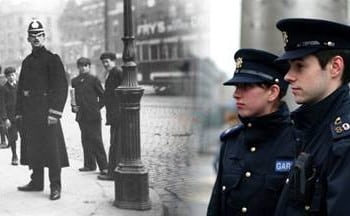
      History, and the current lack of official, political and journalistic incisiveness, suggest reform of the Garda will remain elusive By Frank Connolly Not much has changed since I first wrote about Garda malpractice in the early 1980s. At that time I reported on the miscarriage of justice concerning two youths from Tallaght who were wrongly convicted of stealing a car and carrying its distressed owner on the bonnet as it sped away from his home in Firhouse, and given five-year sentences. The theft and assault intensified the hysteria surrounding car theft in the city and I recall thousands of delegates at that years Fine Gael ard fheis pulsating as the then justice minister promised similarly severe penalties and the introduction of spiked chains to  slow the gallop of the joyriders. The Tallaght Two case, as it became known, was marked by a chain of misconduct by investigating gardaí including at least one flawed internal report which came to conclusions that were in direct contradiction to the facts. After a number of trials and having served their sentences, Joseph Grogan and Joseph Meleady, were granted certificates of miscarriage of justice although they are still, all these years later, awaiting the compensation due to them for their wrongful imprisonment. What was clear from the Tallaght Two case was that gardaí had given false information about fingerprint evidence to the courts, that had led to their conviction; and had failed to act when the man who actually drove the stolen car admitted his role to the parents of Meleady and Grogan in my presence and insisted that their sons were not involved. Further, the gardai ignored the claims of the other car thieves involved, one of whom was convicted and whose father was jailed for contempt of court when he tried to point out that innocent men were being jailed. The third man in the stolen car was convicted of perjury when he tried to insist, truthfully, that he and his two friends were culpable and that Meleady and Grogan were in no way involved. Sound familiar? When I met the McBrearty family in the late 1990s a similar pattern of Garda abuse, inept and inaccurate internal inquiries and cover-up, as well as illegal phone-tapping and intimidation of witnesses was evident as the Donegal Garda sought to set up Frank McBrearty junior and his cousin Mark McConnell for a murder that they did not commit and, in fact, was not a murder. As the Morris tribunal subsequently discovered, it was more likely that cattle dealer Richie Barron was killed in a hit and run incident, and that the more likely suspect was a member of the force. Again, years of false accusations including by paid informers, intimidation of witnesses, illegal phone tapping, abuse in custody and perjured evidence by members of the Garda were among the artillery used to batter a respected Raphoe family whose pub and nightclub happened to present a commercial threat to more politically influential businesses in the north-west. Equally, the treatment of the Diver family in Ardara when they were blamed for planting explosive devices at a controversial MMDS television mast in 1997, wrongly arrested and intimidated until it emerged that a member of the Garda, also involved in the McBrearty scandal, was actually the culprit. Members of the force had explosives planted, and discovered, in Rossnowlagh and other parts of Donegal which they claimed as IRA finds in order to hype their promotional chances while the same gardaí had drugs placed in the premises of Inisowen publican, Frank Short, who was also granted a miscarriage of justice certificate and a huge payout from the State when the truth emerged. What about the treatment of the Gallagher family in St Johnston whose home was subjected to a three-day raid by the Special Branch in a search for explosives which Garda informer, William Doherty, had failed to plant on the property in an elaborate but unsuccessful exercise to stitch up Alfie Gallagher’s son, John? Where’s Willie by the way? The close and unhealthy relationship between security correspondents and their ‘Garda contacts’ across the media ensured that I had a free run on these extraordinary stories as they were advised by their handlers that there was no substance to these wild claims of Garda corruption in the north-west division. For two years and more I published exclusives in the Sunday Business post and in documentary form on TV3, before the political scandal deepened and the Morris tribunal was established. When that lengthy and expensive inquiry was completed, its findings were largely ignored and the illicit practices it uncovered continued in Garda divisions across the country. Its most important recommendation – to set up an independent authority to oversee the force, like Patten in the North, was set aside until it was forced back on the political agenda in the wake of the recent Callinan resignation, the revelations of widespread bugging of garda stations, the whistleblower claims on penalty points etc,  and the Bailey case. Again the bribing of informers, the falsification of evidence, the intimidation of witnesses including of Marie Farrell who gave false evidence in court against Bailey under duress from certain gardaí, have featured – where the only certain outcome is that the killer of Sophie Toscan du Plantier will never be tracked down . Again the toxic relationship between certain media and senior ‘garda sources’ will come back to haunt those outlets which so vigorously resisted Bailey’s unsuccessful defamation case against them. It will be fascinating to read the transcripts of the forty-four phone calls between journalists and gardaí from the tapes recorded at Bandon garda station during the du Plantier investigation. Hopefully, they will receive the same blanket coverage given to the colourful Anglo tapes by Independent Newspapers last year. So where next?  Whether Alan Shatter and his departmental secretary, Brian Purcell, survive the fall-out from various enquiries underway at present is the burning question of the day,  but much more is at stake. For

    Loading

    Read more

  • Posted in:

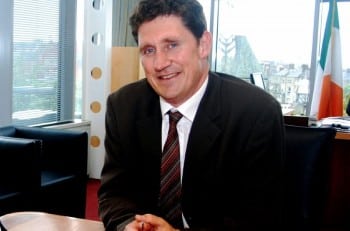
    Dublin MEP candidates. 1. Eamon Ryan (Green)

    Eamon Ryan interviewed by Michael Smith Background I meet Eamon Ryan in the restaurant under the Village Office. He is early. As usual he is metrosexually thoughtful, wry, good-natured and very well-informed, though he is strangely unapologetic and rarely truly philosophical. He recently celebrated his fiftieth birthday with an enormous party reflecting his widespread personal popularity. Growing up in Dundrum and Dartry, he did a commerce degree in UCD and finished up teaching on its marketing course. He played a bit of rugby, joining this interviewer on many occasions in an untypically progressive second row for UCD elevenths. Like a lot of people he emigrated in the eighties; he came back and was unemployed, exploring a hippyish side which we have both strategically forgotten. He set up Irish Cycling Safaris (the name itself a marketing triumph). He chaired the Dublin Cycling Campaign. He became a Dublin City Councillor, a TD, and then a Minister. The last few years he has been working in London on climate affairs for E3G, an environmental not-for-profit and in the Institute of International and European Affairs (IIEA) on digital and energy policy. He works three days a week unpaid for the Greens. Contrary to his (serially inaccurate) Wikipedia entry – environmentalists can be vindictive – his pension is €40,000, split between Dáil and Ministerial; severance pay he’ll get back to me about. As he said he would, he’s effectively using it to pay for his work for the Green Party. I recall that in a previous interview in this magazine he had said he had a libertarian orientation. He tells me his political philosophy was set when he was 15. He did a course in ecology in Gonzaga College, instead of the inter cert, which evoked the inter-connectedness of the world, social and physical/environmental, that everyone’s security is a function of everyone else’s. He’s a Green Christian social democrat. He’s a radical AND a conservative, probably. Christ was radical. Protecting things for the next generation isn’t conservative. Equality isn’t an overarching concern, though he’d prefer a slightly more balanced society. He doesn’t have any less interest in equality than anyone else. Green Party If he is elected to the European Parliament he’ll serve the full five years as it‘s not a launching pad for the Dáil. He’ll stay leader of the Greens if elected, though it will be reviewed after the election. The party is recovering and rebuilding: people see the need for a Green party. Membership has declined from 2000 to 8-900. If the German and Belgian experience is replicated it may take ten years before they are ready to serve in government again. Greens in Government He considers the biggest three achievements of the Greens in government would be: if we’ve avoided complete financial collapse, that would be the most important issue; being a major part of the energy transition, not just here but in Europe – influencing climate and renewables directives; and thirdly (and somewhat elusively) certain things they did in government to develop the internet. The biggest three failures were the first budget after they went into government when they didn’t identify the risk of the crash quickly enough; the loss of public confidence in the government was a failing on their part.; and… he falters and I suggest we can come back to it. “Being within two weeks of getting a Dublin Lord Mayor”. He thinks current Minister Hogan’s heart isn’t in the mayor project – having no position ten weeks before the plebiscite, because Hogan prefers the current Tammany Hall system and the new system of regional authorites – where all the big decisions will be taken – will almost guarantee that Fine Gael is one of the two members who serve on it. Since he left government he’s done a lot of work on climate gatherings and the lesson is to stop preaching, to get the farming community on board as they know more than we do about. I suggest the future is not about getting public support since the climate can’t wait, and he says “not the entire country but a good 30 or 30%”. And focusing on stag hunting alienated rural Ireland. I suggest climate change and planning might be regrets. Also the fact they only implemented the half of the Kenny report that penalised speculation, not the one that allowed local authorities to buy land at agricultural prices and zone it for development, so promoting plan-led rather than owner/developer-led planning. As to emissions they went down in the Greens time, though they’re up in the last year under the new government. I suggest this was due to the economy not policy. He says the retrofit in buildings, energy, renewables development all contributed. We’ve massively decarbonised industrial production over the last twenty years. According to the Breakthrough Institute, Ireland and Sweden are rare examples of this. There’s no advantage in selling ourselves short as it’s unfair, unnecessarily demoralises and worst underplays the exemplary value of at least some of our practices. There are two things the Greens get away with that I’m keen to pin him on. First, I ask if he has evidence the Greens genuinely called the unsustainability of the boom. Before they went into government in 2007 he and Dan Boyle went into the Bankers Federation with the sole purpose of drawing its attention to its overexposure to commercial loans. That’s something they should trumpet. He said the same to AIB whose CEO told him he didn’t understand that what AIB lacked was “risk opportunities”. I say that the need for a bank guarantee is often fudged and that the problem was not with the principle but the detail. Obviously he’s reflected on this: “without doubt junior subordinated debt shouldn’t have been included (even thought here wasn’t that much of it) and you’d prefer not to include senior debt and maybe that the guarantee should only have been about future deposits, though it was indeed limited to two years”. He notes the

    Loading

    Read more

  • Posted in:

    How Ireland got the CRC and exclusive private hospitals The long evolution of our impersonal, centrally-organised, eccentrically-run, consultant-deferential, selfish, non-rights-based regimes for poverty and then health

      By Caroline Hurley. Former CRC board members Poor laws come from Poor Laws. The English Poor Laws date from the fourteenth century and, though regularly modified, were not fully repealed until 1967.  They mark the beginning of the impersonal, centrally-organised approach to deprivation carried forward to health that is still characteristic, in England – and in Ireland, where universal state-funded healthcare never acquired ascendancy. Their effects have been far-reaching, though they were more imitated than implemented in Ireland until the 1830s. Charitable institutions, such as leper houses, established in the Middle Ages, had closed along with Henry VIII’s dissolution of monasteries. Little heed was paid to encouragement of local charity until Edward imposed Sunday alms collections from 1551, on pain of the bishop’s admonishment. This “moral suasion” produced such lacklustre results that an act was passed to fine shirkers in the courts. A paupers’ register came with the establishment of an official poor fund; housing was addressed later. Work was arranged for unoccupied adults and children of improvident parents. Relief was supplied to the lame, impotent, blind, and those unable to work. The Undeserving Poor, otherwise known as idle or sturdy beggars, considered able but unwilling to work, were to be whipped through the streets until they repented and mended their ways. As workhouses were operated voluntarily, local enforcement was haphazard. In 1572, a poor tax to assist the deserving poor was made compulsory. In 1597, every district had to install an Overseer of the Poor,  with the task of calculating and setting the poor rate required to provide for the district’s poor, of collecting and dispensing the rate, and of supervising the parish poor house. The Poor Law passed by an Elizabethan Parliament in 1601 bound together into one legal document these measures. The New Poor Law of 1834 introduced the new administrative unit of the Poor Law ‘Union’ in order to enforce a rigorously and centrally-enforced standard system based around the workhouse. Many commentators agreed that the most significant repercussion of this new philanthropy was how the poor came to be dehumanised, and regarded as inferior and, therefore, the proper object of punishment and control. Suspicion of fault and responsibility replaced the Christian outlook of tolerance and personal charity towards accidents of fortune. Riots didn’t prevent these attitudes hardening, as ideologies associated with moral philosophy were exchanged for those of political economy – that the right response to hunger was labour and not easy alms. Malthus especially blamed poverty on the Poor Laws themselves, as Wilde did, though their conclusions differed. Others faulted factors such as higher prices, and resource and industry declines, for piling misery on misery. Diverse reform proposals never ceased. Still, this nationwide system did form a welfare safety-net throughout England and Wales. Expenditure on poverty relief, at least until the 1830s, exceeded that of other European countries where the norm was informal assistance and charity, often in the form of domiciliary help bestowed by voluntary agencies and civic-minded visitors, overseen by inspectors of relief. The marked failure of voluntary aid in England directly influenced the mandatory nature of poor laws there – the lack of resources required indoor relief in workhouses to prevent imposture and the avoidance of large numbers of professional staff. Constructing and maintaining workhouses devoured money that might otherwise have been available for individual hand-outs. In contrast, in Ireland a quasi-feudal system based on landowner patronage of deferential tenants had held sway.  Tacked  on to this  – with the occupying UK government’s civil initiatives – were medieval mores. Up through the eighteenth and nineteenth centuries, nearly all Irish people were of small-tenant-farmer stock, subsisting on large estates mainly owned by English or Anglo-Irish landlords who’d been granted property after armed conquest. Landowners ideally doubled as magistrates or justices of the peace to adjudicate on local issues, act as welfare buffers for the community, represent tenants in parliament and provide education for their children. However, antagonism – sustained due to religious difference and a hangover of bitter disenfranchisement about land confiscated from tenants’ ancestors – fed a vicious circle of absenteeism and mismanagement. In reality, large landowners rarely rented directly to any of the many small tenants inhabiting the land they received, but would let large areas to middlemen. Several further sublettings down to the smallest unit meant that many transactions went undocumented with little or no right of tenure. Low-paid duty-work for the landlord prevented tenants from tilling their own plots properly which, along with exorbitant rents, left Irish cottagers in more desperate need of subsidisation than any other Europeans. Central government responded to a rash of agrarian revolt in mid-1780s Ireland by trying to compel landlords to do their duty. Formal structuring of policing, schooling and judicial procedures was instigated, although land-owning magistrates still preferred invoking the Insurrections Acts. Catholics eschewed Protestant-run education, preferring illegal hedge-school classes. Crippling poverty was universally identified as the fundamental Irish problem. After the first Irish workhouse opened, in Belfast in 1756, seven further urban ‘houses of industry’ appeared as if inspired by the single motive to institutionalise away the misery. Poverty as a result of sickness drew more sympathy than the other way round. Following legislation, thirty-nine county infirmaries and dispensaries were opened around Ireland between 1765 and 1841, each staffed by a qualified surgeon. The hands-off approach of hoping local magistrates would deal with outbreaks of famine and fever left already disadvantaged areas even worse off. The timid, advisory General Board of Health set up in 1820, eventually geared into action after the cholera epidemic of 1832 that claimed 19,000 lives, and framed the Government’s more interventionist response to the crisis. Despite evidence of the failure of the Poor Laws in England, the pressure to do something, other than dispatch ineffectual medical experts, led to the enactment of Irish poor laws. Swift appointments of regimental commissioners and the erections of workhouses soon left relief distribution to unsalaried local guardians. The associated rate-levying was pounced on as a possible workable model for

    Loading

    Read more

  • Posted in:

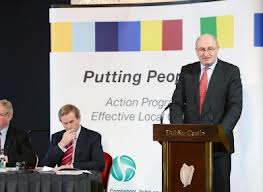
    The madness of repeating Partnership failure Hogan Working Group’s neat PPNs replicate stagnant social partnership model, locally

    By Niall Crowley. You would not immediately associate Phil Hogan, Minister for Environment, Community and Local Government, with an interest in participatory democracy. However, last September he did set up a “Working Group on Citizen Engagement” as part of the voguish and typically bumptious ‘Putting People First – The Action Programme for Effective Local Government’. The Working Group is to make recommendations for “more extensive and diverse input by citizens into the decision making process at local government level”. There is a contradiction in asking a national working group to make recommendations for local citizen engagement. You would expect some form of citizen engagement over the recommendations. The Working Group does contain people with a strong track record in the community and voluntary sector and is chaired by Sean Healy of Social Justice Ireland. However, it does not reflect the diversity of citizens. There are only two women in the group of eight, no minority ethnic people, no people with disabilities and no young people. Village has seen a near final draft of the report of the Working Group. Its centrepiece is “a new framework for public engagement and participation, to be called ‘The Public Participation Network (PPN)’” in each local authority area. The PPN would be made up of voluntary, social inclusion and environmental organisations in the local authority area that are registered with the PPN. Each PPN will develop “a vision for the well-being of this and future generations”. It will facilitate “networking, communication, and the sharing of information” between organisations, “facilitate the election of participants from the environmental, social inclusion and voluntary sectors onto city/county decision making bodies” and “encourage and enable public participation in local decision making and planning of services”. PPNs are neat and participatory. However, neat and participatory never really work when it comes to democracy. Participation cannot be neat if it is real. We already have Community and Voluntary Forums in local authority areas. These were established by the City and County Development Boards to ensure the voice of the community and voluntary sector is represented in the development of the county or city. There is no review of this largely negative experience and the structures now proposed merely replicate these Forums. The huge diversity of groups in the Community and Voluntary Forums often squeezed out some voices, especially those of smaller and unpopular minorities. The draft report does state that the PPN should “support the inclusion of social excluded groups” but does not say how this is to be achieved. Local authorities’ unreceptiveness to input from Community and Voluntary Forums made for a deeply frustrating experience for many organisations. The draft report does identify this issue but makes no recommendations to address it. The PPN is essentially a social partnership model. Social partnership at national level has withered due to political aversion. It did yield gains for community and voluntary sector organisations in its early years. However, later it merely facilitated evolution of most of these organisations into expert lobbyists divorced from their original constituencies. Social partnership did not serve the types of transformative change needed. Recreating sterile models at local level is unlikely to enhance our democracy. Current political alienation calls for more invention and innovation. repeating Partnership failure Hogan Working Group’s neat PPNs replicate stagnant social partnership model, locally By Niall Crowley ‘The “Action Programme for Effective Local Government” suggests processes for citizen engagement including participatory budgeting, petition-related rights, plebiscites and town/area meetings’ You would not immediately associate Phil Hogan, Minister for Environment, Community and Local Government, with an interest in participatory democracy. However, last September he did set up a “Working Group on Citizen Engagement” as part of the voguish and typically bumptious ‘Putting People First – The Action Programme for Effective Local Government’. The Working Group is to make recommendations for “more extensive and diverse input by citizens into the decision making process at local government level”. There is a contradiction in asking a national working group to make recommendations for local citizen engagement. You would expect some form of citizen engagement over the recommendations. The Working Group does contain people with a strong track record in the community and voluntary sector and is chaired by Sean Healy of Social Justice Ireland. However, it does not reflect the diversity of citizens. There are only two women in the group of eight, no minority ethnic people, no people with disabilities and no young people. Village has seen a near final draft of the report of the Working Group. Its centrepiece is “a new framework for public engagement and participation, to be called ‘The Public Participation Network (PPN)’” in each local authority area. The PPN would be made up of voluntary, social inclusion and environmental organisations in the local authority area that are registered with the PPN. Each PPN will develop “a vision for the well-being of this and future generations”. It will facilitate “networking, communication, and the sharing of information” between organisations, “facilitate the election of participants from the environmental, social inclusion and voluntary sectors onto city/county decision making bodies” and “encourage and enable public participation in local decision making and planning of services”. PPNs are neat and participatory. However, neat and participatory never really work when it comes to democracy. Participation cannot be neat if it is real. We already have Community and Voluntary Forums in local authority areas. These were established by the City and County Development Boards to ensure the voice of the community and voluntary sector is represented in the development of the county or city. There is no review of this largely negative experience and the structures now proposed merely replicate these Forums. The huge diversity of groups in the Community and Voluntary Forums often squeezed out some voices, especially those of smaller and unpopular minorities. The draft report does state that the PPN should “support the inclusion of social excluded groups” but does not say how this is to be achieved. Local authorities’ unreceptiveness to input from Community and Voluntary Forums made

    Loading

    Read more

  • Posted in:

    Is Newstalk more than Kenny and Yates?

    The well-marketed commercial station  fails to cultivate its own youthful talent By Gerard Cunningham ‘ The ‘Move the Dial’ campaign for Newstalk, fronted by Pat Kenny in the weeks before his on-air debut on commercial radio, was something of a mixed blessing. The initial launch, with a poker-faced Kenny solemnly informing youtube viewers that if they experienced difficulty retuning their radios,  they could call a special hotline, may have led to some social-media mockery, but then again, social media mocks everything, and the internet’s disdain did get the campaign trending. The poster campaign that followed, costing over €1 million according to some reports, pushed the same message, with Kenny’s face prominently displayed alongside the Move the Dial message with a comprehensiveness that Seán  O’Rourke wistfully but accurately described as giving Dublin the  feel of Pnongyang. With RTÉ unable (or unwilling) to match the independent station’s ad spend on the new season, Newstalk executives can congratulate themselves on their coup, poaching one of the national broadcaster’s marquee names, but the campaign held at its core a mixed message. There’s an old rule in politics that you never name your opponent. In urging audiences to ‘move the dial’, Newstalk may not have identified RTÉ explicitly, but the underlying message was clear: Newstalk was the alternative, RTÉ was the default listener’s choice. RTÉ may not have had €1 million to spend on an advertising campaign for Sean O’Rourke, but Newstalk’s efforts (and regular articles in Independent  Newspapers boosting the contest between the two) had much the same effect. Whether Kenny or O’Rourke wins the major battle of the airwaves won’t be clear until at least until the end of the year, when the next JNLR research figures are published, and realistically it will be at  least a year before clear patterns emerge. Meanwhile Newstalk’s second major autumn announcement, the return on Ivan Yates, brings its own problems. His highly-publicised bankruptcy bought him some measure of sympathy, but also raised the hackles (or should that be heckles?) of many listeners, who saw in his story echoes of how the political class protects its privileges. Yates may not have been a TD for a decade, but he had the misfortune to re-enter the public spotlight just as the banks showed junior minister John Perry the kind of leniency few ordinary citizens can expect. His interview with Pat Kenny (on Kenny’s first morning at the Newstalk helm) brought with it a backlash of comments about his political pensions. It was not the only time Yates misjudged the public mood. His on-air gaffe in discussing Majella ODonnell’s public headshave on the Late Late Show (“ghoulish and inappropriate”) stands in contrast with the €550,000 pledged to the Irish Cancer Society in the week following her appearance. But then, Newstalk has always had a women problem, and not just in the lack of female voices among its presenters. At one point, the station’s listenership was skewed 70% male, and though that is improving, its listener profile remains as blokeish as the daily line-up. And strangely, for a station targeting a younger news audience than RTÉ Radio One, the first team feels like it’s growing older. Yates, at only two years older than Sean Moncrieff, is actually the youngest of the trio made up of himself, Pat Kenny, and George Hook. Moncrieff however sounds as though he comes from another generation. Newstalk’s coup in attracting Kenny disguises the other main personnel exchange in recent times, when the Off The Ball team walked (or were pushed) at the end of protracted negotiations over how to grow the innovative sports programme. Reborn as the Second Captains, the crew moved their format online, podcasting twice-weekly from the Irish Times website, and debuting on television on RTÉ. The irreverence and fresh ideas of the Second Captains had already reinvigorated sporting coverage on Newstalk, uniquely harnessing an audience that wasn’t actually that interested in ball games and contests, and it could do the same on television. Giles and Dunphy are still top dogs, but they look grey and tired compared to the upstarts.   Meanwhile, another Newstalk alumna, Claire Byrne, is one of the anchor presenters of Prime Time, a gig Pat Kenny had to vacate when he jumped ship. Newstalk seems unable to grow and retain its own brands, instead buying in already established – and ageing – names.   October 2013

    Loading

    Read more

  • Posted in:

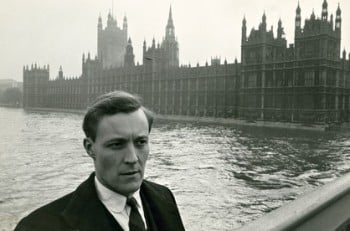
    RIP Tony Benn. Here’s an interview he did for Village (2009).

    Daring to be a Daniel Cult Status hasn’t gone to Tony Benn’s head By Derek Owens   Nearing his 84th birthday, the man once denounced in The Sun as the most dangerous man in Britain battles to stay scary. “The final corruption in politics”, says Tony Benn, is “to be a national treasure”. The most outspoken figure on the left of the British Labour Party  worried in his   diaries published in the late 1980s about becoming a “cuddly” socialist, more indulged than respected, in an age that had left socialism well and truly behind. Today, he’s more aware than ever of the challenge facing a once-feared politician. “You become a kindly, harmless old gentleman. And I am kindly, I am old, I could be a gentleman. But I hope I’m not harmless”, he says. To avoid harmlessness, Benn goes to extraordinary lengths. From  death threats  (he speaks of a recent one  as validation) – to resigning from parliament in 2001 to “spend more time involved in politics”, his ongoing struggle for relevancy is unmatched by most octogenarians. Last year, Benn estimates that he spoke at 161 meetings and made 170 broadcasts. “I’m working harder than I did as a member of parliament,” he argues convincingly. As if to underline the point, he’s interrupted by a call from the Stop the War Coalition – of which he is President – “no doubt for another meeting”. Benn has involved himself in many other issues.  For example he was in Ireland last year to speak against the Lisbon Treaty. He has form in opposing European integration: Benn fought against the Maastricht Treaty in the 1990s, and mounted a campaign for Britain to withdraw from the Communities in the 1970s. “I’m a European – I was born one and will die one – but the present European Union structure is the most undemocratic you can imagine”, he says. “Power is in the hands of people you don’t elect and cannot remove, and therefore they don’t have to listen to you. That whole structure needs to be changed by an infusion of democracy. The next Irish referendum is a very important turning point, not just for Ireland, but  for Europe”, asserts Benn. “I came to Dublin to speak against the first referendum last year. If I’m asked again I will come back”, he adds, undeterred by recent polls that show far greater support for the treaty this time around. Interestingly, rather then singling out any specific aspect of the Treaty he disagrees with, Benn seems to relish the consequences of a ‘no’ vote. “If the Irish voters turn it down again, then Europe will have to think and rethink. I hope out of that comes a looser, more co-operative and less dictatorial system”, he claims optimistically. Indeed, Benn’s optimism is extraordinary for a politician who has suffered repeated disillusionment. It means that, when he speaks earnestly of pessimism as “a prison into which you put yourself,” and of hope as “the fuel that powers engines of change,” he sounds less like cloying Tony Blair and more like an unrepentant idealist. At any rate, he’s unrepentant about diving headlong into controversial causes. “Looked at it one way, the greatest offence in politics is to be a little bit ahead of your time”, he says. “I supported a well-known terrorist when he was sentenced to life in prison – that was Nelson Mandela. I supported gay rights when it was considered unspeakable. I was in favour of freedom of information, colonial liberation”, he continues. “I was threatened with expulsion from the Labour Party for meeting Gerry Adams, and now I can’t get to see him because he’s in and out of Number 10 Downing Street all the time!” Benn’s connection to Ireland, however, runs deeper than a meeting with Adams. “I’ve always been a supporter of the Irish cause”, he says. “My grandfather was elected in 1892 as a Member of Parliament in favour of Home Rule for Ireland and my father campaigned passionately against the black and tans. I was in the Cabinet when the troops were sent in during 1969 and noted at the time that I thought this was a dangerous thing to do.” Benn’s experience in Cabinet, in fact, is what he credits with the most remarkable aspect of his career in politics: a dramatic leap to the left after tasting the trappings of ministerial office. Two stints in Government – from 1964 to 1970 and from 1974 to 1979 – saw him serve as Postmaster General, Minister of Technology, Secretary of State for Industry and Secretary of State for Energy. Despite having established radical credentials early, by renouncing a peerage, Benn was a sufficiently mainstream figure to be a serious leadership contender – and branded a fascist by protesting students in 1968. However, after Labour lost the 1979 election, he resigned from Michael Foot’s shadow cabinet, and began to sound more like those activists himself. “Within days”, he told the 1980 Labour Party Conference, a Labour government should grant powers to nationalise industries, and abolish the House of Lords “within weeks”. According to Benn, it wasn’t quite the u-turn that it may appear. “You mustn’t think I moved from right to left: I moved from left to socialist”. However, adds Benn, his experience at the peak of his career radicalised him. “When I got into the Government and realised that the power in society wasn’t trusted to parliament, but to enormous centres of power elsewhere, it moved me to the left”, he says. “It made a socialist realise that the real clash in the world is not between black and white, men and women, Muslim, Christian and Jew. It’s between the 95 per cent of the population who create the world’s wealth and the five per cent who own the world’s wealth”. Of-the-peg mutterings about unseen centres of power – when pressed, he names the media, the business community and the European Commission – have made it easy to characterise Benn

    Loading

    Read more

  • Posted in:

    Corrupting philanthropy

    As Frank Flannery revealed as overpaid consultant to Philanthropy Ireland as well as chair of Forum on Philanthropy read Niall Crowley on the corruption of philanthropy in Ireland (July 2013, Village) Worried voice. “The one percent difference?…Is this another tax?”. Authoritative voice. “This is not a tax. This is something only you can decide on.” Still worried voice “So it’s definitely not a tax thing?”. Even more authoritative voice. “The Government decides where our taxes go. This is yours”. This conversation is part of the promotional video for the ‘One Percent Difference’ campaign. This reassurance actually takes up about 20% of the promotional piece. The campaign asks everyone to give one percent of their income or time to causes they choose to support. According to the promoters it is the “largest and most significant” public awareness campaign of its kind ever undertaken in Ireland. Strange that such an anti-tax message should be funded by the Department of Environment, Community and Local Government. It is even stranger that this Department should be inflicting extensive and disproportionate cuts on the community and voluntary sector while funding this campaign to enhance giving from the general public. Is funding now to be privatised? The ‘One Percent Difference’ video concludes, “It’s been proven. Giving is good for you. So, you are helping yourself too”. Philanthropy has always been good for you fiscally, especially if you are wealthy. If you give money to eligible charities you get tax relief on your income as a self-assessed individual or on your profits as a company. This is the sort of policy that contributes to the unacceptably low effective tax rates for corporations and wealthy individuals. It’s going to get even better if Frank Flannery has his way. Frank Flannery is a one-time director of elections for Fine Gael, and now the chair of the Forum on Philanthropy and Fundraising. appointed by Phil Hogan (Minister for Environment, Community and Local Government). Frank Flannery has proposed that “tax exiles” (always a strange and inappropriate title) should be given incentives to contribute to philanthropy in the form of extra days they can stay in Ireland. This of course makes the concept of “exile” even more ludicrous. He has proposed that our “exiles” get an extra day at home for every 36,500 Euro they donate to charity, up to a total of an extra 62 days a year. His proposal, bizarrely, extends not only to “investment” in charities but also to investment in small and medium-sized businesses. It is not clear from media reports whether he has the Forum behind him. This should make for an interesting dynamic if they choose to stand up to him. Michael Noonan, Minister for Finance, has, however, responded positively to the extraordinary and unethical proposal [ed’s note: in the end Noonan turned them down]. He believes it might be “an attractive initiative” and he thinks it will enable job creation. He has referred it to the Oireachtas Committee on Finance, Public Expenditure and Reform for consideration. This is the Minister that should be creating disincentives for those who elect to be “exiles” so that the exchequer has sufficient funds to make provision for the full range of civil society activities. Civil society is sadly malleable. It feels it has to shape up to the funding available and, only then, look to what really needs doing in our society. The philanthropy of tax exiles will not, self-evidently, fund many campaigns for tax justice. The philanthropy of big business will not fund actions to develop a ‘de-growth’ agenda. The philanthropy of the wealthy will not enable an equal society. The Revenue Commissioners reflect the narrow understanding of civil society evident in their tax exemptions to encourage philanthropy. The tax breaks they offer have always been for donations that contribute to the “relief of poverty”, the “advancement of education”, the “advancement of religion”, and “works of a charitable nature beneficial to the community”. Many civil-society organisations stand for equality, environmental sustainability and participation. These values need to be the standard against which to assess the nature and sources of funding that can ethically be availed of. These values need to be deployed before Frank Flannery, Michael Noonan, and Phil Hogan ingrain the murkiness now widely associated with philanthropy; and before worthy and progressive organisations find that their funding has been privatised and the state abrogated minimal responsibility.

    Loading

    Read more