Politics

Random entry RSS

  • Posted in:

    The reason MI5 gave Putin a free hand to meddle with Brexit.

    A report from the Intelligence and Security Committee (ICI) about Russian interference with British democracy has just been released. ‘In brief’, it declares:  “Russian influence in the UK is ‘the new normal’, and there are a lot of Russians with very close links to Putin who are well integrated into the UK business and social scene, and accepted because of their wealth”. Worse still:  “This level of integration… means that any measures now being taken by the government are not preventative but rather constitute damage limitation”. Significantly, the report reveals that the various intelligence and security ‘Agencies’ which include MI5, the UK’s internal intelligence service, felt the issue of Russian interference in British politics was too much of a “hot potato” to investigate. According to the report, the spies: “appeared determined to distance themselves from any suggestion that they might have a prominent role in relation to the democratic process itself, noting the caution which had to be applied in relation to intrusive powers in the context of democratic process.” The ‘Agencies’ then attempted to suggest that other government departments were responsible. According to the report they: “informed us that the Department for Digital, Culture, Media and Sport (DCMS) holds primary responsibility for disinformation campaigns, and that the Electoral Commission has responsibility for the overall security of democratic processes.” (Paragraph 31 page 18) This led to MI5 and the others to take “their eye off the ball”. In addition, they were allegedly too absorbed by monitoring Islamic militants to do anything about the threat from Moscow. There is a lot more – a hell of a lot more – to this than meets the eye. MI5 has actually perpetrated crimes against Britain which were far worse than anything the ICI report or the UK media is now placing at the feet of the Russians. Infamously, MI5 officers like Peter Wright tried to topple the Labour government of Harold Wilson. Moreover, MI5, MI6 and a little known – and now defunct – black propaganda department called the Information Research Department (IRD), spent decades meddling with British, European and Irish political affairs. See Her Majesty’s Smearmeisters: how MI5 and MI6 vilified Haughey, Hume and Paisley See also Licence to deceive.http://deceive Books have been written about the MI5 plots against Wilson. A useful summary of it can be found at https://www.theguardian.com/commentisfree/2006/mar/15/comment.labour1 MI5 and to a lesser extent MI6 had to stomach years of harsh criticism in the 1980s as a result of ‘Spycatcher’, the book written by Peter Wright, a senior former MI5 officer, and revelations of Colin Wallace, a psychological operations officer with the British Army in Northern Ireland. Both of these men exposed intelligence agency treachery against the British government. Put simply, MI5’s treacherous history has made it reluctant to do its job in the present era in case it might put a foot wrong and attract criticism that it is following in Peter Wright’s cloven footsteps. Put simply, MI5’s treacherous history has made it reluctant to do its job in the present era in case it might put a foot wrong and attract criticism that it is following in Peter Wright’s cloven footsteps. If the Russians swung the Brexit vote, it would mean that the UK left the EU due – in part – to MI5 fears about it shameful past. But did the Russians actually swing the Brexit vote? It is certainly a possibility in circumstances where the Brexit victory was achieved by a whisker. Predictably, Boris Johnson rejects the notion. “Remainers have seized on this report to try to give the impression that the Russian interference was somehow responsible for Brexit. The people of this country didn’t vote to leave the EU because of pressure from Russia or Russian interference,” Johnson said. “They voted because they wanted to take back control of our money, of our trade policy, of our laws.” It is probably better to let the contentious issue of the victory for Brexit in the context of Russian interference as an issue for debate and focus instead on something more concrete: the failure of MI5 to even attempt to prevent it. Dame Stella Rimmington, a former director-general of MI5, is typical of those who have created this mess. Rather than face up to MI5’s perfidious past, condemn it and then consign it to the history books, she has denied all wrongdoing. But then Rimmington, now a successful spy fiction author, is a dab hand at transforming fact into fiction – whether at a conscious or sub-conscious level is best left to the experts. More specifically, she asserts that no one in MI5 ever lifted a finger to thwart the Labour PM Harold Wilson. This, despite the fact back that no less a figure than Lord John Hunt, the mighty and all-powerful Cabinet Secretary, 1973-79, acknowledged that it had indeed happened. In August 1996 Hunt told a Channel 4 documentary that, “There is no doubt at all that a few, a very few, malcontents in MI5, people who should not have been there in the first place, a lot of them like Peter Wright who were right-wing, malicious and had serious personal grudges, gave vent to these and spread damaging malicious stories about that Labour government.” See also Dial MI5 for Murder There are other lamentable reasons for MI5’s failure to protect British democracy during Brexit. MI5 is meant to devote all of its energies to legitimate purposes such as the protection of Britain from terrorism, hostile cyber punks (in tandem with the technoboffins at GCHQ) and other malefactors. Instead, MI5 has diverted some of its precious energy on reprehensible and entirely wasteful endeavours. MI5 routinely opens the post of whistle blowers like Fred Holroyd, a former military intelligence officer. Holroyd exposed a litany of MI5 dirty tricks in Ireland in the 1980s such as the control by MI5 of the loyalist gang which murdered hundreds of people including the 33 slaughtered during the Dublin and Monaghan bomb massacres in 1974. To date, MI5 interferes with

    Loading

    Read more

  • Posted in:

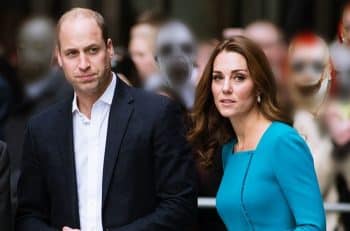
    Judge a (future) king by his courtiers: Prince William and the Duchess of Cambridge, pawns in the cover-up of a transatlantic paedophile network.

    By Joseph de Burca.   Prince William, the Duchess of Cambridge and other senior Royals continue to retain a sinister cabal of deeply corrupt officials in their employment at Buckingham Palace. These officials bartered access to William and Kate as a bribe to ABC TV in the US in return for the concealment of a child abuse network involving Prince Andrew which was run by Jeffrey Epstein and Ghislaine Maxwell. In the worst case scenario the ABC scandal threatens to recast the popular Royal couple as hypocritical, cynical and uncaring, not to mention accessories after the fact to the criminal concealment of child rape. The best case scenario for them is that they are dupes with little or no control over their own lives. Amy Robach, the ABC TV News anchor, interviewed Virginia Roberts in 2015, three years before the Jeffrey Epstein scandal (Phase 2) erupted. Robach was not allowed to broadcast anything Roberts revealed to her by her superiors at ABC. Roberts had been flown by ABC from Colorado to New York City with her family all of whom were put up at the Ritz-Carlton hotel. She was then interviewed by Robach and her colleague Jim Hill about Epstein. In late August 2019 Robach was captured by a live microphone in her TV studio describing her disappointment to colleagues. A recording of this off-air moment leaked. On it she can be heard complaining: “I’ve had this interview with Virginia Roberts…we would not put it on the air. First of all, I was told ‘who’s Jeffrey Epstein.’ Then the Palace found out that we had her whole allegations about Prince Andrew and threatened us a million different ways… [Roberts] told me everything. She had pictures, she had everything. It was unbelievable what we had. Clinton, we had everything.” Robach continued: “One of the reasons an interview with Roberts was not broadcast was because, “We were so afraid we wouldn’t be able to interview Kate and Will, so I think that had also quashed the story.” After Robach’s outpouring was broadcast online by the Project Veritas website, an ABC ‘source’ claimed that the company had “never stopped investigating the story” and that: “A lot of broadcasters can probably empathize. We do have to run everything past standards and practices and there are times when interviews can’t air. We needed time to corroborate details, and we were unable to verify a lot of Virginia’s claims.” There cannot be a village idiot anywhere on the planet who believes this drivel from ABC. The company did not let one of the most important stories of this century slip through its fingers because it was unable to back it up. Absolutely nothing changed over the next three years when the story finally broke. The claims made by Roberts have since been corroborated by a number of witnesses. Roberts knew a great number of them. She even set up an organisation to support them long before the scandal erupted whereby there was a cohort of available witnesses with corroborative stories, documentation and photographs. As the world now knows, Prince Andrew has been shamed and pushed out of the Royal spotlight, Jeffrey Epstein has died in suspicious circumstances in his New York prison cell while Ghislaine Maxwell is facing a criminal trial. The ABC top brass is simply lying when they claim they ever had any intention of letting their journalists pursue the story in any shape, form or manner. ABC’s excuse simply does not hold water. There is something deeply sinister about this scandal. Robach was undoubtedly telling the truth when she raised the prospect of a boycott of ABC by Buckingham Palace. Nonetheless, while the top brass at ABC may be hard boiled and ruthless, it is difficult to believe they would allow children be raped indefinitely just to secure a few minutes of footage with the Royal couple. So why did ABC really protect Epstein? Robach issued a statement after the ABC leak was broadcast online which was less strident than her off-the-cuff outburst in the TV studio. It is reproduced in full below. You can make your own minds up whether it feels authentic or reeks of coercive pressure from above. It is difficult to believe that Prince William and the Duchess of Cambridge were consulted in advance about the threats which were made in “a million different ways” to ABC. Yet, unless they are helpless pawns hermetically sealed from what is going on around them at Buckingham Palace, they surely know by now about the threats issued by their courtiers. Surely they have at least one friend who has alerted them to what Robach let slip in the ABC TV studio. Assuming this is so, they cannot be happy that media access to them was bartered to protect a child abuse network, even if it was not the sole or decisive factor in the cover-up at ABC TV. Despite the Royal couple’s presumed discomfort, no one at Buckingham Palace has been dismissed nor disciplined. The threats from the Palace enabled Epstein and his associates to groom, traffic and abuse young girls for a further three years. Not a single Royal correspondent has asked the future King to confirm that he was unaware of the threats made by his courtiers back in 2015. Nor is anyone asking him {i} when he became aware of the ABC suppression scandal; {ii} what he has been told by the staff at Buckingham Palace about it; {iii} what he believes to be the truth of the affair and {iv} what, if anything, he is doing about it. Most remiss of all, no one is asking him if he has demanded sight of the ABC file kept by his courtiers. There must be a string of emails and memos. One suspects Robach has copies so it would be a brave pursuivant at the Palace who would destroy them. The couple, viewed as a royal breath of fresh air, are clearly hard working and have helped bring some

    Loading

    Read more

  • Posted in:

    Fractious and prolonged post-election volatility difficult to avoid.

    A reply to Conor Lenihan looking at the convoluted practice in Belgium. By John Vivian Cooke. In his article in Village, (¨Risks of high political instability are being underestimated¨, 30 May), Conor Lenihan outlined the factors threatening Irish politics with continued instability. He detailed the calculations of electoral advantage that, in the end, led to an interval of 140 days between the general election and the formation of a new coalition. However, the insecurity caused by this dithering is mild in comparison to the frustrations and anxieties regularly endured by Belgian voters. When Yves Letreme, tendered his resignation as the Belgian Premier on 26 April 2010, federal elections swiftly followed in June. But Letreme`s successor, Elio Di Rupo, was not sworn into office until 5 December 2011. Letreme thereby set an unenviable record by serving the longest term in office as an acting head of government in a modern democracy. 589 days.   Ireland and Belgium use their own forms of proportional representation in national elections. Proportional representation has a tendency to create multi-party systems in contrast to plurality voting that has a propensity to two-party systems. The consequence of this is fragmentation in parliament, which, in turn, has necessarily led to a history of coalition governments. The last single-party government in Belgium was Aloys Van de Vyvere`s short-lived administration in 1925, while, Ireland last elected a single-party (minority) government in 1987. In fact, the last Dáil in which a single party commanded a majority was the 21st Dáil, elected in 1977.  If Ireland and Belgium both reliably expect their elections to result in coalition governments, why does it take so long to agree their composition? If both countries reliably expect their elections to result in coalition governments, why does it take so long to agree their composition? In both cases, the proximate cause resides in the mathematics of the election outcomes. However, an explanation based on contingency does little to explain the deeper causes of these delays. In the case of Belgium there are two forces in operation: one social and the other structural.  Deep divisions in Belgian society jam up the cogs of its politics. In broad terms, the Francophone southern regions of Wallonia are distinct from the Dutch-speaking communities in the northern Flemish districts. This historic, linguistic divide always gave rise to a degree of friction between the communities. In recent years, political relations between the two communities have grown increasingly rancourous as existing language rights and the share of the federal budget are guarded jealously, all the while resenting any gains made by the other community. Unfortunately, some nationalist parties have sought electoral profit by stoking outright enmity and suspicion. Their incessant tugging at the thread of greater regional autonomy threatens to unravel the fabric of the country itself.  The political expression of this is not limited to nationalist parties advocating greater regional autonomy.  Although some parties have an electoral appeal that bridges the linguistic divide, many parties representing the same ideological position have separate and distinct Flemish and Walloon versions. As a consequence, Belgian voting patterns cleave along both ideological and linguistic lines. Imagine if each of Fine Gael, Fianna Fáil, Sinn Féin, Labour, the Social Democrats and People Before Profit had an English and Irish version in the Dáil. After the 2010 federal elections, 12 different political parties won representation in the Chamber of Representatives.  Although such cultural factors are not present in Irish voter behaviour, the salience of voter loyalty as a determinant of voting behaviour is in long-term decline. Fianna Fáil, and, more recently, Fine Gael have had success at individual elections in attracting uncommitted voters. But these gains have proven to be ephemeral and disguise the underlying pattern.  As Lenihan noted, the result of the last election ¨threw up an indeterminate result and an intractable three-way split between Fianna Fail, Sinn Féin and Fine Gael. Beyond these medium-sized parties, are a number of smaller parties of varying sizes and ideologies and of course a plethora of independents¨. Neither of the traditional parties looks to be in any position to re-establish its previous electoral dominance on any lasting basis. The Belgian customs of forming new governments are very much the Heath Robinson of constitutional arrangements. The day immediately after balloting in federal elections, the outgoing Premier is invited to form a caretaker administration until a new government can be appointed. Following wide consultations among leading political figures, the King appoints an Informateur whose role it is to take soundings from all parties and identify the candidate in the best position to put together a parliamentary majority. The Informateur need not report the exact terms of the basis of government as there is no expectation that they will be the new Premier themselves, they merely nominate a Formateur. It is the Formateur`s responsibility in turn to undertake the tortuous detailed work of agreeing policies and dividing cabinet portfolios.  Following a political crisis in 2007, it was felt that the system was not sufficiently complicated and the position of Royal Mediator was created. After elections in 2019, a Preformateur assumed the functions of the Informateur with the intention of becoming Premier. These positions are intended to speed up the process of government formation, but, surprisingly, it has not worked out that way. Moreover, in order to hold together the existing governing coalition, the positions of Clarificateur and Negotiateur were added to the mix in 2007.  If insufficient progress is not made, the process can regress a step with a fresh set of appointees. The frequency with which this happens can make Place des Palais seem somewhat of a roundabout that politicians circle until it is their turn. All the while these Informateurs, Preformateurs, Formateurs, and Royal Mediators go about their business, the previous Premier hobbles along in office a caretaker capacity.  Uachtarán na hÉireann rightly holds a constitutional position above party politics and, thus, is denied the role of encouraging parties into government that is reserved for the King of the Belgians. The royal role is a relic from when

    Read more

  • Posted in:

    Trump’s mentor: another sociopathic paedophile child-trafficker in the mix; from Roy Cohn to Epstein and Maxwell.

    By David Burke. Introduction. Law-enforcement agencies on both sides of the Atlantic have been – and continue to be – adverse to making inquiries into VIP child sex-abuse. This has been the position for decades. Donald Trump’s mentor, Roy Cohn, was a paedophile who abused boys on both sides of the Atlantic, including one from Kincora Boys’ Home, Richard Kerr, whom he selected in Belfast and had taken to him in Venice for sexual abuse. The mere fact of the trip to Venice demolishes the findings of a series of official inquiries  into the Kincora scandal. The cover-up continue to this day. Richard Kerr had been prepared to supply all of the information in this article – including the photographs and financial records – to the Independent Inquiry into Child Sexual Abuse (IICSA) in London but it was not interested. There is a common thread between the Kerr case, Cohn’s activities and, in more recent times, those of Prince Andrew, Jeffrey Epstein and Ghislaine Maxwell: a disturbing refusal by British and American authorities to investigate their cases properly. Cohn may have been part of a sexual blackmail network with Mafia and intelligence links which was later managed by Epstein and Maxwell. Cohn was so corrupt that he was eventually disbarred from practice as a lawyer after which Trump dumped him. He died from AIDS in 1986. Trump then let Epstein and Maxwell into his life. In the US, the FBI has covered-up for an ‘intelligence’ agency for whom Epstein and Maxwell ran ‘honey traps’. Their victims should brace themselves for another round of betrayal by the FBI which has acted deplorably thus far. Ghislaine Maxwell may be thrown to the wolves but the intelligence agencies involved in the scandal will escape justice. In August 2019 the Metropolitian Police in London anounced that it was not going to investigate Prince Andrew for having had sex with a minor. A spokesperson for the Met announced that it had investigated allegations he had “had sex with Virginia Roberts Giuffre aged 17 in Ghislaine Maxwell’s bathroom” in London and confirmed that while they had received “an allegation of non-recent trafficking for sexual exploitation” that “no further action is being taken”. It is doubtful Met officers even spoke to Prince Andrew or Ghislaine Maxwell. As far as they are concerned, the matter is “closed”. Meanwhile, the mainstream media continues to ignore the fact that the notorious paedophile and friend of the Royal Family, Lord Greville Janner, introduced a teenage male prostitute to Prince Andrew. Roy Cohn was a cheating, corrupt, tax-dodging, cocaine-snorting New York lawyer linked to the Mafia who persecuted homosexuals. He acted for Donald Trump and was the driving force behind Trump’s book, ‘The Art of the Deal’ which was published in 1987 shortly after Cohn died. With the election of Trump as US President, Cohn’s primary historical significance is that he imbued the younger Trump with his ruthless, amoral and deceitful approach to life. Cohn was a paedophile with connections to the Anglo-Irish Vice Ring in London. The link to it may have come through a Texan living in London called Fred Ferguson who was also a paedophile or Dr Morris Fraser, a Northern Ireland psychiatrist who was a key figure in the network. In any event, in 1977 he and Ferguson were able to gain access to a boy from Northern Ireland through the network. The boy was part of a group of 14-year-old boys who had been residents of Williamson House in Belfast until they were transferred to Kincora Boys’ Home in 1975. Up to this point, Kincora had mainly catered for 16-18-year-olds. Some, if not all, of the Williamson boys had been subjected to horrific abuse, violence and intimidation by one of the staff at the home, Eric Witchell and his associates from outside of it, so much so they had become fearful and compliant child-sex puppets. Witchell now lives in London. The Independent Inquiry into Child Sex Abuse (IICSA) in London has shown no interest in making any form of contact with him despite his key role in the Anglo-Irish vice ring, a paedophile network that – as this story will demonstrate – overlapped with abuse rings in the US. Village magazine has published an 80,000-word online book entitled ‘The Anglo-Irish Vice Ring’ which outlines the history of the Irish branch of this egregious paedophile underworld as well as its connections to, and exploitation by, MI6 (attached to Britain’s Foreign and Commonwealth Office) and MI5 (attached to Britain’s Home Office). https://villagemagazine.ie/https-villagemagazine-ie-anglo-irish-vice-ring-online-book/ The abuse of the children at Williamson House, Kincora and elsewhere in Northern Ireland, was carried out with the knowledge and connivance of both MI5 and MI6. At the time of the transfer of the boys from Williamson House to Kincora, MI5 was the dominant UK intelligence service operating in Northern Ireland. It was commanded by Director-General Sir Michael Hanley. His key officer on the ground in Northern Ireland was Ian Cameron who was mooted in the media as a contender for the position of Director-General of MI5 in the late 1980s. Cameron might well have ascended to the post but for the Kincora scandal which erupted in 1980, and a fear that MPs such as the redoubtable Ken Livingstone might have raised the issue in the House of Commons. It is deeply disturbing that Livingstone was booed and jeered by Tory MPs when he raised this type of matter in the Commons. One of the boys transferred to Kincora will be familiar to Village readers, Richard Kerr. He was transferred in August 1975. The other boys were:     − ‘F’, who is still alive;     − ‘B’, who later shot himself;       − ‘S’;      − Steven Waring, who had not been in Williamson House, joined a few months later. He committed suicide in November 1977. He had been abused by Lord Louis Mountbatten the previous August; (See the online book for further details.)   − Another young boy, ‘D’, would be consigned to the hell of this existence

    Loading

    Read more

  • Posted in:

    THE BATTLE FOR ST MATTHEW’S, JUNE 1970: THE UNPUBLISHED PAMPHLET. The British Army left the area defenceless; someone had to step in.

    Introduction by Kieran Glennon. In the immediate aftermath of the violence that erupted in Belfast in August 1969, Citizens’ Defence Committees (CDCs) were formed in many nationalist areas; barricades were hastily erected and patrols of vigilantes armed with clubs were organised to ensure that loyalist mobs, the B Specials and the RUC were all kept at bay. Within days, a co-ordinating group was established to link the individual CDCs, the Central Citizens’ Defence Committee (CCDC); its first chairman was Jim Sullivan, who was also Adjutant of the IRA’s Belfast Brigade. Jim Sullivan, Adjutant of Belfast IRA and first chairman of Central Citizens’ Defence Committee (CCDC) By early 1970 Sullivan had been deposed and replaced as chairman by Tom Conaty, a fruit and vegetable merchant from west Belfast. Conaty’s closest ally on the CCDC was Canon Pádraig Murphy, the administrator of St Peter’s Cathedral in the Lower Falls. Paddy Devlin MP had remained the CCDC’s secretary since its inception. Fifty years ago this month at the end of June 1970 the Provisional IRA made their first appearance on the streets of Belfast, in conjunction with armed members of the local CDC, in what came to be known as the Battle of St Matthew’s. In Ballymacarrett in the east of the city, more commonly known today as the Short Strand, three people were killed in the worst night of violence since August 1969. At that time, Tom Henry – a nom de plume – was self-employed as a researcher and was commissioned by Conaty and Murphy to write a history of St Matthew’s church for the diocese of Down and Connor. Also at that time, Conaty and Murphy were welcome at Army HQ Lisburn as representing the Bishop of Down and Connor, Doctor William Philbin. Canon Padraig Murphy and Major General Tony Dyball Henry was given access to parish records at St Matthew’s as well as written statements from witnesses who were present there during that night. However, despite their central involvement in the battle, Henry did not knowingly interview any members of the IRA or their local auxiliaries. Fearful of the police scrutiny that would inevitably follow the pamphlet’s publication, he took the view that what he didn’t know couldn’t be got out of him, even under torture. So, while there is one reference in his text to “armed defenders”, the initials “IRA” are not mentioned. Henry completed his pamphlet in April 1971 and concluded that on the night the British Army had failed to honour written agreements given to the Ballymacarrett CDC for the defence of the area if attacked. In view of this conclusion, he believed the pamphlet would not be well received. This conclusion did not suit Conaty and Murphy. At the time, they were trying to position the CCDC as the spokesmen for moderate nationalists; their efforts to develop a close relationship with Army HQ in Lisburn would receive a frosty response if they were to publish an account of the debacle that was critical of the Army. Tom Conaty, Chairman of the CCDC: commissioned the pamphlet but its conclusions would have threatened his relationship with British Army HQ, Lisburn. I have known Tom Henry for many years and know him to be a man of impeccable integrity: he was not about to change his conclusion to suit the positions of Conaty and Murphy. A copy of the manuscript was shown to Henry Kelly, then northern correspondent of the Irish Times whose opinion, as he informed Henry, was that the pamphlet would never see the light of day. That remark turned out to be prophetic. It is notable that while the confrontation became known as the Battle of St Matthew’s, Henry entitled his pamphlet the “Battle for St Matthew’s”; the distinction is subtle, but probably reflects more closely what happened on the night. Historian Andrew Boyd had a copy of the manuscript and donated it to the Linen Hall Library in Belfast, considering it to be an important historical document. Although it was referenced in the book Belfast and Derry in Revolt, by Simon Prince and Geoffrey Warner, the full text has never before been published. Included as a prologue, as they form an essential foundation for Henry’s conclusion, are the verbatim texts of the documents supplied by the Army to the Ballymacarrett CDC in September 1969; also included are excerpts from written responses to the Army and RUC by the CDC and their legal advisor. Taken together, these constitute the “Joint Military and Police Security Plan for Ballymacarrett.” Like the pamphlet itself, they have never previously been published. The early chapters of the pamphlet provide context for the events of June 1970. Chapter 3 outlines previous attacks made on St Matthew’s in the course of the pogrom of 1920-22. Chapter 4 recounts the opposition to the planned building of a Catholic church elsewhere in east Belfast in the 1930s, illustrating that sectarian hatred was directed, not just at St Matthew’s in particular, but at Catholic churches in general. Chapter 5 details correspondence between the Bishop of Down and Connor, William Philbin, and the chairman of the Sirocco Works at Bridge End, near St Matthew’s, concerning the extent of religious discrimination in employment at the firm – overturning such discrimination was one of the key objectives of the Civil Rights movement, to which unionism took such violent exception. What happened during the Battle for St Matthew’s undoubtedly flowed from what had happened before – but what ultimately transpired was not inevitable. Kieran Glennon is the author of From Pogrom to Civil War, Tom Glennon and the Belfast IRA. Although he is not from the area, two of his great grandparents were married in St Matthew’s. In 1920, his grandfather, as a member of the IRA, did picket duty at the church to protect it from sectarian attack. Prologue: September 1969 On 12th September 1969, the Ballymacarrett Citizens’ Defence Committee (CDC) met with the British Army and RUC to discuss security in the area; the next day,

    Loading

    Read more

  • Posted in:

    Vandalising history. How the truth about Ireland’s Arms Crisis was corrupted by a gang of NI paedophiles, a dissembling Taoiseach, Private Eye magazine in London, some British Intelligence black propagandists as well as an Irish Times reporter who was an ally of the Official IRA.

      By David Burke. Introduction. The story of the Arms Crisis is a perfectly simple one. It only becomes complicated when the lies, fantasies and myths that engulfed it are entertained as if serious. Only two participants in the débacle told the full, accurate and unvarnished truth: Captain James Kelly and Colonel Michael Hefferon, both dutiful officers of Irish Military Intelligence, G2. It is my intention to publish a book next September which will reveal the deepest secret of the affair, aiming to make it even easier to comprehend. For the most part, I have ignored the parallel  story of how the truth was washed away by a flood of hogwash because it does little more than confuse the narrative. However, I will take this opportunity to present some of the more dramatically erroneous materials that made it into print. In other words, this is the story of what did not happen during the Arms Crisis and its aftermath. When the vines of deceit which wrapped themselves around the story are stripped away, what really happened in 1969/1970 becomes clear: James Gibbons, the Minister for Defence, 1969-70, oversaw an operation to import arms which were to be stored in the Republic under Irish Army lock and key. Charles Haughey and Neil Blaney were deeply involved too. Blaney was probably the main protagonist in the affair. Jack Lynch knew about it too. The paedophile, the propagandist and the political correspondent: William McGrath, Hugh Mooney and Dick Walsh. The weapons – which never reached Ireland – were intended to be distributed to certain vulnerable Catholic communities in Northern Ireland but only in the extremely unlikely event of a ‘doomsday’ situation such as a pogrom. Since no ‘doomsday’ scenario in fact occurred, the weapons would have done little more than gather dust and might have become no more than a minor footnote in recent history. All that changed when news of the importation attempt leaked out and all political hell broke loose. History was corrupted by a motley crew comprising a group of paranoid and malicious paedophiles who surrounded Ian Paisley, a cabal of deceitful British Intelligence propaganda experts, a Taoiseach who dissembled under great pressure – as did his minister for defence, a collection of delusional Official Sinn Féin activists, a legion of profoundly ignorant British journalists, and finally Dick Walsh, a secret ally of the Official OIRA in the Irish Times. This ramshackle crew concocted a variety of gobbledygook conspiracy theories. Broadly speaking, they can all be boiled down to a simple and core allegation, namely that the arms were destined for the IRA as part of some sort of dastardly plot involving Charles Haughey. Lying on an industrial scale: Jack Lynch and Jim Gibbons. One of the reasons the Arms Crisis became so confused was because of the hogwash they spouted about it. 1969: INTRODUCING THE EXTREMIST LOYALIST CHILD-RAPIST, ORANGEMAN, BIGOT, THIEF, BOMBER AND TERRORIST WHO INSTIGATED THE FIANNA FÁIL-IRA SMEAR All the trace elements of the Arms Crisis myth can be found in a devious story published in the pro-Paisley newspaper, The Protestant Telegraph, in 1969. A group of extreme Loyalists zealots including ‘Dr’ Ian Paisley, his associate William McGrath, and Paisley’s one-time bodyguard, John McKeague, and one of McKeague’s friends, Alan Campbell, ratcheted up sectarian hatred in the 1960s in tandem with other like-minded bigots. McGrath was a vile creature: a notorious paedophile who would be convicted for child rape in December 1981. The RUC referred to him as ‘The Beast’. McKeague was worse; not only was he a child rapist but his depravity extended further – he became a UVF/Red Hand Commando serial killer and torturer. He would be murdered in February 1982 after he threatened to reveal what he knew about the Kincora Boys Home scandal when it looked like the RUC CID was on the verge of arresting him for rape. Alan Campbell was one of the three men who led the notorious Shankill Defence Association alongside McKeague. Campbell was also the RUC’s chief suspect in the abduction and murder of a ten-year-old boy in 1973 in Belfast. McGrath, McKeague and Paisley Back in April of 1969, McGrath, McKeague, Paisley and other hate-fuelled fanatics mounted a ‘false flag’ bomb campaign in the North, i.e. one they perpetrated but blamed on the IRA and Jack Lynch’s government. The most notorious bomb of the campaign was the one which exploded in the Silent Valley and cut off the water supply to parts of Belfast. At the time the IRA hardly existed and  certainly had no intention of launching any sort of military campaign against the NI State. The allegation that the April 1969 bombs were part of an IRA campaign was circulated in the pro-Paisley newspaper, The Protestant Telegraph. It declared deceitfully that a source “close to [Stormont] Government circles” had informed the paper that a purported “secret dossier” on the Castlereagh electricity sub-station explosion contained: “startling documentation and facts. Original reports suggested that the IRA could have been responsible, but in Parliament no such definite statement would be made…We are told that the Ministry of Home Affairs is examining reports which implicate the Eire Government in the £2 million act of sabotage — By actively precipitating a crisis in Ulster, the Eire Government can make capital, win or lose. The facts, we hope, will be made public, thereby exposing the chicanery of the Dublin regime”. The Irish government ignited the Troubles – if you believe McGrath – by bombing the water supply to Belfast. This picture shows some of the débris left after the Silvent Valley bomb explosion actually perpetrated by supporters of Ian Paisley. William McGrath blamed Fianna Fáil for it. These lies would be laughable but for the vitriol they helped whip up in extreme Loyalist circles. McGrath was the main promoter of the lie. He used the then deputy editor of the Protestant Telegraph, David Browne, as his conduit to plant the story in the paper. Browne had been present at a meeting in

    Loading

    Read more

  • Posted in:

    The Official IRA planned the murders of journalists Ed Moloney and Vincent Browne.

    An Irish Times insider passed a spiked Ed Moloney article about the Official IRA to its commanders, who spread a rumour he was a terrorist, expecting the UDA would murder him. The material was later published by Vincent Browne inspiring plans by the Official IRA to murder him. By David Burke. Ed Moloney A MEETING WITH THE HARD EDGE OF THE UDA’s INNER COUNCIL Shortly after the February 1982 general election, Ed Moloney of the Irish Times found himself standing in a room “in the office of Andy Tyrie at the UDA’s HQ in Gawn Street on the Newtownards Road” with three senior UDA leaders. The trio included John McMichael, a member of the UDA’s Inner Council and Commander of the Ulster Freedom Fighters (UFF), the name the UDA used when it perpetrated assassination, torture and other acts of violence. The name was used so that the UDA itself would not be proscribed. No-one was fooled, least of all the British government and its security services. The second individual was “a very senior member of the Inner Council who is still alive”. Ed Moloney does not want to name him. The third man was Davy Payne, one of the UDA’s most feared killers and torturers. Like the other two, he was a member of its ‘elite’ Inner Council. John McMichael Moloney still recalls how “Payne was to my left. The other two were to my right. Their presence lent considerable authority to what Payne told me, since these three were the UDA’s main military men on the Inner Council”. Ed Moloney survived his encounter with these men. He continued to work as the Northern Editor of the Irish Times and went on to be voted Irish journalist of the year in 1999. Before the encounter with the UDA, he had worked for  Hibernia and Magill. After his time at the Irish Times, he went to work at the Sunday Tribune. He now lives in New York and publishes a blog, ‘The Broken Elbow’. He has contributed to Village. He is also the author of a string of acclaimed books about the Troubles. A CRITIC OF THE WORKERS PARTY During the course of Moloney’s work he had gathered ample evidence that the Official IRA (OIRA) was still in existence despite claims by its political wing, Sinn Féin the Workers Party (SFWP), to the contrary; and, moreover, that it was engaged in a wide range of criminality including bank robberies and extortion. After SFWP won three seats in the February 1982 general election, the party found itself holding the balance of power. The new SFWP TDs voted for Charles Haughey as Taoiseach in a stark choice between him and Garret FitzGerald of Fine Gael. Dick Walsh of the Irish Times, who was an ally of Cathal Goulding, chief of staff of the Official IRA, was appalled by his party’s support for Haughey. He described the development as a “Hitler-Stalin pact of sorts” in the Irish Times. The pact was never destined to last and Haughey’s government would collapse eight months later when the SFWP deputies withdrew their support. After the February 1982 election, Moloney wrote two pieces for the Northern Notebook of  the Irish Times. He has explained to Village  that one part of the series “dealt with the political journey SFWP had taken to power in the South. That part duly appeared on the Saturday as all Northern Notebooks did”. He submitted a second piece which was not published. It  “dealt with the continued existence of the SFWP’s military wing and the various criminal activities it was involved in, including racketeering and paramilitary activity”. This part “never appeared and I was never officially informed nor given any explanation by the Irish Times.  I cannot even say whether my copy was even shown above the level of sub-editor”. Moloney believes that “the real SFWP/OIRA influence was wielded at sub-editor level where stories could be changed and challenged without senior figures even knowing”. Shockingly, someone in the Irish Times – position unknown – passed the article to the Officials behind Moloney’s back. Moloney subsequently handed the research over to Magill, then edited by Vincent Browne, who published a two-part series on SFWP in March and April 1982. The magazine flew off the shelves and sold out completely. This was egregiously embarrassing for SFWP. It later changed its name to the Workers Party (WP) in an effort to distance itself from the whiff of sulphur that clung to the Sinn Féin part of its old name. Vincent Browne (left); Cathal Goulding on the cover of one of the two 1982 Magill articles which incensed the Official IRA; Ed Moloney (right) As Moloney has confirmed to Village, “I certainly gave Vincent the material I had gathered over the years, including material the IT had refused to publish”. THE MACHIAVELLIAN OFFICIAL IRA PLOT TO MURDER ED MOLONEY That the OIRA tried to set Moloney up for murder is not in doubt. The only issue is whether they did so after the publication of the Magill articles, or before. If it was before, it means that the murder attempt was designed to prevent the information he had gathered from reaching the public. If after, it was an act of revenge and a possible attempt to prevent further revelations. The plot was deeply Machiavellian: two Sinn Féin the Workers Party members told the UDA that Moloney was in the INLA. “Since people like Andy Tyrie and John McMichael knew me and doubted the claim, the UDA stayed its hand. The allegation against me was apparently made to the UDA by two members of Sinn Féin the Workers Party” Moloney has told Village that: “I learned about the threat to my life from the late UDA North Belfast Commander Davy Payne who informed me one day that the UDA had been told that I was a member of the INLA but, since people like Andy Tyrie and John McMichael knew me and doubted the claim, the UDA stayed its hand.

    Loading

    Read more