David Burke

Random entry RSS

  • Posted in:

    Kitson’s Private Army: the thugs, killers and racists who terrorised Belfast and Derry. Soldier F was one of their number.

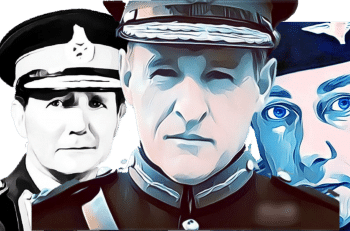
    By David Burke. Brigadier Frank Kitson, who is still alive, ran 39 Airportable Brigade area, i.e. Belfast, as if he was a mob boss with the city his patch. He let the paratroopers under his command run riot in that domain. Some of the more decent and honourable British army officers were aghast at their excesses and asked HQNI to keep them away from their sectors. The shock troops of Support Company of 1 Para became known as ‘Kitson’s Private Army’. 1. State terrorist. There was method to Kitson’s madness, albeit of a grotesque variation: he wanted to make Belfast hell for any community he suspected was or was likely to become an IRA stronghold. Kitson also established the MRF death squads and began the process of collusion with the UDA, UVF and Red Hand Commando terror groups. His counterinsurgency tactics backfired with disastrous results. In effect, he became the greatest recruiting sergeant for which the IRA could have hoped. 2. The ‘Gunge’ Eaters Kitson’s paratroopers, a motley crew of thugs, racists and rapists, were permitted to assault and even kill those they believed had stepped out of line. Rifle butts were used to smash teeth, ribs and noses as a matter of routine while Catholic homes were often ransacked. Michael Asher, author of ‘Shoot To Kill’, described the violence he witnessed while serving as a paratrooper in Belfast in the early 1970s. There were a lot of fights in the barracks: They were what happens in most exclusively male societies: fights to determine the pecking order and who can boss who. But they weren’t the only exotic form of entertainment. One group of soldiers would hold so-called ‘gunge’ contests. They sat around in a circle and tried to outdo each other in acts of gross obscenity, like eating shit and drinking urine. [Asher, Michael, Shoot to Kill: Journey Through Violence (Cassell Military Paperbacks, London, 2003), p.119.] Asher has also described how the paratroopers came to despise the Nationalist community: During house searches they vented their anger on their victims, smashing down doors and breaking up furniture, kicking and rifle-butting anyone who resisted, making lewd suggestions to the women of the house and threatening the children. Some of them tormented the quiet Pakistani in the [regimental] shop until he threw a chip-pan of boiling fat at them. They battered to death a stray cat that wandered past the OP and held up its mangled corpse to the children who came looking for it. [Asher (2003), p.119–20.] Asher knew paratroopers who were truly scraped from the very bottom of the barrel: Several of them boasted of dragging a mentally deficient girl into the OP [observation post] and forcing her to perform oral sex. They said she enjoyed it. [Asher (2003), p.119–20.]   3. Some of the soldiers of Support Company who invaded the Bogside on Bloody Sunday. The sequence of photographs which follows contains pictures of some of the paratroopers who participated in the attack on the Bogside on Bloody Sunday.     4. Mass Murder. It was Kitson’s paratroopers who perpetrated the Ballymurphy massacre in August 1971. 1 Para went to Derry on Bloody Sunday on ‘loan’ from Kitson. It was they who perpetrated the massacre. They disobeyed the orders issued to them by the Brigadier of Derry, Pat MacLellan. Brigadier MacLellan had not wanted 1 Para to go near the Bogside on Bloody Sunday. Lord Widgery conducted a cover-up of what Kitson’s troops did in Derry on Bloody Sunday. Kitson’s name did not even appear once – anywhere – in Widgery’s Report. Lord Saville virtually ignored him in his 2010 report. David Burke is the author of ‘Kitson’s Irish War’. It can be purchased here:  https://www.mercierpress.ie/irish-books/kitson-s-irish-war/ OTHER STORIES ABOUT BLOODY SUNDAY, THE BALLYMURPHY MASSACRE, BRIGADIER FRANK KITSON AND COLONEL DEREK WILFORD ON THIS WEBSITE:   The covert plan to smash the IRA in Derry on Bloody Sunday by David Burke Soldier F’s Bloody Sunday secrets. David Cleary knows enough to blackmail the British government. Learning to kill Colin Wallace: Bloody Sunday, a very personal perspective Lying like a trooper. Internment, murder and vilification. Did Brigadier Kitson instigate the Ballymurphy massacre smear campaign? Where was Soldier F and his ‘gallant’ death squad during it? Another bloody mess. Frank Kitson’s contribution to the wars in Afghanistan and Iraq. 300,000 have died in Afghanistan since 1979. Lying like a trooper. Internment, murder and vilification. Did Brigadier Kitson instigate the Ballymurphy massacre smear campaign? Where was Soldier F and his ‘gallant’ death squad during it? A Foul Unfinished Business. The shortcomings of, and plots against, Saville’s Bloody Sunday Inquiry. Kitson’s Private Army: the thugs, killers and racists who terrorised Belfast and Derry. Soldier F was one of their number. Soldier F and Brigadier Kitson’s elite ‘EFGH’ death squad: a murderous dirty-tricks pattern is emerging which links Ballymurphy with Bloody Sunday. A second soldier involved in both events was ‘mentioned in despatches’ at the behest of Kitson for his alleged bravery in the face of the enemy. Mentioned in Despatches. Brigadier Kitson and Soldier F were honoured in the London Gazette for their gallantry in the face of the enemy during the internment swoops of August 1971. Soldier F, the heartless Bloody Sunday killer, is named. Mission accomplished. The unscrupulous judge who covered-up the Bloody Sunday murders. Soldier F and other paratroopers have been protected by the British State for five decades. None of them now face prosecution. This perversion of justice began with the connivance of the Lord Chief Justice of England and Wales, John Widgery, a former British Army brigadier, Freemason and oath-breaker. Counterinsurgency war criminals, liars and cowards: Kitson and Wilford, the brigadier and colonel who led the soldiers who perpetrated the Ballymurphy Massacre. Brigadier Kitson’s motive for murdering unarmed civilians in Ballymurphy. The McGurk’s Bar cover-up. Heath’s Faustian pact. How a British prime minister covered up a UVF massacre in the hope of acquiring Unionist votes to enable the UK join the European Economic Community, the forerunner of the

    Loading

    Read more

  • Posted in:

    A Foul Unfinished Business. The shortcomings of, and plots against, Saville’s Bloody Sunday Inquiry.

      By David Burke. 1. 50-year Concerted Cover-up. The British government’s determination to absolve all British soldiers involved in killings during the Troubles means that there are now precious few opportunities to get to the bottom of what really happened during the Ballymurphy massacre and on Bloody Sunday. The Bloody Sunday cover-up went into high gear in April 1972 with the report by the duplicitous Freemason and Lord Chief Justice of England and Wales, Lord Widgery. See: Mission accomplished. The unscrupulous judge who covered-up the Bloody Sunday murders. Soldier F and other paratroopers have been protected by the British State for five decades. None of them now face prosecution. This perversion of justice began with the connivance of the Lord Chief Justice of England and Wales, John Widgery, a former British Army brigadier, Freemason and oath-breaker. 2. A stab in the back: the Ministry of Defence’s charade of sympathy while waging a secret black propaganda campaign of vilification. Widgery’s report was condemned as a whitewash around the globe, something that forced the grey-suited gnomes in Whitehall to plot a course correction within two years of its publication. This involved a pretence at sympathy for the relatives of the 14 murder victims of Bloody Sunday. The charade manifested itself in December 1974 when the Ministry of Defence (MoD) announced that it was going to pay out £41,500 to the families of those killed in Derry as a gesture of “conciliation and goodwill”. Slyly, while this was taking place, a cohort of black propagandists were vilifying the victims of the massacre. The smear campaign was led by Hugh Mooney, T. E. Utley, Brian Crozier and the smearmeisters of the sinister Information Research Department (IRD) of the Foreign Office. The money spent on the various smear campaigns was probably a multiple of the cynical token gesture afforded to the families. The policy of carrot and smear was not a success and the issue remained an open wound. The relatives’ families pressed ahead with a  campaign for justice assisted by an array of activists, artists, lawyers, politicians, authors and journalists. Finally, in January 1998, Tony Blair announced a fresh inquiry to be led by Lord Saville of Newdigate. Blair stated that Widgery had rushed his work, had failed to take evidence from the wounded and had not read the eyewitness accounts personally. 3. A cynical prediction about the likely outcome of the Saville Inquiry. Tom Hayden, a Californian State Senator and former anti-war movement leader, who has studied state-sponsored cover-ups, predicted in 1998 that: “The more cynical analysis of the new Bloody Sunday inquiry under Lord Saville is that it will become another exercise in damage control, with perhaps some new drops of truth leaking out. In this scenario, the innocence of the victims will be reaffirmed once more and responsibility for the shooting lodged with an isolated “rogue” element of the army. Any inference of knowledge, complicity, or accountability at higher echelons will be rejected. A further apology will be offered, compensation paid, and perhaps a memorial constructed. As American cover-up and damage-control specialists would say, “let us bottom this up and get it behind us”. [1]   4. The MoD plots to deny Saville access to witnesses. The Ministry of Defence plotted to thwart Saville from the start. Author Anthony Verrier submitted a statement to Saville warning him that:  “I know several members of the Parachute Regiment. One particular member of the Battalion in question who was present in Derry on Bloody Sunday was a mature student on one of my courses. I discussed Bloody Sunday with him. My understanding from him was that the soldiers had been instructed not to assist the Inquiry. This student told me that he had received a letter from the MoD which said he would be provided with legal advice should he wish to make a statement to the Inquiry but he was advised not to. He did not want to be involved in the Inquiry and did not want to give evidence. I am not sure if he has made a statement to the Inquiry“. [2] 5. Murder as material for comedy. Soldier Cleary, also known as “Soldier F” shot Patrick Doherty in the buttock while he was on the ground crawling away from him. As he lay crying out in pain, Barney McGuigan stepped forward with a white handkerchief looking to help Doherty. Cleary dropped to one knee, aimed his rifle and shot McGuigan in the head. All of the victims of Bloody Sunday were shot in cold blood. None of them posed any sort of a threat to the elite soldiers of Support Company of 1 Para who slaughtered them. Behind closed door, the civil servants at the MoD had little more than disdain for the victims. They gave the game away when, in 1999, Saville asked them about the whereabouts of the rifles which had been discharged on Bloody Sunday, i.e. the murder weapons which had extinguished the lives of 14 people. This sparked an internal email stating: “The Bloody Sunday Inquiry are after records (if any) of what happened to the Bloody Sunday weapons .. On Tuesday the Battle of Hastings Inquiry will want to find the longbow which put Harold’s eye out!”. [3] An email of such depravity could hardly have been circulated as a joke if the employees at the MoD had an ounce of respect or sympathy for the 14 victims, the many wounded, their distraught relatives and the people of Derry. 6. The MoD secures the anonymity of the Bloody Sunday trigger men Saville made his introductory statement at Derry Guildhall on 3 April 1999. Oral hearings began on 27 March 2000, with an opening speech by Christopher Clarke QC, counsel to the Inquiry. The first witness took the stand on 28 November 2000. The tribunal ruled in December 1998 that the soldiers of 1 Para would be named, save in exceptional cases. The Ministry of Defence appealed this ruling to the Court of Appeal which

    Loading

    Read more

  • Posted in:

    Soldier F and Brigadier Kitson’s elite ‘EFGH’ death squad: a murderous dirty-tricks pattern is emerging which links Bloody Sunday with the actions of paratroopers in Belfast in August 1971. A second soldier involved in both events was ‘mentioned in despatches’ at the behest of Kitson for his alleged bravery in the face of the enemy.

      By David Burke. 1. “No other perpetrator involved would be given anonymity, for some reason Soldier F is a protected species”. In the last week, Colum Eastwood MP, the Leader of the SDLP, named ‘Soldier F’, in the House of Commons, under privilege. ‘Soldier F’ had faced murder charges for his actions on Bloody Sunday which had been dropped. The world now knows that former Lance Corporal Cleary is ‘Soldier F’. He is a small man who joined the Parachute Regiment in 1966. Eastwood said that, “For 50 years he has been granted anonymity and now the government want to grant him an amnesty. No one involved in murder during the Troubles should be granted an amnesty.” After his speech, Eastwood told BBC NI that: “Over the past couple of weeks his name has been plastered on Free Derry Corner, it has gone viral on social media. The people of Derry know his name. There is no reason for him to be granted anonymity. No other perpetrator involved would be given anonymity, for some reason Soldier F is a protected species.” The Speaker of the Commons has confirmed that Eastwood did not abuse parliamentary privilege in naming Cleary. 2. David Cleary’s Killing Spree. On Bloody Sunday in January 1972 Cleary was conveyed into the Bogside at speed in a Saracen vehicle or “pig”. He and his colleagues leapt out of it and took up positions behind a low wall adjacent to a ramp on Kells Walk from where they shot Michael Kelly. Kelly was unarmed and standing at a nearby rubble barricade, a threat to no one. Cleary and three of his colleagues, Corporal E, Private G, Private H, [the EFGH unit] moved into Glenfada Park North, where their killing spree continued. The Saville Inquiry found that Cleary or Private H shot William McKinney dead; also that this unit was responsible for the shot that wounded Joe Mahon,  and that either Cleary or Private G fired the shot that wounded Joe Friel. Saville opined that the EFGH unit also murdered William Wray, injured Joe McMahon, Joe Friel, Michael Quinn and Patrick O’Donnell, and possibly injured Daniel Gillespie. There was no excuse for their behaviour. According to Saville: “In our view none of the soldiers fired in the belief that he might have identified a person in possession of or using or about to use bombs or firearms.” Saville also found that: “The last gunfire casualties were Bernard McGuigan, Patrick Doherty, Patrick Campbell and Daniel McGowan, all shot in the area to the south of Block 2 of the Rossville Flats within a very short time of each other. We are sure that Lance Corporal F [i.e. Cleary] fired at and shot Bernard McGuigan and Patrick Doherty, and it is highly probable that he was also responsible for shooting the other two casualties. This soldier fired across Rossville Street from the Rossville Street entrance way into Glenfada North”. Cleary was a cruel, cynical and clinical killer. He shot Patrick Doherty in the buttock while he was on the ground crawling away from him. As Doherty lay crying out in pain, his life draining away from him, Barney McGuigan, an exceptionally brave and humane man, stepped forward with a white handkerchief looking to help Doherty. Cleary dropped to one knee, aimed his rifle and shot McGuigan in the head. Cleary was a cruel, cynical and clinical killer. He shot Patrick Doherty in the buttock while he was on the ground crawling away from him. As Doherty lay crying out in pain, his life draining away from him, Barney McGuigan, an exceptionally brave and humane man, stepped forward with a white handkerchief looking to help Doherty. Cleary dropped to one knee, aimed his rifle and shot McGuigan in the head. 3. A Pat on the Back: mentioned in despatches. Cleary was “mentioned in dispatches” for confronting the enemies of the Queen in the London Gazette in February 1972. This was a few weeks after Bloody Sunday. The citation was for his alleged courage in Belfast the previous August 1971. The odds are astronomically high that Cleary was one of those involved in the shooting of unarmed and innocent civilians in what became known as the Ballymurphy massacre. It is now beginning to look like Cleary and a group of paratroopers attached to the Support Company of the 1st Battalion of the Parachute Regiment (1 Para) were identified, recruited and groomed to carry out the extermination of civilians in any circumstance, including on occasions when they posed no threat to the British Army. The man in charge of Cleary and his comrades was Colonel Derek Wilford. He is on record as having said that all Catholics support the IRA. Thus, to kill a Catholic was tantamount to killing a supporter or member of the IRA. That attitude was undoubtedly shared by Cleary and others in 1 Para. The contempt and disdain they had for Catholics became grotesquely manifest in the Bogside on Bloody Sunday. Wilford reported to Brigadier (later General) Frank Kitson. Of the pair, Kitson is the far more significant. First, he was the superior officer. Second, Wilford did not take over command of 1 Para until July 1971 by which time the soldiers of 1 Para had been engaged in countless violent confrontations with civilians in Belfast. (The murderous violence of 1 Para did, however, gather momentum after Wilford’s appointment.) Third, Kitson had disclosed the technique of terrorising a community which harboured insurgents in his infamous book ‘Low Intensity Operations’. An analysis which makes sense of what took place in Ballymurphy from a British Army counterinsurgency perspective – and which is based on the content of ‘Low Intensity Operations’ –  can be found at: Brigadier Kitson’s motive for murdering unarmed civilians in Ballymurphy. From the standpoint of the British Army, Kitson’s book should never have been published. However, the author was entitled to 50% of the royalties of the sale thereof and this may account for the indiscretion of publishing

    Loading

    Read more

  • Kitson

    Posted in:

    Mentioned in Despatches. Brigadier Kitson and Soldier F were honoured in the London Gazette for their gallantry in the face of the enemy during the internment swoops of August 1971.

    By David Burke. Internment – arrest and detention without trial – was introduced by the Stormont Government of Northern Ireland in August 1971. Hundreds of Nationalists were rounded up and detained. Members of the UVF, UDA and Red Hand Commando were not targeted for arrest. The swoops were carried out by British troops including the Parachute Regiment. Loyalist gangs exploited the chaos that erupted to attack Catholic estates. It was against this background that members of the Parachute Regiment perpetrated the Ballymurphy massacre. Officially, it is now recognised by the British state that the Ballymurphy victims had not posed any sort of a threat to the military. At the time of these atrocities Col. Derek Wilford was in command of 1 Para. He reported directly to his superior, Brigadier Frank Kitson, the British Army’s counterinsurgency guru who ran Belfast. Kitson was praised by General Michael Carver for his efforts during the internment swoops in Belfast in the latter’s 1989 memoirs. Kitson was also ‘mentioned in despatches’ in the weekly London Gazette for his efforts. Soldier F, one of the central figures in the Bloody Sunday massacre that took place the following January in Derry, was also ‘mentioned in despatches’ for his gallantry in Belfast in August 1971. A soldier is mentioned in despatches for gallant or meritorious action in the face of the enemy. This happens after an official report is written by a superior officer and submitted to the high command. This means that someone such as Maj. Edward Loden, Col. Wilford or Kitson furnished a report about the gallantry of Soldier F during the internment swoops to General Ford and General Tuzo in HQNI at Lisburn. In turn, they would have passed it to Carver in London. If Kitson was not the instigator and author of the report praising Soldier F, he most certainly approved one passed to him by Wilford or another of his superior officers. Soldier F’s ‘mention in despatches’ was published a few weeks after Bloody Sunday. Presumably, he knew all about the official report praising his gallantry before he went to Derry and became a key figure in the shootings that followed. Indisputably, Soldier F was highly valued by both Wilford and Kitson. Soldier F, who had joined 1 Para in 1966, was a key member of the elite ‘Support Company’ of 1 Para, the group which carried out the Bloody Sunday massacre. Soldiers mentioned in despatches are often seen as leaders of men with a bright military future ahead of them. Wilford and Kitson were obviously earmarking him for the future. While the role of Soldier F in Belfast in August 1971 is not clear, what he did in Derry is now a matter of history: he was accused of murdering James Wray and William McKinney and of the attempted murders of Patrick O’Donnell, Joseph Friel, Joe Mahon and Michael Quinn on Bloody Sunday. He faced a seventh charge of the attempted murder of a person or persons unknown. In his testimony to the Saville Inquiry in 2003, Soldier F admitted to firing 13 rounds on Bloody Sunday The killings and attempted murders for which Soldier F was to have been tried occurred in the Glenfada Park North and Abbey Park north areas of Derry. He has also been linked to other shootings on the day including a sequence at a rubble barricade adjacent to the Rossville flats where six unarmed civilians were slaughtered. One of his bullets was found in one of these victims. Last week, charges against him for murder on Bloody Sunday were dropped. That decision is now being challenged by way of a judicial review. Also honoured by being mentioned in the London Gazette were the following paratroopers: Corporal Patrick Butler; Private Ronald Cook; Sergeant Paul Copson; Lance Corporal Joseph Hill; Staff Sergeant Denis Gilbert Poynter; Second Lieutenant John Pullinger. Village would like to hear from anyone who knows anything about the gallantry and meritorious actions of the soldiers listed above in Belfast in August 1971.   David Burke is the author of ‘Kitson’s Irish War’. It can be purchased here:  https://www.mercierpress.ie/irish-books/kitson-s-irish-war/ OTHER STORIES ABOUT BLOODY SUNDAY, THE BALLYMURPHY MASSACRE, BRIGADIER FRANK KITSON AND COLONEL DEREK WILFORD ON THIS WEBSITE:   The covert plan to smash the IRA in Derry on Bloody Sunday by David Burke Soldier F’s Bloody Sunday secrets. David Cleary knows enough to blackmail the British government. Learning to kill Colin Wallace: Bloody Sunday, a very personal perspective Lying like a trooper. Internment, murder and vilification. Did Brigadier Kitson instigate the Ballymurphy massacre smear campaign? Where was Soldier F and his ‘gallant’ death squad during it? Another bloody mess. Frank Kitson’s contribution to the wars in Afghanistan and Iraq. 300,000 have died in Afghanistan since 1979. Lying like a trooper. Internment, murder and vilification. Did Brigadier Kitson instigate the Ballymurphy massacre smear campaign? Where was Soldier F and his ‘gallant’ death squad during it? A Foul Unfinished Business. The shortcomings of, and plots against, Saville’s Bloody Sunday Inquiry. Kitson’s Private Army: the thugs, killers and racists who terrorised Belfast and Derry. Soldier F was one of their number. Soldier F and Brigadier Kitson’s elite ‘EFGH’ death squad: a murderous dirty-tricks pattern is emerging which links Ballymurphy with Bloody Sunday. A second soldier involved in both events was ‘mentioned in despatches’ at the behest of Kitson for his alleged bravery in the face of the enemy. Mentioned in Despatches. Brigadier Kitson and Soldier F were honoured in the London Gazette for their gallantry in the face of the enemy during the internment swoops of August 1971. Soldier F, the heartless Bloody Sunday killer, is named. Mission accomplished. The unscrupulous judge who covered-up the Bloody Sunday murders. Soldier F and other paratroopers have been protected by the British State for five decades. None of them now face prosecution. This perversion of justice began with the connivance of the Lord Chief Justice of England and Wales, John Widgery, a former British Army brigadier, Freemason and oath-breaker. Counterinsurgency war

    Loading

    Read more

  • Posted in:

    Soldier F, the heartless Bloody Sunday killer, is named.

    By David Burke. UPDATE: Please also see the following story where Soldier F is named as David James Cleary: Soldier F and Brigadier Kitson’s elite ‘EFGH’ death squad: a murderous dirty-tricks pattern is emerging which links Ballymurphy with Bloody Sunday. A second soldier involved in both events was ‘mentioned in despatches’ at the behest of Kitson for his alleged bravery in the face of the enem ****** While ‘Soldier F’ was running amok in Derry on Bloody Sunday, 30 January 1972, murdering people in cold blood, one of his colleagues shouted out his christian name, ‘Dave’. Lord Saville wanted to name the soldier, a former lance corporal in 1 Para, but he was overruled by the Court of Appeal in London. Hence, he remained ‘Soldier F’ for the purposes of the Saville Inquiry. Last month the Northern Ireland courts confirmed his entitlement to anonymity. After the murder charges against him were dropped in July 2021, his full name appeared on at least two notices which were hung in Guildhall Square in Derry. They first appeared on Saturday 3 July. Photographs of the notice was circulated on social media. PSNI officers removed them and initiated inquiries to establish who was responsible for their erection. The justification for concealing his name was out of concern that his life might be endangered. This was fanciful in the extreme as his name has been known in Derry and beyond for decades. Indeed, so too are the names of some of his colleagues who participated in the Bloody Sunday massacre. In any event, the cat is now well and truly out of the bag. The photograph below is of one such notice. We have blurred the killer’s surname. All of Soldier F’s legal costs to date and what have been described as “welfare support” have been paid by the State. Meanwhile, Soldier F retains the support of John Mercer MP, the former Veterans Minister, as is evident from his twitter account: Soldier F is named in the following story: Soldier F and Brigadier Kitson’s elite ‘EFGH’ death squad: a murderous dirty-tricks pattern is emerging which links Ballymurphy with Bloody Sunday. A second soldier involved in both events was ‘mentioned in despatches’ at the behest of Kitson for his alleged bravery in the face of the enemy. David Burke is the author of ‘Deception & Lies, the Hidden History of the Arms Crisis 1970’  and  ‘Kitson’s Irish War, Mastermind of the Dirty War in Ireland’  which examines the role of counter-insurgency dirty tricks in Northern Ireland in the early 1970s. His new book, ‘An Enemy of the Crown, the British Secret Service Campaign against Charles Haughey’, was published on 30 September 2022. These books can be purchased here:  https://www.mercierpress.ie/irish-books/kitson-s-irish-war/ https://www.mercierpress.ie/irish-books/an-enemy-of-the-crown/ https://www.mercierpress.ie/irish-books/deception-and-lies/  OTHER STORIES ABOUT BLOODY SUNDAY, THE BALLYMURPHY MASSACRE, BRIGADIER FRANK KITSON AND COLONEL DEREK WILFORD ON THIS WEBSITE:     The covert plan to smash the IRA in Derry on Bloody Sunday by David Burke Soldier F’s Bloody Sunday secrets. David Cleary knows enough to blackmail the British government. Learning to kill Colin Wallace: Bloody Sunday, a very personal perspective Lying like a trooper. Internment, murder and vilification. Did Brigadier Kitson instigate the Ballymurphy massacre smear campaign? Where was Soldier F and his ‘gallant’ death squad during it? Another bloody mess. Frank Kitson’s contribution to the wars in Afghanistan and Iraq. 300,000 have died in Afghanistan since 1979. Lying like a trooper. Internment, murder and vilification. Did Brigadier Kitson instigate the Ballymurphy massacre smear campaign? Where was Soldier F and his ‘gallant’ death squad during it? A Foul Unfinished Business. The shortcomings of, and plots against, Saville’s Bloody Sunday Inquiry. Kitson’s Private Army: the thugs, killers and racists who terrorised Belfast and Derry. Soldier F was one of their number. Soldier F and Brigadier Kitson’s elite ‘EFGH’ death squad: a murderous dirty-tricks pattern is emerging which links Ballymurphy with Bloody Sunday. A second soldier involved in both events was ‘mentioned in despatches’ at the behest of Kitson for his alleged bravery in the face of the enemy. Mentioned in Despatches. Brigadier Kitson and Soldier F were honoured in the London Gazette for their gallantry in the face of the enemy during the internment swoops of August 1971. Soldier F, the heartless Bloody Sunday killer, is named. Mission accomplished. The unscrupulous judge who covered-up the Bloody Sunday murders. Soldier F and other paratroopers have been protected by the British State for five decades. None of them now face prosecution. This perversion of justice began with the connivance of the Lord Chief Justice of England and Wales, John Widgery, a former British Army brigadier, Freemason and oath-breaker. Counterinsurgency war criminals, liars and cowards: Kitson and Wilford, the brigadier and colonel who led the soldiers who perpetrated the Ballymurphy Massacre. Brigadier Kitson’s motive for murdering unarmed civilians in Ballymurphy. The McGurk’s Bar cover-up. Heath’s Faustian pact. How a British prime minister covered up a UVF massacre in the hope of acquiring Unionist votes to enable the UK join the European Economic Community, the forerunner of the EU.

    Loading

    Read more

  • Posted in:

    Brigadier Kitson’s motive for murdering unarmed civilians in Ballymurphy.

    By David Burke. Brigadier (later General) Frank Edward Kitson is alive and well and living in Devon. He is the individual responsible for the Ballymurphy massacre. He was the Brigadier of 39 Brigade – that is to say he was the officer in charge of all British soldiers in Belfast during the Ballymurphy massacre. His accomplice was Colonel Derek Wilford, the former commander of 1 Para who is alive, alert and living in Belgium. Kitson  joined the Rifle Brigade in January 1945. He would rise to become General Sir Frank Kitson, GBE, KCB, MC & Bar, DL and serve as Commander-in-Chief UK Land Forces from 1982 to 1985, and as aide-de-camp to Elizabeth II from 1983 to 1985. Along the way, he fought the Mau-Mau in Kenya for which he was awarded the Military Cross. He then took on communist rebels in Malaya and helped suppress a revolt in Oman. While fighting in the colonies, he formulated a horrifying counterinsurgency policy which he outlined in his notorious book ‘Low Intensity Operations’. In attempting to counter subversion it is necessary to take account of three separate elements. The first two constitute the target proper, that is to say the Party or Front and its cells and committees on the one hand, and the armed groups who are supporting them and being supported by them on the other. They may be said to constitute the head and body of a fish. The third element is the population and this represents the water in which the fish swims. Fish vary from place to place in accordance with the sort of water in which they are designed to live, and the same can be said of subversive organisations. If a fish has got to be destroyed it can be attacked directly by rod or net, providing it is in the sort of position which gives these methods a chance of success. But if rod and net cannot succeed by themselves it may be necessary to do something to the water which will force the fish into a position where it can be caught. Conceivably it might be necessary to kill the fish by polluting the water, but this is unlikely to be a desirable course of action. (page 49.) The Ballymurphy atrocity makes perfect sense in the context of this tactic. The IRA were the ‘fish’ he sought to eradicate. The streets and estates of Belfast were the ‘water’ in which they swam. The now confirmed FACT that the Ballymurphy murder victims were not in the IRA, had no connection to the IRA and were not any sort of a threat to the British Army mattered not a jot to Kitson or Derek Wilford, the commander of 1 Para. The Ballymurphy massacre makes perfect sense if it was part of a plan by Kitson to unleash his brutes in the hope of terrorising Ballymurphy generally so the locals would turn against the Official and Provisional IRA. Why else would separate groups of soldiers have targeted unarmed and peaceful civilians and murdered them in cold blood? One of them was a mother out looking for her children. Why else would separate groups of soldiers have targeted unarmed and peaceful civilians and murdered them in cold blood? One of them was a mother out looking for her children. Wilford’s defence is that he never became aware of the deaths. Kitson failed to recall the events either, when he appeared at the Saville Inquiry into Bloody Sunday. Both men are liars. They cannot dare tell the truth for it would destroy their reputations and that of other luminaries in the Ministry of Defence and British Army. Wilford went on to perpetrate the Bloody Sunday massacre the following January. Kitson’s dark role in that affair has yet to come to light. Kitson should now be stripped of his many awards as should Wilford. They should then face a rigorous interrogation about their activities on the days during which the murder spree took place. Mike Jackson, a captain with 1 Para, should also be stripped of his honours for vilifying the Ballymurphy murder victims as gunmen and terrorists. He also rose to become Commander-in-Chief UK Land Forces.   David Burke is the author of ‘Kitson’s Irish War’. It can be purchased here:  https://www.mercierpress.ie/irish-books/kitson-s-irish-war/ OTHER STORIES ABOUT BLOODY SUNDAY, THE BALLYMURPHY MASSACRE, BRIGADIER FRANK KITSON AND COLONEL DEREK WILFORD ON THIS WEBSITE:   The covert plan to smash the IRA in Derry on Bloody Sunday by David Burke Soldier F’s Bloody Sunday secrets. David Cleary knows enough to blackmail the British government. Learning to kill Colin Wallace: Bloody Sunday, a very personal perspective Lying like a trooper. Internment, murder and vilification. Did Brigadier Kitson instigate the Ballymurphy massacre smear campaign? Where was Soldier F and his ‘gallant’ death squad during it? Another bloody mess. Frank Kitson’s contribution to the wars in Afghanistan and Iraq. 300,000 have died in Afghanistan since 1979. Lying like a trooper. Internment, murder and vilification. Did Brigadier Kitson instigate the Ballymurphy massacre smear campaign? Where was Soldier F and his ‘gallant’ death squad during it? A Foul Unfinished Business. The shortcomings of, and plots against, Saville’s Bloody Sunday Inquiry. Kitson’s Private Army: the thugs, killers and racists who terrorised Belfast and Derry. Soldier F was one of their number. Soldier F and Brigadier Kitson’s elite ‘EFGH’ death squad: a murderous dirty-tricks pattern is emerging which links Ballymurphy with Bloody Sunday. A second soldier involved in both events was ‘mentioned in despatches’ at the behest of Kitson for his alleged bravery in the face of the enemy. Mentioned in Despatches. Brigadier Kitson and Soldier F were honoured in the London Gazette for their gallantry in the face of the enemy during the internment swoops of August 1971. Soldier F, the heartless Bloody Sunday killer, is named. Mission accomplished. The unscrupulous judge who covered-up the Bloody Sunday murders. Soldier F and other paratroopers have been protected by the British State for five decades. None of them now face prosecution. This perversion of justice began with the connivance of

    Loading

    Read more

  • Posted in:

    Counterinsurgency war criminals, liars and cowards: Kitson and Wilford, the brigadier and colonel who led the soldiers who perpetrated the Ballymurphy Massacre.

    By David Burke. The denial of justice for political gain. Next week will see the release of the long-awaited inquest report into the Ballymurphy massacre during which British soldiers killed and wounded a large number of unarmed civilians in Belfast. The atrocity took place after the introduction of internment in August of 1971. Adding insult to inqury, the victims were vilified as gunmen and terrorists. A documentary entitled ‘The Ballymurphy Precedent’ will be broadcast on Channel 4 on Wednesday 12 May. It contains detailed re-enactments of the actions of Kitson’s and Wilford’s troops. RTE will also be showing it at a date yet to be determined. Meanwhile, the British Government led by Boris Johnson proposes to grant all British soldiers implicated in murder in Northern Ireland immunity from prosecution, contrary to the Stormont House Agreement. Incredible as this may seem in Ireland and across the globe, it has enhanced Boris Johnson’s standing in the eyes of large numbers of the British electorate. Johnson has also set himself on a collision course with the Irish Government. Taoiseach Micheál Martin has stated that: “There is an agreement in place with the British government, with the parties in Northern Ireland and indeed with victims’ groups and that is the Stormont House Agreement of 2014 and that any move from it would amount to ‘a unilateral breach of trust”’. He added: “For us the victims are the priority and the victims remain the priority. There has to be adherence to that agreement. If people have new ideas to present they have to involve all of the parties, and above all the concerns of victims irrespective of who committed the atrocities. People must be held accountable”. Johnson’s Minister for Veterans, John Mercer MP, resigned last month in protest at what then looked like the British Government’s reluctance to change the law to prevent the prosecution of British soldiers accused of murder in Northern Ireland. In his resignation statement, he said he was stepping down to “try and shift UK Government position towards looking after these people and preventing the repeated and vexatious nature of litigation against those who served is a huge task”. There have been further developments and insights into the free rein afforded to British soldiers in Northern Ireland to shoot at human targets. Last week the trial of two paratroopers accused of shooting Official IRA volunteer Joe McCann while he ran away from them collapsed. Judge James O’Hara pointed out that: “At that time, in fact until late 1973, an understanding was in place between the RUC and the Army whereby the RUC did not arrest and question, or even take witness statements from, soldiers involved in shootings such as this one. This appalling practice was designed, at least in part, to protect soldiers from being prosecuted and in very large measure it succeeded.“ Her Majesty’s Killers. The Ballymurphy Inquest report may not address the roles played in the massacre by two of the most notorious British soldiers to set foot in Northern Ireland during the Troubles, Brigadier Frank Kitson and Colonel Derek Wilford. Kitson is a counterinsurgency expert who had served in Malaya, Kenya, Cyprus and the Oman before he was sent to Northern Ireland as the brigadier in charge of the 39 Brigade area which included Belfast, 1970-72. He set up the Mobile Reaction Force (MRF) which carried out the murder of a series of unarmed civilians in Belfast in the early 1970s. Kitson’s own pen has long since exposed him as a racist and anti-Catholic bigot. He committed perjury at the Saville Inquiry into Bloody Sunday (January 1972) on an industrial scale. Wilford assumed command of 1 Para on 21 July 1971. 1 Para formed part of 39 Brigade. Wilford believes that virtually all Catholics in Northern Ireland are IRA supporters, and has said as much in public. He had served with the SAS for two years and trained with American paratroopers at Fort Bragg, the US Army Special Forces School before coming to Ireland. He was also a veteran of Malaya and Aden. He joined the Parachute Regiment as a company commander in 1969. Perceived as a bit of a loner, he was given to reading the classics, in their original Latin. The number of unarmed Catholic civilians murdered by 1 Para reached unprecedented levels after Wilford’s arrival. Many were shot in the back or while lying on the ground. He reported directly to Kitson. The number of unarmed Catholic civilians murdered by 1 Para reached unprecedented levels after Wilford’s arrival. Many were shot in the back or while lying on the ground. He reported directly to Kitson. Both men are still alive and unrepentant at the multiple deaths caused by their troops including those who died during the Ballymurphy massacre. Wilford took 1 Para to Derry early the following year, an event that resulted in Bloody Sunday. Wilford committed perjury at the Widgery and Saville inquiries into Bloody Sunday. He has also admitted lying to the press. He is the keeper of many secrets about that massacre. While Wilford presents himself as an officer who has always been loyal to the paratroopers who served under him on Bloody Sunday, the truth is that he has thrown them to the wolves to save his own skin. One of them is facing murder charges for his actions on Bloody Sunday. Meanwhile, Wilford cowers in Belgium. While Wilford presents himself as an officer who has always been loyal to the paratroopers who served under him on Bloody Sunday, the truth is that he has thrown them to the wolves to save his own skin. One of them is facing murder charges for his actions on Bloody Sunday. Meanwhile, Wilford cowers in Belgium. Operation Demetrius was the code name ascribed to internment which commenced on 9 August 191. 342 people were swept up on that day and taken to to makeshift camps in a series of dawn swoops by the British Army. 105 were released after two days. Instead of

    Loading

    Read more