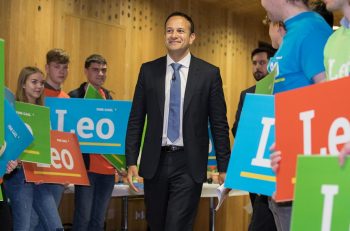
Leo Varadkar

Random entry RSS

  • Posted in:

    SECOND UPDATE: The Irish government has become complicit in the cover-up of British Royal sexual abuse committed in the Republic of Ireland. By David Burke.

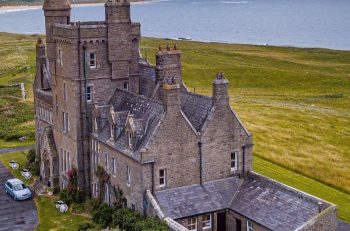
    1. The Classified Garda Files. The information provided by the brothers, John and Pat Barry, confirms that the Garda (Irish police) had a checkpoint at the gate of Classiebawn castle in August 1977. Garda security appears – by some accounts – to have been downgraded in 1979, shortly before Mountbatten was murdered by the Provisional IRA. Hence, while there might be a question mark about the existence of comprehensive Garda logs from 1979, there are no concerns about August 1977. The Classiebawn logs are the key to unlocking the sordid Kincora scandal. Boys from Kincora Boys’ Home in Belfast were trafficked to Mountbatten by Joe Mains, an MI5/6 agent who worked at Kincora. The same boys were trafficked to Loyalist paramilitaries and politicians by Mains as part of MI5 and MI6 ‘honeytrap’ blackmail operations. The Garda have shown no interest in the information at their fingertips. As far as can be told, the Government has displayed no curiosity either. The survivors of child sexual abuse deserve better. 2. Confirmation of a Garda checkpoint at Classiebawn. While the Barry brothers set out to defend the reputation of Mountbatten in their Sligo Champion interview – and did so in good faith – they have nonetheless highlighted a crucial issue about the Mountbatten-Kincora connection. It is one which could yet prove precisely the opposite of what they hoped to achieve with their interview. There is no doubt now that the Garda have a record of the registration plates of the vehicles they stopped at the gates. The existence of the Garda checkpoint was already an established fact, nonetheless, the confirmation by the Barrys is important as they  are living witnesses who can attest to its presence. It would now take a very daring – not to mention corrupt – Garda or Department of Justice official, to interfere with the files. The purpose of the interview with the brothers was to afford them an opportunity to put forward a defence for Lord Mountbatten whom they do not believe was a child abuser. John Barry, who was a boy at the time, made specific reference to a Garda ‘checkpoint’ and also that: “The guards wouldn’t have allowed some guy to come, a warden from Kincora [Boys Home in Belfast] who was supposed to have driven [child abuse victims to Classiebawn], and he was supposed to sit in the car for an hour outside the castle and let the boys in – or a boy in. And you think the guards wouldn’t have asked: ‘What are you doing here?’ No way”. His brother has confirmed the presence of Gardaí at the ‘checkpoint at the gate’. 3. Times and dates. In 2019 Andrew Lownie, author of a book about Mountbatten, sought the Garda logs taken at the checkpoint. Crucially, while the Gardaí refused to declassify the files, they nonetheless confirmed they were still in existenc.  See:  THE MOUNTBATTEN FACTOR: Boris Johnson should not bully Dublin over Brexit because the Irish Government has information which could damage the Royal Family What will the records reveal? In August 1977 Stephen Waring and another boy were abused by Mountbatten in an exterior building. They gained access to the grounds in a car which was driven through a Garda checkpoint. Waring took his own life the following November. See: SECOND UPDATE: Kincora boy abused by Mountbatten committed suicide months later. The Garda logs should contain the date and the arrival time of the car that brought Waring and the second boy through the gates of Classiebawn. They should also reveal when they left, along with the make, model and registration of the vehicle in which they were trafficked. 4. Liaison with the RUC The Kincora boys were driven to Classiebawn by Joseph Mains, the Warden of Kincora in August 1977. As a matter of routine, the registration plate of the car driven by Mains to Classiebawn would have been noted and logged. Next, the Gardaí would have sent them to Garda HQ. Then inquiries would have been made with the RUC. The RUC knew that Mains had connections to the Red Hand Commando (RHC), a Loyalist terrorist group. The Garda inquiry about the visit by Mains to Classiebawn would have raised a red flag. A senior RUC special branch officer would have taken control of the request. It is inconceivable that the Gardaí would have been told about Mains’ links to MI5/6 or the RHCs. The RUC special branch was complicit in the ‘honey trap’ operation that revolved around Kincora. Hence, the RUC undoubtedly told the Gardaí there was nothing to worry about insofar as the car driven by Mains was concerned. The RUC may even have expected a call from the Gardai and were ready for it. Rumours about Mountbatten’s involvement in the abuse of Kincora boys have circulated in security circles in Northern Ireland for decades. The Garda request about the visitor to Classiebawn in August 1977 may be at the root of the gossip. 5. A report on Mains may reside in Garda files at its Phoenix Park HQ in Dublin. The Garda inquiries that took place after Mountbatten was murdered on 27 August 1979, reached back to 1974. All of those who came into contact with him formed part of a massive inquiry. All of those who visited Classiebawn were investigated. A short report on Joe Mains may very well have come into existence as early as September 1979. Indeed, a record of his identity may have existed since his visit in August 1977 (and perhaps other visits in the 1970s). The Kincora scandal did not erupt until January 1980. Thus, when the Gardaí were making inquiries with the RUC in 1977 and/or 1979, about the car Mains drove to Classiebawn in 1977, there was no particular need to conceal his name, at least insofar as Kincora was concerned. The RUC hardly anticipated that Mains would become known as a child abuser in 1980. Mains was convicted of child abuse in December 1981. 6. 60 years

    Loading

    Read more

  • Posted in:

    Leo Varadkar, lawbreaker: Tánaiste transferred confidential document to friend.

    Fine Gael leader Leo Varadkar has come to be known as a leaker. The hashtag #leotheleak has trended on Twitter on several occasions after Varadkar was accused of publishing things he shouldn’t. That Leo leaks however hasn’t yet been proven—or become a political liability for the tánaiste. That may change with evidence from a healthcare whistleblower that Varadkar, while taoiseach, leaked a confidential document to a personal associate.

    Loading

    Read more

  • Posted in:

    THE MOUNTBATTEN FACTOR: Boris Johnson should not bully Dublin over Brexit because the Irish Government has information which could damage the Royal Family?

    INTRODUCTION Last December Taoiseach Leo Varadkar had to slap down Priti Patel MP, who now serves as Britain’s Home Secretary, when she threatened the Republic with food shortages if the Irish Government did not drop demands for the Irish backstop. Varadkar reminded Patel of the starvation that had engulfed Ireland in the 19th century and said he hoped she would think more carefully about what she said in the future. Tensions eased as Johnson dropped the Democratic Unionist Party (DUP) and conceded a regulatory border in the Irish Sea. Now, tensions are on the increase again. Johnson has seen fit to reappoint Patel as Home Secretary and has made bellicose noises about the forthcoming trade talks with the EU. In Dublin Varadkar has stated: ‘It is going to be difficult to secure a good trade deal for Ireland, principally because Boris Johnson has fixed on a harder Brexit than we anticipated under his predecessor or at the time of the referendum, and that is one where he talks very much about divergence’.  If Britain does not get what it wants out of the  forthcoming Brexit negotiations, Anglo-Irish relations could deteriorate again. In extremis Britain could resort to its all too familiar policy of bullying Ireland.  The worst example of this was the bombing of Dublin and Monaghan in 1974 by Loyalist paramilitaries who were RUC Special Branch and MI5 agents such as Robin Jackson. Anyone who doubts Johnson’s moral vacuity and capacity for wrongdoing should listen to the infamous recording of him providing Darius Guppy, an old Etonian colleague, with the contact details of a journalist so the latter could be beaten up. Guppy told Johnson he intended to have the journalist’s ribs broken:  Boris Johnson Darius Guppy telephone call threatening violence  at https://www.youtube.com/watch?v=iDJWkS2A9T0 Unlike many of his predecessors, Varadkar is not the type of taoiseach to back down when under severe pressure. He also has an utterly ruthless streak. Anyone who doubts the latter point should study the manner in which he plotted against and undermined Enda Kenny, his predecessor as Taoiseach over the Garda Maurice McCabe paedophile smear scandal. Kenny was completely blameless in that scandal. Bearing this in mind, Johnson should note that the Irish police – the Gardai –  may very well hold a file which could be deployed to devastate the British Royal Family if relations become really toxic. 1. MOUNTBATTEN ABUSED BOYS IN THE IRISH REPUBLIC. Last August Village  published an article revealing that a boy abused by Lord Louis Mountbatten in August of 1977 committed suicide a few months later. He had been taken by car to Classiebawn, Mountbatten’s castle in the Republic of Ireland from Kincora Boys’ Home in Belfast. The man responsible for trafficking him was Joseph Mains, the Warden of Kincora, also a paedophile. Mains was a British agent and an asset of both MI5 (Home Office) and MI6 (Foreign Office).  (For further details about Mains and Kincora, please click on the Joseph Mains button at the end of this story.) Mains had to cross the Irish Border to get to Classiebawn. The Village  story about the boy who committed suicide is also available on this website. (Click on the Mountbatten tag/button at the end of this story.) 2. LOWNIE’S LABOURS Village  also revealed that the British historian Andrew Lownie had sought the Garda file on the assassination of Mountbatten in August of 1979 while preparing a book on the Mountbattens. Lownie was rebuffed politely. His book has since become an international bestseller and was listed by the Daily Mail  as one of the best biographies of 2019. Lownie’s book contained interviews with two other boys who were abused by Mountbatten in Ireland both of whom are alive. Since the publication of his book, Lownie has asked the Gardai to release the logs they made of the vehicles which visited Classiebawn. They emailed Lownie on 7 October 2019 stating that files ‘generated during the course of a criminal investigation’ are considered confidential and hence they would not be releasing them. It is significant that they did not deny that the logs still exist. Lownie responded by pointing out that the logs he was looking for related to August 1977, i.e. two years prior to Mountbatten’s assassination. There could not have been an investigation of a ‘criminal’ nature in 1977 into an assassination that did not take place until 1979. The Gardai did not – and clearly have no intention of – releasing the logs.   3. JOHNSON HAD BETTER BE ON HIS BEST BEHAVIOUR DURING THE FORTHCOMING BREXIT NEGOTIATIONS The Mains’ log (or indeed logs) are political dynamite, even forty years on, especially with the Royal Family reeling from the Prince Andrew-Jeffrey Epstein scandal. There is more to the Prince Andrew story which has been ignored by the British press thus far: his relationship with the paedophile peer Lord Greville Janner. Details, however, can be found by clicking the Prince Andrew tag/button at the end of this story. Boris Johnson should be told in no uncertain terms that MI5 and MI6 are despised in the Republic and it would be folly to unleash them to spy on, bully or coerce the Irish government during Brexit negotiations;  most particularly, they should not use their influence in the media – on either side of the Irish Sea – to besmirch Irish politicians. Village  has evidence that one of the most senior media figures in Ireland was an ally of MI6. While his influence is now nonexistent, he has surely been replaced by other traitors. It was he who got Dr Martin O’Donoghue  TD to attempt to bribe two Fianna Fail cabinet ministers – Sean Doherty and Ray MacSharry in 1982 to oust Charles Haughey as Taoiseach. Village  has referred to him in the past as the ‘Paymaster’. British spies and their agents are also blamed by all and sundry in Ireland for the Dublin and Monaghan bombings of 1974 which led to the death of 33 people; the atrocious Miami Showband massacre; the egregious assassination of the solicitor Patrick Finucane in

    Loading

    Read more

  • Posted in:

    Obit(ch)uary: Zbigniew Brzezinski

    Brzezinski was part of a triumvirate of Western powerbrokers whose malign influence has scorched the Earth for more than 50 years. One of his confreres, David Rockefeller, died last March aged 101. Now, only the third member of the coven, Henry Kissinger, is left to serve the interests of the billionaires and trillionaires of Wall Street and NATO. When Kissinger goes, their combined legacy will be plain to see: a mountain of twisted and broken skeletons.

    Loading

    Read more

  • Posted in:

    Leo’s paradox

    As a younger, and perhaps wiser, Leo Varadkar once said: there is no messiah who will lead Fine Gael from the desert into the promised land. This did not prevent him from presenting a decidedly messianic image as he posed for the cameras following his decisive victory in the party’s leadership contest on 2 June. Since then politics and the media have obsessed over his choice for cabinet posts with one potential appointee after another scrambling for pole position beside the new leader to confirm their adoration for the man who holds their future in his hands. Soon forgotten was the uncomfortable truth that most of those among the party membership allowed to vote chose Simon Coveney from Carrigaline ahead of the man from Castleknock, and that Varadkar was elected through the over-whelming support of the parliamentary party and local councillors for the sole reason that they believe he is the most likely leader to ensure their re-election. The wider party it seems judged the candidates on policy, rather than geography or dare we suggest because the average blue shirt just is not ready yet for a gay man whose father comes from India as their particular cup of Barry’s tea. This is not to suggest that Fine Gael people are more likely to be homophobic or racist than any other group of political supporters but that they simply have not got their head around the rapid change in attitudes of a population with an average age of 38, which also happens to be Leo’s. For all this, Varadkar is as cautious and conservative as most in his party on both social and economic matters and is more likely to upset the wider LGBT community than endear himself to them. After all, he only came out as gay during the marriage equality referendum which many gay people saw as the culmination of decades of campaigning for their rights from which the young Leo had been silently absent. More importantly however, as Taoiseach, he is unlikely to deliver on a repeal of the eighth amendment which adequately meets the progressive demand for an end to church and State interference with reproductive rights or to tackle the huge range of discriminatory measures the State employs against women, children and minorities in health, education and social provision. There is little question that Varadkar will improve on the future prospects for his party colleagues and that they will go into the next election with greater expectations than if enda Kenny was still in charge. But that does not say much and neither does it take into account the harsh realities facing Fine Gael as it stumbles from one crisis to another while feeding from the life support provided by Fianna Fáil in government. Fianna Fáil is now looking at a general election next year and possibly ahead of the third budget it agreed to allow under the confidence and supply agreement which was negotiated by a less than enthusiastic Varadkar. His tendency to speak first and ask questions later will almost certainly cause some rocky moments over the coming months while his need to satisfy the many competing demands within his own ranks will also hinder any desire he may have to make innovative, not to mind radical, change. Varadkar will be really tested when it comes to the bigger issues facing the country and the first challenge he faces is how to deal with the ongoing and apparently unceasing crisis within the leadership of the Garda. He was among the first to criticise former commissioner, Martin Callinan, for describing the actions of whistleblower, Maurice McCabe as “disgusting”, and almost certainly precipitated the end of his long career in the force. Now he has to decide whether to allow the beleaguered Noirin O’Sullivan to remain in position. Varadkar will be happy to see the public service pay and pensions issue sorted before he takes full hold of the reins but the challenge posed by Brexit and its implications for the border and peace process would have been well outside his previous comfort zone. As to the insuperable health crisis as a medical doctor he might have been expected, when Minister for Health (2014-2016) to have led the delivery of the party’s plan for a universal health service to which he pays lip service, but there is a suspicion he ran out of ideas and little cause to think he will apply swift effective medicine as Taoiseach. Ultimately it will be his willingness to stand up to the vested private interests that sustain and feed the housing crisis, the rise in economic and tax inequality, precarious work and poverty that will test his imputed qualities as a radical young visionary. However, his party promotes the low tax, poor public service model that appeals to the very people he needs to survive in the cruel world of politics. Let’s call it Leo’s paradox. Frank Connolly

    Loading

    Read more

  • Posted in:

    Cox’s conflicts

    Pádraig Ó Ríordáin, a partner with Arthur Cox solicitors, is recent governments’ go-to lawyer for finance and now aviation. After a seven-month search by Fine Gael’s scrupulous Minister for Transport, Leo Varadkar, the appointment, over the becalmed Christmas period, of high-flyer Pádraig Ó Ríordáin to the role of chairman of the Dublin Airport Authority (DAA) generated some turbulence.

    Loading

    Read more