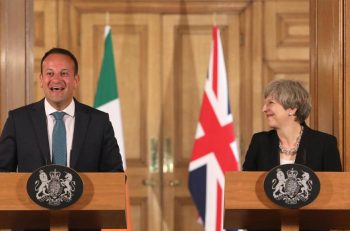
Theresa May

Random entry RSS

  • Posted in:

    The D-G of MI5 who ordered the murder of Patrick Finucane has died.

    By Joseph de Burca 1. Getting away with murder. Sir Patrick Walker was in charge of MI5 when the Belfast solicitor Patrick Finucane was assassinated by MI5 agents. Those agents were handled by the RUC Special Branch on behalf of MI5. They included Tommy Lyttle, Brian Nelson, William Stobie and Ken Barret. The assassination, which was bloody and brutal, was carried out in front of Finucane’s wife and young family. The assassination, which was bloody and brutal, was carried out in front of Finucane’s wife and young family. The Canadian judge who investigated the matter, Peter Cory, told the widow of Patrick Finucane that he had seen documents which emanated from ‘Cabinet’ level about the killing. The most reasonable interpretation of this is that Walker was ordered, or had the sanction of Margaret Thatcher and some of those around her in Whitehall, to murder Finucane. The British State has resisted an inquiry into the Finucane assassination for decades. It has flouted agreements and court orders in so doing. When David Cameron was in 10 Downing Street, he told the Finucane family that he could not order a public inquiry into the scandal. When Finucane’s brother Martin asked him why, he turned to Mrs. Finucane and said: “Look, the last administration couldn’t deliver an inquiry in your husband’s case and neither can we”. According to Cameron this was because “there are people all around this place, [10 Downing Street], who won’t let it happen”. As he was saying this, he raised a finger and made a circular motion in the air. Theresa May, who was Cameron’s Home Secretary between 2010 and 2016, did not order a proper inquiry either whem she became prime minister. Walker’s death will please those in Whitehall who are pulling the strings in the background in resistance to the establishment of a full judicial inquiry into the murder. They are engaged in a tactic of ‘running down the clock’. There are very few people alive now who were directly involved in the plot against Finucane. Village magazine accused Walker of the murder years ago. He was named in one story which has been read more than 22,000 times. He did not sue. He did even seek a right of reply. His silence now condemns him. A full account of the Finucane assassination can be found here, especially at Part 4: Thatcher’s Murder Machine, the British State assassination of Patrick Finucane. By Joseph de Burca. 2. Northern Ireland, counter-terrorism and ‘Death on the Rock’. Walker garnered considerable experience in NI on his way up MI5’s blood soaked greasy pole. He served as assistant to David Ransen, the head of MI5 in NI during the late 1970s. He rose to become the head of MI5’s counter-terrorism division (F Branch), 1984-86. He became Deputy D-G in 1986. He was a bully given to flashes of temper when things went wrong. He was the D-G who oversaw the killing of three members of an IRA active service unit (ASU) in Gibraltar in 1988. That unit was planning the slaughter of a harmless ceremonial band and guard. Suffice it to say, many non-military bystanders and tourists would have been wiped out too. How the IRA planned to equate such a massacre with a ‘just war’ is anyone’s guess. The elimination of the ASU became notorious because the IRA volunteers were on a scouting mission and were unarmed. The SAS men who shot them were acting in tandem with MI5. Carmen Proetta, who witnessed the SAS soldiers in action spoke to the media. Her account contra dicted that of the British government. She was then portrayed in the UK press as a prostitute. No money for guessing who briefed the hacks with that lie. She was later awarded libel damages. One female witness who saw the SAS soldiers in action spoke to the media. Her account contradicted that of the British government. She was then portrayed in the UK press as a prostitute. No money for guessing who briefed the hacks with that lie. She was later awarded libel damages. 3. Protecting paedophile rings. Walker was also in charge of MI5 during the last real heave by British MPs and journalists (such as Paul Foot) to uncover the truth about the vile Kincora Boys’ Home sex abuse scandal. MI5 and MI6 used the home as a ‘honey trap’ to collect ‘compromat’ about Loyalist terrorists and politicians. As a result of the cover-up, the wider paedophile ring of which Kincora was a part survived intact. Kincora was part of the Anglo-Irish Vice Ring which overlapped with a multitude of other similar rings.  An incalculable number of children were raped as a result of Walker’s contribution to the cover-up. An incalculable number of children were raped as a result of Walker’s contribution to the cover-up. Walker undoubtedly knew all about Kincora from his earlier days working in NI as assistant to David Ransen. Furthermore, the FX section of MI5 was responsible for surveillance operations which included telephone tapping, photographing and video taping of MI5 ‘compromat’  targets. At least one Kincora boy was raped by a senior DUP figure on the first floor of the Park Avenue Hotel in Belfast in 1976. He was one of many recorded by MI5 at the venue. While this event took place before Walker took over FX, he would have read all the files and may even have reviewed photographs and videos in the possession of FX as the Kincora scandal became a massive headache for MI5 during the 1980s. By then the DUP figure was in a senior political  position from where he was able to assist the cover-up. This man was an associate of the terrorist, serial killer and paedophile John McKeague. 4. Sailing by the same dark compass as his mentor. Walker was placed in charge of MI5 at the behest of his predecessor, Sir Anton Duff. Duff was another of those who covered up for paedophiles and state assassins. Unfortunately, Walker sailed by the same

    Loading

    Read more

  • Posted in:

    Let Theresa May, Who Has Not Sinned, Cast the First Stone: the 32-year cover-up of the Finucane assassination, its link to Kincora and the hypocrisy of the former prime minister.

    By Joseph de Burca. This week marks the 32nd anniversary of the assassination of the Belfast solicitor Patrick Finucane. In 1989 he was shot dead by UDA killers controlled by MI5 in front of his young family at his home. The British government continues to resist a judicial inquiry into the murder despite castigation from its own Supreme Court and human rights groups across the globe. No-one in the Tory party is putting Boris Johnson under any pressure to resolve the matter. LET THERESA MAY, WHO BELIEVES SHE HAS NOT SINNED, CAST THE FIRST STONE Johnson’s predecessor, Theresa May, however, has accused him of abandoning Britain’s “position of global moral leadership”. Johnson, she said, has failed to honour British values by threatening to break international law during Brexit trade negotiations. Another criticism was that he had backed away from Britain’s foreign aid targets. These two developments had not “raised our credibility in the eyes of the world”, she argued. She then proceeded to lecture him to live up to “our values”. And just what does she think the image of UDA assassins acting on the orders of MI5 to murder an Irish lawyer followed by a 32-year cover-up is doing for “Britain’s credibility in the eyes of the world”? Peter Cory, the Canadian judge who looked at the issue discovered that the murder had been discussed at “Cabinet level”. Sadly, May’s ‘values’ never included an attempt to bring the long-running cover-up that has swirled around the assassination of Finucane to a halt. In her attack on Johnson, May diverted to describe the election of the “decent” Joe Biden as US president as a “golden opportunity” for Britain to become a force for good in the world again. Would an inquiry and the resolution of the scandal surrounding the Finucane assassination not also provide a “golden opportunity” for Britain to show that it can become a “force for good in the world again”? WHAT THERESA MAY DID (AND DIDN’T DO) WHEN SHE WAS IN CHARGE OF MI5. There is a more to May’s hypocrisy than meets the eye: she was the Home Secretary who thwarted earlier demands for a judicial inquiry. MI5 is part of the Home Office and reported to her. At the time she was covering up for MI5, David Cameron was prime minister. He met with the Finucane family at 10 Downing Street where he told them that he could not order a public inquiry. When Finucane’s brother Martin asked him why, he turned to Mrs Finucane and said: “Look, the last administration couldn’t deliver an inquiry in your husband’s case and neither can we”. According to Cameron, this was because “there are people all around this place, [10 Downing Street], who won’t let it happen”. As he was saying this, he raised a finger and made a circular motion in the air. Cameron has not – and probably never will – expose the figures around him in Downing Street who were able to dictate what he could and could not do. Theresa May must know who the culprits are. (They are presumably high-ranking civil servants who have seen the files and know precisely who ordered the murder of Finucane. The list of suspects includes Margaret Thatcher whom May admires.) It clearly does not bother May that State officials have been – and continue to be – complicit in the perversion of justice. One of the officials suspected of complicity in the murder in 1989 – long-since retired – is still alive. So too is Patrick Walker the director-general of MI5 at the time. THE DAUGHTER OF A MAN OF THE CLOTH. May likes to project the image of a deeply religious woman with a moral compass handed to her by her father, a man of the cloth who also understood right from wrong and was possessed of the right ‘values’. Yet, if this was so, why did Team May scrub details of his life from Wikipedia? The mainstream media ignored this act of censorship. There are few comments about the development anywhere but it is addressed in this intriguing article: https://vocal.media/theSwamp/theresa-may-s-father As prime minister May was never bothered by British sales of weapons to an array of foreign powers. How does she feel about the tens of thousands of people who have died as a result? Clearly, slaughtering children in the Yemen is acceptable in her eyes if it generates income for the economy of the UK. Mark Curtis and his colleagues at Declassified UK have covered this scandal in great detail. Interested readers should consult: http://markcurtis.info/category/yemen/ SUFFER LITTLE CHILDREN Privately, May has always been disdainful of Johnson’s prodigious sexploits. Yet, Johnson’s sexual partners have always been adults who have been willing – no doubt eager – to sleep with him. This highlights another dimension to May’s hypocrisy: she is critical of consensual sex between adults while covering-up VIP sex abuse involving children. She helped to cover-up the Kincora scandal by assigning the latest investigation of it to the extraordinarily dim-witted and gullible Judge Anthony Hart who made an unholy mess of it. Hart even managed to contradict himself in the body of his own report, a first by any low standard. Unlike George Terry, the former Chief Constable of Sussex, who had reported on Kincora decades earlier, Hart was not corrupt, merely a fool who would have been out of his depth in a puddle. By giving it to this dolt, May was able to separate it from the ongoing Independent Inquiry into Child Sexual Abuse (IICSA) which was meant to investigate VIP sex abuse involving, inter alia, MPs. Assigning the probe into Kincora to Hart made no sense as it was part of an Anglo-Irish vice ring with connections to Westminster MPs. However, the existence of Hart’s impotent inquiry gave the dreadful IICSA grounds for ignoring Kincora and the abuse perpetrated by English VIPs of Kincora boys such as Enoch Powell MP, James Molyneaux MP, Knox Cunningham MP and others. Not a peep out

    Loading

    Read more

  • Posted in:

    Did Thatcher sanction the Finucane murder? It is now up to PM Boris Johnson and his Home Secretary, Priti Patel, to order a full judicial inquiry into the murder of Patrick Finucane to establish whether or not Margaret Thatcher gave Sir Patrick Walker, Director-General of MI5, the green light to murder him.

    Update: this article was published in October 2019. One year later the British government has refused to carry out a judicial inquiry. One of the stated reasons is that the PSNI and Police Ombudsman are reviewing the case. However, no  review is about to take place. Patrick Finucane’s widow has responded by saying that “as long as there is breath” in her body she will continue to seek answers about her husband’s murder and that the decision by the British government was “quite a shock” and showed “startling arrogance at ignoring the highest court in the land”,  i.e. the UK Supreme Court which has ruled that an inquiry should take place. Mrs Finucane has also pointed out that Brandon Lewis, the Northern Ireland Secretary of State, did not go into any detail about why the decision to refuse the inquiry was made. It  “does seem rather bizarre” she added  “that he [Lewis] is insisting the police [will investigate]” as the PSNI later issued a statement saying there is nothing new to investigate. The Police Ombudsman has no funding for a review. In any event such a review would be pointless and it is a judicial inquiry that is required. Clearly, there are other reasons Lewis and his boss Boris Johnson are blocking an inquiry. Village’s 2019 investigation addressed some of the issues the Tories, MI5 and other elements of the British Establishment are trying to suppress. That article starts here: Introduction: Margaret Thatcher and the cold-blooded murder of an Irish lawyer On 12 February, 1989, the UDA assassinated Patrick Finucane, a highly-regarded Belfast solicitor, at his North Belfast home. Finucane, who was 38-years-old, was shot 14 times by two masked UDA gunmen who sledgehammered their way into his house. His wife Geraldine was also injured during the attack which took place while the couple was enjoying a meal with their young family. In 2019 the Supreme Court in London ruled that the British Government had failed to investigate the murder properly. The only tenable reason for this is because the murder was organised by MI5, the intelligence service attached to the Home Office. A retired Canadian judge, Peter Cory, investigated the murder on behalf of the British State. During his inquiry MI5 officers broke into his office and stole some of the evidence he had accumulated. Cory also told Geraldine Finucane that he had seen a document relevant to her husband’s case which was marked  “for Cabinet eyes only”. Mrs Finucane knows no more. This raises the distinct possibility that her husband’s case was discussed in Whitehall in sinister circumstances before the murder. These revelations formed part of BBC NI’s compelling seven part Spotlight  series,  ‘The Secret History of the Troubles’. They have been ignored by the mainstream British media. Put simply, the finger of blame is now pointing at Margaret Thatcher. It now looks like she gave MI5 the green light to murder a perfectly respectable, law abiding lawyer. If Thatcher  and her circle did not order the murder, why are the Tory top brass so terrified of an inquiry? MI5 was led by Sir Patrick Walker at the time the assassination was planned and executed. If MI5 was involved, it is inconceivable he did not call  the shots – literally. When David Cameron was in 10 Downing Street he told the Finucane family that he could not order a public inquiry into the scandal. When Finucane’s brother Martin asked him why, he turned to Mrs Finucane and said: “Look, the last administration couldn’t deliver an inquiry in your husband’s case and neither can we”. According to Cameron this was because “there are people all around this place, [10 Downing Street], who won’t let it happen”. As he was saying this, he raised a finger and made a circular motion in the air. Theresa May, who was Cameron’s Home Secretary between 2010 and 2016, did not order a proper inquiry either when she took over at 10 Downing Street. The opportunity and duty to do the right thing and call one has passed to Theresa May’s successor, Boris Johnson, and his Home Secretary, Priti Patel. Yet, will they prove every bit as disdainful and corrupt as Blair, Cameron and May and continue the cover-up? Time is fast running out to hear what potentially key living  witnesses have to offer about the Finucane case. The list includes  Thatcher’s then Home Secretary, Douglas Hurd. Born in March 1930, he published a 524 page autobiography in 2003.  Unfortunately, there is no entry under the word “Finucane” in its index. Village  offers him the freedom of this website to inform our readers about what he know about the case, most particularly anything about “cabinet eyes only” documents. The evidence that continues to accumulate points to the probability that Finucane, a skilful lawyer, was targeted by the British State because he had mastered the intricacies of the Diplock Court system in NI and was representing his clients to the best of his very considerable abilities. A lot of Provos were walking free from court. In the mind of Thatcher and others in London, he had to have been a Provo and his death warrant was approved. In these circumstances, the task of assassinating him was passed to Walker and his gang of cutthroats at MI5. However, Finucane was not a Provo. On the contrary, he represented both Republicans and Loyalists. Who ever heard of a Provo securing the freedom of the Loyalist enemy? Moreover, he was married to a Protestant. Finucane was perfectly innocent of any involvement with the IRA although he was vilified as a member after his death. Insofar as the UDA was concerned, the kill-order was issued by Tommy ‘Tucker’ Lyttle, the UDA’s ‘brigadier’ or commander in West Belfast. Ian Hurst, who served with the then top secret Force Reconnaissance Unit (FRU) of the British Army, has stated “with cast iron certainty” that Lyttle was a British agent who was “handled” by the RUC’s Special Branch (RUCSB) using the codename “Rodney Stewart”. Lyttle himself

    Loading

    Read more

  • Posted in:

    Dumb greens and unions

    One of the things historians may dwell on is how the key December 2017 and February 2018 eu drafts of the Brexit agreement came to take the forms they did. It is all the more important since the inept UK Government of Theresa May failed to produce its own draft, though it might have been expected to do just that. Of course that suggests a lack of seriousness on the UK’s part about the agreement and perhaps that the EU Drafts may not go as far as we, and the EU, think, but that is a separate matter. In particular it is interesting that the drafts – the first a draft political agreement, the second a draft legal agreement with the same substance enshrine the EU’s rules for the customs union and single market but not its rules for multifarious other spheres of eu activity that bind the UK while it remains a member of the EU: most notably on the environment, labour and consumer affairs. The body politic and commentators have missed the following: the UK could become the trading neighbour from hell by ignoring EU environmental, health, labour etc standards – exploiting the competitive advantage over the eu you’d expect from a country saving money by keeping these standards low. It is interesting is that so many dogs have failed to bark. One might have expected the British trade unions to be shocked at the potential dangers to workers’ rights if EU standards are abolished and they become subject to the whims of a hawkish Tory party. But they didn’t because, like the British Labour party of course, they can only think of the superior standards Jeremy Corbyn will bring to the sphere. This is self- absorbedly naïve. Corbyn will not be in power for ever and the Tories won’t be going anywhere. When they return they will not have to observe the comfort blanket that EU standards provide. We know well the frustrations of the Tory party over the years with what used to be known as the EU’s ‘Social Chapter’. Nothing is as certain as that they will not observe its prescripts on issues like maternity and overtime if they return to power in some post-Brexit outturn. There are occasional insights into this thinking but mostly the protagonists remain mute. Surprising too that the Irish unions have made so little noise about it but then the Irish Congress of Trades Unions and SIPTU are both challenged by having members and remits both North and South of the border. You’d think they’d be on the warpath. Environmentalists and Green parties have said little perhaps because typically they languish far from the vehicles of power and tend not to be as forensic or aggressive as the circumstances here demand. Village tried to provoke the establishment media, most of RTÉ’s and the Irish Times’ Europe, Northern Ireland and Environment correspondents etc (by twitter) into recognising their failure to cover this issue but – to a man – they’re too complacent, and probably too immersed in politics and economics, to think about social and environmental rights and rules. The issue is clouded as terms like “a common regulatory area on the island of Ireland” and “a single regulatory space on the island of Ireland…” in themselves don’t do justice to the fact that there are important areas that will no longer be regulated by the EU. It’s also a bit difficult for many people to get their heads around as “regulatory alignment” of Northern Ireland with the EU is only envisaged as a ‘backstop’ if the UK can’t strike a more wide- ranging deal with Ireland and if a technological border solution proves impossible. Of course with only a year left to Brexit it’s looking increasingly like neither of the two contingencies will come to pass. The easiest way to avoid the backstop is for the UK as a whole to remain in the customs union and the single market. But the UK government insists this will not happen. Because the contingencies are uncertain they were left out of the draft Withdrawal Agreement which is a strictly legalistic document, thought they had appeared in the December political draft – and they remain politically possible. It’s complicating too that the Tories and Brexiteers so vociferously think the common regulatory area described in the EU draft goes too far rather than not far enough – though of course they are referring essentially to economic matters, not to environmental and social matters about which they may care little. It is clouded because it may well be that no deal is possible. It is important to note that, despite occasional diplomatic pleasantries, there has been little progress on the central conundrum of the negotiations: if the UK leaves the EU trading bloc, then a customs border is needed either on the island of Ireland or in the Irish Sea. One is ruled out by the EU drafts, the other by the UK. Theresa May asked Brussels if Britain could stay in the bits of the single market that she likes and exit the bits that she does not. The EU doesn’t have to, and won’t, run with that – no matter how self-righteous Brexiteers fume. On this basis it is very possible the EU’s draft terms form no element of the (WTO) arrangement that the UK falls back on. And it is clouded because confusingly the Draft Withdrawal Agreement refers, in its Article 12, to the Environment. Most people (not you dear reader) glaze over a little when contemplating the diktats of a customs union and single market. The customs union is an agreement among members to charge the same import duties as each other and usually to allow free trade between themselves. The single market guarantees the free movement of goods, capital, services, and labour – the “four freedoms” – within the European Union. You couldn’t for example have goods which comprise some material, imported into Britain on the basis of a tariff-free agreement between Britain

    Loading

    Read more

  • Posted in:

    Villager February 2018

    Listen up around what they’re at Villager likes nothing more than a shafted preposition. Most of the articles that come in to this magazine are from academics writing ‘around’ their subjects. They go into Village’s file of death along with cover letters for CVs that sign off cheers. So he was thrilled to see the Irish Times say of Nama that is lending €384m to allow developers to “build out projects”. Zagantagonism It’s been a bad month for Rugby schools. Paddy Jackson, the Kiely’s set-to, the illicit publication of the letter from Eunan O’Carroll. And now Frank Armstrong. The editor and half the Champagne socialists/ environmentalists whose whimsies fill the pages of Village have been taken aback by young Armstrong and his piece in the current edition ripping apart Gonzaga College, alma mater to non-conformist and unbulliable egos of all sorts, from Ranelagh right as far as Bray. Hypocrisy on Equality Talking of which it was amusing to see Michael McDowell bemoaning inequality – “the rich getting far richer” in the Sunday Business Post where he ties down an, unpaid, column. When he had power he was largely an agent for liberalism – and inequality, even claiming the economy “demands inequality in some respects”. In 2004 he told the Eonomist Survey of Ireland that he “sees inequality as an inevitable part of the society of incentives that Ireland has, thankfully, become”. He was quoted by The Economist magazine as offering a robust defence of the gap between rich and poor in Ireland. And he told the Irish Catholic that “a dynamic liberal economy like ours demands flexibility and inequality in some respects to function”. It was such inequality “which provides incentives”. He said: “As far as I am concerned liberal politics and liberal economics go together. In a liberal society, equality of opportunity is an equal opportunity to become unequal. A society which legislates and controls in every way to create some sort of mathematical equality just doesn’t work”. In his pomp he believed: “Driven to a complete extreme, the current rights’ culture and equality notion would create a feudal society”. McDowell sat at the Cabinet table for a decade while the country was run – to disastrous long-term effect – in the interests of elites and cartels, including the legal one he still feeds off. McDowell pulled the plug on the Citizen Traveller campaign when it dared to be controversial. He delayed and censored the reports of his department’s own inspector of prisons, Judge Dermot Kinlan. Dodgy Donegal There is still no sign of a date for the High Court case being taken by Michael McLoone, former County Manager in Donegal, represented by barrister Michael McDowell, over a 2014 Village article titled ‘Dodgy Donegal Planning’, alleging improper behaviour in Donegal County Council’s treatment of planning matters. Nor is there any sign of the Department of the Environment’s report into the activities detailed in the impugned Village article, though it has been promised for years. Loughinisland threats Village has received correspondence from the Hawthorns, Ronnie and Hilary saying they will take legal action over the naming, in these pages, of Ronnie as chief suspect for the Loughinisland massacre in 1994 when six Catholics watching a world cup match were gunned down in a pub. The Hawthorns’ concern vacillates between defamation and privacy. But they seem to be having trouble getting anything beyond a few emails together. Colgan threats And Michael Colgan has apparently initiated proceedings against Village for “defamation of character”, though Village hasn’t been served with anything so we’re not really sure. Colgan alleges a recent editorial implied he was guilty of serious crimes and rape. Village claims it was accusing him of harassment. Unthreatening After all that hassle Villager often wonders if it isn’t better to just say nothing. Then you can become as popular as William and Kate, Royal heirs in waiting, who have literally never saidanything anyone can remember. Kith and Quinn Villager never gets cross, never raises his voice. But he hates those Quinns. Complaints by Sean Quinn jnr and his wife Karen Woods about a recent failure to pay some of their €100,000 annual living expenses should be seen in the context of a “scheme of misappropriation on a grand scale”, the High Court has been told. Some €10m has been extracted from a company in India “and we don’t know where that has gone”, Barry O’Donnell SC, for the special liquidators of Irish Bank Resolution Corporation, said. Documentation from India and Hong Kong showed “a scheme of misappropriation” was executed, over time and especially in 2010, at the instigation, and for the benefit, of members of the Quinn family. The transactions at issue “have never been explained” and while the family maintain they had no idea what was going on, that is “wholly implausible”, he said. This, and the fact Quinn and his wife are receiving close to €100,000 annually in living expenses, was of concern to the bank and it was “imperative” the matters were addressed. Villager absolutely begrudges them their 100k. If he had his way the radical left would have picketed the likes of the Quinns instead of faffing around harassing water-meter installers. And he wants to know where Peter Darragh Quinn, a nephew of the bankrupt former billionaire, on the run five years after an arrest warrant was issued for him, is. Ireland biggest environmental mess by a landslide In July 2008, the Court of Justice of the European Union (CJEU) ruled that Ireland had failed to carry out a proper assessment for the 70 turbine Derrybrien wind farm which was built in the early 2000s. The Government has yet to carry out the assessment on the site. The construction work on the wind farm led to a 2km landslide in October 2003, which the Commission itself has called “environmentally devastating”. The incident caused 450,000 cubic meters of peat to slide down the mountainside, which was washed into the local river systems. The European Commission has now requested that the

    Loading

    Read more