2018

Yearly Archives

  • Posted in:

    Oxymoron

    By 2040 we expect that an additional one million people will live in Ireland, an additional two-thirds of a million people will work here. An ageing population and smaller family size mean that we will need an additional half a million homes to accommodate this growth. Project Ireland 2040 purports to address this. It consists of the National Planning Framework which sets out a spatial strategy for Ireland, to accommodate in a “sustainable and balanced” fashion these significant demographic changes. It is the overall Plan from which other, more detailed plans including city and county development plans and regional strategies will take their lead. Learning from past experience, the NPF is backed up by an infrastructure investment programme, the National Development Plan. This National Development Plan sets out the significant level of investment, almost €116 billion, which will underpin the NPF and drive its implementation over the next ten years. €91 billion in Exchequer funding for public capital investment has been allocated and will be supplemented with substantial investment by commercial State Owned Enterprises. This increased level of resources is expected to move Ireland close to the top of the international league table for public investment, from a low post-crash base. In short, the State’s infrastructure investment – the money – should be guided by and follow the Plan. That is what makes Project Ireland 2040 different and a significant innovation in Irish public policy. What is not different is that it does not have teeth, particularly to stop market-driven development that is incompatible with the vision. Project Ireland 2040 is about enabling all parts of Ireland to achieve their full potential. It seeks to move away from the current, developer-led, business as usual pattern of development, to one informed by the needs and requirements of society. This means seeking to disrupt trends that have been apparent over the last fifty years and have accelerated over the past twenty. It purports to aim to ensure that rather than have excessive population growth focused on Dublin – as is the current trend – that 75% of all population growth occurs in the rest of the country.The immediate priority is to increase overall housing supply to a baseline level of 25,000 homes a year by 2020, and then a likely level of 30-35,000 annually up to 2027. 112,000 households are expected to obtain social housing over the decade. A new €2 billion Urban Regeneration and Development Fund will aim to achieve sustainable growth in Ireland’s five cities – Dublin, Cork, Limerick, Waterford and Galway – and other large urban centres, incentivising collaborative approaches to development by public and private sectors. It aims to secure at least 40% of future housing needs by building and renewing within our existing built-up areas, whether they be in the many villages and towns in need of regeneration or in our cities and larger towns where there are also huge opportunities for city and town centre regeneration. Of course the corollary of this is that an unsustainable 60% of future housing need will be met on green-field sites. It targets a level of growth in the Northern and Western, and Southern, Regions combined to at least match that projected for the East and Midland Region. It will support the future growth of Dublin as Ireland’s leading global city of scale, by better managing Ireland’s growth to ensure that more of it can be accommodated within and close to the city. It supports ambitious growth targets to enable the four cities of Cork, Limerick, Galway and Waterford to each grow by at least 50% to 2040 and to enhance their significant potential to become cities of scale. It recognises the extent to which Sligo in the North West and Athlone in the Midlands fulfil the role of regional centres. It recognises Letterkenny in the context of the North-West Gateway Initiative and Drogheda- Dundalk in the context of the Dublin- Belfast economic corridor. It seeks to strengthen our rural fabric, by reversing town/village and rural population decline, by encouraging new roles and functions for buildings, streets and sites, and supporting the sustainable growth of rural communities, to include development in rural areas. That’s one- off housing. Anyone who follows this will see that there’s not much sense of anything being ruled out, and indeed almost everything seems to be ruled in. That suggests it won’t all happen. And the determinant of what happens and what doesn’t will, as usual, be the market – which will skew to Dublin and its hinterland, and of course one-off housing whose site costs are negligible (for those lucky enough to own rural land) but which pose difficulties for sustainability: economic, social and environmental. It costs more to service far-flung housing with broadband, and everything else. One might quibble with elements of the plan. Dr Edgar Morgenroth – Professor of Economics at DCU and a primary author of the document – said that plans for the €850m motorway between Cork and Limerick would undermine the proper growth of “second tier” cities in Ireland. He rejected claims by An Taoiseach Leo Varadkar that the motorway would encourage the cities to grow faster saying it would instead lead to sprawl. He told ‘Morning Ireland’ it was important “to put the infrastructure into the cities, not between them”. “Once you put the motorway between two cities what you’re doing is getting more sprawl. So you’re undermining your own strategy”, he said. Morgenroth also said that building a new motorway undermined a commitment by government to reduce carbon emissions. The NPF will also have “statutory backing” overseen, quasi-independently, by the new Office of the Planning Regulator (OPR) – a key recommendation of the Mahon Tribunal.   Unfortunately this particulator Regulator will not regulate but rather advise others whose motivation may be political and short-termist. A regulator who does not regulate. There has been much light-free heat, led by Sinn Féin which even claimed to be seeking a legal opinion, about the failure of the government to put the NPF to a parliamentary vote but instead to include

    Loading

    Read more

  • Posted in:

    Punker

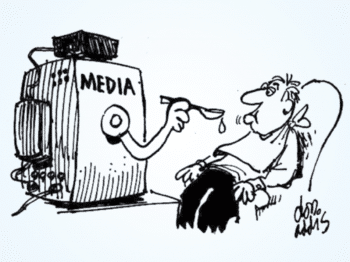
    “Things can only get better”, went the lyrics to the hit by D:Ream which became the anthem of the incoming New Labour government in 1997, fronted by the relentlessly upbeat Tony Blair. Six years later, Blair joined the US in its illegal invasion of Iraq, a move that plunged the entire Middle East into a new era of violent instability and a refugee crisis that today, some 15 years later, shows little signs of abating. Things, it turns out, can also get worse. Statistics can, however, be schooled into presenting a beguilingly different picture of the true state of the world, and the darling of global optimism, psychologist and author Steven Pinker is a skilful inquisitor of data. His scholarship seems to have caught the zeitgeist of the latest wave of techno-optimism, and his data-fuelled Panglossian creed is being enthusiastically embraced by global influencers like billionaire Bill Gates. So excited were the editors of Time magazine that in January, for the first time in its more than 90-year history, it invited Gates to be guest editor of an edition, titled ‘The Optimists’. His editorial was essentially a re-heat of Pinker’s tome, ‘Enlightenment Now’, which, Gates gushed, was his “new favorite book of all time” and “the most inspiring book I’ve ever read”. High praise indeed. Gates’ benediction no doubt helped Pinker’s tome to become a runaway bestseller. What got the Microsoft über-nerd so excited is that: “this is not some naively optimistic view; it’s backed by data”. And Pinker cites data by the chartload, much of it undoubtedly painting an accurate picture of one species doing remarkably well. Life expectancy is a case in point. In just the last 28 years, the number of children dying before their fifth birthday has halved. Women’s and LGBT rights have made remarkable, if uneven, advances in recent decades. Fewer people are living in absolute poverty. Child labour, slavery and sexual abuse have not been eradicated globally but all indicators point towards major progress for millions of people. Catastrophic famines are rarer now; more people now live in democracies (Trump’s populism notwithstanding) than in all of human history and, while there are hundreds of deadly local and regional conflicts around the world, there are, mercifully, no full-scale wars between countries. Were an 18th or 19th century European to survey the region today, they would be astonished to find that the perpetually warring great powers – France, Italy, Spain, Germany, the Netherlands and Britain – have enjoyed more than 75 years of peace, co-operation and prosperity, with just occasional insults now being hurled at one another, where until quite recently, disputes were routinely settled with bloodbaths and pogroms. So, all’s well with the world, it seems. Another contributor to the Time special edition was the estimable investor and billionaire Warren Buffett. He waxed about the astonishing economic progress that swept across the US in the 20th century. No argument there. “The game of economic miracles is in its early innings. Americans will benefit from far more and better ‘stuff’ in the future”, he opined. At this point, it’s time to take a deep breath and a sharp step backwards. How can such heavy-hitters as Pinker, Gates and Buffett have possibly discounted or ignored the ecological train-wreck hurtling ever closer towards humanity? Pinker’s book does indeed grapple – after a fashion – with environmental limits, but it’s hardly encouraging that someone who prides himself on offering numeracy as the cure for biases then launches – unprovoked – into a biased jeremiad against the “quasi-religious ideology” that is what he disparagingly terms “greenism”. For someone regarded as among the world’s great thinkers, this is dull fare indeed. Undeterred, Pinker lashes out at this “apocalyptic creed” which he finds to be “laced with misanthropy”. Quite why it was necessary for Pinker to denigrate environmentalism becomes clear as the narrative unfolds. The vehemence of his anti-environmental rhetoric is in inverse ratio to his ability to address the profound critiques of his beloved ‘progress’ posed by the findings of climate and environmental sciences. He points out – correctly – that as countries get richer, they usually clean up their own rivers and ease local pollution. The fact that rich countries simply outsource much of their dirty heavy industries and ship their wastes to the ‘developing’ world is glossed over. Climate change of course does not respect national borders; faced with the quite over-whelming evidence from the physical sciences (and he frequently claims to be an advocate for science), Pinker baulks at what he dismissively calls the “tragic” view that humanity may well destroy both industrial civilisation and itself in the process. Pinker concedes: “humanity has never faced a problem” like climate change. Rather than ponder this existential threat, he instead brandishes the magic wand of eco-modernism and waves away the gloomy ‘eco- pessimism’ he and his billionaire fan club find so objectionable. He points out that global carbon intensity has been static or declining slightly in recent years. The atmosphere is, however, indifferent to such subtle points. All that matters are the gross numbers, and these continue to climb inexorably. Science tells us we have a finite and rapidly reducing global ‘carbon budget’. The only way of avoiding irreversibly smashing through this budget in the next 10-20 years is drastic, compulsory, permanent and deeply unpleasant cuts in carbon, starting yesterday. Per capita, the greatest carbon polluters on the planet are the global elite, billionaires like Gates and fellow Microsoft founder, Paul Allen. The latter maintains three very large ocean-going yachts at all times, so that one is always fully staffed and equipped close to wherever in the world he might happen to jet. That’s an awful lot of carbon to have to forego. The eight richest billionaires control as much wealth as the world’s poorest 3.7 billion people. Imagine then how pleased Gates will have been to read Pinker’s pronouncement that staggering and increasing wealth inequality is really not that big a deal. In common with Trump, Pinker also tries to blame the media for stoking “irrational pessimism” about the state of the world. I have long argued the opposite:

    Loading

    Read more

  • Posted in:

    Wicklow Manager bouncing Bray demolition

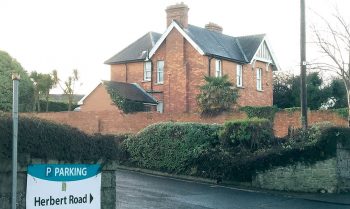
    Village last month reported that Wicklow County Council has agreed to sell a prime town-centre site in Bray to developer Paddy McKillen’s Navybrook Ltd for just €2.6m. The deal is contingent on Navybrook delivering a commercial development by the end of 2019. It is also a controversial sale that has raised questions about value for money. Most Councillors and most residents of Bray want the site developed. Known as the ‘Florentine’, it has been vacant for 20 years, but has also served meanwhile as a convenient car park with 225 spaces. A Council official in January told Wicklow County Council that the site is actually worth more as a paying car park than as a development site. “There’s not huge value in this for developers”, he claimed. But a related effect of the sale of that site to Navybrook is now proving controversial too. For it transpires that Council officials set aside a sum almost equivalent to the Florentine’s sale price to buy and demolish two large inhabited houses at Herbert Road nearby in order to extend another surface car park by up to 100 spaces. The proposed new spaces are seen by some residents as an incentive or subsidy to the purchaser of the Florentine site. The original Council budget for the extra spaces appears to have been only about 10% less than what that Navybrook has agreed to pay for the Florentine. Wicklow County Council might have insisted on any purchaser of the Florentine erecting a multi-storey with 356 car spaces, instead of the 256 now planned there. Had Wicklow County Council insisted on 100 more car spaces at the Florentine, it would still have been fewer than had been required as a condition, when planning permission was granted for the Florentine site to an earlier owner. One previous planning permission for an earlier proposed development on the Florentine site, one that included apartments, had required 417 parking spaces. Wicklow County Council acquired the site at a bargain-basement price during the recent crash. It believes that the Florentine will yield it commercial rates of up to half a million euros annually when completed. The County Council itself sought planning permission for the Florentine before selling the site to Navybrook. The inspector for An Bord Pleanála pointed out that objectors had stated that the Council was not making sufficient allowance for car parking, with provision being promised for just 256 spaces. The inspector’s report included a statement that applying car-parking standards in the, then-current, Wicklow county development plan 2010-2016 would have meant that “504 spaces would be required”. But Wicklow County Council insisted that 256 spaces were enough, and An Bord Pleanála accepted the Council’s assurances. Permission was granted last year. Just one month later the Council was engaged nearby in private negotiations to buy St Paul’s Lodge and another big house, both adjacent to the existing surface car park on Herbert Road which is an area zoned for mixed use. Local residents were not informed, but the prospective purchasers were told that Wicklow County Council wanted to buy their houses, and that the purpose for which the Council wanted them was additional parking. The owners first sought €1.5m each (as opposed to the€765,000 valuation that the Council’s own surveyor put on one of the houses last year). In the end, only the sale of St Paul’s Lodge went ahead, for €913,000 including the vendor’s legal and other costs (such as furniture removal to Spain). The Council thus acquired an Edwardian home and large garden that officials hope to clear for up to 47 hard-surface car spaces.   Bray residents (including myself ) oppose the Council’s proposal to destroy St Paul’s Lodge, on architectural and social grounds among others, pointing out that it was reportedly designed by the architect of Farmleigh House, and that destroying family homes during a housing shortage pushes up the cost of new homes for everyone. Hearing rumours of the Council’s wish to destroy part of their neighbourhood, residents tried between June and October last year to elicit information from Wicklow County Council. We were told by the Council simply that, “We are examining all aspects of parking in the town at this time”. In fact Council officials were then intent on closing the purchase of St Paul’s Lodge as quickly as possible. Council officials concluded the purchase of St Paul’s Lodge unconditionally, despite the fact that it was bought solely “in order to raze it to the ground and build a car park on the site”, as the vendor’s solicitor put it last July. It is an extraordinary fact of current law that Council officials have great freedom to spend public money on acquisitions without the approval of elected representatives. However, approval is required to demolish or dispose of a building, and the process of securing approval in such a case requires public consultation under a provision known as ‘Part 8’. But what kind of consultation? In this case Wicklow County Council ignored expressions of concern by local residents and inserted no provision in the contract of sale contingent on Council approval. The Council closed the sale without first completing the consultation concerning possible demolition. This has put Councillors under pressure to approve demolition. The house could be put back on the market. There is a strong demand for such houses in the immediate vicinity, and at least one older and bigger house nearby (in bad shape) was recently bought and substantially renovated. But the fact that officials paid above what their surveyor considered to be the house’s normal market value could leave the Council out of pocket from any resale. Residents had their request for a meeting ignored by Council management, and have been forced to take an appeal to the Office of the Information Commissioner to get some documents eventually released that reveal details. The first site notices of planned demolition were not clearly visible from the road and none at all was put on the property of St Paul’s itself. A new notice was published when

    Loading

    Read more

  • Posted in:

    Avoiding League Relegation

    In Ireland, North and South. In the last 50 years no pub or shop has changed its language from English to Irish. In recent years, in the last pockets of the Gaeltacht, the young people have been switching to English. Clearly, the time has come for the Gaelic League, Conradh na Gaeilge, to take its last, this time decisive, action to save Irish, our ancestral language, from becoming a revered dead language like Latin, and instead keep it for the future spoken, written and joked in by thousands. The Gaelic League’s original aim in its glory days when it nourished the mind of the Irish Revolution was to make Irish again the language of the entire nation. After Independence, as the League realised that this was not going to happen, its aim became to preserve the Gaeltacht and to ensure that through the schools system and its own classes many thousands in the rest of Ireland would be able to speak and write Irish. That last aim has succeeded and it is now time to reap the harvest and put it to use. Many individuals, North and South, in many different occupations are now able to speak and write Irish well, and because they are in many different occupations they possess the Irish language more fully than the merely rural Gaeltacht did. In many cases, North and South, these persons amount to families where Irish is the family language. The League must seek out, for a start, 1500 of these people from the general population North and South and the Gaeltacht remnants; people who would pledge to speak and write Irish with each other and, if they have children, as their family language. Each of them above the age of twelve would wear a discreet badge to identify themselves to others. That for a start. Then each year, the elected committee of this community, which might call itself Na Caomhnóirí (Guardians), would hold an all-Ireland rally to coincide with Oireachtas na Gaeilge. Spaced through-out the year. Four regional committees would organise provincial gatherings. At these various coming togethers, they would discuss and decide what joint ventures – publications etc, – they would engage in. Na Caomhnóirí would call for new applicants and hold an annual entrance examination as a big public event. That annual event would give the secondary Gaelscoileanna and the university courses in Irish a concrete and prestigious goal to aim at. The entrance exam would be held each year until the number of members would reach 10,000. In this way, whatever else happens, the future of Irish as a spoken and written language would be assured into the future – into the new civilisation which will succeed the disintegrating European civilisation. And in that achievement the Gaelscoileanna, as feeder schools, would have a concrete goal to aim at. Unless action along these lines is taken, the so-called Irish language movement will plough ahead without any concrete goal to aim at and with diminishing support from a State that has lost interest. Probably TG4 and Raidió na Gaeltachta would continue for a while to broadcast and Irish would be spoken occasionally in the Dáil and as a cúpla focal at formal dinners. Latin, too, has its news media on the internet, and English football results are broadcast on radio in Latin. At important ceremonies of the Vatican and of many universities formal Latin is spoken. But because Latin is not spoken and joked in every day by a substantial living community, it is reckoned to be a dead language. To save Irish from becoming that and the League from becoming a historical curiosity, it is necessary to act decisively now in the manner I have outlined. Desmond Fennell Dr Desmond Fennell’s latest book is his autobiography ‘About Being Normal: My Life in Abnormal Circumstances’ (Somerville Press).

    Loading

    Read more

  • Posted in:

    The Right to have Rights

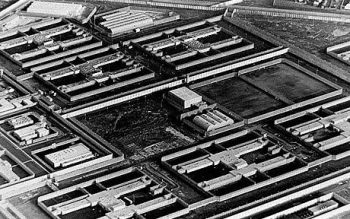
    Hannah Arendt’s famous phrase ‘the right to have rights’ was coined in her 1958 book ‘The Human Condition’. The condition of being stateless, of being a displaced person, which began its modern history in Europe with World War I, has been experienced since by untold millions who have had to listen to the claim that ‘human rights’ are universal and fundamental – but not for them. Once we had the glamorous figure of the cosmopolitan, the person who belonged to the world, the global community; that figure has been displaced by the refugee, who belongs nowhere, but is to be found everywhere in the paradigmatic settings of the modern and contemporary world – the prison camp, the internment zone, the refugee camp, the ghetto, the jail, the arena of suspension where people live in a place that is always outside the country that it is inside. Arendt pointed out that the creation of such places and conditions is a political decision, not just a terrible catastrophe. It is the prevailing form of the penal colony, the new home that we have built to house the theory of human rights. Since Arendt, and most especially in the indebted work of Giorgio Agamben, it has become clear that the concentration camp of the twentieth century was not some historical anomaly, but that it is actually one of the paradigm sites of Western modernity. The internment camp is a zone of suspension, of ‘rendition’, a place that is always outside the country it is inside – Guantanamo is the best-known example, although there many such places – our best- known example was The Maze in Northern Ireland. Those entrapped there expose the hollowness of any claim to universal human rights, to having rights just on the basis of being human. Arendt said it plainly: the refugee, the displaced person, has regularly been denied the right to have rights. The denial is a political decision. It takes its most popular form in the denial that there are any ‘political prisoners’ in the denying country, although enemy countries are full of them. Its political nature has been counterpointed more clearly since 1948, since the United Nations began its series of declarations of Human Rights, unabated since that date; rights of men, women, children, of minorities, of the disabled, of all indeed who can be characterised as having been ‘excluded’, which means that even the ‘poor’, a constituency which enlarges globally by the hour, faster than ever since the almost perpendicular rise of neo-liberalism in the decades before and after the financial crash. Reading these rights, as ‘declared’ (whatever that means), in that bland United Nations universalistic rhetoric, it is hard to know whether to laugh or cry. Such noble vacuities, such actual atrocities – produced by the same state systems that have prevailed since 1945. It was part of Arendt’s long argument, which began in 1943 with her essay “We Refugees” (about Jewish migrants who had become ‘stateless’, that condition in which they had no rights) that asked why European civilisation had so successfully produced the barbarism that made statelessness pandemic and human rights so unavailable to the millions of ‘displaced persons’ of World War II. Part of her answer was that this barbarism was so successful precisely because it was so concealed within or behind the declarations of universal rights and justice which the West, in the case of the American and the French Revolutions, had made central to the powerful ideology of what mutated into Western ‘freedom’. Arendt’s question then was: how could such an ideology be developed (as through the UN declarations) and simultaneously traduced (as in American foreign policy)? It is too feeble an explanation to put it down to hypocrisy. Hypocrisy on this scale occurs when the people who most sincerely believe in the peaceful principles are those who most regularly betray them in violent action. The British spent three centuries in perfecting their international reputation as hypocrites, a nation that believed itself to be peaceful even as it waged endless wars. Now that role has been assumed, largely, by the Americans. But, to achieve world domination is one thing; world hegemony is another. That’s what the World Wars were fought for. Arendt achieved notoriety with her reporting on the 1961 trial of the Nazi Adolf Eichmann, which was published in book form as ‘Eichmann in Jerusalem: A Report on the Banality of Evil’, where she developed the central figure of the ‘desk-murderer’, the bureaucrat who administered the death-camps. But her key point was that this was a show-trial, that pretended to be an example of universal justice triumphing over universal evil. Rather, it was in fact a national victory of the Israelis over their Nazi persecutors. In this exemplary instance, we are shown how the language of universalism can be used as a disguise for a state’s policies. The jurist who had the ambition to do that for a successful Nazi state, Carl Schmitt (1888-1985), described in his ‘Nomos of the Earth’ (1950), how the European system of international law had been replaced by an American one, with the UN as its legislature and the International Tribunal or Court as its executive. In effect, the language of universal rights was used to ratify the aims of American foreign policy; Nuremberg, Tokyo, Damascus, the Hague were, like the Moscow show trials of the 1930s, elaborate pretences that something objectively true was being defended from the current version of sectarian betrayal – war criminality, terrorism, the new terms of ‘war crime’ and its flourishing neighbourly companions, such as ‘ethnic cleansing’. Danilo Zolo has demonstrated in Victor’s Justice how the Kosovo war of 1999, that infamous intervention (to be followed by interventions in Iraq, Afghanistan , Libya and elsewhere, saving the ‘people’ of those countries for democracy, largely by killing and dispossessing them), with its International Court at the Hague, which could try anybody but Americans, is the most egregious example so far of how the language of universal rights has been perverted

    Loading

    Read more

  • Posted in:

    Keeping up with the changing times

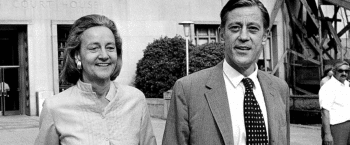
    Those journalists of my vintage who have seen ‘The Post’ on the big screen were struck by memories of the ‘good old days’ of journalism and for once the term ‘good old days’ actually rings true. There were great performances from Meryl Streep as Katharine Graham the paper’s owner and publisher, Tom Hanks as the editor Ben Bradlee but what struck me most forcefully was how things have changed in the newspaper business since The Washington Post and the New York Times published the Pentagon Papers in 1971. ‘The Post’’s newsroom in the movie would be familiar to journalists of my age but I wonder how many of those whose by-lines appear today would have recognised it. There were clunky machines called typewriters on the desks. Reporters battered the typewriter keys to produce their articles. The occasional expletive thundering above the rat-tat-tat of the typewriters gave the impression of being on a battlefield. The resultant reams of paper went to sub-editors (copy editors in the US) to be edited and then entered the special world of highly-unionised printers. Next came the clatter of the linotype machines where the articles were cast into slugs of metal before being assembled into page forms. There was a foundry, there were big paper-cutting machines and finally from the news-room the comforting roar of the presses could be heard to confirm that the first edition was on its way. Now there are no typewriters and no copy-paper. There are no linotype machines and no foundries. The comfortable roar of the presses is not heard in the newsroom because the presses are now sited at the edge of the city. Today’s newsrooms are quiet and far more reminiscent of Banks than Battlefields but despite the outward calmness certain battles continued after the change from hot-metal to electronic publishing. In my early days in The Irish Press, Independent Newspapers and The Sunday Tribune I was barely aware of these as I was learning my trade as a reporter and, at one stage, as a sub-editor. The battles took place between two sides of management: the Commercial Side, known as ‘The Suits’ and the Editorial Side known as ‘The Hacks’. The Suits did everything they could to influence the newspaper’s content and The Hacks did everything they could to stop them. In ‘The Post’ the clear winners at the end of the day were The Hacks. The managing director, the board members, the businessmen, the accountants, the lawyers and the other Suits all tried to use everything in their power to stop publication of the Pentagon Papers. In the end the decision fell to Katharine Graham the owner and publisher. She was no Suit. Although the movie does not mention it she was trained and had worked as a journalist. She decided to publish the Pentagon Papers. As I rose through the ranks in The Irish Times I became more and more aware of the battle between the Hacks and the Suits and eventually became a soldier in the struggle. The set-up in the The Irish Times in my time was different from that of The Washington Post in the movie. There was no owner and no publisher. The paper was controlled by a Trust similar to that which runs the Guardian but closer still to that of US Newspaper The Tampa Bay Times which is owned by the non-profit organisation The Poynter Institute for Media Studies. There was a strong commercial man in the form of the chairman of the board Major Thomas Bleakely McDowell, an Edwardian-style gentleman with sculpted hair and a waxed moustache. He had his foibles but he stayed well clear of interference in editorial matters. He was not technically a Suit although he wore one of pinstriped bespoke elegance and authority. He was simply The Major. There was a strong man on the editorial side too. Robert John Douglas Gageby was known by all as Mr Gageby to his face and The Editor in general conversation. To describe him as a Hack would have been to diminish his true stature but there was no doubt as to whose side he was on. When a big story broke and space was too tight to do it justice he had been known to pull advertisements from the paper to make room. Two of my experiences with him come to mind. When I became what is known nowadays as Features Editor (News Focus Editor was the official title) I was approached by two journalists, Maev Ann Wren and John Stanley, who wanted to run a series of articles illustrating the true nature of the real-estate business. I decided it should be published in the knowledge that the Suits would raise hell since property advertising was a major, if not the major, source of the paper’s advertising income. After the first article of the series appeared I happened to be in the Editor’s office when the Managing Director arrived to complain. He was sent away with a flea in his ear. The other occasion was when a businessman threatened to stop advertising because of articles I had written on the issue of sporting contacts with apartheid South Africa. The businessman asked for a meeting with The Editor. The meeting took place and when it ended I received a phone call from Mr Gageby asking to meet him across the road which was a euphemism for the nearest pub. My worries on the subject were assuaged with the following words: “People advertise in the Irish Times because it’s good business to do so”. Any businessmen who would remove their advertising because they didn’t like someone’s articles would, he said, simply cut off their noses to spite their face. My articles opposing contacts with apartheid South Africa continued to be published and the businessman’s advertisements continued to appear. When Douglas Gageby retired as editor his place was taken by Conor Brady, the first person from the Irish Roman Catholic tradition to become Editor of the Irish Times since it was founded in 1859. Brady and I did not

    Loading

    Read more

  • Posted in:

    Irish is beyond weaponisation

    Some years ago, I read about an anonymous former participant of the blanket protest who recalled a visit from an RTÉ Irish language reporter. He remarked upon her “terrible elitist attitude toward the language” and, in particular, her claim that the brand of Irish which developed in the H-Blocks made her shudder. He quickly retorted, “When you hear the Gaelic in here you’re hearing it as a living language. It’s spoken and evolving in a natural environment. Your Gaelic is put in a glass cage as a showpiece. We have a living language. Yours is an artificial thing. For you it’s an academic achievement, while for us it’s something that lives, and that comes from our day-to-day situation”. I was reminded of this short anecdote at the beginning of the week as I, for lack of a better term, shuddered reading Ruth Dudley Edwards’ take on the politicisation of the language in the Belfast Telegraph. The inherent elitism of that unnamed RTÉ reporter from the late 1970s wafted over the words of Edwards’ column like the curried yoghurt that her headline warned us against. Yet, unlike that reporter, Edwards’ apparent lack of proficiency in Irish embraced a number of head-scratching assertions and historical blunders. Taking the liberty to speak for all Irish speakers with “southern ears”, she quipped about the ugly, harsh sound of the Ulster dialect in comparison to the more melodic sounds of Connacht or Munster. As an Irish speaker, I don’t think I’ve ever come across such rubbish from anyone who actually speaks the language regularly, no matter their location. The bulk of her ire however, tellingly appears to be reserved for Gerry Adams, whose Irish she says, “isn’t good enough to do a substantial interview”. She further points out his linguistic deficiencies by asserting that “Even Leo Varadkar, who learned it only recently, speaks it better”. Now, no disrespect to Leo Varadkar, because whatever his level of Irish may be, he has made a laudable effort recently to bring about an awareness of the language as an inclusive rather than exclusive medium. That being said, anyone with even a passing interest in the language is aware that Adams can, and indeed has, done a number of interviews in Irish-language media over the years, and is well able to hold his own. By comparison, Varadkar has given few if any off-the-cuff “substantial interviews” in Irish. To this point, a quick online search turns up a video from a 2012 session in the Dáil, in which Adams and former Taoiseach Enda Kenny engage in a back and forth completely in Irish. In the clip which lasts nearly ten minutes, Kenny commends Adams for his introduction of Irish into the debate, before lightheartedly noting that, while he agreed with his choice of language, he wasn’t so sure about his opinion on the matter at hand. This scene presents a stark contrast to Edwards’ unfounded claims that Kenny’s superior level of Irish had all but snuffed out Adams’ attempts at its use since his move to the Dáil in 2011. Furthermore, she makes an erroneous claim that Kenny and his colleagues in “the south” interpret the use of Irish as a “discourteous” attempt to “put non-Irish- speakers at a disadvantage”, which eventually resulted in Adams reserving his use of Irish for the Sinn Féin “faithful”. Though, again, this assessment doesn’t stack up factually. Surely Edwards recalls the 2015 instance in which Kenny, not Adams, was accused by TD Mick Wallace of intentionally embarrassing him by refusing to speak English during a session for Leaders’ Questions ? Kenny defiantly answered the claim of the bewildered Wallace by reminding his colleague that “this is our national language”, before reiterating that he should make use of the available translation headset if he can’t comprehend it. Yet, I suppose this example was less “discourteous” or “aggressive” because it was delivered in what she deems the “musical” sounds of Kenny’s Connacht dialect. Turning her focus to the Irish-language community more generally, Edwards went on to discuss the fact that in the Northern context, those who spent time in prison tend to have a solid working knowledge of the language. In many cases, this is true, especially for those who were on the blanket protest. Although, one thing should be made clear. Their embrace of the language was not a result of the “generosity of the Prison Service” as Ms Edwards states, but rather in spite of the abuses and inhumane treatment endured by many on a daily basis. Though perhaps her most curious claim is that in terms of Irish, “those we might call the civilians tend to have the least”. If this is the case, are the 6,000 students currently enrolled in Irish-Language-medium schools in Northern Ireland not counted among those that we “might call civilians”? Regardless, Edwards’ framing of the language along the antiquated lines of decades gone by is a gross oversimplification of the Irish-speaking community today. In the last week of February, for example, a diverse cast ranging from drag queen Ru Paul to actor John Connors showed their support for the language. But hey, maybe this quirky duo too has ‘sashayed’ its way into the IRA leadership, and is now involved in some elaborate new republican language scheme. On a hopeful note, Edwards commended Linda Ervine’s ongoing work in teaching Irish to east Belfast loyalists, remarking that this will hopefully lead to their “taking ownership” of the language. While Ervine’s efforts should undoubtedly be commended, it is time that we move past this sort of rhetoric to describe them. The language, now, belongs to no one. Contrary to what Noel Whelan said in a recent Irish Times article, it is simply incapable of being ‘weaponised’. It’s the old and native language of this island and it cannot belong to anyone more than anyone else. Has it been politicised in the past ? Absolutely. Since the time of the Fenians and the Young Irelanders before them, the language has been present in

    Loading

    Read more

  • Posted in:

    Make sure of the facts

    There are two dominant interpretations of what’s come to be known as “call-out culture”. Many see it as an effective way of holding people, particularly public figures, to account for objectionable deeds and utterances that their status might otherwise have allowed them get away with. Social media has certainly played a massive role in an accelleration of accountability that is changing the way big organisations function. For the powers-that-be many styles of “cover-up” are simply no longer possible. One individual can go viral with their story in a matter of minutes. However, many others see call-out culture as trial by mob, a return to a medieval mentality, or puritanism in another guise – particularly when applied to individuals rather than institutions. Either way, I think – I hope – everyone can agree people shouldn’t be held to account for things they haven’t actually said or done. Yet over the past year it seems there is a disturbing new trend in the now conglomerated battlegrounds of media and social media. The values of call out culture – the idea that people should be made atone for perceived offence through group-shaming – are no longer a phenomenon of those periphery cultures largely concerned with traditional arenas of cultural theory: questions of gender, minorities, and identity. In 2017, call out culture went mainstream in a big way. I’m not referring to the Hollywood purge, which did aim to address gendered issues, and seems to have been long-overdue. The culture of the call-out – its language, style, mentality – started to intrude into new domains. The standard of offence became radically expanded, and the concept of proportionality (let the punishment fit the crime) went out the window. The most depressingly ridiculous example of this has to be the career ending decision of Barry McElduff to make a short video in a local shop, pretending not to be able to find a loaf of bread which was in fact balanced on his head. The video was posted the night before the, to be fair – fairly inauspicious – date of the 42nd anniversary of the Kingsmills massacre. Kingsmills was one of the most despicable atrocities of The Troubles. A group of workers had been travelling on a bus home from a factory when they were stopped by what was ostensibly a British Army patrol. In one of the most poignant gestures of the Troubles, when the gunmen asked the single Catholic worker to identify himself, his Protestant co-workers tried to prevent him stepping forward, as they believed it to be a loyalist gang targetting Catholics. He identified himself nonetheless, but was spared. It was the 10 Protestant workers who were machine-gunned to death. Another man survived despite having been shot 18 times. After the the video was “called-out” on Twitter, condemnation of Kingsmills seemed immediately to become coterminous with condemnation of McElduff. Defence of McElduff was taken to be defence of the massacre. This is a fixture of this style of thinking – any query as to whether or not the accusation is accurate is taken as defence of the deed that has been alleged. Those who queried the likelihood the then MLA was performing some piece of bizarre Daliesque sectarian performance art, were met with rebuttals reasserting how wicked a deed the massacre was, and that it was no laughing matter. Surely true, but irrelevant to ascertaining whether or not McElduff was actually referencing Kingsmills when he put the loaf on his head. I watched in dismay as a number figures across the political spectrum – some of whom I’ve long admired – rushed to condemn McElduff, refusing to countenance the notion that this was an unfortunate coincidence. His own then ordained leader-to-be, Mary Lou-McDonald proved of the same mind-set as she condemned McElduff’s tweet as “crass”, “stupid”, and “unforgivable”. She of course had not condemned the numerous social media posts prior to this in which McElduff had balanced other comestibles on his head, although there were many – it seems to have been a running pantomime gag for the politician. When someone points me to the sectarian atrocity he was referencing when he took a photo with a Snickers balanced on his scalp, then I’ll believe there was ill-intent. It was instead his young daughter who was left to try and defend her father against the social media onslaught, explaining the photo was taken in the shop she worked in, the family always ate Kingsmills bread, etc etc, to absolutely no avail. Fixed thinking is another aspect of this praxis – no amount of evidence will exhonerate the accused, any defence offered is taken as further evidence of their guilt. What mattered to McDonald was not the facts of the matter, or loyalty to someone who dedicated their life to a political party she joined in the late 1990s, what mattered was assuaging the mob. And this has become the prime directive for many powerful people, not only in politics, but in the media and corporate world. This is regrettable, as another recurring theme is that the outrage is often so loud it entirely obfuscates the circumstances of the original incident. In another example, John Connors drew ire after tweeting that he personally wouldn’t call the police on someone for “robbing bread”. This was then completely conflated with events later that same day, when a stolen digger was used to smash and try to steal the safe from a Lidl which had earlier been looted of food and drink. No amount of clarification could convince many of the call-out crew that Connnors was not trying to downplay or justify an event that hadn’t even happened when he originally tweeted. Thankfully Connors is comparatively invulnerable to these tactics, unlike McElduff his career is not subject to the vicissitudes of political sensitivities. Lest anyone accuse me of being partisan, here’s an example of precisely the same style put to use in the opposite direction. When former Taoiseach Liam Cosgrave died, RTE presenter Sean O’Rourke retold

    Loading

    Read more

  • Posted in:

    Capitalisteracy

    Ireland has a dreadful, inequitable, dangerously failing healthcare system. The State’s answer is the likes of healthy Ireland, which runs a public campaign that, in essence, throws the responsibility for health on to individuals – who seemingly just need help from an initiative to ‘empower and motivate them’. February saw the launching conference – hosted by the Broadcasting Authority of Ireland (BAI) at Facebook Ireland HQ – of a new network, Media Literacy Ireland (disclosure: I’m in it). From the conference stage there was lots of talk about empowerment and not much talk exploring from whom it might be necessary to take power away. There was even a speaker from healthy Ireland, lest the analogy be missed. Don’t be surprised, then, to encounter an Irish campaign in the next year or two imploring you to the media equivalent of ‘eat your vegetables, get some exercise, don’t smoke cigarettes’. Something along the lines of ‘read the Irish Times, trust in Miriam, don’t tweet fake news’. Or maybe not. Media Literacy Ireland potentially has some of the hallmarks of industry-friendly campaigns like Drink Aware and Gamble Aware, plus the involvement of a regulator, the BAI, which might like a campaign that implicitly justifies light-touch regulation abetted by ‘greater public awareness’. On the other hand – and credit to its organisers for this – Media Literacy Ireland has come into being as a genuine network of interested researchers, activists, community-media practitioners and others. And most of us in it are not disposed to frame the problem with Irish media as one of public credulousness, to be addressed by offering tips for spotting ‘extremism’ online. Regular readers will know my view: that media (like healthcare) have a capitalism problem, and that everything from fake news to clickbait to inadequate investigative resources to Denis O’Brien ows from that basic source. But you don’t have to agree with me and name the underlying problem as capitalism to understand that there are structural causes for crises such as the one that erupted recently over Government ‘advertorial’. “I believe the Government is attempting to exploit the difficulties many local and regional titles are facing to promote their party interests”, said no less a media critic than Fianna Fáil’s Timmy Dooley, the party’s spokesman on communications. (How sweetly old-fashioned that word ‘communications’ can sound as it grapples with the changing world.) Media literacy, if it is to be of any use, has to do more than implore us to look for the little ‘special feature’ tag on the top of a piece of paid corporate or government puffery, then to regard the ‘journalism’ below with due scepticism. It must mean understanding ‘the difficulties’ for all journalism that operates in the current market, especially one in which technological change has accelerated existing trends toward blurred lines, and in which advertisers have alternatives to local and regional newspapers when it comes to reaching eyeballs. If the most poignant aspect of that brief, quickly snowed-under ‘Ireland 2040’ crisis was the image of the Taoiseach issuing guidelines for labelling advertorial content – guidelines of which the most callow intern in a local newsroom should surely already be aware – we shouldn’t lose sight of the fact that media have been operating at the edges of such guidelines for decades, for the benefit of advertisers looking to buy a little ersatz editorial credibility. How can this fail to be a lesson about how fragile, at best, any such credibility has become ? As the media may or may not have told you, global research shows trust in media is in tatters – media are less trusted than governments, NGOs, businesses – and Irish people are at the mistrustful end of the distribution. In this context, media literacy can hardly consist of legacy media saying ‘trust us, not them’. What can be done ? (Yes, short of getting rid of capitalism.) Anyone who has worked in a newsroom knows what a frightening prospect it would be to try to earn the public’s trust with transparency and accountability about our editorial practices. On a daily basis, contingent and incomplete information is transformed into definitive statements of ringing certitude. That’s one sausage factory we don’t want you to see inside, especially since the work often consists of sticking our label on someone else’s meat. The irony is that the technology often over-simplistically blamed for creating the journalism crisis has long offered tools for remarkable transparency, tools that most journalists have chosen to use only in limited ways. What if hyperlinks in journalists’ stories led not to dull pages of cross-references or to Wikipedia, but rather to images of documents and notebook pages, audio of interviews, pictures of the journalist in the field ? It can be done and has been done, but the experiments in transparency of the early web – notably the extraordinary 1996 investigative series by the aptly named Gary Webb in the San Jose Mercury news, about the CIA’s involvement in the cocaine trade – have rarely been repeated, let alone built upon. Such transparency would foster media literacy without the onus being placed on the audience. Whether it would foster trust is, of course, a matter of what audiences thought of the practices revealed by transparency. Interactivity and social media mean we have some tools whereby that reaction could be tested and gauged. Dublin Institute of Technology, thankfully, is prepared to put its money where my media-literacy mouth is: it’s funding a project that will will use the Liberty, a student- produced ‘hyperlocal’ newspaper and website for Dublin’s Liberties area, to innovate in the area of journalistic transparency. We’ll employ social media as a forum for sharing ‘the story behind the story’, with tweets, Facebook updates, Youtube videos and Instagram posts that unveil aspects of the production of journalism, from notebook pages to editing history, from who-was-interviewed to who-refused. A doctoral-level researcher will be responsible for implementation, monitoring, community engagement and evaluation of this project, which should help readers to understand better the process of news construction, and help journalists-in-training become accustomed to

    Loading

    Read more

  • Posted in:

    The cost of costs

    Real justice requires access to justice, which requires effective access to courts, which requires that courts be accessible without the threat of prohibitive costs. Some 90%, or an even higher percentage, of people in Ireland have no realistic access to justice, due to the prohibitiveness of the costs associated with legal actions via the courts. The Irish system of access to justice is permeated with unfair procedures, unconstitutional laws, and conflicts of interests, which means that most court users in Ireland are vulnerable users. BalaNCiNG CONFliCTiNG CONSTiTUTiONal RiGHTS: The English rule (Loser pays rule) on legal costs does not balance two conflicting rights – (1) the property rights of winning litigants, and (2) the right of persons to have access to the courts, without being threatened by unpredictable and prohibitive legal costs. Notionally, proponents of the English rule claim that winners are entitled to be 100% vindicated, and so be in a position to cover all their legal costs. However, this is a very narrow view, which fails to assess the big-picture consequences: (a) winners are also threatened, up to the point of winning, and can be threatened as defendants, in circumstances where they have no chance of recovery of costs from penny-less plaintiffs. (b) the English rule creates all sorts of conflicts of interests and market distortions, which enormously inflate the costs payable. (c) wealthy litigants can threaten persons of lessor wealth, with adverse costs, such that the case is determined more often by issues of fear, rather than justice. (d) the state, and most government actors become unaccountable, as the decision makers are immune from costs (lumped ontaxpayers, often, with little transparency), but can pursue political goals, or engage in abuse of power, with no financial downside, and can still threaten all challengers with financial ruin; this inequality of arms, means that citizens are generally unable to challenge the unconstitutional laws and conduct of government. HeNCe, THe eNGliSH RUle iS NOT COMPaTiBle WiTH a Real CONSTiTUTiONal deMOCRaCy: Costs Allocation Rules incentivise Unfair Adjudication Rules which also incentivise Inefficiencies into the system. Because the government is allowed to intimidate its challengers with unlimited adverse costs, it then wants to maximise those costs, so as to bolster its threat and avoid oversight; High Legal Costs has been the default weapon of choice for all governments since the commencement of the state; the “Big Stick” is maintained to bounce its opponents out of the ring, and this has so far been achieved with little condemnation by international institutions, which have largely failed to recognise the stealth threat that prohibitive costs represents as a threat to the rule of law. The Big Stick undemocratically deters citizens and/or NGOs from challenging the government when it passes unconstitutional laws, or acts unconstitutionally – this allows the government to pander to its own electoral constituency while depriving less well represented persons access to rights protection, leading to violations of minority rights and individual rights. When populist demands call for adjudicative processes which affect specific rights of connected groups, QUANGOs are often created in order to parry off populist demands for accessible justice. The substitute QUANGO justice can rarely be as independent as courts, and the outcomes are often secretised, thus bypassing democratic oversight. Hence, the government passes unfair laws for legal costs adjudication, so as to frighten all challengers – this allows it to exercise power with minimum oversight. THe Need FOR CCOS (COSTS CaPPiNG ORdeRS) In the ex parte application by Dymphna Maher [2012], the applicant effectively sought an assurance from the High Court that any adverse costs would not be prohibitively expensive, if her lawsuit was subsequently deemed not to have fallen under the ambit of the special costs regime (related to some environmental cases). Judge Hedigan insisted that there was no legal authority to permit him to make the order sought by the applicant. However, he observed that: “[It was] very arguable that the absence of some legal provision permitting an applicant to bring such a motion, without exposure to an order for costs, acts in such a way as to nullify the State’s efforts to comply with its obligation to ensure that costs in certain planning matters are not prohibitive. As things stand, I have no power to change this”. This case along with 12 other cases was appealed to the Supreme Court (SC) on an ex parte basis – where only one of the parties is heard. The SC held that it could not provide such an assurance, on an ex parte basis, as the other side (the EPA) needed to be heard first. The SC decision in the Coffey case means, in effect, that any person seeing to access the courts in Ireland is threatened with financial ruin, even if just seeking a CCO. The court failed proportionately to balance the right of access to the courts as a right conflicting with the property rights of government, particularly in the context of the need for real separation of powers. The judicial sphere of power is rendered inaccessible to most citizens, when the loser-pays rule is applied to challenges to executive power, and so the judicial sphere of power is inappropriately diminished; this undermines the checks and balances necessary in a liberal democracy between the legislative, executive an judicial functions. SePaRaTiON OF POWeRS By dividing power between these traditional three spheres, the courts, the government, and the Oireachtas, we help to disperse power and make less probable the accumulation of power to one person, or a small elite, as often happens in what are referred to as illiberal democracies. Diagram 1, above, displays the traditional Montesquieu view of three spheres of power. However the (Montesquieu) tripartite division of power, is a poor reflection of reality. This is largely because it generally fails to engage with the level of real power held by each of the three spheres, in practice. A second flaw, is that there should really be five spheres of power, and not three; the people should be seen

    Loading

    Read more

  • Posted in:

    ‘Reclaiming the State – a Progressive Vision of Sovereignty for a Post-Neoliberal World’

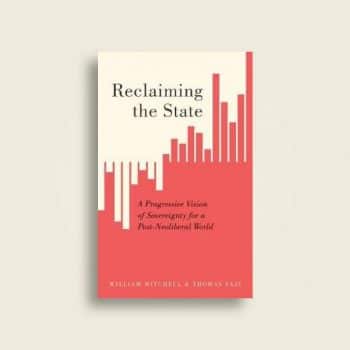
    ‘Reclaiming the State – a Progressive Vision of Sovereignty for a Post-Neoliberal World’ is the title of what will surely come to be seen as one of the more important social science works of our time (Pluto Press, 2017, €23). In it Australian economics professor William Mitchell and Italian political theorist Thomas Fazi reconceptualise the Nation State as a vehicle for progressive change. They issue a highly topical challenge to progressives, leftwingers and genuine liberals to come to the defence of national sovereignty and not cede that issue to the populist right. For the thirty years from the end of World War 2 to the 1970s a left-oriented Keynesian consensus held sway in the developed world. Then, for reasons this book describes, the mainstream Left as represented by the mass Labour and Social Democrat parties in Britain, France, Germany and elsewhere, and by the Democrats in the USA, ideologically disarmed themselves before rampant neoliberalism. Key neoliberal propositions were that national sovereignty had become irrelevant in today’s increasingly complex and interdependent international economy. Globalisation had made individual States increasingly powerless in face of market forces. The growth of multinational companies and the internationalisation of finance had eroded the ability of national States to pursue progressive social and economic policies and deliver prosperity for their peoples. Consequently the only hope of meaningful change was to “pool” State sovereignty and transfer it to supranational institutions such as the European Union, thereby regaining at supranational level the sovereignty that has been lost at the national level. Many who regarded themselves as progressive and on the Left came to share these views, stressing how neoliberalism has involved a retreat or a hollowing-out of the State, which found itself increasingly powerless in face of market forces. To cover their abandonment of criticism of capitalism as a social system, progressives and Left parties generally focused instead on issues such as racism, gender, homophobia, multiculturalism and environmentalism – social marginality being no longer described and opposed in terms of class but rather in terms of identity. This book analyses the political timidity, ideological opportunism and intellectual fallacies involved in this surrender. For example the decades of neoliberalism have seen little or no decline in State spending as a percentage of GDP – a key measure of the strength of the State in society. Even supposedly neoliberal governments such as Reagan’s or Thatcher’s did not reduce overall public spending, although they altered its composition, for example spending more on weaponry and less on welfare. As the authors point out, “even though neoliberalism as an ideology springs from a desire to curtail the State’s role, neoliberalism as political-economic practice has produced increasingly powerful interventionist regimes.” Neoliberalism has entailed extensive and permanent intervention by States and their Governments: for example the liberalization of goods and capital markets, the privatization of resources and public services, deregulation of finance, the reduction of workers’ rights in collective bargaining, cuts to social programmes and the lowering of taxes on wealth and capital at the expense of the middle and working classes. The authors show how neoliberal ideology, in its official anti-State guise, has been little more than a convenient alibi for what has been an essentially political and State-driven project aimed at placing the commanding heights of economic policy in the hands of capital and especially Finance Capital. Far from neoliberal globalisation making the Nation State out of date, all its key elements were the result of choices deliberately and consciously made by national governments as their ruling elites set out to limit State sovereign rights. The authors call this a process of “depoliticisation” of policy. Its principal elements were: the reduction of the power of parliaments via-a-vis the executive; making central banks formally independent of government; adopting constitutional limits on debt-to-GDP ratios and public spending, as with the 2012 Stability treaty, thereby limiting what politicians can do at the behest of their voters; enforcing free movement of goods and capital, and, above, all shifting government powers from the national level to the supranational. Why did national politicians choose to ‘tie their hands’ in this way ? As the EU case epitomises, the creation of these self-imposed ‘external constraints’ allowed national politicians to reduce the political costs to themselves of neoliberal policies that were generally unpopular. It enabled them to ‘scapegoat’ these externally imposed rules and supranational and ‘independent’ institutions. These could be publicly presented as an inevitable outcome of the new harsh realities of globalisation, about which supposedly little or nothing could be done at national level. In this way national government choices and State macroeconomic policies were insulated from popular criticism and protest. Mitchell and Fazi contend that the war on sovereignty has been in essence a war on democracy. This process was brought to its most extreme in Europe where the 1992 Maastricht Treaty that created the euro-currency embedded neoliberalism into the EU’s very fabric, effectively outlawing in supranational EU law the Keynesian policies that had been commonplace in the previous decades. Given neoliberalism’s war against State sovereignty it is only natural that the revolt against neoliberalism should first and foremost take the form of demands for a ‘repoliticisation’ of national decision-making processes – that is, for more democratic control over politics and particularly over the destructive effects of the free movement of capital, goods and labour unleashed by neoliberalism. This necessarily can only be done at the national level by means of the national State in the absence of effective supranational mechanisms of representation. The latter are impossible to bring into being as long as people’s primary political identification is with their own nationality and State. Supranational structures will always lack democratic legitimacy because people do not identify with them as their own. The case of Iceland shows what even a tiny country can do when it used its State sovereignty, an independent currency, capital controls and sequestration of its banks to overcome an extreme economic crisis. The authors argue that progressives and the political Left should not regard Brexit –

    Loading

    Read more

  • Posted in:

    Some devils got him

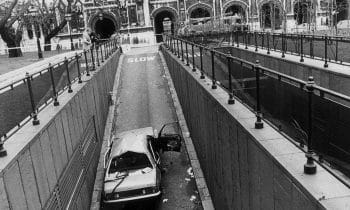
    The Westminster terrorist attack on 22 March of last year, by lone attacker, Khalid Masood (52), who drove a car into pedestrians and fatally stabbed PC Keith Palmer, is not the first time that terrorists have selected the Palace of Westminster, and its surrounds, to perpetrate an act of violence. 39 years ago, on 30 March 1979, the Irish National Liberation Army (INLA) murdered Airey Neave, Conservative MP and Margaret Thatcher’s shadow secretary of state for Northern Ireland, in a devastating car bomb attack. Apart from reaffirming Thatcher’s determination to defeat Republican paramilitaries, Neave’s assassination robbed the Conservative Party of one of its most open-minded, albeit controversial, thinkers on Northern Ireland. By the standards of the day, Neave was a remarkable figure. On the one hand, he was a public figure: war-hero, writer, barrister and politician. He had escaped from Colditz, a Nazi prisoner of war camp during the Second World War; was the author of five semi-autobiographical books; established a practice at the bar; and was Conservative Party MP for Abington, 1953-1979. On the other hand, he was an elusive and secretive individual, retaining close links to the British Secret Intelligence Service throughout his adult life. During the Second World War he worked for MI9, a subsidiary of MI6, later holding the rank of commanding officer of the Intelligence School 9, Territorial Army (TA). Neave’s greatest contribution to political life came in the autumn of his career, following his promotion as shadow secretary of state for Northern Ireland in 1975. Neave’s appointment to Thatcher’s shadow cabinet, in the wake of her election as leader of the Conservative Party in February 1975, had important ramifications for the Conservative Party’s Northern Ireland policy. From the moment he took up his new shadow cabinet portfolio, until his murder by the INLA, Neave’s “first priority”, as he noted in April 1978, was to defeat Republican terrorism. Although often preoccupied by security-related issues, and despite misguided arguments to the contrary, Neave remained committed to finding a workable solution in the hope of ending direct rule in Northern Ireland. As a pragmatist, confronted by the political reality that the mainstream political parties in Northern Ireland could not agree on the terms of devolution, he instead championed reform of local government in Northern Ireland, as an interim measure. By initially supporting the establishment of his so-called ‘Council of State’, subsequently followed by a proposal to create one or more Regional Councils in Northern Ireland, Neave sought to end, as he phrased it in November 1977, `’civil servants’ paradise`’, which existed under direct rule. Unfortunately, Neave’s assassination by the INLA robbed him of the opportunity to implement his proposals to reform local government in Northern Ireland.   New archival material from Neave’s personal papers and the National Archives of the UK iliuminate the events of 30 March 1979. Neave commenced his working day, like any other. Following breakfast, he left his at at Westminster Gardens, got into his powder-blue Vauxhall Cavalier saloon, and made the short journey to the houses of Parliament, the Palace of Westminster. His morning was spent preparing for the forthcoming British general election (scheduled for 3 May) and dealing with day-to-day constituency matters. Following lunch, he decided to stop for the day and return home to spend time with his wife Diana. It was in the members’ lobby that Neave held his last conversations, chatting to colleagues before crossing to the members’ exit and taking the lift to the five- floor underground car-park to pick up his car. At 2.58p.m., an enormous explosion engulfed New Palace Yard. Soon after, as Neave’s sole biographer Paul Routledge wrote, smoke was seen billowing from the smouldering wreckage of a Vauxhall car on the ramp leading up from the MP’s underground car-park. It was a “haunting image”, with sheets of headed house of Commons writing paper “blowing gently in the breeze”, recalled Lord Lexden, Neave’s former political advisor on Northern Ireland. Police officers rushed to the scene and came upon an unidentifiable man, dressed in a black coat and striped trousers. Initially, the victim was believed to be Alan Lee Williams, a Labour MP. In fact, in the car lay sixty-three-year-old Neave. Surveying the burning wreckage, the mangled frame of the car and the glassless windows, it was apparent that some type of bomb had exploded. “He’s still alive! Clear the area!”, a policeman shouted. Within minutes, an ambulance crew arrived to find the still unidentified figure, who was breathing, slumped over the steering wheel, his face burned beyond recognition. A doctor, nurse and firefighters soon joined the entourage, before Neave, with his right leg blown off below the knee, was eventually freed after half an hour. He was quickly taken to Westminster Hospital where he underwent emergency surgery. It was too late. Neave died on the operating table. Thatcher received news of Neave’s murder while preparing for a party-political general-election broadcast at BBC headquarters. Her first thought was reportedly: “Please God, don’t let it be Airey”. When it was confirmed that Neave was indeed the victim Thatcher was described as “numb with shock”. Later that day she informed a BBC reporter that “… some devils got him and they must never, never, never be allowed to triumph, they must never prevail”. Following Neave’s murder, attention immediately turned to who had perpetrated this brutal crime. Initially, the Provisional Irish Republican Army (PIRA) claimed responsibility. In fact, the real perpetrators were the INLA. Formed in 1975, with a pledge to establish a “republican and socialist” state, the movement had previously been known as the People’s Liberation Army, having sprung up in late 1974, when the Official IRA attacked members of the newly formed Irish Republican Socialist Party (IRSP). At the time of Neave’s death, it was believed that the INLA had approximately 60 active members. The INLA basked in the publicity following Neave’s murder. A spokesperson for the terrorist organisation said that Neave’s assassination “had a tonic effect in Northern Ireland where there had been celebrations in Belfast,

    Loading

    Read more

  • Posted in:

    John Imrie, MI5’s Flasher-General

    Village has learnt that John L.L. Imrie, formerly of MI5 and the Northern Ireland Office (NIO), died last summer without a whisper of his passing reaching the ears of the press. Imrie had the unique distinction of being the only British official ever linked to the Kincora Boys’ Home sex abuse scandal by name in the press during his lifetime. Imrie had served as an Assistant Secretary at the NIO in the early 1970s while the sexual abuse of boys at a number of homes in Northern Ireland including Kincora was rampant. Imrie did not provide evidence to the Hart Inquiry in 2016. Judge Hart, whose 2017 report is littered with factual inaccuracies, determined that MI5 had known nothing about the Kincora scandal until it was exposed by the media in January 1980. Imrie was one of many who – had he told the truth – could have put Hart straight. Privates on parade at victoria station Imrie was a convicted sex pest. In 1979 he went ‘cottaging’ in London, that is to say, looking for sex with random strangers in gentlemen’s lavatories. He was arrested at the gents at Victoria Station when, after an attempt to attract a sexual partner by displaying his genitals, he was charged with indecent exposure. The last thing MI5 needed in 1979 was a sordid scandal involving an MI5 officer who had served in Belfast. At this time the Kincora scandal was bubbling under the surface ready to erupt across National headlines. Howard Smith was D-G of MI5. He appreciated the full potential of the scandal because he had served as intelligence supremo in NI in the early 1970s when Imrie had been stationed in Belfast and the Kincora ‘honey trap’ operation was up and running. Two social workers had already provided details of the scandal to Peter McKenna of the Irish Independent. They had learnt about it from Richard Kerr, a resident at Kincora for whom they were responsible. Hence, Establishment pressure was exerted to drop the charges against Imrie for his performance at Victoria Station. The endeavour failed, proving yet again that MI5 is not always top dog when confronted by honest police officers and lawyers. Indeed, only last year we witnessed another example of this when the incorruptible Chief Constable of Wiltshire, Michael Veale, his Assistant Chief Constable Paul Mills, and their Operation Confier team reported that former British PM Edward Heath was a paedophile. (See Village October 2017.) The fact that Imrie was a figure whom Whitehall wanted to protect became public knowledge thanks to Private Eye magazine. On 17 August 1979 it reported that: “Up until the trial strong pressure was brought to bear by a variety of authorities to drop the charges in the national interest”. Ken Livingstone noticed a discrepancy in the way Imrie had been treated compared to the mauling Sir Maurice Oldfield had received after the exposure of his sexual predilections in 1980 Imrie was brought before the Magistrates’ Court at 70 Horseferry road, London, (now the City of Westminster Magistrates Court) where he pleaded not guilty to the charges preferred against him and submitted a preposterous defence maintaining that he had been caught short with a weak bladder and, fearing disastrous consequences on the train he intended to take at 11.10 to Sydneyham – which had no toilet – he had been compelled to display him- self to the gentlemen in the vicinity of the urinals. The presiding magistrate – another honourable individual who was prepared to do his job without fear or favour – concluded Imrie was lying since he had been arrested at 11.25, i.e. 15 minutes after the bladder-bursting train had departed. Imrie was convicted, conditionally discharged and ordered to pay £50 costs. Imrie was not the only senior intelligence officer arrested for misbehaviour in a public lavatory in London during this era. In 1984 Sir Peter Hayman, the reputed Deputy Chief of MI6, was also arrested for gross indecency, and convicted. Hayman was an abuser of Richard Kerr, details of which will be revealed in a later edition of Village. Sir Anthony Blunt and Guy Burgess, another pair of paedophiles from the ranks of both MI5 and the Anglo-Irish Vice Ring, were also members in good standing of MI5’s cottaging circuit. Imrie’s conviction did not deflect the upward trajectory of his career. After Kincora was exposed in January 1980, the RUC set out to track down the child molesters involved, or at least some honest officers in the RUC tried to do so before they were stifled. At least they managed to question Imrie before the vice grip of the cover-up took a hold. Against this background, it is hardly unfair to ask if Imrie was a pederast (i.e. an abuser of teenage males), if not an outright paedophile himself. Why else would the RUC have made inquiries about him? The answers to these questions may be found lurking in the pages of Imrie’s personnel file which gathers dust somewhere in the vaults of MI5. During the 1970s the RUC Special Branch officers who helped Joseph Mains, the Warden of Kincora, run the operation on the ground, are rumoured to have maintained a secret library of files as insurance in case anyone ever tried to prosecute them for trafficking the children involved to their abusers. The RUC Special Branch library may still be in existence and, if so, undoubtedly has bulging files on Imrie and others such as Peter England, also formerly of the NIO. The Independent Inquiry Into Child Sexual Abuse in London still has an opportunity to demand sight of Imrie’s personnel file and that of england but time is running out fast. a career shrouded in mystery Inevitably, a cloud of mystery hangs over Imrie’s career. A little speculation must be forgiven. Despite claims to the contrary, he probably never worked for the Ministry of Defence (MoD). References to him in the Civil Service Yearbooks during the 1980s as an MoD employee were probably nothing more than a cover

    Loading

    Read more

  • Posted in:

    Dumb greens and unions

    One of the things historians may dwell on is how the key December 2017 and February 2018 eu drafts of the Brexit agreement came to take the forms they did. It is all the more important since the inept UK Government of Theresa May failed to produce its own draft, though it might have been expected to do just that. Of course that suggests a lack of seriousness on the UK’s part about the agreement and perhaps that the EU Drafts may not go as far as we, and the EU, think, but that is a separate matter. In particular it is interesting that the drafts – the first a draft political agreement, the second a draft legal agreement with the same substance enshrine the EU’s rules for the customs union and single market but not its rules for multifarious other spheres of eu activity that bind the UK while it remains a member of the EU: most notably on the environment, labour and consumer affairs. The body politic and commentators have missed the following: the UK could become the trading neighbour from hell by ignoring EU environmental, health, labour etc standards – exploiting the competitive advantage over the eu you’d expect from a country saving money by keeping these standards low. It is interesting is that so many dogs have failed to bark. One might have expected the British trade unions to be shocked at the potential dangers to workers’ rights if EU standards are abolished and they become subject to the whims of a hawkish Tory party. But they didn’t because, like the British Labour party of course, they can only think of the superior standards Jeremy Corbyn will bring to the sphere. This is self- absorbedly naïve. Corbyn will not be in power for ever and the Tories won’t be going anywhere. When they return they will not have to observe the comfort blanket that EU standards provide. We know well the frustrations of the Tory party over the years with what used to be known as the EU’s ‘Social Chapter’. Nothing is as certain as that they will not observe its prescripts on issues like maternity and overtime if they return to power in some post-Brexit outturn. There are occasional insights into this thinking but mostly the protagonists remain mute. Surprising too that the Irish unions have made so little noise about it but then the Irish Congress of Trades Unions and SIPTU are both challenged by having members and remits both North and South of the border. You’d think they’d be on the warpath. Environmentalists and Green parties have said little perhaps because typically they languish far from the vehicles of power and tend not to be as forensic or aggressive as the circumstances here demand. Village tried to provoke the establishment media, most of RTÉ’s and the Irish Times’ Europe, Northern Ireland and Environment correspondents etc (by twitter) into recognising their failure to cover this issue but – to a man – they’re too complacent, and probably too immersed in politics and economics, to think about social and environmental rights and rules. The issue is clouded as terms like “a common regulatory area on the island of Ireland” and “a single regulatory space on the island of Ireland…” in themselves don’t do justice to the fact that there are important areas that will no longer be regulated by the EU. It’s also a bit difficult for many people to get their heads around as “regulatory alignment” of Northern Ireland with the EU is only envisaged as a ‘backstop’ if the UK can’t strike a more wide- ranging deal with Ireland and if a technological border solution proves impossible. Of course with only a year left to Brexit it’s looking increasingly like neither of the two contingencies will come to pass. The easiest way to avoid the backstop is for the UK as a whole to remain in the customs union and the single market. But the UK government insists this will not happen. Because the contingencies are uncertain they were left out of the draft Withdrawal Agreement which is a strictly legalistic document, thought they had appeared in the December political draft – and they remain politically possible. It’s complicating too that the Tories and Brexiteers so vociferously think the common regulatory area described in the EU draft goes too far rather than not far enough – though of course they are referring essentially to economic matters, not to environmental and social matters about which they may care little. It is clouded because it may well be that no deal is possible. It is important to note that, despite occasional diplomatic pleasantries, there has been little progress on the central conundrum of the negotiations: if the UK leaves the EU trading bloc, then a customs border is needed either on the island of Ireland or in the Irish Sea. One is ruled out by the EU drafts, the other by the UK. Theresa May asked Brussels if Britain could stay in the bits of the single market that she likes and exit the bits that she does not. The EU doesn’t have to, and won’t, run with that – no matter how self-righteous Brexiteers fume. On this basis it is very possible the EU’s draft terms form no element of the (WTO) arrangement that the UK falls back on. And it is clouded because confusingly the Draft Withdrawal Agreement refers, in its Article 12, to the Environment. Most people (not you dear reader) glaze over a little when contemplating the diktats of a customs union and single market. The customs union is an agreement among members to charge the same import duties as each other and usually to allow free trade between themselves. The single market guarantees the free movement of goods, capital, services, and labour – the “four freedoms” – within the European Union. You couldn’t for example have goods which comprise some material, imported into Britain on the basis of a tariff-free agreement between Britain

    Loading

    Read more

  • Posted in:

    The dark side of the media

    The British media is aghast at revelations that a man called David Floyd was a Soviet spy. Floyd worked for the Foreign Office in the 1950s and was assigned to a string of Eastern European embassies. He confessed his treachery shortly after the defection of Guy Burgess and Donald McClean to Moscow. Rather than admit to the Americans that yet another British official was a traitor, the British establishment hushed Floyd’s treachery up and MI5 set about finding a job for him. Malcom Muggeridge, the Deputy Editor of the Daily Telegraph, obliged – by providing a post for him at his paper. Muggeridge was an ex-MI6 officer, as was his editor, Sir Colin Coote. Floyd spent three decades at The Daily Telegraph where he reported on communist affairs and became known as ‘Pink’ Floyd. It is likely that having repented, he was obliged to do the bidding of MI5 (home Office) and MI6 (Foreign Office) to keep his post at the Telegraph. As such he joined the ranks of a legion of British journalists and broadcasters who have secretly worked for the various branches of British intelligence. The World is your lobster Lobster, a radical underground British publication, printed a special edition entitled ‘A Who’s Who of the British Secret State’ in the late 1980s pinpointing hundreds of British spies, a huge number of whom had worked at the Dublin Embassy and the Northern Ireland Office. Lobster’s research was based on published materials and can only have brushed against the tip of the intelligence-media iceberg. To its credit, it named about ten Daily Telegraph hacks including David Floyd. Lobster reported that Floyd had disseminated propaganda prepared by the Information Research Department (IRD), which was attached to the Foreign Office, during his time as a specialist on Soviet affairs at the Telegraph and also at the Daily Mail, a fact that the mainstream British media is now ignoring. Overall, the Lobster special edition gave an insight into the disturbing depth of the media iceberg. In particular, it listed more than 30 individuals with strong connections to the British intelligence community who had worked for the BBC. The corruption of the BBC as an independent body stretched from head to toe. One of MI6’s most senior officers, Dame Daphne Park, (the ‘Dragon Lady’) sat on the BBC’s Board of Governors. While in MI6 she had acted as an adviser and ‘sounding board’ to the Chief of MI6, Sir Maurice Oldfield, on Irish affairs. Her father came from Belfast. At a lower level, MI5 had a team based in room 105 at the BBC’s HQ in London. They vetted journalists seeking entry to the corporation and promotion for those already employed by it. They also monitored the activities of broadcasters and producers. Don’t expect MI5 to divulge the content of the files they accumulated on the likes of Jimmy Savile, Russell Harty or the other paedophiles at the Beeb to the Independent Inquiry Into Child Sex Abuse in London or to anyone else. Did all of this result in the BBC serving as an instrument of the intelligence community? Unfortunately, the answer to that question is an emphatic ‘yes’. The BBC’s now acknowledged role in assisting the CIA and MI6 topple the government of Iran in 1953 has become a severe embarrassment to it. The reverberations of that operation are still being felt in Iran today where no one trusts anyone from the BBC. This fact has been ignored by the British media in its ongoing coverage of Nazanin Zaghari-Ratcliffe, formerly of the BBC World Service trust who is currently serving a term of imprisonment for allegedly attempting to undermine the present Iranian administration. The BBC’s toxic relationship with MI6 has done a lot more than bring it into disrepute. In 1983 Amnesty International declared that the “government-instigated killings in Indonesia … rank among the most massive violations of Human Rights since the Second World War. A conservative estimate of the number of people killed in Indonesia is 500,000”. The BBC helped create an atmosphere conducive to the slaughter. The British Ambassador to the Republic of Ireland from 1966 to 1970 was Andrew Gilchrist. His last post before Dublin was as Ambassador to Indonesia. At the time the British Government of Harold McMillan was involved in a conspiracy to manipulate events in Indonesia. In 1965 Gilchrist informed the Foreign Office that a “little shooting in Indonesia would be an essential preliminary to effective change”. Gilchrist proceeded to work hand in glove with the IRD. Together they planted stories in the media claiming that communists were planning to slaughter the citizens of Jakarta. There was no truth in the allegation which was beamed into Indonesia by the BBC and helped provide justication for the massacre that followed. Commenting on Gilchrist’s propaganda success via the BBC, Norman Reddaway of the IRD commented: “I wondered whether this was the first time in history that an Ambassador had been able to address the people of his country of work almost at will and virtually instantaneously”. Network television MI5 and MI6 were like two giant octopi with tentacles which reached into every pore of the media. Frank Steele, the former head of MI6’s Belfast Station, became the Chairman of network television after his ‘retirement’ from MI6. Steele was a real charmer. He once told Peter Taylor of the BBC that some good had come of the Bloody Sunday massacre in Derry in 1972. The militant Loyalists, were “cock-a-hoop”, that the “Brits” had finally got “tough”, he opined; also that “it did us quite a lot of good with the more bloody-minded of the Protestant community. The good thing that came out of it was that it enabled Direct Rule to be brought in”. Irish Times The tentacles reached over to Ireland where Major Thomas McDowell, a former officer in the British Army, and Chief executive and Chairman of the Irish Times during much of the troubles was an ex-MI5 officer. Declassified UK files reveal that the Major, born in Belfast in 1923, dubbed his

    Loading

    Read more

  • Posted in:

    Relegate Italy and promote Georgia

    As the 2018 Six Nations enters the final two rounds, the sense of excitement around this year’s tournament gathers pace. It has been a very successful tournament so far, with high-scoring games full of tries, and plenty of drama with the two standout moments being Sexton’s Drop Goal in Paris and the English chariot crashing in Murrayfield. From an Irish perspective, Joe Schmidt’s team is in pole position for a third championship in five years. There is, however, a political elephant in the room when discussing this tournament – and that is the continued discrimination against emerging European Rugby nations by the Six Nations format. The Six Nations promotes itself as European Rugby’s pinnacle, with the best European teams competing – but this claim cannot be taken seriously when it is a closed off tournament that has expanded just twice since 1910. Italy lost convincingly to France in Round 3, consigning them to their fifteenth straight Six Nations defeat. This has left Italy at the bottom of the table and looking very likely to receive a fourth wooden spoon in five years. Italy’s finest ever Rugby player is Sergio Parisse – who has an astonishing 125 international caps for his country but has lost an equally astonishing 92 of these games. Georgia’s Ranking Georgia are ranked the twelfth best international team in the world in the latest World Rankings, two spots better than Italy who are fourteenth. On the other hand, they are streaking ahead in the Rugby Europe Championship, or ‘B Six Nations’. In their first two games, Georgia have won 47-0 and 64-0. They finished third in their Rugby World Cup 215 group: no mean feat considering they were in a group with New Zealand and Argentina. They dominated the previous incarnation of the ‘B Six Nations’, being crowned champions six seasons in a row from up to 2016. In 2016, Georgia once again advanced their reputation when they travelled to the Pacific Islands for the first time and finished unbeaten with a draw against Samoa and wins against Tonga and Fiji. In November 2017, they narrowly lost against Wales in controversial circumstances. Rugby Union is now seen as the national sport in the country and there were 52,000 people in attendance for their game against Russia last year. The general rugby fan in Ireland is probably aware of the Rugby Europe Championship. What many won’t realise is that this competition is not a one-off tournament between the second-best group of six European teams. It is actually the top level of a five-league system – with each level having five or six teams. In each level, the teams play each other during the same international window as the Six Nations. Even more interestingly, they crown an annual champion for each level, and then have a promotion-and-regulation system between the levels. If the Six Nations were to open up their cosy club to a promotion and relegation system, it would create an annual six-tier European league that would be the envy of every non-European Rugby union, and of many non-rugby sports. Reflecting their standing England decided that during one of the rest weeks of this year’s Six Nations that they would train with the Georgian team, partly because of the Georgians ferocious scrummaging skills. Expansion Plans are denied in part due to “Commercial” considerations. There are currently no plans for even a discussion on Georgia’s possible place among the Six Nations elite. While Georgia have been winning consistency in Rugby Europe Championship, they argue that if they were allowed to join the Northern Hemisphere’s premier competition it would help them break into the top echelon of the sport. John Feehan, the Six Nations CEO, has publicly ruled out the possibility on a number of occasions. “This is a subject that crops up after every World Cup but we have no intention of changing the structure of the competition any time soon. This is a closed tournament, by agreement amongst the countries currently competing in it, and we believe we’re in a very strong position, both in sporting and commercial terms”. The Six Nations is a closed competition between six European countries, whose Rugby Unions own and control the tournament. Feehan views the Six Nations as having “the strongest teams in Europe already involved” and that they would not want to “exclude anyone already involved. And if we attempted to increase the number of matches, there would immediately be an issue surrounding fixture congestion. This is not a subject on our agenda and, frankly, it is not the job of the Six Nations to provide solutions for Georgia, Romania or anyone else”. The Georgians argue otherwise and they have a good deal of support among those who fear that, without regular top-class exposure, they will struggle to maintain a signicant presence at international level. England’s RFU CEO Steve Brown last year publicly supported the idea of Georgia’s inclusion in the Six Nations. Brown said: ‘We need to keep an open mind. The world keeps changing, the fan base keeps changing and becoming more sophisticated”.  A historic tournament that has grown stale History drives the character of the Six Nations. Scotland and England faced off in the first ever rugby international in 1871, known as the Calcutta Cup from 1879. For context, the first international soccer game was played in 1872 – also between Scotland and England. The original version of the Six Nations was first played in 1883 as the Home Nations Championship among the four then members of the UK — England, Ireland, Scotland, and Wales. It expanded to the Five Nations Championship in 1910 with the addition of France. 90 years later, in 2000, the tournament finally expanded to its current format with the addition of Italy. It now risks staleness as a cosy club with no inclusion policy for emerging European countries. The reluctance to consider any expansion is completely at odds with World Rugby’s aim for a global game, but Feehan is adamant that the rugby’s

    Loading

    Read more

  • Posted in:

    Sinn feigns principle

    The Westminster oath declares: “I … swear by Almighty God that I will be faithful and bear true allegiance to Her Majesty Queen Elizabeth, her heirs and successors, according to Law. So help me God”. British oaths have a troublesome history in Ireland they‘re never insuperable but they always generate a row and a test for the conscience, for a while. In late February Leo Varadkar, Taoiseach, called on Sinn Féin to take the oath and with it their six – soon to be seven – Westminster seats “to make things better for Ireland”. Naturally, like all other voguish red-liners Sinn Féin have ruled it out. A spokesman said: “This is not even a topic of discussion within the party. We are an abstentionist party, and we are mandated to abstain from Westminster by the people who vote for us”. Writing in the Guardian Polly Toynbee noted: “For now, everyone says no. The winners might be those who make the biggest U-turn sacrifice for the sake of their country. If only they could mutter the loyal oath (they could always rescind it later) they would arrive in parliament as a cavalry of saviours of Ireland – and incidentally Britain”. Admittedly the true Brit-hater would prefer to let them stew a little, or lot, longer in their brew of contradictory shibboleths. But what is the pedigree of abstentionism? In 1921 De Valera refused to recognise the Anglo-Irish Treaty, ending the War of Independence, as it involved an oath of allegiance prescribed by the Anglo-Irish Treaty of 1921. Five years later, after the resultant civil war, he abjured his objections subscribing to an identical formula but claiming that “he had taken no oath of allegiance to the British monarch” on entering Dáil Éireann. The oath in 1921 and 1926 was: “I will be faithful to HM King George V. . . in virtue of the common citizenship of Ireland with Great Britain and her adherence to and membership of. . . the British Commonwealth of Nations”. In power from 1932, de Valera amended the Free State’s constitution to allow him to introduce any constitutional amendments irrespective of whether they clashed with the Anglo-Irish Treaty, and then to remove Article 17 of the constitution which required the taking of the Oath. Certainly the oath for De Valera was of fidelity not allegiance. Less of a lump to swallow than now. The idea of Irish nationalists abstaining from Westminster was in fact first suggested in the 1840s by Thomas Davis and Daniel O’Connell, though ultimately they felt that MPs sitting could not withdraw from Westminster without breaking the oath of office they had taken upon election. It was endlessly debated by Home Rule leader Charles Stewart Parnell in the 1870s. Jeremiah O’Donovan Rossa (in 1869) and John Mitchel (twice in 1875) were returned as independent nationalists at by-elections in Tipperary though O’Donovan Rossa was in prison at his election and Mitchel in exile. The results were invalidated. Michael Davitt set the tone and strategy – he was so fed up with the British system that he withdrew from Parliament in 1899 explaining: “I have for years tried to appeal to the sense of justice in this house of Commons on behalf of Ireland. I leave, convinced that no just cause, no cause of right, will ever find support from this house of Commons unless it is backed up by force”. Arthur Griffith, the original founder of ‘Sinn Féin’ in 1905, advocated withdrawal from the British Parliament as a tactic following the strategies of Hungarian and Czech nationalists in the Austrian Imperial Council in the 1860s. He considered that the Irish Home Rule Party shouldn’t go to Westminster but a council of 300 should meet in Dublin and usurp, by peaceful means, so much of the powers of government as it could. This seemed a good plan. 12 Tory MPs voted against the government to demand a meaningful Commons vote on the final Brexit deal. So things would be tight on Corbyn’s customs-union amendment. [Sinn Féin’s] four or five votes would swing it. Joseph McGuinness was the first ‘Sinn Féin’ abstentionist MP following a by- election in Longford South in May 1917. Even if he had wanted to take his seat, he would not have been able to do so as he was a prisoner in Lewes for his role in the previous year’s Easter Rising. In 1919, the 69 Sinn Féin MPs elected to Westminster in 1918 refused to take their seats there and instead constituted themselves in Dublin as the the first Dáil – the legitimate parliament of the short- lived Irish Republic. At its 1970 Ard Fheis Sinn Féin divided on whether or not to reverse its long-standing policy of refusing to take seats in Dáil Éireann. The split created two parties: ‘Sinn Féin’ and an anti-abstentionist rival to be known as ‘Official Sinn Féin which ultimately split between ‘the Workers’ Party’ and a group that fused with the Labour Party. The abstentionist party was initially referred to as ‘Provisional’ Sinn Féin, but after 1982 it was known simply as ‘Sinn Féin’; it continued to abstain from taking seats won in all institutions. In 1986 ‘Provisional’ Sinn Féin split, as in 1970, over whether to take seats in Dáil Éireann. The larger group led by Gerry Adams abandoned abstentionism, while Republican Sinn Féin (RSF), led by Ruairí Ó Brádaigh retained it. Sinn Féin’s first sitting TD was Caoimhghín Ó Caoláin in Cavan–Monaghan in 1997. It abandoned its abstention from Dáil Éireann and from Stormont in 1998. In the late 1980s Sinn Féin’s abstentionist MPs discovered that under rules to accommodate conscientious objectors and republicans they could avail of facilities at Westminster to represent their constituents, though they do not qualify for a salary. After the 1997 Westminster election the Speaker of Parliament, Betty Boothroyd, banned Sinn Féin from the facilities unless members took the Oath of Allegiance. That was overturned ve years later, although periodically Conservative and Unionist MPs and their allies in the press vituperate about the issue. Sinn Féin

    Loading

    Read more

  • Posted in:

    Lone Woulfe

    The Attorney-General, Séamus Woulfe, failed to disclose a “false” and “misleading” order made by the former Manager of Wicklow County Council (WCC) when he compiled a report for the Government on the controversial compulsory purchase of lands in 2013. Woulfe, who was a senior counsel at the time and a prominent member of Fine Gael, was asked by then environment minister, Phil Hogan, in early 2013 to carry out a review of the proposal by WCC to compulsorily purchase lands at the Three Trout Stream, at Charlesland near Greystones. In the course of his review, Woulfe was provided with substantial documentation by WCC, including a copy of two Manager’s orders setting out the reasons for, and putting into legal effect, the CPO. The Manager’s orders, dated November 2003 and November 2004, stated that the Council required the land for social housing as it only had an “existing land bank of 0.5 hectares in the Greystones area”. The orders were signed by then Wicklow County Manager, Eddie Sheehy. This statement was “false” and “misleading” according to submissions made by a barrister acting for Wicklow Councillor, Tommy Cullen and former Councillor Barry Nevin in their successful High Court defamation action against Sheehy and WCC last year. In her detailed judgment, Justice Marie Baker found that the Councillors had been defamed by Sheehy and the Council in a press release issued on the day the Woulfe report was published in April 2013. She found that the content of the release showed that Sheehy and the Council had acted with malice and improper purpose towards the Councillors. Woulfe had concluded that “almost all of the concerns raised by the Councillors” which led to his review were “not well founded or are misconceived”. This comment was repeated in a statement issued by Hogan and the Department of the Environment and in the press release issued by the Council following publication of the Woulfe report. However, the Council went further and accused the Councillors of wasting up to €200,000 in public monies by raising their “allegations” which prompted the commissioning by Hogan of the Woulfe review. Judge Baker found that the Woulfe report was “not evidence that the Councillors were wrong or acted in bad faith” in raising their concerns. She found that the Councillors had been wrongly accused of being responsible for “wasting money at a time when money was scarce” and awarded them damages of €20,000 each. She also said the claim that there was a €200,000 loss of public monies was an exaggeration on the part of the Council. Woulfe was paid €62,000 in fees for his work. In her judgment, Judge Baker also referred to the extensive documentation available to Woulfe for his review, but withheld from the Councillors, including the two Manager’s orders and various reports which confirmed that the Three Trout Stream lands were prone to flooding and unsuited to social housing. She specifically referenced the documents which proved that the Council owned a site of over 10 hectares (22 acres), zoned residential for housing and adjoining the Three Trout Stream lands. In his report, Woulfe also referred to the existing lands owned by the Council in the Greystones area. However, he did not point out the discrepancy between this fact and the statement in the Manager’s orders that the Council only had a landbank of 0.5 hectares in the area. The November 2004 order formed the legal basis for the CPO and the seizure of lands from the landowner and another local man who used the land to graze horses. Although Woulfe was called as a witness for Sheehy and WCC he was not asked about the incorrect assertion in the Manager’s orders. the plaintiffs only obtained copies of the orders after Woulfe had given his evidence. In his closing submission, Mark Harty SC, acting for the two politicians, said that the Manager’s order stating that the Council had a landbank of just 0.5 hectares in the area was “false” and “misleading”. “This unequivocal statement in an official statutory document was simply false. Certainly, it was misleading”, Harty submitted. “The situation is more serious given the core basis of the decision to confirm the CPO by an Bord Pleanála which is that it satisfied that the Council had established the need for housing and the need to buy land for housing”. It was also the basis for the State’s decision to seize the land from two citizens against their wishes. Judge Baker also raised questions about the conclusions made by Woulfe in his report, in particular in relation to his suggestion that “almost all of the concerns (of the two councillors) are not well founded or are misconceived”. Judge Baker said that “it was not true to say that on the information they had that the plaintiffs raised unnecessary or irresponsible concerns without cause”. The High Court judgment by Judge Baker overturned an earlier decision by the Circuit Court in April 2014 which dismissed the defamation claims. In January, Sinn Féin’s Mary Lou McDonald, asked the Housing and Environment minister, Eoghan Murphy, if he would now remove the Woulfe report and the statement issued by his predecessor Phil Hogan when it was published, from the Department’s website in light of the High Court judgment. The Sinn Féin deputy suggested that Woulfe did not “establish the fact of his statement that ‘almost all of the concerns [raised by the named members of Wicklow County Council] are not well founded or are misconceived’”. McDonald also called for the establishment of a new independent investigation into the CPO of the lands at Charlesland in 2004. Murphy replied: “The public statement of my predecessor and the associated report were not the subject of the High Court judgment…The case in question concerned a statement made in a press release issued by the Council on 23 April 2013. The plaintiffs brought proceedings against the Council claiming that the last paragraph of the press release was defamatory towards them. This paragraph stated that a delay in sanctioning a loan to purchase a

    Loading

    Read more

  • Posted in:

    Fine Male

    Fiona McLoughlin Healy persists, where Catherine Noone left off in drawing specific attention to sexist bullying – in Kildare County Council and the Kildare and Wicklow Educational Training Board By Frank Connolly It must be have been less than reassuring for Fine Gael Senator, Catherine Noone, to know that her complaints of bullying by a male party colleague are were being dealt with by the chairman of the parliamentary party, Martin Heydon. He is among the senior members of Fine Gael who have all but ignored complaints of harassment by another female member and former general-election candidate over the past two years. Noone recently announced she would not pursue a formal complaint. As reported in Village over recent months, Fiona Mc Loughlin Healy, has spent many months trying to get the party to rein in some of those members who have subjected her to misogynistic treatment, harassment and isolation tactics as she performed her role as an elected member of Kildare County Council and as an unsuccessful candidate for Fine Gael in the 2016 general election. Among those who may have felt threatened by the ambitious, media-friendly, young business woman, who was head hunted to stand for the party in Kildare South, was none other than Martin Heydon who is the sitting TD and who is well got with former leader Alan Dukes and his wife, Fionnuala. Party members who did not want her to succeed managed to ensure that McLoughlin Healy was sidelined when it came to meeting and being photographed with senior party figures before and during the election campaign.  These included Simon Coveney, Michael Noonan and Frances Fitzgerald on their high profile visits to the Kildare constituency. Fitzgerald did assist McLoughlin Healy in launching her new constituency office but that was just weeks before the February 2016 election and too late to make much impact. In reality, she did not have the vital support of her local party organisation, with one officer claiming that her imposition on the ticket as a woman candidate was something “North Korea would be proud of”. From the outset, hostile FG members ensured that Heydon’s vote transfers would go to their political opponents in Fianna Fáil or Labour before they went to McLoughlin Healy and that is what transpired on election day. More serious for McLoughlin Healy, though, was the manner in which her complaints of harassment and mistreatment by a senior party figure in the County and former mayor, Brendan Weld, were handled by the Fine Gael disciplinary committee and national executive. McLoughlin Healy has annoyed some of her party colleagues by her persistent queries concerning finance, governance and procurement issues involving KCC and the Kildare and Wicklow Education and Training Board (KWETB), of which Weld is a former chairman. He resigned in late 2017 as a major controversy erupted following an investigation by the Comptroller and Auditor General into procurement issues at the KWETB. After she made a complaint to the party hierarchy in 2015 that Weld had convened a meeting of the leaders of all political groups on the Council where he proposed that they should block motions put forward by McLoughlin Healy, she claims that she was roundly ignored. Worse still, when the whip was removed from her at the instigation of some of her party colleagues on KCC in July 2016, the party failed  properly to investigate her complaints. Instead, she was hauled before the Fine Gael disciplinary committee in November 2016 and had her suspension extended by six months. Among those who presided over this particular indignity was national executive member, Barry Walsh, who has since resigned from his position in the wake of complaints by Dublin Bay South TD, Kate O’Connell, over his misogynistic tweets about her and other female politicians. In July and November last year, McLoughlin Healy wrote to Leo Varadkar to complain about how she had been treated and listed the various complaints she had made and how she had been the person punished rather than her alleged abusers within the party.   During the same month, she met justice minister, Charlie Flanagan, at a conference appropriately entitled “Integrity at Work” where the senior party figure urged those present to speak out about wrongdoing in the workplace and called for support for whistleblowers. When McLoughlin Healy blew the whistle to Flanagan about the mistreatment of her by party members in Kildare and the failure of the national executive to deal with her complaints he promised to look into the matter. She has heard nothing from either of them since. Party general secretary, Tom Curran, did examine some of the issues she raised but, after a promising start, the inquiry sank into the sand. Curran, however, did inform her, some nine months after she first raised her concerns, that the national executive had decided to deal with her complaints against Weld and another Kildare Councillor, Darren Scully, by appointing a group of Councillors from outside the County to devise protocols which could inform party members, including some of her adversaries who have been in politics for decades, as to proper procedures in holding meetings. “Such a protocol would deal with the calling of group meetings, conduct of such meetings, minuting of decisions and communications among members. The said group of Councillors would also devise a protocol covering arrangements with other political groupings including the minuting of arrangements entered into”, Curran wrote. Curran even invited McLoughlin Healy to join the group of party reformers. However, some six months later she has still to hear how the radical proposal to deal with sexist behaviour in the party has progressed. Bullying goes on in Fine Gael in the shiny and modern era of Varadkar.    

    Loading

    Read more

  • Posted in:

    Rugby’s dirty secret

    Come clean, John McClean. John McClean had the power to make or break a schoolboy’s dreams of playing rugby for his country. As a coach in Terenure College for almost 30 years, and then head of the sport at UCD, his role in recruiting future generations of players gave him status and influence. He is credited with spotting Brian O’Driscoll’s talent when he was a teenager, and his elite rugby academy in UCD produced a number of players who went on to have international careers. But behind the glory on the pitch, allegations that McClean had a very dark side are now coming to light. The veteran coach stands accused of a litany of complaints by former pupils at Terenure College who say they were sexually assaulted by him during their time at the private boys’ school. Their harrowing testimonies paint a picture of a predatory paedophile who targeted vulnerable youngsters in his charge, grooming them during class before taking them to his office where he carried out his sordid abuse. Village can also reveal that gardaí have known about the accusations against McClean for almost two decades during which time he continued to have access to children. As more victims start to come forward, the controversy threatens to escalate into one of Ireland’s biggest child-abuse scandals with Leinster rugby bracing itself for a wave of further revelations about a man who was one of its most celebrated coaches. At least five past pupils, now in their 40s and 50s, have made complaints to gardaí in recent months claiming McClean molested them in the 1970s and 1980s. Two say they reported him to gardaí several years ago – one almost 20 years ago – yet neither of their complaints resulted in an arrest or prosecution. The men say they made their original complaints to Detective Garda Tom Stack at Terenure Garda Station. The same officer is handling the numerous allegations coming to light today. The Garda press office has declined to comment on the matter. Now in his 70s and living in south Dublin, McClean, who taught English at the Carmelite school, is alleged to have used his powerful position to indulge in a series of depraved attacks on young boys in his care. Village is aware of at least ten individuals making complaints about John McClean. The former coach was nicknamed ‘The Doc’ due to his enthusiasm for looking after boys’ rugby injuries. It is also claimed he would go into shower rooms after games to talk to players while they were naked. One former pupil describes how he was approached by McClean in the run-up to trials for a sports day in the 1970s. “He used to ask a few of us athletes to stay back after school to check if we had any problems with muscle injury. One day, I was told to meet him at the doors of the concert hall which I did. There was another teacher there. I knew she knew something was wrong when she asked him what he was doing and why. He told her I had a groin problem and that he needed to fix it for sports day. He then took me down to the back room under the stage and interfered with my private parts. He left the room on two occasions only to come back and do it again and again”. The allegations suggest that McClean tended to go for weaker children who were going through difficulties at school or family troubles. Some say he preyed on them during class on the pretence he was concerned for their welfare. They say he would order them to stay back after school and attend his office. It was there the most disturbing assaults are alleged to have taken place, sometimes behind a locked door. Two victims claim they were molested during rehearsals for school plays. One was 13 when he was allegedly assaulted in the college concert hall while changing into a girl’s costume. He claims McClean masturbated himself during the attack. The victim reported the incident to gardaí almost twenty years ago but nothing came of it. He also referred the matter to Terenure College. McClean went on to become Director of Rugby at UCD in the mid 1990s and continued to have unfettered access to youngsters. The university now faces questions as to what background checks, if any, it carried out before he was given the job. Village put the allegations of sexual assault to McClean and asked him if he was willing to confirm or deny them. He said he had no comment to make. Two of his former charges at Terenure say they were so traumatised by what happened to them, they left the school never to return. It is also alleged that the retired coach was capable of severe physical violence. In one case dating back to the mid 1980s, a former pupil at the school said that McClean beat him with a bunch of rulers tied together with an elastic band across his bottom. The boy was 12 at the time. McClean told the boy his mother had given him permission to beat him if he was not behaving. After the beating, the victim says he hugged him and proceeded to sexually assault him. This man also reported McClean to gardaí. A file was sent to the DPP but no charges were brought despite the fact that the authorities were aware of at least one earlier accusation against him.     One victim alleges he was sexually abused at the top of the classroom. He says he was brought to the front of the class to be reprimanded over a poor grade and that McClean assaulted him using his black teaching gown as a shield. Another past pupil describes how he was targeted when his grades started to suffer due to a family illness. On the last week of term, McClean asked him to come to his office one day after class. “He

    Loading

    Read more