2018

Yearly Archives

  • Posted in:

    Publish Chief Justice’s report on garda’s suicide

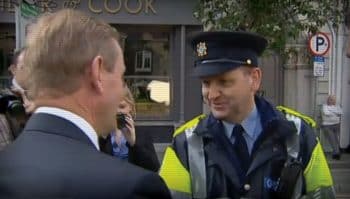
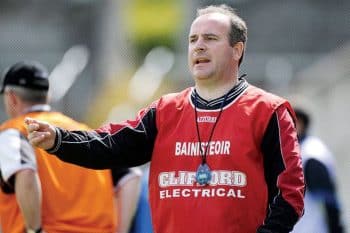
    From our March 2018 edition. If a tree falls in an empty forest does it make a sound: if a gun shot is fired in a building can it not be heard, especially when people are in and near that building? This is something that has puzzled me regarding the death of a Garda Sergeant, Michael Galvin, a former captain and manager of Sligo hurling team, and a father of three who lived in Manorhamilton, Co Leitrim. He died on 28 May 2015. I heard on local radio that morning that a man had earlier been found dead at Ballyshannon Garda Station. The first thought I had was it would be Michael Galvin: WHY? Because I always believed he would become a Garda Whistleblower. I could see from dealings I had with him, that he wanted a more open and transparent Garda Síochána. I had met Garda Sergeant Michael Galvin many times over the years. He came across as an honest, compassionate, straightforward and helpful Garda, who would fight any implications of wrongdoing. He appeared tenacious and I recall him saying, “it will be a long time before I retire”. Sergeant Galvin took statements in relation to Councillor Sean McEniff and others’ alleged incitements to hatred in 2013 after a home proposed for a Travelling family was burnt to the ground at Parkhill in the town. Michael Galvin took his own life with a hand gun after being subjected to a Garda Síochána Ombudsman Commission (GSOC) investigation. Under Section 102 of the Garda Ombudsman Act, the Garda Commissioner forwards any case of a Garda death to GSOC for investigation. Three gardaí, including Sergeant Galvin, were being investigated after the death of 33-year-old Sheena Stewart on 1 January 2015 after a night out in Bundoran, Co Donegal, when she was struck, while intoxicated, by a taxi. It is understood the sergeant had driven past her before the accident as he responded to another call At his funeral his widow, Colette Galvin, revealed he had been in deep personal turmoil over the investigation. Sergeant Galvin told GSOC the woman had been on the pavement rather than the road when he passed her at the scene.  However, an apparent discrepancy arose between that evidence and the CCTV footage of the incident. A Judicial inquiry under Judge Frank Clarke, now Chief justice, looked into the GSOC investigation. The Inquiry found that GSOC should not have instigated a criminal investigation though it had done so in good faith because it was practice to do so in any case where there had been a death. Sergeant Galvin only found out about the investigation three months after it had been instigated, because of deletion by Garda of a key email. Judge Clarke found that the practice of gardaí imparting the news a colleague was being investigated needed to be changed so that GSOC did it. An email from GSOC’s lawyer to its Investigating Officer the morning of the suicide had confirmed that though there was insufficient evidence of commission of a crime the file should be forwarded to the DPP. Sergeant Galvin never got to hear this news. The spin from the Garda Síochána was that GSOC was responsible for Sergeant Galvin’s untimely death – and the inquiry did express concern about how GSOC informed the press after his death about its investigations into him, before his family was aware of the status of those investigations. However, the inquiry noted that the Garda were confused about, and suspicious of, the role of GSOC, and that they had been confused as to whether GSOC’s investigation was criminal in nature and had therefore inappropriately taken uncautioned statements from their three colleagues in the gardaí. GSOC practices changed after the Clarke inquiry. Its chairperson said that it would improve its communication with gardaí and it prepared a set of information leaflets for gardaí on how such investigations should progress. But where are the Garda Síochána changes? Certainly suspicion of GSOC has been acute since its formation. This was symptomised in the vehemence of suspicions that gardaí bugged GSOC headquarters which led to the inconclusive 2014 Cooke inquiry. After this the Garda Commissioner, Noirin O’Sullivan admitted a more constructive relationship between Garda and GSOC was required. But the problems survive the Clarke inquiry. In 2016 Judge Mary Ellen Ring Chairperson of GSOC berated the time the Garda take to furnish documents to GSOC and the absence of sanctions for reticent gardaí. On 1 March 2018 Judge Ring suggested that the Garda attitude towards GSOC is “we get it, when we get it”. She bemoaned the fact there is no penalty if gardaí do not comply. Government is unenthusiastic about GSOC. This year, 2018, GSOC have sought 37 extra staff but on 25 February the Minister for Justice, Charlie Flanagan, said only five staff will in fact be provided. More generally, the failure to implement the recommendations of the Morris report on the gardai in Donegal, and indeed anecdotes from the streets, suggest that in forty years nothing much has changed in the Donegal Garda. I was in fact reminded of Sergeant Galvin’s death by news of the suicide of Detective Superintendent Colm Fox – lead detective in the Regency murder trial also in a Garda Station, Ballymun, on February 10. Michael Galvin also reminded me of another Garda, Michael Lawless, who made written complaints about the untouchables in Donegal and the close relationship between Senior Garda and Sean McEniff. Garda Lawless specifically complained that gardaí were being hindered by Senior Garda in carrying out their duties. As long ago as 1985 an RTÉ ‘Today Tonight’ focused on Law and Order in South Donegal, particularly Seán McEniff’s gaming. Donegal County Council sued RTÉ for defamation for what it said about the inappropriate relationship between Donegal County Council and the Garda but a legal settlement saw it agree to remove the programme, on the steps of the High Court. In 2014 when Sean McEniff appeared to assault a female Councillor Senior Garda would not prosecute

    Loading

    Read more

  • Posted in:

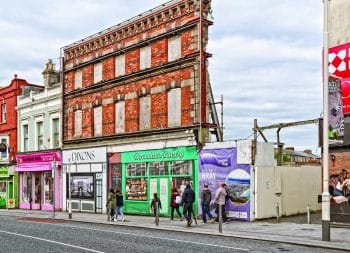
    Wicklow Manager bouncing Bray demolition

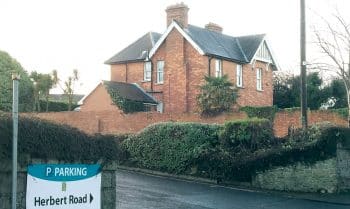
    Village last month reported that Wicklow County Council has agreed to sell a prime town-centre site in Bray to developer Paddy McKillen’s Navybrook Ltd for just €2.6m. The deal is contingent on Navybrook delivering a commercial development by the end of 2019.  It is also a controversial sale that has raised questions about value for money. Most Councillors and most residents of Bray want the site developed. Known as the ‘Florentine’, it has been vacant for 20 years, but has also served meanwhile as a convenient car park with 225 spaces. A Council official in January told Wicklow County Council that the site is actually worth more as a paying car park than as a development site. “There’s not huge value in this for developers”, he claimed. But a related effect of the sale of that site to Navybrook is now proving controversial too. For it transpires that Council officials set aside a sum almost equivalent to the Florentine’s sale price to buy and demolish two large inhabited houses at Herbert Road nearby in order to extend another surface car park by up to 100 spaces.  The proposed new spaces are seen by some residents as an incentive or subsidy to the purchaser of the Florentine site. The original Council budget for the extra spaces appears to have been only about 10% less than what that Navybrook has agreed to pay for the Florentine. Wicklow County Council might have insisted on any purchaser of the Florentine erecting a multi-storey with 356 car spaces, instead of the 256 now planned there. Had Wicklow County Council insisted on 100 more car spaces at the Florentine, it would still have been fewer than had been required as a condition, when planning permission was granted for the Florentine site to an earlier owner.  One previous planning permission for an earlier proposed development on the Florentine site, one that included apartments, had required 417 parking spaces. Wicklow County Council acquired the site at a bargain-basement price during the recent crash. It believes that the Florentine will yield it commercial rates of up to half a million euros annually when completed. The County Council itself sought planning permission for the Florentine before selling the site to Navybrook. The inspector for An Bord Pleanála pointed out that objectors had stated that the Council was not making sufficient allowance for car parking, with provision being promised for just 256 spaces. The inspector’s report included a statement that applying car-parking standards in the, then-current, Wicklow county development plan 2010-2016 would have meant that “504 spaces would be required”. But Wicklow County Council insisted that 256 spaces were enough, and An Bord Pleanála accepted the Council’s assurances. Permission was granted last year. Just one month later the Council was engaged nearby in private negotiations to buy St Paul’s Lodge and another big house, both adjacent to the existing surface car park on Herbert Road which is an area zoned for mixed use. Local residents were not informed, but the prospective purchasers were told that Wicklow County Council wanted to buy their houses, and that the purpose for which the Council wanted them was additional parking.  The owners first sought €1.5m each (as opposed to the €765,000 valuation that the Council’s own surveyor put on one of the houses last year). In the end, only the sale of St Paul’s Lodge went ahead, for €913,000 including the vendor’s legal and other costs (such as furniture removal to Spain). The Council thus acquired an Edwardian home and large garden that officials hope to clear for up to 47 hard-surface car spaces. Bray residents (including myself) oppose the Council’s proposal to destroy St Paul’s Lodge, on architectural and social grounds among others, pointing out that it was reportedly designed by the architect of Farmleigh House, and that destroying family homes during a housing shortage pushes up the cost of new homes for everyone. Hearing rumours of the Council’s wish to destroy part of their neighbourhood, residents tried between June and October last year to elicit information from Wicklow County Council. We were told by the Council simply that, “We are examining all aspects of parking in the town at this time”. In fact Council officials were then intent on closing the purchase of St Paul’s Lodge as quickly as possible.  Council officials concluded the purchase of St Paul’s Lodge unconditionally, despite the fact that it was bought solely “in order to raze it to the ground and build a car park on the site”, as the vendor’s solicitor put it last July. It is an extraordinary fact of current law that Council officials have great freedom to spend public money on acquisitions without the approval of elected representatives. However, approval is required to demolish or dispose of a building, and the process of securing approval in such a case requires public consultation under a provision known as ‘Part 8’. But what kind of consultation? In this case Wicklow County Council ignored expressions of concern by local residents and inserted no provision in the contract of sale contingent on Council approval. The Council closed the sale without first completing the consultation concerning possible demolition. This has put Councillors under pressure to approve demolition. The house could be put back on the market. There is a strong demand for such houses in the immediate vicinity, and at least one older and bigger house nearby (in bad shape) was recently bought and substantially renovated. But the fact that officials paid above what their surveyor considered to be the house’s normal market value could leave the Council out of pocket from any resale. Residents had their request for a meeting ignored by Council management, and have been forced to take an appeal to the Office of the Information Commissioner to get some documents eventually released that reveal details. The first site notices of planned demolition were not clearly visible from the road and none at all was put on the property of St Paul’s itself. A new notice was

    Loading

    Read more

  • Posted in:

    Closure through Disclosure

    It is not a question of whether there was a Garda smear campaign against Sergeant Maurice McCabe. Rather, it is a matter of who planned and orchestrated it. For the first time since his prolonged agony began in 2008, McCabe was given the opportunity to speak publicly of his mistreatment by Garda management and some of his colleagues when he gave evidence at the Disclosures Tribunal in Dublin Castle on Monday 5th and Tuesday 6th March last. It was not new but it was devastating. Leave aside the inevitable conflicts and confusion that have emerged as to what instructions the former Garda commissioners, Martin Callinan and Noirin O’Sullivan, did or did not make in order to discredit McCabe. The simple fact is that McCabe was the victim of a culture within the force that does down any member who does not abide by its code of loyalty. Not loyalty to the truth or the uniform but to protecting their own at all costs. When it came to speaking out about the abuse of the penalty points system by probably hundreds of gardaí, from the rank of commissioner down, McCabe crossed the thin blue line. His efforts to highlight the fact that members routinely cancelled penalty points for family, friends, politicians, journalists and Garda colleagues lit the fuse which ultimately led to a systematic campaign to destroy his career and his life. It is not so long ago that a garda who reported or charged another member for drink driving was committing a hangable offence, for the one doing his duty. It was beyond the bounds as it meant that the guilty drunkard would inevitably lose his job on conviction. So it did not happen. In McCabe’s case, when he discovered how the internal Garda computer system, Pulse, was regularly abused to destroy evidence which could otherwise lead to the conviction of hundreds or thousands of people for drink driving or other offences, he became the target. He was wrongly accused of failing to detain a man who went on to commit murder. He was blamed for disclosing a litany of failures by gardaí in the station in Bailieborough County Cavan when he was sergeant in charge in 2007. As was his duty, he had informed his district officer, Superintendent Mick Clancy, about the low standards of policing at his station and in particular the failure of members to investigate crimes, to execute warrants or to keep proper files. He found himself accused of heinous crimes including the sexual abuse of the daughter of a colleague. When he was cleared of this charge on the instruction of the DPP, he found that it resurfaced time and again, not least whenever he blew the whistle on wrong doing within the force. He found that complaints he was making to more senior officers were not being accurately reported and, in some cases, clearly distorted. On one notable occasion a reference he made to making a complaint “to Clancy” was wrongly described by an officer as McCabe making a complaint “against Clancy”. If he had not secretly taped this meeting with then Inspector, now Superintendent, Noel Cunningham, he would have been, in his own words, “buried”. When he brought his concerns to the confidential Garda recipient who was expected to deal with such matters ‘confidentially’, all hell broke loose. It was then that the orchestrated campaign against him commenced from the very top. It may be a coincidence that among those who, it is alleged, had their penalty points quashed was Martin Callinan, who, it is claimed, was determined to “bury” McCabe. Another was the Irish Independent journalist, Paul Williams who, in April 2014, revived the story of McCabe’s alleged abuse of a garda colleague’s daughter which the DPP had dismissed back in 2006. Williams was among those named in the Dáil as having had his penalty points quashed. Worse still, Callinan was accused of suggesting that McCabe had sexually abused his own children. Callinan had described the whistleblowing of McCabe and another garda, John Wilson, as “disgusting” behaviour when the then commissioner appeared before the Public Accounts Committee in January 2014. The following day Callinan met PAC chairman, John McGuinness TD, in the car park of the Red Cow hotel on the Naas Road in Dublin where the commissioner said, according to the politician, that McCabe couldn’t be trusted and had abused his own children and his nieces. In 2016, the former Garda press officer, Dave Taylor, told McCabe that he had been instructed by Callinan to destroy him by leaking the false child sexual-abuse claims far and wide. “He has to be buried”, Callinan had told Taylor. Then assistant commissioner, Noirin O’Sullivan was the “pusher” of this strategy. That is what McCabe claims he was told by Taylor. Taylor appears to have retracted some of his claims while McGuinness is supporting McCabe’s sensational allegations against Callinan. The smear campaign which was known to politicians, journalists and many members of the Garda, happened. It only remains to be seen who was ultimately responsible for it.   By Frank Connolly.

    Loading

    Read more

  • Posted in:

    It’s Time For Leaving Cert Reform

    It’s that time of year again. The CAO applications deadline has just passed and the mock exams are about to begin for almost 60,000 sixth year students. It’s also the season for commentary on the Leaving Certificate from employers, those in the media and staff in further and higher education institutions. The main criticism centres on how the exam narrows student experience of teaching and learning and prevents them from developing the analytical skills or the ability to think critically that they will need in the workplace, further education and in wider society. The combination of a high-stakes exam and a hugely competitive points system means there is little emphasis on a more rounded education. Supporters of the existing Leaving Certificate model say that it is a level playing field for students who, regardless of gender, ethnicity or social class background, have an equal chance of success. The evidence for this suggests otherwise, as the following research shows.   What do we know about the Leaving Certificate? The ESRI’s Post-Primary Longitudinal Study is the most in-depth study of student experiences in second-level education in Ireland. The research followed a cohort of 900 students in 12 case-study schools from entry to secondary school to completion over the period 2001 to 2008. The schools were selected to reflect key factors in how students experience their education, such as subject choice, streaming, and how much support was available to them. By zeroing in on the sixth-year cohort, using a combination of questionnaires and focus-groups, we gained a deep insight into student experiences of school in the months leading up to the Leaving Certificate exam. In any discussions around Senior Cycle reform, the findings are central to understanding the impact of high-stakes exams, such as the Leaving Certificate, on different groups of students. Here are some of the most important findings of our study that offer some guidance of what to avoid if or when the time comes to overhaul the system.   Educational Inequality High-stakes exams such as the Leaving Certificate reproduce social inequalities because of their disproportionately negative impact on students from lower-income homes. Many argue that students from middle-class households are more familiar with the dominant culture, and so they fare better academically. By contrast, the mismatch between home and school cultures is a disadvantage for working-class students. Our sample of students shows that their experience of their final year leading up to their terminal exam varies according to social class. In sixth year, students begin to find their work more challenging. To cope with this, more middle-class students increase the time spent on their homework and study, with some students spending over four hours per night on homework. Middle-class students are also more likely to take grinds or private tuition outside school to improve their results. In other words, these students appear to use their cultural and financial capital to invest in activities which help them to succeed. Figure 1 shows a clear social class gradient in taking grinds, with extra tuition being much more prevalent among all professional social class groups and farmer groups. The evidence clearly shows social reproduction, where the most privileged consolidate their position at the expense of the chances of social mobility of those at the bottom. Wealthier sixth-year students have more access to the cultural resources that are needed to make the transition to higher education. Even when we take into account prior performance in school, it is clear that attending a predominantly workingclass school will diminish your chances of going on to higher education. The interviews with sixthyear students highlight how those in middle-class schools tend to draw on insider knowledge gained from siblings and other family members in making their decisions about colleges and types of courses. In contrast, students in more working-class schools whose families have no history of higher education are more reliant on advice from guidance counsellors, teachers and their friends in making a decision. These findings point to the importance of the institution of the school in providing relevant guidance and advice to students who most need it.   Stress and the Leaving Certificate The escalation in workload and squeeze on free time have a particular impact on young people’s ability to cope, resulting in high levels of exam related pressure, stress and worry. Many reduce their participation in sport, even though those who continued to take part in regular schoolbased sports have lower stress levels than their peers. Girls experience much higher stress levels than boys, with almost 40 per cent of girls reporting losing sleep with worry and over 50 per cent feeling constantly under strain or pressure in the months leading up to the Leaving Certificate (Figure 2). Female students were also more likely to report losing confidence in themselves and having problems concentrating. The findings also show that stress may be passed from one student to another, becoming contagious among particular groups of (often high-performing) girls. One of the main drivers of this stress was the young people’s own desire to do well. Some of those interviewed spoke about the importance of the Leaving Certificate for their future, believing “it’s the biggest exam you’ll ever do in your life’ (Lang Street, co-ed school, working-class intake) and others felt ‘your whole life depends on it” (Wattle Street, boys’ school, mixed intake). But certain aspects of schooling also influence stress. Students frequently said that teachers who constantly emphasised the importance of the exams were a source of pressure. One student felt that “[teachers] just tell us how bad we are getting on instead of how good we are getting on, you know what I mean. That’s all they do” (Barrack Street, girls’ school, working-class intake). Describing their lack of free-time, another student said that “even the weekends, they’re telling you that you have to study the whole weekend as well” (Barrack Street, girls’ school, working-class intake). Interestingly, students who received more praise or positive feedback from their teachers had lower levels of stress, while some

    Loading

    Read more

  • Posted in:

    Nama, the drama

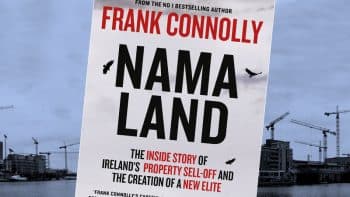
    Nama was inevitably going to be controversial. Set up to acquire loans from the Irish banks that had recklessly provided the finance for an almighty property boom and needing to be rescued when the inevitable happened, Nama was the vehicle created to work through getting some of the money back. In 2009 the property market in Ireland had more than crashed, it had ceased. With no credit available from broken banks , many businesses in existential trouble and incomes squeezed by higher taxes and government cutbacks, a shock hit the economy denuding the resources and confidence needed for property transactions. The concept behind Nama was to take the time to deal with the property issues and avoid all the collateral supporting bank loans becoming valueless in a market with no buyers. Time and a structured approach would allow the physical property assets backing the toxic loans to be sold in a recovering property market and mitigate losses. So called ‘bad banks’ had been established elsewhere in the wake of property busts but nothing on the scale of Nama. If the market was to get going again to facilitate this strategy, it would need brave foreign investment. In crisis there is always opportunity for some, and there are organisations whose very reason to exist is to exploit misfortune. It was Nama’s job to create the conditions where these organizations could come to Ireland and buy. In a great read about what happened as Nama did the necessary, Frank Connolly’s book ‘Namaland’ [Gill 2017: €16.99] does a good job of telling the story so far. Connolly states in the introduction that it did not work as planned and the book sets out to show that. Nama is seen as a secretive defensive organisation with an unwillingness to allow a sufficient degree of scrutiny, and there is a sense that it therefore must be hiding skeletons. Secrecy was always going to be part of the Nama story however, and no account could be as revealing as many who buy this book in the hope of exposures would like. Lending agreements are confidential and borrowers are entitled to their privacy even when loans are distressed. The business of Nama was inevitably going to be veiled, and full transparency was never going to be a feature of the deals Nama did. This in itself created a suspicion and a curiosity. Using journalistic sources Connolly has provided the reader with a coherent narrative often focused on individuals and their interactions; deals were done transferring fortunes to funds with names like Cerebus and CarVal that have become familiar to us all. Clearly Connolly did enormous research and a great job of putting together a comprehensible chronicle of events along the way. In my view, Nama and those who worked there, with what I think are very few exceptions, come out of all this pretty well; it could have gone very badly. There was the danger that Nama could have been a blanket for indigenous cronyism with its power and resources used to enrich insiders and the connected. This book does not make the case that this is what happened. A grave danger for Ireland at the time of the creation of Nama was that foreign funds would come to see the property market in Ireland as being rigged for insiders and political cronies. Certainly the size of Nama relative to the market was an issue. A functioning and transparent property market was needed to speed recovery, and Nama made a significant contribution to recreating a vibrant market in Irelandwhich in turn helped speed the recovery. This is why Nama was set up, and the recovered market is testimony to it having worked much as intended. Connolly’s coverage of Project Eagle and the dealings around it is very interesting. Some of the players on the fringes of Nama in the North are shown in very poor light and certainly there are questions there. The nexus of real estate, serious money, business and politics in a small and uneasy area such as Northern Ireland is covered extensively. Local politics can be troublesome for big funds and certainly they were something of a minefield for Nama. The story of Nama is not yet over. In some years it will be examined by serious academics from both a political and financial perspective. I think it will come to be seen to have done the job it was set up to do. By any standards it was an enormous and difficult organization to operate. People working in Nama must have been under very great pressure and were certainly not popular, often wrongly seen as property market insiders with comprised intentions. If anything, this book will help readers understand the complexity of what was done. Nama was not inevitable and nor was it the only way toxic loans could be dealt with. It was a political choice. We can never know if another approach would have been better. We do know that the property market recovery was quicker than most expected. Certainly Nama made a contribution to that.   Tom Dunne is head of the School of Surveying and Construction Management at the Dublin Institute of Technology

    Loading

    Read more

  • Posted in:

    NIhillism

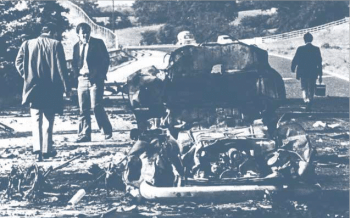
    It is forty three years since the now notorious Glenanne Gang murdered three members of the Miami Showband in July 1975. Two of the band survived -Stephen Travers and Des Lee. The Gang was made up of serving RUC and UDR personnel, plus members of the UVF. The leader on the night, the infamous Robin ‘the Jackal’ Jackson, was at the time in command of the UVF’s mid-Ulster Brigade. He was an ex-British-army soldier. Journalist David McKittrick attributes as many as 50 killings to Jackson, making him one of the most lethal, and most secretive, serial killers of the late 20th century you’ve probably never heard of. The gang is said to have been responsible for 120 murders, including those of the Reavey brothers and the O’Dowd family in January 1976. the next night the IRA murdered ten innocent Protestants at Kingsmill, another sectarian obscenity in Ulster’s murder triangle. Jackson was linked to the Miami Showband killings by the now defunct historical enquiries team in its 2011 report on the 1975 massacre. Jackson’s finger prints were found on the homemade silencer of a Luger gun used in the attack. The report also stated that Jackson claimed he had been “tipped off’” while in custody in May 1976 by an RUC Detective Superintendent, and that he “… should clear as there was a wee job up the country that I would be done for and there was no way out of it for me”. But Jackson didn’t “clear” anywhere; instead he went on to kill many more. Despite widespread rumours about Jackson’s killing career at the time and his virtual impunity from punishment, he remained practically untouched by the forces of law until his death in 1998, apart from a seven-year conviction in January 1981, of which he served only two. That may mean he spent two weeks per killing, in jail. John Weir a former member of the RUC and member of the gang, who was convicted for murder in 1980, called him probably the “best operator” during the troubles. In 1999 Weir made detailed allegations in an affidavit about security-force collusion, making disturbing suggestions about how Jackson and the Glenanne gang’s murderous rampage was not only known of, but also tolerated by, the security forces. Weir’s allegations were regarded by the 2006 Cassel’s report, an independent panel of international lawyers commissioned by the Pat Finucane Centreto look into collusion in the North, as credible. Others found him believable too, including the BBC’s ‘Spotlight’. The fundamental question though is: were Jackson and the Glenanne gang not only tolerated but actively orchestrated by elements of the British intelligence and security apparatus (MI5, Military Intelligence, RUC Special Branch) as a proxy counter-terror gang? For years it has been alleged that Jackson was a protected agent of the RUC’s Special Branch. The 2003 Barron report into the Dublin and Monaghan bombings, quoting British army whistleblower Colin Wallace, said as much. In his affidavit Weir implicated RUC Chief Inspector Harry Breen, who served as a sergeant in Newry and Banbridge in the 1970sas having direct knowledge of the Glenanne gang. More incredibly still, he claimed that Breen was supplying weapons to the gang through a far-right loyalist organisation called Down Orange Welfare. In a 2015 documentary on collusion BBC journalist Daragh McIntyre claimed that, while discussing the Glenanne gang, Jackson was “protected by one of the most senior police men in Northern Ireland”. Breen was later killed by the IRA in 1989. If he was referring to Breen, and given the geography, timing and Weir’s claims, it is very plausible that he was, it is an extraordinary allegation worth stating again – clearly. Was one of the most notorious sectarian killers in the troubles protected as a strategic asset by one of the most senior policemen in Northern Ireland ? Whatever about the alleged protection, Jackson enjoyed practical immunity from prosecution all through his killing years during the 1970s and 1980s. Why that was the case has. But more importantly, the deeper question is who or what was protecting, or directing, or encouraging, the senior policeman ? As early as 1974 Colin Wallace, quoted again in the Barron report, said that Jackson and other leading Mid-Ulster UVF members “…were working closely with SB (Special Branch) and Int. (Military Intelligence) at that time”. Journalist Paul Footand Yorkshire TV’s 1993 documentary ‘The Hidden Hand – The Forgotten Massacre’ both suggested convincingly that Jackson and his gang, with members of the Belfast UVF, perpetrated the Dublin Bombings a year before the Miami massacre from their Glenanne base. The final report into the bombings published in March 2004 signposted obliquely that, “The possibility that the involvement of such army or police officers was covered-up at a higher level cannot be ruled out; but it is unlikely that any such decision would ever have been committed to writing”. As many have also pointed out, it is inconceivable that James Mitchell’s farm in Glenanne, South Armagh, the gang’s well known and notorious epicentre, would not have been under constant surveillance given what was common knowledge about the gang at the time in security and intelligence circles. Mitchell was an RUC reservist. John Weir claimed that the house was constantly watched by both RUC special branch and military intelligence: “basically everybody knew what was going on there…military intelligence was more often in the house than I was” yet to be seriously rebutted. Unfortunately the Barron report was signicantly handicapped from the beginning in its search for the truth. The British government is said to have over 65,000 potentially relevant files about the bombings, of which only a handful were ever handed over to the Inquiry. Writing of the murky, devious and labyrinth world of counter-insurgency in the North, Wallace, in a letter dated August 1975, printed in the Irish Mail on Sunday, on 10 December, 2006, stated that, ”it would appearthat loyalist paramilitaries and Int/SB members have formed some sort of pseudo gangs in an attempt to get paramilitaries on both sides to kill each other, and at the same time, prevent any future

    Loading

    Read more

  • Posted in:

    Eschatology, or the study of the end of times

    Eschatology, or the study of the end of times, is at least as old as the written word. The concept spans many of the world’s major religions, usually referring to some future day of judgement or reckoning. Beyond the realms of theology, eschatology as a concept is currently undergoing something of a renaissance, especially after the tempestuous and chaotic first twelve months of the Trump regime. In this time, almost everything we once took for granted about inherent stability, even inevitability, of western democracies and the robustness of our institutions has been shaken profoundly. As if to add to the sense of impending calamity, the Bulletin of the Atomic Scientists moved their famous Doomsday Clock for 2018 forward in late January– to two minutes to midnight. This is the closest it has ever been to the witching hour. The authors of the Bulletin excoriated the US government’s reckless nuclear brinksmanship, but poured special scorn on its efforts to derail international climate diplomacy. “Avowed climate denialists have been installed in top positions at the EPA and other agencies, and the administration has announced its plan to withdraw from the Paris Agreement. In its rush to dismantle rational climate and energy policy, it has ignored scientific fact and well-founded economic analyses”. The Bulletin was particularly scathing of the role played by climate deniers in stymieing action. “Despite the sophisticated disinformation campaign run by climate denialists, the unfolding consequences of an altered climate are a harrowing testament to an undeniable reality: The science linking climate change to human activity is sound. The world continues to warm as costly impacts mount, and there is evidence that overall rates of sea level-rise are accelerating – regardless of protestations to the contrary”. The toxic wave of US science denialism has swept right across the Atlantic. As previously reported in Village, last May saw the first meeting in Dublin of the self-styled Irish Climate Science Forum (ICSF) a denialist group with opaque membership and funding sources. February sees it host its fifth meeting in just 10 months, featuring a fringe Italian academic with strong ties to US neoliberal think tanks, the latest in a procession of climate contrarians to present new (thoroughly debunked) ‘findings’ to an eager audience mostly of Irish contrarians and deniers. Their agenda appears to be to hobble effective Irish government response to the existential threats posed by climate change. Their standard operating method is to cherry-pick data, float red herrings and exaggerate uncertainties in the scientific consensus often as political cover on behalf of special-interest groups, for continued inaction. Above all, groups like the ICSF are engaging in ‘post-truth’ assaults on reason itself. A recent edition of New Scientist magazine stated baldly: “There are disturbing hints that western civilization is starting to crumble”. The article quotes intriguing research from Yale university, which examined the two broad modes of human thought: 1) fast, automatic and inflexible, and 2) slower, more analytical and flexible thinking. As flexible thinkers within society solve our various problems, from transport to energy, with complex technologies, this relieves the great bulk of the population from even being aware of these problems, and so inflexible, automatic thinking ensues as the population, in a sense, dumbs down, since technologies can create the beguiling illusion that life is magically simple. One of the psychologists who developed this theory, Jonathan Cohen, suggests this may help solve one of the great puzzles regarding societies heading for catastrophe: why do they persist with their self-destructive behaviour, in the face of overwhelming evidence of future harms? “The train had left the station”, according to Cohen, and the forward-thinking, analytical types were no longer at the controls. As flexible thinkers within society solve problems with complex technologies, the population is relieved from even being aware of these problems, and so inflexible, automatic thinking and dumbing-down, ensue Separately, computer modelling carried out at the University of Maryland in 2014 examining the mechanisms that can lead to local or even global system collapse, identified two key elements. The first, unsurprisingly, is ecological strain. The panoply of chronic environmental stressors, including resource depletion, widespread pollution, ocean acidification and sea-level rise are generally well understood, at least in expert circles. What was less widely known was the systemic risk posed by economic stratification or, in plain language, the rich getting richer at everyone else’s expense. In the scenario modelled, “elites push society toward instability and eventual collapse by hoarding huge quantities of wealth and resources, and leaving little or none for commoners who vastly outnumber them yet support them with labour”, according to author Rachel Nuwer. Eventually, she argues, “the working population crashes because the portion of wealth allocated to them is not enough, followed by collapse of the elites due to the absence of labour. The inequalities we see today both within and between countries already point to such disparities”. She notes that the top 10% of global income earners are responsible for almost as much total greenhouse gas emissions as the bottom 90% combined. Here, extreme inequality and ecological stresses converge to form a toxic cocktail capable of crashing our civilisation into the dust. US academic Thomas Homer-Dixon published the influential book: ‘The Upside of Down’ in 2005. It presciently anticipated the global economic crash that occurred some three years later. The financial crisis was, he wrote, one of “five tectonic stresses which are accumulating deep beneath the surfaces of our societies”. Others include population, energy, pollution and resource exhaustion; and climate system stress. The 2008 economic crisis, along with more recent shocks, such as Brexit and the Trump election in 2016 can, according to Homer-Dixon, be seen as a series of non-linearities, or sudden and unexpected jolts to the assumed world order. These may be viewed as a random pattern of tremors presaging a truly global catastrophe, a word that derives from the Greek, meaning ‘to overturn’. To view catastrophe as imminent rather than already occurring requires a deeply anthropocentric perspective. The sequestration, plunder and simplification of the

    Loading

    Read more

  • Posted in:

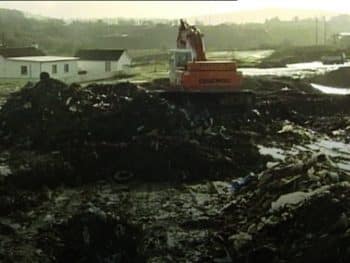
    €140m to clean up one of Ireland’s 450 contaminated sites

    Silvermines, which the government spent €11m remediating in the 1990s, was back in the news in May 2017 as three cows were found dead of lead poisoning. A new inter-agency group involving the HSE, Department of Agriculture, Tipperary County Council, Environment Protection Agency, Teagasc, Irish Water, The Food Safety Authority and the Department of the Environment has since been set up again to address this new situation. It may be of little comfort to local farmers who find restrictions placed on their farms again and to local residents concerned about public health that Silvermines has had significant remediation already. At the same time as this old infamous contaminated site was rumbling again, Judge Richard Humphreys in the High Court was preparing his orders on Ireland’s largest illegal landfill at Whitestown in County Wicklow. The clean-up bill is now estimated at as high as €140m. The case, Brownfield Restoration Ltd versus Wicklow County Council, has been covered in previous issues of Village. Rachel Carson’s book ‘Silent Spring’ in 1962 is credited with drawing widespread attention to global environmental pollution. In the 1970s discovery of a toxic landfill in Love Canal near Niagara Falls in upstate New York became the impetus for the United States adopting a law called CERCLA (Comprehensive Environmental Response Compensation and Liability Act) in 1980. It created a fund to address and eliminate the threat from contaminated sites all over the United States and then attempted to recover the monies from the entities that had caused the pollution. It has become known as Superfund. The Whitestown site in County Wicklow and Judge Humphreys’ order is perhaps our Love Canal moment. Do we need to create an Irish Superfund law? Judge Humphreys in his judgment last July said “a full account of this saga would be book length” and described the activities as reminiscent of 1930s Chicago which prompted the plaintiff’s barrister to refer to the modern-day TV show ‘The Sopranos’ which prominently features gangster-related waste-management control. The Whitestown quarry is roughly the size of eight rugby fields. Up to twenty two companies were listed as having hauled waste there from all over Dublin including from hospitals. Wicklow County Council dumped there until the week of its closure. Now the 80,000 tonnes of waste rests like a giant toxic teabag mixed with a million tonnes of other soils from a botched remediation effort. This ‘teabag’ sits partially in the water table which fluctuates with the seasons by up to two metres. So rainfall and the fluctuating water table create a toxic blend called leachate. The off-gassing can be equally toxic and one investigator was overcome with fumes and hospitalised in the early days of discovery. While up to 93% of the waste (primarily roadworks materials) at the site was deposited by Wicklow County Council, the description of blood-stained hospital theatre waste strewn all over the site left many queasy. Two of the early investigators on site were Donal O’Laoire and Ronnie Russell of O’Laoire Russell & Associates Limited. O’Laoire had been hired by Wicklow County Council as consultant in 2001 to come up with a plan on remediation. Both O’Laoire and Russell, who gave evidence in the case, had also been directors of Eco-Safe Systems Limited since 1999. it was listed as one of the 22 contributors to the site. Eco-Safe specialised in hospital-waste disposal & sterilisation. Dr Russell as founder and president of the Irish Decontamination Institute in 1989 (then called the Irish Association of Sterile Services Managers) had established an important network for healthcare facilities dealing with these issues. O’Laoire and Russell had also founded an environmental management and auditing firm in the 1990s. At this time certifying the compliance with environmental laws was becoming an established area of expertise leading to the ISO 14000 standards for environmental management being set in 1996. O’Laoire has published for the UN on environmental management for developing countries particularly African countries. Russell continues to be a leading research scientist at Trinity College Dublin and recently published guideline Manuals on decontamination for Saudi Arabian healthcare professionals. He is current chair of the HSE National Decontamination Advisory Group and vice chairman of An Taisce’s Environmental Education Unit as well as representing Ireland at the UN in Geneva on disarmament issues as a technical expert on biological weapons. These are arguably two of the leading and trusted influential individuals on chemical environmental issues in the State, which makes the performance at Whitestown so disappointing. The problems created by the initial waste dumping then got exasperated by a “botched remediation” plan. The judge subsequently, in his finding of facts on the Whitestown dump, states: “Mr. O’Laoire developed a proposal which he himself correctly in evidence described as corrupt whereby he and his associates (variously described as a syndicate or consortium) would make a profit from a commercial venture designed to remediate the site… clearly he was engaged in a massive conflict of interest that was actual rather than potential”. Judge Humphreys later described how the Irish EPA placed itself in a compromising situation by being a part of the Technical Working Group on the remediation plan. The EPA was effectively being gentler to the public authority than it would be to a private operator. Wicklow County Council were hoping they would not have to remove all the contaminated soil even though they were requesting and celebrating judgments in other cases (eg case against Fenton, 2002) demanding defendants do just that at other illegal dumps. Judge Humphreys now had to assess the risk the site posed, using European and Irish guidelines as well as case-law. The Irish EPA guidelines gave him a scale to calculate risk. The 2007 Code of Practice: Environmental Risk Assessment for Unregulated Waste Disposal Sites authored primarily by Margaret Keegan, of the Office of Environmental Enforcement, ironically had Michael Boland of Wicklow County Council on its technical review committee. Boland was a key witness on the botched remediation-plan analysis. The risk model used by the EPA assigned ‘points’ to the

    Loading

    Read more

  • Posted in:

    Lessons from Nuremberg

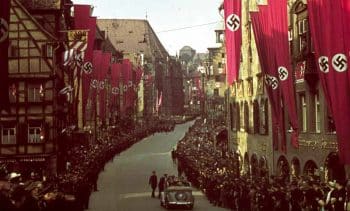
    I have for the last month been based in Eastern Europe, lecturing and contributing to the Anglo American University in Prague. The University has been very nice to me in light of the bedraggled and somewhat shaken image I must initially have presented. Prague, though it has its deficiencies as a city, is conveniently located in middle Europe, a kind of rarefied transport hub, a fractious, ravishing touristy polyglot cosmopolis. As someone of mixed Irish and Austrian blood I feel more at home and safe here than I do in Ireland, given some of the outrages that have been perpetrated upon me by the vicious bullyboy elements of that society, especially its state and at times thuggish professional classes. Nonetheless, I have not completely severed my ties. For over 16 years I lectured on Jurisprudence in Ireland and, for the last number of years, in particular I have been gradually winnowing my thoughts down on questions of moral good and evil and the intersection of such concepts with questions of legality. What are the good and bad things lawyers do? What is justice? In three hours or so from Prague you can be in Germany, or more precisely in Nuremberg, a city I have always wanted to visit but have never before been able to. “Nuremberg shines throughout Germany like a sun among the moon and stars”, according to the normally unimpressionable Martin Luther. Nuremberg was for centuries the undeclared capital of the Holy Roman Empire particularly because the Imperial Reichstag and courts met at Nuremberg Castle. It was the preferred residence of most German kings, who kept their crown jewels there. It was never a bastion of tolerance or Semitism. In 1298, the Jews of the town were accused of having desecrated the Christian host, and 698 of them were killed. In 1349, there was a pogrom of Nuremberg’s Jews. They were burned at the stake or expelled, and a marketplace was built over the former Jewish quarter. Rich and groaning with architectural wonders, it was also a magnet for famous artists. Albrecht Dürer, the great German painter of the Renaissance,was born here and we visited his house. By the 19th century, the city had become an engine room of Germany’s industrial revolution. The Nazis saw a perfect stage for their activities in working class Nuremberg. It was here that the boycott of Jewish businesses began and the infamous Nuremberg Laws outlawing German citizenship for Jewish people were enacted. Because of the city’s relevance to the Holy Roman Empire, the Nazi Party chose the city to be the site of huge Nazi Party rallies. On 2 January 1945, Allied bombers razed the entire city, killing 6000 people. After World War II the city was chosen as the site of the War Crimes Tribunal. Later, the painstaking reconstruction – using the original stone – of almost all the city’s main buildings returned the city to a measure of glory. Bavaria’s second-largest city and the unofficial capital of Franconia is an energetic place now where the nightlife is intense and the Reinheitsgebot determines that the wide-ranging drinking culture observes the highest quality standards. There are a number of ways of approaching Nuremberg but all depend on recognising that surfaces are very deceptive, starting with the resurrected architecture. My own instinct was to look at the city geographically and historically. The War Crimes court is some distance from the vibrant and wealthy re-created city centre. The historic footage gives the impression of a grand court but it is in fact quite small so the distances between the judges and the gallery of evil, condescending to the last, is arrestingly short – a matter of ten intimate feet. If you get a tram from the central station in the opposite direction to the court you come to the futuristic stadium of the infamous Nazi rallies, designed by Hitler’s deputy Albert Speer, and immortalised in the spectacular film, ‘Reichsparteitag – Nuernberg’ by Leni Riefenstahl, the memory of which flooded back to me as I climbed the steps and approached the podium where the Nazis spread their gospel of hate and evil to the enraptured, the hysterical and the merely cynical. It got me thinking about the failure of the European experiment and the recrudescence of fascism and extremism, in Russia and Hungary, in the US, the UK and incipiently in Western Europe, in Ireland. A new age of barbarism is upon us, the most forgetful generation. It advances on the foundation stones of civilisation. Ultimately globalism has ineluctably and insidiously led to growing economic liberalisation, the new age of robber-baron banks, vampire squids like Goldman, and bloodsucking multinational firms, including law firms. Under the guises of economic advance, internationalisation and anti-racist tolerance we have had a race to the bottom and the gradual destruction of the quality of life of many world citizens: longer working hours, short-term contracts, the sidelining of the elderly. The Nazis promulgated serfdom and unquestioning corporatism. Of course Weimar Republic stagflation and economic collapse, social unrest and meltdown may come to Ireland, a compliant population, controlled, self-satisfied, uncivilised and valueless. Our robotically-globalised social media- fetishing youth seems greedy and undirected. Ireland is its own epicentre of Social Darwinism, a technocratic, visionless society with no moral compass – a country that followed Bertie Ahern by Brian Cowen and then Enda Kenny. Of course the left, traditionally and wishfully, sees political quagmire as an opportunity, but in reality it too often leads to authoritarianism. Or dangerously right-wing populism of the sort that spawned Brexit and the triumph of Donald Trump. The Nazi-era Christian pastor Martin Niemoller emphasised the following existential quandary: First they came for the Socialists, and I did not speak out – Because I was not a Socialist. Then they came for the Trade Unionists, and I did not speak out – Because I was not a Trade Unionist. Then they came for the Jews, and I did not speak out – Because I was not a Jew. Then

    Loading

    Read more

  • Posted in:

    Oprah No

    Before she declined febrile suggestions that she run the US presidency on the grounds that she does not “have the DNA for it” Oprah Winfrey, the nation’s mother was attracting a great deal of serious political and media attention. Ireland has tried its hand at Dana, Gay Byrne and Sean Gallagher and may see some future with Miriam O’Callaghan. But Oprah is the ne plus ultra of celebrity in the land that invented it. Her tough-minded speech at the Golden Globes highlighted her potential as erasure of fellow television personality, President Trump who ironically had joked, innocent decades ago, that Oprah would be his “first choice” for vice president if, counterfactually as it could only be, he ever became President. Now it is said, in our uninnocent time, that the possibility of a Winfrey campaign could unite a divided nation. “I want her to run for president”,the ever wholesome, ever progressive Meryl Streep told The Washington Post just after the Globes. “I don’t think she had any intention [of declaring]. But now she doesn’t have a choice. It was a barnburner. She runs a major company. She could lead the country. Instead of leading the country down”. Bill Kristol, doyen of respectable mad neoconservatism and the original promoter of Sarah Palin, tweeted “Oprah. #ImWithHer…Understands Middle America better than Elizabeth Warren. Less touchy-feely than Joe Biden, more pleasant than Andrew Cuomo, more charismatic than John Hickenlooper”, he declared, almost incontrovertibly. Not a good start, it all derives from a joke. Golden Globes host Seth Meyers mentioned his 2011 White House correspondents’ dinner gig, where he had plausibly joshed that Donald Trump wasn’t qualified for the presidency. “Some have said that night convinced him to run. So, if that’s true, I just want to say: Oprah, you will never be president! You do not have what it takes. And Hanks! Where’s Hanks? You will never be vice president. You are too mean and unrelatable. Now we just wait and see”. Winfrey tittered. But an hour later, she gripped the luvvies and their world with a roustabout call to action. “I want all the girls watching here and now to know that a new day is on the horizon”. Winfrey’s longtime partner, Stedman Graham who would know, later told the Los Angeles Times that “it’s up to the people. She would absolutely do it”. And when the Los Angeles Times told Winfrey herself that “the Internet is saying Oprah for president in 2020”, Winfrey responded. “I’m just glad I got through the speech! I thought a lot about it. I wanted this to be a meaningful moment”. But would she consider a 2020 presidential run? “Okaay!” she reportedly responded souciantly. It was the okay that launched a thousand opinion pieces, a thousand and one. “Yes, we can! Am I the only one who had that feeling? It feels like Oprah 2020”, gushed ‘The Daily Show’s Trevor Noah. It has been typical. It wasn’t an accident. In a March 2017 interview, Bloomberg TV’s David Rubenstein had asked Winfrey about her 2020 plans. And, doggone, she has 2020 plans. “I never considered the question even a possibility,” she said decorously, before adding, “I just thought, ‘Oh … oh?’”. Let’s be clear in the interests of good governance, this was “Oh…oh?” not “Oh Oh!”. Rubenstein then pointed out unhelpfully that “it’s clear you don’t need government experience to be elected president of the United States”. “That’s what I thought”, Winfrey said ruminatingly. “I thought, ‘Oh gee, I don’t have the experience, I don’t know enough’. And now I’m thinking, ‘Oh’”. But this inchoate inarticulacy is also arrogant. Republican consultant Ana Navarro explicates this perspective: “Are we really asking ourselves whether a political neophyte, billionaire, media-savvy TV star can become president? America answered that already. I don’t know how much she knows about foreign policy or some domestic policy issues. But hell, it’s not like she’d be running against Churchill. She’d be running against Trump”. But if you could have Churchill you’d take him without a sidewards glance (actually you mightn’t rush to choose Churchill but that’s not really the point here). There is an elementary flaw in the logic. What would we do if Oprah ran and then someone less celebrated but more ideological, and with a lifetime commitment to appropriate policy ran? What would we do if Bernie Sanders ran again, buoyed by a resurgent radical wing of the Democrat Party? Serious progressives would feel they’d let themselves down with the shiny diversion. Trump doesn’t have the seriousness of purpose to be President but nor does Winfrey. Trump being exposed the way he has been – as wrong, dangerous, life-and-welfare threatening, mad – doesn’t mean billionaire Oprah is qualified to take on the job of the world’s most powerful politician. In reality the Trump circus shows that celebrity and alleged acumen aren’t enough. The main difference between Trump and Winfrey is that he is sociopathic and she is comprehensively empathetic. But who said empathy was the key qualification for the Presidency? It is political judgement. And Oprah’s is totally untested. For example there is no evidence she is willing to do anything that might risk making her unpopular, ‘unempathetic’. Empathy is her essence and her selling point. Republican strategist Rick Wilson, an antiTrump diehard, put it succinctly: “Arguably Donald Trump is the most famous man in the world. Maybe you can only beat a celebrity with another celebrity”. Perhaps the best way to political office is to appeal with music, art, chat-showery, and then collect votes. But surely this demeans the intrinsic value of some of these media. Not everybody awaits beyond all else their first blast of fame viewing it as a vehicle to wealth and power. Integrity is about how one deals with the task in hand, not how one manipulates one’s way to bigger or better tasks, and rewards. Indeed it’s not so long ago that John McCain’s most effective attack ad against the insurgent Barack Obama was called “Celebrity” which

    Loading

    Read more

  • Posted in:

    Council to get €2.6m for site once valued at €28m

    Yet another controversy over its land disposals has hit Wicklow County Council following a decision by Councillors to hand over a valuable town-centre site in Bray to developer, Paddy McKillen junior. On Monday 15 January, Councillors voted to dispose of the 0.9 hectare Florentine site in Bray to Navybrook Ltd for €2.6m. The site has planning permission for two anchor stores, a cinema complex, retail and business units and a 256-space car-park. A number of Councillors objected to what they considered to be the poor outcome for the Council, claiming that the site was worth more than the agreed sale figure. Council management had accepted the offer from Navybrook, a company controlled by McKillen junior and Matt Ryan, and finalised a development agreement with the property company which sets out the parameters of the project and its completion by August 2019. Last December, Bannon Property Consultants valued the site at €750,000 and said this figure was based on “a single assumption that the subject property is subject to the contractual obligations contained within the Draft Development Agreement”. Under the terms of the agreement the developer “will be required to carry out the development in accordance with the plans, planning consent, developer’s agreement and developer’s timetable as required by Wicklow County Council and only thereafter acquire title to the property upon practical completion of the scheme”. Navybrook only becomes liable to pay the €2.6m price following completion, according to the disposal documents presented to Councillors before their vote in mid-January. At the meeting, some Councillors questioned the Bannon valuation on the basis that the land for sale includes a number of listed houses, at 6-8 Eglinton Road, which are worth more than the figure estimated by the property consultants for the entire site. An adjoining property, at 9 Eglinton Road, was sold in April 2015 for €620,000 while other houses on the street are valued at more than €700,000. The controversy over the disposal deepened when a potential conflict-of-interest issue emerged in the days before the vote. It transpired that there was an error in the valuation document presented by Bannon to the Council last December. In the terms of engagement which are included in the valuation report submitted to the Council, Bannon states that: “We can confirm that we have had no previous involvement with the subject property. We are satisfied that no conflict of interest arises in undertaking this instruction”. This statement under the heading of disclosures and conflicts of interest is repeated in a later section of the, 78-page, Bannon report. Documents seen by Village confirm that Bannon provided a valuation report to a previous owner of the site, Florentine Properties Ltd. (FPL), in 2005 in which it also provided a detailed assessment of projected costs, rental income and profits that could be achieved on completion of a town-centre project on the lands. Wicklow County Council Director of Services, Des O’Brien, told councillors before the vote on 15 January that: “The Council sees this as a simple error. It was a different department of Bannon (retail services rather than property valuations), most of those involved no longer work there, and in any case other than it being so long ago in a completely different market, Florentine Properties Ltd no longer exists to our knowledge. The main shareholders of Florentine Properties, the Ballymore Group, have no interest in the site, nor did they show any interest at any stage in participating in this competition. We believe this was a simple error that has no effect on the process; there is absolutely no conflict of interest, and this in no way affects the basis of their valuation”. Councillor Tom Fortune insisted that questions remained over the contradictions in the Bannon correspondence and said that he had unsuccessfully sought a copy of the Development Agreement made with Navybrook. Council management had refused to circulate the agreement, on legal advice that it contained commercially sensitive information. Councillor Brendan Thornhill was not convinced that the €2.6m agreed with Navybrook was a good deal for the Council given the value of the properties included in the sale package, including five houses, two shops on Main Street and a car park. He claimed that the site was worth closer to €7m than €2.6m. “I say here the people’s best interest is not being served by selling the site at this price, €2.6m”, Councillor Thornhill said. O’Brien disagreed and insisted that the restrictive terms of the development agreement, including a stipulation that the new town centre would be completed by August 2019, represented a good opportunity for the people of Bray. However, he opened up another potential controversy as he sought to explain why it required the valuation from Bannon, after Navybrook had submitted its €2.6m offer. Further uncomfortable questions for the Council arose when O’Brien explained to Councillors how the valuation and tendering process for the Florentine site was carried out. He said that, in 2013, the Council had hired Savills to advise on the potential rental income and value of the site. In 2017, Savills, he said were also commissioned by Navybrook to advise on its intended purchase of the site. Savills, according to O’Brien, continued to work for the Council during this period. After the Council received the €2.6m offer from Navybrook, it sought a fresh tender from Bannon which came in at the €750,000 estimate in the valuation report provided in December 2017. O’Brien said that it could not release the Development Agreement to councillors as it contained confidential valuation information. He did not disclose the original valuation of Florentine provided by Savills to the Council. Neither did he explain, nor was he asked, whether there was a potential conflict of interest arising from the fact that Savills was advising both Navybrook and the Council at the same time. He insisted that as Bannon had no involvement with Navybrook there was no conflict of interest on the part of the property consultants. O’Brien said: “We went and sought a valuation before

    Loading

    Read more

  • Posted in:

    Looking-down syndrome

    They think the right to life begins at conception and ends at birth. I grew up in a feminist household where that telling put-down of our American anti-abortion brigade was part of the lexicon. (It was also a Catholic household, but when it came to reproductive rights, as most things, feminism trumped religion). It’s a crude line, but it describes a political right for whom opposing abortion is a priority, top of a list that also includes opposing social welfare and environmental regulation, supporting imperialist wars and the death penalty. Ireland’s own anti-choice crusaders don’t necessarily match the full spectrum of the stereotype – though they appear happy to take money from those who do. It’s nonetheless hard to stomach their late-breaking concern for ‘cherishing’ people with Down syndrome (DS) and other disabilities, a population they allege to be at risk of eradication in a more free regime for terminations. Fact-checking should easily dispose of their arguments. There are the countries like Finland where very liberal abortion laws accompany the highest levels of both rights and visibility for people with DS –- do you remember the punk band, all its members with intellectual disabilities, that represented Finland in the Eurovision? We can’t all be Finns, so how about the UK stats that show prenatally diagnosed DS cases as a proportion of terminated pregnancies actually decreasing? (Yes, there are countries with different attitudes: the point is that abortion laws don’t determine whether a given state, or a given family, chooses to accept or reject the birth of people with serious disabilities). Recent international history demonstrates conclusively, however, that it’s a mistake to enter any campaign with confidence that truth will prevail on its own strength, to put it mildly. (“Don’t bring the truth to a knife fight”, as one recent analysis put it more bluntly.) We need to talk about how we talk about DS and abortion. And since we can’t count upon the media to hold and host these conversations in a responsible and representative way, we need to sharpen our critical faculties about what we read and hear. We need to do better than the media when we seek to persuade people who profess to care about such issues of the urgent need to repeal the Eighth. One thing’s for sure: the media wouldn’t print or broadcast the language that came out of one group of mothers of children with intellectual disabilities who found themselves talking recently about the emerging role of DS in the anti-choice campaign. According to a participant who recounted the conversation to me, it sounded less like the school-gate and more like the back-room in ‘The Sopranos’, complete with murderous intent. “Fuck them, the fuckers. What the fuck do they know about it? Every smug fucker that votes to retain the Eighth to ‘save the DS babies’ should have to pay for the upbringing and education of a person with a disability”. It was good to see Down Syndrome Ireland (DSI) point out in January that people with DS can read and understand the current debate: recent research suggests that four out of five people with DS are capable of a significant level of literacy. But the charity’s implication that they and their families are sensitive souls who should be protected from such discussion smacks of the paternalism that you’d expect from, well, a charity. “Yes, I feel like I want to keep him away from the TV and radio for the next few months”, a mother whose son has DS told me. “But if the media actually were listening to people with DS instead of talking about them, it might be different”. Instead, they and their families hear the complexity of their lives and choices reduced to pointscoring soundbites, and the whole vast range of age and capacity encompassed by the condition reduced to cutelooking children on leaflets and posters. ‘Nothing about us without us’ – it’s a principle of inclusion and participation that media routinely ignore in relation to immigrants, Travellers, homeless people…It’s hardly surprising, given the challenges, that people with intellectual disabilities are, even in the hands of sympathetic journalists, always a voiceless ‘they’, never part of a vocal ‘us’. (For the record, my ten-year-old friend who has Down syndrome says terminating babies is wrong but governments shouldn’t interfere with people’s decisions. He also says he hates the term ‘special needs’ and wonders what credentials I’ve got to write this article.) Instead of listening to people with intellectual disabilities, the media turn to charities, generally DSI – a powerful organisation that does a lot of good, including resourcing the speech and language therapies that are vital if many people with DS are ever going to find their voices. But even the best charity is just that: charity. The disproportionate power of a charity like DSI is part of the problem in Ireland, where the State deliberately outsources so much basic welfare provision that addressing the needs of people with disabilities becomes a matter of ‘kindness’ and ‘cherishing’, rather than of hard-won human rights that the State must vindicate. The media complete this vicious circle of ‘care’ when they confer authority on charities, who often brilliantly take up the State’s slack, but whose existence depends on the maintenance of this outsourcing model. As the recent story of ‘Molly’ and her foster family demonstrated, life for people with disabilities and their families can be hard, costly, devastating for personal and working lives. Being forced to negotiate the largely unaccountable bureaucracies of charities, along the bewildering border with the barely accountable services of the State, to get physical aids, educational materials, assistive technology, appropriate food – you name it – makes it even harder. In that context, even well-meaning commentators can sound patronising. Fintan O’Toole’s mostly admirable column on DS and the coming referendum campaign pointed out, superfluously, that “most people with DS can live happy and fulfilled lives”. True, perhaps, but so what? What does that implied ‘happy and fulfilled’ threshold even mean?

    Loading

    Read more

  • Posted in:

    Songs of Inexperience

    U2 released ‘Songs of Experience’ before Christmas as a companion piece to 2014’s Songs of Innocence. Thematically, ‘Songs of Innocence’ was inspired by the band’s memories of their youth in Dublin in the 1970s with Bono describing it as “the most personal album we’ve written”. ‘Songs of Innocence’ touched upon these memories as perceived four decades on. The chances are slim that U2 will ever release the music they actually recorded in the 1970s – which also explored these themes – but at a time when they were raw and painful. A collection of primitive U2 demos – all recorded before their first official release in September 1979 – has been largely consigned to the vaults. Much to the dismay of avid fans, the black market bootleggers never managed to get their grubby hands on more than a few of them. While they are no astonishing gems in the vaults, the tapes do at least provide a few insights into how the U2 sound evolved. U2’s first demo session was the prize for winning a talent contest in Limerick in March 1978. While snippets from it have been broadcast during radio interviews with the band, the session has remained virtually out of bounds to the bootleggers; and even avid U2 websites profess ignorance about what was recorded. After four decades, Village will now finally – and exclusively – review U2’s first ever recording.     The CBS Sessions: ‘They Were Extremely Nervous And No One Was Expecting Miracles’ One of the judges at the Limerick talent contest was Jackie Hayden of CBS Ireland who became a critical figure in U2’s early success. The band’s bass player Adam Clayton felt Hayden “had a bit of flair and he wanted to sign Irish bands. The rest of the companies weren’t interested but he offered the best he could. He actually talked CBS into paying for our first demo tape”. The session took place in April 1978 at Keystone Studios in Dublin. According to Adam, “It was our first time in the studio and I think his first time as producer. He told us to set up as we would for a live show and play the set. It was all done in two-track. He thought that was a good way to do a demo. Then he took the tapes off to London to try to talk them into signing us and they just laughed. The tapes were awful. We didn’t know at the time, we had nothing to compare them with”. Hayden didn’t disagree. “After all”, he has said, “it was their first recording date, they were extremely nervous and no one was expecting miracles”. HANG UP The first song on the CBS session was called Hang Up. Like most of the original compositions, the lyrics evoke teenage angst. On this one Bono pleads on the phone to a soon-to-be ex-girlfriend not to “hang up/time is a cure/time can be found”. UNKNOWN TITLE (possibly SHE’S MY GIRL) The next track is also about teenage yearning but is far more interesting for a hint at how the U2 sound evolved. U2’s guitar player, The Edge, has explained that, “Adam is a very ostentatious sort of person, you know, very extravagant, so when he started playing bass he wasn’t interested in taking the bottom end of the sound spectrum at all. He wanted to be right up there in the mid ranges…In order to give the group any sort of clarity, therefore, I had to stay away from the bottom end of the guitar as much as I could. So, I tended to work around those ringing sounds”. This track displays one of Clayton’s early midspectrum forays. It also features an unremarkable Edge solo in the typical do-it-yourself garage-pub rock style of the time. STREET MISSIONS Another version of this song was eventually released by the bootleggers. This version is not as polished as the later version and the Edge’s contribution is far more restrained here. CONCENTRATION CAMP This song grew to become one of the highlights of U2’s live set in 1979 as they edged closer to a recording contract. It contains a solo courtesy of the Edge and is propelled by a strong bass but is distinguished by Bono’s rapid-fire vocal delivery which is quite unlike any of the other numbers they recorded during the session. The theme is elusive. However, references to “schooldays” suggest that Bono was venting his anger against the educational system. During an interview 1979 he revealed that as a pupil he had reacted against excessive demands for “intelligence in school – everything that it seemed you were not was pushed at you and I had a bit of a heavy reaction against that’. Instead, as he states in this track, he wanted to “live his life tonight”. UNKNOWN TITLE The fourth song is a slow number with vague echoes of Shadows and Tall Trees which appeared on their debut album Boy in 1980. The theme is also dominated by descriptions of life on the streets of Dublin city. INSIDE OUT This forgotten composition, written in 1978, captures U2’s continuing evolution and innovation. It sways on Clayton’s ropey bass. Meanwhile, Bono sings about his feeling that he is “inside out” in the “modern world”. The bootleggers did manage to get a hold of it from tapes of an early radio interview with Bono during which it was afforded an airing. BORN IN THE BACK IN THE STREETS U2 just about stumbles to the end of this track with Bono making excuses: “Doesn’t matter if we make a mess of it, does it?”. They didn’t run through it again so this incomplete version may well be all that remains of this arrangement. Aside from references to being born in the back streets, the lyrics make little sense. Bono admitted in 1979 that: “I never write lyrics until the last minute because they are constantly building as we work out the song. They build subconsciously because I find that

    Loading

    Read more

  • Posted in:

    History Rarely Repeats, But Often Rhymes

    For over a decade now, Dublin-based five-piece The Spook of the Thirteenth Lock have been fusing the folklore and musical traditions of their home city with sounds and processes from further afield, with elements of drone and post-rock sitting alongside the foundations of folk and trad across their previous pair of full-length records. In addressing and recontextualising tradition during the ‘decade of centenaries’, though, The Spook of the Thirteenth Lock have set themselves some massive tasks. In 2013, the band undertook to document and chronicle the lived experiences of the hundreds of thousands of workers denied basic human rights in the 1913 Strike and Lockout. The final product, ‘Lockout’, is a concept album in four movements, finally releasing this March via Dublin/Sapporo label Transduction, after a number of live airings in the intervening years. Having lived with their work for a while, band founder/vocalist/ lyricist Allen Blighe is content with the band’s work: “Initially it was planned as a short piece to tie into the Lockout anniversary but it grew legs. A lot happened, many were born, and many passed away in that time. We feel both happy and relieved to have created something original and ambitious, yet still quite cohesive”. Bassist/vocalist Enda Bates, himself no stranger to large-scale musical endeavours, expands on the size of the task at hand: “It was a big, complex project, both in terms of the writing and the production. We’re never stuck for ideas as a band, but the music does seem to take its own time. In the end, we’re very happy with the result and, despite the logistical demands, it was really great working with an electric-guitar orchestra”. Tackling the story of the Strike and Lockout with nuanced ramifications that lasted for generations, and that continue to reverberate in Irish society, and making of them a work for an eighteen-piece guitar orchestra was always going to be demanding on storytelling, compositional and logistical levels, according to Bates: “We knew we wanted to tell the story of the Lockout chronologically, and Allen had a list of key events he wanted to cover in the narrative. So we developed a timeline for the piece based on that, and it seemed to fall naturally into four sections. We already had some fragments of music written that seemed to fit nicely with certain events, and I had an idea for the opening in which each guitar comes in string by string and builds to a big crescendo before dropping back down to just Allen by himself. From then on we just worked through the timeline, sometimes arranging existing ideas for the orchestra, and sometimes writing new material to fit the narrative. The story of the Lockout contains moments of great hope and unity, but also plenty of violence and despair. We tried to represent this through very consonant material and this big, open C tuning on all the guitars, alongside some very dissonant rhythms and harmonies for the darker moments”. Blighe is keen to outline the serious research done on both the story’s main plot, and on concurrent events of the time, aiming to present a fuller picture of a society in turbulence. ”Much reading was done on the subject. Padraig Yeates’ excellent ‘Lockout: Dublin 1913’ was a big influence. Also, Jer O’Leary’s impassioned performances of Larkin speeches really struck a chord. There were many challenges in compressing such a complex story into an album. For example, we just didn’t have time to fit in anything on the controversy surrounding the so called “Dublin kiddies’ scheme”, where the church blocked efforts to send strikers’ children to sympathetic English families to escape the deprivation of the Lockout. Some other themes, such as those presented on ‘Suffrage’, part of the 4th movement, were important to include. This deals with the struggle for voting equality, and Markievicz’s legacy, one as chequered as many of her male contemporaries but judged more harshly for no other reason than her gender. Matching the music to the narrative was a really interesting process. In the past we’ve written the music first, and then found lyrical themes to apply. For this project we flipped that around, which was a rewarding change of approach”. There’s obviously a great resonance to the story today, over a hundred years later, with the current ideological impasse plateauing across Irish politics and working conditions getting ever tighter for countless people since the introduction of austerity. Blighe discusses the similarities: “The decade of centenaries has been an interesting time to reflect on what exactly Ireland is. Where 1916 and the war of independence were about the struggle for national sovereignty, the Lockout and the Civil War were struggles to define exactly what this nation might be. Things are different now but ‘history rarely repeats but often rhymes’. The Lockout was a struggle for a fairer deal for workers against a very hostile and callous bunch of Dublin employers headed by William Martin Murphy, head of the DUTC, the tram company and owner of the Irish Independent, who enjoyed the tacit support of the law and state. Today we have a few similar characters. Ireland since the collapse has been murky to say the least, and there are many questions about banking regulation, the wind-up of Anglo, NAMA deals such as Project Eagle, the sale of Siteserv, the write-off of debt at INM, the constant policing scandals as the disclosure tribunal continues to unfold, and most importantly, the housing crisis. There is a sense that the gains of the trade union movement are being systematically stripped back in the name of competitiveness in a system that hothouses inequality”. While that might seem grim, Blighe continues to outline what can be done domestically, and what lessons can be taken away from previous popular mobilisations. “Our fear is that if a positive left-wing movement, in the mode of the water protest movement is not generated to deal with this inequality, then we will see a slide to the far right. Irish nationalism

    Loading

    Read more

  • Posted in:

    Dáil and its legal reforms are pro-lawyer

    The circumstances of the demise of former Minister for Justice, Alan  Shatter, diverted attention from the risk of the thwarting of his reforms of the legal profession. Infamously many ministers, and their – often informal – advisers, are lawyers. Indicative of the problem is that at the last reading of the proposed reform bill, it was clear that both Fianna Fáil and Sinn Féin, the principal opposition contributors on the bill,  had nothing to contribute beyond what they had been fed by the representative bodies of the legal profession, the Law Society and Bar Council. The only person who seemed concerned by this was, ironically, the ex-Minister himself, a high-flying solicitor. Under successor minister, Frances Fitzgerald, the substance of his proposals remain intact. So far. To the detriment of all but the most pampered senior lawyers, they do not go far enough anyway. When the bar is accused of privilege and anticompetitive practices, the defence is often proffered that the fact that so many barristers are struggling and even leaving the profession proves lack of privilege and anticompetitive practices. This defence is incorrect. On the contrary, in a profession, the relative suffering of the incoming juniors is indicative of anti-competitive practices, not of their absence: both the general public and those less established in a profession pay for the profession’s obstruction of competition. Ireland shares with the UK the distinction of maintaining the highest legal costs in Europe, and a similar system of practices, including separate functions for barrister and solicitor, the real pressure to hire three lawyers in the higher courts, the much-questioned institution of Senior Counsel, and a system of legal-cost adjudication (formerly called ‘taxation’) in which the question of whether a lawyer has overcharged you is decided in a process which seems designed to punish you severely for challenging the lawyer’s bill. Obstacles to barrister right of establishment and to price competition Two key obstacles to barrister competition are restrictions on advertising, particularly of fees, and prohibition of direct access to barristers by clients (approach must be done through a solicitor). These obstacles have a powerful twofold economic effect in favour of established barristers: first, they obstruct new entrants from establishing themselves, getting market share and competing with the incumbents; second, they inhibit what economists call price competition: the system inhibits the client’s ‘shopping around’ for the best-value barrister for their needs, and haggling for fees, and thus bringing normal market forces to bear for lower fees. These two obstacles are of the Bar Council’s own making and it vehemently resists their repeal, desite the issuance of an infringement ‘formal notice’ by the EU Commission in November 2013. Theoretically the solicitor can do this ‘shopping around’ for the client. But there are three major problems with this. Firstly, the solicitor is not necessarily going to take this ‘shopping’ seriously enough as her own money is not on the line. Secondly, as this shopping takes the solicitor’s time, the solicitor can bill for it; if she does not, she is not incentivised to work thoroughly on it. Thirdly, there can be a fee-splitting practice where solicitor and barrister, while having actually billed the client distinctly, aggregate their actual received fees and split them. Fee-splitting is a form of kickback to the solicitor on the barrister’s fees, and actually puts price competition in reverse by perversely incentivising the solicitor to use a more expensive barrister. The barrister’s code of practice is totally silent on any such kickbacks; it does not prohibit them or even require that the client be notified of them, indeed it does not mention  them at all. Investigation by the Irish Competition Authority The Irish Competition Authority investigated the Irish legal profession and in a final report published in 2006, concluded that the legal profession was “in need of serious reform”, and “permeated with unnecessary and disproportionate restrictions on competition”. It set a target date of 2008 for the implementation of its many recommendations. As of 2014, the most important recommendations have not been implemented. Troika pressure and glacial government response The Irish government was under pressure from the Troika to reform the legal system and to do something about excessive legal fees. The first draft of the Legal Services Bill was published in 2011, already three years after the Competition Authority’s target date for implemented reforms. Since then, the draft bill has sat on the shelf for a further three years. In November 2013, the European Commission initiated an infringement procedure against Ireland (reference NIF 2013/2192) for continuing to allow the Bar Council to maintain the restrictions it has on advertising. The first draft of the bill had many problematic provisions, some of which have removed or improved in the new draft of the bill. Key obstacles to barrister competition not removed The draft seems to be pretending that it is implementing direct access to barristers, with a heading ‘code not to prevent direct access to barrister’. When you look closely, it is only implementing direct access in ‘non-contentious’ cases, that is, about 2% of barristers’ work. The bill does not mandate effective freedom of advertising for barristers at all. Flagrantly unjust legal cost adjudication regime The current draft of the Bill codifies and slightly modifies an existing 18th-century practice of financially flogging those who challenge lawyer’s bills: if you challenge your own lawyer’s bill and she is found to have overcharged by anything less than 15%, you have to pay an 8% ‘stamp duty’ on that bill and, additionally, the costs of the hearing. An even worse current practice is left unmentioned and unchanged by the Bill: you have to pay the stamp duty of 8%, regardless of whether or how much you have been overcharged, when you challenge the bill of a lawyer who is not your own (which happens only when you have to pay the costs of the other side). This system is in flagrant violation of natural justice, equality before the law, and arguably the constitution. In Ireland, unlike for

    Loading

    Read more

  • Posted in:

    Dr Pat and Harassment at the Museum

    ‘Gogglebox’ added a new face to its ever-deepening stable of television viewers last October. Pat Wallace, alongside wife Siobhan, joined TV3’s Irish rendering of BBC’s extremely popular vicarious Big Brother-style television inversion. Before then Dr Pat Wallace was notable mostly for his heroic record on the controversial Wood Quay archaeological dig from 1974 when speaking truth to power he took over the excavations at the tender age of 25, an honour he described variably as like “winning a £2 million scholarship” and a “sink or swim situation”. The son of a blacksmith from Askeaton in Limerick, Wallace had earned a scholarship to University College Galway after achieving the highest Leaving Cert results in Limerick for 1966. He later became Director of the National Museum and was a competent and articulate exponent of the archaeological agenda, standing up robustly against other national bodies for the sites in Tara, Woodstown and Carrickmines, in the teeth of aggressive road plans, for example. Hailing from a staunchly Republican background, Wallace was long a supporter of Fianna Fáil and laid the praise for the completion of a new campus in Collins Barracks at the feet of the Taoiseach of the day, Bertie Ahern. On the day of the opening of the Museum at Collins’ Barracks, however, the IMPACT trade union orchestrated a one-day strike which had the effect of keeping the Taoiseach away from the gala, as he refused to cross the picket in his own constituency of Dublin Central. The move to the Barracks had cost upwards of £30m, attracting scorn from some within the organisation who suggested that the premises itself was taking precedence over the artefacts it was ostensibly in service to. Wallace retired in 2012 after 24 years as Head of the National Museum. Wallace’s name came up again in a November 2017 postscript to a blog post originally uploaded in February 2017. Here, he was implicated as presiding over a “toxic” and “hierarchal” culture of “privilege” in his time as Director of the National Museum of Ireland by archaeologist and blogger Adrienne Corless, who described not only being bullied by Wallace but being sexually harassed on several occasions by her immediate superior, who she now felt ready to identify as Andy Halpin. Halpin, she claims, had touched her inappropriately on several occasions while she was working under him at the museum. Repeated informal complaints to HR had had little effect, as following only minor castigations Halpin would continue his harassment of her even having been moved on to other duties, according to the Irish Independent. When Corless finally initiated a formal complaint against Halpin, he confessed that he viewed her as a “foil for his fantasies”. On one occasion after seeing some “tall school girls” and wanting to “prolong the fantasy” he pushed her against a door to “measure [her] height”. Corless describes how she waited impatiently for news of Halpin’s admonishment at the hands of Museum management, only to be told upon phoning the HR department herself simply that they “had implemented the disciplinary code”. HR would not speak further as to what in practice this implied, and so it fell to Corless herself to look up the code and determine that, in fact, “he [had] received the softest possible reprimand”. Corless feels that Wallace knew about Andy Halpin’s behaviour, as it had continued unabated with other women before and after her experience with him, but had “thought that the Civil Service systems in place would take care of the problem of Mr. Halpin”, in spite of her “foolish” hope that Wallace “would say or do more”. In fact, she recalls an instance after she reported Halpin to HR where Wallace allegedly “chuckled to another senior manager” that he never thought “Halpin would have had it in him”, as if he saw her formal complaint against Halpin as a ‘badge of honour’. Some time after the HR complaint, Corless was offered Halpin’s former position, although Halpin was retained by the museum in a different capacity. Now without a department, Corless came to operate directly under Pat Wallace himself, whereupon his abusive and “bullying” behaviour towards her began to take shape. Wallace’s maltreatment of Corless is exemplified in an episode she relates in her blog post of February 12 2017: “At a social occasion, in front of horrified friends from outside the organisation [the National Museum of Ireland], he told my partner in a seemingly jovial way that he’d better not get me pregnant again”. This came following an incident in which Corless phoned to discuss upcoming maternity leave, and was “angrily” lambasted by Wallace who told her it was not his fault she was “up the pole”. This attitude appears to have been serially manifest in Wallace’s dealings with subordinates within the National Museum. Corless describes how “Higher Managers would pale before visitations of [Wallace]”, and how the “entire organisation” remained in a state of constant fear and anxiety over his appearances. In a more recent blog post in January of this year, hosted on the blog site of Grace Dyas who last year initiated the campaign against Michael Colgan’s harassment of women during his tenure as Director of the Gate Theatre, Corless relates the account of a Danish undergraduate student interning at the National Museum. Nina Vodstrup Andersen similarly alleges she experienced sexual harassment at the hands of Andy Halpin, as well as verbal harassment by other, unnamed staff members. Among them was Director Wallace himself, who she claims cornered her in a dim corridor one day and, “in a tone of voice laden with sexual glee”, accused her of having an affair with her supervisor, commenting that “You Scandinavians are all the same” before walking off. Andersen left the museum in 2008. Wallace claimed that his departure from the directorship of the National Museum in 2012 was a result of being effectively forced out by the realities of pension and salary cuts implemented across the board of the public sector in response to the financial crisis.

    Loading

    Read more

  • Posted in:

    Gonzagrievance

    Revelations of sex abuse in all-male private schools in past decades have been powerfully conveyed across the Irish media. That barbarism should not, however, deflect attention from other enduring problems. I believe grave damage is still being done to the development of boys in ostensibly civilised institutions. Moreover, unequal educational provision maintains widening inequalities, underpinning a pervasive competitive individualism. I draw on painful memories of my own educational background in Gonzaga College SJ (Society of Jesus ie Jesuit) to provide a critique of private, all-male education. This is a personal account and others will have different perspectives. In his ‘Portrait of the Artist as a Young Man’, James Joyce’s boyhood character disparages children from non-private schools as “Mickey Muck and Paddy Stink”. We have an enduring educational snobbery. Many a privately-schooled chap still dons the proverbial old school tie. By the 1920s, one of the leading Dublin Catholic secondary schools for boys of its time, O’Connell School on Richmond Street, recommended its pupils in the following terms: “Your ‘Richmond Street’ boy makes a good official. In the first place he possesses the necessary academic qualifications to place him high on the examination lists. He has, in addition, certain qualities which make him a good colleague. This is an essential point. However clever an official he may be, he has to pull with the team …”. The abiding ambition of most all-male private schools remains not only to produce good examination results, but also to develop a cast of mind disposed to “pull with the team”, rather than swim against the tide. Jesuit institutions have led the way in this regard. Since independence a disproportionate number of high office holders in this state have been educated in Jesuit schools, especially Clongowes Wood SJ in Kildare, Belvedere College SJ in Dublin, and after its foundation in 1950, my own alma mater Gonzaga College SJ, also in Dublin. All three of these are all-male and private, while the first is also a boarding school. The appointment of John Marcus O’Sullivan as Minister for Education in 1926 marked a tipping point such that non-combative Clongownians in the Cabinet outnumbered veterans of the 1916 Rising. Simon Coveney and Richard Bruton continue what is a long line of Clongownians, though the former was expelled, seemingly for underage drinking. This elite education is now more likely to produce managerial material for a thrusting private sector than diligent civil servants. But in these academic hothouses, creativity is still conflated with rebelliousness. After school, positions of influence, and wealth generation, are preserved by ‘old boy’ networks. Pressure is felt in middleclass families to reproduce this status in their sons and, to a lesser extent, daughters. A dominant Catholicism permitted horrific abuse against an older generation in Ireland. Nonetheless, professional lawyers applying Thomistic principles built a State founded on principles of universal justice. For good, and ill, Bunreacht na hEireann, our Constitution, is promulgated “in the name of the Holy Trinity”. The 1960s witnessed the advent of an era of unprecedented judicial activism. By then many of our judges were drawn from all-male, Catholic, especially Jesuit, schools. They ‘discovered’ “Unenumerated Rights”, based on a ‘Catholic’ Natural Law interpretation of the Constitution, an expansive approach the Court has since grown wary of. Moreover, Fine Gael’s ‘Towards a Just Society’ document, conceived by Declan Costello in the 1960s, aligned closely with Catholic social teaching after Vatican II, contemplating a society built on socialist principles, including state ownership of banks. There are still Jesuits, such as the visionary Father Peter McVerry, who maintain a missionary vocation for social justice. But arguments for a fair distribution of wealth did not figure prominently during my own ‘Jesuit’ education, where charitable activities tended to be characterised by noblesse oblige, and an assumption that it was valuable to witness how ‘the other half’ lived. Class divisions were, if anything, upheld by an awareness of a pronounced economic fault line. The 1990s was a peculiar era to be a teenager as Irish society embraced the conformities and staid hypocrisies, of 1950s America, which the beat poet Allen Ginsberg decried in his ‘Howl’ (1954). He asked: “What sphinx of cement and aluminium bashed open their skulls and ate up their brains and imagination?”. In both, a hypocritical conformity was maintained. We abided: “with dreams, with drugs, with waking nightmares, alcohol and cock and endless balls”. Binge drinking, and later bad hashish, were some of our preferred responses to a creeping sense of purposelessness. We stared agog at the fall of the Berlin Wall, and encountered foggy notions of an End of History. A pervasive popular culture, beholden to Mammon, including the exotic promise of sex in the sun played out on Australian soap operas, leached away instincts towards radical politics. The Leaving Certificate-obsessed and rugbybesotted Gonzaga I encountered demanded a dull conformity that did not give room for progressive post-Catholic ideas to flourish. Free-ranging speculation of a sort associated with the intellectual, or poet, was widely scorned. We passed from strangling religiosity to Neoliberal vacancy without coming up for breath. This has hobbled some of our best minds. Well before revelations of serious sexual misconduct, a Catholic ancien regime was already creaking, their pronouncements at odds with an upwardly-mobile generation of businessmen, who really ruled the roost. The emerging financial and technological sectors also boosted the professional classes, many of whose earnings spiralled. Gonzaga College SJ is still among the leading all-male secondary schools in the country, claiming a thoroughbred stable of academics, lawyers, and politicians such as Anthony Clare, Michael McDowell, and Peter Sutherland, the socalled “father of globalisation”. A sense of meritocracy was based on an entrance exam and Leaving Certificate results that often bred a preening elitism, without consideration of the worth of either. In my time, shades of Eton and Oxford cohabited with bog-Irish institutionalism, dissolving individuality into a corporate body toughened on rugby, and kept in check by cruel humour. Endowed with superficial polish, for many, meritocracy provided a fast train to plutocracy.

    Loading

    Read more

  • Posted in:

    2008 not 2000-1

    David McWilliams is a talented analytical polymath but he is egocentric and predictions of both boom and bust for Ireland have nearly all been wrong.

    Loading

    Read more

  • Posted in:

    How the Anglo-Irish Vice Ring Trafficked Boys from Belfast to MPs and a TV star in Britain

    In 2017 Village published a series of articles highlighting allegations of British Establishment complicity in child abuse in Ireland, particularly the crucially flawed Hart Report which was published in Northern Ireland (NI) a year ago. Judge Hart was tripped up by false evidence fed to him by MI5, MI6 and others for their own devious reasons. The problems manifest in his report make it an imperative that all of the activities of the Anglo-Irish Vice Ring (A-IVR) be re-investigated by the London-based Independent Inquiry into Child Sexual Abuse (IICSA) which enjoys far greater powers of witness compulsion than Hart did. First, the IICSA should look afresh at the Kincora scandal on account of its multiple links to Westminster figures such as Sir Cyril Smith MP and Sir Peter Hayman of MI6, both of whom abused Richard Kerr, a former Kincora resident. Another former MP who is still alive abused Kerr while he was still at Kincora. He too should be included in these inquiries. In addition, the IICSA should examine the territory which Hart did not explore and call witnesses who were either overlooked or refused to co-operate with him. The trouble with the files Last month, Britain’s National Archive stated that it was withholding a file on Kincora from publication. We believe this vindicates our criticisms of the Hart Report. Hart was given solemn assurances by the UK intelligence, security and political communities that they would provide him with all the relevant files on Kincora for his work. It now appears that this one was not disclosed to him. If indeed it wasn’t, what is in it that is so sensitive that it was withheld from Hart? If, however, it was furnished to Hart, what influence did it have on his deliberations? Since we do not know what is in the file, these questions cannot be answered. In the absence of clarity, Village believes it is far more likely that the file was withheld in its entirety from the Hart Inquiry. In addition to the criticism Village published during the last year, we can now add that Hart missed the significance of some important information which was furnished to him. He was supplied with a copy of an interview with Hugh Mooney, a former ‘Information Adviser’ to the General Officer in Command of the British Army in NI which was published in The Sunday Correspondent. In it Mooney stated unambiguously that Colin Wallace, who worked at the British Army’s HQ at Lisburn as a PSYOPS officer, had told him about the abuse at Kincora. ‘I do know he mentioned it. He was dropping it in and feeling his way. He kept pushing it. But I could never understand why. I thought it was totally irrelevant to our concerns. I did get the feeling he was pushing this’. Hugh Mooney left NI in December 1973. Hence, Colin Wallace must have told him about the scandal before that date i.e. seven years before Hart concluded that the British Army knew about the abuse. This was also two years before Richard Kerr entered Kincora. Hugh Mooney did not appear at the Hart Inquiry. At page 88 of his report Hart stated that, ‘We are satisfied that it was not until 1980 [after the media exposed the Kincora scandal] that MI5, SIS, the MoD and the RUC Special Branch became aware that [William] McGrath [of Kincora] had been sexually abusing residents of Kincora when that became a public allegation”. Unfortunately, Hart made this finding despite knowing that the Ministry of Defence (MoD) had destroyed all the PSYOPS files at Army HQ in Lisburn in 1981, or at least alleged that it had. Colin Wallace is clear in his memory that a number of the missing files concerned McGrath, his paramilitary organisation Tara and Kincora.   The IICSA will begin its probe into VIP abuse next month The IICSA was established in 2015 by Theresa May in her then capacity as UK Home Secretary. She pointedly refused to include Kincora within the remit of the IICSA despite being requested so to do by former Kincora victims. The IICSA came into being as a response to a plague of child-abuse cases linked to VIPs and the British Establishment, including that of Jimmy Saville. Since the instigation of the IICSA, an array of independent campaigning websites has pursued the story tenaciously while the mainstream UK media has largely steered away from any meaningful coverage of it. Its focus has, instead, been on reports about personnel changes on the staff of the IICSA. Meanwhile, elements of the pro-Establishment press, especially the Daily Telegraph and Daily Mail have seized a number of opportunities to undermine claims about elite complicity in the abuse. They have been supported by a handful of Tory Party grandees who have spoken out on radio and TV. Next month the IICSA will finally begin its probe of allegations about Westminster and VIP abuse; at least that is what is intended. On the basis of past performance, the Telegraph, Mail and their allies in the Tory Party will seize upon a series of stories which Village has long argued are nothing more than fictitious and entirely malicious plants designed to distract attention from the truth; worse still, designed to bring credible witnesses into disrepute by tainting them all with the same absurdist brush. A purported ‘witness’ known only as ‘Nick’ has, for example, poisoned the waters of credibility with absurd claims about sadistic murders – some with preposterous and laughable Occult overtones. ‘Nick’ was wheeled out by pro-Establishment commentators to undermine the findings of the Wiltshire Police last year that the late Edward Heath had abused young boys. We can expect to hear a lot more about ‘Nick’ & Co., in the coming months from the Telegraph, Mail and multifarious Tory grandees. Irrespective of what the IICSA ultimately determines, Village believes that much of the truth has already entered the public domain and there is no reason for this process to cease. The rest

    Loading

    Read more