admin

  • Posted in:

    Anti-bloodshed brothers

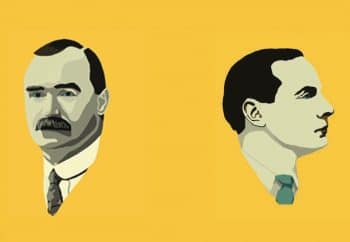
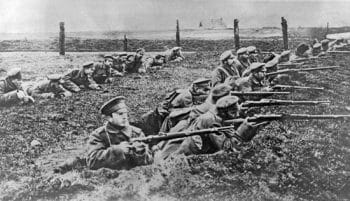
    Much is made of the choice made by James Connolly to join the Irish Citizen Army (ICA) with the Irish Volunteers led by Pádraig Pearse for the Easter Rising in 1916. Across the British and European Left, notably but not exclusively among those on the side of the allies in World War I, there was a mixture of horror and disdain at the Irish merger of socialism and nationalism into a revolutionary force. Within the ICA itself there was some opposition to any collusion by socialists with the nationalists with one of its founders, Sean O’Casey, to the fore in condemning Connolly whom he described, retrospectively, in 1919, as having “stepped from the narrow byway of Irish Socialism onto the broad and crowded highway of Irish nationalism”. For many years since, and particularly since the outbreak of conflict in the North in the late 1960s, Connolly’s decision to join the military council of the Irish Republican Brotherhood and to set a date for the Rising after a three-day secret meeting with Pearse, Sean MacDiarmada and Joseph Plunkett in January 1919 has been the subject of much criticism, including by many on the Left. However, in the light of so much recorded material including the invaluable statements of participants to the Bureau of Military History becoming available since then, the rationale behind Connolly’s decision, however reluctant, has become much clearer. Equally, the motivation and coherence of Pearse and his comrades in the Volunteers in striking a blow for freedom is also now more credible than many of their detractors would allow. In 1915 Connolly did use the words “blithering idiot” to describe anyone who would celebrate the “red wine of the battlefields” – comments widely believed to have been in response to Pearse’s exhortations. He said: “No, we do not think the old heart of the earth needs to be warmed with the red wine of millions of lives. We think anyone who does is a blithering idiot. We are sick of such teaching and the world is sick of such teaching”. He was referring to a Victorian tradition in literature and poetry which was widespread in Ireland and Britain as well as in mainstream, including socialist, European thinking which glorified blood sacrifice and martyrdom. What is more important though is the practical opposition of Pearse and Connolly to the actual blood sacrifice which saw hundreds of thousands of young men wasting their lives on the killing fields of Flanders and beyond in an imperialist war. For this was the central reason why both men found common cause in the Spring of 1916. As President Michael D Higgins said at a commemoration for the ICA in Áras an Uachtaráin at Easter: “The suggestion that, when WWI broke out, James Connolly scrapped his faith in socialism to embrace pure nationalism is contradicted by Connolly’s writing and journalism both before and after 1914. James Connolly was deeply concerned with the context of turmoil in Europe and the world, whose revolutionary potential was, in his view, being squandered in defence of imperialist adventurism. In Connolly’s estimation, a blow against Empire was a clearing of the ground for future socialist struggle. It is important, therefore, not to rush to judgement on what James Connolly’s motivations were for orchestrating a joint action with the Volunteers. One can understand how, in despair at the collapse of his and other socialists’ internationalist hopes after the outbreak of the War, appalled by the breakdown of the international proletariat into nationalities which were slaughtering each other on the Western Front and in the Middle East, James Connolly resolved to seize the opportunity of the war to strike a blow again the British Empire”. At the secret meeting in January 1916, Connolly accepted an invitation to join the IRB council and agree a date for the Easter Rising while conscious of the ideological differences that existed between the ICA and the nationalists of both the Irish Volunteers and the larger force of nationalists under John Redmond. Connolly had worked with the trade union movement against the capitalists in the US, and on return to Ireland led the Dublin workers against the brutal onslaught by employers, some of whom were prominent in the nationalist movement during the 1913 Lockout. That struggle led directly to the creation of the ICA the constitution of which influenced key sentiments of the 1916 Proclamation including its call for equality for women and children and “the right of the people of Ireland to the ownership of Ireland”. Further, Connolly was an internationalist who understood that the world war was essentially a contest between the great powers over global resources. Pearse clearly shared more in common with this perspective than many of his former nationalist allies as he agreed to include the progressive thinking of the ICA in the Proclamation he drafted and read at the GPO, a document that had of course been printed by union labour in Liberty Hall the night previously. Redmond on the other hand was prepared to encourage tens of thousands of young, mainly impoverished, Irishmen to their deaths in the imperialist war in order to gain advantage for his wealthy compatriots through the fading promise of limited home rule. As President Higgins remarked, “the ranks of mainstream nationalists, and particularly those of the Irish Parliamentary Party, comprised a significant number of industrialists and graziers who were happy to secure the advantages of a political independence within the Empire but who would resist economic, social, or as both O’Casey and Synge would learn, cultural, innovation”. Many of those who fought heroically with the Irish Volunteers during Easter Week went on to reveal just how divergent their view of the type of Ireland they were ghting for was from their comrades in the ICA, and indeed many in Cumann na mBan. Some of those drafting the 1922 Constitution of the Free State just six years later described how the proposed inclusion of Pearse’s words on equality was dismissed as “Bolshevist” by the British authorities

    Loading

    Read more

  • Posted in:

    Democracy and war

    DEMOCRACY AT HOME General Election 2016 has thrown up an utterly unpredictable result with Fianna Fáil in the ascendant. At the time of writing the consequences of the vote including who will survive as leaders, who will be in government and who will lead the government could not be less predictable and, without resorting to metaphysics, will reflect only opaquely the will of the people. Yet we carry on as if this did not reflect in any way on the integrity of our democracy. DEMOCRACY ABROAD The Brexit referendum should have been framed on whether the UK will be in the EU, in EFTA, or independent. But, as always in these islands, the third option, the middle one, has been omitted. The outcome, therefore, is bound to be inaccurate. And given the divisive nature of the in-or-out, stay-or-leave question, it is highly likely that the ‘leave’ option will win. In a three-option poll, the ‘leave’ option will probably lose. On 20th Dec last year, Spain went to the polls… and two months later, Spanish politicians are still arguing about who should be in government. But this is par for the course. As happens in so many democracies, open and transparent elections are followed by closed and opaque discussions, as various parties wheel and deal behind closed doors, trying to concoct a majority coalition. In 2013, Germany’s four parties took 67 days to sort something out. In 2010/11, Belgium’s dozen took 451 days! Will Ireland have the same sort of uncertainty? Democracy is for everybody, not just a majority. Conflict zones like Syria and Ukraine need inclusive governance, governments of national unity. Inter alia, this should mean that elections are preferential and proportional; that power is shared in both joint presidencies and all-party coalition cabinets; while the third ingredient is preferential voting and collective responsibility in parliament. Sadly, while we preach at least some of these ideals abroad, we practice the very opposite at home: majority rule in the Dáil and the Commons, and divisive majority voting both in parliaments and national referendums. Before the Scottish referendum of 2014, it was widely assumed that ‘devo-max’, the middle option for maximum devolution, would get about 60 per cent. The ballot, however, included only the two other options, status quo and independence. The result, therefore, was a highly inaccurate nonsense. There are times, as with the election victory of Aung San Suu Kyi in Myanmar, or our own recent referendum on same sex marriage, when democracy is wonderful. On other occasions, as in the Balkans, it was downright dangerous: the 1990 elections there were little more than sectarian headcounts and “all the wars in the former Yugoslavia started with a referendum”. (Oslo- bodjenje, Sarajevo’s main newspaper, 7.2.1999.) It must also be remembered that Napoleon became the Emperor by a popular vote, one in which he, literally, dictated the question. Hitler, too, came to power ‘democratically’. In the 1924 elections, the National Socialists won just 14 seats but, in the wake of the great depression, this rose to 107 (17.6%). The subsequent history consisted of weighted majority votes in parliament (like the Enabling Act of 1933), simple majority votes in referendums in which, again, the dictator di tated the question, and war. DEMOCRACY AND WAR The focus of this article is Westminster’s democracy and the decision to go to war in Syria. Would the outcome of the debate on bombing in Syria have been different if the chosen methodology of decision-making in parliament were not majority voting? In other words, would the House have made a different decision if the procedures had allowed for a more pluralist decision-making methodology? First of all, a little background. In 2002, in the UN Security Council debate on Iraq, Resolution 1441, both France and Germany objected to the phrase “serious consequences” in Clause 13. Yet both voted in favour of that resolution. The outcome, described as “unanimous”, was (not the but) a cause of war, of the invasion of Iraq on 20.3.2003, and of the sorry story since, not least in Syria. But that outcome – 15-nil – was not unanimous! France and Germany did indeed object to the above clause, and perhaps would have objected to other paragraphs if but the procedures had catered for such criticisms. Maybe other Council members, one or other of the ten temporary non-veto powers, which at the time included Ireland, might have had policy proposals worthy of consideration. Unfortunately, binary voting means questions are dichotomous. So countries vote in favour, perhaps because the resolution is better than nothing, perhaps because of the need for international solidarity, we don’t know. There is the main resolution; there may be amendments to this clause or that, or even perhaps a wrecking amendment; but everything is yes-or-no; it is this methodology which is at fault. Majority voting was, yes, a cause of war. A MORE INCLUSIVE PROCEDURE A more accurate methodology would allow the UK and USA to propose one draft Resolution 1441; option A. If France and Germany objected to Clause 13 or whatever, they could propose an alternative wording, even if only for this one clause, whence their preference would be a slightly revised but nevertheless complete package, option B. Syria, then a temporary member of Council, might have preferred another complete package, option C. Ireland could have preferred a more obviously neutral option D, and so on. Naturally enough, countries might seek to come together in groups to favour this or that option but the first principle would remain: everything should be on the table, (computer screen and dedicated web-page). The subsequent debate would allow for questions, clarifications, composites and even new proposals (although of course, at any one time, any one country could sponsor only one motion). At various stages, participating countries could express their preferences, so to indicate where the eventual consensus might lie. Then, at the end of the debate, all concerned would cast their preferences on a final (short) list of about five options. The winning outcome,

    Loading

    Read more

  • Posted in:

    Put in perspective

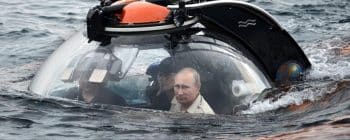
    As we know well in Ireland cash is one of man’s greatest temptations. It’s a recurring theme in Russia. In the venal world, for example, of Fyodor Dostoevsky’s ‘The Idiot’ (1869) most of the characters succumb to greed. General Ivolgin desires money to support his addiction to alcohol and to allow him to spend time with his mistress. Lebedev is willing to put his hands into a replace to retrieve a package that Nastassya Filippovna has discarded, with 100,000 roubles inside. In the society of The Idiot, money not only creates one’s fortune it also obtains one a bride. ‘Bids’ for Nastassya Filippovna range from 75,000 roubles to 100,000 to over a million. Money, then, is a clear symbol of the perversion of human values in the novel. Russia fell into a similar stupor at the end of the Cold War when excessive wealth corrupted Russian politics as Boris Yeltsin amply filled the role of the Idiot, his powers declining in a haze of vodka as the plot unfolds. It was out of this pit of iniquity that Vladimir Putin rose to power, the short but muscly former KGB of cer emerging from obscurity to become prime minister and then being elected President in 2000 when Yeltsin finally lost his reason. The US embassy cables published by WikiLeaks in 2010, revealed that American diplomats considered Putin’s Russia had by then become “a corrupt, autocratic kleptocracy centred on the leadership of Vladimir Putin, in which officials, oligarchs and organised crime are bound together to create a virtual ma a state”. A 2007 CIA report estimated Putin’s wealth at $40bn. Indeed the one-time biggest foreign investor in Russia, Bill Browder, told Business Insider that Putin was worth $200bn, making him the richest man in the world. He claimed “the first eight or 10 years of Putin’s reign over Russia was about stealing as much money as he could”. A BBC Panorama investigation earlier this year showed he has a $1bn palace on the Black Sea Coast. Funds for it were diverted from the super-rich who thought it would be spent on healthcare. But of course for most Russians, after a decade of buoyancy, all is not good on the cash front because of Ukraine-fallout sanctions, and the collapsing currency and oil prices. The Russian economy shrank 3.7 percent in 2015, and 4.1 in 2014 in rouble values, but in dollar terms it is 40% below peak. Oil prices rebounded in early February to above $35 per barrel but they had peaked in 2012 at close to $110 (when oil and gas constituted 52% of government revenue) and government forecasts are based on €50. Real wages fell 10 per cent year-on-year in December, the 14th consecutive month of contraction. Russia is running an unsustainable budget deficit of almost 5%. Soon a key thresold will be reached where over 50% of an average income is spent on food. Putin’s dastardliness and vulnerablity to exposé is even more drastic on the security front. For example, it has been alleged that, presumably under the direction of Putin, the Russian secret services, the FSB, bombed apartment blocks in Moscow in 1999 killing almost 300 people and pinning the blame on Chechnyan separatists. Of course, Putin was able to use the war in Chechnya to good propagandistic effect but he may have created hostages to fortune, even in furtive Russia. Such tactical ethical nihilism might have appeared in another of Dostoevsky’s extraordinary novels, Devils (1872). Towards the end one of the conspirators Lyamshin is put on trial and asked, “Why so many murders, scandals and outrages committed?”. He responds that it was to promote: “the systematic destruction of society and all its principles; to demoralise everyone and make hodge-podge of everything, and then, when society was on the point of collapse – sick, depressed, cynical and sceptical, but still with a perpetual desire for some kind of guiding principle and for self-preservation – suddenly to gain control of it”. Destruction and demoralising animates much of Putin’s policy from Crimea to Ukraine, Syria to Chechnya. Russia consistently operates standards that are more indiscriminate than Western military powers. Last September Putin shocked the world by weighing into the Syrian conflict with air strikes against rebel-held targets. Controversially the primary targets did not seem to be ISIL. An article in Time magazine by Timothy Snyder argued that the motivation for Russia’s intervention in Syria was to turn Europe into a ‘refugee factory’, compelled to accommodate many more beleaguered victims than have already arrived. This is based on the credible assessment that the Putin views the stability of the European Union as a threat to Russia. He will also have appreciated the opportunity to create a client authoritarian regime in the Middle East and to play to a growing anti-Islamic gallery in Europe, particularly in the former Soviet Union. Ironically, Putin started as a centrist in Russian terms. However, he was threatened by nationalist support for electoral protests against his regime in 2011-12, and now by economic instability and public poverty. If Putin fails to deliver in Ukraine, there is a probability of a challenge to his authority from a more radical nationalist agenda. Confronting Putin may be the greatest geopolitical challenge that Europe has faced since the end of the Cold War. Machismo, personal and political, is a big part of his schtick. Whether it’s bare-back horse-riding, descending in a deepwater submersible, posing with a massive pike he’s just caught or a tiger he’s tranquilised, or drinking 24-year-old vintage wine with Berlusconi he’s not notably alive to his feminine site. It’s Haughey for the twentieth century, gone global. He divorced in 2014 and is now living with a fecund gymnast. Man-on-Man buddy of Trump. Antagonist of Elton John. Scathingly self-righteous denier of any connection with the characteristic polonium poisoning of Alexander Litvinenko in London, despite the finding of a former English judge that he had “probably authorised it” and the dead man’s allegation that “the howl of protest from around the world

    Loading

    Read more

  • Posted in:

    Britain was responsible for The Rising and WWI

    As July 1, the centenary of the start of the Battle of the Somme – a asco in which one million soldiers were killed or wounded to make a six-mile advance for the Franco-British forces, comes nearer we will no doubt be asked to counterpose once again the heroism of the Easter Rising participants with the heroism of the combatants in the Great War. Heroism is surely an ambiguous category. Can heroism in a discreditable cause be admired? Is not indignation the most appropriate retrospective response to the politicians and generals who sent millions to their deaths in that mass slaughter? And compassion, rather than admiration, for those who followed their lead? The 1500 or so Irish volunteers of 1916 were taking on the British Empire at the height of its power. History has by now justified their cause by passing a negative judgement on that and other territorial imperialisms. The Easter Rising inaugurated the first successful war of independence of the 20th century, an example which many other colonial peoples have since followed. It set in train the events that led to the establishment of an Irish State. As the world moves from some 60 States in 1945 to 200 today and to a probable 300 States or more over the coming century, it is unlikely that either history or historians will look negatively on that Irish pioneering achievement. The 1914-18 war was by contrast a war between Empires which unleashed a catastrophe on mankind whose effects still haunt us. Quite apart from its 17 million deaths, 20 million wounded and economic devastation, its disastrous winding-up in the Treaty of Versailles gave us Hitler and World War II. The Great War was a conflict between empire-hungry politicians and powerful economic interests in the main belligerent countries. The recent academic consensus on how it started tends to spread responsibility between on the one hand the governments of the Entente Powers – France, Britain and Russia and on the other the Central Powers – Germany, Austria- Hungary and Turkey. The title of Cambridge historian Christopher Clarke’s best-selling book ‘Sleepwalkers’ implies that both sides drifted into a disaster none of them foresaw or intended. They were all equally foolish or criminal, and so equally responsible. Traditional left-wing characterisation of 1914- 18 as an “inter-imperialist war” implies a similar conclusion: that as all the imperialisms were bad, they were all equally guilty for the war. It is true there was a war party in each big power on either side. But neither logically nor historically does that mean that they all contributed equally to starting it Unsurprisingly, Christopher Clarke’s conclusion has gone down well in Germany. Germany was forced to accept sole responsibility for starting World War I in the ‘war guilt clause’ of the Treaty of Versailles. For decades English language historians echoed that verdict complacently until the Australian Clarke came along with his revisionism. Further revisionism may be called for. Some historians now contend that the prime responsibility for causing War War I rests with Britain. Their thesis seems convincing. Their argument goes like this: The economic and political rise of imperial Germany from the 1890s onwards threatened British global pre-dominance. German economic competition was making inroads into the British Empire. Britain was a naval power, with a small army. The only powers with land armies strong enough to crush Gemany were France and Russia. They could attack Germany from East and West while the British navy could blockade its ports. The central aim of British foreign policy in the decade before 1914 was to encourage a Franco-Russian alliance against Germany which Britain could join when a favourable moment came. For centuries Britain’s main continental enemy was France, with which it fought many wars. In 1904 Britain concluded the Entente Cordiale with France, ostensibly to sort out their colonial interests in Africa. This was not a formal military alliance, but secret joint military talks directed against Germany started at once and continued up to 1914. As for Russia, that was the land of serfdom, the knout and anti-Jewish pogroms in the eyes of British public opinion during the 19th century. Russia threatened Britain’s empire in India. It was the cause of “the great game” between their respective intelligence services, which Kipling fictionalised in his novel ‘Kim’. Britain and France fought Russia in the Crimean War of the 1850s to prevent it moving in on the weak Turkish Empire to take Constantinople and the Dardanelles, which was a longstanding Russian dream. In 1907 Britain upended this policy and came to an agreement with Russia on their respective spheres of in uence. From that date British policy-makers worked together with France and Russia towards bringing about a war with Germany in which Turkey would be pushed into joining Germany’s side. If victorious, France would get back Alsace-Lorraine, which it had lost to Germany in the Franco-Prussian War of 1870. Russia would get Constantinople and the Dardanelles. And Britain, France and Russia between them would divide up the rest of the Turkish Empire, including Syria, Lebanon, Palestine and Iraq. The war aims of the Entente Powers were set out in the secret treaties which the Bolsheviks released in 1917 following the Russian Revolution. These tell us what ‘the war for small nations’ was really about – that of cial propagandist phrase which many people in this country who do not know their history are still liable to trot out to explain Britain’s involvement in the Great War. Who were the British politicians who orchestrated this scheme to crush Germany for a decade prior to Sarajevo? They were the ‘Liberal Imperialists’ who were in office from 1906 – Asquith as Prime Minister, Grey as Foreign Secretary, Haldane as War Minister and Churchill as Naval Minister, interacting intimately with the Tories’ Arthur Balfour, Alfred Milner and Bonar Law, for the key people on both front benches were at one in their anti-Germanism. And what of poor little neutral Catholic Belgium – leaving aside its bloody

    Loading

    Read more

  • Posted in:

    Party climate poopers

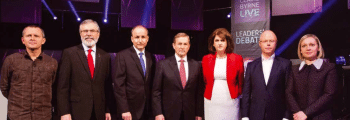
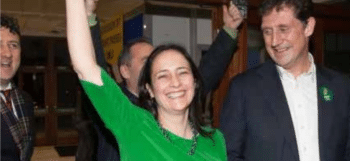
    To say that environmental issues didn’t have much of an impact on Election 2016 would be a bit like observing that feminism hasn’t exactly been the defining feature of Donald Trump’s exciting US presidential run. The topic was completely ignored in the botched opening Leaders’ Debate on TV3, and again, on RTÉ’s seven-way debate the following week. The Green Party had fallen foul of an internal RTÉ decision to exclude it from a slot among the extended parties. This telling ruling was upheld in the High Court, and sure enough, RTÉ’s Claire Byrne steered the seven leaders through two long hours of questions and answers without a mention of anything remotely environmental. Ironically, the same journalist had dramatically dashed in an Air Corps helicopter only a few weeks earlier to interview some of the latest victims of this winter’s extreme flooding event. This dramatic fare, with long shots of ruined farms and submerged houses, interspersed with heart-rending stories of loss and struggle, is understandably grist for RTÉ’s current affairs mill. It is standard training in journalism to ask the five Ws – who, what, where, when – and why. We are getting lots of who, what, where and when from our media on flooding disasters and other climate- fuelled events, but precious little time is being devoted to that all important final W: why. And the ‘why’ is of course climate change. This vast topic made it into the last few min-includes lots of easy utes of the nal leaders’ debate, where just the savings, by 2020 four main parties were involved. Presenter Miriam O’Callaghan admitted in her introduction to it that it hadn’t featured at all in the campaign up to that point – the media weren’t asking and the politicians sure as hell weren’t going to bring it up spontaneously. O’Callaghan lobbed the climate grenade into the reluctant lap of outgoing Taoiseach, Enda Kenny, who – shocked that there might be an Idea in play – took fright and ubbed his lines. First off, he announced that the EU’s 2020 targets (20% emissions reduction versus 2005) “are targets we cannot reach”. Fair enough. And why, prime minister, would that be? “We have a chance with the abolition of milk quotas to expand greatly the capacity of our national herd…to increase our dairy herd by 50%”. Having fessed up to the fact that Ireland has chosen not to meet its 2020 targets, Kenny then went on to make the following quite extraordinary statement: “The targets that are set for 2030 are dif cult targets, but we will meet them”. The targets he is referring to are for a massive 40% cut in emissions. Given our inability to hit 20%, which includes lots of easy savings, the idea that we can escalate to an infinitely tougher 40% target in just one more decade suggests, to the cynical, that Kenny knows for certain that he will be long gone before the fantasy 40% emissions cuts by 2030 are exposed as a sham. So, the world’s greatest existential threat, according to Mr Kenny, is a distant second to pushing the agri- industrial expansionist agenda on behalf of the IFA and the food PLCs it so often appears to speak on behalf of. These same transnational organisations offshore their tax affairs to ensure the Irish Exchequer gets as little as possible. Glanbia, for example, routed its €40 million profits in 2014 via brass-plate companies with no employees in Luxembourg in order to cut its Irish tax bill to a paltry €200,000, or an effective tax rate of 0.5%. These patriotic enterprises represent, in the view of our Taoiseach, so vital a national interest as to set aside all other considerations to ensure their burger and baby milk powder export operations are in no way impacted by binding international emissions targets. To be fair to Mr Kenny, when asked to choose between agricultural expansion and climate chaos, the three other major party leaders also waffled and equivocated in equal measure, all fearful of riling up the assorted special interest groups that maintain such an effective lock on Irish environmental policy. Both Micheál Martin and Joan Burton did try to point out that the transport sector is on an equally ruinous trajectory, but the clear instruction that O’Callaghan pursued single-mindedly was to pitch climate policy in Ireland as either pro- or anti-farmer. This obsessive focus on agriculture seems to be a rut that RTÉ’s PrimeTime has dug for itself, as reflected in its paltry two efforts at covering climate change since 2009, which have lurched from cack-handed to catastrophic. Having attracted a slew of written complaints, the BAI will rule in the coming weeks on whether PrimeTime’s most recent ‘climate debate’, in early December, was in breach of broadcasting regulations. While climate and environmental issues were squeezed to the periphery of both the media and political framing of Election 2016, there was sufficient to be gleaned from the assorted party manifestos to suggest that whatever coalition is eventually assembled to lead the 32nd Dáil might represent a step forward on the hugely underachieving FG/Labour coalition, and the woeful Alan Kelly in particular. While Labour’s stewardship of the Environment ministry was a huge failure, the loss of outgoing Energy Minister, Alex White is a genuine setback, as he is regarded as one of the few politicians with the brains to truly understand climate change, and the guts to speak publicly on it. Not that it in any way helped his own political cause. The obliteration of Renua signals that the Irish public is in no mood to return to the simple-minded moral certainties of the 1980s. For the Green Party, turning a 2.8% national share of vote into two seats was an impressive achievement; whether such slender representation can really add a green hue to the new Dáil remains to be seen. While both Labour and the Green Party have plenty of useful things to say about addressing climate change and moving Ireland towards decarbonisation, given that the two

    Loading

    Read more

  • Posted in:

    (Good)gers and Cattle TB

    Sometimes farmers find difficulty sleeping at nights. Random, gnawing thoughts drift into our heads as we doze off. Are badgers prowling around the farmyard? Are they sniffing the cattle? Is TB being transmitted? New research will allow us to sleep more easily. A project led by district conservation of cer Enda Mullen, with Trinity College Dublin (TCD) and the Department of Agriculture, spent three years tracking badgers in the Wicklow countryside. 40 badgers from twelve social groups had radio collars fixed around their necks. Then enthuastiac National Parks and Wildlife Service (NPWS) staff and volunteers from TCD plotted the 12,500 movements of the badgers as they made their ways through the countryside. We usually find TB in cattle in the lungs.The conventional wisdom states that badgers transmit TB to cattle via aerosol – direct breathing close to a cow. A badger may be lured into a farmyard by the presence of spilled grain, and come in contact with livestock housed in sheds. But this study proved otherwise. Badgers tended to avoid farmyards – and particularly farmyards with cattle. If they visited farmyards at all, they tended to frequent equestrian, and disused, farmyards. But most badgers kept away even from these. A single individual badger (which the researchers christened Violet) seemed to like a trip to the horses, but most other badgers kept well away from all livestock, and even were shy of visiting disused farmyards. A second study undertaken by Declan O Mahony in Northern Ireland confirmed that badgers avoid cattle. Declan works with the Agri-Food and Biosciences Institute in Belfast, and his approach was slightly different. He affixed proximity collars on 58 cattle and 11 badgers in a TB hotspot in Northern Ireland. If the badgers and cattle came within 2 metres of each other (enough distance to share a breath), the collars would emit a pulse. This would be plotted via GPS. In addition, motion sensor cameras were positioned all over the farmyards to video anything which moved. The results were amazing. There were over 350,000 interactions between cattle and cattle. There were 11,774 interactions between badger and badger. Clearly, you hang out with your own species. And there were no interactions between cattle and badgers. Zero. So is TB being transmitted by badgers? And if so, how? The researchers looked at water troughs. But badgers and cattle did not use water troughs concurrently. In fact, badgers rarely used water troughs at all. So the researchers turned their attention to the farmyards. They recorded 500,000 hours of video at farmyards in a mammoth undertaking, and analysed the results. The visiting animals recorded mostly were feral cats, some of which were in poor health. Farm cats play an important role in rodent control, but can also be carriers of TB, and any animal in poor condition is more susceptible to disease. Mice and rats were also seen on camera, and very rarely an individual badger (perhaps a cousin of Violets) turned up at a meal shed for a few min-utes. Most other badgers kept away – and all badgers avoided the cattle sheds. Cattle are large, sometimes dangerous, and often scarily frisky. It seems that the badgers have known this all along, and are keeping well away from them. Instead of scapegoating the badger,we need to increase bio security measures on our feed sheds. And thanks to this hard work and wonderful research, we can settle down to sweet dreams and sleep without worries. Now – did I feed the farm cats? Donna Mullen

    Loading

    Read more