Economy

Random entry RSS

  • Posted in:

    Why Pay Teachers [They’re Only Women]?

    Last month, Minister for Education and Skills Richard Bruton mentioned that “the idea of courses to upskill homemakers were among a number of steps under consideration” to deal with the shortfall of teachers in key subject areas. Calling them “homemakers” may have been correctly gender-neutral, but the issues at stake are not. How could they be, given that women vastly predominate among stay-at-home parents, and among teachers? Why wouldn’t Irish mammies see their role as unpaid child minders extend to the classroom and shouldn’t they be delighted if the government decides to throw them a few euro for doing so? As a lecturer, activist and member of the Teachers Union of Ireland, I have been struck that the numerous public-service pay agreements over recent years have totally failed to address the relation of gender to the teaching profession. The government, trade unions and the media failed to comment on the fact that since the 1970s there has been an almost total feminisation of teaching in Ireland. According to the Central Statistics Office, women account for almost nine out of every ten teachers at primary level, and more than seven out of ten at second level. In the primary system, you have a 17% chance of being a principal if you are a man, but only 8% if you are a woman. So if primary school teaching is now an almost entirely female profession, how is it that men are twice as likely to become a school principal? Why are the majority of teachers now women, and why do men do better when it comes to promotion? There are two problems facing us here: the feminisation of teaching, and gender inequality when it comes to promotion. When a profession or job becomes feminised, there is a correlating depreciation in salaries. This is borne out by researchers such as Emily Murphy and Daniel Oesch, who point out that “in female-dominated professions salaries are lower and it is not only women with children, but also childless women, who earn lower wages”. According to a report by the Primary Education Committee, set up by the Minister for Education and Science in 2003, “There is a strong argument that jobs involving care work have been systematically devalued. For example, teaching and nursing are female-dominated professions while engineering and software development are male-dominated”. A recently qualified primary or secondary teacher starts on a basic salary of €34,602, rising to €43,292 after five years, and incrementally up to the top of the scale at €64,701. But it takes 27 years to reach this level. By contrast, according to the most recent Morgan McKinley salary guide for 2017, a Dublin-based qualified accountant starts on €45-55K, which increases after three years to between €55K and €65K, and after two more years to between €65K and €70K. A Dublin-based software (e.g. Android) developer can expect to start on €30-40K and to reach €85K after five years. Over the course of a career, therefore, teachers earn less than other professionals, and they endure incredibly slow career progression and mobility. Moreover, the 27-year incremental scale has since 2012 had a proportionally negative impact on career average pensions. As the teaching profession is dominated by women, what has developed is a system where women are systematically paid less, and where they will be most at risk of income poverty when it comes to living off their pensions. With such low salaries and lack of mobility and progression, not to mention increasing workloads, men are choosing not to become teachers. When male primary school teachers ten years into the profession were asked in a 2005 survey what would attract more men into the profession the answer most frequently given was “more money (improved salary structure/financial rewards/ promotion prospects)”. The next most common factor was the poor public image of the profession, which seems strange given the level of education and achievement required to enter. The CAO entry requirement for primary school teaching in 2017 was 451-466 points. New regulations introduced this year require entrants to score at least 60% in Leaving Cert Higher Level Irish. For secondary school teaching, an honours Bachelors degree is required, followed by a two-year Professional Masters in Education (PME). Not only does it take a lot of time to become a teacher, but there are financial expenses too. With the minimum number of years to acquire a primary teaching qualification at four years, and five years for a secondary school teacher (a three-year minimum degree plus two more years), the financial expenses start to mount: a basic degree is €3,000 per year, and the PME costs approximately €10,000. It is outrageous that, despite all this, our educational system does not value teachers and refuses to pay them commensurate with their professional qualifications and expertise. In fact, in the recent talks for the current pay agreement, the government has made it clear that it would rather permanently instate a lower rate of pay for new teachers entering the profession. The message is that teaching is ‘women’s work’ that doesn’t merit fair or equitable pay. Since the ballooning of state debt that was part of the decision to bail out the bondholders in 2008, all sectors of education in Ireland have suffered severe reductions in funding. At primary and secondary levels, the pupilteacher ratio has increased and moratoriums have been placed on recruitment to posts of responsibility, severely limiting promotional opportunities. Among Institutes of Technology, there was a 35% cut in funding between 2008 and 2015, but during the same period student numbers rose by 32% and full-time academic staff numbers fell by almost 10%. The Further Education sector has also undergone similar ‘reform’. From the point of view of teachers and lecturers, these cuts have created severe additional workload pressure, all in a context where the new norms of precarious employment status and hourly paid contracts are exacerbating income poverty. Numerous high-profile cases in Irish universities have also highlighted gender discrimination when it comes to promotion. It is no

    Loading

    Read more

  • Posted in:

    Buildings At Risk

    Heritage and the Irish Psyche The cynic who knows the price of everything and the value of nothing drives the perception of properties in Ireland. There is a belief within the Irish psyche that new is best, even when it comes to our historic properties. We flock to perambulate around our country houses and their gardens once they have been restored, often to the point of sanitisation. However, we wince at the sight of a crumbling beauty, and the mere thought of the cost and effort it takes to bring it back to glory. There are thousands of derelict historic properties strewn across the country. Our planning laws are toothless and we seem unable to incentivise maintenance, most particularly of accommodation over shops. Shifts in our economic and political landscape also frame how we perceive this cultural legacy, often alien in design but built, beautifully, by Irish artesans. It is only a generation ago that one of the major factors leading to the demise of the country house was de-roofing as owners struggled to find ways to avoid paying oppressive rates. The National Attitude towards these buildings has evolved from hostility to indifference without anyone noticing. Hostility only resurfaces when there’s any sort of economic (or social) imperative. The Regime for Protection Who protects it? So whose job is it to look after significant buildings? Legislation enables Local Authorities to protect buildings and to take action if they are vulnerable. However, lack of funding, resources, manpower and wit; the cost of litigation; and inertia militate against, and there is – at bottom – no legal obligation for local authorities to do anything, so mostly they don’t. One way to protect a historic property is to list it on the Record of Protected Structures, and especially if built before 1700, the Record of National Monuments. Each Local Authority puts together a Protected Structures list for each Development Plan taking suggestions from the National Inventory of Architectural Heritage, a unit of the Department of Culture, Heritage and the Gaeltacht. As valuable as this database is, it is only a representative sample of the architectural heritage of each county and not updated regularly. For example Limerick Cty’s was last conducted in 2005. Volunteers For such a small country numerous charities have been set up to raise awareness of and restore our historic properties. An Taisce, established in 1948 owns many properties including Booterstown Marsh, the Boyne Canal and Crocnafarragh blanket bog, Glenveagh, in Donegal. The Irish Georgian Society has restored many properties and provides strategic funding for particular conservation projects such as some on Henrietta Street in Dublin. The Buildings of Ireland Charitable Trust set up in 2005, the Irish Heritage Trust was established in 2006 as a joint initiative between the voluntary sector and the government, receiving approximately one third of its financial support from the State. So far its projects have been Fota House and Gardens, Strokestown Park, and the Irish National Famine Museum in Roscommon – with Johnstown Castle, Estate and Gardens (Wexford) proposed for the coming years. The Irish Landmark Trust for Ireland, a non-profit organisation set up in 1992 has restored 30 properties. Public and private owners typically agree to let it take properties on 50-year leases that allow them to make them suitable for holiday accommodation. Once a lease expires, the property reverts to the owner. Dublin Civic Trust provides pro-active advice on Dublin and completed an audit ‘Dublin’s Wasting Assets’ in 1997 which was revisited in 2001 and 2010. Irish Buildings at Risk Buildings at Risk are heritage assets, such as protected structures or scheduled monuments that are at risk as a result of neglect, decay or inappropriate development, or are vulnerable to becoming so. A major part of this is a lack of property maintenance. We don’t give servicing our cars a second thought but yet we question the upkeep of these hard-working living machines. As to buildings that become dilapidated a national buildings at risk register would raise awareness of problems and act as a catalyst in marrying up potential resources with suitable available properties. Robert O’Byrne, Vice-President of the Irish Georgian Society, who writes on vanishing period homes in The Irish Aesthete blog, advocates such a register. “By having a list you raise its profile: you raise the security level. Otherwise buildings at risk can be invisible. A long-term ideal would be an annual buildings list like the World Monuments Fund Top Ten”. Not everyone shares this enthusiasm: one retired senior advisor to the Department told me that a register would be “a shopping list for thieves”. He believes it would leave the Department open to legal action from property owners citing the public list for the robbery of their original fireplaces or the lead from their roofs. Geraldine Walsh, CEO of Dublin Civic Trust notes: “Yes, An Taisce have compiled an excellent Buildings at Risk document, but an annual review of it should be funded by the State in order to independently maintain the process and to keep the list of the buildings identified updated. It should be co-ordinated with the local authorities’ Derelict Sites database. The UK NGOs, including English Heritage, Historic Environment Scotland, Ulster Heritage Society and SPAB all publish their list of buildings at risk annually. A particularly useful aspect of their work is publicising those properties that are available for sale to prospective purchasers”. Lists of vulnerable buildings are not enough, as Will Derham, author of ‘Lost Ireland, 1860- 1960’ points out: “As we have seen recently in the renting sector, building standards require enforcement. A statutory buildings-at-risk register would be a small, but welcome step in the direction of fully protecting and preserving the nation’s built heritage”. But a State that lacks a culture of enforcement, from banking to spatial planning to police accountability, needs to think hard about how it is going to handle the more ethereal imperative of historic-building conservation and restoration. International Experience of Buildings at Risk In England an annual Heritage at

    Loading

    Read more

  • Posted in:

    One Cheer For The Sugar Tax

    In the early 1980s the government decided to try to get children to drink more milk. I’m not sure that there had been a problem with children not drinking milk. As I recall, that’s all we drank. Yet it introduced a free milk scheme. The milk was to be distributed through schools and it was packaged in a sort of rough plastic bag. If it had arrived cool, by the time we were given the milk it was warm and smelled rancid. We used to have fights using the gone-off milk on the way home from school. If the policy was intended to get children to drink more milk, and not designed to alleviate the then-growing butter mountain, the policy failed. The government is still concerned about children’s diets. Since the 1980s there has been an increase in the number of children who are overweight and diagnosed with type II diabetes – the one related to poor diet. When confronted with such figures the first response should be to question the data. As we can see with Garda data on crime, even measurement of clearcut things is rarely simple. Data are based on man-made decisions, collected by humans, and so can be subject to human biases. The measure of weight using Body Mass Index (BMI) is somewhat controversial, though some of the criticism is overdone. We know for instance that muscle weighs more than fat, and so very fit people can be classed as overweight. We also know that all fat isn’t equal. Fat around the bum and thighs may not be wanted, but it’s not deadly in the way visceral fat around the organs at the belly is. Weight itself isn’t a problem, it’s what weight is associated with. But as a measure BMI broadly correlates with other measures of health, and has the advantage of being relatively easy to measure. We also do it right. Though expensive, we now measure a genuine random sample of people in Ireland, with interviewers willing to call to targeted respondents multiple times. This is rare. It’s also rare to survey over 7,000 people, which allows us to see where they live and who they are in greater detail than most other surveys would. So let’s assume that the data are broadly right, and about 60 per cent of adults are overweight or obese. The government’s concern has led to a number of policies being introduced. One is to give out free samples of healthy food in primary schools – in a Food Dudes programme. It’s the modern equivalent of the milk-in-schools scheme, and it makes the same mistakes. The fresh vegetables and fruit are not that fresh, and so children who don’t normally eat fresh fruit and vegetables will be left (even) less likely to try them again. In the recent budget Paschal Donohoe announced another policy, which has been dubbed a sugar tax. It isn’t actually a sugar tax: processed sugar is zero-rated for VAT and will continue to be. It’s a tax on sugar-sweetened beverages. Sugar is seen by some as today’s tobacco. Whether it is or not is less clear. There’s no evidence that sugar has properties that are addictive in the way nicotine is, but it’s also clear that there is a link between sugar-sweetened processed foods and diseases such as diabetes. However, if we look to UK data (which we are culturally and economically closest to) we are consuming fewer calories now than in the 1980s. However, the nutritional value of the calories we are consuming may have changed. Milk consumption among US children and adolescents has halved since the 1960s, largely replaced by sugar-sweetened beverages. So even though we don’t have good time-series data for Ireland, and the Healthy Ireland survey doesn’t give us very fine grained data on what we are eating, we’re probably consuming more sugar now than in the past. So how do we deal with this? And will Paschal Donohoe’s intervention work? Taxes affect behaviour. We often don’t want them to affect behaviour – taxes on work tend to deter people from offering or taking up employment; taxes on goods may stop people from trading goods, suppressing economic activity. But what if those goods are ones we don’t really want people to consume, or certainly not in large volumes? As long ago as 1776 Adam Smith, who didn’t want taxes that distort the economy, nevertheless noted that “Sugar, rum, and tobacco are commodities which are nowhere necessaries of life, which are become objects of almost universal consumption, and which are therefore extremely proper subjects of taxation”. Whether these taxes would work depends on their price elasticities. That is, the extent to which price changes cause changes in demand. Demand for tobacco is shown to be highly inelastic to changes in prices. Increased prices have little impact on consumption. The tax on cigarettes is now about 400% and, while smoking has reduced that is mainly because of lower take-up and people quitting for health reasons, though no doubt the price helps. It can raise a lot of revenue for the state. But even this huge tax might not affect consumption among existing smokers. In Ireland the tax introduced by Donohoe on sugar-sweetened beverages (SSBs) is modest. He is “introducing a tax at a rate of 30 cent per litre on drinks with over 8 g of sugar per 100 ml and a reduced rate of 20 cent per litre on drinks with between 5g and 8g of sugar per 100 ml”. A can of Coke will go up by 10 cent. This is roughly a 10% tax. Will it deter people? Research by Mathew Harding and Michael Lovenheim, published in the Journal of Health Economics, on elasticity of demand suggests that sweet snacks are quite inelastic, which might mean taxes won’t affect behaviour much. However, using modelling techniques, which are themselves problematic, they found it might work: a 20% tax on high-sugar products might reduce sugar consumption by 16%. There have been

    Loading

    Read more

  • Posted in:

    Lowry and Sinclair

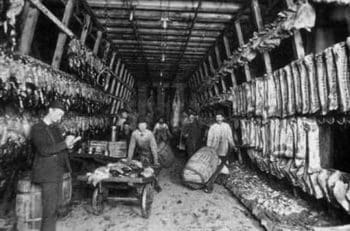
    I recently concluded a criminal case in the Crown Court in Manchester; a city I had not visited in over 20 years. Much has changed while I’ve been gone. It is a little less frenetic, with no Tony Wilson or Hacienda club, and a good deal more gentrified. Salford, the traditional working-class area, immortalised in the works of such working-class poets of music as John Cooper Clark and Mark E Smith, is no longer as bleak and industrial as it was 20 years ago, but has acquired a glossy riverside sheen, or rather façade. Appearances are always deceptive, and much is still very rundown indeed. Perhaps the most famous chronicler of Mancunian and Northern working-class existence is the painter LS Lowry, to whom there is dedicated a fabulous museum in the designer-revamped Salford: a huge treasure, free to the public and staffed by authentic people of the utmost friendliness. The museum is there, along with a northern version of a Daniel Libeskind structure – actually designed by James Sterling, containing the imperial war museum, northern branch; two theatres; and sundry other cultural delights. The paintings, once seen en masse in the beautiful gallery in the Lowry Centre, are indeed like the ‘matchstalk men and matchstalk cats and dogs’ that I remember children singing about in my youth. Humanity is represented by little emaciated speckled archetypes, often scurrying around in droves near the citadels of northern capitalism, the industrial factory. The people appear as miniature figurines to highlight the backdrop as in an industrial Canaletto view of Venice. The people are all like dots of insignificance: working-class cyphers, their lives dedicated to the service of their paymasters. If you wander away from the totemic works there are, not as famous but more precise, evocations of workingclass existence. A drunken brawl, a funeral congregation in black, the Sunday best for the big occasion: dour. The celebration of shortened lives in rank conditions. These paintings are stark but full of empathy, observed calmly and with rational detachment, as indeed are some of his portraits, and he is a remarkable portrait painter, though I had not realised it. Separately, some weeks ago on a visit to Dublin I spoke to a friend, the librarian in the IFI bookstore, an oasis of modern civilisation in an ever-bleaker city. We conversed and he intimated to me that he had read a recent article by me in the Dublin Review of Books, where I noted the need for a new Orwell to chronicle how the poor die in our nefarious third-world state. No, he firmly intimated, we need not Orwell but that great chronicler of American depression-era working-class life, Upton Sinclair. In Sinclair’s most famous book ‘The Jungle’ he demonstrated sub-standard conditions of workers in the Chicago meat-packing industry and many of his works including ‘Oil’, which became the film ‘There Will be Blood’, are attacks on unbridled, greedy capitalism and what it does to the human spirit. Lowry and Sinclair are ever more relevant as we return to the present. The Marxist analysis of dead capital sucking the blood of labour is more pertinent than ever. I know the tropes and nuances are different, and that the culture has shifted. I know with Marx that identifying the problem does not solve it but recognise the communist manifesto will not work. The existence of the ordinary person in under-paid and over-worked corporatism is not unlike the heyday of Victorian capitalism, or indeed the Great Depression, with the modern version of the factory being the bleak buildings of financial services and corporate law firms. Death by overwork while serving the interest of the plutocracy has become banal in much of western society. Ordinary people console themselves often, as in a seminal painting of Lowry, in the consolations of booze, the Friday night out, the office party. Oblivion. Blowing the limited amounts of disposable income they have, which has not been hoovered up by inflated rents, and mortgages which may never be repaid. Certainly in Ireland there is little or no ‘real’ economic growth as such. Those who have wealth and property run the country like a feudal oligarchy, abusing state structures to go after anyone that poses a threat to their interests. They often mask it well. But deep-seated criminality and thuggery are intrinsic to the modus operandi of our ruling classes and the tactics of surveillance, fabricated cases and false or political prosecutions endemic to a system descending into anarchy, where vested interests are using ever more desperate and ruthless tactics of human exploitation. There is a pattern to all of this. As Arundhati Roy intimates in her monograph ‘Capitalism: A Ghost Story’, and her recent novel ‘The Ministry of Small Things’, the pattern is that globalised capitalism is ‘cartelising’ the world into a small number of people who control the wealth and assets, and enforce penury and degradation on the mass of the population who are deemed surplus to requirements. That word “surplus” implies disposability by any means necessary. Thrown in a river, locked up in prison, shot. Exposers of the systemic corruption such as Roy in India have been jailed for their temerity in pointing out the growth of the rotten neoliberal agenda. Lives are being destroyed or truncated and the lunatics of the corporatocracy and the insanely rich are pillaging the planet with a speed and rapacity never witnessed before. In their wake, they are destroying equality of opportunity and the ability of ordinary people to work themselves out of the poverty trap. It is not just the working class but all of us, including the educated middle class, who are suffering. So, the working middle classes are confronted with longer working hours, increased competition and migration through neoliberalism – a wholesale race to the bottom. As Roy demonstrates in her ‘Capitalism’ book droves of Indian farmers are committing suicide because of the punitive conditions imposed on them. Suicide rates are exorbitant for failed businessmen, lonely farmers and the homeless of Ireland. A

    Loading

    Read more

  • Posted in:

    My Vision of the Future of the Green Party

    The Green movement was born when we looked back on our planet for the first time and realised the threat we posed to our own natural world. It was a child of the 1960s, embracing and promoting civil, racial, feminist, gay, and animal rights. It was into making love not war and thinking globally, while acting locally. The movement was inspired by Rachel Carson and her warnings that we faced a ‘Silent Spring’ if the use of pesticides and fertilisers by industrial agriculture went on unchecked. It came of age with ‘systems thinking’ from the Club of Rome in the early 1970s, which used the most advanced computers to look ahead 100 years and measure our future use of resources – and came back with the rational conclusion that there are real limits to growth on this finite planet of ours. Green economics is not easily categorised on a left/right ideological divide. It assumes that future progress must be made in terms of the things that really count rather than the things that are merely countable. It values our quality of life rather than just increases in the quantity of goods that are consumed. The movement found political form in the late 1970s and early 1980s as Green parties were set up in just about every country. In Ireland the Ecology Party of Ireland was formed at a meeting in Dublin’s Central Hotel in 1981. The founding principles were agreed at a second meeting a few months later in the Glencree Peace and Reconciliation centre. Those principles are still relevant today. • We have the responsibility to pass the Earth on to our successors in a fit and healthy state. • Unrestricted economic growth must be replaced by an ecologically and socially regulated economy. • Decisions should as far as possible be on the basis of consensus and respect for the rights of minorities. • Society should be guided by self-reliance and cooperation at all levels. • The need for world peace and justice overrides national and commercial interests. • There is no place for violence or threat of violence in the democratic political process. The fortunes of the party have ebbed and flowed over the last three decades in tandem with varying levels of public support for the wider environmental agenda. The first Green Party councillor was elected in Killarney at the same time the Bruntland commission defined sustainable development – as meeting the needs of the present without compromising the ability of future generations to meet their own needs. Our first TD was elected in 1991, just before the signing of the Rio declaration, which combined commitments to protect our environment with ambitions to address global poverty. The tide then ebbed during the boom years of the late nineties as oil became cheap again. We were told we were at the end of history and all public services had to do was clear the path so markets could pave the way. Our Dáil representation grew with the greater understanding of the scale and importance of this climate issue. We entered Government in 2007 determined to do what we could to position Ireland as a leader in responding to the challenge we all face. We learnt a lot in the process and it was not all negative. First of all, it imbued us with a healthy dose of humility. The last thing anyone wants is public representatives who think they know it all. We also learnt how you can get things done in Government. It requires showing respect to both colleagues and officials so you earn their trust, while still sticking up for your convictions and asking the right awkward questions, so that big ideas can be progressed and that decisions do not go through on the nod. I stand up for Green politics because I have seen how we have made a real difference over the years. In the last four decades road deaths have fallen by two thirds. We can’t claim responsibility for that outcome but we were there every step of the way supporting better road designs and new safety regulations. We also changed waste policy. I remember a Council engineer arguing against the introduction of green and brown bins in Dublin, on the grounds that Irish people would never take to recycling. I like the fact that we all proved him wrong. Similarly, I look at the way my German Green colleagues changed the course of history by initiating a clean renewable-energy revolution that will not now be stopped. I am equally happy we were there at Pride Parade long before most other parties or big corporations showed up for the day. Last but not least, I like the fact that we are an all-island party, which gets to canvass on both the Shankill and the Falls. That non sectarian outlook comes from our 1960s roots. We may not be the biggest party but we are friends with every other European Green Party and are based in every county here at home. We now have two great teams back in the Oireachtas and Stormont. We are disciplined and motivated with a new ambition to become a mainstream political choice for people right across this island. In the North the first job is to get the Assembly back in action. In the South we want to triple our representation in the next Dáil and perhaps more importantly triple the number of Green Party Councillors who are elected at the next local elections in 2019. We are setting ourselves such goals because in truth we are losing on the big battles which inspired us into action in the first place. For all the achievements I have mentioned, the reality is that the world has lost almost half of all wildlife over the last forty years. In the same geological blink of an eye, we’ve seen the concentration of carbon dioxide in the atmosphere increase by a third. For the first time in years, the global number

    Loading

    Read more

  • Posted in:

    Don’t Bank On Justice

    Ivan Preston and Danske Bank In the first case, the North’s Police Ombudsman found police misconduct in the treatment of a Bangor businessman, Ivan Preston, who had his 2014 conviction for harassment overturned on appeal. Preston had sent 357 emails in a year to a senior Danske Bank official, querying the awarding of a contract for courier services by the Northern Ireland Interbank Forum (representing. and co-ordinating services for, the four main banks). The senior official, Elwyn Thompson, said in his statement to police that the “content of the contact being made by Mr Preston is directed mostly against the ethics of banking practices…”. Thompson did not allege that any of the emails contained threats and all email providers allow for mail from a specific address to be blocked. Preston had no previous convictions, but was convicted in January 2014. The judge imposed a conditional discharge. Four months later the conviction was quashed on appeal. On foot of a complaint from Preston, the North’s Police Ombudsman found there were “factual inaccuracies” in evidential materials which police had gathered. Two police officers were disciplined. One of them received a sanction in respect of his original statement regarding Preston’s attitude. Preston’s problems began when the Northern Ireland Interbank Forum ended the courier contract of the Preston family firm and awarded it to DHL. Preston was concerned that this company did not offer workers the same pay and conditions his firm did. In a statement to police on December 7 2012, Thompson said: “A full Audit was independently conducted into the tendering process that fully justified the outcome as originally reached in the awarding of the new collection contract [to DHL not the Preston family]”. However, a letter of February 23 this year on behalf of Ulster Bank Chief Executive, Gerry Mallon, to Lady Sylvia Hermon MP differed significantly. This said “RBS [Royal Bank of Scotland] UK & I[reland [which owns Ulster Bank]] completed an internal view of the tender process in 2012 as part of our audit requirements and no discrepancies were found”. In other words the audit was internal not independent. Lars-Johan Sandvik, a director of Danske Bank, Ulster Bank’s Danish parent, emailed Preston a week before Thompson’s statement: “You have already filed a ‘whistleblower’ case, and it is being investigated”. Danske Bank seems to have been heavy-handed with Preston on the basis of a flimsy internal audit and despite the fact his case was still being investigated. The prosecution and appeal have apparently been stressful for Preston. His GP, Dr Joanne Drew, has written that his health has suffered. “He has lost his positive outlook on life, become more insular and less able to cope with demands of daily living”, she wrote. Stephen Boyes and First Trust (AIB) Separately, Stephen Boyes, a farmer from Maghaberry, County Antrim, is currently living in the South, as he would face immediate imprisonment if he set foot in the North, for defying a court order to surrender land. This relates to a loan he took out from First Trust (AIB in the North) for £850,000. In November 2009, the bank’s lawyers wrote a ‘without prejudice’ letter to Boyes: “Upon publication of (Belfast Metropolitan Area Plan), if the 20 acre portion of your client’s land is owned [presumably in error for ‘zoned’]for employment/industry, your client will immediately and actively market this for sale for such sum as will insure the repayment in full of the debt due to our client…”. In April 2012, the North’s former Justice Minister David Ford announced that Magilligan, the North’s second-largest prison, was to close. Closure of Magilligan would mean Maghaberry would have to expand. This would increase the value of the lands, which landlocked the prison and were owned by Boyes, and his family, through a trust. Shortly after the announcement, Boyes received notification that the Bank had appointed a receiver to those lands. He maintains the bank’s actions were draconian where he and his family were on the verge of a windfall. Boyes has also produced a report from a handwriting expert, querying the authenticity of his signature on one of the leases the bank relies on. His family has made several complaints to the Police Ombudsman, as large numbers of police have accompanied the receiver, which they claim to find intimidating. A PSNI spokesperson said it does not comment on the operational deployment of officers. In April, the Irish News reported that the PSNI is investigating allegations regarding ownership of the lands on which the prison has been built.   Anton McCabe

    Loading

    Read more

  • Posted in:

    More On Moran/Nomura

    One of the intriguing characters in the story of ‘NAMA-land’, the title of the book I have written which has just been published by Gill Books, is the former general secretary of the Department of Finance, John Moran. The Limerick man was appointed to the second most senior position in the Irish civil service by then finance minister and fellow County Limerick man, Michael Noonan in May 2012. His appointment was welcomed at the time as a breath of fresh air, given that he had only joined the department a couple of years earlier. It was widely reported that his most recent business experience was in running a juice bar in the Languedoc region of France, where he was also renovating an old property. Not so well reported at the time were questions raised in the Dáil by Sinn Féin spokesman, Pearse Doherty, about Moran’s time with Swiss insurance company, Zurich Capital Markets (ZCM), where he was US-based chief executive from 1997 to 2005. As Doherty pointed out, ZCM was fined $16m, in May 2007, by the US Securities and Exchange Commission (SEC) after it found that the insurance company had “provided financing, aided and abetted four hedge funds that were carrying out schemes to defraud mutual funds that prohibited market timing” and “employed various deceptive tactics to invest in mutual funds”. ZCM was an affiliate of Zurich Global Investments LLC and an indirect subsidiary of Zurich Financial Services, the Swiss holding company. Not much notice was paid to Doherty’s remarks following the somewhat surprise appointment of Moran, except that the deputy was expelled from the Dáil for what the then ceann comhairle, Sean Barrett, described as “attempted character assassination”. After settling in to his new position, Moran was an enthusiastic supporter, with Noonan, of the rapid disposal of NAMA assets and in encouraging global or ‘vulture’ investment funds in their acquisition from 2013. As has since been revealed, he met with a number of the funds which arrived in Ireland since then and purchased huge bundles of heavily discounted, distressed assets from NAMA, only to flip them within months, for much higher margins than achieved by the agency. He was involved in designing some of the tax-efficient incentives which Noonan introduced during his term as finance minister, some of which are under scrutiny again, following the most recent revelations on tax avoidance in the Paradise Papers involving Apple and other multi-nationals. In February 2013, Moran told the REIT Forum conference in Dublin, a gathering of 500 property investors, owners and auctioneers, of his “ambitions to make Ireland a base for international REITS (real estate investment trusts) in much the same way as Dublin is now an international centre for aircraft leasing”. Among those who spoke at the conference was the then head of asset recovery at NAMA, John Mulcahy, who left the agency later that year to join one of Ireland’s leading commercial property investors, IPUT. Another former NAMA executive, Kevin Nowlan, whose father Bill had helped devise the REIT legislation introduced by the then government, went on to form Hibernia REIT in October 2013, less than a year after leaving the agency. Hibernia is now one of the country’s leading purchasers of commercial properties in Dublin, including some previously on the distressed loan books controlled by NAMA. Last year, Moran was reported in Village as saying that he could not recall whether he attended a meeting between Noonan and senior Cerberus representatives, including former US treasury secretary, John Snow, in late March 2014. The meeting took place on the day before the final tenders were submitted to NAMA for the agency’s entire Northern Ireland loan book, known as Project Eagle. Noonan was criticised in a report by the Public Accounts Committee of the Oireachtas earlier this year for his participation at the meeting which was described as “not procedurally appropriate”. In fact, the records and minutes since released and naming those finance department officials attending the meeting do not include Moran. Within weeks, Cerberus emerged as the successful bidder and paid £1.2bn (€1.6 bn) for the portfolio. Some £730m, or almost two-thirds of the monies paid by Cerberus through its subsidiary, Promontoria Eagle, for Project Eagle was lent by Nomura, a Japanese Bank. After just two years as secretary general with the department, Moran retired from the position in May 2014. In November 2015, Nomura announced that Moran had been appointed as an advisor to the bank. He lobbied Noonan and finance department officials on behalf of Nomura during 2016. There is nothing illicit, improper or unsurprising about any senior civil servant going on to provide consultancy and other expertise to local and international companies following retirement. Nevertheless, it is fascinating to follow the global web of networking in the world of high finance.   John Moran

    Loading

    Read more