admin

  • Posted in:

    CETA will provide greater certainty for investors suing foreign states

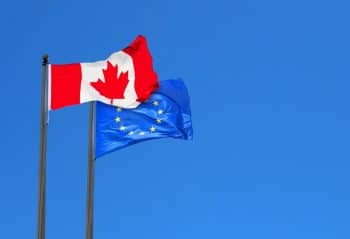
    The Comprehensive Economic and Trade Agreement – implemented in an EU/Canada trade deal – introduces a bilateral Investment Court System and will transform it into a Multilateral Investment Tribunal. By Anna Jermak Introduction Given that foreign investments significantly contribute to a country’s economic prosperity, States have been trying to attract foreign investors by offering them a favourable investment environment. Through proliferating bilateral investment treaties (BITs) and treaties with investment protection – safeguarding foreign investors against unfair or discriminatory treatment by a host State – an international system governing the investor-State relationship was created. The Investor-State Dispute Settlement (ISDS) is at its heart a mechanism for foreign investors to sue a host State for breaches of their rights. Traditionally, the proceedings took the form of arbitration before ad hoc tribunals. However, due to the shortcomings of the ISDS system, the voices calling for its reform have been heard more and more loudly. The EU’s reform proposal – implemented in the Comprehensive Economic and Trade Agreement (CETA) – is so far the most promising one. It introduces a bilateral Investment Court System (ICS) and commits to ultimately transform it into a Multilateral Investment Tribunal. Why reform at all? The current ISDS system’s adaptability to international reality, and its implementation of global legitimacy standards, have been widely questioned for want of reliability, predictability, transparency, and consistency. The fact the arbitration proceedings do not constitute precedents for later proceedings to rely on, and their decentralisation – that is, the formation of arbitration tribunals ad hoc, separately for each dispute – make it close to impossible for decided cases and interpretations to be consistent. Such legal uncertainty inevitably leads to decreased trust from the parties in the institution of investment arbitration, as the majority’s ‘correct’ interpretation of law or facts is so uncertain. In conjunction with the colossal costs that arbitration proceedings entail, the parties may be overwhelmed by the risk. Economically weak countries pay the highest price for its unpredictability. Another factor that contributes to low levels of confidence in ISDS has been the absence of an appeal mechanism that would ensure coherent interpretation and application of the law. Widely present in national legal systems (appeal courts) as well as in WTO dispute settlement (the Appellate Body), the review mechanisms serve to not only allow for uniformity of court and tribunal decisions but also to reassure the parties that the decision held is legitimate and must be respected. Without the parties’ confidence, the ISDS is on the verge of collapsing. Lastly, the fact that disputing parties themselves appoint the arbitrators who resolve their conflict undermines confidence not just in the ISDS system but also in the arbitrators’ independence and impartiality. The parties are certainly inclined to nominate an arbitrator who they believe will decide in their favour. And although arbitrators are expected to followthe soft-law International Bar Association (IBA) Guidelines on Conflicts of Interest in International Arbitration which require their impartiality and independence, they may still be biased on a conscious or subconscious level. Thus, even a mere suspicion of an arbitrator’s bias is unsustainable – as Paulsson rightly noticed: an unfavourable decision is unlikely to be accepted as legitimate if it is perceived to be the product of arbitrariness or bias. Jan Paulsson, ‘Moral Hazard in International Dispute Resolution’ (2010) 25 ICSID Review – Foreign Investment Law Journal 340. How is CETA’s mechanism different? The enshrinement of the ICS in EU trade and investment treaties – such as the EU-Vietnam Free Trade Agreement, the EU-Singapore Free Trade Agreement, and CETA – appears to be the answer to these criticisms. Despite neither of the ICS provisions in these agreements being operative, the mere act of replacement of the ISDS system has aroused so much controversy that it led the Court of Justice of the EU to confirm CETA’s ICS’s compatibility with EU law. For the purpose of critiqueing the EU’s ICS proposals, the focus will here be on CETA’s investment provisions. CETA was signed in 2016, following eight years of negotiations. Its emphasis on the removal of trade barriers between the EU and Canada did not stop it from putting in place remarkable provisions on international investment protection and dispute settlement. Art. 8.27 of CETA establishes a permanent Tribunal for the resolution of investment claims. It is to be composed of fifteen highly qualified and (as stated in Art. 8.30) fully independent members coming from the EU, Canada, and third countries. Pursuant to Art. 8.28, an Appellate Tribunal, reviewing the first instance Tribunal’s awards, has come into existence. The language allowing it to “uphold, modify or reverse” an award resembles the wording referring to the Appellate Body’s competences in the WTO’s Dispute Settlement Understanding. Under Art. 8.29, the contracting parties pledge to pursue, in collaboration with other trading partners, the establishment of a multilateral investment tribunal and a separate appeal body. Upon their creation, the ICS (together with bilateral investment courts established pursuant to the EU’s other free trade agreements) will be replaced by the new single multilateral dispute-settlement mechanism. Any country willing to accept the rules underlying its functioning will be welcome to join it. Pros and cons This two-tier system is a move away from the traditional ISDS framework to permanent, transparent, impartial, and independent Tribunals inspired by the principles of public judicial systems in the EU and its Member States and Canada, as well as international courts such as the International Court of Justice and the European Court of Human Rights. Council of the EU, Joint Interpretative Instrument on the Comprehensive Economic and Trade Agreement (CETA) between Canada and the European Union and its MemberStates 27 October 2016, 13541/16. Indeed, the permanency of the investment Tribunal under the ICS stands in opposition to the ad hoc character of regular arbitration tribunals, providing more consistency and predictability and therefore a more stable investment dispute settlement system overall. The fact that the Tribunal’s members are designated in advance eliminates the danger of biases and conduces to trust. The requirements of absolute independence

    Loading

    Read more

  • Posted in:

    Brexitology: the deal and the problem

    The UK will probably apply lower environmental and social standards, and in exchange will have EU tariffs applied to its goods and restrictions on freedom of movement to the EU. By Michael Smith Britain formally left the EU on 31 January, and is now in a transition perioduntil the end of the year. Boris Johnson’s shot-to-his-ownfoot deal crashes the UK out of both single market and customs union, unless there had been deal with the EU by the end of June 2020; and poses the possibility, which I have long here predicted, that the UK will reduce standards particularly on labour and the environment. Inept Theresa May’s luckless deal kept Britain in the single market and the customs union until at least 1 July, 2020, extendable only by mutual agreement. However, her Northern Ireland ‘backstop’, which restricted the whole UK to avoid opening differences between Britain and Northern Ireland has been replaced, in Boris Johnson’s deal, with a frontstop meaning he crashes the UK out of both single market and customs union, unless there are deals with the EU reinstating them by the end of this year.Talks, however, are deadlocked. The two sides have taken polar positions on fisheries, governance and competition. And in what was an, apparently unwitting, big concession then, by accepting a customs border Northern Ireland will now remain aligned tothe EU’s Custom Union, but will be in the United Kingdom’s custom territory, allowing Northern Ireland to avail of future non-EU trade deals. In practice, this means that if goods are sent from Britain to Northern Ireland, no tariffs apply. If goods are sent from Britain through NorthernIreland to Ireland, tariffs will apply, but they will be collected at ports and airports – effectively putting a customs border along the Irish Sea betweenGreat Britain and Northern Ireland, something that was thought to be a bridge too far. Annex 4 of the Theresa May Protocol – which contained references to EU laws that would apply to the whole of UK in what were called “level playing field” commitments to limit the UK’s capacity to gain what it would see as an unfair advantage by lowering standards – have now been removed. The level-playing-field provisions were in the areas of taxation, environmental protection, labour standards, state aid and competition. They had been subject to a legally-binding agreement in the Withdrawal Agreement – it’s now stated in the Political Declaration – with only non-binding commitments. Britain can reduce these standards and negotiate new trade agreements with blocs outside the EU, notably the US. It can remove protectionsagainst chlorinated chicken, open up the National Health Service to commercialisation and competition and remove habitats protectionand Environmental Impact statement requirements. This is what Johnson and his mates always wanted to do though they fudged the issue like practised fraudsters. If the UK reduces standards the EU will have to decide whether it wishes to do a big trade deal with it or whether it wants to protect its own standardsby imposing proportionately heavy tariffs and restrictions on freedoms of movement. My guess is the EU will be reluctant to impose tariffs and restrict movement and will indulge some insidious reductions in standards, particularly those that won’t register at a border: some standards are evident from inspection of a good (chlorinated chicken); others aren’t (parental leave in the workplace). We can look forward to Tory Britain reducing labour, environmental and other standards, and to Northern Ireland specialisingin attracting jobs on the basis of such low standards. It would certainly tie in with the DUP’s ethos; and there is not much evidence that any party in the North cares much for environmental niceties. Unfortunately the reality is that if the UK loses the EU baseline standards regulation will fall to Parliament. We know from the zeal with which the Tories undermined EU social standards and their excitement at “unleashing” new entrepreneurial zeal, that they are looking forward to deregulation. And any change in standards, even an ostensibly neutral one, opens up the possibility of lack of clarity and regulatory gaps. To compete in attracting inward investment, especially with a Janus-like Northern Ireland benefiting from the best of both worlds, Ireland willitself feel obliged to reduce its own standards. And in addition to the disbenefits of reduced trade with the neighbours, and the Coronavirus slump that is why Brexit is a disaster for us, all. Under the withdrawal treaty, the two sides could have chosen before the end of June 2020 to extend the transition for up to two years. Failing that, any extension now needs a fresh treaty and the approval of all 27 national and some regional parliaments. Brinkmanship failed. Statecraft died. Turmoil awaits.

    Loading

    Read more

  • Posted in:

    Ireland should stand with Poland on threats to gay rights

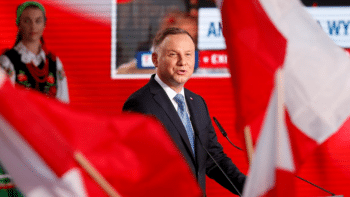
    An emigrée contrasts Poland’s reversion to hatred of LGBT+ with Ireland’s recent liberalisation. By Sara Chudzik. I was twelve when I first moved to Ireland in 2007. Ever since then with every passing year I would count how many years it is that I’ve lived in Poland and how many in Ireland. Now the Irish half is becoming top-heavy and I’ve lost count of the years. Yet, for the past few days I’ve felt more Polish than ever. On 6 August 2020 Andrzej Duda was sworn in for his second term as the President of the Republic of Poland, having narrowly defeated the liberal mayor of Warsaw, Rafał Trzaskowski, who  in 2019 promised to provide greater support to the city’s gay community, including offering some anti-discrimination and anti-bullying education in schools. Duda had claimed the mayor’s gesture constituted the “sexualisation of children” and the destruction of the family. Duda’s wish and promise it is to make Poland an LGBTQ+ free zone and to stop the spread of LGBTQ+ ‘ideology’. Since the election activists have taken to the streets to peacefully protest the extension of Duda’s conservative regime. Rainbow flags have begun to appear around monuments and statues around cities. Margot, a transgender activist, was violently arrested for stealing a registration plate from a van belonging to an anti-LGBT+ Fundacja Pro, an organisation responsible for spreading pseudo-scientific facts such as that homosexuality is on par with paedophilia. Margot was detained and taken to a man’s prison yesterday. Since then 48 more activists have been detained;  in many cases with no immediate information about their whereabouts.  Back in 2015 when Ireland became the first country to legalise gay marriage in a popular vote, I did not vote because I couldn’t. Despite living in this country for years and being educated here, I was still not a citizen. Technically, I did qualify. Practically, I never had the money to buy an Irish passport. I have never voted in Irish elections and could not take part in either the 2015 marriage equality or the 2018 choice referendums. Living in a country in which you don’t vote makes you feel like an observer or a lurker rather than an active participant of society. I feel deep regret at the fact that I wasn’t part of these monumental and historic changes in Ireland.  This entire time I’ve been a remote Polish citizen and when my parents reminded me of my right to vote in the upcoming election, knowing about Duda’s hatred-fuelled ideologies, I was excited at being able to exercise my right to vote. I wanted to take part in stopping Duda from continuing to a second term. When that didn’t happen, I felt useless. I’ve already heard of LGBTQ+ people being targeted by the police and about the violence that erupted at pride marches in June. Then Duda got re-elected and I was in Ireland, not knowing how to take action.  In the past few days, the situation has gone from bad to worse, as more peaceful demonstrations followed that were violently interrupted by the police. People gathered in their hundreds around Warsaw and other major cities in Poland. I saw brutal videos and images and read about the arrests of activists from the safety of my phone screen. For years I have considered Ireland my primary home but now I wish I was in Poland to be part of the fight — a wish that only those from a safe distance could make.  I watched and wondered — what about Ireland? The Polish are the biggest minority group here. There must be people out there angered by this. Eventually I came across a social media group which listed cities in Poland and around the world where peaceful protests and demonstrations were to take place. After scrolling through the comments, I saw a user ask about Dublin. Later I found an event which was to take place this Sunday.  I felt like I should make a poster for that purpose as I didn’t have any flags with me. I took out whatever materials I could find in my room in order to draw a Polish flag with the outline of the country with rainbow colours. Months ago, I bought some make-up and an eyeshadow palette that had red in it. Whatever could I use that for? Today that came in handy. Sometime later I found myself outside the GPO amongst dozens of both Irish and Polish people with LGBTQ+ flags and signs showing both solidarity and expressing the need for action. We stayed there for an hour as passers-by took interest and some stopped to learn more about the situation.  The GPO was the appropriate place for this as the sight of Ireland’s fight against oppression. And we weren’t standing there alone. Behind us were two stands with food for the homeless, one set up by the Sikh community, the other by a group of nuns. At the end, men with turbans offered us some rice and curry.  This wasn’t an uprising – it was only a small crowd, mostly young adults, but we all knew that being able to stand there uninterrupted and safe was a privilege that is not given to people like us in Poland. Some older demonstrators  who came from different parts of Poland remembered the protests from years ago. They said not much has changed. The goal right now is to raise awareness. People in Ireland need to know what is going on — we have been here and lived here for many years now and are part of this country — help us to protect people from where we came from. We aren’t in Poland but there are a number of things that we can do from here. You can donate to various organisations in Poland at  https://lgbtqpl.carrd.co The goal of the activists at the GPO on Sunday is for there to be consequences for the Polish government. The EU as well as governments outside of Poland have the power to prevent the spread

    Loading

    Read more

  • Posted in:

    The elephant in the (staff)-room – lack of diversity.

    We need to move beyond tokenism to ensure genuine equality of access to training and jobs for teachers from minority backgrounds.   By Sorcha Grisewood. In her memoir, ‘No You Shut Up: Speaking Truth to Power and Reclaiming America’, political activist Symone Sanders recalls her experience of school in America: “In Omaha, my sister and I went to elementary school in my predominantly African American neighbourhood.  Despite this, there was not a single Black teacher in our school (something that is still an all too common an occurrence)…You know what?  There wasn’t a single Black teacher at my high school, Mercy High School, either.  In fact, one of my classmates had never even seen a person of colour before meeting me and some of our classmates”.   Her words also aptly describe the experience of ethnic-minority pupils in Irish schools.  In June, eleven-year old Tré Jones from County Meath read out a heart-breaking poem on RTÉ Radio One’s Liveline programme describing his experience of racism growing up in Ireland, and his eloquent words have been echoed by several other black and mixed-race voices.   Schools have a crucial role to play in tackling racism and discrimination.  Our school-going population has become more diverse in recent decades but not our school staff rooms.  Teachers cannot simply talk to pupils about tolerance, equality and respecting difference; our staffrooms need to embody those values.  We must acknowledge the lack of diversity in the teaching profession as a real problem and then facilitate increased participation by people from minority groups.   99% of applicants for primary teacher training courses listed their ethnicity as “White Irish” and “Settled” but 9.91% of pupils were not born in Ireland or had parents not born in Ireland  Research by Dr Elaine Keane and Dr Manuela Heinz of NUI Galway, for their 2018 paper, ‘Socio-demographic composition of primary initial teacher education entrants in Ireland’, found that 99% of applicants for primary (and post-primary) teacher training courses listed their ethnicity as “White Irish” and “Settled”. Applicants from a minority background are clearly greatly underrepresented.      Imagine how students from minority backgrounds feel in primary schools – a formative encounter with a State institution – learning about racism, diversity, tolerance and the importance of respecting difference, but never seeing any teachers like themselves. Ireland has 3,106 mainstream primary schools and 133 special schools, catering for 567,731 pupils.  Neither the Department of Education and Skills nor the Teaching Council keeps official records of the socio-economic or ethnic backgrounds of pupils and teachers, but figures from the CSO for 2019 show that 9.91% of pupils were not born in Ireland or had parents not born in Ireland.  The largest group came from EU countries, then the Middle East and Asia, and then Africa.  These pupils are extremely unlikely to ever encounter a teacher like themselves in an Irish classroom.   Little data had been collected on teacher diversity, Keane said, before her project with Heinz, with prior discussions of teacher homogeneity having been “completely uninformed by data on the national context”.  The research by Keane and  Heinz is the first national study of this important area.   Students, schools and society benefit from a diverse teaching profession.   “Minority teachers can be ‘cultural translators’ and inspiring ‘role models’ in and outside of classrooms” state Drs Keane and Heinz in their 2018 paper.  For this to work in practice, however, we need to move beyond mere tokenism and ensure genuine equality of access to training and job opportunities for those from minority backgrounds.   Simon Lewis is principal of Carlow Educate Together National School.  He is Jewish and the only ethnic minority teacher in his school.  He would love to see more diversity in staffrooms, but, sadly, he believes that he is “probably as diverse as teachers get”.  A new Migrant Teacher Project at the Marino Institute of Education, led by Dr Garret Campbell and supported by the INTO, may lead to change, however.  An INTO spokesperson stated that the union “actively support[s] the Migrant Teacher Project, including taking migrant teachers into our schools on placement as part of this project”. The Migrant Teacher Project started in 2019 and aims to support migrant teachers in understanding the requirements for teaching in Ireland and facilitate them in finding employment in the sector. Last year, 34 teachers from 17 countries graduated from the bridging programme.   The Migrant Teacher Project started in 2019 and aims to support migrant teachers in understanding the requirements for teaching in Ireland and facilitate them in finding employment in the sector.  Dr Campbell receives four or five queries most weeks about the project’s bridging programme and over 1,000 people subscribe to a newsletter.   Last year, 34 teachers from 17 countries graduated from the bridging programme.  Despite obvious interest from aspiring migrant teachers eager to work in Irish schools, significant financial, cultural and bureaucratic barriers, and the denominational ethos of most schools, deny them their dreams.   Overcoming these barriers will require discussion, collaboration, vision, political will and cultural change.  It remains to be seen whether our schools, our education system and our society are ready to embark on that scale of transformation.    

    Loading

    Read more

  • Posted in:

    The flexibility of FF and FG in coalition ironically provides the best vehicle for a green and red agenda.

    A reply to Adam McGibbon and Michael Rafferty of the Just Transition Greens. By John Vivian Cooke. Quo Virides (Whither the Green Party)? In their recent articles in Village Magazine, Adam McGibbon (Just Transiti ON) and Michael Rafferty, (Just Transition are Left insurgents in the Green Party aiming higher than ¨internal opposition¨), debated the future of the Just Transition Greens. Looking from the outside, as a member of neither JTG or the Green Party, it strikes me as nothing so much as two bald men fighting over a comb. At the moment, JTG are caught up in a moment of self-reflection. They are seeking greater influence within the Green Party when they should be seeking greater influence with the public: eco socialism needs to be outward looking and not inward looking. The debate between McGibbon and Rafferty exposes divisions within a movement that itself is already a division within the Green Party giving outsiders a glimpse of the Russian Doll of factionalism that is incapacitating any progress on both a green or socialist agenda and allowing the centre right to dominate the political landscape by default.  The spectacle of a party devouring itself leads to electoral defeat and political irrelevance. It is a lesson that neither article appears to have considered. The Green Party needs a continuing supply of vitality and fresh ideas. Clearly JTG have an ample supply of both and their contributions are to be welcomed. Differences, disagreements and debates within political parties are not only healthy but essential. However, those of us who watched the Labour Party in the Seventies and Eighties know all too well that the spectacle of a party devouring itself leads to electoral defeat and political irrelevance. It is a lesson that neither article appears to have considered.  McGibbon`s entryist strategy shares the failed ambition with Militant Tendency to take over their respective parties. Rafferty`s neglect of any sort of electoral strategy or practical policies is just another iteration of the refrain about the imminent overthrow of the capitalist system we have heard down the decades.  Eco Socialism needs to be a viable political proposition with electoral appeal. That entails attracting people who are not self-consciously environmentalists through the hard graft of knocking on the doors of voters who have never voted Green in order to convince them that specific practical policies will make a tangible positive difference to their lives.  Eco Socialism has the ability to realise that potential but not if it remains in the realm of the abstract, or, remains obsessed with winning obscure places on the party`s executive. It was precisely such a concentration on the granular details of retail politics that allowed the German Green Party to rebuild in the aftermath of its electoral meltdown in 1990. Highlighting how Alexandria Ocasio-Cortez and Democratic Socialists have redefined their party`s platform takes away the wrong lesson: Irish Eco Socialists should learn the mechanics and methods of community activism and outreach that propelled them to positions of influence in the first place. The Green Movement encompasses global activists who have effected meaningful and important changes from whom Irish Greens can learn. However, emulating those tangible successes requires detailed and extensive conversations and planning that go beyond 280 characters.   The worry is that the disconnect between JTG and the current party leadership is mirrored by a disconnect between the party and Green Party voters The Green Party has to establish a stable electoral base. Unfortunately, the party`s recent electoral gains were not the product of such a vote, but came about by constructing a rickety alliance of, essentially, contradictory voting blocks. On the one hand, the Green Party won the number one votes of urban-middle-class soft environmentalists who it is tempting to dismiss as Fine Gaelers on a bike. On the other hand, the Green Party profited by capturing the first preference surpluses of elected Sinn Féin candidates – a phenomenon that only occurred because of the absence of a second SF candidate on the ballots. If the environmental movement makes no attempt to understand the broader electorate with all its contradictions and complexities it can never hope to persuade them. The worry is that the disconnect between JTG and the current party leadership is mirrored by a disconnect between the party and Green Party voters.  JTG has been founded by eco socialists who do not want to be in coalition with either Fine Gael or Fianna Fáil and who are distrustful of the current party leadership. This dissatisfaction does not mean that the alternatives are any more palatable. It is difficult to see how the party can compete effectively on its chosen ground on the left where voters have a range of socialist options to choose from. Neither should the Greens put blind trust in Sinn Féin as a coalition partner: at the last election they were only too keen to compromise on the environment to win rural votes and their record in Belfast raises legitimate concerns that they might compromise on both the environment and social justice to retain power. Clearly, the parties that appear to be the natural partners of Eco Socialism will prove to be just as difficult to govern with as the current coalition and the party runs the danger of stalling between two fools.  Even though it is counter intuitive, there is greater scope to advance a green agenda in coalition with Fianna Fáil and Fine Gael than has been assumed by JFG. Neither Fianna Fáil nor Fine Gael is bound by political dogma.  This allows them to make greater policy compromises in order to stay in power. It also, however, allows Green ministers to exact a price even as they green and redden the government`s actions in economic and social policy areas. Green ministers can both shape economic policy to moderate the worst instincts of fiscal hawks in other parties, and maximise the impact of their environmental policies.  Recognising these factors will force the Green Party to confront a number of painful dilemmas inherent in melding red with

    Loading

    Read more

  • Posted in:

    Just Transition are Left insurgents in the Green Party aiming higher than ‘internal opposition’.

    A reply to Adam McGibbon’s recent article in Village. By Michael Rafferty. Adam McGibbon’s summary in Village of the birth of the ‘Just Transition Greens’ (JTGs) recalls the relatively modest experience of the Green Party’s eco-socialists in mitigating some of the worst facets of their involvement in a previous coalition government. But these counted for little when the party was electorally and organisationally wiped out in the Republic’s general election of 2011 and rightly implicated in the wake of economic and ecological damage caused by that administration.  Becoming an ‘internal opposition’ (as Adam McGibbon proposes) therefore seems a rather limited prospectus for the emergent JTGs. Instead of being engaged in a negative war of attrition against centrist Green ministers and government whips over the duration of the parliamentary term, the JTGs’ sights are on a more constructive, consequential – and urgent – reconfiguration of eco-socialist politics beyond party structures on the island.  Prospects for such an ‘internal opposition’ hauling the Green Party leftward while it implements a greenwashed, regressive programme for government are challenging at best. Equally bleak is the outlook for having a longer-term impact on government through policy development or in forcing a favourable mid-term readjustment of the coalition programme. These ideas run up against some quite obvious, unavoidable -and, I would argue, insurmountable – difficulties. First, no incremental change or ‘greening’ of the Programme for Government (PfG) can efface its deeply neoliberal underpinnings. Acquiescence to any variation of a basic framework which places a higher value on the maintenance of a tax-haven economy than green public investment in infrastructure, services and housing still amounts to squandering the political capital and good-will reflected in the party’s February 2020 election result. The elements of the PfG trumpeted by broadsheet media as ‘Green wins’ such as the carbon tax are objectively regressive in nature, i.e. they make working people pay the costs of a rather illusory decarbonisation of the Irish economy instead of corporate polluters. The fact that it is these latter aspects which were sold as ‘gains’ by Green negotiators makes it quite absurd that they could be renegotiated with Fianna Fáil and Fine Gael in a fit of buyer’s regret. Yet this is the magnitude of adjustment required to render the programme in any way reminiscent of a ‘just transition’. The centrist riposte that ‘there is no alternative’ to making an unsustainable economic model less bad is anathema to eco-socialists in an age of Fridays for Future climate strikers united around the slogan “system change, not climate change”. Second, the political reality of continuing as a mudguard for this grand coalition is another electoral and organisational wipeout. The simple fact that the addition of Green Party TDs was not numerically required to bind the civil war parties in a histrionic coalition will not go away. A handful and a half of pliant independent TDs was all that was required. The Green offer to shore this edifice up came too enthusiastically and commanding too low a price to make sufficient impact on the ‘woolly management-speak’ of the PfG.  Setting the bar as low as “internal opposition” at the outset not only makes it too easy for centrist Greens to push back, but would also risk the perception that the new group is an inconsequential face-saving exercise for left-wing Green members.  Third, the comparisons with insurgent groups within the party frameworks of the UK Labour Party and the Democratic Party in the USA while topically inspiring are also evidence of the limits of this approach. In the end ‘Corbynism’ was undermined by centrist forces within the Labour Party and the Democratic Socialists of America also failed to nominate Bernie Sanders for the Presidency. The consolation prize of some positive-sounding ‘green new deal’ campaign verbiage from an uninspiring Joe Biden, months out from an election, is seen as precisely that. The organic emergences of left-wing tendencies within broad-church parties, including the JTGs, are of course exciting developments in themselves but they come up against strong pushback from centrists which can weigh heavy on their ability to realise the change they strive for. Setting the bar as low as “internal opposition” at the outset not only makes that job too easy for centrist Greens, but would also risk the perception that the new group is an inconsequential face-saving exercise for left-wing Green members.  I think it is more accurate to say that while some Green members have joined the JTGs in the hope of regaining control over their party and its policy, most will accept the doubtful feasibility of overturning a 76% majority within the party for entering government, particularly after Eamon Ryan’s retention of the party leadership only last month. And many are not even Green members at all. While the Greens’ decision to enter government was the short-term cause for the emergence of JTGs, the wider factor is the materialisation of a palpable left-right cleavage in Irish politics evident in the February election result. While the Greens’ decision to enter government was the short-term cause for the emergence of JTGs, the wider factor is the materialisation of a palpable left-right cleavage in Irish politics evident in the February election result. A campaign fought on issues of housing affordability and the infrastructural deficit in health, transport and public-services, followed by unprecedented interventions made in response to the coronavirus, has shifted the economic ‘common sense’ decisively leftward. Globally, even the most staid neoliberal orthodoxy is reversing back up the Road to Serfdom towards ‘tax-and-spend’ Keynesianism in anticipation of the economic freefall when social protection measures are cut back in coming months, second wave or no second wave.  Globally, 2021 is likely to see the simultaneous arrival of several historic crises in financialised capitalism, public health, mass unemployment and deepening climate emergency. Emerging in these circumstances, the JTGs’ expectations go well beyond reconciling tensions within the Green Party and are focused more on bringing about the necessary coalition in progressive, ecological and Left politics, trade union and community organisations to make an Irish Green New Deal possible. Implementing neoliberalism with the civil

    Loading

    Read more

  • Posted in:

    Just Transiti ON

    The Green Party needs Just Transition Greens  to make it possible to negotiate a more ambitious programme for government. By Adam McGibbon. As the Green Party leadership election drew to a close last month, a new green-left affiliate organisation – the ‘Just Transition Greens’ – was born. The foundation of the Just Transition Greens, announced in a statement signed by TDs, councillors and Northern Ireland Assembly MLAs, is a hopeful sign. Former Northern Ireland Green Party leader John Barry told a podcast last week that around 400 people have joined JTG, and 10% of the Green membership are now involved. This is a good start. The Green Party desperately needs an internal opposition while in government. The Just Transition Greens could help the party achieve more in government, curb the most dangerous instincts of Fianna Fáil and Fine Gael, keep members involved who would quit otherwise, resist the rumoured drive to make the party less democratic and more centralised, and in the long term bring forward a more deeply embedded red-green politics in the party. The need for JTG is obvious from 2007-11. The membership trusted their TDs completely to get it right meaning that real dissent didn’t fully emerge until half way through the government term by which time many members had already left The need for JTG is obvious when the Greens’ previous time in government from 2007-11 is considered. The membership, excited to finally implement some of their agenda, desperately wanted the FF-Green coalition to work, and trusted their TDs completely to get it right. This implicit trust, combined with a less radical wider environmental movement and a relatively more centrist membership compared to now, meant that real dissent didn’t fully emerge until halfway through the government term. Many members had already left by 2009, but discontent had built up too slowly to exert any real pressure on the party’s TDs. The exodus of dissenting members meant it took longer for real discontent to emerge. In 2009, after the Greens threatened to pull out of the government, a more ambitious programme was negotiated with Fianna Fáil and voted through by the Green membership. But it was too late – as the government fell apart, few of the new renegotiated policies were implemented. The Green Party of 2020 desperately needs Just Transition Greens to prevent this from happening again. The climate crisis demands that the Greens use their position to demand fairer, faster climate action than what has already been negotiated. In voting to go into government, many members felt forced to prioritise environmental action over social justice, despite believing both are equally important. A 45 degrees Celsius heatwave in the Arctic during the voting period may have also focused minds for immediate climate action. Despite important wins like a new Climate Act, an end to oil and gas extraction and the blocking of gas terminals, the current programme for government will not achieve the internationally-agreed Paris Agreement climate goals – more is needed, and the action must be structured in a way that will benefit the worse-off. The Greens are a small party – if members who feel the deal is not ‘red’ enough (as opposed to just ‘green’) – and I count myself among them – can be properly organised within the party, they can exert a huge influence on party policy. They could even pull the party out of government if not enough is being achieved fast enough.  Internal opposition can achieve things, acting as pressure on the TDs to be more aggressive in government and giving them much-needed perspective on the world outside Leinster House. In 2009, the Irish Young Greens managed to prevent the introduction of a formalised UK-style tuition fees system in Irish universities, during the renegotiation of the FF-Green programme for government. A well-organised group could hope to achieve much more, as others have done across the world – it’s well-known that the UK Labour Party in government has often been forced into its better governing moves by the pressure of their affiliated trade unions and membership. Alexandria Ocasio-Cortez and the Democratic Socialists of America have had a noticeable impact on Joe Biden’s surprisingly bold climate plans, which some have labelled ‘a Green New Deal in all but name.’ Members who either voted for the Programme for Government – while recognising its shortcomings – or against it, can feel comfortable in Just Transition Greens.  Rumours abound of a shake-up of party structures, which could dilute membership control, potentially including the removal of the ability of members of the (more left-wing) Northern Ireland Green Party to have a say in government formation, and more generally, the member’s powerful ability to pull the party out of government. These moves must be resisted – it would make a mockery of the Greens claim to have ‘grassroots democracy’ as one of its four principles, and further centralise power around the party’s TDs. But it can only be resisted if members who disagree stay involved and organise themselves effectively as an internal opposition. Members are free to leave or join other parties, but the Greens are uniquely democratic (for now) and more is likely to be achieved inside. Saoirse McHugh and her colleagues are natural leaders of an internal opposition. Although she has ended her membership of the Green Party, she could still play a huge role through the Just Transition Greens. It is likely that McHugh and allies could have more impact doing this, than by joining another organisation – Fis Nua, the green-left splinter group formed by Greens who left over the FF-Green government, got 0.3% of the vote in the 2011 general election and disappeared.  Saoirse McHugh and her colleagues are natural leaders of an internal opposition JTG will not find it easy, from supporting TDs voting against the government, to harnessing the power of youth climate-strikers and the wider climate movement, to recruiting members branch-by-branch – and if too much is being compromised, organise to pull the party out of government. This isn’t factionalism – it is

    Loading

    Read more

  • Posted in:

    Traduced (updated version): John Hume was the victim of a campaign of character assassination perpetrated by the British Secret Service, MI6, and was placed under MI5 surveillance in Dublin with the assistance of the Gardaí.

    By David Burke. UPDATE: See also Just declassified UK memo on John Hume reveals interest of PM John Major’s top civil servants in “possible press stories regarding John Hume’s private life”. John Hume was the victim of a campaign of character assassination in the early 1970s perpetrated by British spies. It was spearheaded by an individual called Hugh Mooney, a graduate of Trinity College Dublin, who once worked as a sub-editor for the Irish Times. Mooney belonged to the ‘Special Editorial Unit’ (SEU) of the Information Research Department (IRD). It was responsible for the production of black propaganda. Mooney’s boss was the IRD’s Special Operations Adviser, Hans Welser, a veteran of the WW2 Political Warfare Executive. The IRD was part of the Foreign Office and worked closely with the British Secret Service, MI6, which is also attached to the Foreign Office. The IRD operated from a building in London called Riverbank House. Although Mooney worked at Army HQ Northern Ireland under the cover title of ‘Information Adviser to the GOC’, official documents show that in 1972 he was reporting to the Director and Co-ordinator of Intelligence (DCI) at Stormont – not to the GOC. This means that his activities were known about at a very high level. Prior to his attack on Hume, Mooney had worked in Bermuda where his colonial and racist side had come to the fore, a story for another day. Mooney and his associates sought to depict John Hume: as part of a communist conspiracy to turn Ireland into Europe’s Cuba; as a supporter of the IRA; as a fundraiser for the IRA; as a thief who stole charitable donations; as a man for whom a warrant had been issued for his arrest in 1972. There may have been other smears which have not yet been detected. Unintentionally, Her Majesty’s spies and their colleagues in the British Army also made his task of achieving peace extraordinarily difficult at key moments in his career, such as those of Bloody Sunday in January 1972 in his native Derry. Rogue elements inside MI5 also plotted with the Ulster Workers’ Council (UWC) to tear down the 1974 Power-Sharing Executive of which Hume was minister for commerce. This left Hume without a reliable source of income for a number of years and could have forced him to abandon politics for a job outside of it. Throughout his career he was placed under surveillance, something that was tantamount to treating him as a subversive. In the 1980s the Gardai in the Republic of Ireland helped MI5 bug some of his conversations. A house where his deputy leader, Seamus Mallon, stayed in 1983 was also bugged by the Gardai. In the 1990s MI5 opposed his discussions with Gerry Adams. Hume was a towering political figure of immense courage, foresight and integrity. Boris Johnson has paid him a lavish tribute, praising his “strong sense of social justice” and saying that without him “there would have been no Belfast or Good Friday Agreement”. Despite Johnson’s fine words, the Tories did their best to stand in Hume’s way during the 1970s, 80s and 90s. In fact it is not an exaggeration to say that they made his life hell. HEATH IN THE 1970s: Ted Heath served as Tory prime minister, 1970-1974. He sent his black propaganda operatives to Ireland to conduct dirty trick campaigns in the early 1970s. It was they who ran the smear campaign against Hume. Ironically, it is Heath’s legacy which is in now in tatters while Hume’s has never soared higher. Heath’s reputation was destroyed by a report published by the Wiltshire Police in 2017 about his abuse of boys, one as young as 14. THATCHER IN THE 1980s: Margaret Thatcher, Tory PM, 1979-90, let MI5 (attached to the Home Office) spy on Hume in gross violation of his human rights. Some of this surveillance was carried out in the Burlington Hotel in the Republic of Ireland with the assistance of the Republic’s special branch. The first steps of the peace process were taken in the middle of Thatcher’s premiership in 1986 when a back channel was opened between Gerry Adams and Charles Haughey via Fr. Alex Reid. Haughey ‘s Northern Ireland adviser Martin Mansergh was a pivotal figure in the process. Thatcher’s battery of spies do not appear to have had any inkling of what was afoot. Had Thatcher discovered this development, it is – to put it mildly – likely she would have denounced it. The Haughey-Adams process was so secret that even John Hume did not know about it when he entered the process later and expressed disbelief when he finally discovered this fact. MAJOR IN THE 1990s: Thatcher’s successor at 10 Downing Street, John Major, PM 1990-97, was not supportive of the next phase of the process which became known as ‘Hume-Adams’. In 1993 and 1994 key elements of the press in the Republic denounced Hume’s dialogue with Adams, in particular Conor Cruise O’Brien who wrote for Ireland’s Sunday Independent. O’Brien was close to a number of dubious intelligence figures such as Dame Daphne Park, a self-confessed MI6 dirty tricks expert and David Astor, one of MI6’s most important assets in the media. O’Brien knew them through the British-Irish Association (BIA) which Astor had helped set up in the 1970s, and which Park co-chaired in the 1980s. It was Astor who appointed O’Brien as editor of The Observer. Haughey considered the BIA a British Intelligence front and forbade Fianna Fail figures (such as Brian Lenihan) from attending it. How much O’Brien was influenced by his friends in the British Establishment is an imponderable. Major, who had an exceptionally close relationship with his spymasters, was not supportive of what Hume, Adams and Dublin were trying to achieve either. Eventually, Bill Clinton had to intervene to twist Major’s arm and move the process forward. Still, MI5 tried to derail it. Haughey’s successor as taoiseach, Albert Reynolds, 1992-94, became so concerned about the hostility of MI5 that he told Major

    Loading

    Read more

  • Posted in:

    Who is afraid of Richard Kerr?

    Malicious and unfair assaults on the credibility of Richard Kerr, the Kincora whistleblower, are nothing new. The most concerted effort to undermine him so far was one perpetrated by sinister individuals posing as journalists who attempted to get him to join forces with the now notorious conman Carl Beech. This occurred when Beech was featuring prominently in the mainstream British media as ‘Nick’ and was holding himself out as a victim of VIP child sex abuse when he was nothing of the sort. Beech was later exposed as a liar and a fraud. Richard realised from the outset that Beech was a complete fraud and refused to have anything to do with him. Village has argued that Beech was a plant all along who was constructed from day one to be exposed as a fraud and taint genuine victims of VIP sex abuse. Village’s analysis can be found at: Does ‘Nick’s’ conviction mean Jimmy Savile and Ted Heath are innocent? Yes, if you work for the British tabloid press. By Joseph de Búrca Another dirty trick is to assert that Richard has made a claim when he hasn’t. Judge Anthony Hart was tripped up repeatedly by his reliance on press reports containing errors. Hart relied upon articles about Richard which appeared on the Internet. Some of them had misreported what Kerr had said. As a judge, Hart should have known better than to have relied upon hearsay and dross from the internet in his egregious and woeful 2017 report on Kincora. Worse again, Hart himself conjured an allegation out of thin air that Kerr had claimed that he had been abused by Sir Maurice Oldfield, the former head of MI6. Kerr never made such an allegation. The supreme irony is that Hart claimed elsewhere in his report that Richard had not in fact made any allegation about Oldfield abusing him. Bizarrely, one of ‘Nick/Beech’s’ allegations was that he too had been abused by Maurice Oldfield. Kerr decided that he was not going to have anything to do with Judge Hart after some tentative engagement with the clown. In light of the multiple errors Hart made in his lamentable report, Kerr has been vindicated. A third line of attack is to claim that Richard must be making up stories after he releases new information. Why? Well, because he had not made the disclosure previously. This presupposes that all interviews that Kerr has ever given were intended to be comprehensive biographical accounts of his entire life. Suffice it to say Kerr has not attempted to provide anyone with a full biographical account of his life. It would probably take a book containing 100,000 words to describe it in a way that would do justice to it. Another factor in all of this is trust. As Richard is at pains to explain to anyone who talks to him, a severe symptom of his post-abuse syndrome is a lack of trust in people. This is a symptom common to most abuse survivors. Hence, it should be apparent to any intelligent journalist, writer or researcher who has conducted even the most elementary preparation for an interview with a sex abuse survivor that trust must be built up over time. One figure in the UK with an overblown view of his own importance has attacked Richard simply because he was not given chapter and verse on his life when he established some tentative contact with him. Fear is also a factor in hesitating about making certain disclosures. Richard encountered brutes like John McKeague, a sadistic Red Hand Commando/UVF terrorist, not to mention the fact that he he has been beaten up by RUC and English police officers to shut him up about what he knew about Kincora. McKeague was a vicious serial killer who enjoyed torturing Catholics in UVF ‘romper rooms’. Yet another factor is the suppression of traumatic memories. Irish legislation makes a specific exception for victims of sex abuse who wish to take a legal action later in life. The normal time limits do not apply to sex abuse victims where they are found to have been labouring under a psychological disability which prevented them taking litigation at an earlier stage in their life. Time only begins to run when they emerge from such a psychological disability. This legislation was based on advice furnished to the Irish government by psychologists and experts in the field of sex abuse trauma. There is similar legislation in other jurisdictions. There are many stories yet to come from Richard including one involving a cabinet minister in Margaret Thatcher’s government. In addition, Richard has yet to name the well-known TV star who abused him in London in the 1970s. The individual in question is still very much in the spotlight. Indeed, he has appeared all over the British media in the last number of days. See: How the Anglo-Irish Vice Ring Trafficked Boys from Belfast to MPs and a TV star in Britain Richard has also been subject to intimidation. He was sent a letter purporting to be from the Ulster Freedom Fighters (i.e. the Ulster Defence Association) which Village magazine has published. Most assuredly, it was not sent by the UFF, rather by individuals with a vested interest in convincing the public that the Anglo-Irish Vice Ring never existed. The threatening letter can be read in full at Careless about Kerr Bearing all of the foregoing in mind, a new video has just appeared on the Internet which features some photographic material provided to the producers of it by Richard. Unfortunately, a number of errors have crept into the video. Since a clown cast from the same mould as Judge Hart could yet be appointed to look at Richard’s case at some stage in the future, it is important to nail these errors before they take root. In fairness to the producers of the video, some important issues have been raised in it with which Richard Kerr takes no issue and indeed are based on revelations which

    Loading

    Read more

  • Posted in:

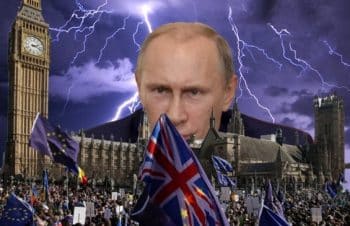
    The reason MI5 gave Putin a free hand to meddle with Brexit.

    A report from the Intelligence and Security Committee (ICI) about Russian interference with British democracy has just been released. ‘In brief’, it declares:  “Russian influence in the UK is ‘the new normal’, and there are a lot of Russians with very close links to Putin who are well integrated into the UK business and social scene, and accepted because of their wealth”. Worse still:  “This level of integration… means that any measures now being taken by the government are not preventative but rather constitute damage limitation”. Significantly, the report reveals that the various intelligence and security ‘Agencies’ which include MI5, the UK’s internal intelligence service, felt the issue of Russian interference in British politics was too much of a “hot potato” to investigate. According to the report, the spies: “appeared determined to distance themselves from any suggestion that they might have a prominent role in relation to the democratic process itself, noting the caution which had to be applied in relation to intrusive powers in the context of democratic process.” The ‘Agencies’ then attempted to suggest that other government departments were responsible. According to the report they: “informed us that the Department for Digital, Culture, Media and Sport (DCMS) holds primary responsibility for disinformation campaigns, and that the Electoral Commission has responsibility for the overall security of democratic processes.” (Paragraph 31 page 18) This led to MI5 and the others to take “their eye off the ball”. In addition, they were allegedly too absorbed by monitoring Islamic militants to do anything about the threat from Moscow. There is a lot more – a hell of a lot more – to this than meets the eye. MI5 has actually perpetrated crimes against Britain which were far worse than anything the ICI report or the UK media is now placing at the feet of the Russians. Infamously, MI5 officers like Peter Wright tried to topple the Labour government of Harold Wilson. Moreover, MI5, MI6 and a little known – and now defunct – black propaganda department called the Information Research Department (IRD), spent decades meddling with British, European and Irish political affairs. See Her Majesty’s Smearmeisters: how MI5 and MI6 vilified Haughey, Hume and Paisley See also Licence to deceive.http://deceive Books have been written about the MI5 plots against Wilson. A useful summary of it can be found at https://www.theguardian.com/commentisfree/2006/mar/15/comment.labour1 MI5 and to a lesser extent MI6 had to stomach years of harsh criticism in the 1980s as a result of ‘Spycatcher’, the book written by Peter Wright, a senior former MI5 officer, and revelations of Colin Wallace, a psychological operations officer with the British Army in Northern Ireland. Both of these men exposed intelligence agency treachery against the British government. Put simply, MI5’s treacherous history has made it reluctant to do its job in the present era in case it might put a foot wrong and attract criticism that it is following in Peter Wright’s cloven footsteps. Put simply, MI5’s treacherous history has made it reluctant to do its job in the present era in case it might put a foot wrong and attract criticism that it is following in Peter Wright’s cloven footsteps. If the Russians swung the Brexit vote, it would mean that the UK left the EU due – in part – to MI5 fears about it shameful past. But did the Russians actually swing the Brexit vote? It is certainly a possibility in circumstances where the Brexit victory was achieved by a whisker. Predictably, Boris Johnson rejects the notion. “Remainers have seized on this report to try to give the impression that the Russian interference was somehow responsible for Brexit. The people of this country didn’t vote to leave the EU because of pressure from Russia or Russian interference,” Johnson said. “They voted because they wanted to take back control of our money, of our trade policy, of our laws.” It is probably better to let the contentious issue of the victory for Brexit in the context of Russian interference as an issue for debate and focus instead on something more concrete: the failure of MI5 to even attempt to prevent it. Dame Stella Rimmington, a former director-general of MI5, is typical of those who have created this mess. Rather than face up to MI5’s perfidious past, condemn it and then consign it to the history books, she has denied all wrongdoing. But then Rimmington, now a successful spy fiction author, is a dab hand at transforming fact into fiction – whether at a conscious or sub-conscious level is best left to the experts. More specifically, she asserts that no one in MI5 ever lifted a finger to thwart the Labour PM Harold Wilson. This, despite the fact back that no less a figure than Lord John Hunt, the mighty and all-powerful Cabinet Secretary, 1973-79, acknowledged that it had indeed happened. In August 1996 Hunt told a Channel 4 documentary that, “There is no doubt at all that a few, a very few, malcontents in MI5, people who should not have been there in the first place, a lot of them like Peter Wright who were right-wing, malicious and had serious personal grudges, gave vent to these and spread damaging malicious stories about that Labour government.” See also Dial MI5 for Murder There are other lamentable reasons for MI5’s failure to protect British democracy during Brexit. MI5 is meant to devote all of its energies to legitimate purposes such as the protection of Britain from terrorism, hostile cyber punks (in tandem with the technoboffins at GCHQ) and other malefactors. Instead, MI5 has diverted some of its precious energy on reprehensible and entirely wasteful endeavours. MI5 routinely opens the post of whistle blowers like Fred Holroyd, a former military intelligence officer. Holroyd exposed a litany of MI5 dirty tricks in Ireland in the 1980s such as the control by MI5 of the loyalist gang which murdered hundreds of people including the 33 slaughtered during the Dublin and Monaghan bomb massacres in 1974. To date, MI5 interferes with

    Loading

    Read more

  • Posted in:

    Judge a (future) king by his courtiers: Prince William and the Duchess of Cambridge, pawns in the cover-up of a transatlantic paedophile network.

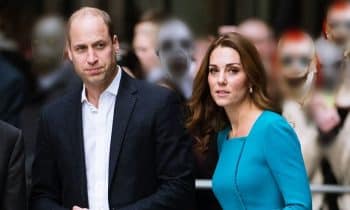
    By Joseph de Burca.   Prince William, the Duchess of Cambridge and other senior Royals continue to retain a sinister cabal of deeply corrupt officials in their employment at Buckingham Palace. These officials bartered access to William and Kate as a bribe to ABC TV in the US in return for the concealment of a child abuse network involving Prince Andrew which was run by Jeffrey Epstein and Ghislaine Maxwell. In the worst case scenario the ABC scandal threatens to recast the popular Royal couple as hypocritical, cynical and uncaring, not to mention accessories after the fact to the criminal concealment of child rape. The best case scenario for them is that they are dupes with little or no control over their own lives. Amy Robach, the ABC TV News anchor, interviewed Virginia Roberts in 2015, three years before the Jeffrey Epstein scandal (Phase 2) erupted. Robach was not allowed to broadcast anything Roberts revealed to her by her superiors at ABC. Roberts had been flown by ABC from Colorado to New York City with her family all of whom were put up at the Ritz-Carlton hotel. She was then interviewed by Robach and her colleague Jim Hill about Epstein. In late August 2019 Robach was captured by a live microphone in her TV studio describing her disappointment to colleagues. A recording of this off-air moment leaked. On it she can be heard complaining: “I’ve had this interview with Virginia Roberts…we would not put it on the air. First of all, I was told ‘who’s Jeffrey Epstein.’ Then the Palace found out that we had her whole allegations about Prince Andrew and threatened us a million different ways… [Roberts] told me everything. She had pictures, she had everything. It was unbelievable what we had. Clinton, we had everything.” Robach continued: “One of the reasons an interview with Roberts was not broadcast was because, “We were so afraid we wouldn’t be able to interview Kate and Will, so I think that had also quashed the story.” After Robach’s outpouring was broadcast online by the Project Veritas website, an ABC ‘source’ claimed that the company had “never stopped investigating the story” and that: “A lot of broadcasters can probably empathize. We do have to run everything past standards and practices and there are times when interviews can’t air. We needed time to corroborate details, and we were unable to verify a lot of Virginia’s claims.” There cannot be a village idiot anywhere on the planet who believes this drivel from ABC. The company did not let one of the most important stories of this century slip through its fingers because it was unable to back it up. Absolutely nothing changed over the next three years when the story finally broke. The claims made by Roberts have since been corroborated by a number of witnesses. Roberts knew a great number of them. She even set up an organisation to support them long before the scandal erupted whereby there was a cohort of available witnesses with corroborative stories, documentation and photographs. As the world now knows, Prince Andrew has been shamed and pushed out of the Royal spotlight, Jeffrey Epstein has died in suspicious circumstances in his New York prison cell while Ghislaine Maxwell is facing a criminal trial. The ABC top brass is simply lying when they claim they ever had any intention of letting their journalists pursue the story in any shape, form or manner. ABC’s excuse simply does not hold water. There is something deeply sinister about this scandal. Robach was undoubtedly telling the truth when she raised the prospect of a boycott of ABC by Buckingham Palace. Nonetheless, while the top brass at ABC may be hard boiled and ruthless, it is difficult to believe they would allow children be raped indefinitely just to secure a few minutes of footage with the Royal couple. So why did ABC really protect Epstein? Robach issued a statement after the ABC leak was broadcast online which was less strident than her off-the-cuff outburst in the TV studio. It is reproduced in full below. You can make your own minds up whether it feels authentic or reeks of coercive pressure from above. It is difficult to believe that Prince William and the Duchess of Cambridge were consulted in advance about the threats which were made in “a million different ways” to ABC. Yet, unless they are helpless pawns hermetically sealed from what is going on around them at Buckingham Palace, they surely know by now about the threats issued by their courtiers. Surely they have at least one friend who has alerted them to what Robach let slip in the ABC TV studio. Assuming this is so, they cannot be happy that media access to them was bartered to protect a child abuse network, even if it was not the sole or decisive factor in the cover-up at ABC TV. Despite the Royal couple’s presumed discomfort, no one at Buckingham Palace has been dismissed nor disciplined. The threats from the Palace enabled Epstein and his associates to groom, traffic and abuse young girls for a further three years. Not a single Royal correspondent has asked the future King to confirm that he was unaware of the threats made by his courtiers back in 2015. Nor is anyone asking him {i} when he became aware of the ABC suppression scandal; {ii} what he has been told by the staff at Buckingham Palace about it; {iii} what he believes to be the truth of the affair and {iv} what, if anything, he is doing about it. Most remiss of all, no one is asking him if he has demanded sight of the ABC file kept by his courtiers. There must be a string of emails and memos. One suspects Robach has copies so it would be a brave pursuivant at the Palace who would destroy them. The couple, viewed as a royal breath of fresh air, are clearly hard working and have helped bring some

    Loading

    Read more

  • Posted in:

    Media failed in its duty on Covid

    Government should focus on the elderly, as it should have done in March; Varadkar and Martin both outrageously breached the lockdown. By Michael Smith Perspective The Covid-19 infection rate of Irish healthcare workers at 32% of total infections is the highest in the world. Nursing homes account for nearly two-thirds of deaths, while the international average is just 25%. Yet those who predicted swamped ICUs, scandalous shortages of equipment and overflowing morgues were utterly wrong. 1800 deaths though tragic, is at the extreme benign end of the predicted spectrum. Annual deaths in Ireland from the flu are 200 to 500. Nevertheless, we are actually a shocking eighth worst in the world for deaths per million people, a key indicator of incompetence, and indeed of misery, though admittedly we peaked early in global terms and otherswill surpass us. It seems a major reason for this is we simply applied the lockdown a week later in the cycle than many other countries. Media failed If you haven’t realised all that, nuanced as it is, you weren’t following. Ireland’s media in general failed in their duty to keep the public aware of the evolving pattern of Coronavirus cases in Ireland over the last four months. There was a pattern of reported cases it is just that the media did not follow it. Their job was not to convey this as a certainty but as the probability, based on the curves – the data. They failed the most vulnerable in society– the very elderly in nursing homes. Instead, all their energy went into plying pictures of improvised morgues, invitations to submit stories about deceased love ones, pieces about our nonexistent devastating shortages of PPE and ventilators, and of rockstars organising emergency imports of it. It was implied healthcare workers were dying on a serious scale when seven have died in a sector that employs 120,000 – a rate lower than the average rate for the population and around the same number as that of healthcare workers likely to die in road fatalities and drownings this year. Figures from the INMO showed that up to the end of May, a total of 8,018 cases of infection of healthcare workers were reported. Some 66 percent or 4,823 remain out sick. New Scientist reported in late June that one in five of those who need ICU treatment may suffer permanent lung damage but that suggests no more than 100 patients in total. Non-mortal infections, evenon a disturbingly large scale, do not constitute catastrophe. Ireland’s misplaced healthcare-worker catastrophism was enabled by the fact that many countries and in particular the two countries from which we draw most of our external news, the US and the UK, genuinely faced shortages of equipment and facilities and rampant deaths, as well as base, brutal, science-defying incompetence from the very top. The authorities Some credit is due to those who imposed the lockdown efficiently (and of course those who observed it – and the healthcare services). The reality The rates of infection and indeed of death worldwide have been really quite small (around 360 deaths per million in Ireland; 400 in the US; 700 in Britain, the ignominious world leader, after dysfunctional Belgium). In Ireland, 65% of cases have come from three sectors: healthcare workers, nursing homes and residential institutions like Direct Provision centres. The incidences of people outside particular hotspots of this type catching Covid-19 have been low. As to deaths, nursing homes alone account for 62%. And 92% of deaths have been of people over 65 (who comprise just over a quarter of cases; with the median age of death 83), mostly (nearly 90%) with underlying health conditions, “comorbidities”. Many of these people would have died within a few years anyway. On the one hand, it is the case that it is far worse for younger people with a long life expectancy to die, but on the other, it is extraordinary that it was allowed to happen, with so little real interest in covering the experiences of those in the homes or addressing the predicament of the elderly generally while the virus rages. The priority for journalism now should be to analyse and draw lessons from what happened in the nursing homes and ensure the most vulnerable, especially the elderly, are better protected against a likely second wave of the pandemic. Whistleblowers That is not to say even outside the care-homes all was above board. Village understands there were cases where whistleblowers about potential PPE shortages in hospitals were pressurised to remain silent. An organisation called WhistleblowerAid Ireland has been established to investigate possible corruption surrounding the handling of the Covid-19 crisis. It is affiliated to the charitable legal aid firm which recently advised the whistleblower who triggered the impeachment of Donald Trump. There should be an inquiry into what happened and major public concern at apparent failures. Guarding a realistic perspective does not mean we should not investigate incompetence. What happened? Inertia then catastrophism but mainly inadequate regard for nursing homes Let’s start by looking at the sequence of what happened in Ireland. There was a very bad start. The Department of Health oversaw a system underprepared for a pandemic and then specifically underestimated the dangers from China – on 20 February the Chief Medical Officer TonyHolohan ineptly faced a camera and said: We don’t expect to see anything more than individual cases occurring that we believe we’ll be well-positioned to manage within the next couple of months. Within a few weeks, however, the official view had flipped the other way and by 8 March Paul Reid, CEO of the Health Service Executive (HSE) was endorsing a report in the Business Post which quoted the health authoritiesmassively overestimating cases. The lead story in that newspaper on that day, apparently teed up with the health authorities, predicted 1.9 million infected cases for Ireland which would have implied 68,000 deaths, since the death rate given by theWHO at the time was 3.4%. The report did not say there “might” or

    Loading

    Read more

  • Posted in:

    The Plague, Ecocide, Thanatos and Gaia.

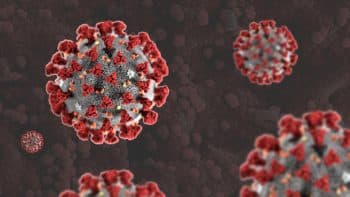
    Coronavirus shows that our self-destructive civilisation is fragile. But the earth may be on our side. by Michael Smith. This article argues that self-destructiveness including neo-liberalism facilitates twin scourges: plagues and environmental catastrophe (“ecocide”). In reacting, as you would expect, against ecocide Gaia, the force that regulates the earth’s environment, also attacks plagues and those that cause or facilitate them. I’m going to take you on a journey through plagues; humans’ self-destructiveness; neoliberalism as a manifestation of that self-destructiveness; how countries have performed on both Coronavirus and ecocide in ways that reflect their self-destructiveness; and how ultimately Gaia is responsible for the Coronavirus and is a warning to us to take better care of our exhausted earth. Plagues Coronavirus and plagues Coronavirus is not the first plague to bring civilisation to a standstill. But looked at from the perspective of the planet forcing a standstill is a cry for help that, rather than bringing down our civilisation, affords us the chance to reflect on our selfdestructiveness and maybe save it. Particular human civilisations – as opposed to humanity itself – assailed by plagues have not always had that chance.   Historical Plagues In 430 BC during the Peloponnesian War typhoid crossed the Athenian walls as the frugal Spartans laid siege, killing two-thirds of the population of the cradle of democracy. The first appearance of the bubonic plague in 541 AD stopped the Emperor Justinian from saving the Western Roman Empire and expedited the ascent of Goths and Vandals and the so-called ‘dark ages’. In the fourteen century bubonic plague put an end to England’s feudal system with its moribund social rigidity. In 1520 the death-worshipping Aztec empire was destroyed by colonists’ smallpox. So…plagues are dangerous to the very survival of particular civilisations. Human Ecocide Human driving of species loss and climate change is self-destructive. In the last fifty years humans have damaged the earth so much that most life forms are under existential threat. Humans have wiped out 60% of mammals, birds, fish and reptiles and threatened a million species with extinction to the point where we are facing the sixth Great Extinction. Since 1906, the global average temperature has increased by more than 1.1 degrees. A further .4 of a degree rise may put 20-30% of species at risk of extinction. Climate change generates rising seas, hurricanes, floods, droughts and desertification. Self-evidently it is self-destructive to have manufactured a future of this. It is, then, extraordinary that we are currently accelerating towards probably 3 to 4 degrees and perhaps, in places, 10 degrees centigrade of warming by the end of the century. A quarter of a billion years ago, a rich and wonderful world was annihilated in the end-Permian extinction when the world warmed the same amount, 10 degrees. It is a simple truth that most humans have not synthesised that this bears on our civilisation. We’ve known about climate change since the 1860s. We’ve really known about it since around 1988. Yet since then global emissions have risen by 50% and continue to rise, causing and threatening all this, to the point that over the last dozen years it has become a clear and overarching existential threat. Society has failed to recognise, still less control, this momentous threat. Some countries are worse than others in their approach to climate change. So…ecocide is dangerous to the very survival of the whole of human civilisation. We have discussed the dangers of plague and ecocide. But human self-destructiveness compounds the dangers of both plague and ecocide. Self-destructiveness Self-destructive societies are open to plague and ecocide Societies that are self-destructive tend to make mistakes. They open themselves to predation, to attack – to plague, to ecocide. Already-self-destructive societies are more likely to generate plague and ecocide. Societies that are underprepared, licentious, self-absorbed, intolerant, arrogant, profligate, reckless, short-termist, greedy, laissez-faire, uneducated, anti-scientific or ignorant. That, in Freudian psychoanalyticalterms, have clinched Thanatos – the death wish. Self-destructiveness. Humankind has always had a destructive side but it really lost its existential caution, and became self-destructive from, at the latest, the beginning of the twentieth century after which it fought two ‘world wars’ and entered an epoch of nuclear and now environmental threat to the continuation of the human species. But some societies and some people within those societies are particular vectors of self-destructiveness – and of plagues and ecocide.   Neo-liberal self-destructiveness: Britain, the US, Brazil The most self-destructive, though of course certainly not the most evil, ethos to have arisen in the history of humanity is globalised capitalism, market-deferential laissez-faire that I shall call, denigratingly, neo-liberalism. It originated in Thatcher’s Britain and Reagan’s USA forty years ago. It promoted capital over humans. It stopped those countries investing in their populations, including in their education. It promoted irresponsible laissez-faire. It celebrated inequality. It was a form of death worship. Aftera while society and many citizens became self-destructive. After a generation of social, environmental and cultural decay countries that had been beacons for much of the twentieth century turned to populist authoritarianism, xenophobia, racism and narcissistic leadership: the UK elected hedonistic Brexit Boris; and the USA racist, sexist Trump. A similar but accelerated process threw up proto-fascist Bolsonaro in Brazil.   Self-destructive leaders and Coronavirus Boris Johnson is so self-destructive he did not even protect himself or, apparently, his heavily pregnant partner, against Coronavirus. He nearly died. His chief advisor, Dominic Cummings, who advised a lax approach to the disease, then discovered he had it and travelled and picknicked half way across England risking multiple infections in search of law-breakingisolation. Trump’s deathly instincts have helped make the US the worst mortality victim of Coronavirus. They spawned his initial denial of the disease – a “Democratic hoax” and his subsequent obsession with prematurely reopening his country. He believes Coronavirus can be cured by applying light and injecting disinfectant. On a personal level he continues to shake hands, does little to social distance, ingests insidious malaria drugs, and refuses to wear a mask. Reflecting this puerile vanity, Vice-President Pence

    Loading

    Read more

  • Posted in:

    The UK’s constitutional ‘crisis’ over the Union, rights, minorities, the judicial role and European law is dangerous for Northern Ireland.

    The Conservative Party’s view of the role of the judiciary in politics won’t work in Northern Ireland.  By Christopher Stanley. This piece looks at the dangers for Northern Ireland of ‘Cummings-Type’ tampering with the British Constitutional settement. For readers of Village Magazine it is offered as a supplement to my recent post, Contempt in the Rose Garden, on the travels and travails of British Prime Minister Boris Johnson’s eminence grise Dominic Cummings. it is written in response to a paper by Richard Elkins: “Protecting the Constitution: How and why Parliament should limit judicial power” (Policy Exchange Protecting the Constitution, 2 December 2019) which focuses too much on Britain.  In general for Britain read England. This distinction has become particularly acute during the current pandemic crisis.  The UK’s devolved administrations reacted in different ways to the control of Covid-19.  This post is offered as a warning to those elsewhere – in Dublin for example – who may be curious about the recent proposals from London to reform the unwritten constitution and to review how Executive authority-power is exercised. It is a view from that ‘Narrow Ground’ described by Sir Walter Scott in 1825. “I never saw a richer country, or, to speak my mind, a finer people; the worst of them is the bitter and envenomed dislike which they have to each other. Their factions have been so long envenomed, and they have such narrow ground to do their battle in, that they are like people fighting with daggers in a hogshead”.  The narrow ground in Northern Ireland is unfortunate but forced on it.         [I] Conservative Manifesto The problem originated with the Conservative Manifesto published before the recent General Election in the UK which stated: “After Brexit we also need to look at the broader aspects of our constitution: the relationship between the Government, Parliament and the courts; the functioning of the Royal Prerogative; the role of the House of Lords; and access to justice for ordinary people”.  “We will update the Human Rights Act and administrative law to ensure that there is a proper balance between the rights of individuals, our vital National Security and effective government. We will ensure that judicial review is available to protect the rights of the individuals against an overbearing  state while ensuring that it is not abused to conduct politics by another means or to create needless delays” (Conservative Manifesto 2019 page 48). The Queen’s Speech 1, which gives sovereign expression to the Conservative Party Manifesto and therefore a democratic mandate to govern, states:  “My Government will take steps to protect the integrity of democracy and the electoral system in the United Kingdom”. In the accompanying Background Briefing Notes, the Cabinet Office  expatiates on this statement: “Examine the broader aspects of the constitution in depth and develop proposals to restore trust in our institutions and in how our democracy operates. Careful consideration is needed on the composition and focus of the Commission” Queen’s Speech 2. In 2020 Manifesto Commitments are unusually important.  This is because many of them are likely to find their way into the Queen’s Speech and from there into action. The current UK government has a majority in Parliament of 80 seats. This constitutes what Lord Hailsham described in 1976 as an Elective Dictatorship. Julian Petley recently commented:  “At a time when the powers of Parliament are under severe threat from government, it might not seem an opportune moment to recall Hailsham’s lecture, but the crucial point to bear in mind is that his phrase refers to the fact that Parliament’s legislative programme is determined by the government, whose bills virtually always pass in the Commons thanks to the majoritarian, first-past-the-post electoral system and the imposition by the whips of party discipline on the governing party’s majority. Thus there is a strong tendency towards executive dominance, and this is compounded by the constitutional inability of the Lords ultimately to block government initiatives. We are closer than ever to Hailsham’s Elective Dictatorship” (30 September 2019). [ii] The mood is majoritarian Policy Exchange is ‘the UK’s leading think-tank’. Richard Elkins is Head of the Policy Exchange Judicial Power Project and Professor of Law and Constitutional Government in the University of Oxford. His paper ‘Protecting the Constitution: How and why Parliament should limit judicial power’ has a foreword by former Conservative Home Secretary and Leader of the Oppositon Lord [Michael] Howard of Lympne CH QC in which he offers his own insight into the British constitution by way of a question:  “Who should make the law by which we are ruled? Should it be elected, accountable politicians, answerable to their constituents and vulnerable to summary dismissal at elections or by unaccountable, unelected judges, who cannot be removed?”. This is a politician’s question in that it points to the questioner’s own answer. Lord Howard then posits a further ‘drain’ on democracy as he sees because not only is law apparently being made by judges, but these judges are applying and making the law from the perspective of the European Court of Human Rights (ECtHR) at Strasbourg through judgments which apply the European Convention on Human Rights (ECHR) and its abstract jurisprudence (obviously infected by pernicious Continental legal systems) as opposed to the pragmatic Common Law.  [iii] That majoritarianism pays little attention to Ireland Fog in Channel – Continent Cut Off. Irish Sea nowhere to be seen.  Policy Exchange is a (Neo-Conservative) Think-Tank. It is part of The Stockholm Network(‘The Stockholm-Network.org is the leading pan-European think tank and market oriented network’). Policy Exchange therefore articulates and promulgates an ideological position which underscores a political mandate. Who Funds You? The English constitutional settlement is an unwritten set of conventions, principles and practices forming  an ideological construct balancing competing interests. As a constitution that is unwritten, save for the Bill of Rights 1688, there are both implicit and explicit consitutional conventions – for example the contested sovereignty of Parliament.  Note: most European countries are republics, the UK is a monarchy. While European states have citizens, the UK has subjects.  The UK’s constitutional ‘strength’, as commentators such as Dicey noted, is that the system is flexible and can accommodate change. This

    Read more

  • Posted in:

    Fractious and prolonged post-election volatility difficult to avoid.

    A reply to Conor Lenihan looking at the convoluted practice in Belgium. By John Vivian Cooke. In his article in Village, (¨Risks of high political instability are being underestimated¨, 30 May), Conor Lenihan outlined the factors threatening Irish politics with continued instability. He detailed the calculations of electoral advantage that, in the end, led to an interval of 140 days between the general election and the formation of a new coalition. However, the insecurity caused by this dithering is mild in comparison to the frustrations and anxieties regularly endured by Belgian voters. When Yves Letreme, tendered his resignation as the Belgian Premier on 26 April 2010, federal elections swiftly followed in June. But Letreme`s successor, Elio Di Rupo, was not sworn into office until 5 December 2011. Letreme thereby set an unenviable record by serving the longest term in office as an acting head of government in a modern democracy. 589 days.   Ireland and Belgium use their own forms of proportional representation in national elections. Proportional representation has a tendency to create multi-party systems in contrast to plurality voting that has a propensity to two-party systems. The consequence of this is fragmentation in parliament, which, in turn, has necessarily led to a history of coalition governments. The last single-party government in Belgium was Aloys Van de Vyvere`s short-lived administration in 1925, while, Ireland last elected a single-party (minority) government in 1987. In fact, the last Dáil in which a single party commanded a majority was the 21st Dáil, elected in 1977.  If Ireland and Belgium both reliably expect their elections to result in coalition governments, why does it take so long to agree their composition? If both countries reliably expect their elections to result in coalition governments, why does it take so long to agree their composition? In both cases, the proximate cause resides in the mathematics of the election outcomes. However, an explanation based on contingency does little to explain the deeper causes of these delays. In the case of Belgium there are two forces in operation: one social and the other structural.  Deep divisions in Belgian society jam up the cogs of its politics. In broad terms, the Francophone southern regions of Wallonia are distinct from the Dutch-speaking communities in the northern Flemish districts. This historic, linguistic divide always gave rise to a degree of friction between the communities. In recent years, political relations between the two communities have grown increasingly rancourous as existing language rights and the share of the federal budget are guarded jealously, all the while resenting any gains made by the other community. Unfortunately, some nationalist parties have sought electoral profit by stoking outright enmity and suspicion. Their incessant tugging at the thread of greater regional autonomy threatens to unravel the fabric of the country itself.  The political expression of this is not limited to nationalist parties advocating greater regional autonomy.  Although some parties have an electoral appeal that bridges the linguistic divide, many parties representing the same ideological position have separate and distinct Flemish and Walloon versions. As a consequence, Belgian voting patterns cleave along both ideological and linguistic lines. Imagine if each of Fine Gael, Fianna Fáil, Sinn Féin, Labour, the Social Democrats and People Before Profit had an English and Irish version in the Dáil. After the 2010 federal elections, 12 different political parties won representation in the Chamber of Representatives.  Although such cultural factors are not present in Irish voter behaviour, the salience of voter loyalty as a determinant of voting behaviour is in long-term decline. Fianna Fáil, and, more recently, Fine Gael have had success at individual elections in attracting uncommitted voters. But these gains have proven to be ephemeral and disguise the underlying pattern.  As Lenihan noted, the result of the last election ¨threw up an indeterminate result and an intractable three-way split between Fianna Fail, Sinn Féin and Fine Gael. Beyond these medium-sized parties, are a number of smaller parties of varying sizes and ideologies and of course a plethora of independents¨. Neither of the traditional parties looks to be in any position to re-establish its previous electoral dominance on any lasting basis. The Belgian customs of forming new governments are very much the Heath Robinson of constitutional arrangements. The day immediately after balloting in federal elections, the outgoing Premier is invited to form a caretaker administration until a new government can be appointed. Following wide consultations among leading political figures, the King appoints an Informateur whose role it is to take soundings from all parties and identify the candidate in the best position to put together a parliamentary majority. The Informateur need not report the exact terms of the basis of government as there is no expectation that they will be the new Premier themselves, they merely nominate a Formateur. It is the Formateur`s responsibility in turn to undertake the tortuous detailed work of agreeing policies and dividing cabinet portfolios.  Following a political crisis in 2007, it was felt that the system was not sufficiently complicated and the position of Royal Mediator was created. After elections in 2019, a Preformateur assumed the functions of the Informateur with the intention of becoming Premier. These positions are intended to speed up the process of government formation, but, surprisingly, it has not worked out that way. Moreover, in order to hold together the existing governing coalition, the positions of Clarificateur and Negotiateur were added to the mix in 2007.  If insufficient progress is not made, the process can regress a step with a fresh set of appointees. The frequency with which this happens can make Place des Palais seem somewhat of a roundabout that politicians circle until it is their turn. All the while these Informateurs, Preformateurs, Formateurs, and Royal Mediators go about their business, the previous Premier hobbles along in office a caretaker capacity.  Uachtarán na hÉireann rightly holds a constitutional position above party politics and, thus, is denied the role of encouraging parties into government that is reserved for the King of the Belgians. The royal role is a relic from when

    Read more

  • Posted in:

    Trump’s mentor: another sociopathic paedophile child-trafficker in the mix; from Roy Cohn to Epstein and Maxwell.

    By David Burke. Introduction. Law-enforcement agencies on both sides of the Atlantic have been – and continue to be – adverse to making inquiries into VIP child sex-abuse. This has been the position for decades. Donald Trump’s mentor, Roy Cohn, was a paedophile who abused boys on both sides of the Atlantic, including one from Kincora Boys’ Home, Richard Kerr, whom he selected in Belfast and had taken to him in Venice for sexual abuse. The mere fact of the trip to Venice demolishes the findings of a series of official inquiries  into the Kincora scandal. The cover-up continue to this day. Richard Kerr had been prepared to supply all of the information in this article – including the photographs and financial records – to the Independent Inquiry into Child Sexual Abuse (IICSA) in London but it was not interested. There is a common thread between the Kerr case, Cohn’s activities and, in more recent times, those of Prince Andrew, Jeffrey Epstein and Ghislaine Maxwell: a disturbing refusal by British and American authorities to investigate their cases properly. Cohn may have been part of a sexual blackmail network with Mafia and intelligence links which was later managed by Epstein and Maxwell. Cohn was so corrupt that he was eventually disbarred from practice as a lawyer after which Trump dumped him. He died from AIDS in 1986. Trump then let Epstein and Maxwell into his life. In the US, the FBI has covered-up for an ‘intelligence’ agency for whom Epstein and Maxwell ran ‘honey traps’. Their victims should brace themselves for another round of betrayal by the FBI which has acted deplorably thus far. Ghislaine Maxwell may be thrown to the wolves but the intelligence agencies involved in the scandal will escape justice. In August 2019 the Metropolitian Police in London anounced that it was not going to investigate Prince Andrew for having had sex with a minor. A spokesperson for the Met announced that it had investigated allegations he had “had sex with Virginia Roberts Giuffre aged 17 in Ghislaine Maxwell’s bathroom” in London and confirmed that while they had received “an allegation of non-recent trafficking for sexual exploitation” that “no further action is being taken”. It is doubtful Met officers even spoke to Prince Andrew or Ghislaine Maxwell. As far as they are concerned, the matter is “closed”. Meanwhile, the mainstream media continues to ignore the fact that the notorious paedophile and friend of the Royal Family, Lord Greville Janner, introduced a teenage male prostitute to Prince Andrew. Roy Cohn was a cheating, corrupt, tax-dodging, cocaine-snorting New York lawyer linked to the Mafia who persecuted homosexuals. He acted for Donald Trump and was the driving force behind Trump’s book, ‘The Art of the Deal’ which was published in 1987 shortly after Cohn died. With the election of Trump as US President, Cohn’s primary historical significance is that he imbued the younger Trump with his ruthless, amoral and deceitful approach to life. Cohn was a paedophile with connections to the Anglo-Irish Vice Ring in London. The link to it may have come through a Texan living in London called Fred Ferguson who was also a paedophile or Dr Morris Fraser, a Northern Ireland psychiatrist who was a key figure in the network. In any event, in 1977 he and Ferguson were able to gain access to a boy from Northern Ireland through the network. The boy was part of a group of 14-year-old boys who had been residents of Williamson House in Belfast until they were transferred to Kincora Boys’ Home in 1975. Up to this point, Kincora had mainly catered for 16-18-year-olds. Some, if not all, of the Williamson boys had been subjected to horrific abuse, violence and intimidation by one of the staff at the home, Eric Witchell and his associates from outside of it, so much so they had become fearful and compliant child-sex puppets. Witchell now lives in London. The Independent Inquiry into Child Sex Abuse (IICSA) in London has shown no interest in making any form of contact with him despite his key role in the Anglo-Irish vice ring, a paedophile network that – as this story will demonstrate – overlapped with abuse rings in the US. Village magazine has published an 80,000-word online book entitled ‘The Anglo-Irish Vice Ring’ which outlines the history of the Irish branch of this egregious paedophile underworld as well as its connections to, and exploitation by, MI6 (attached to Britain’s Foreign and Commonwealth Office) and MI5 (attached to Britain’s Home Office). https://villagemagazine.ie/https-villagemagazine-ie-anglo-irish-vice-ring-online-book/ The abuse of the children at Williamson House, Kincora and elsewhere in Northern Ireland, was carried out with the knowledge and connivance of both MI5 and MI6. At the time of the transfer of the boys from Williamson House to Kincora, MI5 was the dominant UK intelligence service operating in Northern Ireland. It was commanded by Director-General Sir Michael Hanley. His key officer on the ground in Northern Ireland was Ian Cameron who was mooted in the media as a contender for the position of Director-General of MI5 in the late 1980s. Cameron might well have ascended to the post but for the Kincora scandal which erupted in 1980, and a fear that MPs such as the redoubtable Ken Livingstone might have raised the issue in the House of Commons. It is deeply disturbing that Livingstone was booed and jeered by Tory MPs when he raised this type of matter in the Commons. One of the boys transferred to Kincora will be familiar to Village readers, Richard Kerr. He was transferred in August 1975. The other boys were:     − ‘F’, who is still alive;     − ‘B’, who later shot himself;       − ‘S’;      − Steven Waring, who had not been in Williamson House, joined a few months later. He committed suicide in November 1977. He had been abused by Lord Louis Mountbatten the previous August; (See the online book for further details.)   − Another young boy, ‘D’, would be consigned to the hell of this existence

    Loading

    Read more

  • Posted in:

    THE BATTLE FOR ST MATTHEW’S, JUNE 1970: THE UNPUBLISHED PAMPHLET. The British Army left the area defenceless; someone had to step in.

    Introduction by Kieran Glennon. In the immediate aftermath of the violence that erupted in Belfast in August 1969, Citizens’ Defence Committees (CDCs) were formed in many nationalist areas; barricades were hastily erected and patrols of vigilantes armed with clubs were organised to ensure that loyalist mobs, the B Specials and the RUC were all kept at bay. Within days, a co-ordinating group was established to link the individual CDCs, the Central Citizens’ Defence Committee (CCDC); its first chairman was Jim Sullivan, who was also Adjutant of the IRA’s Belfast Brigade. Jim Sullivan, Adjutant of Belfast IRA and first chairman of Central Citizens’ Defence Committee (CCDC) By early 1970 Sullivan had been deposed and replaced as chairman by Tom Conaty, a fruit and vegetable merchant from west Belfast. Conaty’s closest ally on the CCDC was Canon Pádraig Murphy, the administrator of St Peter’s Cathedral in the Lower Falls. Paddy Devlin MP had remained the CCDC’s secretary since its inception. Fifty years ago this month at the end of June 1970 the Provisional IRA made their first appearance on the streets of Belfast, in conjunction with armed members of the local CDC, in what came to be known as the Battle of St Matthew’s. In Ballymacarrett in the east of the city, more commonly known today as the Short Strand, three people were killed in the worst night of violence since August 1969. At that time, Tom Henry – a nom de plume – was self-employed as a researcher and was commissioned by Conaty and Murphy to write a history of St Matthew’s church for the diocese of Down and Connor. Also at that time, Conaty and Murphy were welcome at Army HQ Lisburn as representing the Bishop of Down and Connor, Doctor William Philbin. Canon Padraig Murphy and Major General Tony Dyball Henry was given access to parish records at St Matthew’s as well as written statements from witnesses who were present there during that night. However, despite their central involvement in the battle, Henry did not knowingly interview any members of the IRA or their local auxiliaries. Fearful of the police scrutiny that would inevitably follow the pamphlet’s publication, he took the view that what he didn’t know couldn’t be got out of him, even under torture. So, while there is one reference in his text to “armed defenders”, the initials “IRA” are not mentioned. Henry completed his pamphlet in April 1971 and concluded that on the night the British Army had failed to honour written agreements given to the Ballymacarrett CDC for the defence of the area if attacked. In view of this conclusion, he believed the pamphlet would not be well received. This conclusion did not suit Conaty and Murphy. At the time, they were trying to position the CCDC as the spokesmen for moderate nationalists; their efforts to develop a close relationship with Army HQ in Lisburn would receive a frosty response if they were to publish an account of the debacle that was critical of the Army. Tom Conaty, Chairman of the CCDC: commissioned the pamphlet but its conclusions would have threatened his relationship with British Army HQ, Lisburn. I have known Tom Henry for many years and know him to be a man of impeccable integrity: he was not about to change his conclusion to suit the positions of Conaty and Murphy. A copy of the manuscript was shown to Henry Kelly, then northern correspondent of the Irish Times whose opinion, as he informed Henry, was that the pamphlet would never see the light of day. That remark turned out to be prophetic. It is notable that while the confrontation became known as the Battle of St Matthew’s, Henry entitled his pamphlet the “Battle for St Matthew’s”; the distinction is subtle, but probably reflects more closely what happened on the night. Historian Andrew Boyd had a copy of the manuscript and donated it to the Linen Hall Library in Belfast, considering it to be an important historical document. Although it was referenced in the book Belfast and Derry in Revolt, by Simon Prince and Geoffrey Warner, the full text has never before been published. Included as a prologue, as they form an essential foundation for Henry’s conclusion, are the verbatim texts of the documents supplied by the Army to the Ballymacarrett CDC in September 1969; also included are excerpts from written responses to the Army and RUC by the CDC and their legal advisor. Taken together, these constitute the “Joint Military and Police Security Plan for Ballymacarrett.” Like the pamphlet itself, they have never previously been published. The early chapters of the pamphlet provide context for the events of June 1970. Chapter 3 outlines previous attacks made on St Matthew’s in the course of the pogrom of 1920-22. Chapter 4 recounts the opposition to the planned building of a Catholic church elsewhere in east Belfast in the 1930s, illustrating that sectarian hatred was directed, not just at St Matthew’s in particular, but at Catholic churches in general. Chapter 5 details correspondence between the Bishop of Down and Connor, William Philbin, and the chairman of the Sirocco Works at Bridge End, near St Matthew’s, concerning the extent of religious discrimination in employment at the firm – overturning such discrimination was one of the key objectives of the Civil Rights movement, to which unionism took such violent exception. What happened during the Battle for St Matthew’s undoubtedly flowed from what had happened before – but what ultimately transpired was not inevitable. Kieran Glennon is the author of From Pogrom to Civil War, Tom Glennon and the Belfast IRA. Although he is not from the area, two of his great grandparents were married in St Matthew’s. In 1920, his grandfather, as a member of the IRA, did picket duty at the church to protect it from sectarian attack. Prologue: September 1969 On 12th September 1969, the Ballymacarrett Citizens’ Defence Committee (CDC) met with the British Army and RUC to discuss security in the area; the next day,

    Loading

    Read more

  • Posted in:

    EXTINCTION REBELLION IRELAND (XRI) STATEMENT ON PROGRAMME FOR GOVERNMENT

    Extinction Rebellion Ireland rejects the proposed draft Programme for Government as being “full of fluff, and not good enough” to address the climate crisis. In a statement, a representative of Extinction Rebellion Ireland said: We in Extinction Rebellion believe it is our role to always tell the truth as backed by science, and the truth is that this programme for government is not good enough. As young activists, it is not good enough for our futures. As parents, it is not good enough for our children’s futures. As citizens we do not believe it is good enough for Ireland’s future or the planet. The PfG is a textbook example of spin, jam-packed with fluffy aspirations, but lacking in substance. Paying lip service to environmentalism should not be used as a cover for austerity. It demonstrates a lack of commitment to dealing with the climate crisis and a lack of understanding of a just transition. The UN Environment Programme has been clear that we need a MINIMUM of 7.6% emissions reductions every year till 2030. If we do not achieve those reductions we will trigger irreversible runaway climate change. The PfG fudges the question of how to achieve a 7% reduction, essentially kicking the can down the road to a future government, which all but guarantees we will not meet our 2030 targets. We believe that the climate and biodiversity crisis should be treated as an emergency, and that this programme does not do so. We urge members of Fine Gael, Fianna Fail, and the Green Party to consider this when voting on the Programme for Government. A half-hearted, delayed approach to solving the climate crisis is not good enough. Net-zero by 2050 is not good enough. The Programme for Government is not good enough. Appendix: Extinction Rebellion Ireland have pointed out the following as examples of some of the specific shortcomings in the Programme for Government: Greenhouse Gas Emissions – The PfG makes no concrete pledge about how much greenhouse emissions will be cut over the lifetime of this government, instead making a target for the decade, and saying the “strong climate action” will be left to the next government, outside the scope of this PFG. According to Professor John Sweeney stated, ‘backloading the 7% commitment to the second half of this decade is not good, and runs the risk of repeating the experience of the past, when aspirations and commitments were not realised’. Full of fluff – The PfG uses the word ‘review’ 127 times, ‘examine’ 68 times and ‘consider’ 44 times. It also promises a dozen different commissions. This is clearly politics as usual, promises little solid progress, and will not deliver the systematic change we need. Agricultural emissions – The PfG refers to “The special economic and social role of agriculture and the distinct characteristics of biogenic methane” which, as John Sweeney has pointed out, is nonsense. Methane is methane and it traps heat at 72 times the rate of CO2. Eco-Austerity, not Climate Justice – The PfG plans to quadruple the Carbon Tax from its current level, re-introduce water charges by the back door, and will guarantee more austerity in the later years of the government. This stands in contrast to the climate justice advocated by the school strikes, XR, global movements, etc and directly contradicts the idea of a real just transition. Fracked Gas and LNG terminals – The PfG does announce withdrawing the Shannon LNG Terminal from the EU projects of Common Interest in 2021, but makes no reference to the possible Cork LNG Terminal. On the broader issue of importation of fracked gas, it promises to “develop a policy statement” opposing it, but includes no guarantee it will be banned. Biodiversity – Nature is dying and the PfG offers nothing concrete to address this. One example of this is in the lack of commitment to Marine Protected Areas. This is absolutely crucial in the fight against climate change. Ireland is signed up to the Convention on Biological Diversity committing us to 30% of our marine water being Marine Protected Areas (MPA) by 2030 with 10% by 2020. We are only at 2.3% now and there’s no mention of this in the PfG. — 

    Loading

    Read more

  • Posted in:

    Vote Yes and then have overdue debate.

    Agreeing the Programme for Government has forced a defining debate on the Green Party but it is best left to the leadership contest. By Peter Doran. The Comhaontas Glas/Green Party’s internal debate on the Programme for Government will be a defining moment for both party and the country. We are at tipping points for the earth and for our country, one that converges with the long-awaited end of civil war politics. A new page in our history is unfolding as Fianna Fáil and Fine Gael concede what many of us have known for a generation: they have always needed each other, for their differences were always more contrived than real. They have defined themselves only in relation to their civil war shadows. So a new narrative of transition is about to emerge and the Greens can be authors because they are more than a political party, they are participants in the world’s most powerful critical ‘social‘ movement. I underline ‘social’ because the modern movement for climate and ecological justice is about root-and-branch system change, embracing economic, societal and cultural shifts – personally, locally and globally.   Last weekend, the voice of a new generation of climate justice activists, Greta Thunberg, who can take a large part of the credit for the boost to the Green Party’s recent membership intake and success in the recent General Election, made a remarkable intervention. Thunberg told us that the rise and rise of the Black Lives Matter protests has shown that society has reached a tipping point where injustice cannot be ignored. She told the BBC, “It feels like we have passed some kind of social tipping point where people are starting to realise that we cannot keep looking away from these things. We cannot keep sweeping these things under the carpet, these injustices”. This is also the worldview of the emergent radical wing of the Green Party, especially among the younger global citizens who are connected to a vision of global justice, are embedded in an organic movement demanding a new world beyond the enclosures of the Western consuming elites and their preoccupations with mass distraction,  and who know from their history that Ireland’s liberation must have an ecological dimension. ‘The radical caucus of the Green Party, much of which has rallied behind Neasa Hourigan TD’s opposition to the PFG, heralds the decisive entry of ecology into the history of Ireland’s post-colonial narrative’ The radical caucus of the Green Party, much of which has rallied behind Neasa Hourigan TD’s opposition to the PFG, heralds the decisive entry of ecology into the history of Ireland’s post-colonial narrative. Young activists know their history, they know that their island has been used as a petri dish for capitalist and colonial adventures, as a template for economic dispossession, plantation and enclosure that would reach beyond these shores to the Americas. The frontier of England’s colonial expansion was once Ireland’s forest, swamp and bog but did not end here. From the plantations in the 16th century to neoliberal austerity in the 21st, our Atlantic home has been a laboratory for economic and ecological regimes that have sought to colonise our moral imagination. From the foundation of the State, successive political regimes have obscured the ways in which our colonisation was also a form of eco-colonisation by the forces of capital, private property and hyper-individualism. Our political masters pursued a contemporary colonisation of our commons, celebrating and raising the figure of the ‘developer’ as the new sovereign, unquestioned, heroic and scandalously empowered to conflate greed and private profit with national interest. Faux performances of opposition by the civil war parties, in harness with a reactionary church and media, could cope with early environmentalism that was little more than a middle-class cultural aesthetic that has sought only to hold the disenchantment of modernity at arms-length. Thunberg and radicalised young greens in Ireland – within and beyond the Green Party – are embedded in an organic movement that harks back to the vision of Die Gruenen [German Green Party] founder and friend of Ireland, Petra Kelly. She understood that green parties are “anti-party parties”: parties that can only be true to their core vision by working tirelessly within and beyond the corridors of power. It is in the nature of political parties and power to compromise to the point that people and are ideas risk co-option by the very forces they seek to resist. Indeed this is the art of capital! Moreover, no contemporary struggle for climate and ecological justice can be reduced to environmental demands and legislation. The ecological emergency is a ‘sign of the times’, a call to arms for a system change that is defined by the intersections of demands for social, gender, racial, economic and cultural transformation. These linked struggles are the elements of the “great transition” celebrates in contemporary literature and movements that seeks to move beyond capitalist modernity in the image of the privileged West. And, in the words of James Baldwin, let us remember that “whiteness is a metaphor for power.” These systemic and intersectional understandings of the climate and ecological emergencies – are novel for the Irish Green Party, which has sometimes lacked an organic link to the political, economic and colonial history of the island. This has been reflected in an absence of a distinctive Irish cultural or political ecology, with the exception of occasional glimpses of such a project in the works of John Feehan, John O’Donohue and John Moriarty. The debate about the Programme for Government within and around the Green Party and the wider movement for a socio-ecological transformation of Irish society has been forced to the surface by the imminent decision on entry into government. This was, perhaps, inevitable given the salutary lessons of the 2007-2011 government mandate, when Green Party TDs lost all of their seats in return for modest gains while in government during a cyclical crisis of capitalist financialisation. The urgency of the debate, however, has led to a conflation of arguments that are essentially ideological (and unapologetically led by

    Read more

  • Posted in:

    Vandalising history. How the truth about Ireland’s Arms Crisis was corrupted by a gang of NI paedophiles, a dissembling Taoiseach, Private Eye magazine in London, some British Intelligence black propagandists as well as an Irish Times reporter who was an ally of the Official IRA.

      By David Burke. Introduction. The story of the Arms Crisis is a perfectly simple one. It only becomes complicated when the lies, fantasies and myths that engulfed it are entertained as if serious. Only two participants in the débacle told the full, accurate and unvarnished truth: Captain James Kelly and Colonel Michael Hefferon, both dutiful officers of Irish Military Intelligence, G2. It is my intention to publish a book next September which will reveal the deepest secret of the affair, aiming to make it even easier to comprehend. For the most part, I have ignored the parallel  story of how the truth was washed away by a flood of hogwash because it does little more than confuse the narrative. However, I will take this opportunity to present some of the more dramatically erroneous materials that made it into print. In other words, this is the story of what did not happen during the Arms Crisis and its aftermath. When the vines of deceit which wrapped themselves around the story are stripped away, what really happened in 1969/1970 becomes clear: James Gibbons, the Minister for Defence, 1969-70, oversaw an operation to import arms which were to be stored in the Republic under Irish Army lock and key. Charles Haughey and Neil Blaney were deeply involved too. Blaney was probably the main protagonist in the affair. Jack Lynch knew about it too. The paedophile, the propagandist and the political correspondent: William McGrath, Hugh Mooney and Dick Walsh. The weapons – which never reached Ireland – were intended to be distributed to certain vulnerable Catholic communities in Northern Ireland but only in the extremely unlikely event of a ‘doomsday’ situation such as a pogrom. Since no ‘doomsday’ scenario in fact occurred, the weapons would have done little more than gather dust and might have become no more than a minor footnote in recent history. All that changed when news of the importation attempt leaked out and all political hell broke loose. History was corrupted by a motley crew comprising a group of paranoid and malicious paedophiles who surrounded Ian Paisley, a cabal of deceitful British Intelligence propaganda experts, a Taoiseach who dissembled under great pressure – as did his minister for defence, a collection of delusional Official Sinn Féin activists, a legion of profoundly ignorant British journalists, and finally Dick Walsh, a secret ally of the Official OIRA in the Irish Times. This ramshackle crew concocted a variety of gobbledygook conspiracy theories. Broadly speaking, they can all be boiled down to a simple and core allegation, namely that the arms were destined for the IRA as part of some sort of dastardly plot involving Charles Haughey. Lying on an industrial scale: Jack Lynch and Jim Gibbons. One of the reasons the Arms Crisis became so confused was because of the hogwash they spouted about it. 1969: INTRODUCING THE EXTREMIST LOYALIST CHILD-RAPIST, ORANGEMAN, BIGOT, THIEF, BOMBER AND TERRORIST WHO INSTIGATED THE FIANNA FÁIL-IRA SMEAR All the trace elements of the Arms Crisis myth can be found in a devious story published in the pro-Paisley newspaper, The Protestant Telegraph, in 1969. A group of extreme Loyalists zealots including ‘Dr’ Ian Paisley, his associate William McGrath, and Paisley’s one-time bodyguard, John McKeague, and one of McKeague’s friends, Alan Campbell, ratcheted up sectarian hatred in the 1960s in tandem with other like-minded bigots. McGrath was a vile creature: a notorious paedophile who would be convicted for child rape in December 1981. The RUC referred to him as ‘The Beast’. McKeague was worse; not only was he a child rapist but his depravity extended further – he became a UVF/Red Hand Commando serial killer and torturer. He would be murdered in February 1982 after he threatened to reveal what he knew about the Kincora Boys Home scandal when it looked like the RUC CID was on the verge of arresting him for rape. Alan Campbell was one of the three men who led the notorious Shankill Defence Association alongside McKeague. Campbell was also the RUC’s chief suspect in the abduction and murder of a ten-year-old boy in 1973 in Belfast. McGrath, McKeague and Paisley Back in April of 1969, McGrath, McKeague, Paisley and other hate-fuelled fanatics mounted a ‘false flag’ bomb campaign in the North, i.e. one they perpetrated but blamed on the IRA and Jack Lynch’s government. The most notorious bomb of the campaign was the one which exploded in the Silent Valley and cut off the water supply to parts of Belfast. At the time the IRA hardly existed and  certainly had no intention of launching any sort of military campaign against the NI State. The allegation that the April 1969 bombs were part of an IRA campaign was circulated in the pro-Paisley newspaper, The Protestant Telegraph. It declared deceitfully that a source “close to [Stormont] Government circles” had informed the paper that a purported “secret dossier” on the Castlereagh electricity sub-station explosion contained: “startling documentation and facts. Original reports suggested that the IRA could have been responsible, but in Parliament no such definite statement would be made…We are told that the Ministry of Home Affairs is examining reports which implicate the Eire Government in the £2 million act of sabotage — By actively precipitating a crisis in Ulster, the Eire Government can make capital, win or lose. The facts, we hope, will be made public, thereby exposing the chicanery of the Dublin regime”. The Irish government ignited the Troubles – if you believe McGrath – by bombing the water supply to Belfast. This picture shows some of the débris left after the Silvent Valley bomb explosion actually perpetrated by supporters of Ian Paisley. William McGrath blamed Fianna Fáil for it. These lies would be laughable but for the vitriol they helped whip up in extreme Loyalist circles. McGrath was the main promoter of the lie. He used the then deputy editor of the Protestant Telegraph, David Browne, as his conduit to plant the story in the paper. Browne had been present at a meeting in

    Loading

    Read more