Frankie Gaffney

  • Posted in:

    Classholes

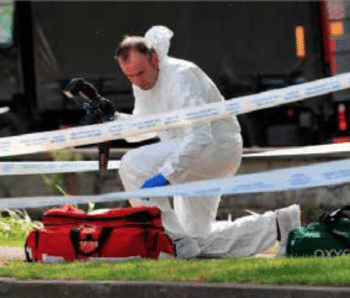
    Last month the early departure of another Garda Commissioner drew much media attention – probably more than it deserved, given that the wheels keep turning, the Gardaí still show up for work, and the ship of state creaks on. The change, if any, will be largely cosmetic. But the week before the Commissioner “retired”, a man was shot by a garda in Dublin city. The garda was off-duty. The man was unarmed. This came in the wake of revelations that have seriously damaged the credibility of An Garda Síochána, from the conspiracy to smear whistleblower Maurice McCabe, to the penalty-points fiasco, to doctored drink-driving stats. But there were no signs of concern in our media about the shooting of an unarmed man. Our journalists, instead of querying the chain of events that led to an unarmed man being shot by an off- duty garda, swallowed and regurgitated the Garda line without question. The victim of this shooting was smeared as “known to gardaí” before any inquiry, let alone court case. Due process, but not for the working-classes m’lud. The Sun asserted the victim was a “close associate of well known gangster”. Of course no source was cited for this information. Crime reporting still operates to a standard of citation that would not be acceptable in an undergraduate essay. One can only assume this information came from the Garda, but are they to be trusted? Forgetting the recent scandals that led to the “resignation” of the previous Commissioner, and calls for the current Commissioner to step down also, there are other serious questions about credibility. The Judge in the Jobstown trial, for instance, had to instruct the jury to disregard all Garda evidence . This is all well-known and on the public record, and should counsel caution when it comes to trusting versions of events put forward by our police force. In the case of a shooting, it is folly to accept without question an account that comes solely from the person doing the shooting. This is elementary, self-evident. There is far too much motivation to paint a picture that exonerates them. And unsurprisingly that is the picture that has been painted. Worse, this is the second time in just over a year this has happened. Last summer an unarmed man was shot in the face. This was similarly reported as an “accident”, before any inquiry, and without the remotest semblance of investigative reporting, or even critical thinking on behalf of our journalists. That very day, RTÉ News reported the victim of that shooting was a suspect in a spate of burglaries. This is not some tabloid, this is the national broadcaster. Similar stories were published in a other media. How did they know this to be true? Why do they feel justified in applying uniquely low probative standards? They didn’t say but one can assume they heard it from the Garda, the same organisation whose member carried out the shooting. So, before any inquiry the shooter was exonerated (it was “accidental”) and before any court case the victim was implicated (“known to gardaí”). Despite the fact An Garda Síochána are supposedly being subjected to an ever increasing level of scrutiny by politicians and media both, precisely the same events had played out again. The message this sends is that gardaí can shoot young men without any criticism from our press. Our media remain beholden to the Garda in a sort of dysfunctional symbiotic relationship. Gardaí continue to give them stories at individual discretion, which risks leaving journalists in thrall to a police force that has, we know, been compromised by scandal after scandal, many relating to honesty and veracity. The feudal bestowing of stories on favoured journalists makes a mockery of the concept of independent journalism. It is disgraceful that this situation persists given the ongoing revelations about An Garda Síochaná. No better is the near-silence of the liberal commentariat on this issue. Those who paid easy and empty lip service to the ‘Black Lives Matter’ movement couldn’t seem to care less when the poor people getting shot are from closer to home. Class remains one of the biggest predictors of life outcomes in this country. More people die of economic inferiority in this country every year than died in 30 years of the Troubles. Even when our police force are shooting unarmed men, Irish liberals side with the establishment, in untypical silence. This “must have deserved it” mentality is a mirror image of the prejudice which allows innocent black men to be killed in their droves in America. In Ireland, those who shout loudest for equality for races, genders and sexualities are hypocritically squeamish about…class. Frankie Gaffney

    Loading

    Read more

  • Posted in:

    Labour starts to rebuild

    Is the Irish Labour party finished, is a question that’s been asked for nearly as long as the party has existed. In the last year or so however, or more accurately since a couple of years into the Fine Gael-led coalition, the party’s tail-spinning poll numbers have started to feel symptomatic of a terminal decline. The old question has a new urgency. The regular Irish Times’ poll with Ipsos/MRBI hasn’t placed Labour over 10% since February 2013. The same poll has yet to rise above the benchmark set in February last year, when the party’s support bottomed out at 6.6% in the general election. On some level, the party recognises that the negative association with the last government isn’t going away in a hurry. Asked whether Labour’s problems might stem from increased competition on the left, Councillor Martina Genockey, recently selected as the party’s candidate in Dublin South-West, is quick to retort that no, “our biggest problem is that we were in government for five years”. Abatement of hostility? “People are still seeing things through that lens”, she says. A year on from the nadir of Labour’s worst general election result, policy proposals are still met on the doorstep with shouts of “you didn’t do this when you were in government, you didn’t do that”. That isn’t to say that canvassing is as rough as it once was. The increased amiability on doorsteps is a recurring line in conversations with the new array of candidates. “I wouldn’t say there’s a swing to Labour”, says Andrew Montague, selected to run in Dublin North-West, “but the anger against Labour has dissipated”. Ged Nash, elected to the Seanad and selected in April to run for his old Dáil seat in Louth, says that “there’s been an abatement of the hostility experienced on the doors”. That the polls have, if anything, gone in the wrong direction since the election, misses the point, says Kevin Humphreys, also a Senator. “Don’t necessarily expect movement in the polls”. Labour, he says, are focussing on 15-20 winnable constituencies, such that national opinion polls may not reflect the party’s strength. How credible is this? According to a spokesperson for the parliamentary party, plans are well underway for the next election, whenever it comes. The plan is to contest a minimum of 30 out of 39 constituencies. All selection conventions are intended to be completed by Christmas, with conventions already on the cards to select Brendan Howlin, Alan Kelly, Seán Sherlock, Brendan Ryan and in Meath West, newcomer Tracy McElhenny. A draft manifesto has been prepared, a fundraising drive is underway, while a membership recruitment drive is ongoing, said the spokesperson. The stated aim of party leader Howlin has been to double the party’s Dáil representation at the next election. Achieving that, bringing Labour to around 14 seats, would see it back around its historical average. That’s when the real rebuild could begin, you might think. Labour’s problem lies partially in its vote distribution, says Adrian Kavanagh, a lecturer in political geography at Maynooth University. Until not that long ago, Labour’s real base was in rural Leinster and Munster, and not necessarily in Dublin. That changed after the amalgamation with Democratic Left in 1999. “The change in the last number of years is in the loss of traditional working-class areas”, says Kavanagh. The party’s result last year saw it shrink back to a core of largely personal votes in rural Leinster and Munster – with the likes of Howlin in Wexford, Willie Penrose in Longford- Westmeath, and Alan Kelly in Tipperary clinging on. This leaves the party in a precarious position as regards vote share. Its vote is more thinly spread than that of Solidarity-People Before Profit, who won only one less seat on a lower vote total. If Labour falls a few percentage points below the 6.6% from last year, “they’ll struggle to win any seats” says Kavanagh – his analysis of the most recent Sunday Business Post poll has Labour winning only one, with Brendan Howlin in Wexford perhaps the sole survivor. Such is the geographical distribution of Labour’s vote, this could come about even as Solidarity- People Before Profit leapfrog them to 7 seats, still on a lower vote share. On the other hand, if Labour go up a few percentage points, “then it’d be possible to get back up to the mid-teens in terms of seats, which is quite a respectable result”. Separate, and socialist? Fairly or not, the primary accusation that’s been levelled at Labour in the years since it entered government has been that it turned away from its working-class base, with the consequences being felt at the ballot box. Joan Burton, the then-leader, lost more than 3,000 votes at the 2016 election. Party figures are reluctant to give credence to this viewpoint – Labour stepped up in the national interest, they still say. According to Nash, Labour’s “unique selling point is that we’re prepared to put our money where our mouth is”, minus a harmful obsession with being “philosophically pure”. Humphreys rejects the idea that Labour’s social democratic roots were abandoned, and emphasises the traditional idea that the party has a record of delivery. “Protest, not People: is all those on the hard left are good for”. Labour are in many ways dealing with an old problem, says DCU academic Eoin O’Malley. “They’re not radical enough for lots of people, while at the same time, they’re a bit too radical for a lot of people in centrist Ireland”. Furthermore, says O’Malley, “as pragmatic as the Labour Party is, it damaged them as a brand to go into government”. Better in 2011, would have been to lean on Fianna Fáil to prop up a Fine Gael government, sailing into 2016 as the uncontested leader of the opposition for the first time in its history. Counter-factuals are fine but what should the party be doing? The party has taken the implications of its diminished representation seriously – rewriting the party constitution, re-energising ordinary supporters and, says

    Loading

    Read more

  • Posted in:

    Nati(on) off

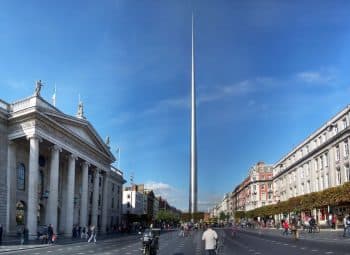
    In 1985, the Irish-Australian writer Vincent Buckley, after spending some time in Ireland, wrote in his book ‘Memory Ireland: “Ireland has been asked to lose its national memory by a kind of policy, in which politicians of almost all parties, ecclesiastics of all religions, media operators, and revisionist historians co-operate to create (and let us hope they do not need to enforce, for if they need to, they will) a new sense of corporate identity. This sense contradicts the immediately preceding one (the one based on the rising of easter 1916 and its aftermath), which proved first so exhilarating and then so wearying to its generations, some of whom had fought to realise it. Ireland is not a nation, once again or ever, so the new story runs, but two nations; maybe several; it does not have its characteristic religion—or if it does, it ought not; it does not have its characteristic language, as anyone can see or hear; it has no particular race or ethnic integrity. Ireland is nothing – a nothing – an interesting nothing, to be sure, composed of colourful parts, a nothing mosaic. It is advertising prose and Muzak”. Buckley was saying in effect that Ireland had lost its national identity: the fact of being a nation distinguished from other nations by a combination of language, history, culture and values, and the knowledge of being that. Since 1985, the collective condition that Buckley depicted – that of being together nothing in particular – has intensified. At the centre of Ireland’s capital city a tall monument, designed in London, has been erected which honours and signifies literally nothing. (A joke says ‘The Spire’ was meant to be delivered to the other Blackpool – Duibhlinn means “black pool” – the seaside resort across the Irish Sea.) Ireland’s distinctive religious culture – women blessing themselves as they pass a church; traffic jams at city churches on Sunday mornings; fasting during Lent; May and Corpus Christi processsions; the family rosary; the TV newsreader finishing the evening news with “God bless you” – has withered almost to vanishing point; and with it a set of moral values, forceful because they pointed towards a happy eternal life and gave security against punishment there. With the study of Irish history made unnecessary for the Leaving Cert, and all forms of mass media blind to that history beyond the Famine, knowledge of Irish history by most Irish university graduates reaches no further back, with the post-revolutionary missionary movement into Africa, Asia and South America bringing Christianity, hospitals, schools and anti-imperialist sentiment omitted as a ‘merely religious matter’; not to mention, earlier, the repeated resistance to conquest or those dark times before Europe began when Irish monks and monasteries brought Christianity, literacy, art and learning to Britain and the Continent as far as Germany, Austria and Italy. Meanwhile, with the nation speaking the same language as the much larger nation beside it, its journalists, instead of writing or saying ‘in Ireland’ or ‘in the Republic’ commonly make do with ‘here’ or ‘in this state’. Irishmen use the word ‘Irishness’ derisively; politicians avoid uttering ‘Ireland’ or ‘the Irish’ with pride or in exhortation; the media treat English football and politics including ‘the Royal Family’ as part of the Irish scene. The only still habitual demonstrations of Irish nationhood, far from being everyday are occasional: everyone cheering for Ireland when an Irish football team is playing a foreign team, or people drinking together on St Patrick’s Day. In short, with regard to distinctive identity, Ireland, as an offsore island of Britain, is close to becoming a larger version of the Isle of Wight. A nation can lack a national identity for either of two reasons. It can, like Ireland, have lost the national identity which it previously had. (Ireland had a well-known, distinct identity from the sixth century to the eighteenth when it began to fade to the shadow of itself it still was in 1916.) Or it can, like say Zambia, never have had one. Formerly Northern Rhodesia and named after the river Zambezi, it was created in 1964. With English as the official language, Zambians belong to about 70 ethnic groups, speak a similar number of languages, and adhere to many religions. It is widely believed that a national identity is an important thing for a nation to have – that it favours national wellbeing; creates, when needed, a national collective effort; generally urges the nation towards success and buttresses it in bad times. If one googles “national identity” one finds at least 25 pages – I gave up counting – filled with items dealing with it. (Denmark, a small country like Ireland, seems to be particularly interested in the matter.) It is, of course, entirely possible to get along without a national identity, as Ireland and Zambia have been doing; living from day to day. Even with the consequent absence of collective zest, it is not catastrophic. But when after the Breivik massacres in Norway a few years ago, the Norwegian Prime Minister told his people: “This must strengthen our resolve to make our Norwegian values prevail”, some old-fashioned Irishman might have felt a pang of regret that no Irish Taoiseach could speak of “our Irish values”, because no such things exist. national values indicate that at least Something is there rather than nothing. They suggest that in that nation aspiring minds are at work. The present cultural condition of Ireland is the result of successful cultural colonisation by two forces: first, by the Protestant british from the sixteenth century onwards, second from the 1960s onwards by American neoliberalism working through its Irish converts. The process by which cultural colonisation works was well illustrated by an incident in which the present writer participated in the 1970s. A Dubliner, I was living for some years in a still Irish-speaking part of South Connemara. Talking one day in Irish to a local 16-year-old boy who was telling me about a Frenchman he had met on a

    Loading

    Read more

  • Posted in:

    Conflict in Corner

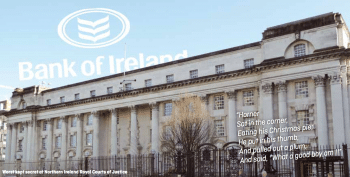
    A situation is unfolding in the Northern Ireland Royal Courts of Justice which calls into question the integrity of the Administration of Justice, the right to a fair hearing and fair procedures on which the entire system depends. It is the worst kept secret in legal circles in Northern Ireland and yet not one media organisation has chosen to run the story. On 9th March 2017 Justice Mark Horner, a well-regarded judge best known for a recent liberal judgment on abortion rights in the North, was asked by a litigant-in-person to recuse himself from a case involving Bank of Ireland (UK) Plc as it had been brought to the litigant’s attention that Justice Horner had a serious conflict of interest which he had failed to bring to the court’s attention at any stage while he sat as Judge on the case. Justice Horner was a director up until late 2011 and is currently a shareholder in TMKK Limited which was a financially-troubled client of the bank. On 14 March the litigant-in-person made an official complaint to the Lord Chief Justice’s office and has yet not received a substantive reply as the office seems wrongfooted. The Lord Chief Justice’s office seems nowhere close to convening the Tribunal envisaged in the Code of Practice on Judicial complaints. On 27 March Justice Horner recused himself from the litigant-in-person’s case giving a statement saying that the reason he recused himself was because the litigant in person would not accept his judgment. This is judicial nonsense. No judge ever should doubt the acceptance of his judgment by a party. The Lord Chief Justice’s office told Village: “Mr Justice Horner stated in open court that he was recusing himself in the case involving the Bank of Ireland and the personal litigant. He said he was satisfied that there was no question of actual bias or that he had any conflict of interest in the case, but that it was apparent to him that ‘the party would never feel able to accept [his] verdict’”. On 4 April in a separate case involving the same plaintiff i.e. Bank of Ireland (UK) Plc, the bank itself, presumably sensing the dangers of compromise and appeal, actually instructed its own QC, Patrick Good, to request that Justice Horner recuse himself from that case. Horner had little choice but to stand down from this case also. The same legal firm, C & H Jefferson now DWF, represented the plaintiff, Bank of Ireland (UK) Plc in both cases described above. It is obvious that the plaintiff was aware of the conflict of interest with Justice Horner as the judge had for many years been a director and is currently a shareholder in TMKK Limited which was a client of the bank. However, neither the bank nor its legal team made the court aware of the conflict though, as solicitors are officers of the court, it is normally their duty to do so. The solicitor who acted for the plaintiff in both cases seems not to have fulfilled that duty. She is no longer acting for her rm in either of the cases. After that Justice Horner stopped sitting on any cases involving Bank of Ireland in the Chancery court but moved to the Commercial Courts in September and has sat on a number of Bank of Ireland cases. On 4 october 2017, as Village was going to press, a Bank of Ireland case was listed in the Commercial Court [image C, 1] (Interestingly another case was listed for the same day (not involving Bank of Ireland) where the defendant is the current master of the High Court in Belfast, Ian Thomas Hardstaff, who was in partnership with the Harrison referred to in the list who is still a shareholder and director of TMKK Limited) [image C, 7]. Moreover Justice Horner also has dealings with The Northern Bank Ltd through TMKK Limited. Here too he sat on many cases and did not inform the parties of this. The defending party in one such case is aware of his recusal in the two Bank of Ireland cases. That defendant is currently appealing a case involving Northern Bank Ltd in which Justice Horner gave a judgment against them. They brought his conflict of interest with Northern Bank Ltd to the Appeal Judges’ attention and the court remitted the matter back to the Chancery Court as it is the appropriate court to determine such matters. Justice Horner resigned as a director of TMKK Ltd before applying for appointment to the High Court – though he and his wife both remain shareholders. Indeed his wife replaced him as a director. Relevant accounts (page 144 section 4 [image A]) for TMKK Ltd available from the Companies office show that it is indebted to Bank of Ireland and Northern Bank (now Danske bank). However, much more dramatically the company is insolvent. The final paragraph of the accounts entitled “Going concern” [image b] clearly states that TMKK Ltd is only trading at the discretion of Bank of Ireland. By any standard this Judge should not be hearing any cases involving Bank of Ireland. He has immense power and has given possession orders in favour of Bank of Ireland and Northern Bank while he has been seriously conflicted. This could have involved both commercial properties and family homes. All of his cases are on public record. Anyone who has had a case under Justice Horner involving Bank of Ireland or Northern Bank Ltd/Danske Bank may be able to have their judgment set aside due to failure to disclose a serious and fundamental conflict of interest. The Lord Chief Justice’s office notes that while the judge may be considering Queen’s bench actions which are listed for mention he is not now “adjudicating on any commercial or Chancery cases involving the Bank of Ireland”. The Lord Chief Justice’s office said it was “unable to comment further as the Justice (NI) Act 2002 provides information on complaints on judicial office holders is confidential and must

    Loading

    Read more

  • Posted in:

    Hospital better than prison, for injured innocents

    An inquest into the death of an Omagh woman who was a domestic-violence victim heard evidence of major failings in Police Service of Northern Ireland (PSNI) handling of events, and of how the the police have subsequently changed their procedures in dealing with persons who reported being assaulted. Thirty-six-year-old Mairéad McCallion died in hospital on February 24th 2014, the day after she told police that her partner Noel Knox grabbed her by the hair and knocked her head against a wall before throwing her out of the house. Knox then called the police because McCallion and another man were outside. It was a very cold day, and she was wearing neither shoes nor coat – and wanted Knox to give them to her. When police arrived, Mairéad McCallion reported the assault. Police saw clumps of hair had been torn from her head. They arrested Knox, and brought McCallion to the custody suite at Omagh Police Station for examination. A senior police officer told the inquest that procedures had now changed. Chief Superintendent Karen Baxter said that all victims should now be taken to an accident and emergency unit. “The custody suite is not a place of safety – it is a place of detention”, she said. Constable Catherine Kilkie, to whom McCallion had reported the assault, said she did not tell the Forensic Medical officer (a police doctor) who examined Mairéad about the blow to the head, or that Mairéad said “her head was a bit sore”. Kilkie told the inquest she did not pass this on as “the doctor usually takes an account from the victims themselves”. There was conflicting evidence as to whether Dr Paul Alleyway, who examined her in the police station, asked her if she had sustained a head injury. Alleyway said “on direct questioning, she denied having a head injury”. Civilian Custody officer Linda Carson who was present during the examination said “I just can’t recall” this question being asked. In his notes, Alleyway recorded having asked the question. These notes were completed on the following day. After the examination, the Custody Sergeant thought it necessary to bring in a domestic Violence officer to deal with McCallion. However, it was a Sunday, no-one was on duty, and he was denied authorisation to bring one in on overtime. There was conflicting evidence from two police officers about McCallion’s condition on the afternoon of the alleged assault. Constable Gareth McCrystal said McCallion’s face was “sloped like she had a stroke” when he first saw her outside the house. When he later returned after taking Knox to Omagh police station, he was “concerned she had changed so much from what I’d seen three hours or so previously” but not enough to call an ambulance. She was slumped in the reception area. Kilkie told the inquest she believed McCallion had deteriorated because she hadn’t taken her medication, and her difficulties in walking were due to wearing heels. In mid-afternoon McCrystal and Kilkie drove her away from the police station in a police car. They were taking her to a friend’s house. She only had the clothes she stood in, and none of the medication she needed. Kilkie gave evidence of only ringing the friend when they were on the way. The friend could not keep Mairéad. During the journey, McCrystal said McCallion was “not speaking but making noises in the back of the car”. When they reached the friend’s house, Kilkie went inside. McCallion began making retching noises. McCrystal asked her “if she could, could she please be sick outside the car”. By this stage, she was not speaking. He rang Kilkie, who contacted paramedics. Paramedics treated her on the scene, then took her to the South West Acute Hospital in enniskillen, where she died of a catastrophic brain injury. It would have been impossible to survive this injury. Mairéad McCallion did not fit the stereotype of a domestic-violence victim, or of an alcoholic. She had been a straight-A student at her grammar school, then went to university in Scotland. There she suffered mental-health difficulties and had to leave. Returning to Omagh she began training as an accountant. Then, in August 1998 she arranged to meet her friend Julia Hughes in the town centre one Saturday afternoon. The Omagh bomb exploded that afternoon: Julia was killed. This was another blow to Mairéad’s health. However, she continued to work. She moved to Coleraine and bought her own place. unfortunately, her depression and drinking worsened. Her mother died, and shortly after she moved back to Omagh. McCallion was unemployed. She drifted into a circle of alcoholics who gravitated around drinking houses in a couple of housing estates. She tried to fight her demons, and enjoyed periods of sobriety. She also formed a relationship with Knox, an unemployed alcoholic about a dozen years older than her. It was a controlling relationship. They lived together in Knox’s brother’s house, but she did not have a key. Knox has never been convicted of assaulting McCallion. He was charged with her murder, though the charges were subsequently withdrawn. Evidence was given that the screensaver on his phone was a picture of her with a broken nose and two black eyes; and that, when he rang her, this picture came up. Police logged five complaints from McCallion that Knox had assaulted her, though all were withdrawn. on one occasion she obtained a barring order against him. Under cross-examination during the inquest, Knox accepted physically putting her out of the house the day before she died. He admitted she fell in the front garden and may have hit her head on the grass, or on a metal manhole cover. That day, in the police station, she spoke to Linda Carson about being a domestic-violence victim. McCallion said “she was going to do something about it this time”. Her sister Josie and half-brother Marcus both told the inquest of seeing bruises on her. Josie said that one time: “it was obvious she had been beaten up, there were

    Loading

    Read more

  • Posted in:

    Bud get real

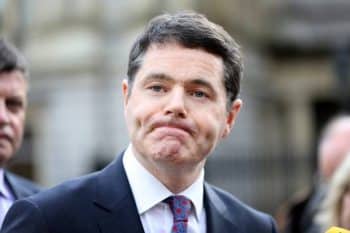
    The Annual ritual surrounding the budget will come to an end on Tuesday 10 october when finance minister, Paschal Donohoe, unveils his first package of tax and spending proposals since his appointment earlier this year. Don’t expect too many surprises though, as most of the expected initiatives have already been well aired through inspired leaks from various government and other sources. Once again, and despite the faux outrage of some Fianna Fáil frontbenchers who are threatening to pull out of its confidence-and-supply agreement unless the USC is cut or pensioners given another ver, the reality is that the deal is already done. It will not take much to cobble what both parties will claim as a victory in relation to cuts to the USC for lower- and middle-income earners while also ensuring that the wealthy are not overburdened and indeed will also gain from fiddling with tax bands and rates. Varadkar has promised to reward those who get up early and those who create wealth and pay for public services in what is clearly a pitch to the middle-class and better off voters he needs to keep on board if Fine Gael is to regain power. Equally, Micheál Martin does not wish to alienate the same constituency which he hopes will return to the Fianna Fáil fold in greater numbers than the party managed in 2016. Ultimately, the differences on tax and spending policies between the two main parties are minuscule and any rows over tax breaks for builders, increases in stamp duty, inheritance tax or whatever other measures are largely manufactured. The real question of the ratio between reducing the tax burden at the expense of improving public services is of course ideological. This makes the contribution of the hardly radical Economic and Social Research Unit all the more interesting. It has warned against tax cuts while the economy is growing by around 5% this year and an expected 4% in 2018. It submits that tax cuts will only overheat the economy. “Given the pace of growth over the past number of years there is certainly no case to stimulate economic activity with the budgetary package”, ESRI economist Kieran McQuinn said. He added that, if anything, the Government might need to raise taxes in order to dampen consumption and in order to raise the funds for essential capital spending on infrastructure in housing, health and education. This is not the narrative that Varadkar needs, to boost his chances of retaining power after the next election which many expect will come some time after the third and final budget to which Fianna Fáil committed in the confidence-and-supply deal. This is subject of course to the upshots of other unexpected events which could prompt a rush to the polls earlier next year or following the abortion referendum. Others on the Left who oppose the tax-cutting agenda and argue that the housing and health crises, not to mind other social needs, demand that all available resources should go into public services. SIPTU president Jack O’Connor spelled this out at the union’s biennial conference in Cork on 2 October. In his final presidential address to the union after more than fourteen years in the job, he argued that there should be no tax cuts whatever between now and the centenary of the foundation of the State in 2022. Arguing that all available resources should be put into the construction of social housing, decent health and education systems and a mandatory second-pillar pension scheme, he condemned the main parties for promoting tax-cutting policies and “a value system that precipitated the crisis in the first place”. “It’s back to be looking the other way, while exponentially growing inequality reasserts itself in our domestic and social affairs. It is absolutely unforgiveable that thousands of our children are homeless, in the aftermath of the collapse of a credit fuelled property bubble”, he told delegates in Cork city hall. “It is appalling to think that this is happening within twelve months of the celebration of the centenary of the insurrection of 1916, which was fought on the basis of a Proclamation which declared the establishment of a Republic which would cherish all the children of the nation equally. And while this is unforgivable in itself, it is absolutely obscene that our major political parties are again promoting a tax-cutting agenda while children are homeless, in this, one of the wealthiest countries in the world”. It is unlikely that Donohoe and Varadkar will heed such advice or that Fianna Fáil will do anything more than pay lip service to such utterances. As O’Connor, who is chairman of the Labour Party, also said, it will require an alliance of all genuinely progressive forces in Ireland to achieve his ambition for the common good by 2022. And that is a big ask. Frank Connolly

    Loading

    Read more

  • Posted in:

    Behind doors at KWETB

    The Comptroller & Auditor General are looking into the Kildare and Wicklow Education and Training Board’s (KWETB) handling of development at St Conleth’s College and elsewhere.

    Loading

    Read more

  • Posted in:

    Village October 2017

    Gratuitous Trump Image Section   Bean and Bucket Theresa May is the most inelegant British leader since Gordon brown. It’s funny how the same person can be perceived as utterly unrecognisable in terms of elementary human characteristics, just by the unfair elapse of time. In office, these two leaders managed to entirely lose their reputations for frugal good sense. If brown was Mr Bean, May is surely Hyacinth bucket (pronounced ‘bouquet’, if that’s not French). The bill for their party Villager likes to consider how much the bailout cost us all, when he’s counting out the five-cent pieces from the jar at the end of the month, in a quest to find the price of a miserable cheese sandwich down at the Capel St Spar. Sometimes he swoons unmanfully. At the end of 2016 the cost of bailing out our domestic banks stood at €39.9 billion, with an annual cost of servicing the associated debt of over €1 billion. €66.8 billion was used to recapitalise the banks and €14.8 billion went in servicing debt. by the end of 2016, the State had recouped €25.1 million in income from the disposal of investments, income from the guarantee scheme, and other means. Subtracting one from the other yields a figure of €56.5 billion. The C&AG has estimated the residual value of our remaining investments in AIB (a 71 per cent shareholding), bank of Ireland (14 per cent) and Permanent TSB (75 per cent) at €13.6 billion. name is projecting a €3 billion surplus. It all comes to €16.6 billion. Irish bank resolution Corporation (Anglo Irish bank and Irish nationwide building Society) cost us €35.8 billion. you mean on judges Most of the money that might have been sprayed around in budget 2018 has gone on reinstating public-sector pay. Villager will be reading a good book when the unexcitable Paschal Donohue rises to his feet. Nothing to see here. Socks and Swimming pay off with undiscerning youth According to Irish Times/Ipsos/MRBI pollsters, satisfaction with Varadkar’s performance as Taoiseach is – for some reason – high, at 49 per cent. 31 per cent are dissatisfied and 20 per cent, presumably people who – like Villager – don’t know what to make of hipsters, are undecided. Varadkar is the most highly rated leader, ahead of Micheál Martin (down two points since May, to 37 per cent), Gerry Adams (down one point, to 30 per cent) and Brendan Howlin (down two points, to 20 per cent).   Jayz, not another Healy-Rae on the Today programme Villager favours urban life and doesn’t like the rural perspective. nevertheless, Ireland’s most ostensibly serious broadcaster, Sean O’Rourke, continues to celebrate rural Ireland to the detriment of the capital and sport to the detriment of the arts. He is also the world’s leading user of the word wonderful. Villager caught it 15 times in one show, before the dial spun off the wireless. Women’s place Noel Whelan, barrister and political pundit, is a gentlemanly influence in the discourse but he has decided his schtick now is being unimpressed with the ephemeral machinations of the political process. Fresh from denouncing the serious attempt to impose identity cards for public-service users, as “silly season nonsense” over the summer, the second un-angriest man in Ireland (Colm McCarthy in this as so many other things remains unassailable) is dissing the attempt to visit a rake of referenda on an uninterested electorate as “a political stunt” from “a weak government trying to prove it has vision and durability”. but the man who found his progressive side during last year’s Marriage equality referendum campaign is surprisingly derisive of the likes of the attempt to remove purported acknowledgement of the special place within the home of (all women) from the constitution. Like the invocation of the Holy Spirit at the opening of bunreacht na Éireann the kinked vision of women taints the whole legal system. If you don’t get that you either don’t get equality, don’t get the point of the twentieth century or are from the ‘Fianna Fáil gene pool’. Arthur’s pay day Villager just loves development. And multinationals. When the two come together he loses control of his thesaurus. Diageo has announced plans to transform 12.6 acres at its St James’s Gate site in Dublin City to create a new mixed-use development, which will include residential units, and Villager says it is awesome. The maker of Guinness said that after “significant” investment since 2011 at St James’s Gate and advances in technology, it can now brew more second-rate beer with less, valuable, space. To this end it wants to transform 12.6 acres of the nearly 50-acre site it has been degrading for a generation to create a mixed-use development “a third residential, a third commercial and a third leisure”. called, inevitably, the St James’s Gate Quarter. During the boom Guinness talked of relocating to Leixlip where land was allegedly to be purchased from the ancient Guinness family for a “super brewery”. Oliver Loomes, country director for Diageo Ireland, told the Irish Independent that “it will be many, many years before a sod is turned on this site” for this latest development salvo. Villager therefore predicts it will not happen. parable of the Apple Villager is suggesting everyone should do in their own private and business lives what the Irish government is doing with our €13bn Apple loot. resist the pressure of the rich and powerful – the elite of Europe – to use if for ourselves. Give it back, we don’t need it. It’s Christianity in action and it’s endorsed by those always-just forces of global capitalism, the IT multinationals. Ireland is proving it is post-materialism. It just now needs to widen the ambit of its new strategic love for neighbour. beyond its stance on multinationals, to others. Neo-goldmanism Atavistic xenophobic populism has returned to German national politics with a ‘Knall’, in the unlikely form of a 38-year-old lesbian investment-banking economist, Germany’s own version of Ann-Marie Waters who once worked for Goldman Sachs. Alice Weidel is the

    Loading

    Read more