Posted in:
Years after the day after
Nuclear apocalypse requires crazed dictators and unhinged presidents to seem real. Catastrophic climate change on the other hand, merely requires us to continue living as we are.
Posted in:
by John Gibbons
Nuclear apocalypse requires crazed dictators and unhinged presidents to seem real. Catastrophic climate change on the other hand, merely requires us to continue living as we are.
Posted in:
by Anton McCabe
Mairéad McCallion was taken to a custody unit after being assaulted in February 2014. It’s not clear whether anyone asked about her injuries.
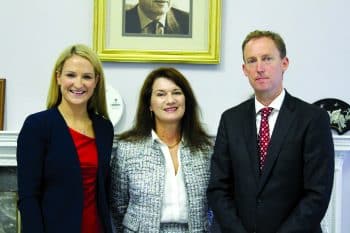
Barry Andrews, Director of the Institute of International and European Affairs (IIEA) argues for Ireland’s priorities if we want to mitigate the effects of Brexit.
Posted in:
by Trevor White
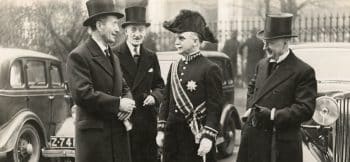
When Byrne died, it was assumed he would be remembered as one of the greatest Dubliners of all time. Instead, he is largely forgotten.
by Tony McKiver
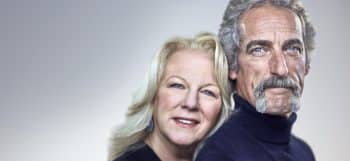
The banks know that behind images of silverhaired, debt-free retirees, there is a darker, contrasting mural, crammed with a sea of worried faces.
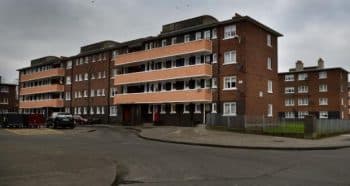
The housing crisis is an emergency, which threatens to affect us all. Something has to change. Let’s start by putting the right to housing in the Constitution.
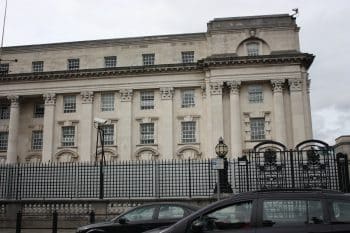
Judge Mark Horner should have recused himself from cases involving Bank of Ireland, as a company in which he is a shareholder and former director is in deep financial difficulty with them.
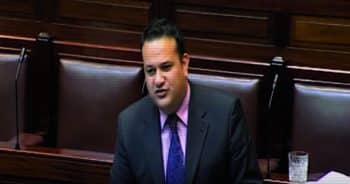
Journalist Ken Foxe led the backlash to the deletion of the official Oireachtas Report.
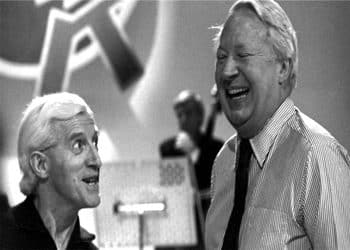
In the wake of last week’s revelations about the inquiry into former British Prime Minister Ted Heath, Joseph de Búrca looks at a scandal which implicated figures on both sides of the Irish Sea.
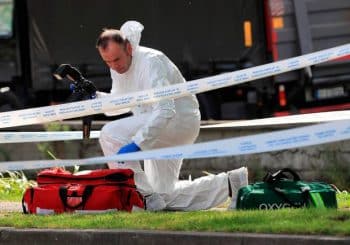
The media are far too trusting of Garda narratives, not to mention blind to the class issues blighting Irish society.
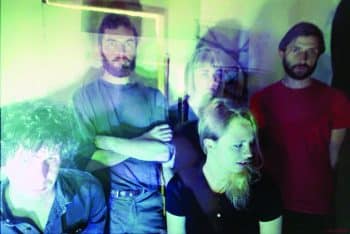
Mike McGrath-Bryan speaks with Cathal MacGabhann of the Cork-based quintet.
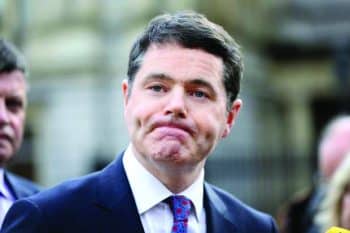
The annual ritual surrounding the budget will come to an end on Tuesday 10 October when finance minister, Paschal Donohoe, unveils his first package of tax and spending proposals since his appointment earlier this year. Don’t expect too many surprises though, as most of the expected initiatives have already been well aired through inspired leaks from various government and other sources. Once again, and despite the faux outrage of some Fianna Fáil frontbenchers who are threatening to pull out of its confidenceand-supply agreement unless the USC is cut or pensioners given another fiver, the reality is that the deal is already done. It will not take much to cobble what both parties will claim as a victory in relation to cuts to the USC for lower- and middle-income earners while also ensuring that the wealthy are not overburdened and indeed will also gain from fiddling with tax bands and rates. Varadkar has promised to reward those who get up early and those who create wealth and pay for public services in what is clearly a pitch to the middle-class and better off voters he needs to keep on board if Fine Gael is to regain power. Equally, Micheál Martin does not wish to alienate the same constituency which he hopes will return to the Fianna Fáil fold in greater numbers than the party managed in 2016. Ultimately, the differences on tax and spending policies between the two main parties are minuscule and any rows over tax breaks for builders, increases in stamp duty, inheritance tax or whatever other measures are largely manufactured. The real question of the ratio between reducing the tax burden at the expense of improving public services is of course ideological. This makes the contribution of the hardly radical Economic and Social Research Unit all the more interesting. It has warned against tax cuts while the economy is growing by around 5% this year and an expected 4% in 2018. It submits that tax cuts will only overheat the economy. “Given the pace of growth over the past number of years there is certainly no case to stimulate economic activity with the budgetary package”, ESRI economist Kieran McQuinn said. He added that, if anything, the Government might need to raise taxes in order to dampen consumption and in order to raise the funds for essential capital spending on infrastructure in housing, health and education. This is not the narrative that Varadkar needs, to boost his chances of retaining power after the next election which many expect will come some time after the third and final budget to which Fianna Fáil committed in the confidence-andsupply deal. This is subject of course to the upshots of other unexpected events which could prompt a rush to the polls earlier next year or following the abortion referendum. Others on the Left who oppose the tax-cutting agenda and argue that the housing and health crises, not to mind other social needs, demand that all available resources should go into public services. SIPTU president Jack O’Connor spelled this out at the union’s biennial conference in Cork on 2 October. In his final presidential address to the union after more than fourteen years in the job, he argued that there should be no tax cuts whatever between now and the centenary of the foundation of the State in 2022. Arguing that all available resources should be put into the construction of social housing, decent health and education systems and a mandatory second-pillar pension scheme, he condemned the main parties for promoting tax-cutting policies and “a value system that precipitated the crisis in the first place”. “It’s back to be looking the other way, while exponentially growing inequality reasserts itself in our domestic and social affairs. It is absolutely unforgiveable that thousands of our children are homeless, in the aftermath of the collapse of a credit fuelled property bubble”, he told delegates in Cork city hall. “It is appalling to think that this is happening within twelve months of the celebration of the centenary of the insurrection of 1916, which was fought on the basis of a Proclamation which declared the establishment of a Republic which would cherish all the children of the nation equally. And while this is unforgivable in itself, it is absolutely obscene that our major political parties are again promoting a tax-cutting agenda while children are homeless, in this, one of the wealthiest countries in the world”. It is unlikely that Donohoe and Varadkar will heed such advice or that Fianna Fáil will do anything more than pay lip service to such utterances. As O’Connor, who is chairman of the Labour Party, also said, it will require an alliance of all genuinely progressive forces in Ireland to achieve his ambition for the common good by 2022. And that is a big ask. Frank Connolly
Theresa May’s industrial policy must entail credit and tax policies to encourage industrial investment, and a shift in education policy from universities to vocational training.
Posted in:
The Constitution and the Abbeylara decision prevent imposition of fines for the abuse of Oireachtas privilege, but also more robust Oireachtas committees.
Posted in:
by John Gibbons
Pádraic Fogarty is justifiably sceptical about Ireland’s official environmentalism in his new book, ‘Whittled Away – Ireland’s Vanishing Nature’

A ‘pay-to-partake’ fee for submissions on Planning Applications may no longer be valid, certainly when Environmental Impact Assessments (EIAs) are involved

by Dara Carroll
Reducing carbon emissions is one thing: mitigating the effects of climate change when it hits is another.
Posted in:
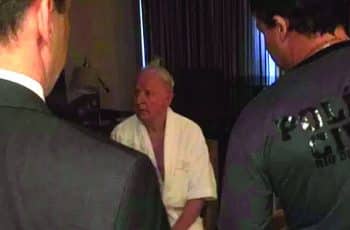
30 years ago, Pat Hickey and Des Richardson acquired apartments at unknown prices after choosing a builder for the HSA, under Minister for Labour Bertie Ahern.
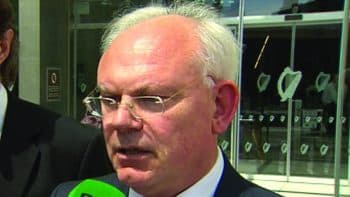
As former Wicklow county manager Eddie Sheehy moves to retirement, two judgments question his competence, while a third exonerates him from corruption.
A few Docklands successes do not mean Dublin’s fragile human-scale city centre can handle increased height in its historic areas