Conor Lenihan

  • Posted in:

    Social History Isn’t History With Politics Left Out

    2016 was inevitably an outstanding year for the history industry as publishers, writers, and those elements of the intelligentsia that love a good commemoration got to work on the Easter Rebellion’s hundredth anniversary. The Irish people have an interesting relationship with their own history. It is, like their relationship to Catholicism, frequently the subject of fervent debate, at certain period followed slavishly as orthodoxy, and on other occasions the subject of shame. In the more modern Ireland that began to emerge from the 1960s a new revisionism took hold about the history itself. Revisionism itself became a pejorative term as scepticism about our history joined forces with those who would be sceptical about the benefit of Catholic Ireland. In the 1970s liberalism, secularism and scepticism about nationalism ascended. The first historical-revisionist tract was produced by a Jesuit priest named Fr Francis Shaw. His scepticism about 1916 was so overt that it was thought best to delay publication for six years as the country was, in 1966, fervidly commemorating Easter Rising anniversaries. Fr Shaw’s revisionism seems mild by the yardstick of today – he blamed 1916 for the division of Ireland, the Civil War and the fact that little or no commemoration was possible of those who gave their lives in World War I. Eunan O’Halpin and Guy Beiner take us through the various commemorations in Irish life in their essay ‘Remembering and Forgetting’ as a final input to the exhaustive and very stimulating ‘Cambridge Social History of Modern Ireland’. What this book reminds you of is the timely and regular nature through which historians not only review earlier conclusions but also attempt to put a new narrative account on what has previously been thought of as undisputed territory. it is noteworthy that one of the best-selling books on the 1916 centenary celebrations was a book about how children were treated though the week-long rebellion. The editors of the Cambridge Social History, Mary Daly, Professor Emeritus of Modern History at UCD, and Eugenio Biagini, Professor of Modern and Contemporary History at the University of Cambridge, are quick to point out that social history is not just history with the ‘politics’ left out. That said, they are robustly critical of an over-emphasis on political, constitutional, and institutional histories of Ireland. “Our emphasis is on economic and social change, our focus on people and cultures, instead of institutions and political ideologies”, they assert in their introduction. The book suggests a purposeful placing of Irish history in the context of wider European and global events. This is challenging stuff but with 40 distinct contributors cover ground of interest to both academic and general readers. The wide-ranging topics include previously taboo subject matter like sex and class in Ireland. Thankfully, as historian Joe Lee acknowledged in his Irish Times review, this is not a textbook. More than half the contributors are based outside of Ireland, which again shows a purposeful focus on diversity of thought by the editors. Lee has said of this book that the historian’s delight is a reviewer’s nightmare. The book is not a rainy-day read. One of the great tragedies of recent Irish scholarship is the number of posts in economic and social history that have either fallen vacant or simply just not been continued. It is to be hoped that Irish universities and corporate philanthropy will re-discover the benefits of social and economic history and invest in it. My own view is that local history, as well as social and economic history, deserves investment to counterbalance the overarching political narrative. Amongst the essays included here is one by Terence Dooley, Professor of Modern History at Maynooth University, on the fate of the Big House, the preserve of the ascendancy class and a symbol of an Ireland that is now essentially gone. Dooley deals both with the social destruction of that class but also the physical destruction of its physical heritage. This still makes for sad reading, in particular, when one looks at the Department of Finance’s memorandum in 1929, declining to take Russborough House in Wicklow, one of Ireland’s greatest houses, into state ownership because it was only of interest to “connoisseurs of architecture” and had never been associated “with any outstanding events or personalities in Irish history”. Despite the obvious neurosis that afflicted the early state with regard to the Big House there should surely be now an argument for a much more comprehensive policy to preserve heritage properties of every description, if only to assuage tourism’s endless search for new venues and more enchanted and more promotable ways. Henry Patterson, Emeritus Professor of Irish Politics at Ulster University, takes up the challenge of Irish working class experience and why, despite the best efforts, this did not translate into support for the Irish Labour party. He quotes UCD economist Cormac O’Gráda as acknowledging that by 1939 Fianna Fáil had become the party of the working class. Even the 1970s were never socialist. Moreover, unsurprisingly the recent displacement of the Labour party has been at the hands of a resurgent Sinn Féin which is reaping an electoral harvest and an indelible presence in working-class areas, from peace in our time. Patterson (‘The Irish Working Class and the Role of the State, 1850-2016) acknowledges why working-class politics made so small an impression on Irish life, pointing to the obvious conservatism and anti-communism of the Catholic Church and the fact that James Connolly threw in his lot with nationalism as a progressive force in Irish life. The other reason that class consciousness never took hold in Ireland is probably the existence of the Big House and the ascendancy class. The fact that the ruling class in Irish society were not drawn from the majority Catholic population meant that for several hundred years radicals had no class enemy to tilt at but the ascendancy. Jennifer Todd, Professor of Politics at UCD, and Joseph Ruane, Emeritus Professor of Sociology at UCC, make a timely point (‘Elite Formation, the Professions, Industry and the Middle

    Loading

    Read more

  • Posted in:

    Myanmarmy Genocide

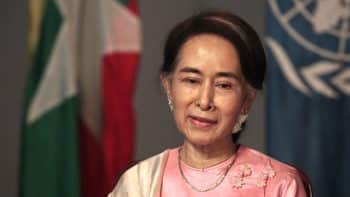
    Irish observers of the Rohingya refugee crisis will find disturbing similarities between Myanmar’s mistreatment of the Rohingya and formative aspects of Ireland’s own history. Today the Rohingya are victims of a brutal Myanmar military crackdown that has led more than 600,000 to flee the country on foot since August. The UN High Commissioner for Human Rights describes this forced displacement as a “textbook example of ethnic cleansing”. Human Rights Watch released satellite images showing almost 300 Rohingya villages razed and there are reports these burnings are ongoing. Amnesty International calls the crisis a “humanitarian catastrophe”. This is no exaggeration. I recently visited the Rohingya refugee camps on the Bangladesh/ Myanmar frontier and what I saw and heard there was heartbreaking. The scale and speed of the displacement is difficult to comprehend. Within eight weeks a shanty city of bamboo and tarpaulin has become home to more people than Dublin. These refugees have lost every material possession including their homes. Children, the old, and sick were carried by family members to these camps over mountains, through rivers and across a now land mined border. Their situation is dreadfully bleak. The weather is stiflingly hot and punctuated by the monsoon season’s torrential rain. They are wholly reliant on aid agencies for food, water and medicine. Providing adequate sanitation is an ongoing challenge making the threat of disease ever-present. There is mud and desperation everywhere. For the Rohingya this is the sad culmination of decades of discrimination by Myanmar’s authorities who deny the Muslim group’s centuries-long heritage in Buddhist-majority Myanmar. Myanmar’s authorities deny the Rohingya citizenship, making them stateless, but also limit their human rights including by restricting their freedom to marry, practise their religion, obtain education and healthcare, and even to travel freely from one village to another. The Rohingya’s right to vote was taken away in 2015. Researchers at the International State Crime Initiative (ISCI) in 2015 rightly concluded this was a process of genocide. The interviews I conducted with male residents of unregistered camps and at the registered Kutupalong Camp confirm this. They told heartbreaking stories of loss, violence and forced migration that no one should be forced to endure. One young man in his 20s explained his journey to the refugee camp involved being forced from village to village by the military who used a helicopter to burn homes: “When our village was burned we moved to another village, and then they came to burn that village, and we moved another village, and when they came to burn that village and we moved, and that’s how we came here at last. They used the helicopter to burn the villages”. I heard frequently how the military used helicopters to burn Rohingya villages and now young children in the refugee camps are drawing heartbreaking pictures with crayons of helicopters raining fire on their former homes. One elderly man, recently arrived in Kutupalong Camp, told me ten men were arrested in his village and their families had not heard from them since. He said the military bluntly told Rohingya villagers to leave: “they openly told us to go to Bangladesh – otherwise you will be killed”. This too was a depressingly familiar story among those I interviewed – the military arrived, fired their guns, killed some, arrested mostly young men but sometimes the young women too, and instructed the others to go to Bangladesh. More than 600,000 did. A 60-year-old man from Buthidaung township showed me his bandaged leg, a bullet injury he said. His story is disturbing: “Among my four sons, one was killed by the military in front of me, and one arrested, and one of my daughters – my adult daughter – was arrested but I don’t know where she is”. An understandably emotional farmer tells me: “I lost my two sons, and two daughters. At midnight the military come in my house and burnt the house, but first they raped my two daughters and they shot my two daughters in front of me. I have no words to express how it was for me to suffer to look at my daughters being raped and killed in front of me. My two sons were also killed by the government. I was not able to get the dead bodies of my daughters, it is a great sorrow for me”. These individual stories of recent abuses are heartbreaking, but camp residents talked too about years of discriminatory practices that will be all too familiar to readers of Ireland’s history – restrictions on education and religious practice, and land confiscations. Now Myanmar’s authorities plan to confiscate all burnt Rohingya villages and settle them with new residents. A plantation. It’s little wonder tens of thousands of Rohingya annually boarded dangerous boats to flee their homeland, knowing they would probably never return. Another experience all too common in Ireland’s history. Despite this, Myanmar’s civilian leader, Aung San Suu Kyi has shown little sympathy towards the Rohingya. It took ten weeks of crisis before she set foot in the state from where 600,000 of Myanmar’s Rohingya fled. Suu Kyi has delivered two televised addresses to the nation since the crisis began and each could have been scripted by the military. In her most recent address she told Myanmar, “no one can fully understand the situation of our country the way we do” echoing military claims they have not committed atrocities but are instead unfairly maligned by international media and the UN. Suu Kyi’s words ring hollow and she is increasingly seen as acting as a political shield for the military’s crimes – using her international reputation to hold back the tide of international condemnation. Suu Kyi also stubbornly denies visas to UN human-rights investigators to enter Myanmar. As Foreign Minister she could grant UN investigators access with the stroke of a pen. She chooses not to. Dr Thomas MacManus, an ISCI researcher from Dublin, is appalled by the behaviour of Aung San Suu Kyi and said, “She is a huge disappointment. Not only is

    Loading

    Read more

  • Posted in:

    The Unionists are British

    The fact that the West’s European civilisation is ending need not prevent us from thinking constructively about problems that have concerned us and that linger on. Nothing more useful is left for us to do. The Northern Ireland problem is an instance. It became a problem when Irish nationalism and the Irish State opposed a partitioned Ireland and insisted on a “united Ireland”. By that they meant what Wolfe Tone had called for: an Irish nation that would “abolish the memory of all past dissensions and substitute the common name of Irishman in the place of the denominations of Protestant, Catholic and Dissenter”. The trouble with that formally generous intention was twofold: the misuse of the word “Irishman” to mean someone who lives in Ireland; second, the ignoring of the fact that Ulster and later Northern Ireland, besides being a collection of individuals adhering to those religions, was more importantly a combination of two nationalities; one Irish, the other British. So the idea that those Britishers would agree to become members of an all-Ireland state and accept the national description “Irish” was fantasy, It could be brought about only by force and compulsion – as the Provisional IRA, inspired by Wolfe Tone, attempted to do. In August 1969 when, as we say, the North exploded, I was living in South Connemara and engaged with others in launching the “Gaeltacht revolution” of the following years. We had realised that the first prerequisite for changing a defective socio-political situation for the better is to observe and recognise its existing features realistically. So as the bombs began exploding in the North I wrote an article for The Irish Times called ‘A Plea for Realism’. It began: “The first basic fact that needs to be recognised is that Northern Ireland contains two historic peoples, or rather one such people, the Ulster Protestants, and part of another. Only the accident that both of them speak English obscures the fact that they are peoples as real and distinct as, say, the Austrians and the Czechs. But for an accident of history they would differ in language as do the Flemings and Walloons in Belgium”. I knew, because he had proclaimed it editorially, that the Editor, Douglas Gageby, a Protesant, was a Wolfe Tone republican, so I wondered how he would take my article. He told me to go on writing on the North and before the end of the month he had published two more articles by me on the subject. He was that kind of man. In the early 1970s in my column in the Sunday Press I pushed for settling the Northern problem by means of a British-Irish condominium of Northern Ireland. The new Northern nationalist party, the SDLP, in the persons of Ivan Cooper and John Hume, got in touch with me and in the Ostán Gaoth Dobhair in County Donegal they told me they would propose condominium as the solution for the North while making it more widely intelligible as a “British-Irish joint sovereignty”. Shortly after, at a press conference in Dublin, they did so. This initiative, although brushed aside at the time as the war in the North rumbled on, ensured that never again would efforts at a Northern settlement treat Northern Ireland as a collection of people differing only or mainly in religion. Through the 1970s into the 1990s Sunningdale, the Anglo-Irish Agreement and finally the Good Friday Agreement were sovereign Irish-British affairs which treated Northern Ireland as a matter of two opposed communities, Irish nationalist and British unionist, and provided for institutional input from Dublin and London, with the latter remaining sovereign. The Good Friday Agreement came into effect in December 1999. It provided, among other things the right of “the people of Northern Ireland” to “identify themselves and be accepted as Irish or British, or both” as well as their right to hold “either or both British and/or Irish citizenship”. The Agreement also provided that if referendums showed majorities in Northern Ireland and the Republic in favour of a united Ireland, the British and Irish governments would collaborate to bring that about. It seems then that a united Ireland is within reach. It requires only a majority popular vote in its favour, North and South, to set in motion the British and Irish steps needed to accomplish it. It would probably take the form, at least initially, of the transfer from London to Dublin of sovereignty over Northern Ireland while the Assembly and Executive there remain in place.   Dr Desmond Fennel’s autobiography, ‘About Being Normal: My Life in Abnormal Circumstances’, was published this year.

    Loading

    Read more

  • Posted in:

    My Vision of the Future of the Green Party

    The Green movement was born when we looked back on our planet for the first time and realised the threat we posed to our own natural world. It was a child of the 1960s, embracing and promoting civil, racial, feminist, gay, and animal rights. It was into making love not war and thinking globally, while acting locally. The movement was inspired by Rachel Carson and her warnings that we faced a ‘Silent Spring’ if the use of pesticides and fertilisers by industrial agriculture went on unchecked. It came of age with ‘systems thinking’ from the Club of Rome in the early 1970s, which used the most advanced computers to look ahead 100 years and measure our future use of resources – and came back with the rational conclusion that there are real limits to growth on this finite planet of ours. Green economics is not easily categorised on a left/right ideological divide. It assumes that future progress must be made in terms of the things that really count rather than the things that are merely countable. It values our quality of life rather than just increases in the quantity of goods that are consumed. The movement found political form in the late 1970s and early 1980s as Green parties were set up in just about every country. In Ireland the Ecology Party of Ireland was formed at a meeting in Dublin’s Central Hotel in 1981. The founding principles were agreed at a second meeting a few months later in the Glencree Peace and Reconciliation centre. Those principles are still relevant today. • We have the responsibility to pass the Earth on to our successors in a fit and healthy state. • Unrestricted economic growth must be replaced by an ecologically and socially regulated economy. • Decisions should as far as possible be on the basis of consensus and respect for the rights of minorities. • Society should be guided by self-reliance and cooperation at all levels. • The need for world peace and justice overrides national and commercial interests. • There is no place for violence or threat of violence in the democratic political process. The fortunes of the party have ebbed and flowed over the last three decades in tandem with varying levels of public support for the wider environmental agenda. The first Green Party councillor was elected in Killarney at the same time the Bruntland commission defined sustainable development – as meeting the needs of the present without compromising the ability of future generations to meet their own needs. Our first TD was elected in 1991, just before the signing of the Rio declaration, which combined commitments to protect our environment with ambitions to address global poverty. The tide then ebbed during the boom years of the late nineties as oil became cheap again. We were told we were at the end of history and all public services had to do was clear the path so markets could pave the way. Our Dáil representation grew with the greater understanding of the scale and importance of this climate issue. We entered Government in 2007 determined to do what we could to position Ireland as a leader in responding to the challenge we all face. We learnt a lot in the process and it was not all negative. First of all, it imbued us with a healthy dose of humility. The last thing anyone wants is public representatives who think they know it all. We also learnt how you can get things done in Government. It requires showing respect to both colleagues and officials so you earn their trust, while still sticking up for your convictions and asking the right awkward questions, so that big ideas can be progressed and that decisions do not go through on the nod. I stand up for Green politics because I have seen how we have made a real difference over the years. In the last four decades road deaths have fallen by two thirds. We can’t claim responsibility for that outcome but we were there every step of the way supporting better road designs and new safety regulations. We also changed waste policy. I remember a Council engineer arguing against the introduction of green and brown bins in Dublin, on the grounds that Irish people would never take to recycling. I like the fact that we all proved him wrong. Similarly, I look at the way my German Green colleagues changed the course of history by initiating a clean renewable-energy revolution that will not now be stopped. I am equally happy we were there at Pride Parade long before most other parties or big corporations showed up for the day. Last but not least, I like the fact that we are an all-island party, which gets to canvass on both the Shankill and the Falls. That non sectarian outlook comes from our 1960s roots. We may not be the biggest party but we are friends with every other European Green Party and are based in every county here at home. We now have two great teams back in the Oireachtas and Stormont. We are disciplined and motivated with a new ambition to become a mainstream political choice for people right across this island. In the North the first job is to get the Assembly back in action. In the South we want to triple our representation in the next Dáil and perhaps more importantly triple the number of Green Party Councillors who are elected at the next local elections in 2019. We are setting ourselves such goals because in truth we are losing on the big battles which inspired us into action in the first place. For all the achievements I have mentioned, the reality is that the world has lost almost half of all wildlife over the last forty years. In the same geological blink of an eye, we’ve seen the concentration of carbon dioxide in the atmosphere increase by a third. For the first time in years, the global number

    Loading

    Read more

  • Posted in:

    Don’t Bank On Justice

    Ivan Preston and Danske Bank In the first case, the North’s Police Ombudsman found police misconduct in the treatment of a Bangor businessman, Ivan Preston, who had his 2014 conviction for harassment overturned on appeal. Preston had sent 357 emails in a year to a senior Danske Bank official, querying the awarding of a contract for courier services by the Northern Ireland Interbank Forum (representing. and co-ordinating services for, the four main banks). The senior official, Elwyn Thompson, said in his statement to police that the “content of the contact being made by Mr Preston is directed mostly against the ethics of banking practices…”. Thompson did not allege that any of the emails contained threats and all email providers allow for mail from a specific address to be blocked. Preston had no previous convictions, but was convicted in January 2014. The judge imposed a conditional discharge. Four months later the conviction was quashed on appeal. On foot of a complaint from Preston, the North’s Police Ombudsman found there were “factual inaccuracies” in evidential materials which police had gathered. Two police officers were disciplined. One of them received a sanction in respect of his original statement regarding Preston’s attitude. Preston’s problems began when the Northern Ireland Interbank Forum ended the courier contract of the Preston family firm and awarded it to DHL. Preston was concerned that this company did not offer workers the same pay and conditions his firm did. In a statement to police on December 7 2012, Thompson said: “A full Audit was independently conducted into the tendering process that fully justified the outcome as originally reached in the awarding of the new collection contract [to DHL not the Preston family]”. However, a letter of February 23 this year on behalf of Ulster Bank Chief Executive, Gerry Mallon, to Lady Sylvia Hermon MP differed significantly. This said “RBS [Royal Bank of Scotland] UK & I[reland [which owns Ulster Bank]] completed an internal view of the tender process in 2012 as part of our audit requirements and no discrepancies were found”. In other words the audit was internal not independent. Lars-Johan Sandvik, a director of Danske Bank, Ulster Bank’s Danish parent, emailed Preston a week before Thompson’s statement: “You have already filed a ‘whistleblower’ case, and it is being investigated”. Danske Bank seems to have been heavy-handed with Preston on the basis of a flimsy internal audit and despite the fact his case was still being investigated. The prosecution and appeal have apparently been stressful for Preston. His GP, Dr Joanne Drew, has written that his health has suffered. “He has lost his positive outlook on life, become more insular and less able to cope with demands of daily living”, she wrote. Stephen Boyes and First Trust (AIB) Separately, Stephen Boyes, a farmer from Maghaberry, County Antrim, is currently living in the South, as he would face immediate imprisonment if he set foot in the North, for defying a court order to surrender land. This relates to a loan he took out from First Trust (AIB in the North) for £850,000. In November 2009, the bank’s lawyers wrote a ‘without prejudice’ letter to Boyes: “Upon publication of (Belfast Metropolitan Area Plan), if the 20 acre portion of your client’s land is owned [presumably in error for ‘zoned’]for employment/industry, your client will immediately and actively market this for sale for such sum as will insure the repayment in full of the debt due to our client…”. In April 2012, the North’s former Justice Minister David Ford announced that Magilligan, the North’s second-largest prison, was to close. Closure of Magilligan would mean Maghaberry would have to expand. This would increase the value of the lands, which landlocked the prison and were owned by Boyes, and his family, through a trust. Shortly after the announcement, Boyes received notification that the Bank had appointed a receiver to those lands. He maintains the bank’s actions were draconian where he and his family were on the verge of a windfall. Boyes has also produced a report from a handwriting expert, querying the authenticity of his signature on one of the leases the bank relies on. His family has made several complaints to the Police Ombudsman, as large numbers of police have accompanied the receiver, which they claim to find intimidating. A PSNI spokesperson said it does not comment on the operational deployment of officers. In April, the Irish News reported that the PSNI is investigating allegations regarding ownership of the lands on which the prison has been built.   Anton McCabe

    Loading

    Read more

  • Posted in:

    Resignation After Nepotism Questions

    The crisis at the Kildare Wicklow Education and Training Board (KWETB) continues to deepen. The newly appointed investigator into alleged improper procurement and other practices at the agency recently heard claims concerning safety issues, potentially affecting hundreds of school children. As reported in Village in October, the former president of Sligo Institute of Technology, Richard Thorn, was appointed to investigate a series of issues which arose following an investigation by the Comptroller and Auditor General (C&AG) into spending and procurement at the KWETB. Among the concerns raised by the C&AG were a number related to construction projects, including large school buildings and extensions, rental properties, and the use of vehicles. The KWETB spends around €116m annually and is responsible for the operation of many primary and secondary schools across the two counties as well as providing further education and training courses. Announcing the terms of reference for the Thorn inquiry, education minister, Richard Bruton, said in late September that it was to examine “public procurement, usage and disposal of assets and propriety matters” at the KWETB. Thorn was asked to identify any “lacunae, inconsistencies, or insufficient clarity” in the responses by the board to questions posed by the C&AG, including potential conflicts of interest in procurement, asset disposal or leasing that concerned companies identified in the audit. Soon after Thorn’s appointment, the chief executive of the KWETB, Seamus Ashe, announced his retirement from the position while questions were raised about the role of a company in which his daughter, Jennifer, is a director. The company rented a property in Naas from the board in recent years. The rental arrangements are among the issues mentioned in Thorn’s terms of reference. The crisis deepened in early November after Thorn was informed of serious questions raised about the quality of some of the construction work carried out in at least one school in County Kildare. It became the subject of a hastily convened meeting involving senior government officials and some building and other companies at the Department of Education on 6 November last. This followed a High Court hearing the previous Friday where one builder, Townmore Ltd, sought to force a company, Drumderry Ltd, which provided materials used in the construction of an extension at St Conleth’s secondary school in Newbridge, County Kildare to certify the quality of the work done. Drumderry supplied concrete for walls, beams, columns, and floors to Townmore but refused to issue certificates stating that the work had been carried out to the accepted standards. Among other complaints, Sam Deacon of Drumderry has raised questions about how the headed notepaper of his company was used to issue certificates without his knowledge, in recent years. As Village went to press, the High Court action had been adjourned for a week. Over recent weeks, issues were also raised about the integrity of, and procedures involved in, recent meetings of the board of the KWETB to discuss the growing controversy. Councillor Fiona McLoughlin Healy, formerly of Fine Gael, opposed a decision by the chair and vice chair of the board, Councillors Brendan Weld and Jim Ruttle, respectively, to hold meetings in private on at least two occasions. Councillor McLoughlin Healy has publicly asked for Weld, Ruttle and the corporate services manager of the KWETB, Mary Dillon, to step down from their positions pending completion of the Thorn investigation. Following a board meeting on 11 October she said in a press statement: “I have serious concerns that a false narrative is being constructed in relation to the board’s response to the investigation of the KWETB by the Department of Education. As a board member I am concerned that despite repeated requests we have not been provided with all of the legal advice that has been made available to the Chair and the Vice-Chair for and on behalf of the board… I have also had access to a document which is evidence of a serious and malicious misrepresentation of a private meeting (of the board) called by the Chair and the Vice Chair on September 19th. Although the meeting did not go ahead because the Chair and Vice Chair had acted outside their powers by calling a secret meeting, that is not what is documented in the memo”. She continued: “The Minutes Secretary is also the Corporate Affairs Manager and has a senior management role in relation to one of the main areas being investigated. Chairs have signing authority relating to the area in question. We as a board have a duty to ensure that not only conflicts of interest but any perceptions of conflicts of interest are managed. Let me be clear: I am casting no aspersions on the Corporate Affairs Manager, the Chair or the Vice Chair. It is in everyone’s best interests including theirs to ask that they be relieved of their duties around any discussion in relation to the investigation, given the potential for conflicts of interest”. The allegations of inadequate certification of construction work at schools and other public buildings have also dragged others into the controversy. These embrace some involved in providing architectural and engineering consultancy to the building companies involved.   Frank Connolly

    Loading

    Read more

  • Posted in:

    More On Moran/Nomura

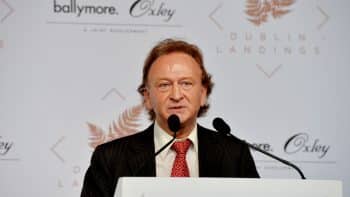
    One of the intriguing characters in the story of ‘NAMA-land’, the title of the book I have written which has just been published by Gill Books, is the former general secretary of the Department of Finance, John Moran. The Limerick man was appointed to the second most senior position in the Irish civil service by then finance minister and fellow County Limerick man, Michael Noonan in May 2012. His appointment was welcomed at the time as a breath of fresh air, given that he had only joined the department a couple of years earlier. It was widely reported that his most recent business experience was in running a juice bar in the Languedoc region of France, where he was also renovating an old property. Not so well reported at the time were questions raised in the Dáil by Sinn Féin spokesman, Pearse Doherty, about Moran’s time with Swiss insurance company, Zurich Capital Markets (ZCM), where he was US-based chief executive from 1997 to 2005. As Doherty pointed out, ZCM was fined $16m, in May 2007, by the US Securities and Exchange Commission (SEC) after it found that the insurance company had “provided financing, aided and abetted four hedge funds that were carrying out schemes to defraud mutual funds that prohibited market timing” and “employed various deceptive tactics to invest in mutual funds”. ZCM was an affiliate of Zurich Global Investments LLC and an indirect subsidiary of Zurich Financial Services, the Swiss holding company. Not much notice was paid to Doherty’s remarks following the somewhat surprise appointment of Moran, except that the deputy was expelled from the Dáil for what the then ceann comhairle, Sean Barrett, described as “attempted character assassination”. After settling in to his new position, Moran was an enthusiastic supporter, with Noonan, of the rapid disposal of NAMA assets and in encouraging global or ‘vulture’ investment funds in their acquisition from 2013. As has since been revealed, he met with a number of the funds which arrived in Ireland since then and purchased huge bundles of heavily discounted, distressed assets from NAMA, only to flip them within months, for much higher margins than achieved by the agency. He was involved in designing some of the tax-efficient incentives which Noonan introduced during his term as finance minister, some of which are under scrutiny again, following the most recent revelations on tax avoidance in the Paradise Papers involving Apple and other multi-nationals. In February 2013, Moran told the REIT Forum conference in Dublin, a gathering of 500 property investors, owners and auctioneers, of his “ambitions to make Ireland a base for international REITS (real estate investment trusts) in much the same way as Dublin is now an international centre for aircraft leasing”. Among those who spoke at the conference was the then head of asset recovery at NAMA, John Mulcahy, who left the agency later that year to join one of Ireland’s leading commercial property investors, IPUT. Another former NAMA executive, Kevin Nowlan, whose father Bill had helped devise the REIT legislation introduced by the then government, went on to form Hibernia REIT in October 2013, less than a year after leaving the agency. Hibernia is now one of the country’s leading purchasers of commercial properties in Dublin, including some previously on the distressed loan books controlled by NAMA. Last year, Moran was reported in Village as saying that he could not recall whether he attended a meeting between Noonan and senior Cerberus representatives, including former US treasury secretary, John Snow, in late March 2014. The meeting took place on the day before the final tenders were submitted to NAMA for the agency’s entire Northern Ireland loan book, known as Project Eagle. Noonan was criticised in a report by the Public Accounts Committee of the Oireachtas earlier this year for his participation at the meeting which was described as “not procedurally appropriate”. In fact, the records and minutes since released and naming those finance department officials attending the meeting do not include Moran. Within weeks, Cerberus emerged as the successful bidder and paid £1.2bn (€1.6 bn) for the portfolio. Some £730m, or almost two-thirds of the monies paid by Cerberus through its subsidiary, Promontoria Eagle, for Project Eagle was lent by Nomura, a Japanese Bank. After just two years as secretary general with the department, Moran retired from the position in May 2014. In November 2015, Nomura announced that Moran had been appointed as an advisor to the bank. He lobbied Noonan and finance department officials on behalf of Nomura during 2016. There is nothing illicit, improper or unsurprising about any senior civil servant going on to provide consultancy and other expertise to local and international companies following retirement. Nevertheless, it is fascinating to follow the global web of networking in the world of high finance.   John Moran

    Loading

    Read more

  • Posted in:

    Think [and consider the data]

    A CLEARER PICTURE is emerging of the state of the housing sector. A number of reports and newly-compiled statistics point to a heavily strained system, struggling to provide even modest levels of supply and affordability. Most households cannot afford a new home within reasonable commuting distance of Dublin, without first stumping up a significant deposit. Policies aimed at reducing building costs by either increasing building heights, or reducing standards, are ineffective and don’t facilitate the common good. And only ten local authority homes were built in Dublin the first half of this year. What does this crisis look like? Here are some figures that help point the way. 1. HOUSING SUPPLY Due to inaccurate official housing statistics, Goodbody has instigated an independent audit of house-building output. Its ‘BER House-building Tracker’ is based on new Building Energy Ratings, certification of which have been a legal requirement for all dwellings since 2013. By this measure, 6,447 new homes have been completed in the year to date, less than half the official Department of Housing figure, which is based on ESB connections. The pace of building is increasing, rising 86% year-on-year in September, though it remains well below official estimates. In total, fewer than 8,000 new homes will be built this year. 80% of these new dwellings are houses, and fewer than 1000 apartments have been completed this year. Seven out of ten new dwellings, and most apartments, are located in the Greater Dublin Area, the ‘recovery’ evidently being restricted to the capital. 2. HOUSE PRICES The Central Statistics Office’s Residential Property Price Indicator Index is an accurate record of house prices. It confirms that government policy has facilitated a remarkable recovery in new home prices. In 2010, the average new home was 25% cheaper than the average second-hand house price. By 2016, the average new home was 15% more expensive, at €450,274. The price of second-hand homes in Dublin has increased at a much slower rate – an average of 11% per year, to €389,879 by 2016. By last year, Dún Laoghaire-Rathdown had seen new home prices double in six years to €618,026, almost 14 times the average full-time wage. 3. APARTMENT PRICES & AFFORDABILITY A report in October by the Society of Chartered Surveyors Ireland (SCSI), ‘The Real Costs of New Apartment Delivery’, confirmed what the industry has known for years – new apartments are severely unaffordable. A combined household salary of €87,000 is required to afford the cheapest low-density two-bed apartments in suburban Dublin. The average sale price across the city is €435,500, almost ten times the average full-time wage. Prospective owners must be in the top 20% household-earnings bracket. The report raised a number of interesting facts. Increasing height – an official preoccupation, actually drives prices up. Reduced standards like smaller floor areas and reduced lift cores – an industry preoccupation, do little to reduce the ‘affordability gap’. Site values are the biggest cost, and a significant driver of price inflation. Land values and developers’ profits comprise 35% of sales prices. 4. SOCIAL HOUSING Rebuilding Ireland’s ‘Social Housing Completions Report 2017’ catalogues an expanding ‘pipeline’ of almost 700 projects, with the capacity to provide more than 11,000 potential social homes. However, actual output is far less impressive than official inputs. Local authorities built 75 social housing units nationwide in the first six months of this year. In addition, 380 social homes were completed nationwide by ‘approved housing bodies’ (AHBs) and voluntary co-ops, organisations that heavily rely on voluntary efforts and fund-raising, in addition to state funding. Of the 120,598 people on housing waiting lists nationwide, 40,207 are in the four Dublin council areas. Ten local authority homes were built in Dublin the first half of 2017. Dublin city council has the largest population, and the highest number of homeless families, but it built no social housing. Cork city council, Kildare county council and Galway city council did not build a single local authority home between them, despite having housing waiting lists of 6,005, 6,869, and 4,095 respectively. 21 local authorities built no social housing in the first six months of 2017. CONCLUSIONS There are 240 new households availing of state rent assistance every week. Approximately €730m will be spent on state rent assistance, for 96,000 households, this year. By 2018 this will increase to €900m for 110,000 families. Rising levels of homelessness have been well documented, and are truly alarming. There are only 1000 rental properties available in Dublin, and 3,200 nationwide. The lack of supply continues to pressurise the rental sector, and lower-to-middle income households and tenants in arrears are especially vulnerable. Local authorities own enough residential- zoned land to build 37,000 dwellings, yet at current rates just 300 local authority homes will be completed this year. Considering the continued reliance on the private sector, low levels of new house-building, the lack of an affordable housing scheme, and low permanent social-housing provision, the situation for families on more modest incomes will remain perilously difficult for the foreseeable future.   Mailíosa (Mel) Reynolds is a Registered Architect and Certified Passive House Designer

    Loading

    Read more

  • Posted in:

    Boiling Over

    This March marked the 40th anniversary of Mary Boyle’s disappearance. Ever since she vanished on St. Patrick’s weekend in 1977, a veil of secrecy has shrouded the case of the Donegal schoolgirl who is Ireland’s longest and youngest missing person. There are few scandals that embarrass the establishment more, not least because of the sinister role played by senior political, Garda and media figures in suppressing the truth about what happened to the six-year-old. Yet despite a virtual blackout by the mainstream media on all of the astonishing new revelations in the case, the lid is slowly being lifted on this sad and sordid story, and the public is hungry for justice. My 2016 documentary ‘Mary Boyle: The Untold Story’ has been viewed almost 600,000 times on YouTube. A recent petition to the Donegal coroner’s office requesting an inquest was signed by thousands in a matter of hours. There is growing frustration and fury that justice has not been done and little doubt that the case involves a cover-up of enormous magnitude. Few believe the story as it was spun in 1977 when Mary went missing during a visit to her grandparents’ home in Cashelard, Ballyshannon. It is implausible that a little girl, who was born in Birmingham, could simply vanish without trace on an isolated farm while in the company of at least 10 members of her family. A ‘Cold Case’ review, set up in the days immediately after the documentary’s release, has resulted in nothing almost a year and a half on, and there is no conclusion in sight. It appears now that this review – one of several that have led to nothing – was established to placate public outrage over allegations contained in the film, especially those made by retired gardaí who claim that Fianna Fáil politician Sean McEniff tried to stop their investigation in its tracks. Expert legal opinion suggests the Gardaí have ample evidence to make charges, yet nobody has been arrested. The last person known to have seen Mary, her uncle and local Fianna Fáil stalwart Gerry Gallagher, has given several unconvincing and inconsistent accounts of what happened the day she went missing. His claim that his niece simply vanished into thin air after accompanying him along a laneway on his farm holds no credibility. Gallagher’s failure to admit when initially asked that Mary had been with him is suspicious at the very least. Statements given to gardaí at the time by him and certain other family members are laden with contradictions. Some officers who were first on the scene that day say they are in no doubt Gerry Gallagher was responsible for Mary’s disappearance. Retired sergeant Martin Collins describes one encounter with Gallagher, where Collins put it to him that he was responsible for his niece’s disappearance. Gallagher, he says, sat in silence and made no attempt to rebuke it. Collins, who was initially refused entry to the cottage by the family, also claims he was told numerous times by Ann Boyle – Mary’s mother and Gerry Gallagher’s sister – that she believed Gallagher was responsible. Mary’s twin sister Ann Doherty and country singer Margo O’Donnell, a distant cousin, say Mrs Boyle told them the same story. Mrs Boyle appears to have now retracted this belief, and says the matter should be addressed privately not publicly. She has been scathing about the justice campaign for her daughter, and has told Donegal coroner Dr Denis McCauley she does not want an inquest into her death, an astonishing position but one that the coroner supports, depriving Mary, her twin sister and the public of a key mechanism for justice and closure in the case. Sergeant Collins also alleges that another close relation of Mary came to him in tears at Ballyshannon station in the days after her disappearance, repeating the claim that he believed Gallagher was responsible. Retired detective Aidan Murray, one of the lead Gardaí in the original ‘investigation’ supports Collins’ theories. He claims that during an interview with Gallagher, he was on the brink of getting a confession when he got a ‘nudge’ under the table from his superior officer who ordered Murray to leave the room and get water for the suspect. More disturbingly, both officers say they are in no doubt Mary was sexually assaulted before her death. Ann Doherty makes the same claim and says Mary was going to blow the whistle on the alleged abuse and had to be silenced. The retired Gardaí also allege that Fianna Fáil’s longest-serving councillor, the late Sean McEniff, made a phone call to Ballyshannon Garda station ordering that none of the Gallagher family were to be made suspects in the case. Shortly before his death earlier this year, McEniff denied their claim yet Aidan Murray, the former head of Special Branch in the area, has stated on camera: “I know that as a result of that phone call, certain people were not allowed to be interviewed. It was all hands off them and we were to look somewhere else”. Given the power McEniff wielded in almost every aspect of Donegal life, there is little doubt his intervention could have derailed the investigation. His legacy of corruption is notorious and was well documented in a recent obituary of him in Village magazine, not least because of his close relationships with Gardaí whom he seems to have been able to order around with impunity, especially where his illegal gaming operation in Bundoran was concerned. A 1985 RTÉ documentary ‘Law and Order in Donegal’, reveals the control McEniff had over local superintendent Dom Murray, who was in charge of the Mary Boyle investigation and who told a number of lies about the case in media interviews through the years. It offers a damning insight into the incestuous relationship between Fianna Fáil and the Gardaí, which has been used to protect the party from scandal on numerous occasions, not least in the aftermath of the Fr Niall Molloy murder in Offaly in 1985. Gerry Gallagher

    Loading

    Read more

  • Posted in:

    Some rugger-buggers hooked on group sex

     The George Hook affair – in which he scandalously suggested that a woman might hold a degree of responsibility for being raped – touched on many things, but one overlooked aspect is a connection to a worrying trend in the world of rugby, where he made his name as a trainer and commentator. Irish society is accustomed to cover-ups and prevarication within corporate organisations, especially where there are allegations of sexual abuse. So, does the Irish Rugby Football Union (IRFU) need to address the advent of a dangerous culture of sexism among its professionals? Four current or former Irish rugby players are set for trial in Belfast this year for rape. The precise details are not open for discussion, but Ulster and Ireland players Paddy Jackson (25) and Stuart Olding (24) are accused on two counts each of raping the same woman on June 28, 2016. Both deny the charges. Former Ulster player Blane McIlroy has been charged with exposing himself to cause “alarm or distress” on the same date, and former UCD player Rory Harrison (25) has been charged with perverting the course of justice by allegedly making a false witness statement to police. He is also accused of withholding evidence. Needless to say, anyone accused of a crime is innocent until proven guilty, but we need to consider the autonomous issue of whether rugby has a cultural problem with sexism and alcohol abuse. Superficial similarities Until recently rape was considered a property crime of man against man: women. Women were not their own agents. In a different and ancient way we still see this attitude in Bunreacht na hÉireann. Victims were commonly accused of incitement, and even subject to punishment. In India and Pakistan, unfortunately, that is still sometimes the case. In Ireland, rape within marriage was only recognised as an offence in 1990. Ireland, like most countries, has long had a problem with under-reporting of this heinous crime. The Rape Crisis Centre reported in 2016 that 65% of survivors using their services had not previously reported to any formal authority. The conduct of many Irish men clearly remains hugely problematic. George Hook courted controversy, and lost his job, for offensive comments he made on his Newstalk show regarding a case with superficial similarities to the Ulster players’ case now playing out in Britain. Hook was reacting to details of a court case involving a young woman who returned to the hotel bedroom of British Olympic swimmer Ieuan Lloyd and had consensual sex with him, where upon, she alleges, she was “passed on” to his friend Otto Putland who, she claims, raped her. Hook said: “Why does a girl who just meets a fella in a bar go back to a hotel room?”. “Should she be raped? Of course she shouldn’t. Isn’t she entitled to say no? Of course she is. Is the guy who came in a scumbag? Certainly. Should he go to jail? Of course. All those things”. And then the clanger – “But is there no blame now to the person who puts themselves in danger?”. The answer, to be clear, is that there is none. A woman always has a right to choose with whom, and when, she has sexual relations. Provocateurs George Hook is a proud rugby man, whose hulking six-foot-three frame equipped him for the playing fields of Presentation Cork. He would find elusive success as a rugby coach, with Connacht and London Irish, and also the United States in the first Rugby World Cup in 1987. But it was as a pundit on RTÉ sports television, beginning in 1997, that he really shot to prominence; copying the role Eamon Dunphy plays in soccer commentary – as a provocateur who stands up for the values of his game. Having found fame in his twilight, he embarked on a successful media career as conservative columnist for the Sunday Independent, and then as Ireland’s first ‘shock jock’ on Newstalk. Along the way he has championed “beleaguered” motorists against girlie-men cyclists, infuriated feminists, and proclaimed himself an unashamed Blueshirt, reaching out to those who eat their dinner in the middle of the day. When TV3’s Colette Fitzpatrick suggested he was “controversial” he lost his temper, saying it was an “outrageous accusation” which was the same as calling him a “liar” and a “fake”, that it was a stereotype that he battles every single day. George Hook may not represent mainstream views on rape in the rugby community, but his success on the airwaves attests to a constituency of angry, middle-age men among them who inveigh against a rapidly changing world. To that mindset perhaps, the scantily-clad, inebriated girl – the tart – who returns to a hotel room with a group of men should not expect to halt proceedings once she puts herself in that position. Worryingly, the Ulstermen are not the only Irish professional rugby players to have been accused of rape this year. In March Denis Coulson (23), then playing in France for Grenoble, was detained along with two non-Irish team-mates in Bordeaux after a 21-year-old woman alleged she was drugged, taken to a hotel room and raped. He strenuously denies a charge that did not prevent the IRFU re-integrating him into the Irish game as a member of the Connacht squad. It might appear that group participation in sex is a form of currency among elite rugby players. In 2013 another incident of group sex involving two other prominent Irish rugby players, being filmed by a third, was widely reported in the media, especially the Irish Independent which lapped up the sordid details. A video went viral via social media, and soon afterwards the woman involved felt compelled to leave the country. There is no suggestion that consent was absent or withdrawn, or any sexual assault committed, but there was nonetheless a serious violation of privacy. The players faced no public sanction, and the IRFU did not deem it necessary to investigate whether a culture of sexism operates among rugby players in

    Loading

    Read more