January 2018

Monthly Archives

  • Posted in:

    Food Insecurity

    Like most people in Ireland, I grow almost none of my own food. Unfortunately living in the city, and not having a garden I am somewhat restricted. Every now and again I get a pang of anxiety when I see supermarket shelves empty on a Sunday night, before the delivery lorries have arrived. This is a reminder that our plentiful food supply is not a given, and is dependent on many factors, such as the supply of fossil fuels to transport the food, the viability of food producers, processors and supermarkets, as well as the availability of money to afford a nutritious and balanced diet. Without one or some of these factors, I, and many others, would struggle to eat properly. In 2000, a major truck-driver strike in the UK brought the country to the brink, with severe fuel shortages and dwindling of food on supermarket shelves. It is said that modern civilisation is three meals deep. If the delivery lorries suddenly stopped, if the fridges couldn’t be powered, or if the value of currency collapsed, food shortages would be a very real prospect. While something quite as dramatic as this suddenly happening is unlikely, the fact that it could happen at all should be enough to make us consider the security of our food supply. Food security isn’t something that many of us think about very often. According to the Global Food Security Index of 2017, Ireland is the most food-secure nation on the planet, so why would we worry ourselves unnecessarily? In 2008, food security became a prominent global issue again. The rising price of oil, coupled with pressure on food supplies from extreme weather events and the increased use of land for biofuels, led to the doubling of food prices in many countries, as well as the disruption of the food chain as many small food businesses couldn’t cope with the extra prices. Shelves emptied in several developing nations, leading to food riots and civil unrest. Closer to home, Ireland and the UK saw a dramatic rise in the number of people relying on food banks during the worst of the recession. Obesity and diabetes rates are on the rise. Ireland will become the most obese country in Europe, with the UK, within a decade, according to a study published in The Lancet. Irish men already have the highest body mass index (BMI) – a key measure of overweight – in Europe, while Irish women rank third, the study shows. Unfortunately, due to the nature of the profit-driven agri-business sector, it is often the unhealthiest food which is the most heavily marketed and affordable. Sadly, our profit-driven food system is not fit for social or environmental purposes. In what is often a race to the bottom, supermarket price wars ensure many fruit and vegetables are sold at below cost. Consumers vote with their purses and it is the cheapest food, usually imported from large commercial farms, with economies of scale, which win out over smaller producers, many of whom have been producing food for generations. As a result many of our smaller farmers, especially crop producers are struggling to stay in business. The production of crops generally in Ireland has declined, as has the overall number of farms and farmers. Overall production of the three main cereals (wheat, oats and barley) decreased by 12.3% in 2016. The total area under cereals decreased by 11,200 hectares (-3.8%) and overall cereal yield decreased by 8.7% to 8.2 tonnes per hectare. The yield of potatoes decreased by 7.9% from 42.3 tonnes per hectare in 2015 to 38.9 tonnes per hectare in 2016 while the area under potatoes increased by 6.1%. In 1915 there were 359,700 farms over one acre in Ireland and by 2010 this had declined to 139,860 farms over one hectare. Sadly we are becoming an agricultural one-trick pony, with beef and dairy being the hot-ticket items. This reduces the diversity of food we produce in Ireland and is leaving us more dependent on food imports. It is a bizarre reality of a neoliberal food economy that the most food-secure nation on the planet is a net importer of food. According to the Food and Agriculture Organisation (FAO) of the United Nations, data from 1960 to 2011 (the most recently available data) reveal that while Ireland was a net importer of calories until the mid-1970s, it then became a net exporter until 2000. Since then, however, the value of this country’s foodenergy net imports in calories has at times exceeded the equivalent of the calorie intake of 2.5 million people. This leaves Ireland very vulnerable to disruptions in the food supply-chain. We received a taste of this earlier in the year when supermarket shelves became short of vegetables such as broccoli and lettuce. Being so heavily dependent on imported food is taking a major gamble with our long term ability to feed ourselves, as we head into a future of huge uncertainty regarding the supply of fossil fuels.   De-carbonising our food system From artificial fertilisers, to pesticides, farm machinery, processing, packaging, shipping and refrigeration, fossil fuels play a major role in getting food from farm to fork. On average, up to 10 calories of fossil fuel input is required to produce just one calorie of food. Richard Heinberg, a fellow of the Post-Carbon Institute believes that we need to decarbonise our agricultural system by making a number of changes to how we produce food. First, we need to become less dependent on fossil-fuel-derived artificial fertilisers. Second, we need to shorten our food supply chains and once again produce more food close to where it is consumed. This will mean more people involved in producing food. Third, along with shortening the supply chain, we will need to become less dependent on heavily-oil-dependent machinery, which, again, will mean more people working the land on smaller plots of land. This isn’t as pie in the sky as it might sound. Already in Ireland, there is a growing interest in

    Loading

    Read more

  • Posted in:

    Brexit: Dunkirk or D-Day?

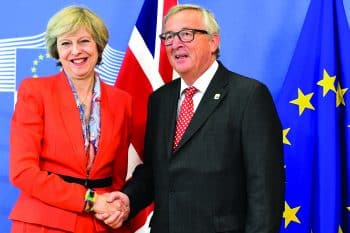
    Standing beside Britain’s much-maligned Prime Minister, Theresa May, European Commission President Jean-Claude Juncker on the morning of the 8 of December announced that “sufficient progress” has been made on Phase I of the Brexit talks to move onto Phase II, and the integral future trading relationship between the United Kingdom and European Union. Brought to the point of parliamentary collapse by the steadfast border standoff between Leo Varadkar and her own supply and confidence partner in Arlene Foster, Theresa May had no choice but to accept an agreement that posits that if there is a failure of the parties to reach a suitable solution to the problem of the Irish border, Northern Ireland and therefore the entire UK would in essence maintain regulatory alignment with the European single market and customs union. The final text, comprising paragraph 45 of the agreement, read: “In the absence of agreed solutions, the United Kingdom will maintain full alignment with those trade rules of the internal market and customs union which, now or in the future, support North-South cooperation, the all-island economy and the protection of the 1998 Agreement”. [The italicised portion of this sentence was originally omitted for simplicity’s sake, and because it tends only to reinforce the editorial allegation that the UK/Tories are getting a better deal than is being reported in other media. See in particular, Editorial in current edition which explicates the issue.] It will probably be, in a word, the softest of soft Brexits. President of the European Council Donald Tusk pushed even further on the back of the agreement, proposing “that during [the transition] period the UK will respect the whole of EU law, including new law” and would “respect judicial oversight”. In the round of back-slapping congratulations that followed in the halls of power in Brussels and Dublin (and the dejected, glassy-eyed resignation that descended like a pall over Westminster that same day), the narrative remained fixed on the upshot for Ireland and the EU as a whole that the British surrender was seen as representing. After months of negotiating, Britain has been brought to terms on an agreement – that has since been declared as binding – that would tie their hands on trade alignment with Europe. So complete was the Tory rout, on the surface, that nobody took a second to question where this left the rest of Europe’s initiatives. The precise wording of the agreement neglects to broach any of the EU’s areas of responsibility outside the trade regulations necessary to ensure the all-Ireland economy is not dissected by a north-south border postBrexit. In essence, in omitting mention of other EU regulations such as those governing social, labour, environmental and consumer rights, the wording of the current agreement leaves the door open for the UK and Northern Ireland to undercut European single market members on all those issues, while retaining the right to export into the EU and take advantage of its market supply chains. Neale Richmond, a Fine Gael Senator and its Seanad Spokesperson on European Affairs, argues that this outlook is purely “hypothetical”. “The deal secured, to be ratified shortly, is a base of ground-rules” he says, “the agreement of which will allow the second phase of negotiations to take place”. In other words, “Nothing is agreed until everything is agreed”. There is, Richmond states, “no practical difference” between the phrases “regulatory alignment” and “avoidance of regulatory divergence” bandied about by all sides during the negotiations. “It is a use of language”, he said, designed to win the support of the DUP for an agreement to maintain standards between the Republic and Northern Ireland. But those standards remain vested in economic issues. “The final agreement”, Richmond promises, “will tie together all working parts”. Should Westminster become alerted to the inadvertent outmanoeuvring of Ireland and Europe afforded them by the wording of the current agreement, however, they are under no obligation to concede alignment on social and environmental matters which would probably require oversight by the European Court of Justice anyway. The Phase I agreement has passed muster in good faith on both sides without reference to areas of regulatory responsibility outside trade and the economy. Through Phase II negotiations, therefore, London is under no obligation to subscribe to the Social Chapter of the European Union, an agenda successive Tory governments have derided since the 1990s. Whether a future Labour government under the radical Jeremy Corbyn might prove more amenable on these issues, Senator Richmond was not inclined to opine on. “We are negotiating as part of the European side in good faith with the current British government”, he said, adding that the government “cannot entertain” speculation as to the motives of any hypothetical future Labour party. As Village goes to press, the media on both sides of the Irish Sea remain silent as to the possibility of an opportunity opening up for the UK post-Brexit. It remains to be seen what role the Social Chapter and other noneconomic regulatory concerns will play in Phase II of negotiations, when they begin next March.

    Loading

    Read more

  • Posted in:

    DUPed

    Ireland and the EU have been outmanoeuvred by the UK into a deal that gives NI and perhaps ultimately the whole UK a competitive advantage trading into Ireland and the EU, by allowing a retreat for NI and the UK from EU environmental, social and other typically non-economic standards.

    Loading

    Read more

  • Posted in:

    Needed: Mass party of the socialist Left

    It is almost a decade since the beginning of the financial crisis which brought capitalism to the point of collapse. In the intervening years, working-class people have been forced to carry the cost of bailing out the system through various, vicious austerity programmes. Establishment political parties across Europe and the world have been greatly reduced, or almost wiped out, for implementing these measures. Now, as we enter 2018, the ‘line’ from the establishment and media is that we have entered a period of stability and recovery. However, for working-class people the key signifiers of the ‘recovery’ are precisely the issues which show that capitalism cannot deliver a decent standard of living for all and provide the space for movements and a socialist Left to grow. Politically, in Ireland, recent opinion polls have been heralded by right-wing commentators as a sign that everything’s ‘back to normal’. But it is a new ‘normal’, with the combined vote of Fianna Fáil and Fine Gael at best only hitting 60% but averaging out in the mid-50s, only slightly up on its historic low. Meanwhile, the Labour Party is stuck in the margin of error. The ‘centre’ isn’t as strong as it tells itself it is, and through movements on the streets can be forced into giving some concessions, solving the problems facing people we need a fundamental change of the system.   Housing The key crisis facing working-class people is housing. At the last count in October, 5298 adults and 3194 children were homeless and in emergency accommodation. 184 homeless people are forced into sleeping on the streets. Rents have rocketed and are expected to continue skywards for the next two years at least. Over 100,000 people and families are waiting on housing. 500,000 young adults are forced to live at home because they cannot afford to move out, twice the number in 2006. At least 29 housing policies have been launched by this government and its predecessor, but the problem gets worse. All of these policies have relied on the private sector to solve the housing crisis. This reliance on the private sector has resulted in massive wealth being gathered in the hands of a parasitic elite of developers, vulture funds and landlords. While huge misery is inflicted on the majority. In Dublin West, for instance, despite the area being a homeless blackspot only 10 new social homes were directly built by the Council. Solidarity’s recent proposal to build 1100 social and affordable homes in Damastown has received widespread public support and is an example of the approach which is required. This proposal is for 550 social homes to be built for rent from Fingal County Council. Another 550 affordable homes are to be built and made available to buy through affordable mortgages. The mortgages would be provided by the Housing Finance Agency, and paid back over 25 years. Monthly mortgage repayments will be from €478 per month for a one-bed home, to under €800 for a four-bed home. This is the type of radical approach on housing which is needed but the government will need to be forced into it by pressure from the streets.   Repeal A whole generation of young people have been drawn into a battle to win abortion rights over the last number of years. This year saw the largest ever March for Choice, and big turnouts on International Women’s Day for Strike4Repeal and other marches and events. This has been accompanied by a deep politicisation of issues of oppression and equality. The #metoo campaign has encouraged women to speak out against sexual assault, genderbased violence and sexism. Demands for the separation of church and state and trans rights are now more common and loud than ever before. The vote on the Oireachtas Committee on the 8th Amendment to support abortion up to 12 weeks on request is a testament to the work and pressure applied by activists over a number of years. In particular, credit is due to the courage of those who highlighted the abortion pill, campaigning across the country to raise awareness and assist women and pregnant people with a crisis pregnancy. The pressure from the movement forced and dragged conservative politicians into voting for these recommendations. However, legislation must still be produced and passed by the Oireachtas. The Dáil is still deeply conservative and may attempt to water down any legislation. We need to continue to exert pressure on the Dáil to make sure there is no backsliding on the proposals.   Precarious employment While unemployment may be decreasing, many people returning to work are finding themselves in worse conditions. The government, the capitalist class and big business have used the crisis to hammer employment terms by creating a slew of temporary and contract jobs. The phenomenal growth of the so-called ‘precariat’ signals the success they have had with this policy. So called ‘if and when’ and ‘banded hours’ contracts have become the norm across whole industries. The effect of this row-back in employment conditions especially affects ‘would’ workers. They are expected to be at the beck and call of employers. They have no guarantee of hours and therefore have no guarantee of income. The Tesco strike this year exposed for everyone the reality of ‘banded hours’ contracts which can see a worker’s hours and income fluctuate anywhere from 16 to 40 hours a week – often determined at the discretion of a manager, and often as a weapon to punish workers. The decision of Ryanair pilots in Ireland and across Europe to take industrial action can be a decisive battle. If a major anti-union, anti-worker employer like Michael O’Leary can be given a bloody nose it will be a major victory for all workers. It will demonstrate to workers, especially those employed in multinationals, that international action against bosses is possible and can deliver victories. The government have played a part in undermining working conditions too. As part of public-sector pay deals, they have created an age apartheid between young and older

    Loading

    Read more

  • Posted in:

    Housing: ‘the carrot and the stick’

    There’s been plenty of talk about “carrot and stick” for our housing predicament. At a property Summit last month, commentators exhumed memories from the industry boom and bust and suggested numerous ways to revive the sector. Much discussion revolved around the fact that there is no official metric for the measure of new housing output. With projected completions of fewer than 9,000 new homes this year, supply remains well short of demand. Senior Government officials suggested that the state needed more land and would get more into active land management. Others noted how state house-building has fallen off a cliff. Local authorities are building on average 300 homes per annum yet own enough zoned residential land to build more than 45,000 homes nationwide . Approved Housing Bodies (AHBs) – part-funded by the state, and voluntary efforts, account for the bulk of social homes in any year, out-performing local authorities two to one. In Dublin there were 16 local authority homes built in the first six months of 2017 – AHBs completed were 174.   Part V One source of new-build social homes is so-called ‘Part V’ dwellings, built by developers and sold at a discount to local authorities. Part V requires 10% of all private residential developments of ten units or more to be sold to the state at reduced prices. The discounted site cost is calculated at ‘existing use value’, a pre-determined formula. The ‘preferred’ option is purchase of units (Part V guidelines direct Local Authorities to buy units rather than land), but land transfer can be agreed as an alternative. Indeed up to September 2015 cash in lieu of land was an option. Subsequent revisions precluded cash payments so developers can no longer buy their way out of Part V. The Rebuilding Ireland Part V target is an average of 524 units per year. However, only 514 Part V units were purchased nationwide in the past five years (see table right). 11 Local Authorities including Cork and Galway City Councils made no Part V social housing purchases in five years. On average 9 social homes have been purchased by Dublin City Council per annum. The current situation is in marked contrast to that of the preceding decade.   Part V 2002- 2011 According to the Housing Agency, between 2002 and 2012, 567,585 new homes were completed and 15,320 Part V social homes were purchased by the state. Other forms of Part V compliance, land transfers and cash in lieu, equated to the potential for an additional 4,311 social homes. Sites for 213 homes were transferred (20 hectares) and cash paid in lieu totaled €122.4m (av. €29,800 per site). The bulk of Part V compliance, 78%, was achieved by developers providing social homes at discounted prices.     Part V 2012- 2016 In the last 5 years the situation has changed dramatically. €29.6m was paid in lieu of land transfer by owners plus sites for just 3 homes (9 hectares). Out of a potential 1,510 Part V homes only 514 were delivered. The bulk of Part V compliance, 64%, was achieved by developers paying cash in lieu of land transfer. The affordable housing scheme was discontinued in 2011. Part V was revised in September 2015 to preclude cash payments, but according to official figures €11m was paid in 2015 and €4.9m in 2016 in lieu of land transfers by developers, perhaps reflecting an overhang of planning permissions extended from before the system was changed but perhaps also suggesting that old (and bad) habits die hard. The total percentage required was reduced from 20% for schemes of five or more units to 10% for schemes of ten or more units. The affordable housing scheme was discontinued in 2011. In the period 2002 to 2016, the total combined figure for cash in lieu of land transfers was €152m. Cash has been king for beleaguered local authorities. Extraordinarily, only three house sites have been transferred in five years. Figures suggest that a significant number of new homes will be built in coming years with little or no social housing element. For example in 2017 our total new housing output may be close to 9,000 homes but Part V is likely to comprise just 200 units, only 2.2% of total new housing. Given the minusculity of payments during the downturn, there is the strong uncomfortable possibility that some developers, while under the control of state agencies, sought successfully to reduce the provision of social housing. Even if there is an increase in new house-building, fewer than than 1,000 Part V social homes may be delivered by 2021. To put these figure in context, there are currently 216 new households per week availing of rent assistance (housing assistance payment) for the first time. 1000 homes would solve the problem for just five weeks worth of this backlog – by 2021!       Conclusion The reality of state land management is very different from the official narrative, even if – under media pressure – the authorities have ratcheted up their rhetoric. Official figures confirm there is little official appetite to obtain cheap land from developers and build directly, and even less inclination to pass site discounts to potential purchasers of affordable housing. Despite all the rhetoric. Owners of land-banks who agreed to buy-out part V obligations when sites were at a historic low values can expect a handsome return on their investment in a short time. Many sites will benefit from generous capital gains-tax exemptions. Legislation introduced by Minister Murphy in July 2017 to extend the lifespan of existing planning permissions ensures that lucrative Part V cash arrangements remain unaffected. There is no official affordable housing scheme and no official definition of what an affordable house is. Last July Minister Murphy confirmed that local authorities can build 2 bed dwellings directly for €191,000 ‘all in’ cost- yet Dublin City Council is purchasing Part V units from a developer in Rathgar for €480,000 per unit . At the property summit, when asked if there

    Loading

    Read more

  • Posted in:

    Immingratitude

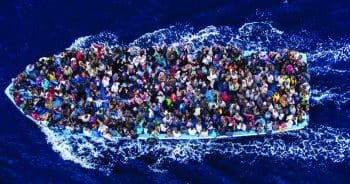
    In December a group called ‘Identity Ireland’ made much of a do online about the relative nothing of unfurling their banner from a bridge over a motorway. The banner urged motorists to “DEFEND IRELAND”, prompting one Twitter user to quip they were “11 days too late” (referring to the Irish soccer team’s humiliating 5-1 defeat to Denmark). The further irony is that the Identity Ireland group itelf is but an Irish franchise of a European anti-immgration organisation. An organisation of foreign conception bemoaning foreign influence. While it may seem ridiculous, anti-immigration groups coming into the open like this is a new development, another symptom of sentiments more likely to find expression in the broadsheets than in the streets. This Summer, the Irish Navy ship LE Eithne rescued 700 people from the Mediterranean sea in a single day. Those souls were but droplets in a wave of refugees, cast adrift in the wake of state failure in various parts of the Middle-East. There is much anxiety across Europe about the demographic consequences of an influx of migrants. Kevin Myers uncharacterisitically said sorry for a supposed slur on an ethnic minority that ended his tenure as a columnist for the Sunday Times. Yet he is less contrite about his numerous other statements stoking anxieties about other minorities. Myers described the swell in immigration to this country, for example, as a “tidal wave”, asserting it was “the greatest threat to the existence of the Irish nation”. And this was in 2007, long before the fallout of the Arab Spring, the demise of Gadaffi, the rise of ISIS, and the consequent disastrous upsurge in refugees. Given this island’s history of invasion and colonisation, we are particularly well versed in the dangers posed by foreigners seeking to make home on these shores. We have much to protect. The value and venerability of our collective cultural inheritance is perhaps epitomised in Newgrange, or Brú na Bóinne. The construction predates Stonehenge and the Great Pyramid of Giza by 500 odd years. Despite the remarkable survival of this structure (not only intact after 5000 years, but still watertight), we are perhaps more aware of the fragility of ‘culture’ than any other European state. The wreckage of invasion remains strewn all over our society. Vikings have become synonymous with rape, pillage, and plunder – there is still something earnest in my shudder when Americans in plastic-horned helmets roar at me from the Viking Splash Tour buses! But the most poignant example of the very real humans terrorised by their raids is a short poem in the margins of a Ninth Century manuscript. A monastic scribe paused in his task to express gratitude that there was a fierce storm raging, for it meant “the fierce warriors of Norway” would not be arriving that particular night. The English invasion left deeper scars. Our legal and parliamentary systems are not derived from the ancient Brehon laws, or the old Gaelic political order. They are carbon copies of the English regime we supposedly deposed. The same is true for our system of landholding (indeed, Travellers, although the most maligned demographic in this, their own country, have a culture much more ‘Irish’ than the vast majority of the populace). The overwhelming majority of the people on this island speak English as their daily language. Think for a second how a native Irish speaker from Rosmuc might view the Anglophone population: we speak the language of the invader, we mimic their laws and power structures. Our national culture is much more English than it is Irish. So unless you’re a committed Gaeilgóir still surviving on one of the Celtic fringes of this country, in Connemara, West Kerry, or Donegal, maybe you should rethink your right to object to immigration at all. But even then, you might pause and consider this: the precise origin of the name of our greatest national monument, Brú na Bóinne, is lost to history. But it was certainly not the name given to it by those who built it. They didn’t speak Irish. Newgrange was built thousands of years before the Celts would arrive, bringing with them horses, Iron, and an Indo-European language. The Irish language arrived here the same way English did – via conquest. ‘Ah, but’, the argument goes, ‘Islam is uniquely intolerant’. Shocking scenes of unfettered depravity in Syria – beheadings, homosexuals being thrown from high buildings, women being stoned to death for transgressing Sharia law – have instilled intense anxiety about accepting immigrants from that part of the world. One of Myers very latest pronouncements is that Europe is in the midst of “an existential crisis for Judeo-Christian values”. But many of the refugees aren’t Muslim at all, many are not only Christian but Catholic – just as most Irish people still claim to be on our census. These are the Chaldeans – an ancient and distinguished branch of the Catholic Church with its own liturgy and lineage dating back to the apostles. The very existence of these particular refugees points to a glaring inconsistency in the idea that Islam is inherently a religion of intolerance. Those supposedly concerned about demography should be well aware of the Middle-East’s remarkable religious and cultural diversity. Zoroastrianism, Yazidism, Mandeanism, Samaritanism – all these ancient belief systems are still extant, despite the dominance of Islam. Where are Europe’s pre-Christian religions? Christendom didn’t suffer them to survive. Yes, the plurality of peoples and faiths in the Middle East are now under threat of extinction from a vicious, virulent strand of Wahhabism – but this is the very horror the refugees are fleeing. And what does the Chaldean Patriarch of Baghdhad cite as the root cause for this exodus of his flock? Western intervention. As surely as the slumber of reason conjures monsters, the ‘war on terror’ brings forth fresh evils. This is the terror we helped create, by continuing to allow American war planes to use Shannon Airport making an absurdity of our claim to ‘neutrality’. You can’t bomb a society

    Loading

    Read more

  • Posted in:

    Gambling sells itself as normal and fun

    My brother told me about a stag weekend he went to recently. The bus that was taking them to Galway hosted an online game where they bet on virtual horses. On arrival, the fellas announced that they had organised a poker night for the husband-to-be. The next day they went to the races. ‘Wow’, you might think, ‘gambling is a popular entertainment for young men today’. But how did gambling go from a furtive preoccupation of the older man to an apparently cheeky, funny, harmless entertainment for the young man? Gambling has a long and varied history, but it was not until the early 1900s that it became a mass activity, with the development of licensed high-street betting shops. These then expanded from individual family bookmakers into some of the commercial high-street chains of the modern betting industry. Telephone betting began in the early 1990s and in 2001 the Irish bookmaker Paddy Power was the first to move into Internet betting, before becoming first mover on the Apple App Store in 2010. In the past decade, neurological marketing research, consumer profiling, single-click betting, geo-tracking mobile technology, virtual reality, and real-time ‘in-play betting’ have led to a seamless, intensively immersive and pervasive market. Through this technology-driven marketing approach, gambling companies have achieved three objectives. First, they have fundamentally changed the public image of gambling by a marketing process known as normalisation. Second, they have diversified the range of ways in which people can gamble, expanding access to gambling touchpoints, increasing the range of what can be gambled on, and reducing the obstacles to gambling – a process we call the gamblification of life. And finally, they have waged an undeclared public relations war to ensure that successive governments don’t interfere with the soft-touch regulatory environment in which they thrive. What has it led to? An estimated 40,000 people have a gambling addiction in the Republic of Ireland. Recently, the Economist magazine calculated the per capita gambling losses by country: Ireland ranks third in the world, and first when it comes to online losses (graph below). 80% of Irish people who bet on sports events have at least one online account. Ireland has grown leading international and internationalizing gambling brands such as Paddy Power, Boylesports and most recently Quinnbet, Sean Quinn’s online gambling company launched in August 2017. In an experiment broadcast by BBC ‘Panorama’ last year, MRI imaging revealed that an addict’s brain exhibits the same neurological state whether it is anticipating a spinning roulette wheel, placing a bet, or in fact winning. This suggests that gamblers are addicted not as much to the end goal of winning as to the thrill of being involved in a betting experience. This neurological evidence for gambling allows two things to happen that are advantageous to the industry: it gives better insight into how reward centres in the brain are stimulated, and it offers clues as to how to naturalise addiction and thus limit discussion of the role that marketing plays in creating gamblers. In our research on the gambling market in Ireland, it was striking that marketing managers in the industry would repeatedly talk about gambling addiction as a neurological dysfunction, specifically in the brain’s mesolimbic reward system, that about 10% of the population are predisposed to. Portraying the other 90% of gamblers as ‘problem-free’ is therefore a useful tactic in denying that gambling may be a condition that is caused, and even fostered, by the industry.   The new vulnerability So who is the ‘problem gambler’? From a psychological perspective, there are two recognisable characteristics. First, the gambler has diminished control over the time or the money they spend, and second, their gambling results in negative consequences for them and/or for someone close to them. Contrary to our traditional view of gambling as older, working-class men in bookmakers, the majority of problem gamblers are young men, aged 18-24. Surprisingly perhaps, a higher level of academic education correlates with an increased risk of problem gambling. And perhaps unsurprisingly, 1 in 5 problem gamblers attempt suicide. And, contrary to policy rhetoric that seeks to solve problems by pointing out that people merely ‘need to know the dangers’, evidence points to a very high level of addiction within the industry – proof that those with the most knowledge of the market are not immune to it. To compound matters, problem gamblers within the male demographic are least likely to admit they have a problem, and their behaviour is often not recognised by themselves or by others as problematic, but rather as normal young male behaviour. This cocktail of factors makes it especially difficult to reveal the scale of the problem that this market creates.   Funning Risk Gambling brands position gambling as a harmless activity. This normalises its pervasiveness, frequency and intensity. Often, animations are used to appeal to young consumers, the tone is jocular, and there is never a reference to losing. The injunction to have fun is an especially important positioning tool that resonates with young men who are seen as more acceptable when they are jokey, laddish, and in good humour – an injunction which increasingly spills into other domains – we must be fun at work, we must be a fun dad, and so on. Alongside the fun archetype, the second most used archetype is that of the hipster, with major gambling brands encouraging the perception that gambling is a James Bondesque talent or skill which can be learned and developed, rather than a game of chance where the odds are stacked against you. Of course advertising is a way of enticing existing gamblers to gamble more, but it’s also a mechanism to educate the next generation of gamblers in brand awareness and preference: gamblers develop problem behaviour most often during adolescence, when they are most exposed to televised sport. Advertising frequently demonstrates not only the fun of betting, but how to bet, as in the Bet365 advertisement shown here. Sponsorship is another mechanism of normalisation, particularly in sport. For

    Loading

    Read more

  • Posted in:

    EU(S)

    Books on the European Union generate glaze-over and are certainly neither written nor read for fun dinner-party conversation, trading as they do in institution-making and bureaucracy. The EU is an incomplete experiment in international co-operation brought about by the catastrophic decline in imperialism, with its consequences for European nations, and two major world wars. But who made it what it is? Success, it is often said has many patrons, but failure is an orphan. Professor Berend’s book lucidly identifies the major patrons who have sponsored European integration and how roll of sponsors has changed over the years. The true extent of US sponsorship of integration in the years following World War II is laid bare by his detailed investigation of the archival documents. In 1948 the American Committee on United Europe was established, supported by the Rockefeller and Ford Foundations. As Professor Anthony Coughlan gleefully pointed out in Village last year, for years the CIA channelled money to the European Movement whose national chapters became the main non-governmental lobbyists for ever further integration in the different European countries and have remained so to this day. Britain, France, and even the US – initially at least, wanted to punish Germany after World War II. De Gaulle wanted to seize the industrial assets of Germany’s Ruhr and Saar to prevent a German resurgence but also to help revive France’s industrial capacity. Fear of the Soviet Union soon crystallised into a new US plan for the continent which saw the ditching of the Morgenthau plan to punish Germany. In the Spring of 1948 France was bankrupt and desperately in need of US Marshall Aid to rebuild its industrial capacity and infrastructure. The Americans made Marshall Aid conditional on French support for Western European integration. It is a lesson on how big countries use their influence. The French performed a quick about-turn on their policy of confiscating and gelding German industrial capacity. Fear of the Soviet Union destabilising Germany seems to have been the motive for the US supporting western European integration. Support for German leader Willy Brandt was also crucial and in particular his espousal of Ostpolitik, or an opening to the East, as an alternative to hard military conflict with the Soviet Bloc. British support for the EU has always been ambivalent. Churchill set the tone by advocating a United States of Europe mainly because of a fear of Soviet expansionism. He felt that Britain might not be part of it. At this stage, even with the American eclipse of its role, and the end of its Empire Britain still nurtured ideas (or delusions ) that it could be a stronger global force in the world without being part of a European political structure, in particular because of its fabled relationship with the wider English-speaking world. Eisenhower was sold on European integration and even boasted privately that it would allow America to sit back a bit with the Europeans doing their bidding – in other words being active in the world without actually rubbing up the isolationists in America the wrong way. Britain was eventually sold on the idea but again had to be pushed a bit to actually join the EU. The British reluctance about its role in Europe is probably best explained in a classic episode of the comedy series ‘Yes Minister’. The perplexed minister (Jim Hacker) expresses genuine surprise about the attitude of his senior civil servant Sir Humphrey which hints at opposition to the European idea. Sir Humphrey explains the policy to Hacker by stating that the real reason why the UK is in the EU is to break up the possibility of them (the continentals) getting together and having unity of purpose on virtually any issue. Balance-of-power preoccupations, rather than zeal, has been the leitmotiv of British involvement in the continent of Europe for hundreds of years. The irony of US support for Europe shines clear for Berend who is a professor in the University of California. By allowing Germany to return to full industrial strength America was allowing a potential rival to develop on the world stage. Henry Kissinger was the first person in the US to point this out, in a book published in 1965. He subsequently advised Nixon not to deal with Brussels but rather the nation-state governments. The French Foreign Minister in 1973 told Kissinger: “You wish to divide Europe to strengthen your mastery”. The inclusion of such spicy quotes energises Professor Berend’s book beyond a limited academic purview. The waxing and waning of the assiduousness of US sponsorship of the EU was rapidly followed by the rapid and rather desperate sponsorship of the European ideal by large European corporations whose motivations were very different. In the late 1970s and 1980s it had begun to dawn on the business elite in Europe that Europe’s economy was threatened by the extraordinary dominance of both the U.S. and Asian companies in the area of consumer electronics amongst other things. This existential fear for survival led European cormpanies to push for the creation of an enlarged and bigger regional market for their products and services within the European area. Professor Berend underlines the importance of three figures in this regard – Helmut Kohl in Germany, Francois Mitterand in France and Jacques Delors as President of the European Commission. The campaign to instigate and complete a single European market and eventually a currency were all the work of Delors; and the clearest beneficiaries were Europe’s big industrial companies who used it as an opportunity to mimic US merger and acquisition culture. Mitterand in France was critical to this success. His early domestic enthusiasm for more and bigger state enterprises was quickly jettisoned in favour of privatisation in his second term. In fairness he saw, as other European countries did, that building national champions, some of which were not long-term competitive, would not be enough to raise European industry off its knees. Currency instability, widespread immigration from the Mediterranean basin, as well as Africa, and the global

    Loading

    Read more

  • Posted in:

    Marine life: out of sight, so nihilistically destroyed

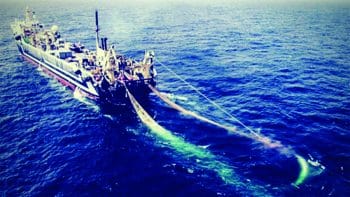
    Fish don’t vote. When Ireland’s Marine Minister Michael Creed said: “I am satisfied that I have managed to turn an extremely worrying set of proposals from the Commission into a much improved outcome for the Irish fishing industry”, there was little doubt as to whose interests the minister represented. While he added that he was “especially pleased that the quotas agreed respects the scientific advice ensuring that the fish stocks in our waters will be managed sustainably”, this may have been tongue in cheek. In 2016, Ireland came out as number one in the league table of worst offenders for the promotion of overfishing in the North East Atlantic, according to a report published by the New Economics Foundation (NEF) an independent think tank. The report – ‘Landing the Blame’ set out to name-and-shame the EU member states most responsible for setting fishing quotas above the level recommended in scientific advice – the very advice in fact that Creed said he “respected”. At the time the NEF report was being compiled, Simon Coveney was our minister with responsibility for marine affairs. Coveney negotiated the largest proportional increase in fishing quotas for Ireland above scientifically advised levels in December 2015, with Ireland’s quotas exceeding scientific advice by 25%. Fish, don’t lobby, so their interests, including the fundamental right to exist at all, were not considered. According to the NEF there is a total lack of transparency about the fisheries negotiations, leading to wheeler-dealing where Irish fishermen, politicians and processors ‘celebrate’ beating the system and catching far more fish than the marine system can bear. What stands out about overfishing isn’t so much the destructive greed involved, it’s the sheer nihilistic stupidity. Research published by NEF calculated that the EU could actually increase its fish catch by two million tonnes a year, raise an extra €1.6bn in income from the marine sector, and create an additional 20,000 jobs in the industry. How? Simply by sticking rigidly to the scientific advice, which means allowing fish stocks to recover, avoiding targeting of breeding grounds for juvenile fish and, critically, eliminating trawling. By its very nature, much of what happens at sea is out of sight, and therefore largely out of mind. This is the only possible reason to explain how the industrial-scale vandalism involved in trawling isn’t regarded as a criminal offence. If you saw a plane flying over a pristine forest and carpet-bombing it, you would be rightly outraged. Yet, this extreme level of wanton wreckage of the sensitive marine habitats on the sea floor is carried out daily by trawlers right around our coasts. According to the Irish Wildlife Trust: “trawling destroys seabed habitats and catches huge numbers of other marine organisms (known as bycatch) including juvenile cod, whiting etc. Successive cod management plans have failed and we believe the only solution is to prohibit trawling in large areas of the Irish Sea.” A trawling ban within 12 miles of shore would, according to the IWT, “repair habitats, restore biodiversity, be a boon for coastal tourism (angling, diving) and ultimately provide more and bigger fish for fishermen”. Much of the seas around Ireland is already critically overfished; and bottom-trawling in particular is uniquely destructive as well as extraordinarily wasteful. When weighted nets and trawl doors are dragged along the seafloor, everything in their path is disturbed or destroyed, including seagrasses, coral reefs and rock gardens where fish hide from predators. In one study, bottom trawling for prawns threw away nine times as much bycatch as more selective fishing gear. A 2007 study on shrimp trawlers in Belize found that landing less than 20 tons of shrimp involved destroying and discarding about 76 to 190 metric tons of other marine life. Globally, marine systems are under greater stress than at any time for tens of millions of years. A lethal cocktail of pollution, overfishing, rising water temperatures and ocean acidification is pushing many systems into irreversible collapse. Any one of these threats in isolation would be serious; in combination, they risk tipping us into a world where the oceans are essentially dead, with little besides jellyfish capable of surviving and adapting to the unprecedented rate of change. Other than the occasional dolphin or clown fish, we as humans have little personal empathy with most forms of marine life. We tend to view them as cold and slimy; hardly worth bothering about at all. David Attenborough’s latest marvel, ‘Blue Planet II’, has just finished broadcasting. Hitting weekly audiences of over 17 million, it was in fact the most watched TV programme of 2017. Great storytelling, combined with breath-taking photography has brought the exotic and bizarre wonders of the seas to amazed audiences. Blue Planet II is expected to be sold to over 100 TV stations all over the world, showing this interest, even compassion, is not just a flash in the pan. Viewers watching resolute puffins engaging in perilous and exhausting three-hour roundtrips to catch fish for their young, while being harried on the return journey by raiding skuas will have a better grasp of just how tough life is, and how survival itself is balanced on a daily knifeedge for most species. Skellig Michael, off the coast of Kerry, is a rare sanctuary for puffins, among others, yet this delicate ecosystem is being constantly threatened by human intrusions, especially since the island first featured in the ‘Star Wars’ film franchise, with Heather Humphries, the unfortunately named then Heritage minister signing off on the film crew’s right to move 180 staff, plus heavy equipment, including lighting rigs, onto the island. It doesn’t take a trained ecologist to work out the impacts of having helicopters and drones swirling around this tiny island. By the time ‘Star Wars’ has finished with it, it’s likely the already endangered sea birds will have long abandoned their ancient sanctuary. Still, puffins don’t vote, so who cares? While Humphries has made a ministerial career out of selling out the natural environment to special-interest groups, ‘Blue Planet II’ lingered long

    Loading

    Read more

  • Posted in:

    Adventurers in immortality and Nazism

    The revised edition of ‘Francis Stuart: Artist and Outcast’ (Kiely, Liffey Press, Dublin 2007; Areopagitica, NC 2017) coincided this year with two other biographies about Nora O’Mara and John Lodwick, close friends of Stuart’s in wartime. The challenge for the biographer is to interrogate the sources about Stuart, O’Mara, and Lodwick each of whom was lured to a war zone, and establish the truth about their psychology, actions, personality and politics. Stuart and O’Mara became lovers while working for the Propaganda Ministry (Fichte Bund) in Berlin. Stuart’s notorious broadcasts made him, according to critic Cyril Connolly, “the Irish Haw-Haw”. Lodwick, who worked for British Special Operations was a Croix de Guerre hero and novelist hailed by writers from Somerset-Maugham to Anthony Burgess. O’Mara held many aliases: Nora O’Mara, Deirdre O’Mara and Roísín Ní Mheara. She is mentioned in James O’Donnell’s ‘The Bunker’ (2001) as Rosaleen James aka ‘Mata O’Hara’ so-nicknamed by Hitler’s SS adjutant, Otto Günsche. O’Mara was in fact Phyllis Ursula James, born in 1918. Her natural father is unknown, her mother Nora James “a ladies maid of Hyde Park”. She was adopted by Sir Ian and Lady Hamilton of 1 Hyde Park Gardens, and despite a privileged education, including at a finishing school in Germany, suffered psychologically as an orphan. This is also attested to in ‘Black List, Section H.’ The Bundesarchiv-Militärarchiv in Freiburg holds a letter from the Nazi Propaganda Ministry of 12 March 1942: “Frau O’Mara is being sent for 14 days of convalescence to Baden-Baden”. The letter suggests finding “a decent theatre engagement…and to help Frau O’Mara in case of need; it is requested to appropriate 500 RM (Reichmarks) from the Goebbels Fund”. The letter focuses on O’Mara’s status as an actress while working in the Haus des Rundfunk as a radio broadcaster alongside Stuart. O’Mara’s connections made her an insider with the Nazi regime. For example, Hitler’s personal pilot Hans Baur says he met her at a party in Goebbels’ villa in Schwanenwerder. The letter is intriguing as to how O’Mara penetrated the Reich’s higher echelons. She features in Stuart’s ‘Black List, Section H’ (King Penguin) as Susan Loyson, a distressed mother trying to get into German movies and theatre. The tempestuous O’Mara-Stuart relationship is pervasive in the book: she had two children, as did he back in Ireland from a failed marriage to Maud Gonne’s daughter, Iseult. While Stuart recanted his years in Berlin in interviews and especially ‘Black List, Section H,’ O’Mara’s loyalty to Nazism is clearly stated in two memoirs under the name Roísín Ní Mheara, ‘Cé hÍ Seo Amuigh’ (1992) and ‘I gCéin is I gCóngar’ (2006). The first caused a media scandal representing ‘neo-Nazism in Europe’ under the auspices of Gaelic-language publisher, Coiscéim. The government funders of the publisher had to answer for a text that evinced Holocaust denial like David Irving’s ‘Hitler’s War’ (1977). O’Mara’s overt anti-Semitism had first surfaced in January 1978 in her column in ‘Inniu’ denying the genocide in Bergen-Belsen. Her words are redolently vile: “there is plenty of evidence that the Germans did their serious best to solve the ‘Jewish problem’ humanely”. Stuart and O’Mara were blacklisted for being friends of pro-Nazi IRA activists Sean Russell and Frank Ryan who retain nationalist hero status. Russell died aboard a German U-boat on a mission with Ryan to Ireland during the war. Stuart was imprisoned by the French but released after a year. O’Mara’s release shortly after her arrest in Paris at the request of the post-war American and British authorities is mysterious since “MI5’s file on her was made to go away”. O’Mara’s foster-father, Sir Ian Hamilton, led the British Legion delegation in 1938 and was hosted by Hitler in Berchtesgaden, Obersalzberg. Making international news, Hamilton was photographed with Hitler as had other deviant foreign nationals including the runaway king Edward VIII. The memoir states O’Mara was “born in Switzerland” but in 1938 O’Mara was listed in Berlin’s Reichstheaterkammer Jahrbuch having established her identity as ‘Irish’. Her background and lineage were fake in a milieu where the bogus Nazi obsession with Aryanism and Jewishness in particular led to many reinventions of identity. The Abwehr, the SS, and the Geheime Staatspolizei sanctioned her profile as ‘Irish’, and her shadowy activities. O’Mara appears in John Francis O’Reilly’s ‘I Was A Spy in Ireland.’ He believed her cover-story. She was “Irish looking with unusual blue eyes and a peculiar walk as if she had at one time injured her back. Good-looking, but with rather an unwashed appearance”. O’Mara was obviously a spy for the Germans among their ‘adopted’ Irish gang of anti-British, pro-IRA supporters residing in Berlin and on the payroll. They included Stuart. William Warnock, the Irish chargé d’affaires in Berlin put on the record that O’Mara “was responsible for a raid by the SS on fellow broadcaster Liam Mullally’s flat”. The fact that she was quickly declassified by MI5 and the Americans after the war points perhaps to some sort of double-agent status. Francis Stuart’s novels had been highly praised, notably by Yeats who lost out in the tug-of-love with Iseult Gonne who married Stuart. Yeats’ proposed to Iseult twice but was blankly refused and he moved on speedily to marry Georgette Hyde-Lees. Yeats admired Stuart as poet and novelist, stating “he will be our great writer”. Stuart had returned to Berlin in January 1940 on a cultural visit organised by German Academic Exchange’s Helmut Clissmann (later assigned to the SS). This gets much space in ‘Black List, Section H.’ It has the highest political resonance in the novel since he acknowledges “being branded as a Nazi by those from whom most of his readers would have to come, scarcely augured well for his future”. Stuart’s Berlin years achieved everything he wanted for his art, albeit at the price of infamy. His twenty-five novels present a unity of thematic structure about war and its reality as counter-flow to so-called peace time. The extremes of Nazi Germany fulfilled his personal and psychological needs. The politics of

    Loading

    Read more

  • Posted in:

    The Shaker Hymn: There’s no redoing things

    Independent music is odd: for a wide umbrella of music that breeds the creative freedom and cultural autonomy needed to help progress the overall artistic discourse, there’s no shortage of revivalists of various stripes, rejigging and refreshing previously well-worn sonic tropes. It’s been hard in the past to look at Corkonian psych-poppers The Shaker Hymn and not get some degree of the warm-and-fuzzies: emerging from teenage adventures in the folk and alternative genres, second album ‘Do You Think You’re Clever?’ self-released last year and veered wildly into tape-hiss, big sounds and the kind of vocal harmonies the like of Supergrass would have been envious of at the outset of Britpop. It was a mix that intrigued a lot of people, and preceded a furious touring schedule in small towns and minor venues all over the country, before the band took a breather to try other things and collect their thoughts, ready for another salvo of new material. In that context the band’s new single, Dead Trees, is a surprise. Vocalist/guitarist Caoilian Sherlock, a naturally happy-go-lucky fellow, drops the youthful distrust of the band’s postMillennial fug in favour of fire-and-brimstone doomsaying, warning of an uncertain future, in direct contrast to his fine fettle as we meet at L’Attitude on Cork’s Union Quay. Sherlock is relaxed about the response the single has met with at the band’s gigs so far this winter, a return to live activity that foreshadows an upcoming third album. “It’s been good. I forgot what it was like to do gigs. We hadn’t performed in about a year, except for one gig in Belgium where we tested out all our new songs. It’s nice. The songs are different. It seems boring to other people, but they’re longer. I guess we’ve given up the idea of trying to impress anyone else, I think. When you’re a bit younger, you try and write something to get in the charts, or something. We’ve been doing that since we were sixteen. We’re twenty-eight, twenty-nine, now. The point of us being in a band is to give us that expression that comes from being together, so there’s less rules and a lot more of a democratic process going on between the four of us. The intention is to make the most exciting thing we can”. The process of creating music for record is obviously very different now from what it would have been in the days of the band’s broader influences; and in trying to bequeathe a document of where they are now the outfit have opted to keep recording their third album on tape to instill the same sense of urgency, immediacy, and the finality of limited takes into their tunes, though with permanence now underpinning the hard-won authenticity of fuzz and hiss,. “Music nerds will say, ‘oh, how exciting!’, but for those who don’t really care about the musicrecording process: we’ll be recording to tape, like they did up until the late Eighties, early Nineties. It means everything has to be done live. That’s exciting for us, ‘cause it’s a different process, there’s no sitting at the computer and redoing things. If you sound good or bad on the day, it doesn’t matter: that’s what happened, and that’s really exciting for us. We recorded two albums in three years and before that tons of EPs, so the recording process can get a bit flavourless. So for us, this is a bit of spice”, smiles Sherlock. Dead Trees itself touches on fairly hefty business, shifting creative focus from benign appraisals of the maladies of twenty-somethings in the binds of austerity and ladder-pulling, like in previous single Trophy Child, to altogether broader subject matter including the aforementioned doomerism. The question is: what prompted this turn for the thematically heavy? “Trophy Child was on our last album, and I couldn’t help but write about things that were going on around me. All my friends were going away to the UK, leaving Cork to go to Dublin, go to Australia and New Zealand, coming back, then going to South East Asia… much of that album was about that lost kind of feeling, not that I was stymied staying in Cork, but a lot of people around me were having the conversation about not knowing where to go. So a lot of the songs were about that. This time around I wanted to write from a more thematic point of view, as much as I could, but not so personal, more universal. So, I was doing a lot more travelling, as this album began to be written. I got to go to Iceland and LA, and other places I’d never seen, new landscapes, so I wanted to write something about nature, and the more I thought about it, the more I couldn’t not write about the world after Trump, and Brexit. There was a heavy feeling at the end of last year and the beginning of this year, so there’s a lot of that on this new album. There’s also a lot of joy and excitement, and a feeling of ‘ooh, what’s gonna happen next?’”. The band’s recent downtime allowed Sherlock to spread his wings, solo, as Saint Caoilian, releasing his début one-man effort, ‘The Faraway’, earlier in the year. Away from a shared creative endeavour, Sherlock’s tendencies toward lovelorn pop, summoning power-pop pioneers like Big Star, are writ large all over leadoff single I’ll Be a Fool For You. It led to a busy summer of gigs, both in support of his own record and of fellow Corkonian troubadour Marlene Enright, and with accelerating momentum, there’s little stopping him from continuing this in between bursts of band activity. “I’m recording another EP this December! It’s funny, the reason Saint Caoilian came about was because I had about fifty demos at home. They weren’t going anywhere, and they weren’t necessarily Shaker Hymn songs. On top of that, I’ve been in this band since I was sixteen, you can’t expect three other people to travel all

    Loading

    Read more

  • Posted in:

    Trouble Pilgrims

    The Radiators From Space, Ireland’s first punk band, captured the subversive mood of 1979 in the groundbreaking ‘Ghostown’ album. Now they cast a long shadow over Trouble Pilgrims who have inherited band members Steve Averill and Pete Holidai. But the iconic pair of Irish rockers are not just surviving, they’re thriving. The reason for this must be the strength of their collaborators in Trouble Pilgrims. In fact, Trouble Pilgrims now are almost an Irish post-punk supergroup. The lineup includes Bren Lynott who was a member of The End and The Cathedral, and Johnny Bonnie who comes via the Skank Mooks, Those Handsome Devils and The Baby Snakes. Tony St Ledger was in The Myster Men, The Deep and Vatikan3. So there are plenty of ghosts in this album, and ghosts of hopes. The 1970s and 1980s Dublin’s scene’s glimmer of dreams. Prospects of stardom; the price – a ticket on the B+I ferry. As ex Radiator and Pogue, Philip Chevron said: “where the hand of opportunity draws a ticket in the lottery”. ‘Dark Shadows and Rust’ is a triumph, an essential piece of modern Irish art. It takes all of the hopes and aspirations of those Moran-ish, Baggot-y, Ivy Room-y (although that’s an oxymoron), McGonagle-y, college and Magnetic first steps of young bands and welds them together into an unholy celebration of the power of rock. While ‘Dark Shadows and Rust’ is a very Dublin album, it also celebrates the dust and grit, the sweat and blood, the tension and release of the blues, from the Delta to Canvey Island. It wears the ghostshirts of glam, of Bolan and Bowie and Roxy and the candyfloss pop of the Everly Brothers and Roy Orbison. In the key word from the opening track, it’s a carnival. Snake Oil Carnival sets the tone for the album in grand style. After an introduction featuring a cacophony of traffic, cymbals and radio drone (a riot in Chatham St music academy perhaps), Steve Rapid and Tony St Ledger combine to sizzling effect in a Doors meets Queens of the Stone Age sixties stomper. It’s almost overflowing with taut guitar whose sinewy histrionics pulse in this rock and rollercoaster. And then without warning, with the sharpest of shocks, the Carny is over. It’s breath-taking. Another outstanding track is Tony St Ledger’s, Instant Polaroid, which celebrates a Dublin character, snapping pics on O’Connell street. Capturing moments of bliss, delirious smiles, and the beauty of youth, and developing them in what must have been a lonely dark room. It’s an intensely evocative song and is delivered with the panache of early Bauhaus, the sparkle of Spizz Energi and the invention of the great post-punk bands. And that’s why ‘Dark Shadows and Rust’ is such an exultation: it captures the moment punk was a kaleidoscope of images and sounds, of personalities and dreams. It marshalled a sense of power and glory for the people who felt powerless and inglorious. Death Ballad and Queen of Heartache are a pair of Moore Street meets New York-flavoured gems. The first contains a candyfloss melody combining with barbedwire guitars. If Debbie Harry fronted the Outcasts this would be the song to record. Queen of Heartache is the Ramones twisting with the Royal Showband. Style icons hucklebucking trends, throwing shapes at the mineral bar in some maple-sprung dancefloor of dreams. It’s the song the Golden Horde shudda wrote. I am only pointing out the points of comparison that I imagine because: a) it’s fun, and b) the album refuses to be typecast or to fit into any neat compartment, and that makes it thrilling. These kicks are encapsulated when Pete Holidai grabs the mic for Animal Gang Blues. To my ears, he’s never sung truer, more convincingly, more intensely than on ‘Dark Shadows and Rust’. It’s a career-high. The song itself is a prequel to ‘Ghostown’. It’s a bloody B-movie of a song, a scare-a-thon, washed in acid guitars where Holidai is the grinderman, voicing the moral panics that stalked deprived Dublin. Scorning the hopeless souls with finger wagging and wondering where it all went wrong. The characters of the first two Radiators’ albums are here in spirit, although it documents pre-1970s Dublin. That’s one of the best things about the album. As rap did in the 1980s and early 1990s when it celebrated the tenements of New York City, Trouble Pilgrims take the same razor-sharp cinema lens to their own surroundings. Most rewardingly the Pilgrims invoke the past, but never wallow in it.

    Loading

    Read more

  • Posted in:

    The rock star should be sometimes alone, but never lonely

    The story of the contemporary rock diva, Lady Gaga, who literally could not stand to be alone, is a philosophical fable for our times. A few years back, according to claims in a legal action filed by the rocker’s former personal assistant, who sued for overtime pay, the singer could not tolerate being in her bed alone. The assistant was required to be with her boss 24 hours a day (including sleeping with her), yet was not paid for the extra hours. What is going on?   A Globalised World Specialising in the torture of Sleep Deprivation No aspect of our biology is left unscathed by sleep deprivation, according to Professor Matthew Walker, director of the Centre for Human Sleep Science at the University of California, Berkeley. “It sinks down into every possible nook and cranny. And yet no one is doing anything about it. Things have to change: in the workplace and our communities, our homes and families”. It’s not just margaret Thatcher who suffered from lack of sleep, you do yourself… In the book ‘24/7: Late Capitalism and the Ends of Sleep’, Jonathan Crary argues that the expanding non-stop communication technology of twenty-first-century capitalism is ruining individual attentiveness and impairing perception. The 24/7 marketplace is endlessly pushing us into constant activity, damaging the fabric of everyday life. Humans are endlessly diverted and distracted by the images, demands and noises of ubiquitous technology, including mobile phones and other electronic devices. There is never any peace. Doctor Frank Lipman, who treats conditions of stress and fatigue, has noted that: “feeling spent is an understandable response to the 21st century. If you put a human being in a modern city, and add computers, mobile phones, credit cards, neon lights and 24-hour shopping…what do you expect?”.   The ‘Wired Life’- or the Death of Solitude But the modern condition engenders more than just the death of sleep, chronic fatigue, and pointless frenetecism. This famous saying of the philosopher Blaise Pascal has never been more relevant to the contemporary world – yet never more violated. “Our unhappiness arises from one thing only, that we cannot be comfortably alone in our room…That is why the pleasure of solitude is seen as so incomprehensible”. The Wired Life of hyper-capitalism and its world-wide-web – think of a massive spider’s ‘web’ in which we are all entangled – is designed to be intrusive and overweaning. To want solitude is to be an oddity. Experiments summarised in the journal Physiology & Behaviour suggest that, given a choice of physical pain or isolation, social mammals will choose the former. Capuchin monkeys starved of both food and contact for 22 hours will rejoin their companions before eating. Children who experience emotional neglect, according to some findings, suffer worse mental health consequences than children suffering both emotional neglect and physical abuse: Though he wrote his short story ‘The Pedestrian’ in the era of Big Box TV pre-cable, pre-streaming media, Ray Bradbury grasped the effect of emerging electronic communication, which tended to undermine both the right of – and desire for – privacy. The pedestrian Lawrence Mead is out walking alone: “And on his way he would see the cottages and homes with their dark windows, and it was not unequal to walking through a graveyard, because only the faintest glimmers of firefly light appeared in flickers behind the windows… In ten years of walking by night or day, for thousands of miles, he had never met another person walking, not one in all that time”. Shortly thereafter Mead is arrested by a robotic police car and taken to a psychiatric institute for treatment for regressive behaviour, that is, seeking solitude in a world saturated by media. Unlike the rock star who cannot sleep alone, the Pedestrian wants to walk alone but a technocratic world won’t leave him alone. Non-stop video games, omnipresent online streaming, iPhones, social media, multiple cable channels, all conspire to make humans into Outer-Directed Machines always looking to be attached to the Wired World for their amusements. Montaigne in his essay, ‘Of Solitude’ said: “We must reserve a backshop, wholly our own and entirely free, wherein to settle our true liberty, our principal solitude and retreat. And in this we must for the most part entertain ourselves with ourselves, and so privately that no exotic knowledge or communication be admitted there”. The reference to finding solitude away from “exotic knowledge or communication” – a harbinger of the WWW – is a battle cry for those seeking to liberate themselves from the endless distractions of a 24/7 Interconnected Info-World. The philosopher Arnold Schopenhauer assailed those who constantly seek happiness through external stimulations (food, entertainments, games, wealth, etc). Such a life “cannot protect a man from being bored”, Schopenhauer cautioned. The rock singer could not be alone because she no longer had the capacity to entertain herself with herself. The ability to be comfortably alone in her room was beyond her. She is a contemporary casualty of the age-old War against Solitude. George Monbiot, who believes capitalism has inspired a generation of loneliness, has written: “Of all the fantasies human beings entertain, the idea that we can go it alone is the most absurd and perhaps the most dangerous”. He and Gaga are only half right: we should relish company but thrive too, because it is sometimes inevitable, on solitude.

    Loading

    Read more

  • Posted in:

    Required Viewing

    The last day of November this year marked the seventieth anniversary of the death of Ernst Lubitsch, whose greatest works, such as ‘Ninotchka’, ‘To Be or Not to Be’, ‘The Shop Around the Corner’ and ‘Heaven Can Wait’, are now widely unknown. Lubitsch himself, who started his career in silent movies in his native Germany and ended it as one of Hollywood’s most prestigious producer-director-writers, is certainly now an obscurity. But the list of stars who benefited from the once-famous ‘Lubitsch touch’ contains many familiar names: Greta Garbo, Betty Grable, Mary Pickford, Marlene Dietrich, Jack Benny, Maurice Chevalier. That list deserves a little consideration, as it tells us something about the nature of celebrity. Regardless of the age of the reader, it is reasonable to think that most of the names there are familiar, and yet it is also reasonable to assume that very little specific is known about any of them. At best, most readers will have a fair idea of what Dietrich or Garbo looked like, but does anyone watch films with these actors in them, anymore? The first centenary of cinema was celebrated around 1995, but in fact for the first 20 years or so, almost all moving pictures were non-fiction recordings of street life that were viewed as much as a funfair attraction as anything else. So really what we regard now as cinema, that hugely transformative, mass cultural development, has only just turned 100. In its short existence, it pumped out thousands of films that were consumed as intimately shared experiences, that drew millions of people into a vast simultaneous sensorium, the like of which was only dimly prefigured by mass newspapers and radio. Because of this technological wonder, people from across the world were able to swoon for the same actor, who appeared to every single one of them in the same way. The star system was born, pre-eminently in Hollywood, but also in other national cinemas. That system carried on more or less intact right through cinema’s first 50 years or so, when there was relative scarcity of screen experiences for most people. So for quite some time, viewers had to passively wait until a new film appeared, which they could then dutifully go and see. The widespread adoption of television in the 1960s and 1970s began to change things somewhat, but it was not until the spread of video in the early 1980s that viewers began to have any control over what they could watch. Once the back catalogues started to come out in all the various formats that have cascaded since those developments, we left the era of scarcity behind. There was a brief period, perhaps 1980-2000, of what may be called an era of plenty. And now we are in the era of glut. This goes some way towards explaining why those old Lubitsch films don’t get watched anymore. The dizzying array of offerings and hundreds of hours of content mean that there are very few simultaneously experienced screen moments anymore. They do still happen in the cinema itself, assuming nobody in the theatre has watched a ripped version in advance. And sports broadcasting still provides some shared moments, though of course recordable television has made it increasingly common for fans to save a match for viewing at their convenience, while trying to avoid the social media simultaneity of their friends reacting to the live results. In short, there are no longer very many shared touchstones of screen culture, such as those Lubitsch films, which once would have been justifiably called ‘classics’ and now are in an uncertain zone between ‘obscure’ and ‘cult’. The tense of the verbs that we use to talk about media have undergone a corresponding shift. No longer do children in the schoolyard or colleagues at work ask ‘Did you see Top of the Pops last night?’ Now we ask ‘Are you watching ‘Game of Thrones’?’, or ‘What season are you on now?’, or ‘Have you started watching ‘The Deuce’ yet?’. Viewing audiences, which for a brief 50 years or so were in a fixed lockstep of fandom, are now atomised and independent. The realisation that we were all consuming precisely the same thing at precisely the same time was a great engine of social and artistic change. That weirdness of simultaneous experience is key to understanding Joyce’s ‘Ulysses’, for example. And it’s worth noting that the era of that book – set in 1904 and published in 1922 – spans those early years when the cinema as mass entertainment found its feet (with no help from Joyce’s own entrepreneurial efforts at the short-lived Volta cinema on Mary Street, now occupied by Penney’s). The risk that somebody would ‘ruin the ending’ of a film we had not seen was always present, most especially in the domestic television-viewing space. What used to happen far more often was that several generations would watch the same thing together, with the older ones having seen it before. This retreading of the viewing tyres for the older viewer transformed the favoured films (James Bond, ‘The Wizard of Oz’, ‘Some Like it Hot’) into a ritualistic, and sometimes wearisome and despised, experience. But the palpable tension of different sets of viewers engaged in the same thing, with the emotional energy in the room passing as much among the different kinds of viewers as between the screen and the viewers, are mostly things of the past now. The newer phrase is ‘spoiler alert’, and we hear it all the time because of the way that no two people experience the same media timeline, with the exception maybe of X-Factor style phastamagorias, although viewers spend much of their time checking their phones for what viewers elsewhere think about the show on their phones. With more screens in the average home than people, there is no pressure or compulsion to watch the same things, and films that require a modicum of commitment to get into them, aka black and white movies, are neglected by

    Loading

    Read more

  • Posted in:

    Old Lady weds De Paper

    A s early as last February, the Irish Times reported that Landmark was in talks with Independent News & Media (INM) over a possible takeover, as the company struggled to service its €21m debt. At the time, INM was undergoing a competition review of its plans to purchase Celtic Media. The Competition and Consumer Protection Commission (CCPC) had authorised the planned deal in November 2016, but because the merger involved media companies, it also faced a review by the Broadcasting Authority of Ireland (BAI). However, INM and Celtic Media called off the deal in June days before Communications Minister Denis Naughten was due to give his determination on the BAI’s merger report. Perhaps dissuaded by the lengthy competition review process, INM had already declared that it was not interested in the Examiner in April. Landmark Media emerged from the ashes of the Thomas Crosbie Holdings receivership in 2013, and in addition to the Irish Examiner owns eight regional newspapers as well as shares in radio stations Beat 102 103, WLR FM and RED FM; and several websites, including the recently acquired Benchwarmers, a sports-news website. The Irish Times emerged as a possible bidder for the Examiner in March, as reported in the Sunday Business Post. By July, there were more reports of interest from Trinity Mirror, provincial publisher Iconic Newspapers and Rupert Murdoch’s News Corp, although the Irish Times was “in pole position”. The group appeared to be in a race against time, even closing down the Echo titles and appointing a provisional liquidator in June, and winding up the Irish Examiner Pension Scheme in August. Even so, negotiations dragged on, with suggestions at times that Landmark Media was for sale as a job lot; and at other times that it would be broken up, with the remaining provincial titles going to Iconic and Rupert Murdoch’s recently acquired Wireless Group expanding its footprint by taking the local radio stations. By September, the sale of the Irish Examiner to the Irish Times had been agreed in principle, but with several million euro in outstanding bank loans, there was clearly a lot of work still remaining. Iconic was reported to be taking the regional titles. It was not until the start of December that the deal was finally announced. All other buyers having dropped out, the Irish Times was taking over all of Landmark Media, with the exception of the Echo papers in liquidation. So what happens next? The Irish Times deal seems likely to pass muster with the CCPC and BAI (it will certainly have an easier time doing so than if the buyer had been a 900lb gorilla like Rupert Murdoch or Denis O’Brien) but, even so, the competition reviews are estimated to take until at least Easter. With Iconic apparently having dropped out, the chance to recoup some of the investment by selling regional titles to a company with expertise in running them may be gone for now, and getting the sale of radio stations to the likeliest buyers (the gorillas) still seems difficult given the regulatory hurdles. The Irish Times has previously said it intends to operate the companies in the group as a going concern. So, has the Trust shot itself in the foot in a bid to stop its rivals getting hold of the Examiner? Perhaps not. Properly managed, the Irish Examiner even in its current perilous state with sales below 30,000 copies daily, still commands a loyal following in Munster, particularly in Cork. Production synergies, where contributors and production staff work for both newspapers, are notoriously difficult to achieve in practice, but if done well, and if reports of a rumoured bankdebt write-off are accurate, the paper could stabilise. The Irish Times has already proven it can sell subscriptions – both online and in print – in Dublin. That same expertise applied in the home of De Paper could right the ship. Preserving the character that makes the Examiner’s journalism stand out may prove more difficult. No matter how much new owners pledge to preserve editorial integrity and independence, ownership matters, even if only because of the decisions owners take about who to put in charge. That question is particularly pertinent with the Examiner, which has been without a full time editor-in-chief since Tim Vaughan stepped down last year. Allan Prosser is filling the gap as acting editor. The Irish Times is very often the Paper of Official Records, while in recent years the Examiner, perhaps insulated from the usual pressures on news reportage in the capital due to its location in the second city, has championed stories which challenge official versions of Ireland, from Michael Clifford’s dogged coverage of the Maurice McCabe saga to Conall Ó Fátharta’s work on the abuses uncovered at Mother and Baby homes, from Tuam to Bessborough. This ethos would be missed.

    Loading

    Read more

  • Posted in:

    Dáil and its legal reform is pro-lawyer

    The circumstances of the demise of former Minister for Justice, Alan Shatter, diverted attention from the risk of the thwarting of his reforms of the legal profession. Infamously many ministers, and their – often informal – advisers, are lawyers. Indicative of the problem is that at the last reading of the proposed reform bill, it was clear that both Fianna Fáil and Sinn Féin, the principal opposition contributors on the bill, had nothing to contribute beyond what they had been fed by the representative bodies of the legal profession, the Law Society and Bar Council. The only person who seemed concerned by this was, ironically, the ex-Minister himself, a high-flying solicitor. Under successor minister, Frances Fitzgerald, the substance of his proposals remain intact. So far. To the detriment of all but the most pampered senior lawyers, they do not go far enough anyway. When the bar is accused of privilege and anticompetitive practices, the defence is often proffered that the fact that so many barristers are struggling and even leaving the profession proves lack of privilege and anticompetitive practices. This defence is incorrect. On the contrary, in a profession, the relative suffering of the incoming juniors is indicative of anti-competitive practices, not of their absence: both the general public and those less established in a profession pay for the profession’s obstruction of competition. Ireland shares with the UK the distinction of maintaining the highest legal costs in Europe, and a similar system of practices, including separate functions for barrister and solicitor, the real pressure to hire three lawyers in the higher courts, the much-questioned institution of Senior Counsel, and a system of legal-cost adjudication (formerly called ‘taxation’) in which the question of whether a lawyer has overcharged you is decided in a process which seems designed to punish you severely for challenging the lawyer’s bill.   Obstacles to barrister right of establishment and to price competition Two key obstacles to barrister competition are restrictions on advertising, particularly of fees, and prohibition of direct access to barristers by clients (approach must be done through a solicitor). These obstacles have a powerful twofold economic effect in favour of established barristers: first, they obstruct new entrants from establishing themselves, getting market share and competing with the incumbents; second, they inhibit what economists call price competition: the system inhibits the client’s ‘shopping around’ for the best-value barrister for their needs, and haggling for fees, and thus bringing normal market forces to bear for lower fees. These two obstacles are of the Bar Council’s own making and it vehemently resists their repeal, desite the issuance of an infringement ‘formal notice’ by the EU Commission in November 2013. Theoretically the solicitor can do this ‘shopping around’ for the client. But there are three major problems with this. Firstly, the solicitor is not necessarily going to take this ‘shopping’ seriously enough as her own money is not on the line. Secondly, as this shopping takes the solicitor’s time, the solicitor can bill for it; if she does not, she is not incentivised to work thoroughly on it. Thirdly, there can be a fee-splitting practice where solicitor and barrister, while having actually billed the client distinctly, aggregate their actual received fees and split them. Fee-splitting is a form of kickback to the solicitor on the barrister’s fees, and actually puts price competition in reverse by perversely incentivising the solicitor to use a more expensive barrister. The barrister’s code of practice is totally silent on any such kickbacks; it does not prohibit them or even require that the client be notified of them, indeed it does not mention them at all.   Investigation by the Irish Competition Authority The Irish Competition Authority investigated the Irish legal profession and in a final report published in 2006, concluded that the legal profession was “in need of serious reform”, and “permeated with unnecessary and disproportionate restrictions on competition”. It set a target date of 2008 for the implementation of its many recommendations. As of 2014, the most important recommendations have not been implemented.   Troika pressure and glacial government response The Irish government was under pressure from the Troika to reform the legal system and to do something about excessive legal fees. The first draft of the Legal Services Bill was published in 2011, already three years after the Competition Authority’s target date for implemented reforms. Since then, the draft bill has sat on the shelf for a further three years. In November 2013, the European Commission initiated an infringement procedure against Ireland (reference NIF 2013/2192) for continuing to allow the Bar Council to maintain the restrictions it has on advertising. The first draft of the bill had many problematic provisions, some of which have removed or improved in the new draft of the bill.   Key obstacles to barrister competition not removed The draft seems to be pretending that it is implementing direct access to barristers, with a heading ‘code not to prevent direct access to barrister’. When you look closely, it is only implementing direct access in ‘non-contentious’ cases, that is, about 2% of barristers’ work. The bill does not mandate effective freedom of advertising for barristers at all.   Flagrantly unjust legal cost adjudication regime The current draft of the Bill codifies and slightly modifies an existing 18th-century practice of financially flogging those who challenge lawyer’s bills: if you challenge your own lawyer’s bill and she is found to have overcharged by anything less than 15%, you have to pay an 8% ‘stamp duty’ on that bill and, additionally, the costs of the hearing. An even worse current practice is left unmentioned and unchanged by the Bill: you have to pay the stamp duty of 8%, regardless of whether or how much you have been overcharged, when you challenge the bill of a lawyer who is not your own (which happens only when you have to pay the costs of the other side). This system is in flagrant violation of natural justice, equality before the law, and arguably

    Loading

    Read more

  • Posted in:

    Trump and the Road to Hell

    States, including our own, have always afforded privileges to certain groups above others through their laws. Various codes have upheld discrimination in gender, pedigree, ethnicity, and even ordained that one person is the property of another. But positive law co-exists with another ideal of a universal Rule of Law, or justice, conceived in classical antiquity by philosophers such as Plato, Aristotle and Cicero who said; “True law is right reason in agreement with nature; it is of universal application, unchanging and everlasting; it summons to duty by its commands, and averts from wrong-doing by its prohibitions”. There is a similar transcendence in the literary canon, a tradition of the best which puts William Shakespeare rather than John Grisham on an English syllabus. The philosopher Alasdair MacIntyre wrote: “Tradition if it is to flourish at all…has to be embodied in a set of texts which function as the authoritative point of departure for tradition-constituted enquiry and which remain as essential points of reference for enquiry and activity, for argument, debate, and conflict within that tradition”. The sacred texts in our legal tradition come from classical antiquity and have informed an idea of justice, from which the Founding Fathers of the United States drew inspiration. Another layer of values, often formed unconsciously, comes from the poetry contained in all our art forms. This is the sustaining life blood of culture, which led Percy Shelley to argue that the poets are “the unacknowledged legislators of the world”. Over the long term, no lawmaker’s code ever had a cultural impact equivalent to William Shakespeare’s plays. Contrariwise, apart from their direct effect, laws still have a vital pedagogic role in informing values. The US Constitution has served as a model for democratic constitutions worldwide since its promulgation, but made no mention of the slavery which operated in the Southern states of the country until 1865. Moreover, the so-called ‘Three-Fifths Clause’ contained in the Constitution said that in a Southern state black slaves should be counted as three-fifths of a free citizen, for the purposes of Congressional elections; although they were of course denied the right to vote. This gross hypocrisy augmented the representation of Southern states in the House of Representatives, ensuring a Northern majority could not interfere with the South’s ‘peculiar institution’. The Rights of Man were colour-coded from the start. Slavery was only abolished in 1865 by the Thirteenth Amendment after a bitter five-year Civil War that caused more US combatant deaths than the First and Second World Wars combined. It should also be noted that the war was not fought by the North to bring about the end of slavery but to prevent Southern secession, and only when the war was effectively won was a right to own slaves brought to an end. It was violent competition between Southern and Northern migrants to ‘Burning’ Kansas that really set the two sides against each other before the Civil War. Nor did the US Constitution protect First Nation Americans from what is increasingly viewed as an orchestrated genocide throughout the nineteenth century. Cormac McCarthy’s novel ‘Blood Meridian’ paints a gruesome picture of the aftermath of the Mexican-American war of 1846-48 for the Native American peoples effectively annexed into the expanding United States. The twentieth century altered a prevailing view of a buccaneering United States. In 1917 Woodrow Wilson famously entered World War I “to end all wars”, setting the stage for the League of Nations; although Isolationism reasserted itself, especially after Wilson suffered a debilitating stroke in September 1919, meaning the United States did not participate in that first experiment in international governance. Despite the horrific, and unnecessary, atomic bombing of Japan, the US is still considered the saviour of civilisation in World War II. But especially since the Vietnam War normal exploitative service has been resumed with the development of a state-sponsored, fearsome military-industrial complex, which also relies on the sale of arms to ‘friendly’ powers, whose ruling elites are often subservient to US interests. The guarantee of free speech under the US Constitution has allowed US political activists a degree of latitude, often operating from academic institutions rather than a media dominated by special interests, which turned socialism into a dirty word. Nevertheless, during and after both world wars in particular, the state actively repressed left-wing movements. This has forestalled the emergence of socialism, despite promising beginnings under Eugene Debs, a candidate in multiple Presidential elections. He was found guilty of sedition for advocating resistance against the military draft, and sentenced to ten years in imprisonment in 1918. Nonetheless, US citizens have been able to rely on constitutional rights, especially since the Civil Rights movement of the 1960s. It has mostly been outside its national territory that US intelligence services have committed their crimes. It poses the question who were the ‘good guys’ during the Cold War. The Trump administration’s persecution of aliens is also nothing new. Nativism goes back to the arrival of Catholic Irish from the late 1840s when the Know Nothings became a major political force, even putting up Millard Fillmore as a candidate in the 1856 Presidential election under the auspices of the American Party. The hysteria against Muslims today recalls charges that Catholicism was incompatible with ‘American’ values. But the erosion of the Rule of Law in the wake of the September 11 bombings revisits an even grimmer spectre. The twentieth century bore witness to the horror of the Nazi concentration camps, where the meticulous efficiency of an apparently advanced country was harnessed to manufacture death and spread fear. In response, the Nuremberg Trials established ideas on universal justice, including extra-territorial prosecution of Genocide and Crimes Against Humanity. Of course there was a great deal of hypocrisy such as the inclusion on the bench of a Soviet judge, Iona Nikitchenko, who had presided over Stalin’s infamous Show Trials. Nonetheless, the court established a line of internal repression which could not be crossed by any sovereign state. The jurisdiction of a universal norm of justice was declared,

    Loading

    Read more

  • Posted in:

    Villager – December ’17 / January ’18

    Happy Christmas from Villager! No Trump lookalikes or Nominal determinisms this month. Villager’s had it with formula journalism. In fact he’s had it with a lot of things. Nothing ever changes: Fianna Fáil, Fine Gael, one-off-housing and winter never went away. The only good thing is we see less of Martin Mansergh, now. And Christmas, well we’re writing for the January market too since the finances and staffing are so threadbare we can’t come out every month. so the editor’s told Villager not to emphasise Yule. Whatever the spirit of Christmas is Village is the opposite of it, Villager reflected. The only concession anyone remembers to the season of goodwill in this magazine was a sprig of photographic holly between the bar code and Frank Connolly. In 2009.   New So, the Oireachtas committee on the Eighth Amendment has agreed to recommend a series of changes to abortion laws, including access to terminations without restriction, up to 12 weeks. That, Villager has to accept, is new. As is Sinn Féin’s new found queasiness about being the most radical gang in town. Sinn Féin abstained on the vote as it goes beyond the party’s position on the Eighth Amendment. However, the party’s health spokeswoman Louise O’Reilly said it would review its position on this matter, in light of the committee’s recommendations. Where stands transcendent feminism in the mix?   McCabes The leadership of Sinn Féin has demonstrated a cynical indifference towards Garda McCabe. Its collective silence about the injustice meted out to him is deafening. Villager is talking about the other Garda McCabe; the skeleton in SF/IRA’s bloodstained cupboard, the murdered Detective Jerry McCabe who was gunned down by the Provisional IRA at Adare in June 1996 during a Republican fundraising event (i.e. an armed heist). Back in 1996 SF told all sorts of lies about the killing. It took Gerry Adams until 2013 to make an apology in the Dáil. Mary Lou McDonald aspires to becoming SF Leader and, no doubt Tánaiste, in the future. We know what she thinks about Garda Maurice McCabe. She admonished the recently retired Tánaiste Frances FitzGerald about his case thus: “You may think, Tánaiste, that you’ll weather this storm, that you ride it out, but you won’t, because the terrible vista of a conspiracy to malign a good man, to smear him as a sex abuser in order to shut him up, is not some minor political episode that can simply be brushed away”. Fine words but what pray has our putative SF Tánaiste ever had to say about the murder of Jerry McCabe? The murder of a Garda officer is “not some minor political episode”. She might also care to answer the following question for Villager: “Have you or anyone on your behalf, either directly or indirectly, had any form of communication with anyone involved with the Provisional IRA, concerning SF leadership issues during the last three years? In other words: Have you obtained the Army Council’s blessing for your forthcoming leadership coronation?”.   Boulted-on to Disney Disney has bought much of Rupert Murdoch’s media empire including Sky UK and Adam Boulton with it. Villager didn’t mind Boulton referring to “You Irish” as being too sensitive about the Brexit negotiations. Partly because we are but also because there was a time when it would have been “The Irish” as an introduction to something patronising. Of course we’ve little enough to be patronised about these days (apart from our trashy party politics). Britain, or more precisely England, meanwhile has managed to throw away a Millennium-old reputation for sober and empirical, evidence-based stoicism in the eighteen months since it wrapped up all its understanding of history and economics, wrapped it up in a Union Jack and tossed it into the cross winds over Beachy Head. Now that’s something to get patronised about.   Boosting home Eoghanership The Department of Housing is to exempt a number of developments from planning permissions to help tackle the housing crisis. Under new regulations – which will need to be passed by theOireachtas – the redevelopment of so-called “over the shop” units will be allowed without planning permission. It seems a sensible measure. Nothing else has worked in thirty years and our towns, cities and villages are characterised by lack of energy overhead. Still they’ll need to ensure that Building Regulations on issues like sewerage and noise are somehow addressed, and that historic features like staircases aren’t casually jettisoned.   Dense Further development of a new town by Gannon Homes at Clongriffin in north Dublin is to proceed following the granting of planning permission for a landmark 16-storey 139-apartment building on the edge of the town’s’ Station’ square. Clongriffin has been designed as a new town with a main street and 3,600 residential units once complete. Its development stalled with the downturn. High-rise there will add visual interest, and high-density is justified as the DART stops beside it; just stay cautious about imposing it on the unyielding centres of our cities and towns where, particularly in Dublin, it threatens the unique selling point of the city, its historic human scale.   Dense Dublin hoteliers continue to take casual injunctions of high-density from Leo Varadkar and his mate at the Department of Justice, Eoghan Murphy, as a charter. Rumour has it the Ormond Hotel which adjoins the Village office on Ormond Quay Upper is looking to increase the density allowed by An Bord Pleanála in its decision earlier this year. And the horrible Ashling hotel near Heuston wants to become horribler still, and demolish some of its historic neighbours. The freeholders of the Leprechaun Museum (with a Ben Dunne gym overhead) on the Upper Abbey St/Jervis St corner in central Dublin too want to demolish an unusual and potentially attractive former corset factory, the Twilfit building, and replace it with a behemoth that would overshadow the concreted space that passes as Wolfe Tone Park.   Amnesty for Amnesty? The Standards in Public Office commission (SIPO) has instructed Amnesty International to

    Loading

    Read more

  • Posted in:

    KWETB, under investigation by Fraud Squad, C&AG and HSA, is not the only scandal in Kildare

    It is unlikely that the controversies which have rocked the Kildare and Wicklow Training Board (KWETB) in recent months would have emerged but for the persistence of Newbridge Councillor and unsuccessful Fine Gael general election contender, Fiona McLoughlin Healy. Her efforts in exposing the questionable decisions by the KWETB have been followed by the early retirement of its chief executive, Sean Ashe, in November and the resignation of the chair and vice-chair of the board, Jim Ruttle and Brendan Weld, in early December, though they both remain Count y Councillors. Weld is a member of Kildare County Council for Fine Gael and Ruttle an independent on Wicklow County Council but their political futures may ultimately depend on investigations currently underway into governance and alleged conflicts of interest at the KWETB. The National Economic Crime Bureau (aka the Fraud Squad) and the Health and Safety Authority have also weighed in with their own inquiries into related matters while claims of serious wrongdoing have been made in the High Court in a case involving building company, K&J Townmore Construction Ltd and the Wexford-based concrete products supplier, Drumderry Aggregate Ltd. Meanwhile, work on a new extension at St Conleth’s secondary school in Newbridge has been halted pending a number of investigations into the quality of the columns, beams and other materials used in the construction work which are at the centre of the court action and which ultimately affects the safety of pupils who are due to enter the building in the new year. Fiona McLoughlin Healy is a member of the KWETB and its audit committee and is also on the board of the school and has been to the fore in raising concerns across a range of issues since first elected as a Councillor for Fine Gael in the 2014 local elections. Her hard constituency work and high profile led to her selection as a candidate for the party in the 2016 general election but since then her political ambitions have been thwarted, not least by her own Fine Gael colleagues. Raised in Castlerea, County Roscommon, by her parents who were psychiatric nurses, McLoughlin Healy studied nursing herself before qualifying with a degree in politics and law at UCG in 1998. From there, she obtained a Masters degree in Public Relations, Communications and Advertising in Ulster University which assisted her when she went into marketing. She first worked in the charity sector with Cerebral Palsy Ireland, employed to manage its successful rebrand as Enable Ireland. A stint in the US introduced her to the world of private property sales and as the boom looked set to go on forever she set up a website, Privateseller.ie, which cut out the auctioneering middlemen and earned her steady commissions and a media profile. Her web-site was hacked days after she was elected as a Councillor. She made regular appearances on the TV3 breakfast show, Ireland AM, and in the Star newspaper, and was a committee member of the chamber of commerce in Newbridge. Her standing as a successful local businesswoman brought her to the attention of the local FG branch which identified her as a potential political flag-waver for the party and approached her with a view to a future, in first local, and then national politics. Married to Bernard Healy, a GP in Newbridge, with a young family, McLoughlin Healy fitted the new politics promoted by the up-and-coming Fine Gael generation led by leadership hopefuls, Leo Varadkar and Simon Coveney, and the growing number of women in the party seeking Dáil seats as gender-balancing rules were introduced. After topping the poll for Fine Gael in the Newbridge area in the local elections with 1415 votes, just ten short of a quota on the first count, McLoughlin Healy looked certain to make waves in the next general election and was identified as a good prospect by party stalwarts, including Frank Flannery and Tom Curran. They saw two seats as a distinct possibility in the south Kildare constituency. While she was streetwise enough to insist that she would not be “a pawn in someone else’s political game”, she entered the fray with enthusiasm with an eye on a Dáil seat, sometime soon. However, her optimism was not shared by sitting TD, Martin Heydon, who is based in Athy, and who was not about to concede any ground to the new arrival, clearly a potential vote getter in the more populous suburban, northern, end of the county. Before that particular problem surfaced, McLoughlin Healy first found herself at loggerheads with the long-established male hierarchy on Kildare County Council, led by long-sitting FG Councillor, Brendan Weld. Not long after her election to the Council in 2014, controversy erupted over the botched move by then leader, Enda Kenny, to appoint Donegal-based party hack, John McNulty, to the board of the Irish Museum of Modern Art (IMMA). The appointment was made just days before McNulty was nominated to the Seanad. The IMMA appointment was clearly intended by Kenny to ensure McNulty’s election to the upper house but instead the Donegal man was forced to withdraw from the contest. McLoughlin Healy was censured by the party for her vocal criticism on local radio of this blatant act of cronyism by her leader and her call on Heydon, as sitting TD, to vote against McNulty’s appointment. Whatever about taking on the FG big brass, it was nothing to the opposition she met from a number of her eight male party colleagues on Kildare County Council. Her first bruising encounter, however, was with the then Mayor of Kildare, Fianna Fáil Councillor Fiona O’Loughlin, with whom she clashed over the way funds were allocated by the Decades of Commemoration Committee of the Council. As reported extensively in Village, McLoughlin Healy raised the not insignificant award of a €600 grant to a company of which the Mayor’s brother was a Director, for the Buskers and Bluebells festival he was running in memory of their late father. While the Council ethics committee and subsequently

    Loading

    Read more

  • Posted in:

    Resignation as probes proceed into €116m education body

    The resignation of the chairman and vice-chairman of the Kildare and Wicklow Education and Training Board (KWETB) in early December is the latest dramatic development in a controversy that has already been marked by the early retirement of its chief executive, Seamus Ashe. Chairman and Wicklow councillor Jim Ruttle and vice-chairman, Kildare Fine Gael councillor, Brendan Weld announced their resignations in early December after a number of different inquiries were launched into various matters relating to the KWETB, which has an annual budget of €116m. Controversy erupted following a report by the Comptroller and Auditor General (C&AG) which queried the KWETB accounts for 2016 and raised issues including the award of tenders, the rent of properties and the use of vehicles controlled by the board. Among the matters raised was the rent of a property in Naas to a company, Postbrook Ltd controlled by Jennifer Ashe, a daughter of the chief executive, as reported previously by Village. The refusal by the C&AG to approve the accounts and other matters he raised prompted the appointment by education minister, Richard Bruton, of an independent consultant, Dr Richard Thorn to investigate various issues at the KWETB. A potentially more serious issue engulfing the Board and its executives was the intervention of the Health and Safety Authority (HSA) in a dispute over the safety of a new school extension, funded by the KWETB, at St Conleth’s Community College, in Newbridge. The National Economic Crime Bureau (aka the Fraud Squad) has also been called in to look at this aspect of the growing controversy. In late November, the architects on the project, MCOH based in Tullamore, County Offaly, issued a notice to construction company, K & J Townmore Construction Ltd., another Tullamore-based operation, to cease work on the almost completed school extension pending provision of certification required to guarantee the quality and safety of the work. In particular, MCOH, the assigned certifier, sought a testing report for precast concrete frame work and for precast hollowcore floors as well as further information required by the HSA. A senior HSA executive, Kevin Brannigan, also wrote to Townmore in recent weeks seeking information which he required in order to satisfy its requirements about the quality of work at the school extension which is due to open for students in the new year. On 5 December, Brannigan complained to Townmore about “a dripfeed of emails/memory stick” which had been sent to him as a “result of me identifying deficiencies” with regard to proposals by the construction company to resolve outstanding certification and other matters. Among the issues in contention is the quality and certification of work completed by a now liquidated company, Concrete Designs Concepts Ltd (CDC) which Townmore had contracted to supply beams and columns. Brannigan wrote that he had “expected for some time a structured proposal with clear identification of the specific number of identified beams/ columns, designed/manufactured by CDC; a defined methodology of what processes you intend to adopt such as scanning and if any destructive/ intrusive testing is intended to be undertaken; and clear identification of the body/persons who will undertake the analysis…”. A further meeting between the companies involved and the HSA took place on Tuesday, 12th December, to try and resolve the outstanding issues. In parallel with the HSA investigation, the High Court heard arguments on affidavit from Townmore which was seeking to force Wexford company, Drumderry Aggregate Ltd, to provide required certification for the hollowcore floors it installed in the school. Drumderry claimed that it could not certify the work as the floors were now connected to beams and columns which it did not manufacture. In a recent affidavit provided to the High Court, Drumderry claimed that the floors it installed are attached and connected to columns which it did not erect. It stated: “The columns are not CE marked as required. The result is that the Defendant (Drumderry) cannot certify that its floors are installed in accordance with the drawings it was given”. Complicating this is a claim by Drumderry owner, Sam Deacon, that CDC Ltd had been created by a former employee of his and had used the headed notepaper of his company without permission, among other misdeeds. If this was not enough of a headache for the KWETB as well as the contractors and others involved in the St Conleth’s project, an appearance before the Public Accounts Committee (PAC) of the Oireachtas revived earlier complaints of mismanagement in the education sector in Kildare stretching back several years. At a PAC hearing on 16 November, Seamus Ashe confirmed that he had previously appeared before the committee in 2012 in his capacity as a senior executive with Kildare VEC. Sinn Fein TD, Mary Lou McDonald, reminded Ashe that his 2012 appearance at the PAC was in connection with “the sorry saga of €180,000 worth of computers and support services bought from a former employee”. She said: “We heard of failings in Kildare VEC’s handling of a €23m school building development, as a consequence of which the Department (of Education) had to bail out the VEC to the tune of €20m. Issues were raised relating to land and property and a school development, with €139,150 paid to an auctioneer in 2008 without a competitive tender…”. Ashe confirmed that a year later, he was appointed as chief executive to the newly established KWETB. Asked whether the previous issues relating to poor governance were raised prior to his appointment, Ashe replied that he had been redeployed within the public service. Asked about the current investigation into the KWETB by independent consultant, Dr Richard Thorn, following the refusal by the C&AG to approve its 2016 accounts, Ashe said that he was “precluded from discussing that matter”. McDonald asked whether his decision to retire at the end of December was “influenced in any way by the fact that the investigation is under way?”. “Not in the slightest… It is for personal reasons”, he replied. Ashe told the hearing that they had been advised not to

    Loading

    Read more