

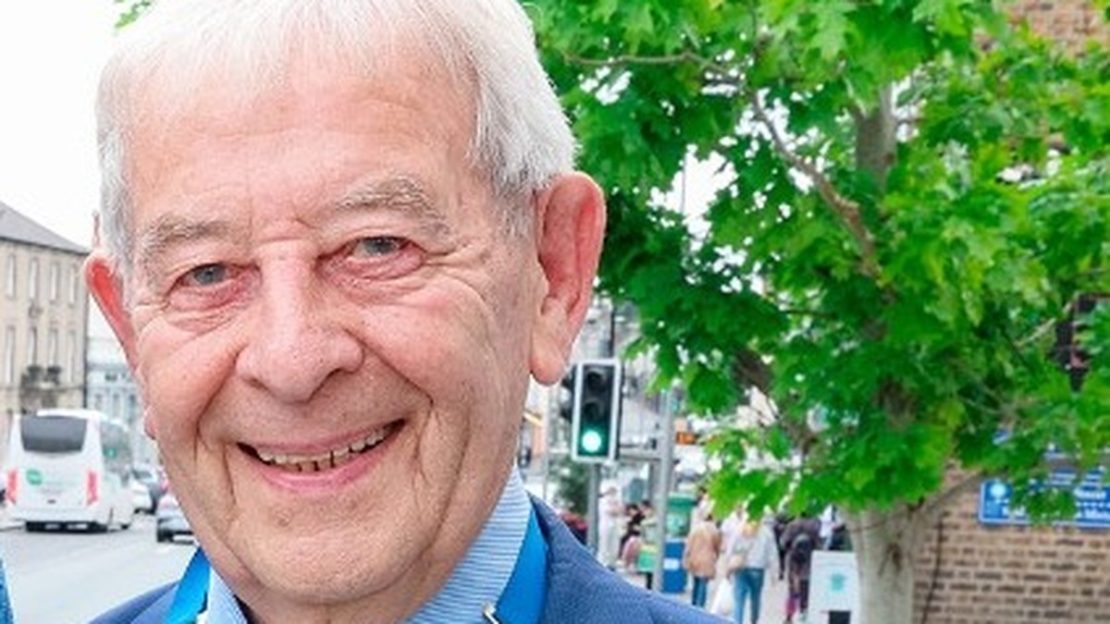
Councillor Seamie Moore got a judge’s parking vision seen to and avoided a fine he should have paid
On 6 January 2025, Councillor Seamie Moore from Naas, later Mayor of the Kildare town’s Municipal District, overstayed paid parking while attending an Irish Business Against Litter event there.
Under the Naas Parking Bye-Laws 2017, parking is €1 per hour, payable at a nearby meter or via an App; and enforcement operates as a fixed, rule-bound process. A €40 fixed-charge notice issues first, followed by a reminder after ten days. If unpaid after 29 days, it rises to €60. By day 57, a €100 legal referral fee is added, and once a summons issues, a further €100 applies — bringing the total to €260. At each stage, payment ends the matter. Escalation occurs only where a motorist consciously allows each statutory deadline to pass.
Moore chose not to pay. He let the fine escalate through every single stage: reminders, increased penalties, solicitor instruction, and ultimately a District Court summons. Instead of using the ordinary appeals route, he contacted senior management directly. On KFM Radio he confirmed: “I did, I did. I made representations to the most senior executive officer”. Moore suggested that mayors and deputy mayors attending civic events should receive parking grace periods or exemptions at very important functions.
This was not a case where the system bent. Council officials declined to withdraw the notice and applied the bye-laws exactly as written. The enforcement process continued without deviation. By the time the case reached court, the amount stood at €260 and had absorbed public administrative and legal resources. At the time, Moore was a member of the Council’s Audit Committee — overseeing public expenditures — and would soon become Mayor.
In October 2025 the matter came before Naas District Court before Judge Desmond Zaidan, listed alongside more than 200 routine parking prosecutions.
After the hearing, the judge called the defendant back and made remarks not about parking enforcement, but about traffic-calming measures and bollards at the Abbey Street–Basin Street junction beside Naas courthouse.
According to Moore’s own account in Freedom of Information-released correspondence, the judge instructed him to “listen” but “not to make any comment”, while raising concerns about the junction closure. The judge reportedly stated that his life “at any time is at risk” due to the level of decision-making required with his judicial decisions, involving cases and people “with the highest level of crime records, including murder and serious bodily harm”. He warned that “a burning, single vehicle blockage or similar incident… could prevent Garda, Ambulance or Prison services from reaching the scene”.
The court ultimately struck out the matter, taking into consideration Moore’s age, then 87, and previous good character. Yet Moore could not resist claiming special treatment. When asked whether the judge had made an exception for him, on KFM Radio the next day, he declared: “I would say he did, I would say he did”.
The judge may have been unaware that Moore was not Mayor when Kildare County Council issued the parking fine. The local authority was later obliged to issue a public clarification confirming that no such exemption exists in the parking bye-laws.
Within weeks, the Abbey Street–Basin Street issue resurfaced in formal political form. At the November 2025 meeting of the Naas Municipal District — without declaring any interest — Moore tabled a motion calling for the withdrawal of the Section 38 closure at the junction. The motion warned that the area had become a long cul-de-sac and that a blockage could isolate “Residential Groups, Courts System and Business Area”.
Moore’s reference to the “Courts System” at the municipal district meeting was noted at the time. Councillor Anne Breen queried whether the reference was to reports, following recent Court proceedings, of a request to pursue the removal of traffic-calming infrastructure at Basin Street. In that context, she raised the question of a potential conflict of interest under Section 177 of the Local Government Act — a concern noted in the minutes. That provision is concerned not only with outcomes, but with actions “seeking to influence” a decision in circumstances where a personal connection may arise.
Council officials confirmed a search of the Customer Relations Management system showed “no complaints or correspondence… in the past 12 months”. The motion closely echoed the safety concerns Moore had attributed to the judge.
The most serious ethical issue lay not in the parking fines themselves, but in what followed the October 2025 hearing of Moore’s first parking enforcement case.
Moore took remarks made during that hearing and subsequently reintroduced them into the political system, citing the courts as an affected interest, in a motion seeking reversal of the traffic calming measure.
This sequence engages serious ethical cautions.
The Judicial Council Act 2019 and the Guide to Judicial Conduct require judges to “not use the judicial office to advance personal, political or other interests, nor permit others to convey the impression that they are in a position to influence the judge”.
The Guide to Judicial Conduct states explicitly: “Judges should exercise restraint in public comment and should avoid expressing views that may undermine confidence in their independence or neutrality”.
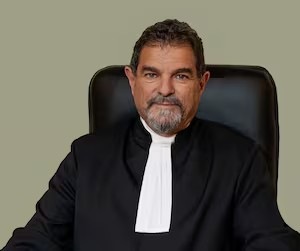
Here, the remarks were unrelated to the parking prosecution before the court, concerned a live local-authority policy issue, were addressed to a councillor appearing before the judge as a litigant, and were subsequently carried into the political process. The issue is not whether Judge Zaidan intended to influence events, but whether the circumstances created an appearance inconsistent with the restraint ordinarily expected of judicial office.
A second parking enforcement matter less than a year later reinforced the pattern of delinquency on the part of Councillor Moore. On 1 November 2025, a fixed-charge notice issued after a vehicle was recorded in Abbey Street car park as “not parked within the limits of a parking bay (vehicle parked in a yellow box)”.
This time, parking had been paid for. A recent Freedom of Information request revealed the previously undisclosed fact that Moore has recently been summonsed to court a second time for this offence. Moore submitted a late appeal in February 2026 citing an official Council-related function and limited parking. Officials refused, as the statutory appeal period had expired.
For Moore, the rules are unforgiving for his parking profligacies, both the statutory ethics framework and the Councillors’ Code of Conduct.
Section 177(4) of the Local Government Act 2001 provides:
“A member of a local authority… shall neither influence nor seek to influence a decision of the authority in respect of any matter which he or she has actual knowledge that he or she has a pecuniary or other beneficial interest in, or which is material to, any matter which is proposed, or otherwise arises from… the performance by the authority of any of its functions”.
The Code of Conduct for Councillors contains several provisions that also resonate directly with the facts of Moore’s situation.
Section 2.2 requires councillors to “prevent conflicts of interest arising and never seek to use improper influence”. Section 4.10 provides that “Councillors must not seek to use their official position so as to benefit improperly themselves”. Section 4.8 stresses that not only actual impropriety but also the appearance of impropriety should be avoided. Section 12.1 requires Councillors to “show all reasonable care” for local authority “resources and funds”.
Taken together, these provisions point to a standard in which both the attempt to secure advantage and the appearance that official roles are being relied upon are matters of concern, irrespective of whether any benefit is ultimately obtained.
The relevance of those provisions lies not in whether Moore ultimately obtained favourable treatment — he did not — but in the repeated assertions that his official duties warranted different treatment, including reference to his public role as a basis for flexibility when doing so, and the subsequent introduction into political debate of concerns first raised during proceedings in which he appeared before the court as a litigant.
Moore has stated, in relation to the original parking fine, that the case was “not about money or privilege or special treatment” but about “principle”. His position, consistently expressed, was that the issue was one of principle rather than privilege, although the distinction between the two is central to how the episode may be understood.
The system resisted. The bye-laws were enforced, the motion was rejected on the facts, and the guardrails held. Yet public resources were wasted on a case that could initially have been discharged for €40. A sitting Mayor and Audit Committee member allowed a trivial fine to escalate while seeking intervention and repurposing courtroom remarks into political pressure.
In the end, the principle at issue is larger than the events described here. Ethical and legal frameworks exist not merely to address misconduct, but to sustain fragile confidence that public authority is exercised impartially and that official roles confer no special standing in the administration of everyday rules.
Building that confidence begins with a willingness from those with any power to give the benefit of the doubt to the ordinary operation of rules, particularly when they are inconvenient, and with a recognition that personal interests and public responsibilities must remain distinct. It is there, rather than in headline controversies, that equality before the law is most often tested and sustained. How power responds to minor inconvenience tells us a great deal about how it understands itself — and about how vigilant democratic institutions must remain when the ordinary rules come knocking at the door of the office.
