


Use of the army in support of the Garda rested on a mixture of custom, convenience, delegated regulations and constitutional assumption rather than explicit statutory authority, until the fuel protests and statutory panic ended all that
The phrase ‘aid to the civil power’ has the tone of constitutional doctrine, invoked by governments, the Garda, military officials and commentators alike as if it referred to a clearly articulated statutory framework. What it actually refers to is typically-armed support provided to the Garda by the Defence Forces in domestic operations. It is distinct from ‘aid to the civil authority’, which refers to unarmed, typically emergency logistical support.
In April 2026 the Minister for Justice sought to deploy the Defence Forces in aid to the civil power.
In the wake of the protests of early 2026 what has been missed is a debate not merely about military assistance to the Garda, but about legality, democratic legitimacy, proportionality, transparency, our relationship with coercive force, and the character of the Irish State itself.
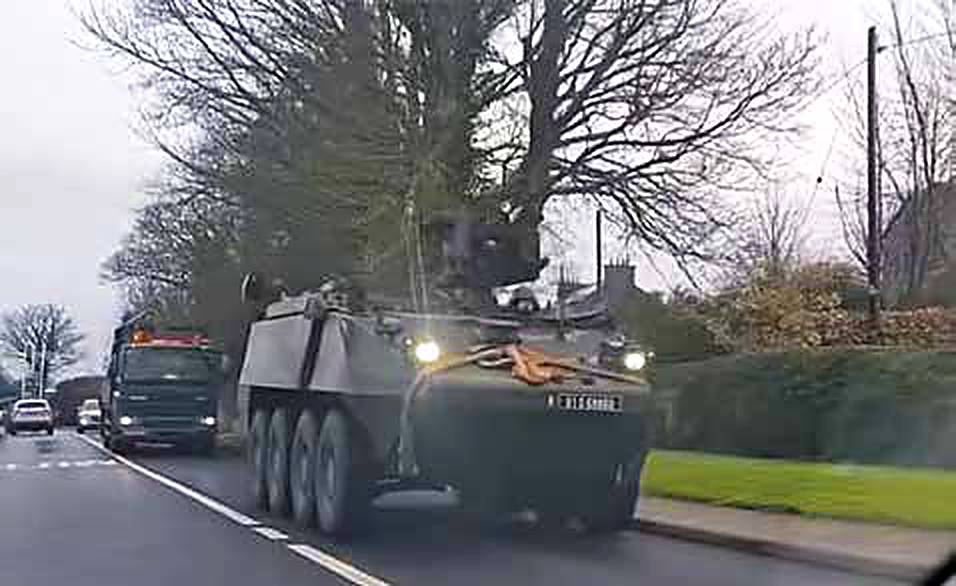
The debate has been throttled, particularly by Minister for Defence Helen McEntee, who has not evinced much sense that she considers democratic norms are an imperative in Irish society; and by Minister for Justice, Jim O’Callaghan.
Defence Forces support in aid to the civil power is invoked hundreds of times annually: it accounts for support at the national mint; cash escorts; explosive ordnance disposal; Garda air-support missions; hospital security; prisoner transport; repatriation operations, and backup for the US Military on the so-called ‘Taxiway 11’ at Shannon Airport.
As a former colony we almost didn’t realise these are things we should be careful about.
The fuel protests, backlash and an inconvenient truth
The immediate catalyst for the present controversy was the April 2026 fuel protests during which convoys of tractors and heavy vehicles blocked roads and fuel infrastructure across the State. Deployment of the State’s troops abroad and of foreign military in this State are also hot contemporary topics.
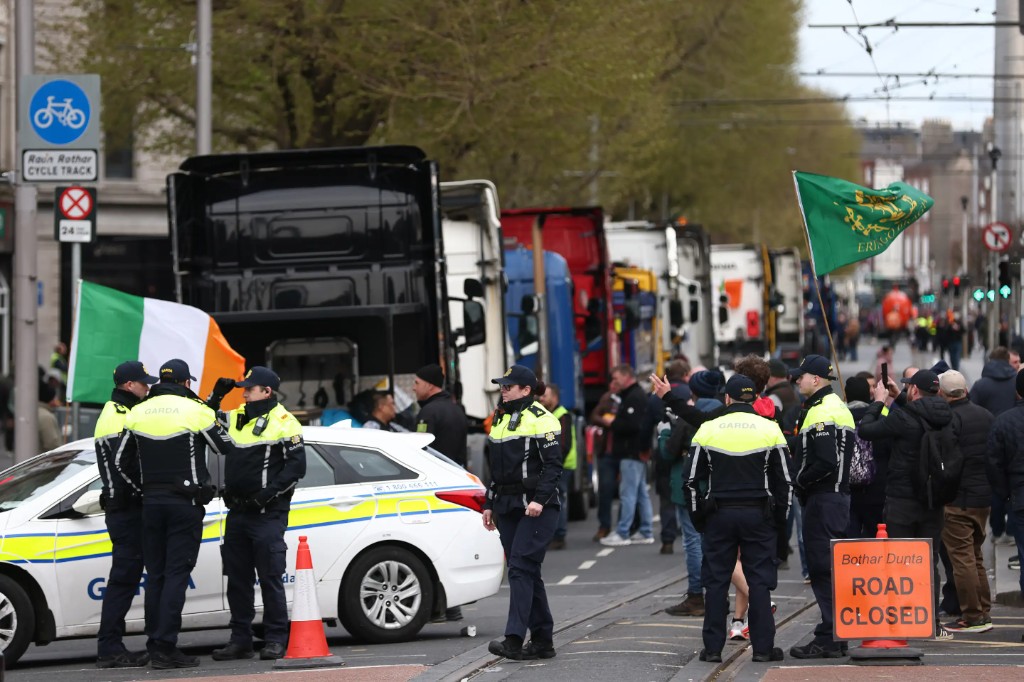
The Government convened the National Emergency Coordination Group, and Minister for Justice Jim O’Callaghan publicly suggested that the Defence Forces could be deployed in support of the Garda. A booming statement from his Department on 9 April declared:
“The Minister for Justice Jim O’Callaghan has confirmed that it is well established in law that the Defence Forces may assist An Garda Síochána in aid to the civil power, when requested and when required. On each occasion that the support of the Defence Forces is required, An Garda Síochána issues a form C70 to the Defence Forces to request their assistance.
The blocking of critical national infrastructure will not be permitted to continue and the assistance of the Defence Forces has been requested. Large vehicles blocking critical infrastructure will be removed.
Owners of those vehicles should remove them immediately this morning and should not complain later about any damage caused to those vehicles during removal”.
This was excessive, in practice and in principle. Tractors are not tanks, if they had been tugged they would have lost transmission and been immobilised.
More seriously, for many his statement crossed a psychological and constitutional threshold. Ignominiously, the army was not in fact called upon but the Government moved quickly to legislate for such interventions in the future. That is the focus of this article.
Ministers rush legislation in the Dáil
In March, before the fuel protests, against the background of alleged Russian shadow-fleet activity and the upcoming Irish EU Presidency, the Government proposed amendments to the Defence Act 1954. Writing in The Irish Times, Sinéad O’Sullivan also described “aid to the civil power” as a statutory role under the Defence Act 1954. It is not. The Act contains no such formulation. It should have.
“Aid to the civil power” behaves as though it is law despite lacking formal statutory existence
But the Government is now turning its mind to legislation on aid to the civil power. Its Act is imminent: the bill on the matter is now back with the Dáil which is considering amendments made in the Seanad. Anomalously the amendments are being treated as the Miscellaneous Civil and Criminal Law Bill 2026.
The bill was guillotined passing through the Dáil the first time and the debate was lacklustre.
The bill would mean that forces could be deployed in aid to the civil power on the direction of the Minister for Defence. If enacted, this would normally require a request in writing from the Minister for Justice, but in urgent situations both Ministers could agree a faster process. The Minister for Defence could also give general approval for certain classes of activities agreed with the Minister for Justice, under agreed conditions.
Sinn Féin’s justice spokesperson Matt Carthy described introducing constitutionally sensitive legislation in this way as “the most bizarre stroke” he had witnessed in the Dáil. He noted that the Government inserting its reactionary new agenda into a miscellaneous law bill meant it would be considered as a Department of Justice, not Defence, issue.
Carthy explicitly tied the proposed amendments to Jim O’Callaghan’s controversial remarks during the fuel protests. He argued that the Government was now attempting “to retrospectively make legal what he said during the protests”.
At committee stage on 24 June, Senator Alice Higgins expressed concern that the provision for aid to the civil power would be a blank-cheque measure, depending on two ministers without oversight from the Dáil or Seanad. Senator Michael McDowell insisted it would be ridiculous for the Houses to be required to approve deploying the army in cases such as kidnapping for ransom. Minister O’Callaghan agreed.
Sinn Féin’s amendment to remove aid to the civil power from the miscellaneous bill was lost.
The 1995 lacuna and the emerging constitutional challenge
The most explosive claim emerging during the debate concerns the alleged legal vacuum created after the end of the State’s emergency powers in 1995.
Section 15(8) of the Criminal Law Act 1976, which provided for aid to the civil power, stated:
“This section shall have effect only as long as the Emergency Powers Act, 1976 is in force”.
In 1995, after the IRA ceasefire, Dáil Éireann terminated the Emergency Powers Act 1976. Nevertheless, the Garda continued to call upon the Defence Forces in aid to the civil power ignoring the expiration of the statutory basis.
Without explaining the legal basis on which the Defence Forces had been operating since 1995, the government indicated it would place future deployments on an express statutory footing.
In May Minister McEntee was repeatedly pressed in committee on whether the Attorney General had ever raised concerns about the gap in legal authority that remains until the bill is enacted. The Minister wobbled, repeating that she did what the Attorney said. The Minister also assured the committee she would provide the committee with case law and copies of the secondary legislation, DFR CS.1, a regulation drawn up by one of her predecessors rather than the Oireachtas, which substituted for legislation. That made the contents of DFR CS.1 central to the debate. If ministers were relying on this regulation as the legal grounding for military deployments, it became essential to examine exactly what the regulation says.
DFR CS.1 and the hidden rules of engagement
The Department of Defence replied in June to a Freedom of Information request from Village magazine by releasing Defence Forces Regulation C.S.1, ‘Employment of Troops in Aid of the Civil Power in the Maintenance or Restoration of the Public Peace’, together with the legal authority relied upon by Minister Helen McEntee before the Oireachtas. The regulation reveals considerably more than ministers have publicly acknowledged.
While military intervention will “normally” occur at the request of the senior Garda officer present, the Defence Forces commander remains “solely responsible” for deciding both the action to be taken and “the degree of force” to be used.
The regulation states that restoring public order may require anything “from the mere appearance of troops to the use of all the force at a Commanding Officer’s disposal”. They also contemplate circumstances in which commanders may intervene before any Garda request where immediate danger exists, and prohibit the issue of blank ammunition because crowds might otherwise believe there is no real danger, potentially leading to “severe casualties to restore order”.
Although the regulation stresses that preserving public order is primarily the responsibility of the civil authorities and that military force must never be punitive, it nonetheless establishes a detailed operational framework for the domestic use of military force that has received remarkably little public scrutiny.
Precedents for using troops against civilians
Led by former Irish Times and Garda Review editor, Conor Brady, the case was recently made that troops have never been sent in against civilians in this State. That is untrue. In the 1970s, troops in riot gear were deployed inside Irish prisons on several occasions, and they killed a man escaping from Portlaoise Prison. Irish soldiers fired CS gas at rioters in Dundalk, and rubber bullets at protesters at the Curragh and the funeral of the hunger striker, Frank Stagg.
In the 1980s, soldiers were sent onto Spike Island during rioting by prisoners and were involved in another deadly confrontation during which a wanted man was killed in Kilkenny in November 1987.
Since the 1990s, there has, by all accounts, been police primacy in domestic public order situations.
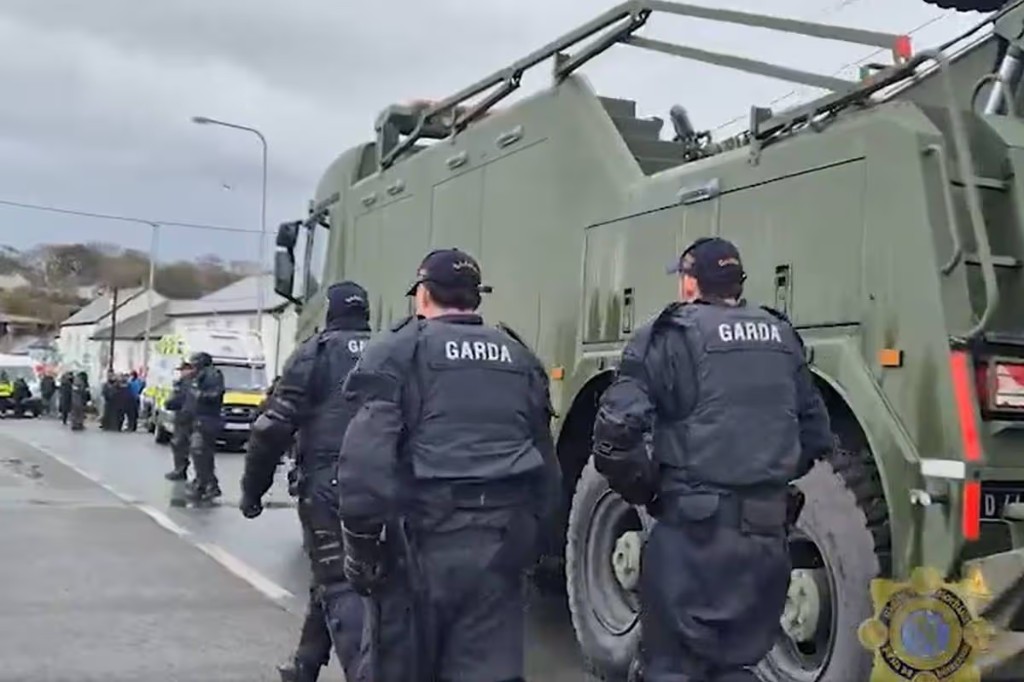
But in 2026 the army has again been put prominently in the sightline of protesters, albeit as an undelivered threat.
Unclear whether supplementing, or substituting for, Garda
That willingness to use soldiers ignores the lessons of the past and blurs the line between supporting policing and replacing it.
In democratic systems, military deployment in domestic settings is generally tolerated when under police supervision the armed forces provide capabilities unavailable to ordinary policing agencies. It becomes more controversial when soldiers begin directly managing civilian dissent, protests or public order.
Most clearly, it is not the function of State agencies to fill purported gaps in legislation that are perceived to restrict the carrying out of their function. The function of An Garda Síochána is detailed in section 7 of the Garda Síochána Act 2005 and nowhere does it allow the Garda to abdicate its statutory function to another agency.
The European Convention on Human Rights
The controversy also raises serious questions under the European Human Rights law which requires coercive powers to be accessible, foreseeable and subject to safeguards.
Most significantly, McCann v United Kingdom, arising from the killing of IRA members Daniel McCann, Mairéad Farrell and Seán Savage in 1988 in Gibraltar, subjected military involvement in security operations to intense scrutiny.
The Court in McCann criticised the reflexive use-of-force assumptions embedded in military operational culture and contrasted them with the caution expected of ordinary law-enforcement personnel in democratic societies.
As to the military carrying out a policing function, it concluded:
“Their reflex action in this vital respect lacks the degree of caution in the use of firearms to be expected from law enforcement personnel in a democratic society, even when dealing with dangerous terrorist suspects, and stands in marked contrast to the standard of care reflected in the instructions in the use of firearms by the police which had been drawn to their attention and which emphasised the legal responsibilities of the individual officer in the light of conditions prevailing at the moment of engagement”.
If it appears that military intervention is to be used to chill lawful protest activity in Ireland then there are potentially other rights engaged, not least those protected by Articles 10 and 11 of the European Convention on Human Rights concerning freedom of expression and freedom of assembly.
Overwhelming concern about imminent abuse of force
To mark its EU Council Presidency, the Irish Government will make an offering of the dismantling of the Triple Lock. People who don’t share the atavistic Eurodream of conquering Russia will protest this.
In a case involving excessive force, the State may find it struggles to demonstrate a sufficiently articulated legal framework with clear operational limits; independent safeguards; and democratic foreseeability sufficiently structured for contemporary human-rights standards.
The international experience
Ireland is not alone in permitting military assistance to civilian authorities. Most democratic states do so in one form or another. The United States has long maintained restrictions on military involvement in ordinary law enforcement through the Posse Comitatus tradition. Germany’s constitutional order places strict limits upon domestic military deployment and forbids mobilising against demonstrators. The United Kingdom regulates military aid to the civil authorities through published doctrine and extensive parliamentary scrutiny.
Messy Irish informality
The Irish approach has been informal and without statutory safeguards. It seems to be as much about cost saving as security. Freedom of Information answers provided to Village show it costs roughly one seventh the amount for the army, rather than the Garda, to provide protection at Shannon Airport.
While other jurisdictions have spent decades constructing detailed statutory frameworks, parliamentary oversight mechanisms and published doctrines governing domestic military support, the Irish approach is a mess.
Legitimacy
Powers involving soldiers in a democracy should rest upon clear legislation. This would ensure that extending the power would attract the normal legislative scrutinies of the Oireachtas.
Democratic legitimacy requires more than legality alone. A framework under which ministers from the National Emergency Coordination Group can authorise deployments while the practical rules governing force remain contained in internal military instruments risks blurring the constitutional distinction between law-making and administration.
It seems the government is now willing to do what it should have done a generation ago: put aid to the civil power on a statutory basis. But having learnt its lesson on this, it has not learnt other universal lessons, like the need for safeguards of transparency, accountability and compliance with international, including ECHR, law. This Government’s haphazard approach to the democratic fundaments of our security policy is, ultimately, indefensible.
In 2017 Dan Dowling was arrested at Shannon Airport while trying to search a US Navy plane under Irish Defence Forces guard. In 2026, with the support of IHREC as amicus curiae, his prosecution for trespass was appealed to the Supreme Court.
